
25 Italian pasta recipes every home cook should know
From weeknight Roman classics to slow-cooked Sunday ragùs, these 25 Italian pasta dishes cover the full range of techniques, regions, and flavors worth mastering at home
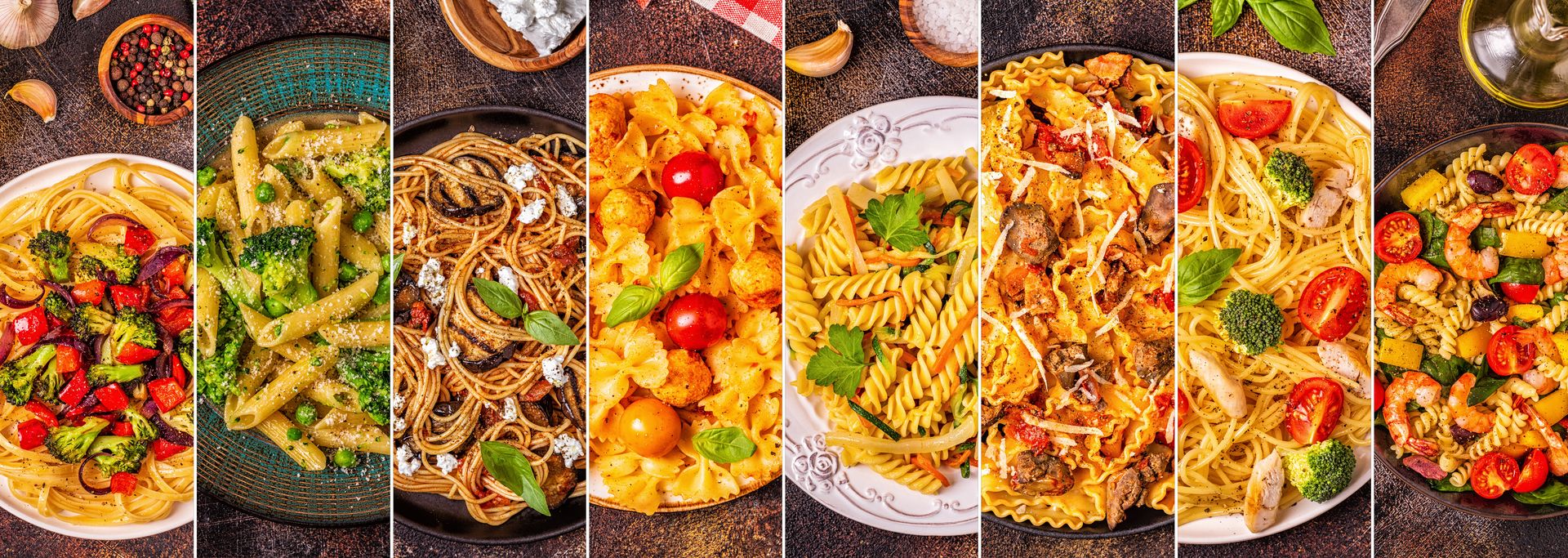
tbralnina / Getty
Pasta is one of the few foods that has achieved genuine universality — eaten daily across cultures, climates, and income levels — yet its spiritual home remains the Italian kitchen, where it has been shaped, dried, sauced, and argued over for centuries. Italy produces more than 300 recognized pasta shapes, each with its own regional logic: thick tubes to trap chunky ragùs, thin strands to carry delicate oil-based sauces, ridged surfaces to hold cheese and butter. Learning Italian pasta is not just about memorizing recipes. It is about understanding why each combination exists, what the sauce is doing, and how the pasta itself is a structural decision as much as a culinary one.
The Italian approach to pasta is also deeply economical. The country’s most revered dishes — carbonara, cacio e pepe, aglio e olio — were born from poverty, from the need to make something satisfying from almost nothing. Guanciale, pecorino, black pepper, garlic, olive oil: these are pantry staples that, in the right hands, produce food of extraordinary depth. That frugality shaped the entire aesthetic of Italian pasta cooking: restraint, balance, quality ingredients handled with precision rather than buried under complexity.
Italian pasta also tells a story about geography. The north — Emilia-Romagna, Lombardy, Veneto — gravitates toward fresh egg pasta, butter, and cream, shaped by the dairy wealth of the Po Valley. The south — Campania, Sicily, Calabria — favors dried semolina pasta, olive oil, tomatoes, and preserved fish, products of a sun-drenched, historically poorer landscape. Neither tradition is superior. They are different answers to different climates, economies, and pantries.
This list covers 25 dishes that span that full geography, from the iconic Roman quartet of carbonara, cacio e pepe, amatriciana, and gricia to Sicilian pasta con le sarde, Genovese pesto, Venetian bigoli in salsa, and Neapolitan ragù. Some are weeknight dinners that come together in 20 minutes. Others require hours of patience. All of them reward attention, practice, and a willingness to respect the logic behind the dish rather than improvise around it.
The ingredients referenced throughout this guide — good semolina pasta, aged pecorino, guanciale, San Marzano tomatoes, 00 flour — are worth sourcing carefully. The quality of the result is almost entirely determined by the quality of the inputs. Italian pasta cooking at its best is not complicated. It is precise.
Spaghetti carbonara
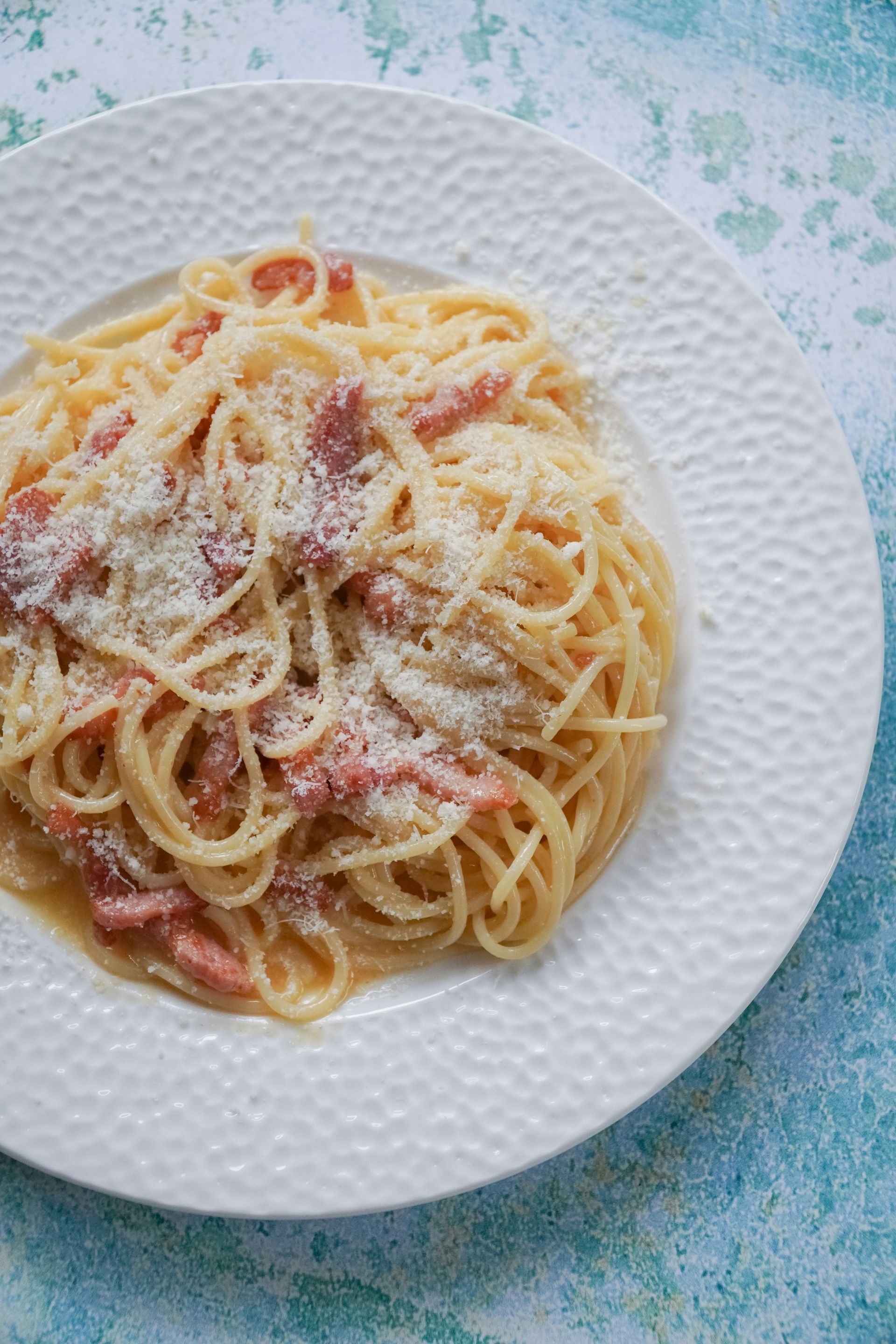
Kołodziejczak / Unsplash
Carbonara may be the most misunderstood pasta dish in the world. Outside Italy, it is routinely made with cream, bacon, and onions. In Rome, where it was codified in the mid-20th century, it contains exactly four ingredients: guanciale, eggs, Pecorino Romano, and black pepper. No cream, no pancetta, no garlic. Understanding why those substitutions are wrong requires understanding what carbonara actually is — an emulsified sauce built entirely from egg proteins loosened by pasta water and enriched by pork fat.
The pasta of choice is spaghetti, though rigatoni and mezze rigatoni are also used in Rome. The guanciale — cured pork cheek, not pancetta — is sliced into lardons and rendered slowly in a dry pan until the fat runs clear and the meat crisps at the edges. While the pasta cooks, the egg mixture is made separately: whole eggs plus extra yolks, finely grated Pecorino Romano (some cooks add a small amount of Parmigiano Reggiano), and an aggressive amount of freshly cracked black pepper. The ratio of eggs to yolks matters. More yolks mean a richer, more stable sauce; too many whole eggs and the mixture runs thin.
The critical technique is temperature management. The egg mixture must never be added to the pan over direct heat, or it will scramble. Instead, the drained pasta is tossed in the pan with the guanciale off the heat, then the egg and cheese mixture is added and worked with tongs and a spatula while pasta water is added gradually — tablespoon by tablespoon — to create a sauce that clings to every strand without clumping or setting. The target texture is glossy, barely set, coating the pasta in a continuous film rather than pooling at the bottom.
Black pepper is not a garnish in carbonara. It is a core flavor component and should be toasted in the pan before the guanciale renders, or cracked directly into the egg mixture in generous quantity. Some Roman cooks use a dedicated pepper grinder for this dish and never hold back.
The name’s origin is debated. One theory connects it to carbonari, the charcoal workers of the Apennine mountains, who may have made a version of the dish on the job. Another traces it to post-World War II Rome, when American soldiers brought eggs and bacon rations and Roman cooks adapted them. Neither theory is definitively proven, and Romans tend to find both arguments beside the point. What matters is the dish itself: a four-ingredient pasta that is simultaneously simple and technically demanding, with almost no margin for error and enormous room for excellence.
For home cooks, the most common failure is scrambling the eggs. The second most common is using too little pasta water, producing a thick, sticky paste rather than a flowing sauce. Practice the temperature calibration — removed from heat, add egg mixture, add pasta water, move quickly — and carbonara becomes one of the most satisfying dishes in the Italian repertoire.
Cacio e pepe
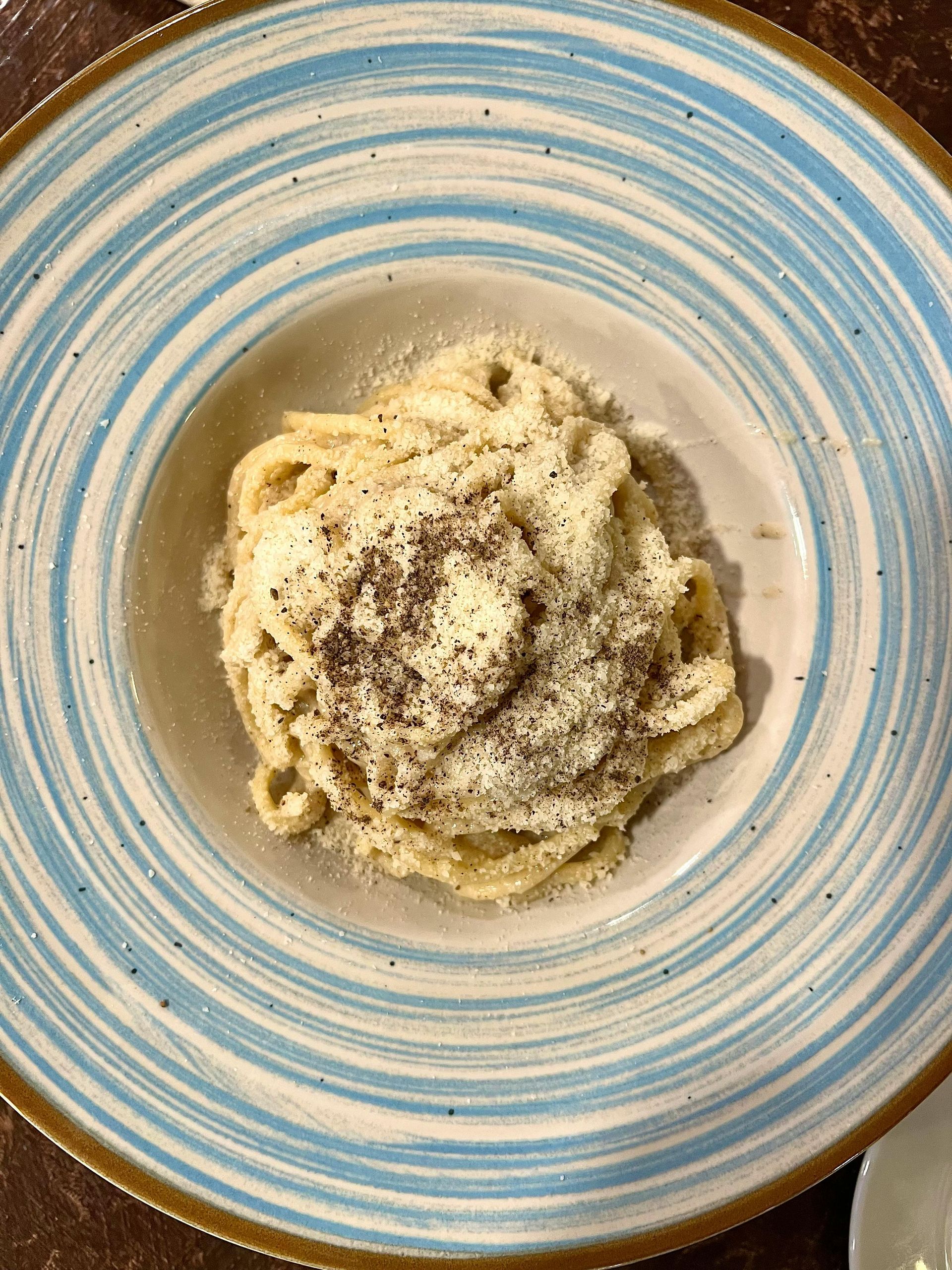
Luca Volpe Productions / Pexels
Cacio e pepe translates literally as cheese and pepper, and that near-total simplicity is what makes it deceptively hard. The dish contains three ingredients: Pecorino Romano, black pepper, and pasta — traditionally tonnarelli (a thick, square-cut spaghetti) or spaghetti. No fat beyond the natural oils in the cheese, no pasta water excess, no cream, no butter. What looks like an austere pantry pasta is actually one of the most technique-dependent dishes in Italian cooking.
The problem cacio e pepe presents is emulsification. Pecorino Romano is a dry, salty, aged cheese with a relatively high fat content. When added directly to hot pasta, it either clumps into rubbery masses or refuses to dissolve at all. The solution is starchy pasta water, used in precise quantities to create a creamy suspension between the cheese particles and the water. The mechanics are similar to making a beurre blanc or a hollandaise: you are building an emulsion that is only stable within a narrow temperature range and will break if you push it too far.
The technique developed by Roman cooks involves toasting the black pepper in a dry, wide pan until fragrant, then adding a ladle of pasta water to bloom the pepper and create a thin, peppery liquid base. The pasta — cooked slightly less than al dente — is added to this pan and tossed vigorously over moderate heat. As the pasta finishes cooking in the pan, the starchy water concentrates. At this point, the pan is taken off the heat, finely grated Pecorino is added in stages, and the pasta is turned constantly, adding small amounts of reserved pasta water to keep the mixture fluid. The result, when it works, is a sauce that looks like cream but contains none: glossy, cohesive, coating the pasta evenly.
Black pepper is not a subtle background note here. It should be cracked coarsely — not finely ground — so that it has texture and delivers its heat in pops rather than as a uniform background warmth. Some cooks use a mortar and pestle to crack the pepper to the right coarseness. The toasting step matters: heating peppercorns releases volatile aromatic compounds, principally from piperine, that give fresh-ground pepper its complexity.
The cheese selection also matters. Genuine Pecorino Romano — not domestic pecorino, not a blend — has a sharpness and salinity that defines the dish. Some cooks incorporate a small amount of Parmigiano Reggiano to soften the edge, though purists consider this a compromise. The pasta cooking water should be lightly salted, since the cheese will contribute substantial salt to the final dish and over-salted pasta water will make the result inedible.
Cacio e pepe is a pasta that rewards repetition. The first attempt is often clumped or undersauced. By the third or fourth try, the mechanics become intuitive: when to add water, how much to move the pasta, when to pull it from the heat. It is a dish that teaches technique more efficiently than almost anything else in Italian cooking.
Bucatini all’amatriciana
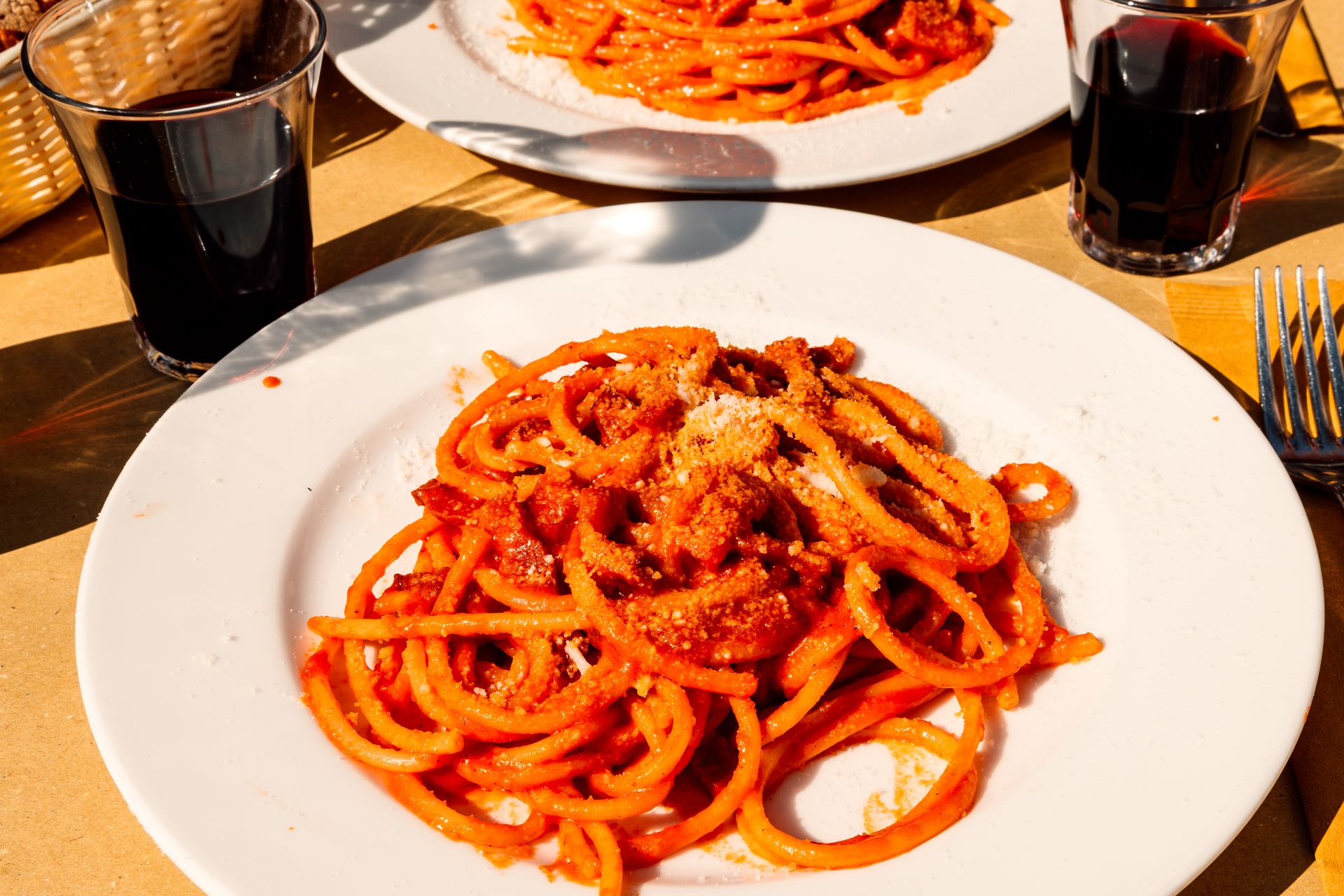
Alexander Spatari / Getty Images
Amatriciana is the third member of Rome’s canonical pasta quartet, alongside carbonara, cacio e pepe, and gricia — though technically it originated not in Rome but in the mountain town of Amatrice, in the province of Rieti, about 150 kilometers northeast of the capital. The town’s proximity to Rome, and the migration of its shepherds and cooks to the city over centuries, brought the dish into the Roman repertoire, where it was slightly modified — the tomato was added, probably in the 18th century after tomatoes arrived in Europe from the Americas.
The dish is built on guanciale, tomato, Pecorino Romano, white wine, and black pepper. Bucatini — thick, hollow spaghetti — is the traditional pasta. The guanciale is cut into lardons and rendered in a wide pan with a small amount of olive oil until the fat runs and the meat colors slightly. White wine is added and cooked off. Crushed or hand-broken San Marzano tomatoes go in next, along with a pinch of chili flake (called peperoncino in Italian), and the sauce is simmered until reduced and slightly sticky. The pasta is cooked separately, drained, and finished in the pan, where it absorbs the sauce. Pecorino Romano is grated over the top — some is stirred in at the end off the heat to thicken the sauce slightly, and the rest is served at the table.
The ratio of guanciale to tomato is a point of regional debate. Amatrice’s version is guanciale-heavy, with the tomato acting more as a brightener than a base. Rome’s version tends to have more tomato. Both are correct. The key principle is that the guanciale fat should be the primary flavor carrier; the tomato adds acidity and body but does not dominate.
Bucatini is the preferred pasta for a practical reason: the hollow tube traps both the sauce and the rendered pork fat inside, so each mouthful delivers multiple textures and flavors at once. Spaghetti or rigatoni are acceptable substitutes if bucatini is unavailable, but they produce a different eating experience.
Amatrice was devastated by an earthquake in August 2016, and the rebuilding of the town has been slow and painful. Amatriciana has taken on an additional meaning for Italians since then — a culinary emblem of a place and a community. Some Italian restaurants and organizations held fundraising nights in the years after the earthquake, serving amatriciana with proceeds directed toward reconstruction efforts. The dish’s resilience mirrors that of the town.
For home cooks, the main misstep is using pancetta instead of guanciale. Pancetta comes from the belly, not the cheek; it has a different fat-to-meat ratio and a milder flavor. Guanciale renders more richly and has a distinct funkiness that underpins the whole dish. If guanciale is genuinely unavailable, pancetta is a reasonable substitute, but it is a different result.
Spaghetti aglio e olio
Zoryana Ivchenko / Getty Images
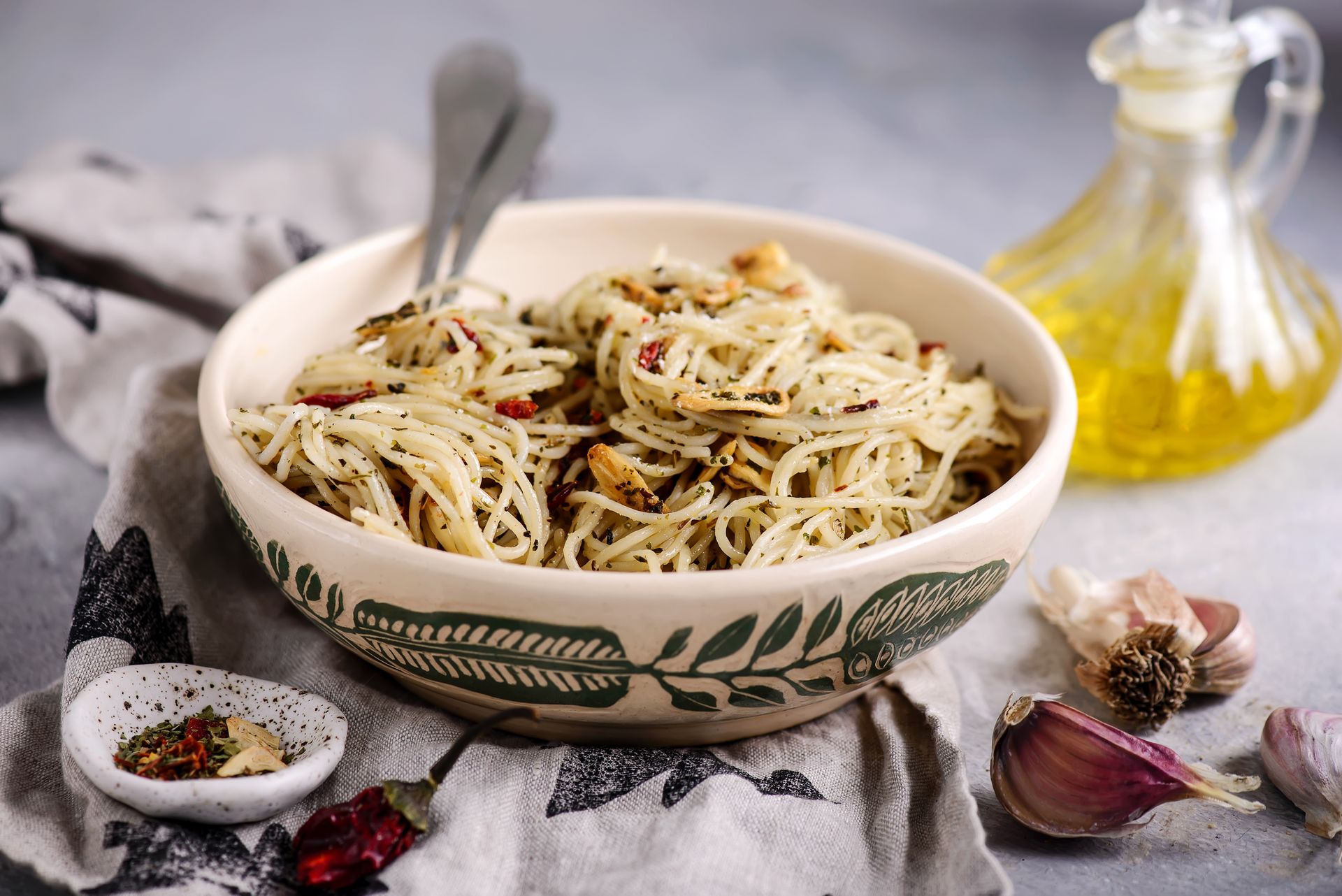
Aglio e olio — garlic and oil — is the midnight pasta, the cook-from-nothing pasta, the dish that separates people who understand restraint from those who reflexively add more. It contains spaghetti, garlic, olive oil, chili flakes, and flat-leaf parsley. That’s the whole recipe. In practiced hands, it produces a pasta that is aromatic, silky, and deeply satisfying. In careless hands, it produces something that tastes of burnt garlic and separated oil.
The technique is specific. Thin-sliced garlic — not minced, not pressed — goes into a wide pan with a generous amount of good olive oil over low heat. The goal is not to fry the garlic but to infuse the oil with it: the garlic should turn pale gold at the edges over about three to four minutes and release its flavor into the surrounding fat without browning significantly. Browning garlic past golden turns it bitter; that bitterness cannot be corrected later. When the garlic is nearly done, chili flakes go in for the final minute.
While the garlic cooks, the pasta is boiling in well-salted water. The spaghetti goes into the pan slightly undercooked, with a cup of the starchy pasta water added at the same time. The heat is raised briefly, and the pasta is tossed vigorously while the water emulsifies with the oil into a light coating sauce. This is the same mechanic as cacio e pepe: starch from the pasta water acts as an emulsifier, binding the oil into a smooth film rather than allowing it to pool. When the pasta is al dente and the sauce coats evenly, the heat is cut and parsley added.
The quality of the olive oil is not incidental — it is the sauce. A flat, cheap olive oil will produce a flat, cheap result. Extra virgin olive oil with genuine fruitiness and slight bitterness — the kind sold in tins or dark bottles to protect from light — makes this simple dish genuinely good.
Aglio e olio comes from the Neapolitan tradition, though it is cooked throughout southern Italy. In Naples, it is sometimes made with vermicelli rather than spaghetti and enriched with toasted breadcrumbs, called pangrattato, which add texture and a nuttier dimension. The breadcrumbs are toasted in olive oil until golden and scattered over the finished pasta. This variation is sometimes called pasta con le briciole.
The dish is a benchmark. If someone can make aglio e olio well — properly infused oil, emulsified sauce, perfectly timed garlic — they understand the foundations of Italian pasta cooking: patience, temperature control, and the discipline not to add anything that isn’t necessary.
Pasta al pomodoro
Cris Cantón / Getty Images
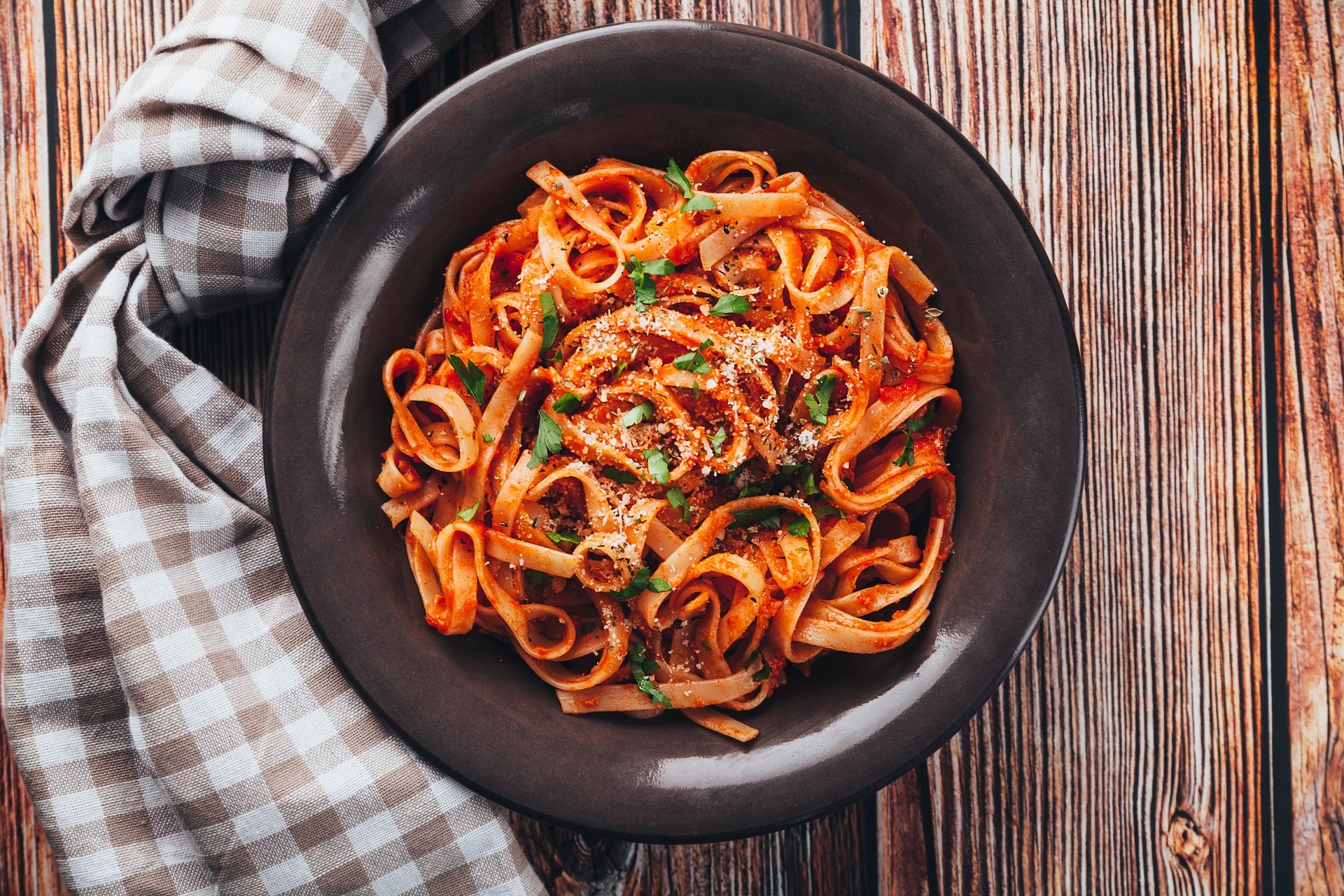
Pasta al pomodoro is the simplest expression of Italian pasta cooking: spaghetti or pasta coated in a tomato sauce made from few, fresh ingredients. It is not marinara (which typically includes garlic, olive oil, and aromatics and is thicker), nor is it a meat sauce or a long-simmered ragù. It is a quick, bright, fresh-tasting tomato sauce in which the tomato flavor remains clean and direct.
The classic version begins with olive oil warmed in a wide pan, into which a halved onion is added along with whole canned tomatoes — San Marzano tomatoes are the benchmark, valued for their low acidity, thin skin, and intensely sweet flavor. The onion is removed after the sauce has cooked down, typically after about 45 minutes of gentle simmering. This is the Marcella Hazan method, one of the most reproduced tomato sauce recipes in English-language Italian cooking, and it works because the onion adds sweetness and body to the sauce without leaving fibrous texture. A generous amount of unsalted butter goes in at the end, enriching the sauce and smoothing its acidity.
A separate, more Roman approach skips the onion entirely and starts with garlic in olive oil, adds canned tomatoes, cooks quickly — 15 to 20 minutes — and finishes with torn basil. This version is brighter and sharper, with a fresher tomato character. Neither approach is definitively superior. The Hazan version rewards patience; the quick version rewards good tomatoes.
The pasta’s role is not passive. Spaghetti or rigatoni is the standard, but bucatini, mezze rigatoni, or fusilli all work depending on personal preference. The pasta must be finished in the tomato sauce, not merely topped with it: a ladle or two of sauce goes into a wide pan, the drained pasta is added, and everything is tossed together over heat for a minute or two while pasta water adjusts the consistency. This technique — called mantecare — marries pasta and sauce into a unified dish rather than a bowl of pasta with sauce sitting on top.
Basil is added at the very end, torn by hand rather than cut, to preserve its aromatics. Fresh basil bruised by a knife loses much of its volatile fragrance. The finishing olive oil — a drizzle of high-quality raw extra virgin — is not optional if you want the full flavor.
Pasta al pomodoro also reveals the most about the quality of the tomatoes used. When the sauce has only four or five ingredients, there is nowhere to hide inferior produce. Good canned tomatoes — San Marzano PDO or comparable high-quality alternatives — make this dish. Cheap, acidic, watery tomatoes cannot be corrected with technique.
Tagliatelle al ragù bolognese
Guido Cozzi / Atlantide Phototravel / Getty Images
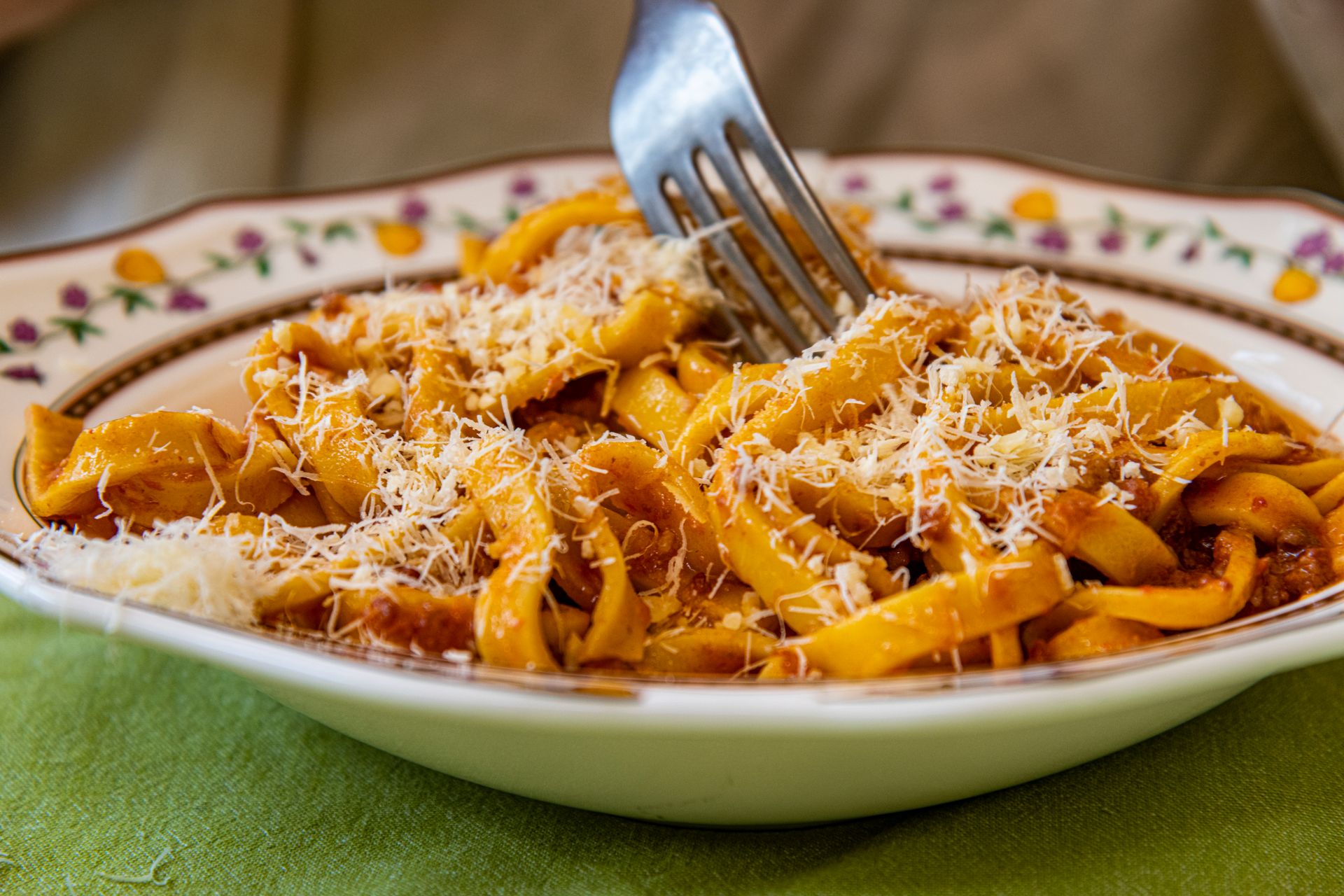
Ragù bolognese is one of the most imitated and most misrepresented sauces in Italian cooking. The version that circulates globally — spaghetti bolognese with a heavy tomato-ground beef sauce — bears only a passing resemblance to the original Bolognese ragù, which is meat-forward, gently tomatoed, and made with fresh tagliatelle, not spaghetti.
The Accademia Italiana della Cucina registered an official recipe for ragù bolognese with the Bologna Chamber of Commerce in 1982. That version calls for beef (specifically coarse-ground or finely chopped beef — the recipe specifies cartella di manzo, a cut from the plate), pancetta, onion, carrot, celery, whole milk, dry white wine, and a small amount of tomato paste or puree. No garlic, no herbs beyond what is in the soffritto, and very little tomato. The sauce is cooked slowly — two to four hours — until the meat has absorbed all the liquid and the texture becomes dense and almost dry. Milk is a key ingredient: it rounds the acidity of the wine and tomato while tenderizing the meat proteins.
The pasta is fresh tagliatelle made from eggs and 00 flour, rolled thin and cut to a width that the Bolognese specify precisely: when cooked, a tagliatella should be 8 millimeters wide, or roughly 1/12,270th the width of the Torre degli Asinelli, Bologna’s medieval tower. This measurement, slightly tongue-in-cheek, was also deposited with the Bologna Chamber of Commerce.
The technique requires patience above all else. The soffritto — finely diced onion, carrot, and celery cooked slowly in butter and oil — must be properly softened before the meat is added. The meat is browned in stages to develop color without steaming. The wine is added and cooked off completely before the milk and tomato are added. Then time does the rest.
Home cooks attempting this dish sometimes add too much tomato, trying to make the sauce resemble a standard meat sauce. The better result comes from trusting the original proportions: a few tablespoons of tomato paste or pureed canned tomatoes, not a full can. The sauce should be beige-brown, not red. Parmigiano Reggiano is grated generously over the finished dish. Tagliatelle al ragù bolognese is food that takes an afternoon to make and rewards the patience entirely.
Pasta alla Norma
Boblin / Getty Images
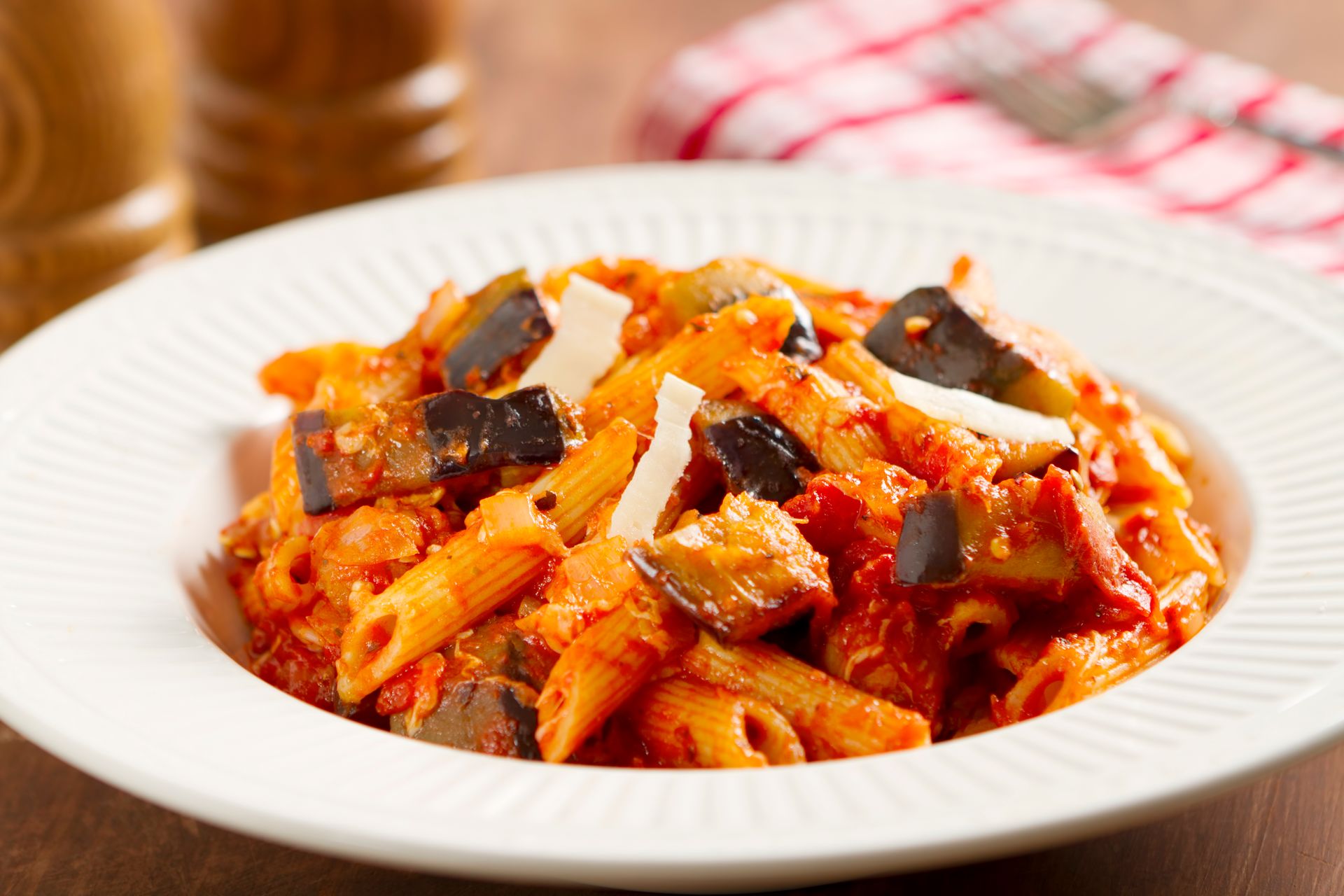
Pasta alla Norma is a Sicilian dish of short pasta — typically rigatoni or sedani — with a sauce of fried or roasted eggplant, tomato, basil, and ricotta salata. It is named, by common account, after Bellini’s opera Norma, composed in 1831 in Catania. The story goes that the playwright Nino Martoglio, tasting the dish in 19th-century Catania, declared it as fine as the opera — and the name stuck. Whether or not the anecdote is literally true, the dish has been associated with Catania and with Sicilian identity for well over a century.
The eggplant is the structural and flavor center of the dish. Traditionally it is cut into rounds or cubes, salted to draw out moisture, dried, and deep-fried in olive oil until golden. The frying concentrates the eggplant’s flavor and creates a texture that contrasts with the softness of the tomato sauce. Some modern cooks roast the eggplant instead — it is less oily and still produces good results — but the fried version has a richness that roasting does not fully replicate.
The tomato sauce is simple: good canned tomatoes, garlic, olive oil, cooked down quickly and seasoned with salt. The fried eggplant goes into the sauce to warm through and absorb some of the tomato flavor without losing its fried exterior completely. The pasta — cooked al dente — is tossed in this mixture, fresh basil is torn over the top, and ricotta salata is grated or crumbled generously over everything.
Ricotta salata is not the same as fresh ricotta. It is a pressed, salted, and aged version of ricotta — firm, crumbly, and salty, with a flavor somewhere between mild feta and Pecorino Romano. It melts slightly when it hits the hot pasta, adding creaminess and salt simultaneously. Fresh ricotta can be used in a pinch but produces a wetter, milder result.
Pasta alla Norma is a dish where the quality and preparation of the eggplant determines everything. Undercooked eggplant is spongy and bitter. Improperly drained eggplant makes the sauce oily and heavy. The salting step — even if the eggplant is being roasted rather than fried — removes excess moisture and bitterness and should not be skipped.
This dish is also a good entry point into Sicilian cooking for cooks unfamiliar with the island’s food traditions, which blend Italian, Arab, Greek, and Norman influences into something distinct from mainland Italian cuisine. The use of ricotta salata, fried vegetables, and basil in a single dish reflects that layered culinary history.
Trofie al pesto genovese
amirali mirhashemian / Unsplash
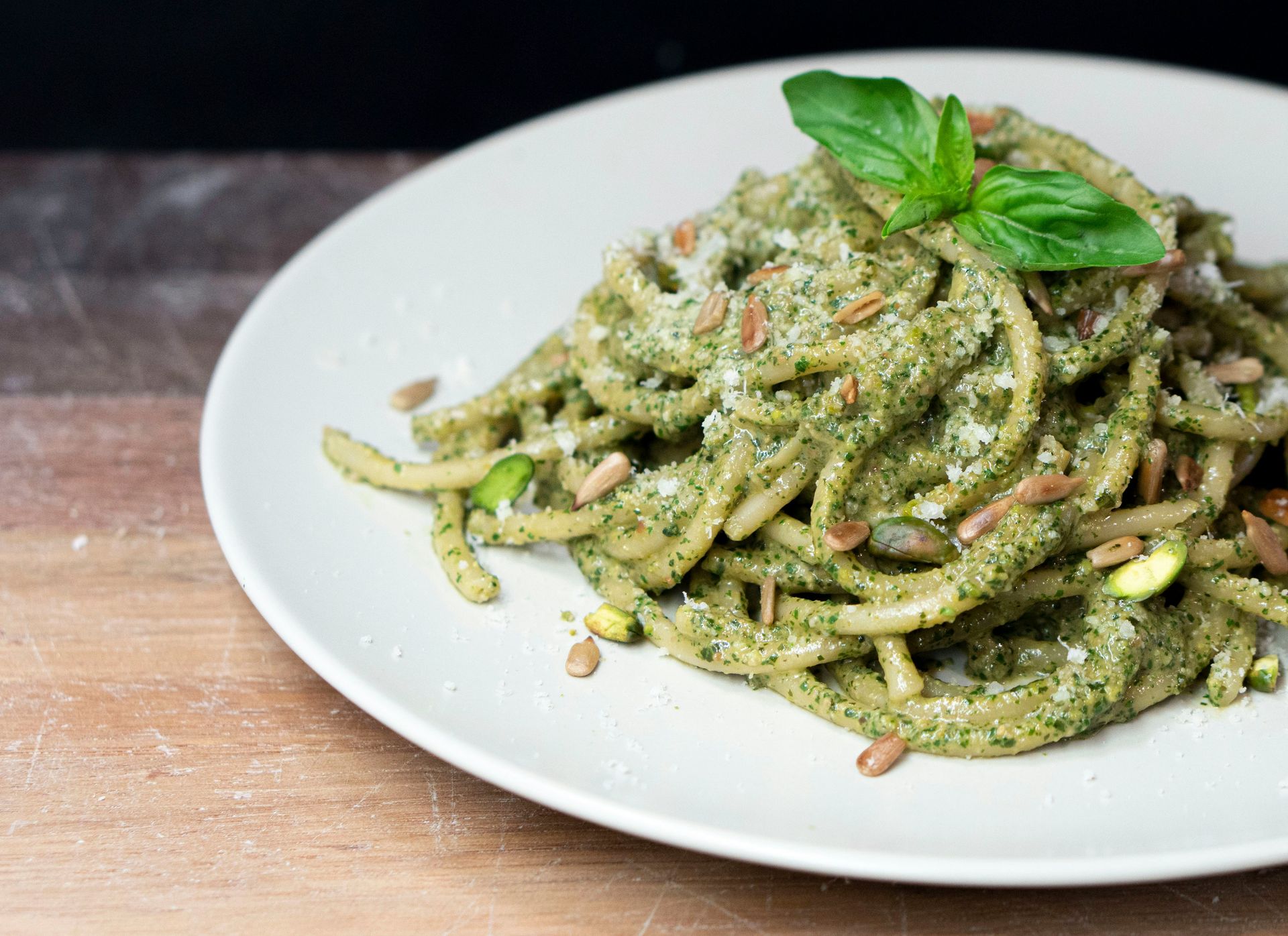
Pesto genovese is one of the most copied and most degraded sauces in Italian cooking. The jarred, commercial versions available worldwide bear little resemblance to the original — the basil is often cooked, the garlic is sharp and raw, the oil is neutral and flat. The real thing, made from fresh Genovese basil, pine nuts, garlic, Pecorino Sardo, Parmigiano Reggiano, and Ligurian extra virgin olive oil, has a freshness, sweetness, and aromatic depth that depends entirely on quality ingredients handled gently.
The traditional pasta is trofie — a short, twisted pasta from the Ligurian coast, traditionally made by hand from just flour and water, rolled thin and twisted into tight spirals that grip the pesto. Trenette (similar to thick, flat spaghetti) is also traditional, as is the combination served with trofie, boiled waxy potatoes, and blanched green beans — all cooked together in the same pot. The potatoes and beans are a Ligurian tradition that adds substance and contrasting textures to the dish.
The pesto is made in a marble mortar and pestle, by the purist method: garlic and salt are worked to a paste first, then the basil leaves are added in batches and crushed with a circular motion (not pounded — the circular motion bruises the cells without heating the basil), then the pine nuts, then the cheeses, and finally the olive oil is worked in gradually until the mixture is cohesive but slightly coarse in texture. The mortar method produces a different result from a food processor: the basil is bruised, not shredded, keeping the color vivid and the flavor fresh rather than slightly metallic.
A food processor pesto is acceptable and more practical. The key is to keep the machine running minimally — pulse rather than blend — and to ensure nothing gets warm. Some cooks chill the processor bowl first. The olive oil should be added last, with the machine off, and stirred in by hand.
The basil variety matters. Genovese basil (DOP-protected when grown in specific Ligurian provinces) has smaller leaves, a sweeter flavor, and less clove-like intensity than the large-leaf basil common in supermarkets. The difference in the finished sauce is noticeable. If only large-leaf basil is available, using slightly less of it compensates partially.
Pesto is not cooked. The drained pasta goes directly into a bowl, a spoonful of pasta water is added to loosen, and the pesto is worked through. No heat. Cooking pesto darkens the basil and destroys the aromatics that make the sauce what it is.
Pasta puttanesca
James de Wall / Getty Images
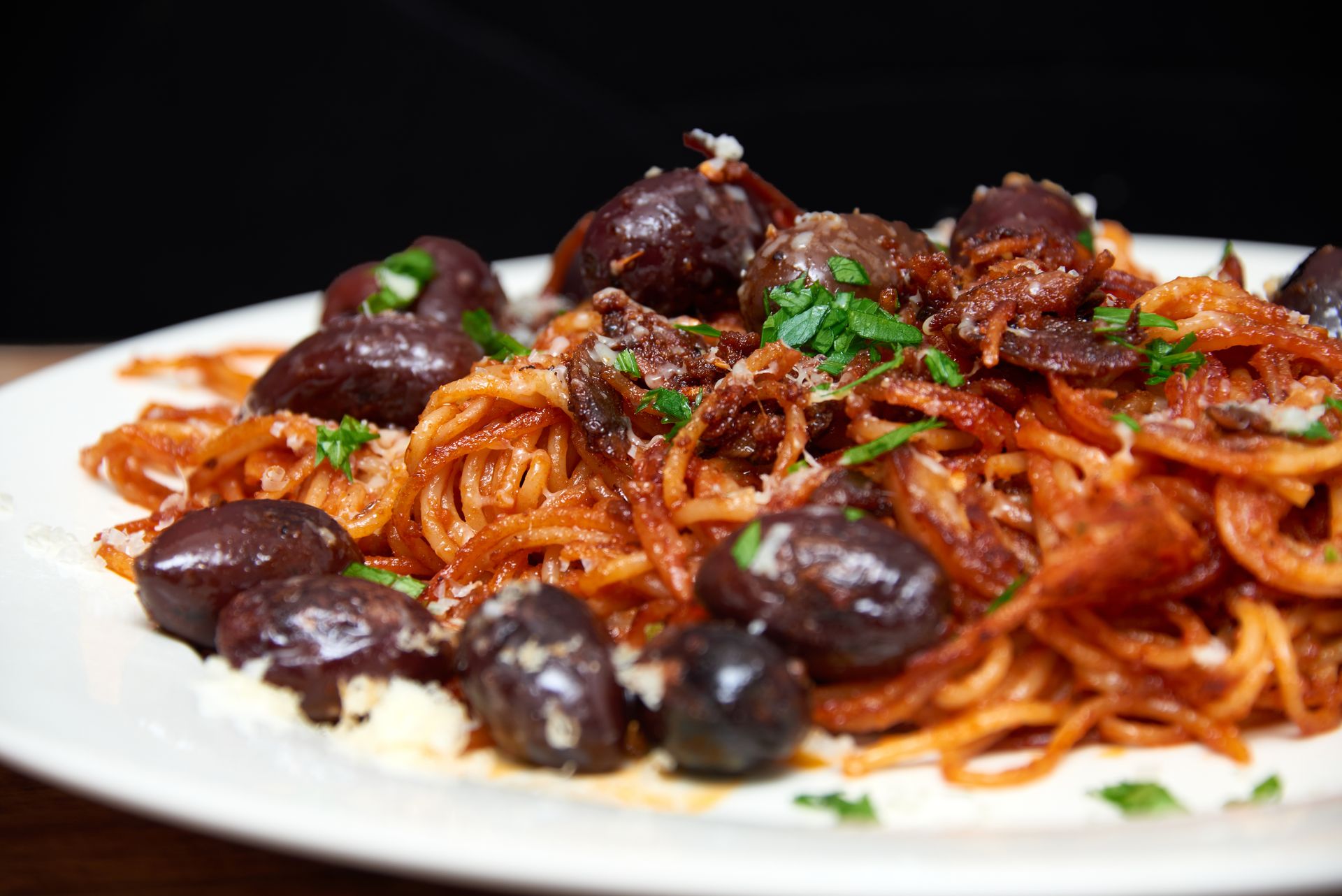
Pasta puttanesca is a southern Italian dish — most strongly associated with Naples — made from canned tomatoes, olive oil, garlic, anchovies, Kalamata or Gaeta olives, capers, and chili flakes. It is fast, deeply savory, and built almost entirely from shelf-stable pantry ingredients, which is one reason it has remained in continuous use since at least the mid-20th century.
The name has a disputed and colorful etymology. Puttanesca derives from the word puttana, meaning prostitute. Several competing explanations exist for the name, none of which is conclusively documented. One story holds that the sauce was invented or popularized in the brothels of Naples, where the intense aroma was used to attract customers. Another credits a mid-20th century restaurant owner in Ischia, Sandro Petti, who allegedly made the dish one night when he had little else in his pantry and a table full of hungry guests. A third explanation suggests the name simply refers to the sauce’s bold, unsubtle character — “in the manner of a whore,” meaning brazen and direct. The food historian Luca Cesari and others have noted that the dish appears in print no earlier than the 1960s, making it a relatively modern creation despite its association with older Italian culinary culture.
The technique is simple. Olive oil is warmed with minced or thinly sliced garlic and anchovies — the anchovies dissolve into the oil within a minute or two, providing a deep umami base without any discernible fishy flavor. Chili flakes go in briefly, then crushed canned tomatoes. After the tomato has cooked down slightly, olives (pitted and halved) and capers (rinsed if salt-packed, drained if brine-cured) are added and simmered for another five to eight minutes. No cheese is served with puttanesca — this is a general Italian rule with fish and seafood-adjacent ingredients.
Spaghetti is the standard pasta. The spaghetti is tossed in the sauce with a splash of pasta water, fresh flat-leaf parsley is added, and the dish is served immediately. It takes about 20 minutes from start to finish, making it one of the fastest serious pasta sauces in Italian cooking.
The balance between salty elements — anchovies, olives, capers — is the key calibration. Salt-packed capers in particular need thorough rinsing, otherwise the sauce tips into briny excess. Taste as you go and adjust conservatively, since the sauce concentrates as it cooks.
Lasagna al forno
Adriano Bragi / Pexels
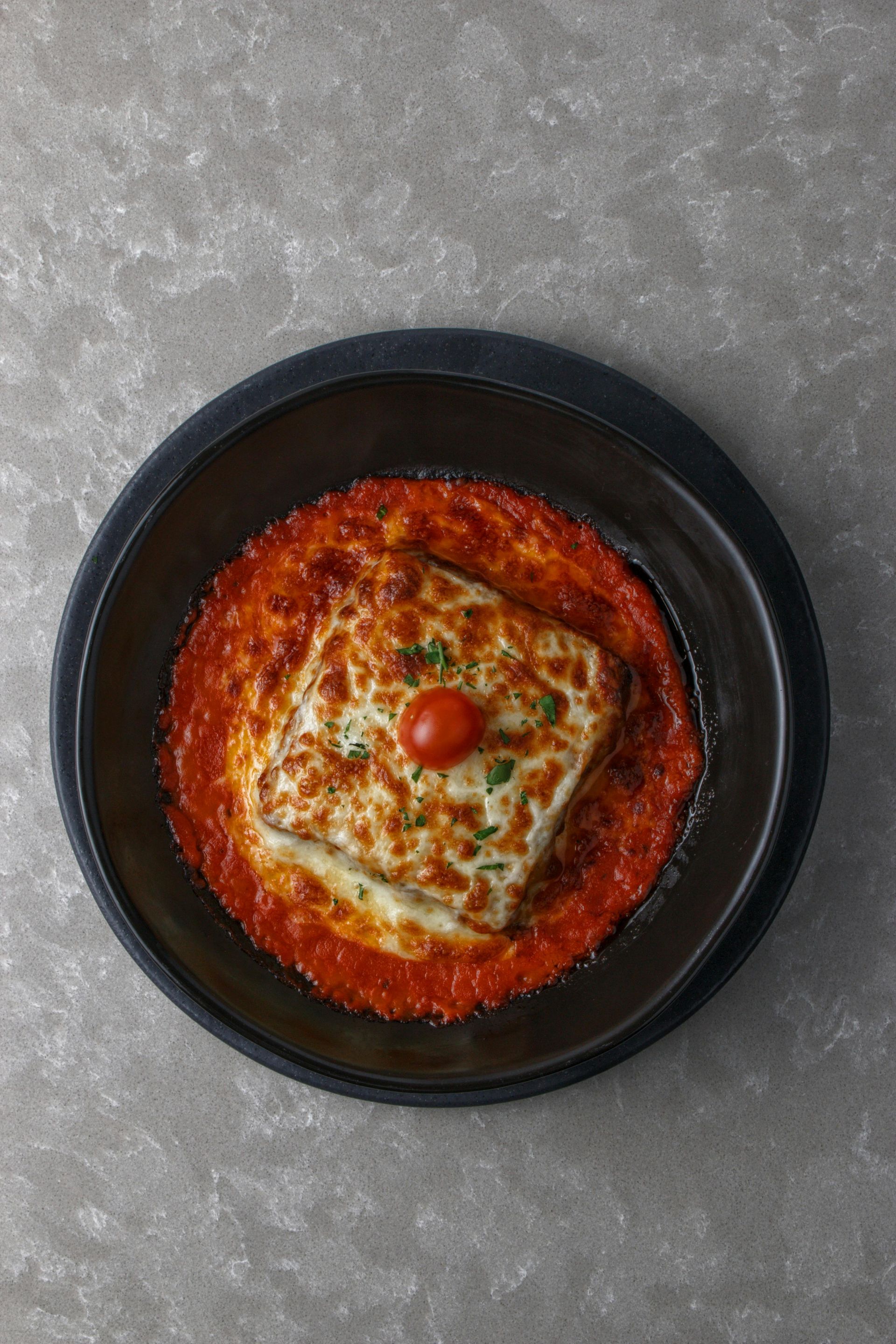
Lasagna al forno is the Emilian version of what the world calls simply “lasagna” — layers of fresh pasta, ragù bolognese, béchamel, and Parmigiano Reggiano, baked until the top is golden and the interior is set but still creamy. It is a dish of extraordinary richness and, properly made, one of the most technically accomplished in Italian cooking.
The foundation is fresh pasta: thin sheets of egg and 00 flour pasta, sometimes made with a small amount of spinach worked into the dough to produce the green pasta associated with Emilia-Romagna’s lasagne verdi. The pasta sheets are blanched briefly in salted water, spread on clean towels, and allowed to dry before assembly. This step removes surface flour and ensures the sheets soften properly during baking without going gummy.
The ragù is the bolognese described elsewhere: meat-forward, lightly tomatoed, long-cooked. The béchamel is made from butter, flour, and whole milk, whisked over heat until thick and smooth, seasoned with salt, white pepper, and a grating of nutmeg. The proportions of béchamel to ragù matter: too much béchamel and the dish becomes muffled and starchy; too little and the pasta dries out. A roughly equal presence of both in each layer is the guide.
Assembly is done in a buttered baking dish: a thin film of béchamel on the bottom, then pasta, ragù, béchamel, Parmigiano, and repeat — typically four to six layers — finishing with pasta, béchamel, and a generous grating of Parmigiano. The baking time is about 40 to 45 minutes at a moderate oven temperature (around 180°C / 350°F), covered for the first half and uncovered for the second to allow the top to brown. The finished lasagna must rest for at least 15 minutes before cutting, otherwise it will slide apart.
The most common shortcut — using dried pasta sheets instead of fresh — produces an inferior result. Dried sheets require more liquid to hydrate and typically produce a tougher texture. No-boil dried sheets are a modest improvement but still lack the delicacy of fresh pasta. The 30 minutes spent making fresh pasta dough is worth it for this dish.
Lasagna al forno is a Sunday-dinner dish in the Emilian tradition, made in large quantities for family gatherings. It improves significantly when reheated the next day, once the layers have fully set and the flavors have had time to meld.
Pasta e fagioli
The Washington Post / Getty Images
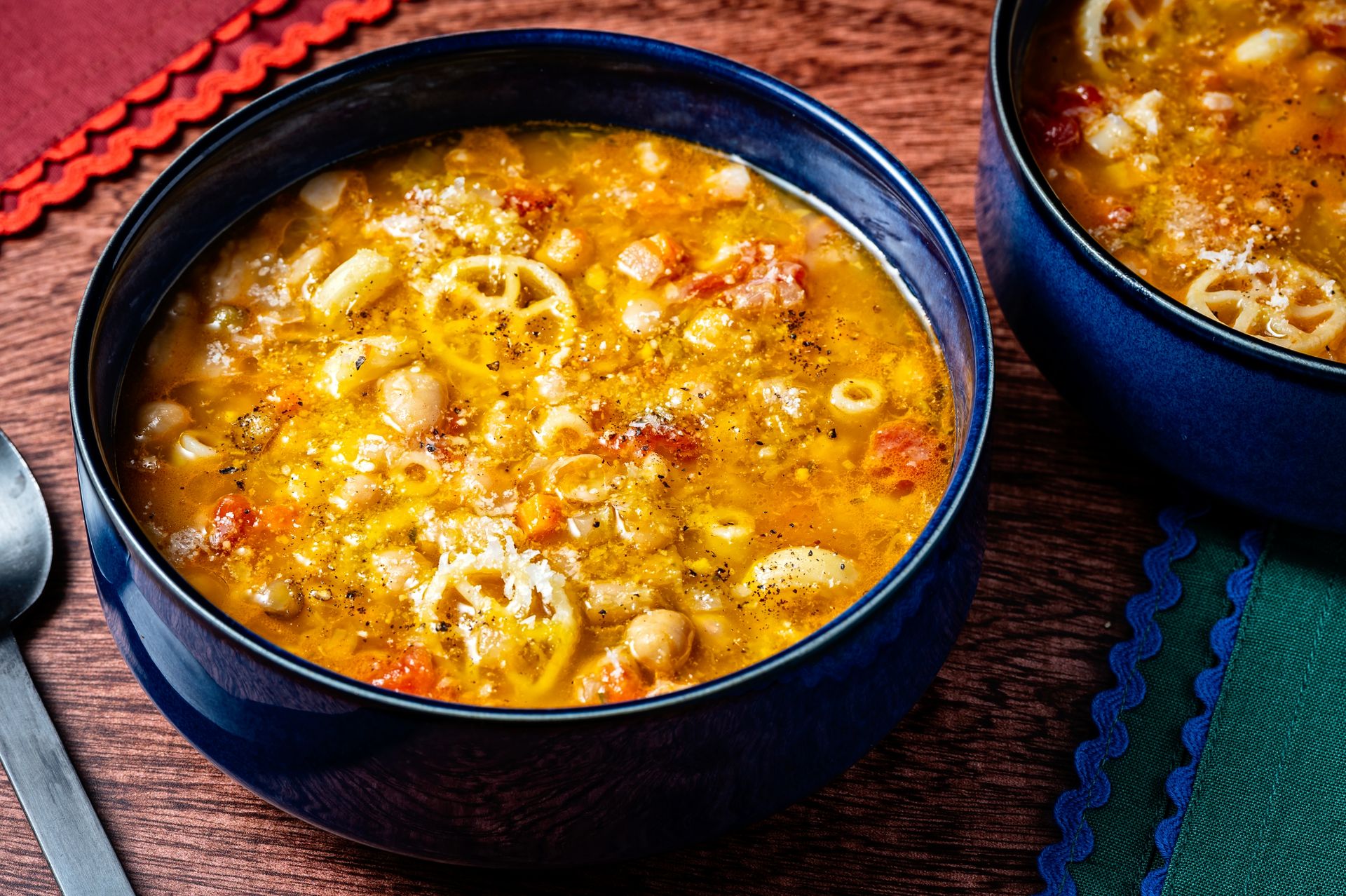
Pasta e fagioli sits at the boundary between pasta dish and soup, and the balance between those two identities shifts by region and cook. In Veneto, it is thick and dense, almost porridge-like, made with borlotti beans and a pasta like ditalini or maltagliati that absorbs so much liquid it becomes inseparable from the beans. In Naples, it is a looser, brothier affair, sometimes made with fresh pasta scraps and a more tomato-forward base. In Lazio, it leans toward the Venetian density. All versions are built on the same principle: dried beans, aromatic vegetables, pork fat of some kind, pasta, and time.
The borlotti bean — speckled pink and cream when fresh, brownish-red when dried — is the traditional choice, though cannellini beans are also common. Dried beans are soaked overnight, then simmered in water until tender. Some cooks add a parmesan rind to the bean-cooking water — the rind releases gelatin, proteins, and fat that enrich the broth considerably without making it taste cheesy.
The soffritto for pasta e fagioli is built on lard or guanciale (or, more commonly now, olive oil), diced onion, carrot, and celery, sometimes with rosemary and a dried chili. Tomato paste or a small amount of canned tomato is added, then the cooked beans with their liquid. About half the beans are then pureed — either with an immersion blender directly in the pot or by passing through a food mill — and returned to the pot. This dual texture, partly smooth and partly chunky, is characteristic of the dish and provides both creaminess and body.
The pasta is added directly to the bean broth and cooked until al dente. Because the pasta continues absorbing liquid as it sits, pasta e fagioli is best eaten immediately, or made with the understanding that it will thicken considerably upon standing. Some cooks cook the pasta separately and add it per bowl to avoid this.
Pasta e fagioli is among the oldest dishes in Italian cooking. Beans and grain — fagioli e grano — were the diet of Rome’s poor and working class for centuries before refined pasta was widely available. The modern dish is a direct descendant of those simple combinations, transformed over time by the addition of tomato, preserved pork, and pasta shapes that arrived in the Italian kitchen at different points in history.
Orecchiette con cime di rapa
Olga Mazyarkina / Getty Images
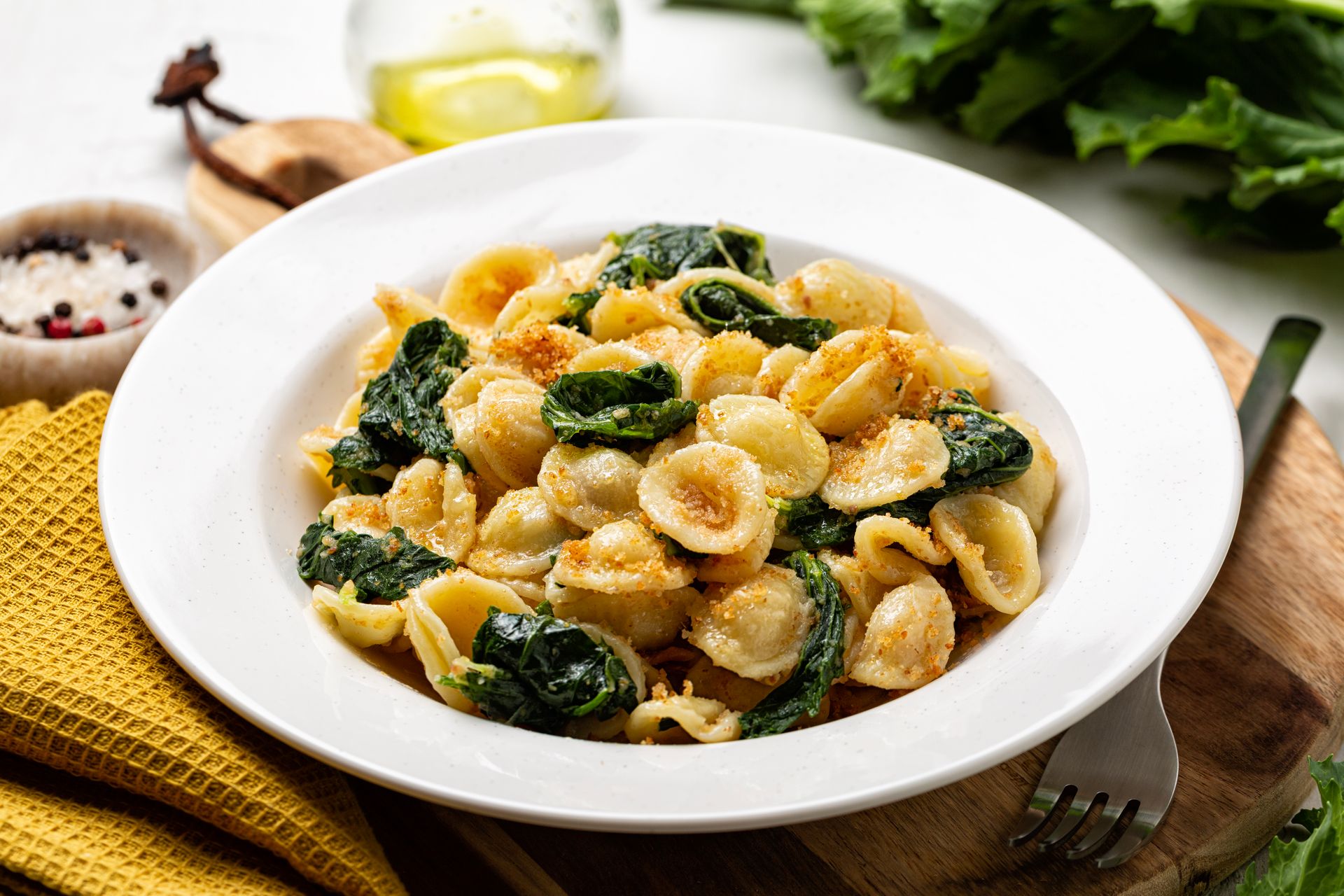
Orecchiette con cime di rapa is the signature dish of Puglia, the heel of Italy’s boot. Orecchiette — “little ears,” shaped by pressing and dragging small pieces of semolina dough across a wooden board with the thumb — are paired with cime di rapa, also called rapini or broccoli rabe: a slightly bitter, leafy brassica that looks somewhat like broccoli but has a more assertive, almost pungent flavor. The bitterness of the greens and the salty richness of the anchovy and olive oil dressing are in deliberate tension, and that tension is what makes the dish interesting.
The dish begins with cime di rapa: the leafy tops and florets are trimmed away from the thicker stalks, though some of the tender stalk is usable. The greens are blanched in salted boiling water — the same pot will be used to cook the pasta — then removed and set aside while the orecchiette cook in the same water, which has absorbed some of the vegetable’s bitterness and color.
The sauce is made in a wide pan: olive oil, thinly sliced garlic, anchovies (which dissolve, as in puttanesca), and dried chili flake. When the anchovies have melted, the blanched cime di rapa goes in and is sautéed briefly until it has wilted further and absorbed the oil. The drained orecchiette are added and tossed together, with pasta water added if needed to keep things fluid. No cheese — this is a southern Italian dish with fish-adjacent ingredients, and cheese is traditionally withheld.
The orecchiette themselves, if made from scratch, are produced from semolina and water only — no egg, no olive oil. The semolina provides the slightly grainy, chewy texture that makes orecchiette distinct from egg-based pasta shapes. In Bari and surrounding areas, women still sit in front of their homes and make orecchiette by hand for sale at market, using the same technique passed down through generations.
The dish is difficult to replicate exactly outside of Puglia because cime di rapa grows best in the cooler months and the specific variety available in Puglia has a more pronounced bitterness than what is typically sold as broccoli rabe in other countries. Blanching the greens twice — or adding a pinch of sugar to the blanching water — can reduce excess bitterness if the rabe available is particularly sharp.
Pasta alla gricia
Carlo A / Getty Images
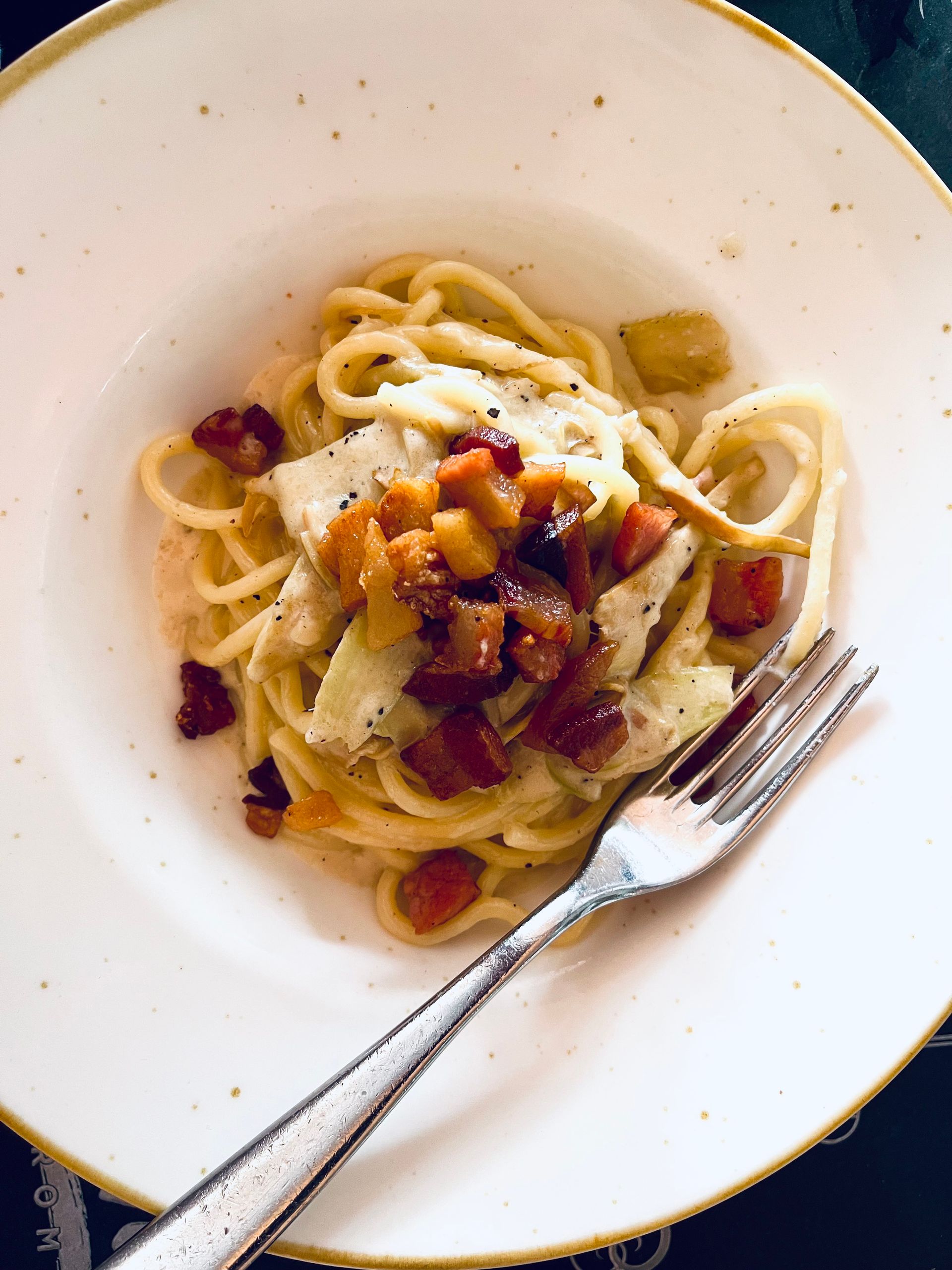
Pasta alla gricia is often called the forerunner of both carbonara and amatriciana — an early form that predates both the egg (in carbonara) and the tomato (in amatriciana). It contains guanciale, Pecorino Romano, black pepper, and pasta, typically rigatoni or spaghetti. It is Rome’s simplest pork pasta, and in many ways the most honest: without egg or tomato to amplify or brighten the flavors, the guanciale and pecorino must carry everything on their own.
The technique follows the same structure as carbonara. The guanciale is rendered in a dry pan until the fat runs clear and the meat crisps at the edges. Some of the rendered fat is poured off — not all of it, but enough so the sauce does not become greasy. Black pepper, coarsely cracked, goes into the pan with the guanciale and toasts briefly in the fat.
The pasta — rigatoni is preferable here because the ridges and hollow tube pick up both the rendered fat and the cheese — is cooked in salted water and added to the pan while still slightly undercooked, along with a ladleful of pasta water. The pasta finishes cooking in the pan while absorbing the pork fat and the starchy water. Off the heat, finely grated Pecorino is added in stages, the pasta is turned constantly, and additional pasta water is added until the cheese forms a creamy emulsified sauce rather than clumping.
The result should look like carbonara without the yellow tint of egg: white-cream-colored, glossy, coating the pasta evenly. The dominant flavors are salt from the pecorino, fat from the guanciale, and heat from the pepper. There is no acidity, no sweetness, nothing to balance the richness except the sharpness of the aged cheese.
Gricia is not a backup dish — it is a first-rank dish that simply happens to have fewer ingredients than its more famous relatives. It is also a useful learning vehicle: mastering the emulsification technique in gricia before attempting carbonara reduces the chance of scrambling the eggs, because the core skill — managing pasta water, cheese, fat, and heat — is identical.
The name is believed to derive from Grisciano, a hamlet near Amatrice. Some food historians trace it to a group of street food vendors in Rome known as grici, who sold pork-based foods from the mountain towns of central Italy. As with most ancient dishes, the etymology is debated and unresolved.
Spaghetti alle vongole
Ensora / Unsplash
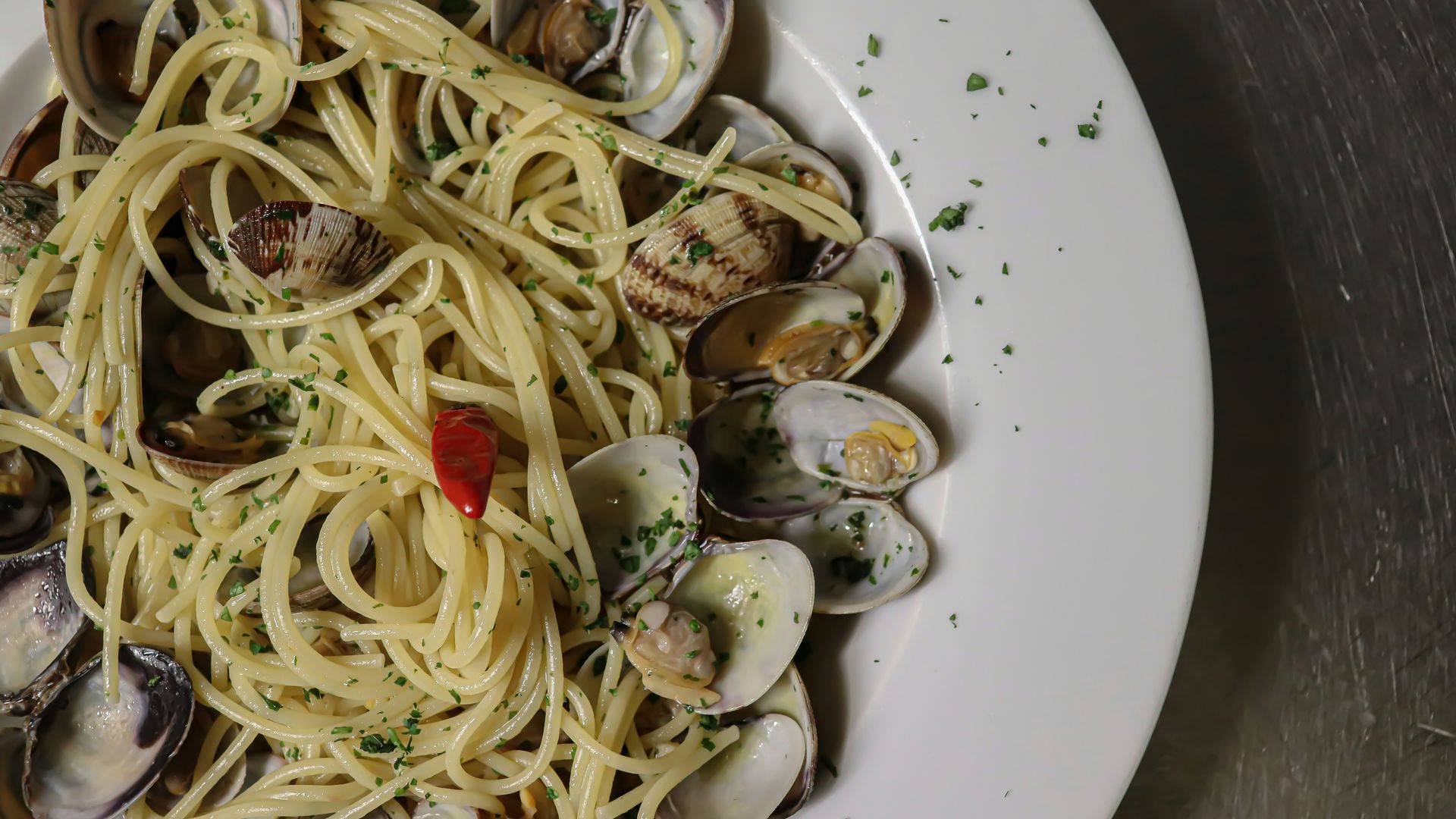
Spaghetti alle vongole — spaghetti with clams — is a Neapolitan classic that comes in two versions: in bianco (without tomato) and in rosso (with tomato). The white version is more widespread and generally considered the purer expression of the dish, allowing the brininess of the clams and the quality of the olive oil and wine to come forward without competition from tomato acidity.
The clams used in Italy are typically veraci — small, sweet, thin-shelled, and intensely flavored. Outside Italy, Manila clams, cockles, or littleneck clams work well. The clams must be purged of sand before cooking: they are soaked in cold, well-salted water for two to three hours, which causes them to spit out any grit they’ve ingested. Attempting to skip this step results in a sandy sauce that is impossible to enjoy.
The cooking is fast. Olive oil and thinly sliced garlic go into a wide, deep pan over medium heat. When the garlic is fragrant, dry white wine — roughly half a glass — is added and allowed to boil off briefly. The clams go in next, the lid goes on, and the pan is shaken every minute or so until all the clams have opened, typically five to seven minutes. Any clam that does not open after eight minutes is discarded.
The clam liquid — which has pooled in the pan — is reduced slightly over high heat while the spaghetti finishes cooking. The spaghetti, strained al dente, goes into the pan with the clams, and everything is tossed together over high heat for a minute, with raw olive oil drizzled in to enrich the sauce. Flat-leaf parsley and chili flakes finish the dish.
The rosso version adds crushed canned tomatoes — or halved cherry tomatoes — after the garlic and before the wine, cooking the tomato down briefly before the clams are added. It is a sharper, more rustic variation that pairs better with stronger-flavored clams.
No cheese is served with vongole. In Italian cooking, cheese with fish or seafood is considered a category error — the salty sharpness of Pecorino or Parmigiano works against, not with, the briny sweetness of the clams.
Pasta al limone
Kelsey Curtis / Unsplash
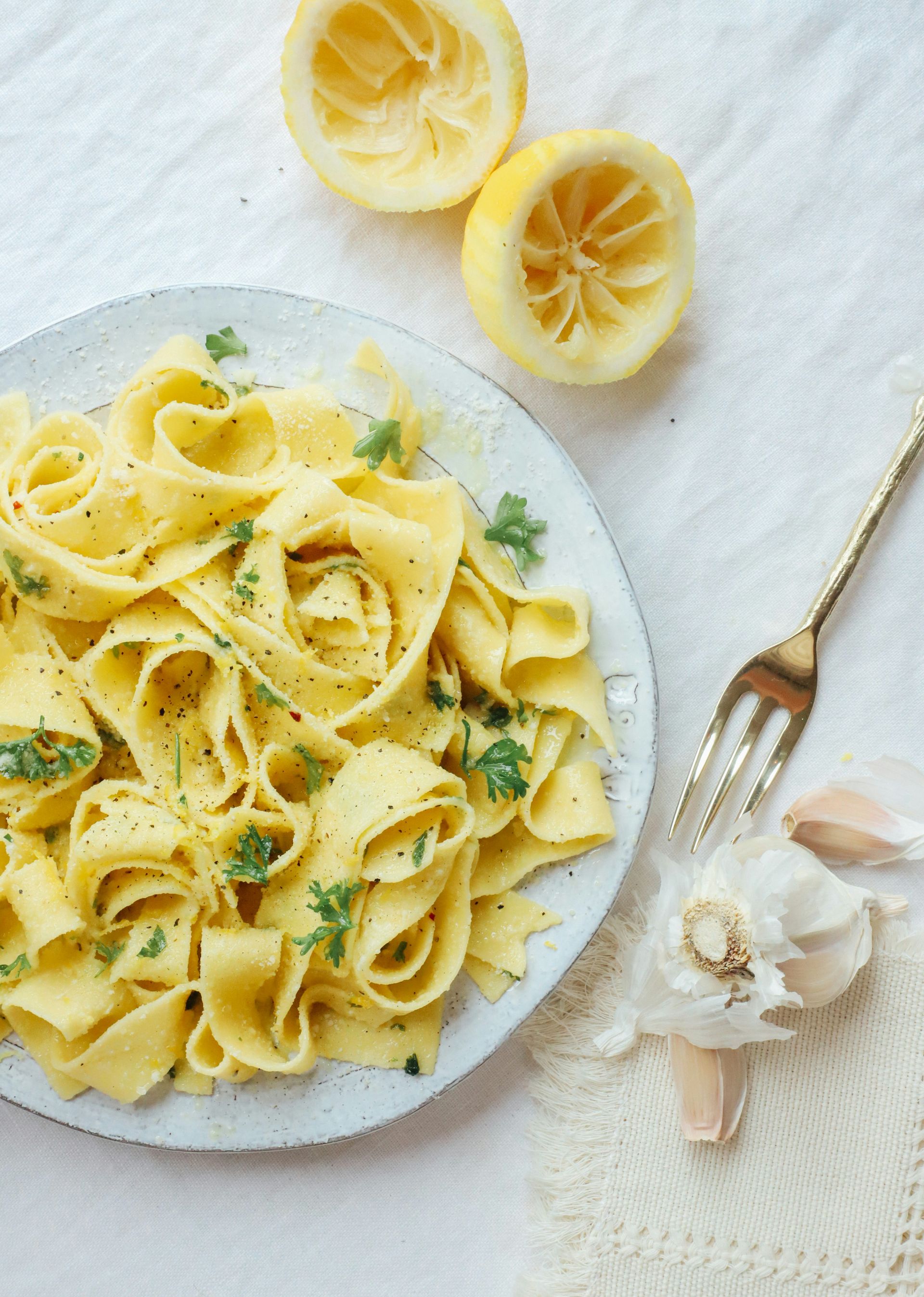
Pasta al limone is a dish of the Amalfi Coast, where the lemons grown on terraced hillsides above the sea are among the most intensely perfumed in the world — large, thick-skinned, and so sweet that they can be eaten like oranges. The Amalfi lemon (sfusato amalfitano) has a DOP designation, and the region’s lemon industry is woven into its identity. The pasta named for it is a direct reflection of that place: clean, bright, and built on the flavor of one exceptional ingredient.
The base of pasta al limone is butter, heavy cream, and lemon zest — though versions vary. A strictly Neapolitan approach uses only zest, olive oil, and Parmigiano, without cream; the Amalfi coast version tends toward the richer style. Either way, the lemon is the point: not just a squeeze of juice added at the end, but zest worked into a sauce in which it can bloom.
The pasta is typically spaghetti or linguine, though short pasta like rigatoni also works. The sauce is built in the pan while the pasta cooks: butter is melted over low heat, lemon zest is added and allowed to warm in the butter for two to three minutes without browning (heat releases the oils in the zest without burning them), then a splash of pasta water and a small amount of cream, if using, is added and whisked together. Parmigiano Reggiano goes in off the heat. The drained pasta is tossed through the sauce, more pasta water added for consistency, and served immediately with additional zest over the top.
The lemon must be unwaxed if the zest is to be used. Commercial lemons are often coated in food-grade wax to extend shelf life and improve appearance; the wax is not pleasant to eat and dulls the zest’s flavor. Unwaxed lemons should be scrubbed briefly under hot water before zesting regardless.
Pasta al limone is a summer dish — light enough for warm weather, quick enough for a weeknight, and dependent on the season for its best version. In winter, good-quality preserved lemon zest, or particularly bright-flavored Meyer lemons, can approximate the result.
Rigatoni all’arrabbiata
Snappr / Pexels
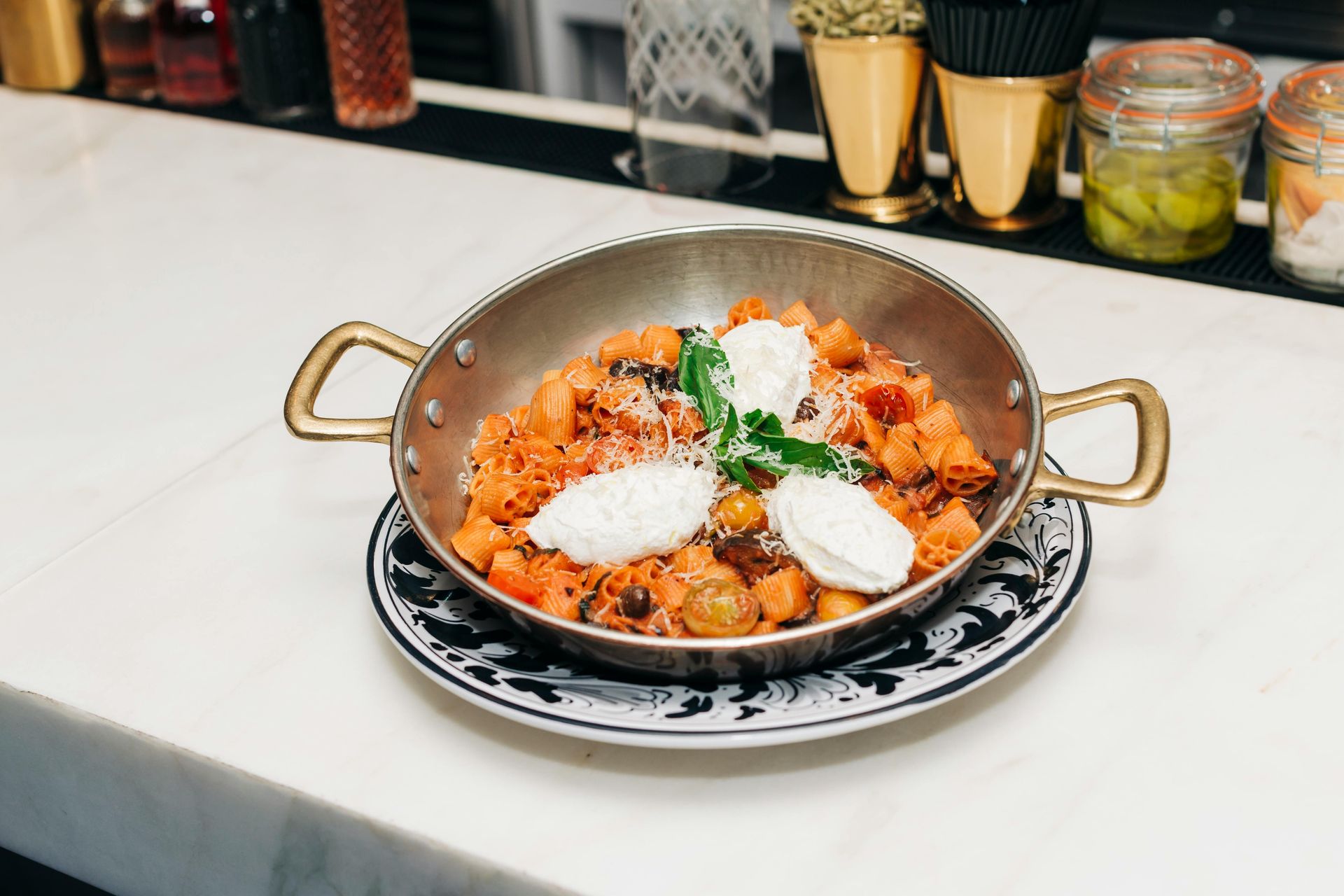
Arrabbiata means angry in Italian, and the name refers to the heat of the sauce: a spicy tomato preparation made from olive oil, garlic, dried chili, and canned tomatoes — nothing else. It is a Roman dish, fiercely simple, with no meat, no cheese at the table (some Romans forgo cheese entirely; others use Pecorino Romano in small quantities), and no softening elements. The heat is the point.
The technique is quick and direct. Olive oil, sliced or minced garlic, and a generous quantity of dried peperoncino — more than you think necessary — go into a pan over medium heat. The garlic is cooked to golden-brown at the edges, which is a departure from most Italian pasta sauces where garlic stays pale: arrabbiata likes the slightly bitter, roasted quality of more deeply colored garlic. Crushed canned tomatoes are added and simmered for 15 to 20 minutes until the sauce is thick and concentrated. No water, no stock, no wine — the tomatoes provide the only liquid.
Rigatoni is the traditional pasta, and the choice is practical: the ridges and hollow tube of rigatoni trap the thin, oily sauce inside and on the exterior, delivering more sauce per bite than spaghetti or penne. Penne all’arrabbiata is also widely made, and the dish was historically served on rigatoni in Rome and on penne in other regions.
The level of heat in arrabbiata is a point of personal and regional calibration. Some versions are mildly warm. Some are genuinely fiery. The correct approach is to use enough chili that the heat builds as you eat — not a single sharp hit, but a cumulative warmth that accompanies each bite.
Flat-leaf parsley is the only garnish, stirred in at the end. If cheese is used — Pecorino Romano, finely grated — it is applied in modest quantity. The cheese and chili contrast is good; too much cheese muffles the heat and changes the character of the dish.
Arrabbiata is a Rome weeknight staple for good reason: it takes 20 minutes, requires nothing perishable, and tastes better with intensity than with restraint.
Pasta con le sarde
beingbonny / Getty Images
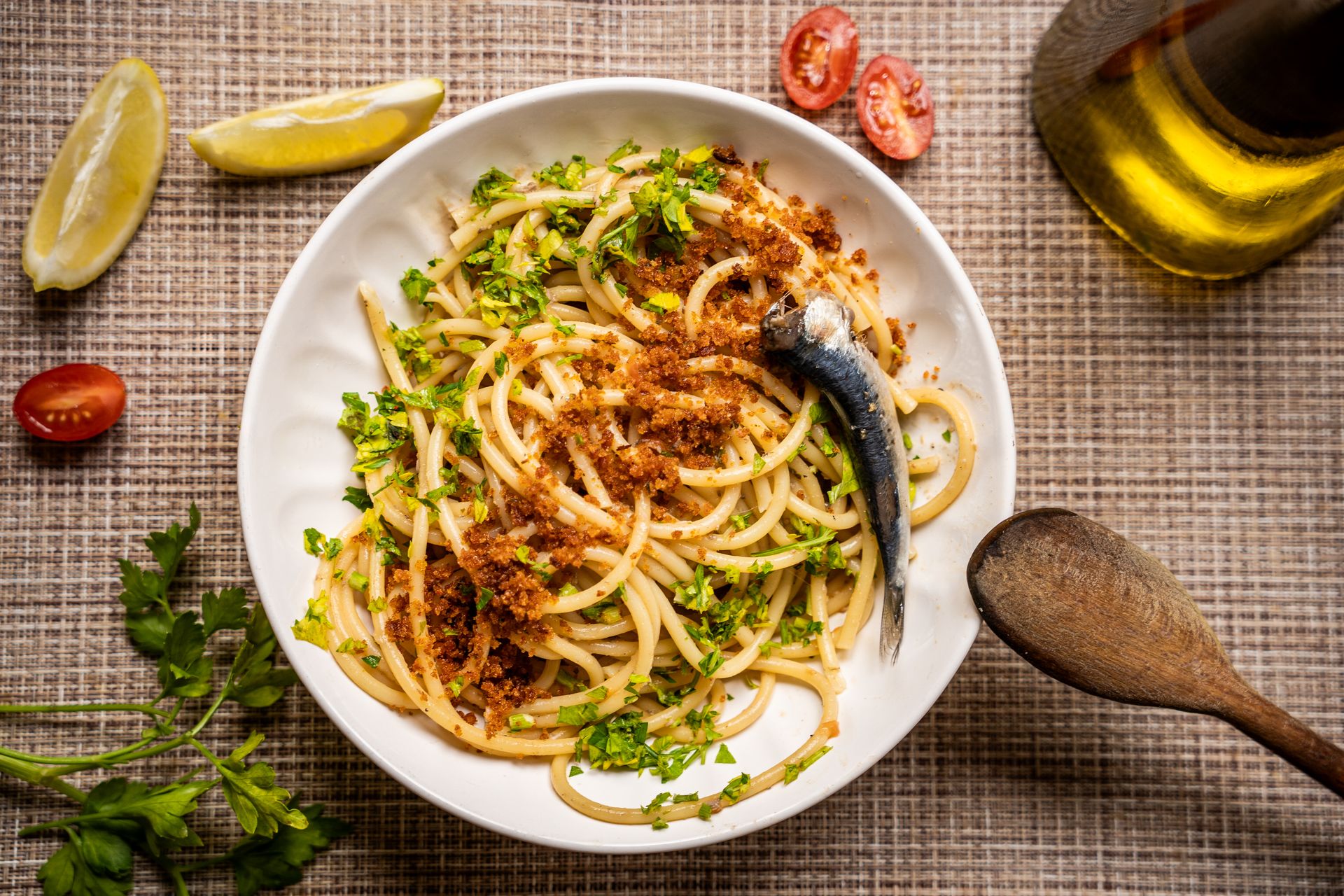
Pasta con le sarde is a Sicilian dish of extraordinary depth and complexity — one of the island’s most celebrated preparations and a clear expression of its Arab-influenced culinary history. The sauce combines fresh sardines, wild fennel fronds, saffron, pine nuts, golden raisins, and breadcrumbs (toasted in olive oil, called pangrattato) with pasta, typically bucatini or perciatelli. Sweet and savory, soft and crunchy, delicate and pungent: this dish is full of contrasts that make it unlike anything else in the Italian repertoire.
The Arab influence on Sicilian cooking arrived with the occupation of the island from the 9th to the 11th centuries, and it is most visible in the sweet-savory combinations that characterize many Sicilian dishes: citrus with meat, dried fruit with fish, sweet spice with savory stew. The raisins and pine nuts in pasta con le sarde are direct descendants of Arab agrodolce traditions. Saffron, used in small amounts, adds a floral depth and golden color that further reflects this heritage.
Fresh sardines are cleaned, filleted, and gently sautéed in olive oil until just cooked through; they break apart naturally in the pan and meld into the sauce. Wild fennel fronds — available in the Sicilian spring and used both in the sauce and in the pasta blanching water — give the dish a distinctive anise note. Cultivated fennel bulb fronds can substitute when wild fennel is unavailable, though the flavor is less intense.
The sauce is assembled in layers: softened onion, saffron (bloomed in warm water), sardines, raisins, and pine nuts are combined and briefly cooked together. The bucatini is cooked in salted water that has been infused with wild fennel, drained, and tossed through the sauce. Toasted breadcrumbs are scattered over each portion — they add texture that echoes what grated cheese would provide, and in Sicily, pangrattato with fish is traditional where cheese with fish is not.
Pasta con le sarde is most commonly made in Palermo and western Sicily, where sardines from the surrounding sea are still plentiful. The best version uses sardines caught and used the same day. Outside of Sicily, the dish requires some ingredient hunting, but the effort produces a sauce with no close equivalent in Italian cooking.
Bigoli in salsa
Dietmar Rauscher / Getty Images
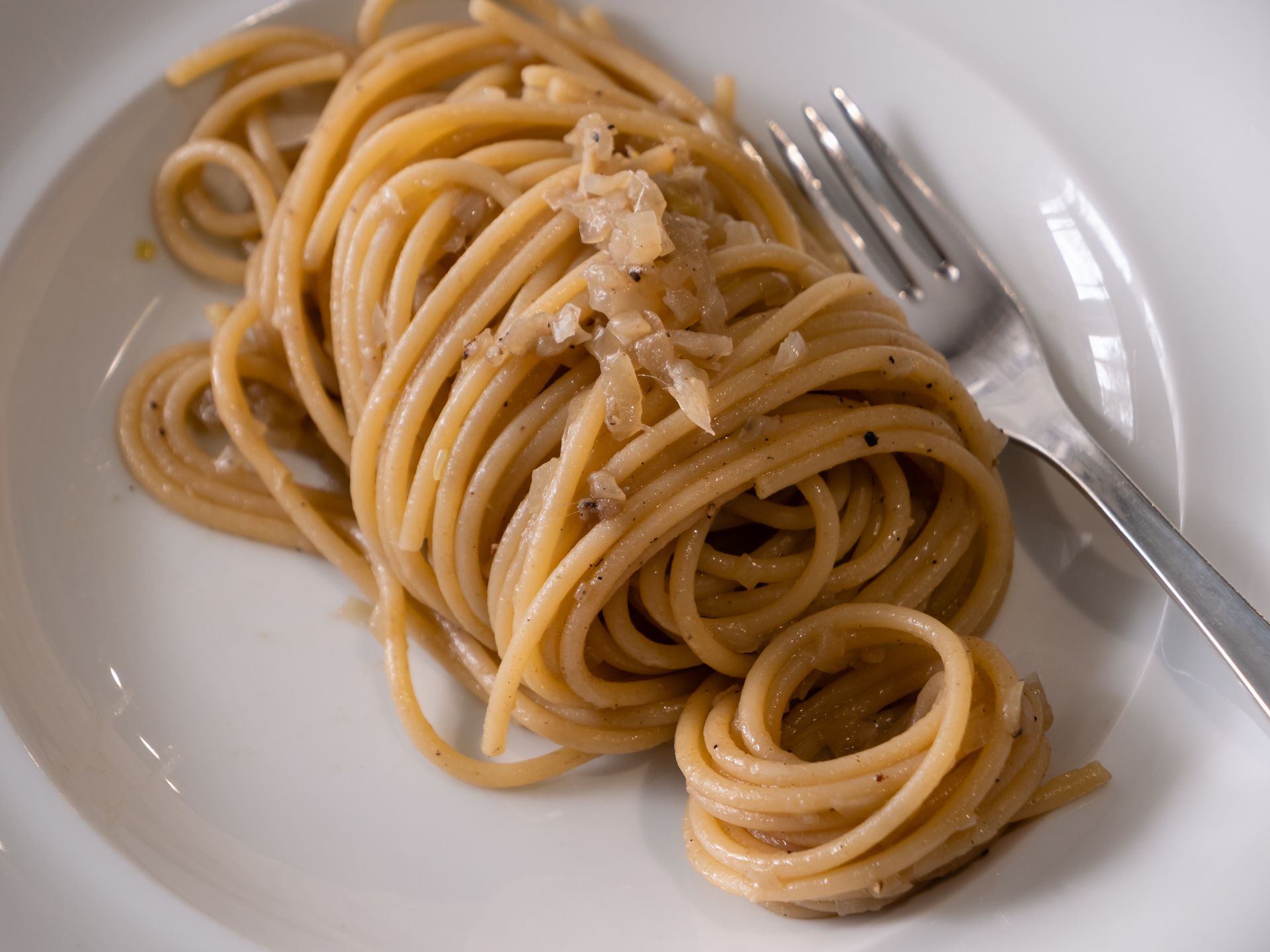
Bigoli in salsa is a Venetian pasta dish of ancient simplicity: thick, whole-wheat pasta (bigoli) dressed in a sauce made from slowly cooked salted anchovies and onions. That is the entire dish. It is typically eaten on lean days in the Catholic calendar — Ash Wednesday, Good Friday, Christmas Eve — when meat was traditionally forbidden, and it has been a fixture of Venetian home cooking for centuries.
Bigoli are a Venetian pasta made from whole-wheat or buckwheat flour and egg, extruded through a device called a bigolaro into thick, rough-surfaced spaghetti-like strands. The rough texture is essential to the dish: the sauce, which is thin and intensely flavored, clings to the surface texture of the bigoli in a way it would not adhere to smooth pasta. Outside the Veneto, bigoli can be made at home with a pasta extruder or approximated with whole-wheat spaghetti, which has a coarser texture than refined-flour pasta.
The sauce requires patience. White or golden onions — a substantial quantity, typically one large onion per serving — are sliced thin and cooked in olive oil or butter over very low heat for 40 to 50 minutes, until completely soft, translucent, and sweet. They should not brown or caramelize; the goal is dissolution, not Maillard reaction. Salted whole anchovies, rinsed and filleted (or a generous amount of oil-packed anchovy fillets), are added to the onions in the last 10 minutes and stirred until they dissolve entirely into the sweet onion mass. A small amount of white wine is often added with the anchovies.
The result is a sauce that is simultaneously sweet, salty, and savory — deeply umami without any perceptible fishiness. The fish-averse are often surprised by how little the sauce tastes of anchovy and how much it tastes of something indistinct but compelling.
Bigoli in salsa is served without cheese, without garnish beyond a thread of olive oil, and in Venice is sometimes accompanied by a small glass of white wine from the Veneto — a Soave or Garganega — which balances the sweetness of the onions.
Pasta con funghi porcini
Deane Bayas / Pexels
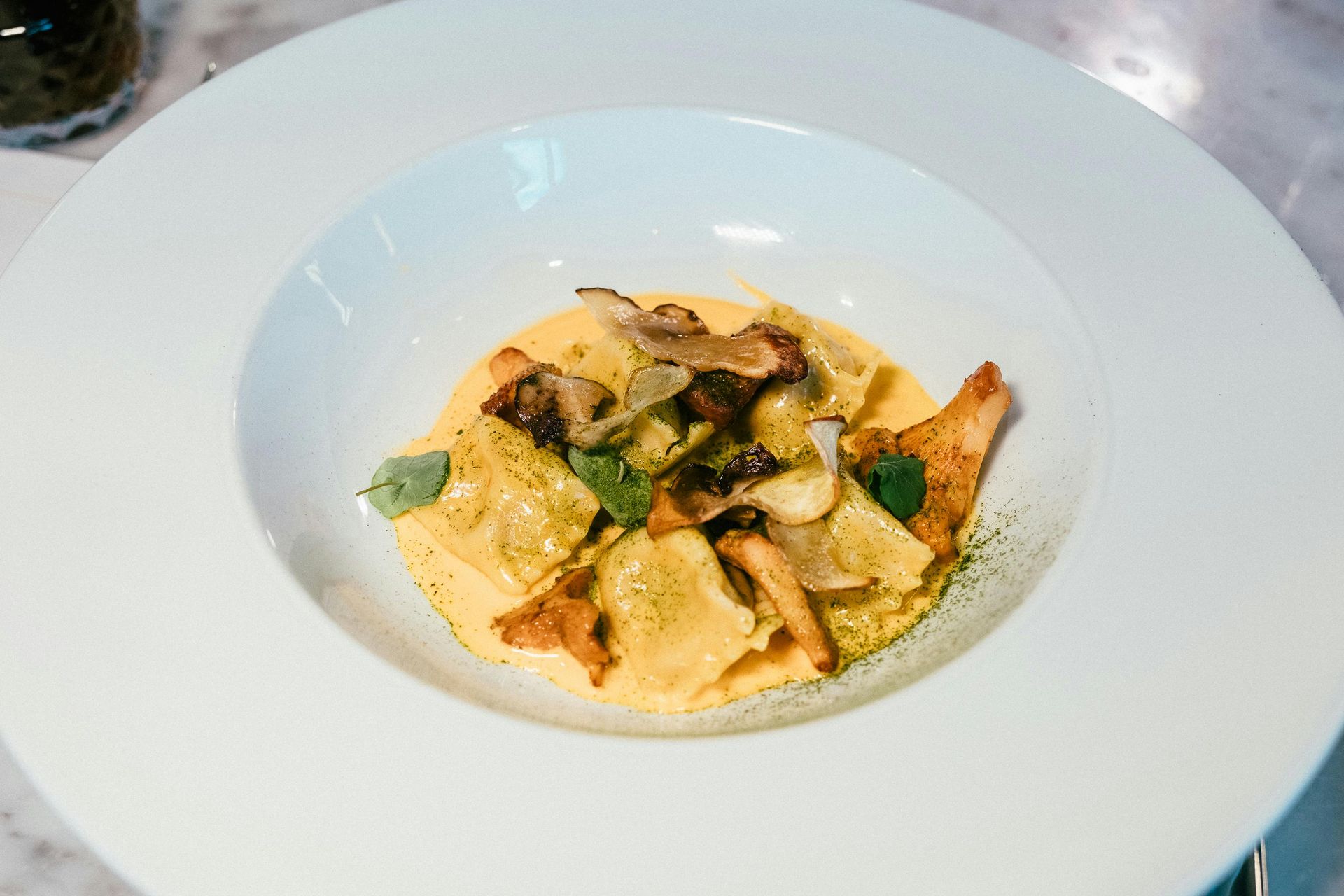
Pasta with porcini mushrooms is one of the great autumn dishes of Italian cooking, made when fresh porcini (Boletus edulis) appear in the forests of the Apennines, the Alps, the Dolomites, and the woods of Tuscany and Umbria from late summer through October. Porcini are valued for their dense, meaty texture and their intensely savory, earthy flavor — a concentration of umami that is almost meat-like in its depth.
The preparation is simple precisely because the mushroom is exceptional. Fresh porcini are cleaned with a dry brush (never washed in water, which causes them to absorb moisture and lose flavor), sliced, and sautéed in olive oil or butter with garlic and fresh thyme until golden. The sautéing must happen over high heat, in a pan that is not crowded: crowding causes the mushrooms to steam in their own moisture rather than brown, eliminating the flavor concentration that makes them worth using.
Pasta for porcini is typically tagliatelle — fresh egg pasta wide enough to support the mushroom pieces and absorb the butter and juices — or a short pasta like pappardelle or rigatoni. Parmigiano Reggiano or Pecorino Romano is grated over the finished dish. A handful of finely chopped flat-leaf parsley is added at the end.
Fresh porcini are seasonal and genuinely irreplaceable at their best. The dried version — available year-round — is a reasonable substitute and, when properly reconstituted, delivers concentrated flavor. Dried porcini are soaked in warm water for 20 to 30 minutes; the soaking liquid, strained through a fine sieve to remove grit, is added to the pan as the sauce develops. This enriches the sauce considerably. The reconstituted mushrooms should be squeezed dry before being added to the pan.
A combination of dried porcini for flavor intensity and fresh cremini or shiitake mushrooms for texture is a practical approach in areas where fresh porcini are unavailable. The result does not equal fresh porcini but is substantially better than dried porcini alone.
Fettuccine Alfredo
Engin Akyurt / Pexels
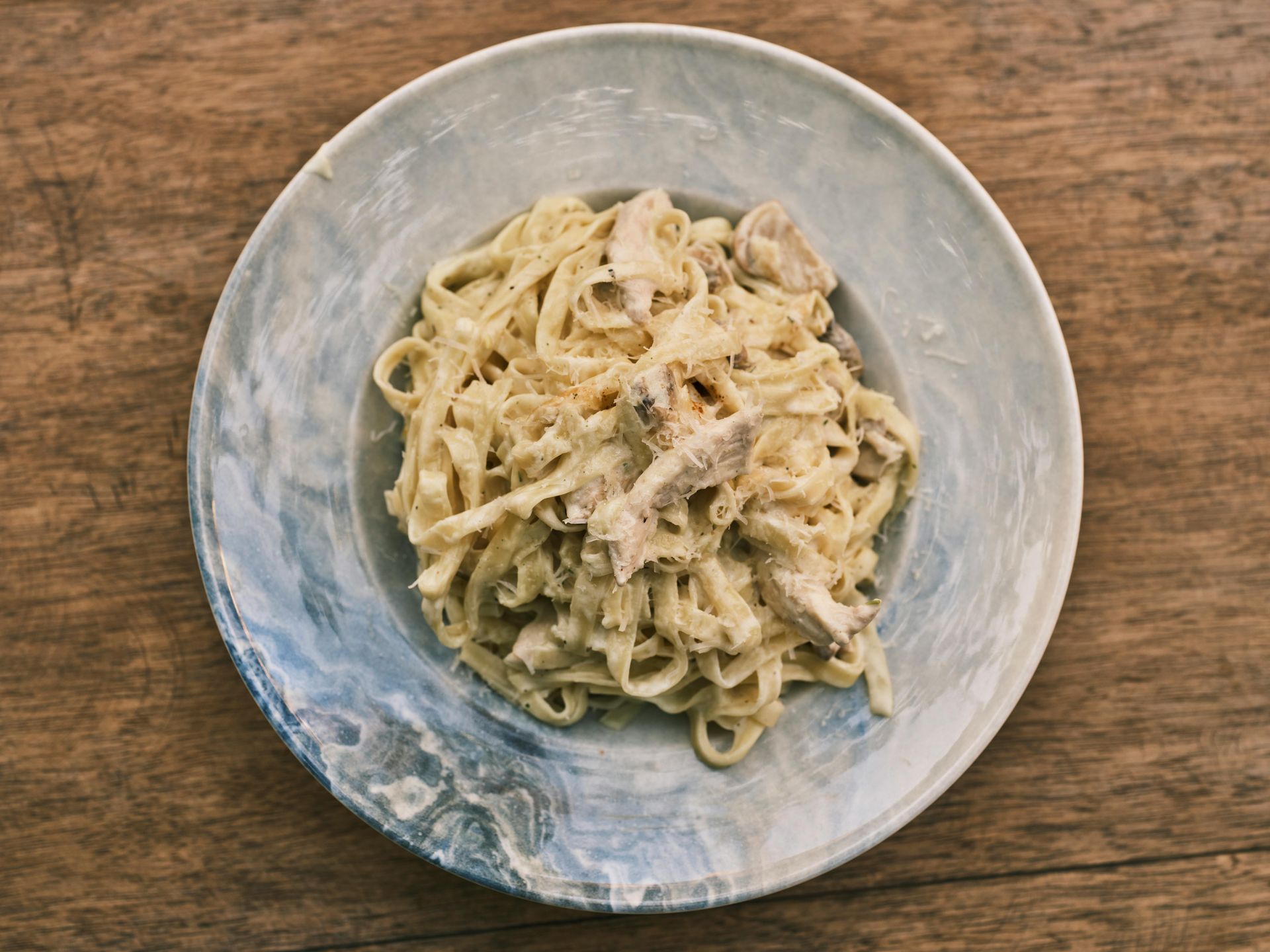
Fettuccine Alfredo has a clear documented origin: it was invented by Alfredo di Lelio at his restaurant in Rome around 1907 or 1908. The original dish was made for his wife, who was recovering from childbirth and had lost her appetite. He dressed freshly made fettuccine with an extravagant quantity of Parmigiano Reggiano and butter, tossed tableside until the cheese and butter emulsified into a creamy sauce, and served it to her. She ate it. He put it on the menu. Two decades later, American film stars Douglas Fairbanks and Mary Pickford visited Rome, ate the dish at his restaurant, and brought the recipe back to the U.S., where it became enormously popular.
The dish that bears Alfredo’s name in the U.S. — cream-based, often with added chicken, shrimp, or broccoli — is a significant departure from the original. The Roman version contains only three ingredients: fresh egg fettuccine, Parmigiano Reggiano (aged at least 24 months, finely grated to a powder), and unsalted butter (at room temperature, of high quality). No cream, no garlic, no herbs, no protein additions.
The technique is the dish. The butter is placed at the bottom of a warm serving bowl. The freshly cooked fettuccine is drained and immediately placed in the bowl on top of the butter. Finely grated Parmigiano is added generously, and the pasta is tossed with tongs, lifting and folding, while pasta water is added a tablespoon at a time. The butter softens in the heat, the Parmigiano dissolves into it, and the starchy water binds them together into a glossy, continuous emulsion that coats every strand.
Temperature is everything. The bowl should be warm — chilled serving dishes cause the butter to seize and the sauce to separate. The pasta water should be used while hot, not after it cools. Movement must be continuous until the emulsion is achieved.
Freshly made pasta is essential. The delicacy of the sauce requires a pasta with some give — dried pasta produces a texture too firm for this dish to feel right.
Pasta al forno
fahrwasser / Magnific
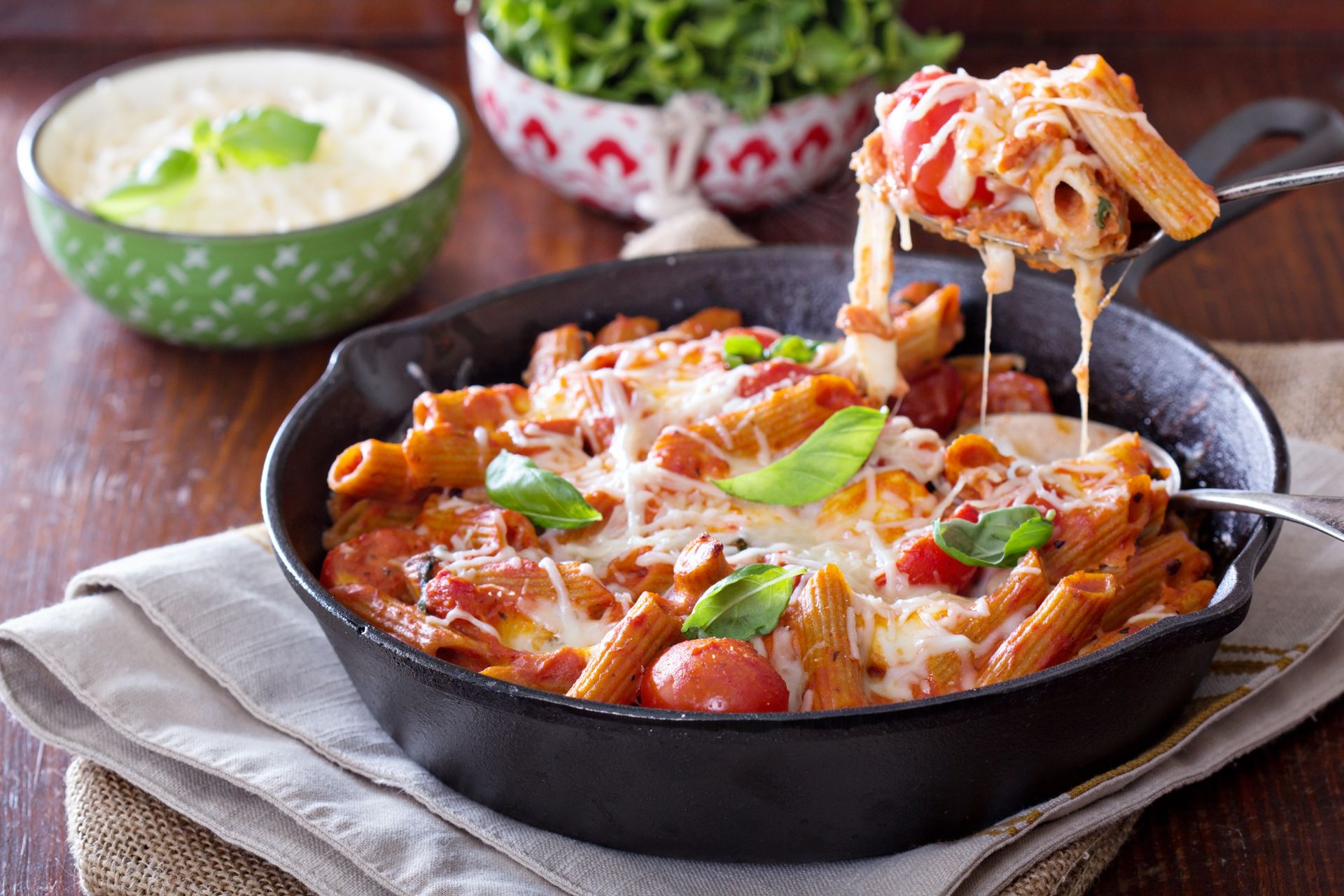
Pasta al forno — baked pasta — is less a single recipe than a category of dish found across Italy, each region producing its own version. In Sicily, it might be maccheroni baked with ragù, fried eggplant, hard-boiled eggs, salame, and a layer of béchamel — a grand preparation for Sunday lunch. In Naples, it could be ziti broken and layered with meat sauce, smoked provola cheese, and meatballs. In Emilia-Romagna, it is the lasagna described separately. What these dishes share is the concept of pasta baked in a casing until the exterior crisps and the interior sets into something you can cut into portions.
The Neapolitan version — pasta al forno napoletana, sometimes called ziti al forno — is one of the most elaborate and satisfying. Ziti are broken into shorter pieces and parboiled, then combined with a tomato-based ragù, small meatballs cooked separately, cubed smoked provola or mozzarella, hard-boiled eggs, sliced Neapolitan salame, and Parmigiano. The mixture goes into a baking dish, is finished with a layer of the tomato sauce and a generous grating of Parmigiano, and baked until bubbling and slightly charred at the edges.
The Sicilian version — anelletti al forno — uses ring-shaped pasta (anelletti) rather than ziti and adds fried eggplant and peas to a similar composition of ragù, cheese, and egg. The assembled dish is sometimes cooked inside a layer of eggplant slices that form a crust around the exterior, making it a self-contained savory cake when unmolded.
Both versions improve considerably when rested after baking — 15 to 20 minutes minimum, an hour ideally. This allows the filling to set and the flavors to distribute. Cutting into pasta al forno immediately after it leaves the oven produces a sloppy mess; patience produces clean, distinct portions.
Pasta al forno is a make-ahead dish by nature, assembled the day before and refrigerated, then baked when needed. The extra time does not diminish it. In most cases, it improves the flavor and simplifies the day-of effort.
Pasta alla sorrentina
Olga Mazyarkina / Getty Images
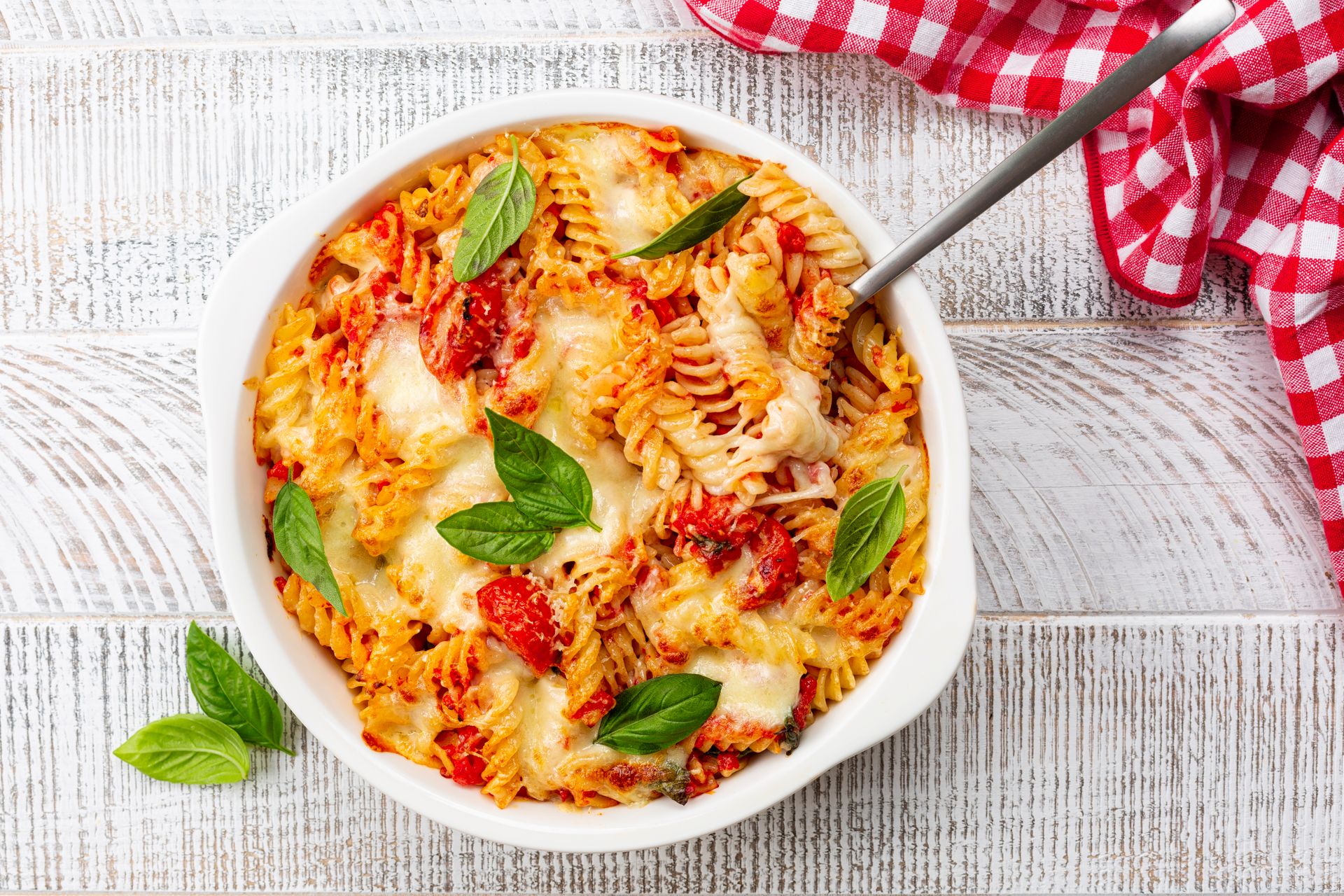
Pasta alla sorrentina is a dish from Sorrento, the clifftop town on the southern edge of the Bay of Naples, made with rigatoni or paccheri, a simple tomato sauce, fresh mozzarella, and basil. It is finished in the oven or under the broiler until the mozzarella melts and the sauce bubbles at the edges. It is close to pizza in its combination of flavors — tomato, mozzarella, basil — and is similarly straightforward.
The tomato sauce is made quickly: olive oil, garlic, canned San Marzano tomatoes or fresh summer tomatoes, basil leaves, salt, and a brief simmer of 15 to 20 minutes until reduced. The pasta is cooked al dente in salted water, since it will continue cooking in the oven. Mozzarella — either fresh fior di latte (cow’s milk mozzarella) or buffalo mozzarella — is cut into cubes and either stirred through the pasta off the heat or layered through the dish before baking.
The key technical consideration is moisture management. Fresh mozzarella contains substantial water, which releases during cooking and can dilute the sauce. Cutting the mozzarella well in advance and allowing it to drain on a clean towel removes surface moisture and reduces this problem. Some cooks use the drier fior di latte specifically for cooked applications, reserving the more delicate buffalo mozzarella for uncooked preparations where its texture and flavor can be appreciated.
Pasta alla sorrentina is frequently made as an individual dish — baked in small terracotta pots (cocottine) that are brought directly to the table. The sealed container retains heat and allows the cheese to melt evenly. A single cocottina is a common starter in Sorrentine restaurants.
Paccheri — very wide, smooth tubes, a Neapolitan pasta shape — work particularly well for this dish. Their large diameter allows mozzarella to melt inside the tube as well as around it, creating concentrated pockets of cheese. Rigatoni is more practical for home cooking since it cooks faster and is easier to find.
Pasta con 'nduja
ChiccoDodiFC / Getty Images
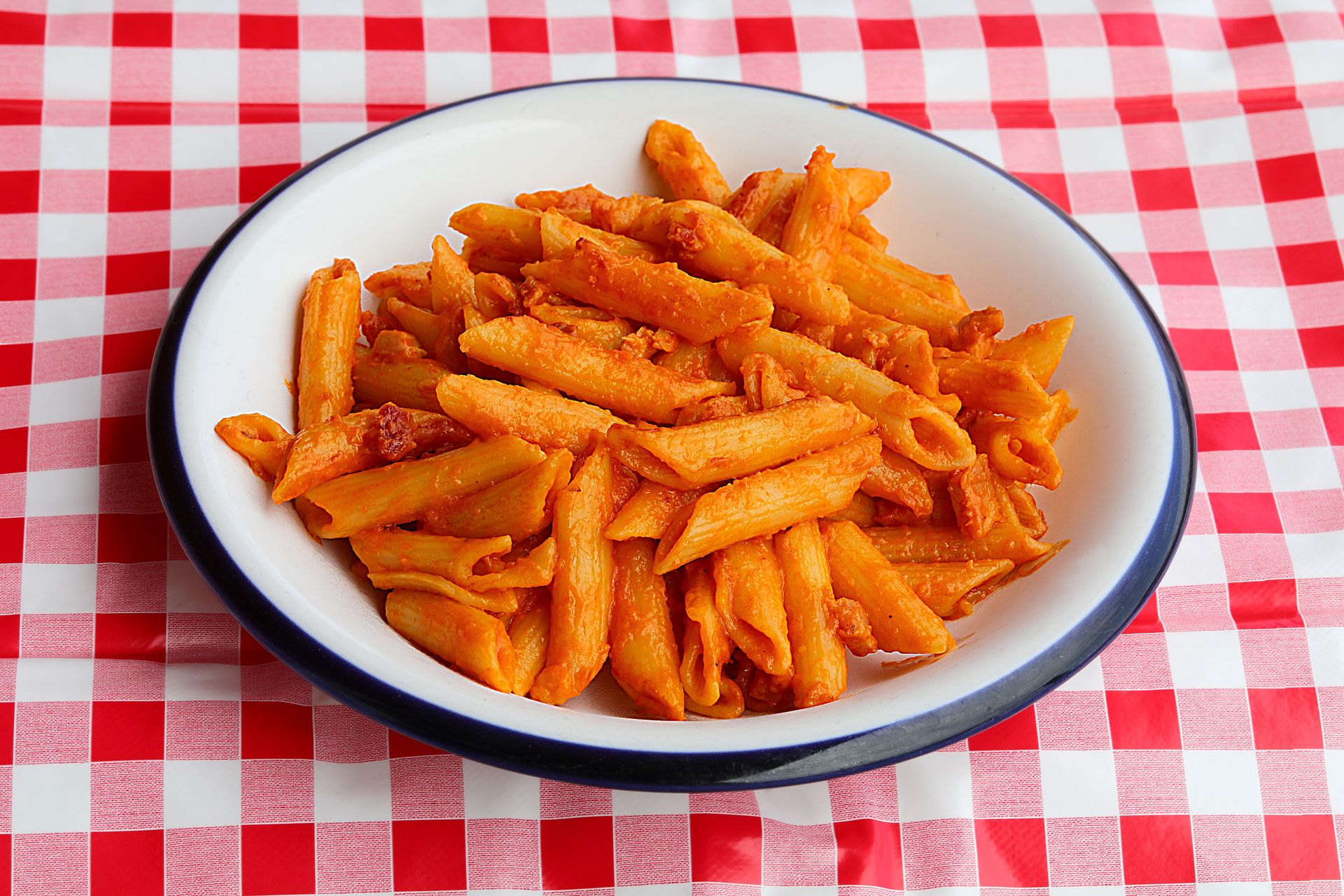
'Nduja (pronounced en-DOO-yah) is a spreadable, fiery Calabrian pork salame made from the meat and fat of the pig combined with a large quantity of Calabrian chili — the ratio of chili to meat is high enough that the sausage is red-orange in color and assertively hot. It originates from the town of Spilinga in Calabria, Italy’s southernmost mainland region, and has become one of the most widely exported southern Italian food products of the past decade.
When cooked, 'nduja melts completely into whatever fat or liquid surrounds it, releasing its chili oil and pork fat into the sauce. This makes it uniquely suited to pasta: a tablespoon or two stirred into a warm pan releases enough fat and flavor to sauce an entire portion.
The most common pasta preparation is direct and fast: a small amount of olive oil, one or two crushed garlic cloves, and a generous spoonful of 'nduja go into a pan over medium heat. The 'nduja dissolves into the oil within two minutes, creating an orange, fragrant fat. Crushed canned tomatoes are added, the sauce is simmered for 15 minutes until concentrated, and the pasta — typically rigatoni, spaghetti, or paccheri — is tossed through. Finely grated Pecorino Romano and fresh parsley finish the dish.
Variations include the addition of burrata or fresh ricotta at the end, which counteracts the heat of the 'nduja with creamy coolness. A popular version pairs 'nduja with bivalves — clams or mussels — in a combination of briny seafood and fiery pork fat that is contradictory on paper and compelling in practice.
The heat level of 'nduja varies considerably by producer. Some versions sold in export markets are significantly milder than the Calabrian original. For home cooks, tasting the 'nduja before using it and adjusting the quantity accordingly prevents unintentionally incendiary results.
Paccheri al ragù napoletano
Stefan Schauberger / Unsplash
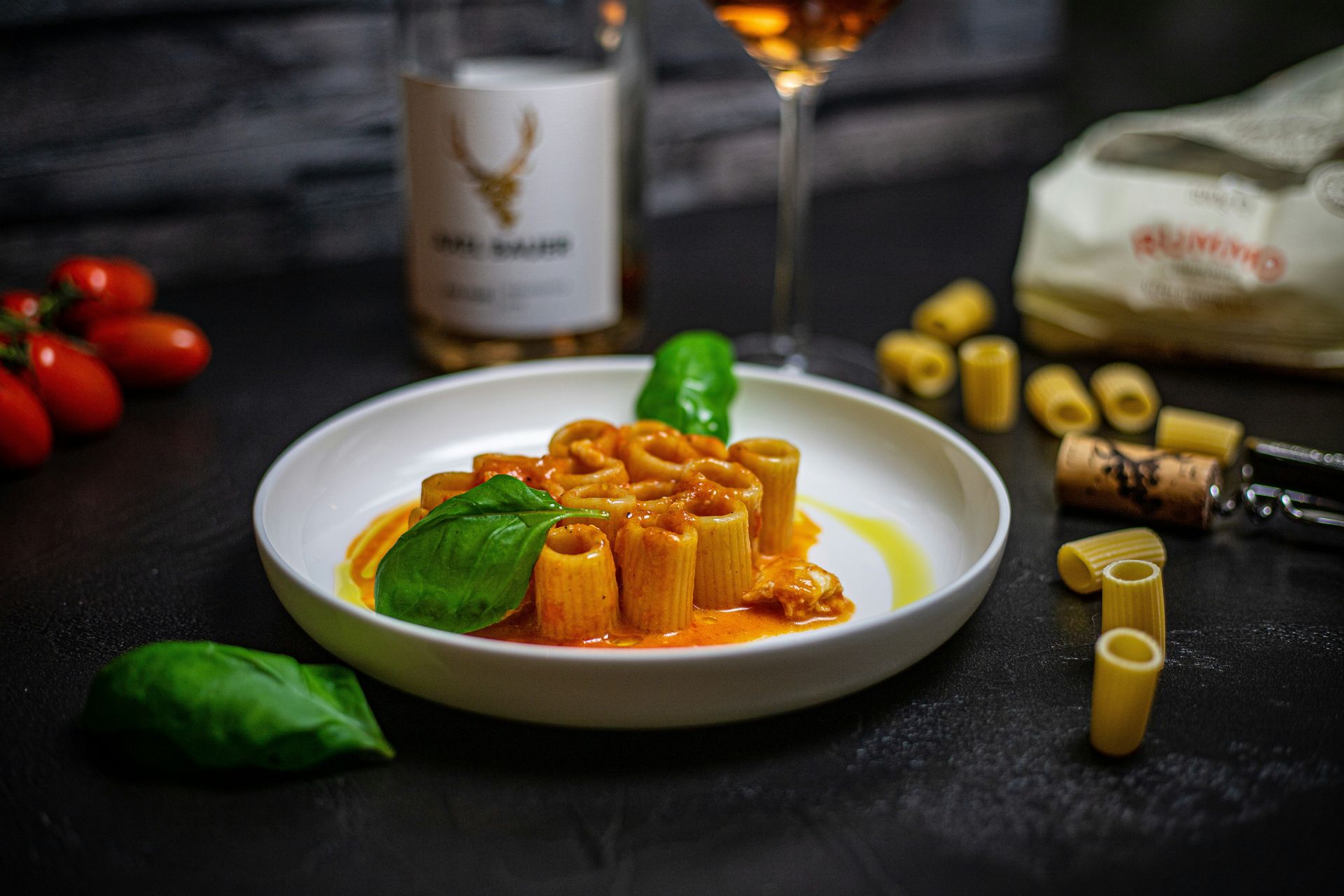
The Neapolitan ragù is a different animal from the Bolognese version and should not be confused with it. Where ragù bolognese is a finely ground meat sauce with little tomato, Neapolitan ragù — called 'o ragù in Neapolitan dialect — is built on whole or large-cut pieces of pork (spare ribs, braciole, sausages, sometimes beef), submerged in a large quantity of tomato and cooked for a minimum of three hours, often five or six, over the lowest possible heat. The result is a sauce of extraordinary depth: dark red, sweet from the long cooking, enriched by the collagen and fat of the pork, and concentrated enough to coat the back of a spoon.
The meat is browned in lard or olive oil before the tomato is added — this Maillard step develops the base flavor the sauce builds on. The tomato, typically San Marzano or a high-quality passata, is added in large quantity, along with a small amount of red wine. The pot is left to simmer, lid slightly ajar to allow evaporation, for as long as patience allows.
Paccheri — large, smooth Neapolitan tubes — are the pasta most associated with this ragù, chosen because their width accommodates the thick, concentrated sauce. The pasta is served as a first course (primo), dressed with the sauce and Parmigiano Romano or Parmigiano Reggiano. The braised meat pieces are typically served separately as a second course (secondo), with the sauce having absorbed their flavor while they absorbed the tomato.
The Neapolitan ragù has an almost devotional quality in Naples. Sunday sauce, it is called in Italian-American cooking — the pot that sits on the stove from early morning. It is understood to be a dish that requires a day, and that understanding is part of what makes it what it is: you cannot rush it, you cannot approximate it with a shorter cooking time, and the version made in four hours is not the version made in six.
Pasta con pesto di pistacchi
Nerfee Mirandilla / Unsplash
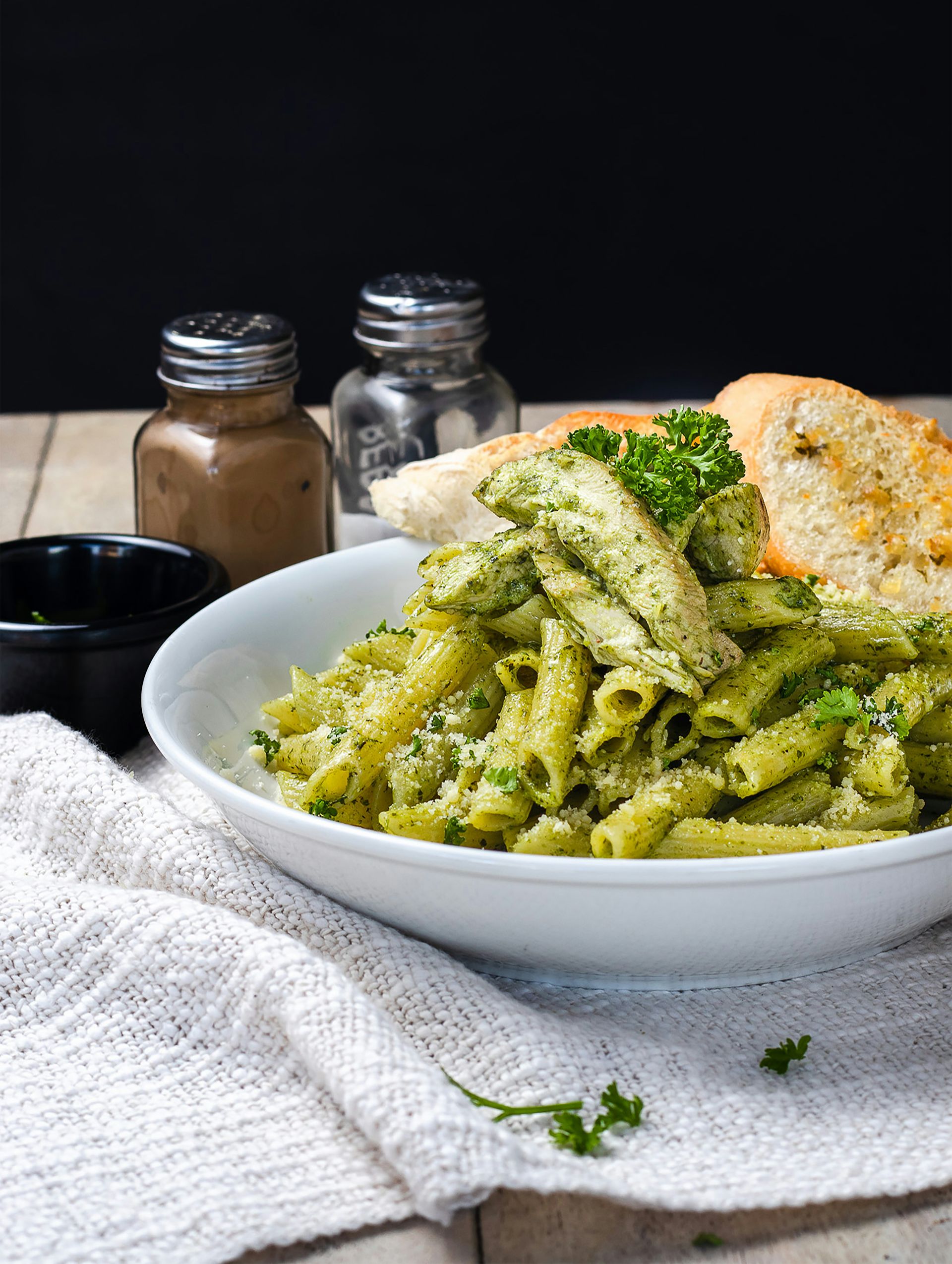
Pesto di pistacchi — pistachio pesto — is a Sicilian preparation from Bronte, a small town on the western slope of Mount Etna in Catania province, where the local pistachio (pistacchio di Bronte DOP) has been cultivated for centuries in the volcanic soil. Bronte’s pistachios are distinctive: smaller than Iranian or Californian pistachios, intensely green, and with a flavor that is sweeter and more complex than any commercial pistachio most people have encountered.
The pesto is made by grinding pistachios (blanched briefly to loosen the skins, which are removed before grinding to prevent bitterness) with olive oil, garlic, Parmigiano or Pecorino, salt, and sometimes a small amount of fresh basil. Unlike Genovese pesto, which is herb-forward with nuts in a supporting role, pistachio pesto is nut-forward: the pistachio is both the body and the flavor of the sauce, and the other ingredients merely frame it.
For pasta, the pesto is used in the same way as any cold sauce: the drained pasta goes into a bowl, pasta water is stirred in first to loosen the pesto (which is thick and needs this step), then the pesto is worked through. The result is vibrantly green, rich, and savory with a sweetness that is unusual in Italian pasta.
Paccheri, rigatoni, or mezze maniche are the most common pasta shapes used in Sicily, but the dish works with any pasta that has enough surface area or texture to hold a thick sauce. It is often finished with additional crushed pistachios for crunch, a thread of raw olive oil, and sometimes crumbled ricotta salata.
Outside of Sicily, Bronte pistachios are available through specialty importers, and the difference between them and standard supermarket pistachios is substantial. For home cooks working with more accessible pistachios, using a slightly lower proportion and adding more basil compensates partially.
Pasta e ceci
Md Shohan Ridoy / Unsplash
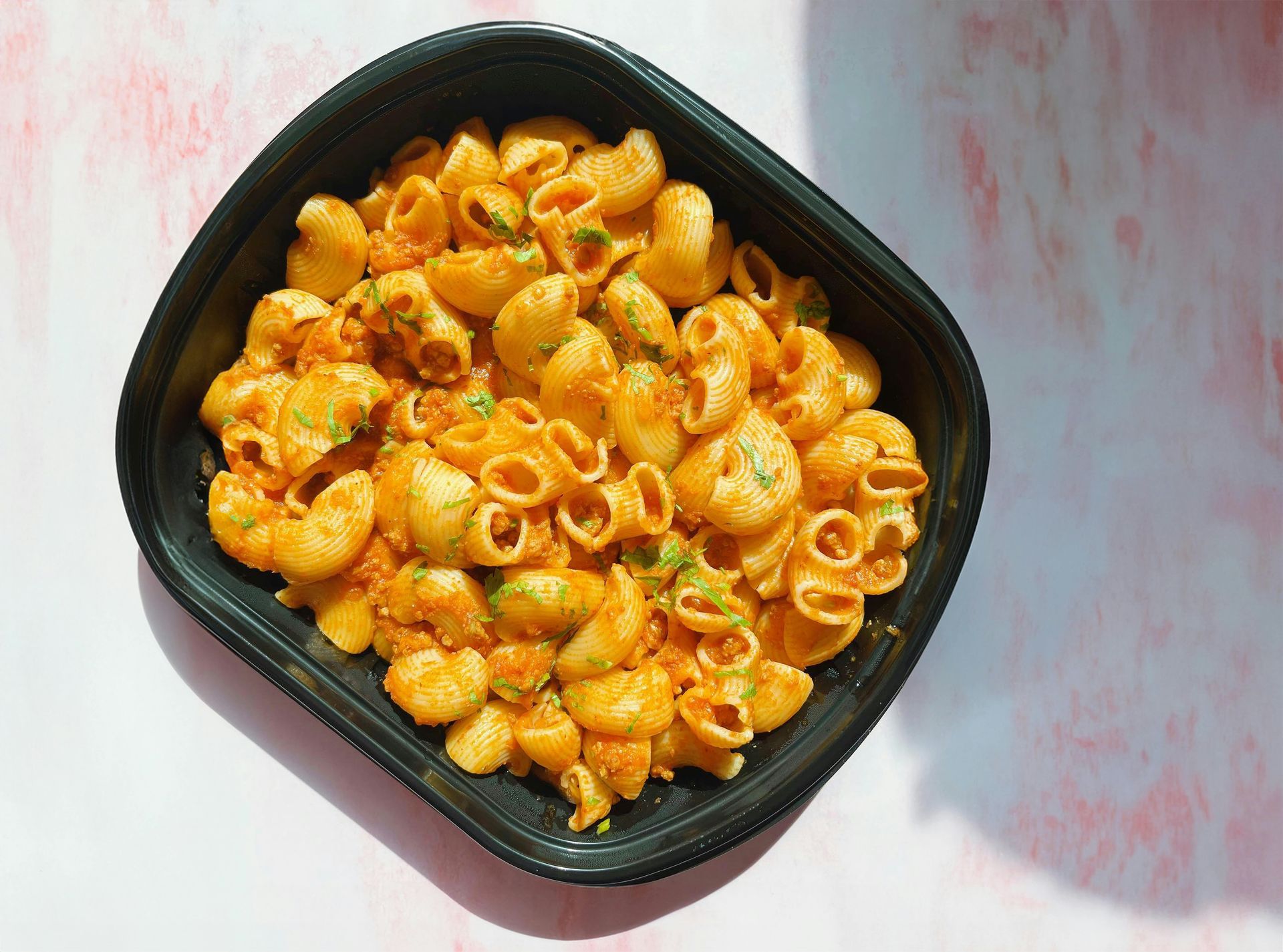
Pasta e ceci — pasta with chickpeas — is a Roman staple of the same family as pasta e fagioli: a thick, half-soup, half-pasta dish built on legumes, aromatics, and pasta, eaten as a filling single-course meal. In Rome, it is made with small pasta (ditalini, tubettini, or broken spaghetti), dry or canned chickpeas, rosemary, tomato, garlic, anchovies, and olive oil. It is sometimes called pasta e ceci alla romana to distinguish it from similar dishes made elsewhere in Italy.
The Roman version starts with a soffritto of olive oil, garlic, rosemary, and anchovy — the anchovy dissolves completely and provides savory depth without fishiness. Tomato paste or a small amount of canned tomato is added, then cooked chickpeas with their liquid (or rinsed canned chickpeas plus additional water or stock). About a third of the chickpeas are mashed or blended and returned to the pot to give the broth a creamy, thick consistency. Pasta is added directly to the chickpea mixture and cooked in the absorbed liquid, which concentrates and makes the dish thicker as the pasta releases its starch.
The dish is traditionally made on Fridays in Rome — a lean-day tradition that produced some of the city’s most enduring food. Pasta e ceci shares this Friday identity with pasta e fagioli and with other dishes that make protein from legumes rather than meat.
Finishing the dish requires a generous drizzle of raw extra virgin olive oil, which provides fruitiness and counterbalances the starchy density of the chickpeas and pasta. Some cooks add a small fresh chili or dried peperoncino for heat; others top the dish with a spoonful of ricotta for creaminess. Both additions are optional.
The most common error is making the dish too thin. It should be thick enough that the pasta barely moves when the pot is stirred, and a spoonful should hold its shape for a moment in the bowl before slowly flattening. The thickness comes from pasta starch and from the blended chickpeas — not from added thickening agents.
Strozzapreti al ragù di salsiccia
Strozzapreti al ragù di salsiccia / Getty Images
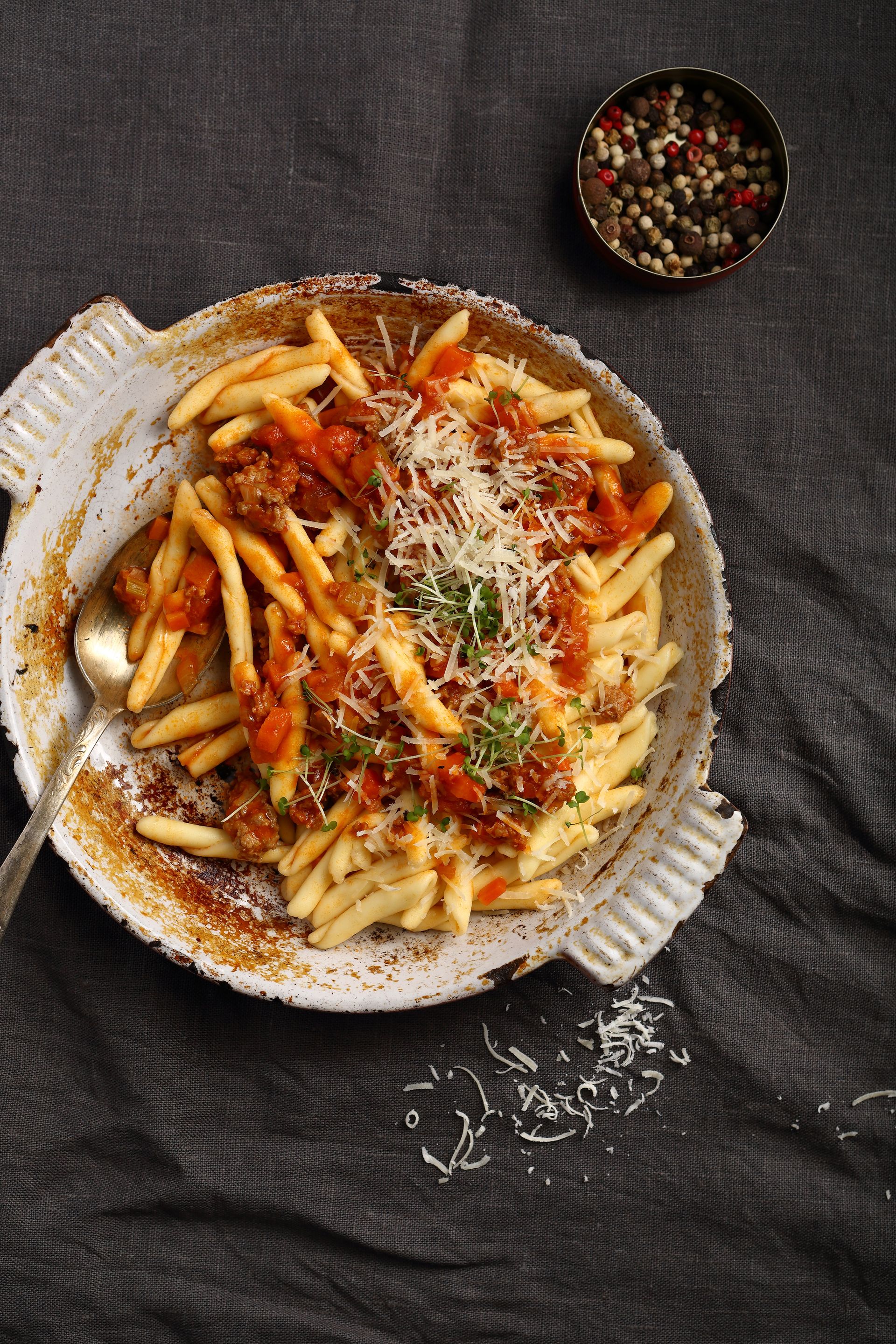
Strozzapreti — “priest-stranglers” — are a pasta shape from Emilia-Romagna, Umbria, and the Marche, made from flour and water (no egg) and rolled into short, twisted lengths by hand. The name, which appears in the cuisine of multiple central Italian regions with slight variations in form and story, carries a degree of irony typical of rural Italian humor: the pasta is said to be so good that priests who received it as tribute would eat it so fast they would choke on it. Whether the story refers to anti-clerical sentiment or simply to excess appetite depends on who is telling it.
The sauce paired with strozzapreti in central Italy is typically a salsiccia ragù — a pork sausage ragù that is simpler and faster than either the Bolognese or Neapolitan versions. Italian pork sausage (salsiccia) is removed from its casing, crumbled into a pan with a soffritto of onion, garlic, and possibly carrot and celery, and browned until the pork is fully colored. White wine is added and cooked off. Canned tomatoes, fresh or dried fennel seed, and a pinch of chili are added, and the sauce is simmered for 45 minutes to an hour — long enough to meld but not so long that the pork loses its texture entirely.
The pasta’s twisted shape is functional: each piece has a curled, uneven surface that catches and holds a chunky sauce. The sauce should not be too finely textured — the slightly rough, crumbled sausage pieces are part of the eating experience.
Parmigiano Reggiano is the standard finishing cheese, grated generously at the table. A few tablespoons of the pasta cooking water, added to the pan while the pasta finishes, help meld sauce and pasta into a cohesive dish rather than a coating.
Salsiccia ragù is fast enough for a weekday but good enough for a dinner party. The pasta can be made at home from semolina and water if the ambition is there, but good-quality dried strozzapreti, available from Italian specialty shops and increasingly in well-stocked supermarkets, produces an excellent result.