Abercrombie & Fitch’s absurd dress code is going all the way to the Supreme Court
Abercrombie & Fitch has been around for more than 100 years, but it’s just over the past two decades that the US retailer has established its famously preppy, rumpled, hormonally charged aesthetic. A meticulous employee dress code, or “look policy”—which doesn’t, apparently, prohibit young men from appearing shirtless in sweatpants—helps to maintain the mood in stores. Now, that policy will bring Abercrombie all the way to the US Supreme Court.
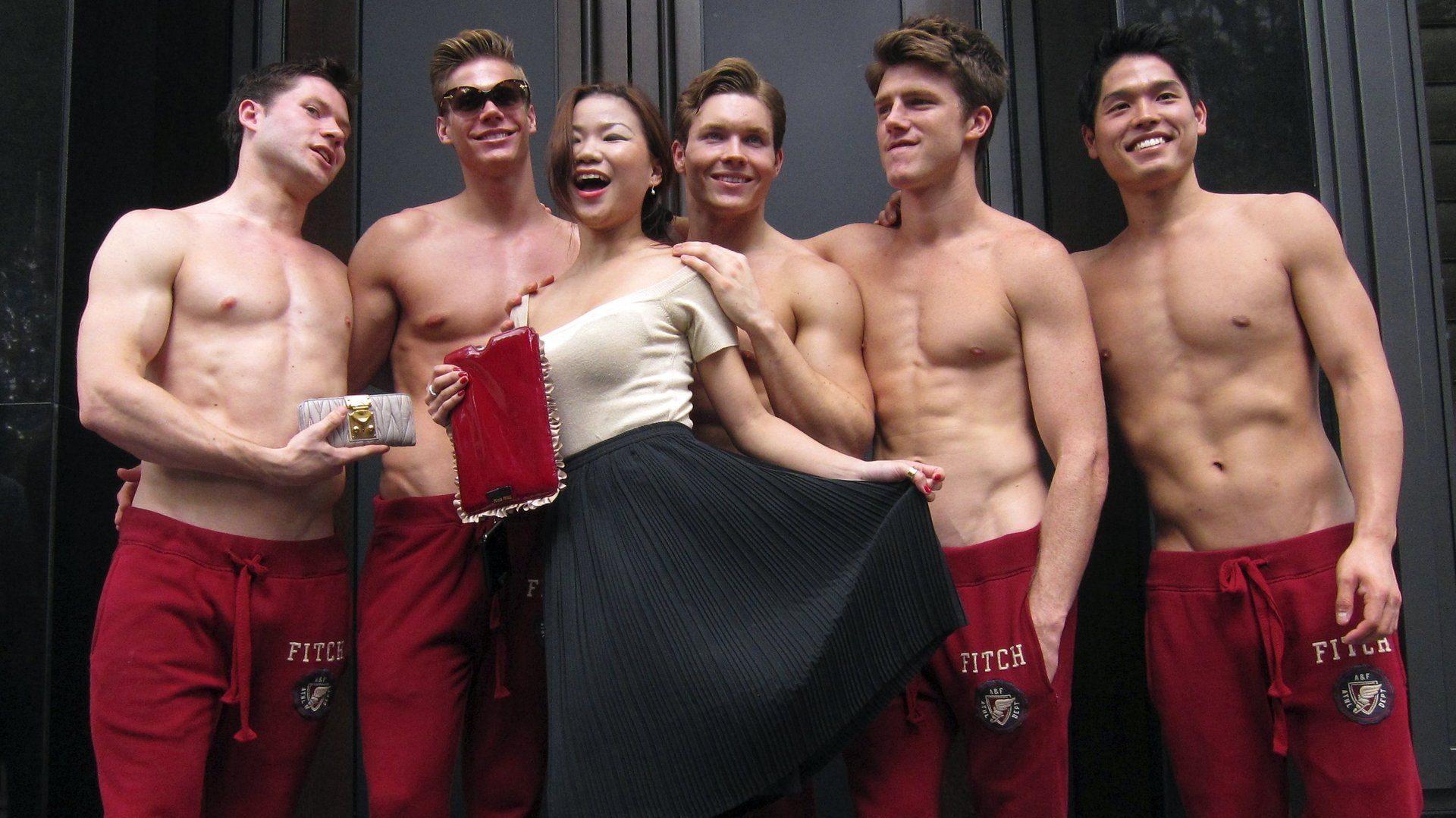
Abercrombie & Fitch has been around for more than 100 years, but it’s just over the past two decades that the US retailer has established its famously preppy, rumpled, hormonally charged aesthetic. A meticulous employee dress code, or “look policy”—which doesn’t, apparently, prohibit young men from appearing shirtless in sweatpants—helps to maintain the mood in stores. Now, that policy will bring Abercrombie all the way to the US Supreme Court.
In 2008 Samantha Elauf, then 17 years old, wore her hijab when she interviewed for a job at an Abercrombie store in Tulsa, Oklahoma. Heather Cooke, a 23-year-old sales manager, assumed—but didn’t ask—that Elauf wore the headscarf for religious reasons. Although Abercrombie’s “look policy” states a limited exception will be made for religious head coverings, the US Equal Employment Opportunity Commission claims that in not asking, Cooke violated EEOC guidelines, and essentially created a loophole allowing for religious discrimination.
Abercrombie has been accused of discrimination in the past: In 2005, the company paid $40 million to several thousand minority and female plaintiffs, to settle a case brought for racial and sexual discrimination. In 2008, the EEOC sued on behalf of 18-year-old Halla Banafa, in a case similar to Elauf’s. In 2011, 19-year-old Umme-Hani Khan sued after Abercrombie’s sister brand Hollister fired her for refusing to remove her headscarf.
In Elauf’s case, which the Supreme Court has agreed to hear, a manager gave Elauf a low score in the interview’s “appearance and sense of style category.” If that sounds like an absurd category for a professional evaluation, as opposed to a beauty pageant, consider that the company refers to sales associates as “models”—hence, the “look policy.”
Abercrombie & Fitch has not responded to our requests for its most current policy, but here are a few verbatim excerpts from one Buzzfeed published last year:
- Clothing choices should be clean and classic, not provocative (e.g., tanks should be worn with an undergarment).
- No associate is permitted to wear extreme hairstyles or color.
- [Hair] highlights should be blended and there should be no streaks, blocks or chunks of contrasting colors.
- [Hair] highlights should appear as if the hair is naturally highlighted by the sun and not manipulated by unnatural bleaching methods.
- Earrings should not be larger than a dime and should not dangle.
- No more than two earrings in each ear can can be worn at a time for women.
- The shape of the earring must be in good taste.
- Men are not allowed to wear earrings.
- No other pierced jewelry is appropriate.
- Fingernails should not extend more than 1/4 inch beyond the tip of the finger.
- If polish is worn, it should be clear or natural in color.
- Foundation, base or blush can only be worn if it is applied in such a way as to look completely natural.
- Eyebrow pencil, eye liner, and eye shadow are acceptable in natural color.
- Lipstick should be very natural in color.
- Facial hair, including mustaches, goatees, and beards, is unacceptable.
- Clothing should be consistent with the season (e.g., a heavy wool turtleneck sweater should not be worn in 90 degree heat).
- Associates are prohibited from wearing apparel that is clearly that of a competitor.
