
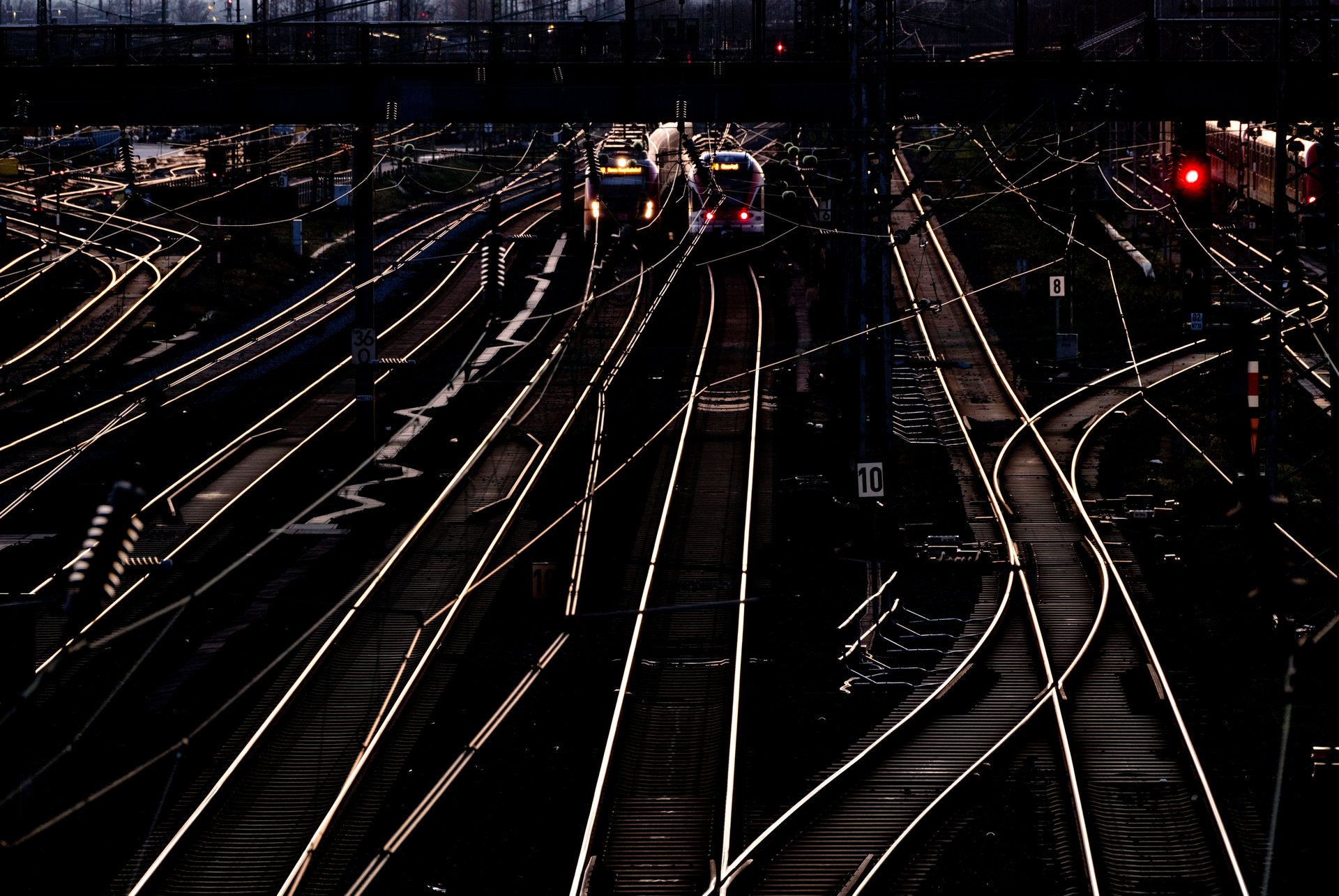
BERLIN (AP) — A union representing many of Germany’s train drivers started a nearly three-day strike early Wednesday in a rancorous dispute with the country’s state-owned main railway operator over working hours and pay.
Train travel across the country and in many cities came to a near standstill with commuters and other travelers struggling to find alternatives involving long-distance bus or car travel or flights.
State-owned Deutsche Bahn said only around 20% of its long-distance trains were running and many regional and commuter trains in cities like Berlin were also not in operation.
“The strike by the train drivers’ union GDL has had a massive impact on train services in Germany," said Deutsche Bahn spokeswoman Anja Broeker. “We regret the restrictions and hope that many people who were unable to reschedule their journey will get to their destination.”
The GDL union's strike on cargo trains began on Tuesday evening.
In the wage dispute, the GDL union had already called two previous warning strikes last year, which lasted a maximum of 24 hours in passenger transport. The current strike lasts until Friday at 6 p.m.
Deutsche Bahn had tried to legally prevent the strike until the very end, but on Tuesday night a court ordered that the strike could go ahead.
Late last month, members of GDL voted overwhelmingly to stage open-ended strikes in a bitter dispute.
In addition to pay raises, the central issue is the union’s call for shift workers’ hours to be reduced from 38 to 35 hours per week without a pay reduction, a demand for which employers so far have balked.
GDL argues that it would make working for the railway more attractive and help attract new recruits, while Deutsche Bahn says the demand can’t practically be met.
Germany's Transportation Minister Volker Wissing called on both sides to return to the negotiating table.
“A way has to be found that both sides can get along with,” the minister told daily newspaper Bild. “That means talking to each other. I urge both sides to return to the negotiating table.”
However, union head Claus Weselsky said it was now up to Deutsche Bahn to present an improved offer.
If there's no new offer until Friday, "we’ll take a break and go into the next strike,” Weselsky said in an interview on public broadcaster ZDF's morning show after the start of the train drivers’ strike.
Mike Walter from Frankfurt expressed a lack of understanding about the strike.
“I have an appointment for a surgery at 10 a.m., that I’ve been waiting for months,” he told The Associated Press in Berlin on Wednesday morning, adding that he had to change his travel plans and come to Berlin a day earlier and stay at a hotel to avoid the strike.
"I mean, if you limit it to 50% or something like that, that’s fine. But you can’t go to zero," Walter said. “That’s just inconsiderate.”
Dieter Nettersheim, who was standing near an information counter of Deutsche Bahn inside the unusually empty main train station in the western city of Cologne, did also not seem to approve of the strike.
“I think they have to keep negotiating to get results so that (their dispute) is not being carried out at the expense of the customers," the 55-year-old told the AP.
The train drivers' strike coincides with an unrelated one-week strike by farmers who have been blocking city streets and highway access roads in parts of the country since Monday. They have snarled traffic with their tractors to protest against a government plan to scrap tax breaks on diesel used in agriculture and led to further traffic problems in Germany.
___
Fanny Brodersen in Berlin and Daniel Niemann in Cologne, Germany contributed reporting.