
The signifiers of success used to be simple. Own a home (or two) and a car (or two) and voilà! You’ve achieved the American Dream. Ownership, however, is a complicated concept for an increasing number of Americans (this writer and her sister, included)—and not for all the reasons you might think.
Multiple studies and datasets have shown that millennials are not buying homes and they are not buying cars. In fact, they are not buying many big ticket items at all (save for their smartphones) in the way generations of the past have. This behavior has earned them the nickname Generation Rent and has businesses struggling to understand how to market to a demographic that is resistant to ownership. As with most trends among millennials, economic factors delaying major milestones (as well as, perhaps, a general fear of commitment) are cited as part of the issue.
While that certainly has impacted the situation, the greater element at play is shifting value systems.
Young people have redefined success, and their new definition values experience over possession. The word “experience” may sound like a code word for “free,” but the change is not necessarily a reaction to underemployment or even a desire to save money.
I know this macrotrend firsthand. I am a millennial, I am gainfully employed, and I have a nice chunk of change saved up. But I choose to rent my apartment and rent my furniture. It allows for much more flexibility—financially, geographically, spatially, liquidity’ly. What’s more, growing up on my family farm in rural Oregon, I used to dream about living in a big city like New York or London, wearing black, talking fast, having to wear real reading glasses, owning a few homes, and maybe having a driver (I saw it on a movie once!). Now? Those material things are not interesting to me. At. All. I just use Uber $UBER or Lyft $LYFT for the “personal driver” effect. And Airbnb $ABNB for the “owning multiple homes in cool places” effect. And without any of the overhead or attaching myself to material possessions (I do, however, live in New York City, frequently wear black, have real reading glasses, and talk fast). Like my little sister and our friends—who live similarly—these moves allow us to be flexible and value experience over possession. And on a deeper, more spiritual level: it has allowed me to really let go of the concept of possessing things. It is liberating not just financially, but also soulfully.
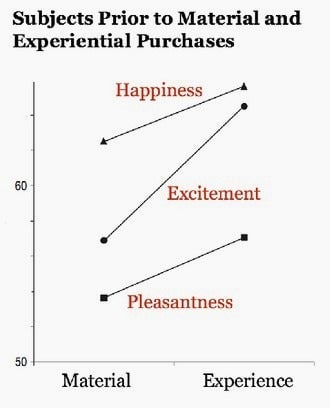
Up to this point, I’ve pinned this shift on “young people” (or millennials, if you will). I was holding back on you. In fact, we are seeing these values aren’t just relegated to the youngins’. The Atlantic’s James Hamblin wrote in October of this year: “Over the past decade, an abundance of psychology research has shown that experiences bring people more happiness than do possessions.” Hamblin goes on to cite at-length learnings published by Thomas Gilovich, Matt Killingsworth, and Amit Kumar in the journal Psychological Science in August 2014. In particular, their findings “expanded on the current understanding that spending money on experiences ‘provide[s] more enduring happiness’.”
Three points to call out from Hamblin’s piece that are particularly instructional for the discussion at hand:
In addition to basic human psychology driving a preference for experiencing over owning, the internet age has produced accessibility, impermanence, and rapid change like no other moment in time. A few examples of how these shifts have shaped the overall “Rent, Stream, Experience” attitude and are now impacting our real-life decision-making:
For businesses, the lesson here is to emphasize service over product. To this point, several industry newcomers are finding success by focusing on lifestyle and offering consumers instant access.
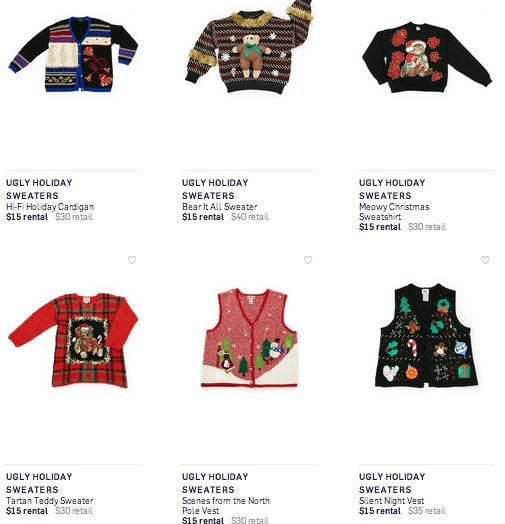
More than the ability to make large investments in things that depreciate (save for a home), I am struggling with understanding my incentive. Perhaps after seeing so many lose their material possessions during the financial crisis, my sister, our friends, and even non-millennials see ownership as more of a liability than an attribute.
My conclusion? Our increased aversion to ownership is not a shortcoming, it’s an opportunity. Valuing experiences means we don’t want just one thing; we want a little bit of everything. Businesses launching or adapting to this are smart to do so. While many Americans still choose to invest in buying a home when the time is right in their lives (or when wanting to invest in an appreciating asset), renting, streaming, and experiencing are here to stay in a big way.
This post originally appeared at Medium.
