Why has Africa lagged behind other regions in economic development? Part of the problem is a parasite that is endemic to the continent and found nowhere else—and according to a new study (pdf) just published in the American Economic Review, it created social conditions that hindered prosperity there even before the European colonists arrived.
Why has Africa lagged behind other regions in economic development? Part of the problem is a parasite that is endemic to the continent and found nowhere else—and according to a new study (pdf) just published in the American Economic Review, it created social conditions that hindered prosperity there even before the European colonists arrived.
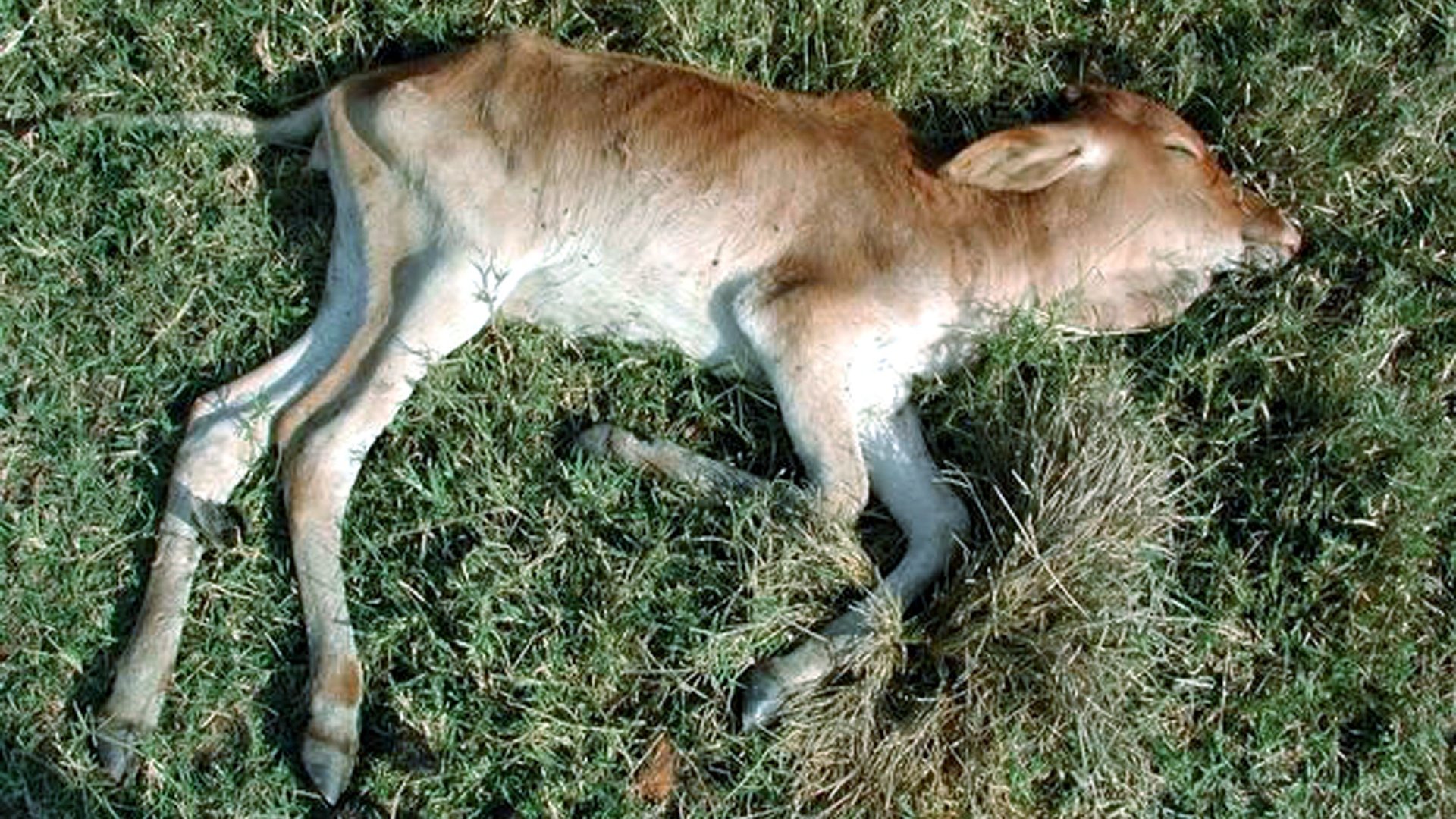
Marcella Alsan, a Stanford physician and economist, built a historical model of tsetse fly populations across Africa. The fly carries a parasite, Trypanosomiasis, that affects both humans and livestock, but it affects animals more drastically than people.
Join 500,000+ readers who start their day with Quartz.
By subscribing, you agree to our Terms of Service and Privacy Policy.
Comparing the populations to the relative development of ethnic groups in Africa at the time, Alsan finds that areas with lower tsetse populations were more likely to take advantage of the important technology of the day: Animal husbandry, to provide both labor and fertilizer for agricultural enterprise. Unfortunately, arable land and tsetse fly populations in Africa heavily overlap:

And sure enough, Alsan found strong correlations of higher tsetse fly populations with both the use of slave labor and political decentralization—two institutions that political scientists and economists associate with poor development outcomes.
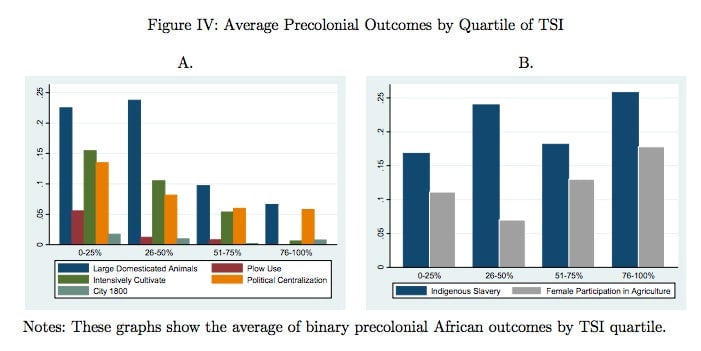
Alsan also cross-checked her results with other tropical areas outside of Africa to control for climate, and finds the parasite remains the key variable for under-development. And even within Africa, the most advanced civilizations of the time, like the Great Zimbabwe, saw its borders restricted by tsetse fly populations.
Those effects on people, throughout the region where tsetse flies are found, have carried on to the present day, with areas that lacked political centralization before colonization still lagging behind neighboring economies that were less susceptible to the parasite.
