If anyone thought European Union digital commissioner Günther Oettinger was bluffing when he recently suggested (paywall) the EU might rein in big internet companies like Google, Facebook, and Yahoo, they may not think so now. According to leaked documents from Oettinger’s office, the EU has been mulling the idea of establishing a new regulator to aggressively go after dominant (and mainly US-based) web platforms, essentially clearing the way for European competitors.

If anyone thought European Union digital commissioner Günther Oettinger was bluffing when he recently suggested (paywall) the EU might rein in big internet companies like Google $GOOGL, Facebook $META, and Yahoo, they may not think so now. According to leaked documents from Oettinger’s office, the EU has been mulling the idea of establishing a new regulator to aggressively go after dominant (and mainly US-based) web platforms, essentially clearing the way for European competitors.
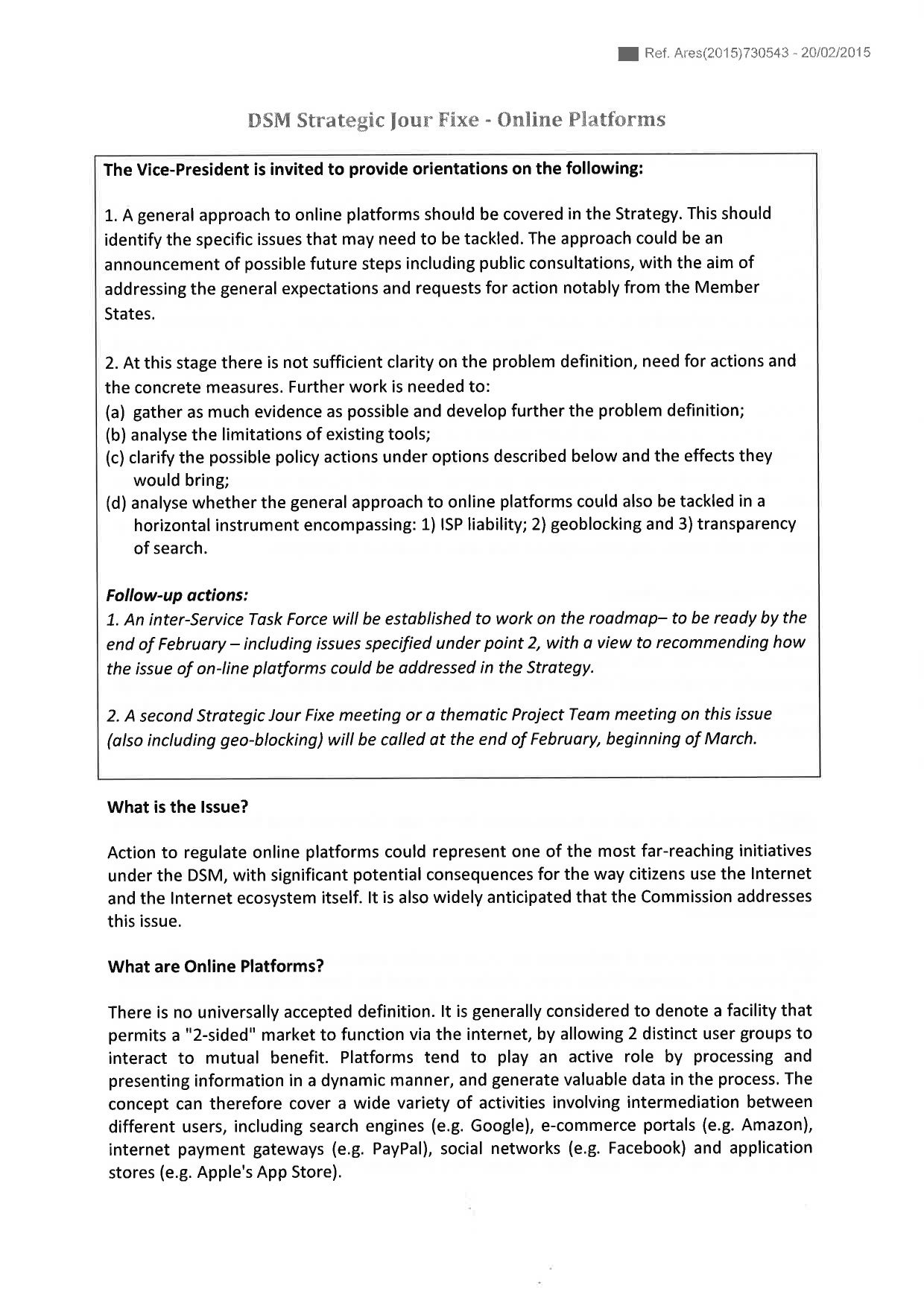
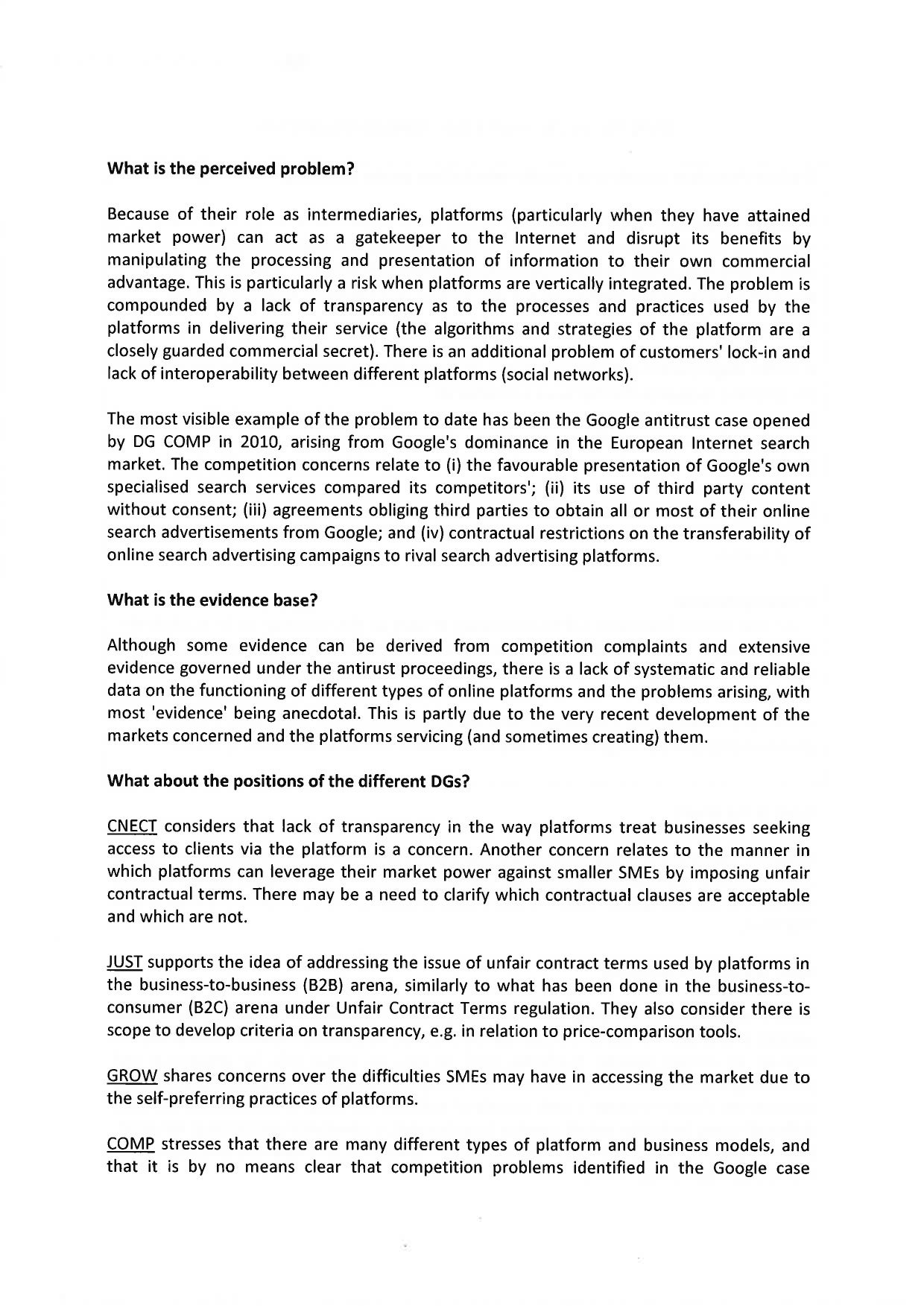
The documents, reported on by The Wall Street Journal (paywall) and also obtained by Quartz, lay out the EU’s fears that entrenched internet companies will abuse their primacy, noting, “It is highly unlikely that platforms will unilaterally limit the power they have gained and will continue to accumulate.”
Join 500,000+ readers who start their day with Quartz.
By subscribing, you agree to our Terms of Service and Privacy Policy.
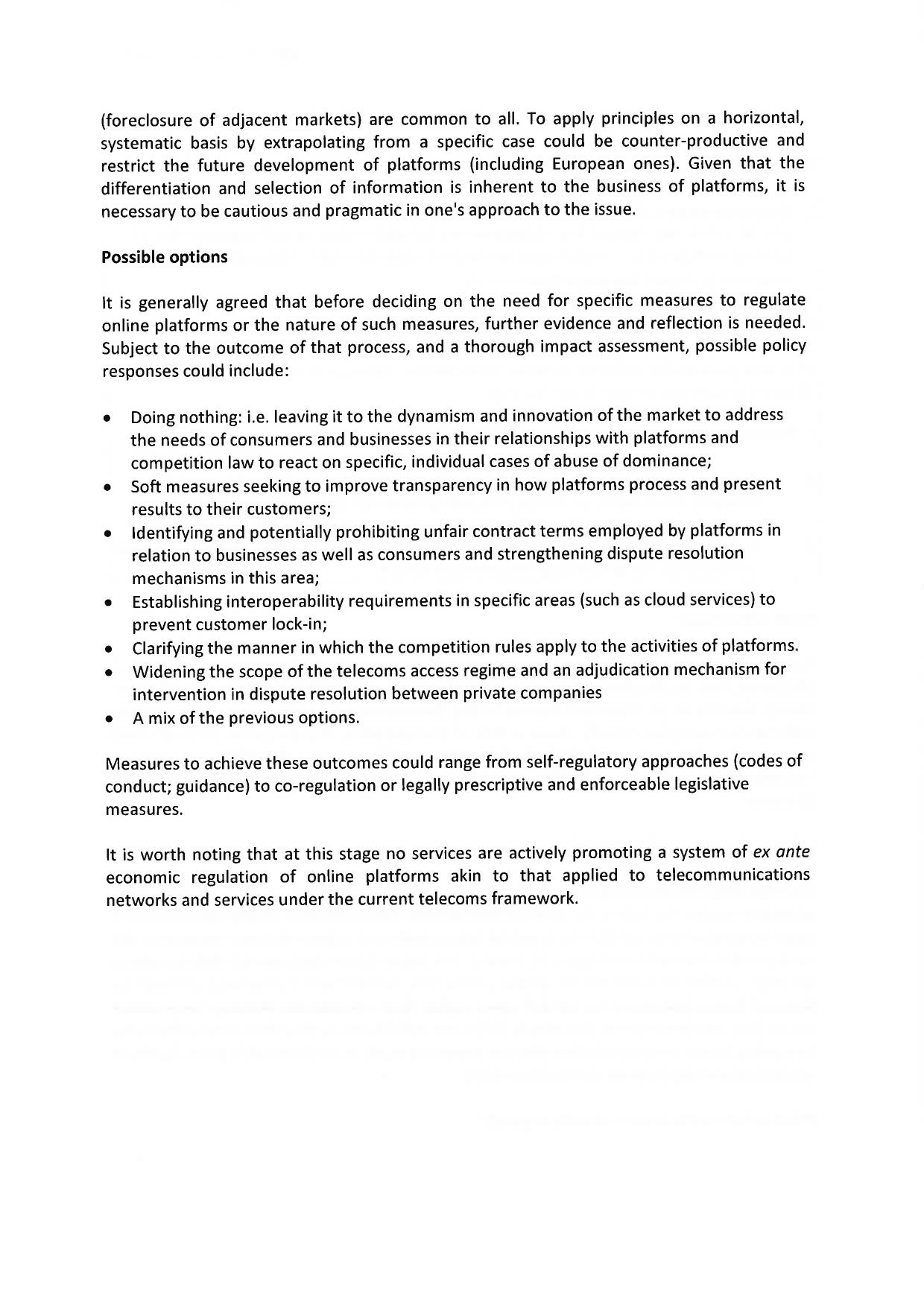
The documents, working papers that are two months old, are highly unlikely to translate directly to policy. The authors themselves caution that “it is worth noting that at this stage no services [departments] are actively promoting a system of ex ante economic regulation of online platforms akin to that applied to telecommunications networks and services under the current telecoms framework.”
But the papers provide some insight into the thinking of the European Commission, the EU’s executive branch, just weeks before a landmark announcement on the creation of a “digital single market” to eliminate barriers to cross-border business in the digital economy, similar to the way trade barriers between EU members were struck down to allow the free flow of goods and services in the physical world.
Any European initiative could have ramifications for internet users worldwide—in the face of such government regulations in a region such as Europe, US internet companies have sometimes adjusted their services globally. Another possibility is that internet companies discontinue offering their services in Europe, as Google recently did with Google News in Spain in response to legislation there.
A spokeswoman for the commission declined to discuss the specifics of the documents.
“We don’t comment on internal “paperology” in the run-up to our Digital Single Market Strategy,” Mina Andreeva wrote in an statement. “All papers and notes produced to help prepare the Digital Single Market Strategy have by now been superseded. We are finalising the draft Digital Single Market Strategy which will be adopted on 6 May by the College.”
The full document covers issues of geo-blocking, internet-service-provider liability, and cross-border e-commerce. The parts of the document relevant to platform regulation are reproduced below.
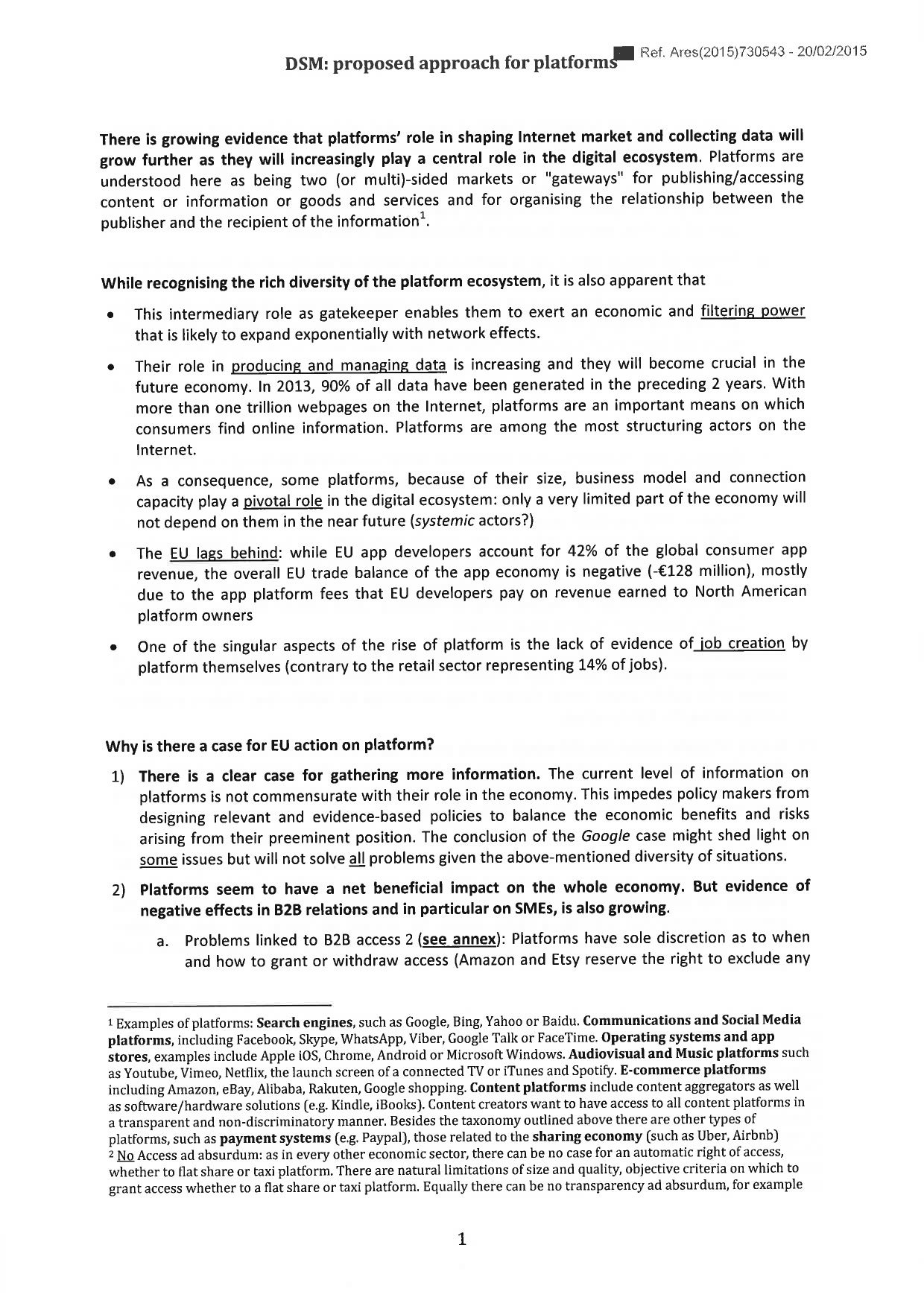
Here, the EU is fretting that some web platforms may have become too powerful, not just in economic terms but in their role as gatekeepers structuring the vast amounts of data on the internet.
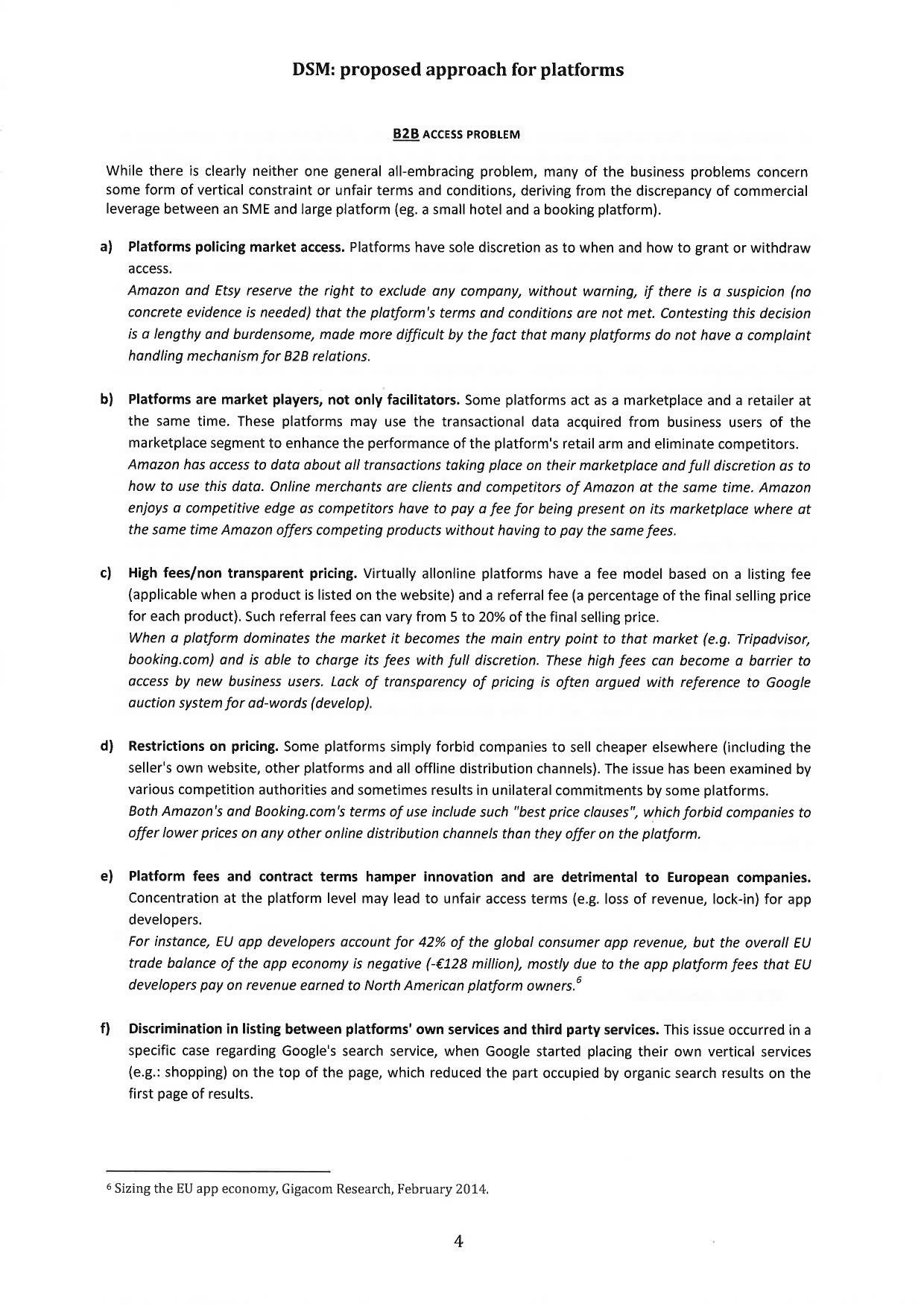
Moreover, the Commission worries that Europe’s trade balance in the app economy is negative to the tune of €128 million ($138 million), which is what European developers pay North American platform controllers such as Google and Apple $AAPL.
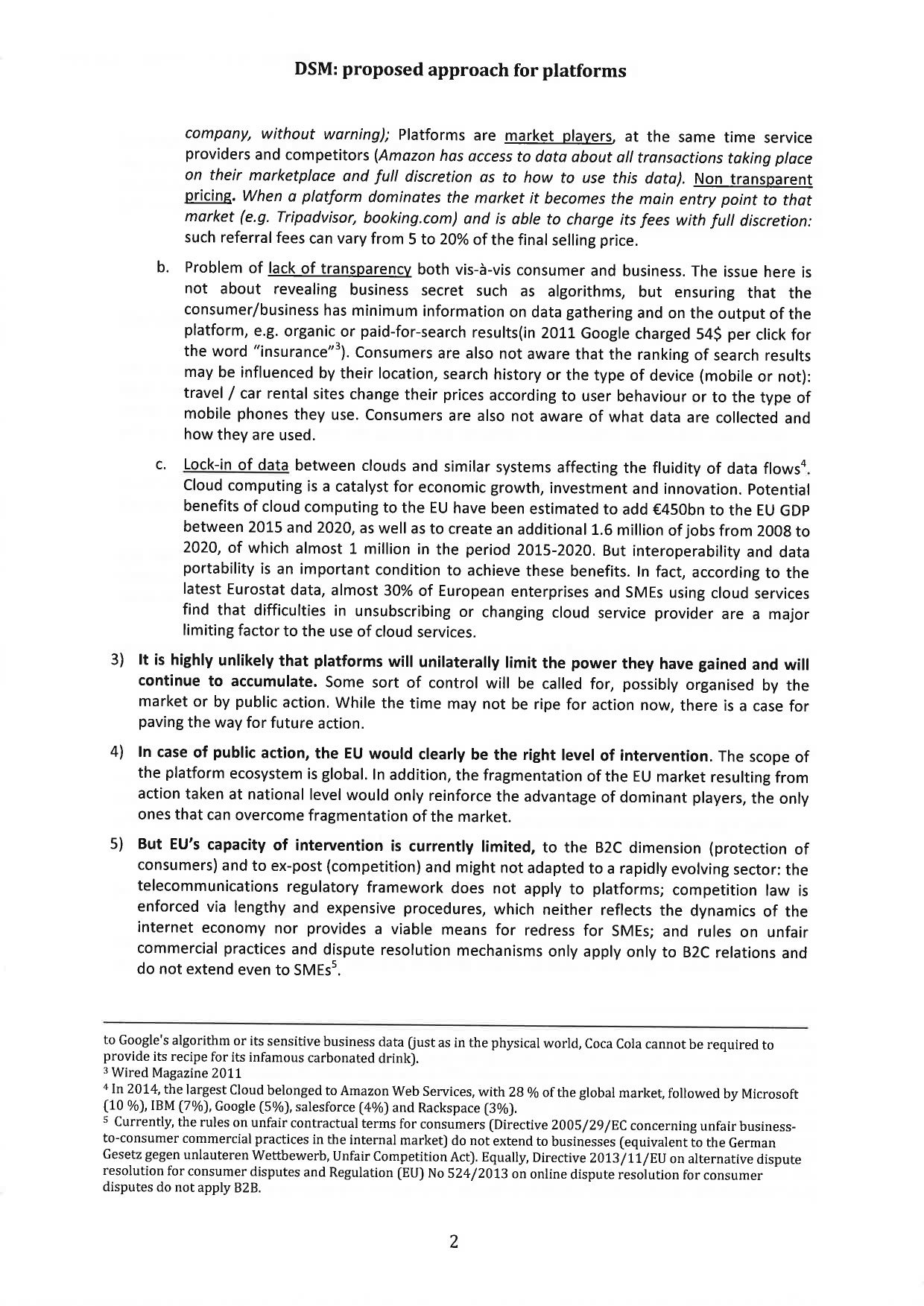
While platforms are good for the economy as a whole, according to the paper, they may harm small businesses. One example: the sole discretion of Amazon $AMZN and Etsy to decide who is allowed to use their respective marketplaces. Another is the ability of dominant platforms to determine fees at will. (Indeed, booking.com recently settled a case with Europe’s antitrust body.)
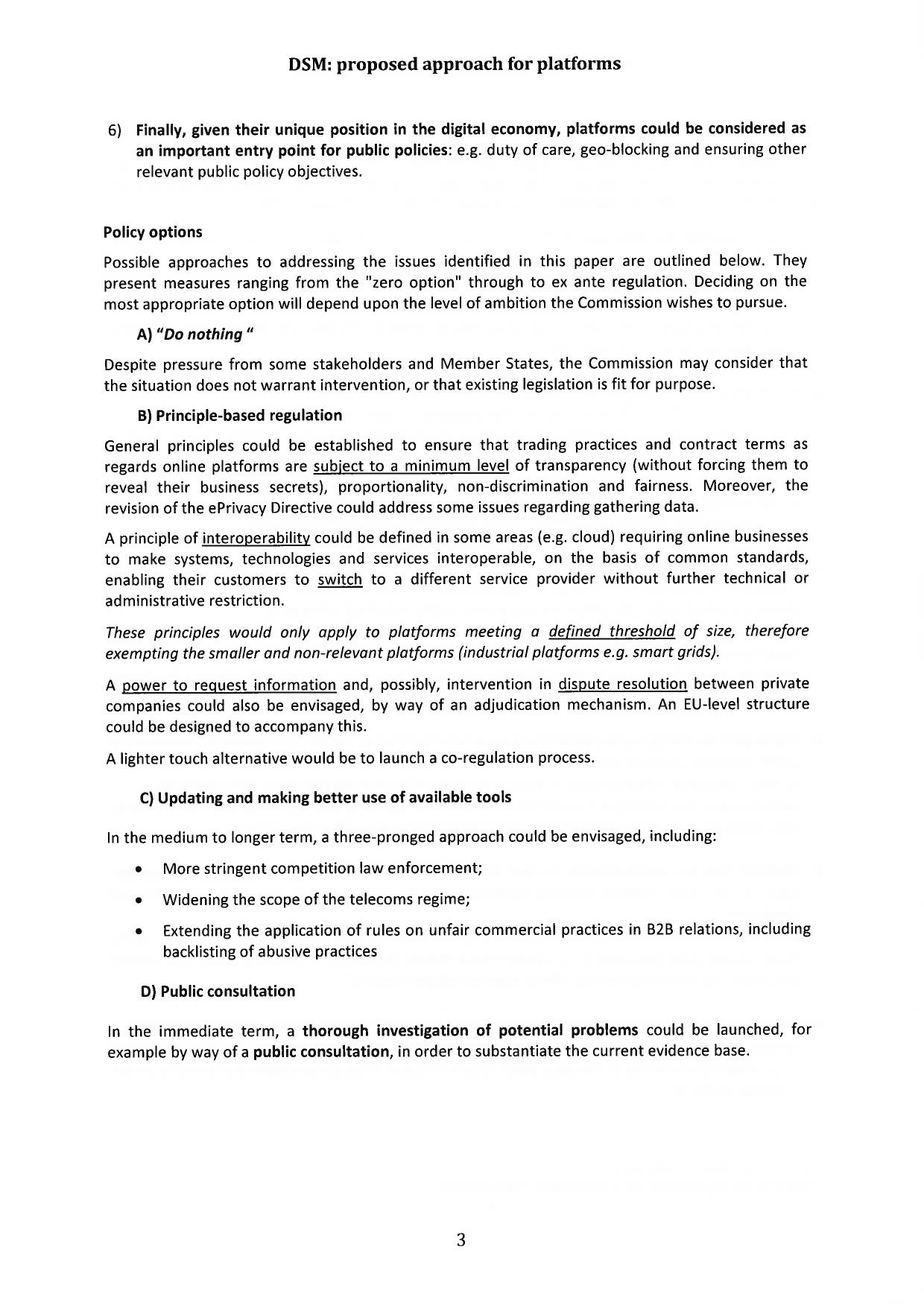
The options the document outlines here range from doing nothing to requiring a minimal level of transparency, a public consultation, or better enforcement with existing tools such as antitrust and telecoms and consumer protection regulations.
The following pages were written by Oettinger’s staff for Andrus Ansip, a vice president of the commission, Oettinger’s boss, and the man in charge of the “digital single market.” These are meant to provide a quick update briefing to Ansip and solicit his views.