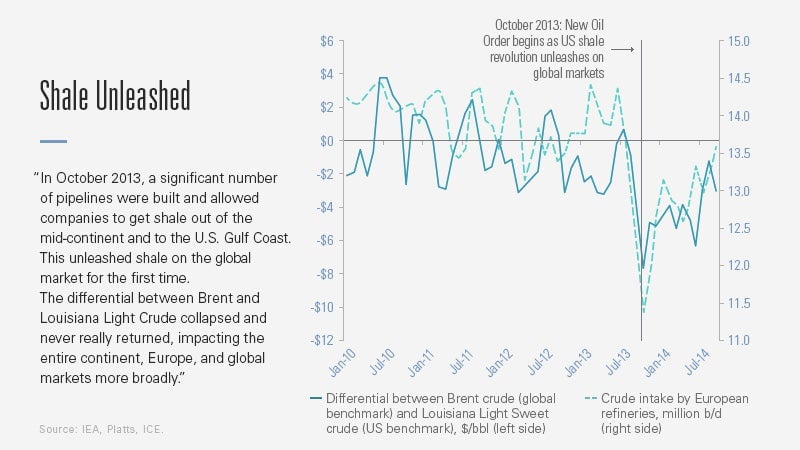
In 2006, the United States imported more than half the oil it consumed and OPEC played the dominant role in balancing global oil supply with demand. Since then, investments in shale extraction technologies have resulted in substantially increased domestic production and a fundamental reorganization of the global energy hierarchy. The United States is now the largest producer of natural gas in the world, and US shale oil has supplanted OPEC output as the primary margin for balancing supply. After oil prices reached record highs in 2008, this “New Oil Order” contributed to oil’s recent declines.
In 2006, the United States imported more than half the oil it consumed and OPEC played the dominant role in balancing global oil supply with demand. Since then, investments in shale extraction technologies have resulted in substantially increased domestic production and a fundamental reorganization of the global energy hierarchy. The United States is now the largest producer of natural gas in the world, and US shale oil has supplanted OPEC output as the primary margin for balancing supply. After oil prices reached record highs in 2008, this “New Oil Order” contributed to oil’s recent declines.
Join 500,000+ readers who start their day with Quartz.
By subscribing, you agree to our Terms of Service and Privacy Policy.
“The New Oil Order” has significant implications for energy importers and exporters as well as companies and consumers grappling with changing energy prices. In the video below, Jeff Currie, global head of Commodities Research at Goldman Sachs, discusses how “The New Oil Order” is reshaping the way markets and the oil and gas industry balance supply and demand.
Learn more about the macroeconomic issues and trends that are shaping markets around the world.
This article was written by Goldman Sachs and not by the Quartz editorial staff.