Mobile technologies and advances in connectivity have given rise to a new series of startups. These emerging companies seek to quickly match employers and individuals with the labor, skills, and services they need at a moment’s notice. Dubbed the “on-demand” economy, this market has rapidly taken off, disrupting numerous industries and garnering $787 million in funding during Q1 of 2015 alone (chart above omits Uber, which has raised nearly $5 billion in funding since 2009). The labor force has taken this development in stride. In the last five years, the number of independent workers in the US has risen 12%.
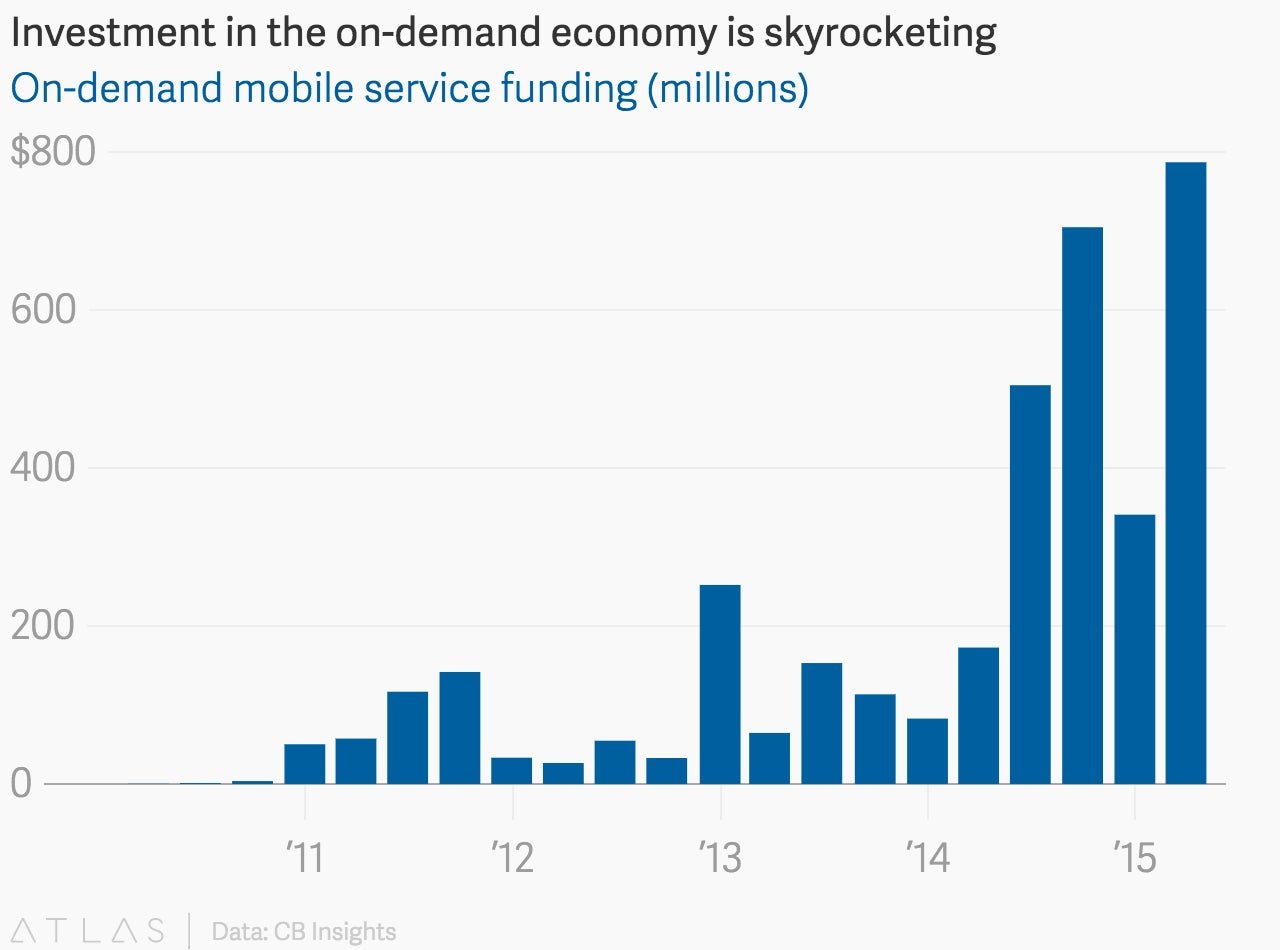
Mobile technologies and advances in connectivity have given rise to a new series of startups. These emerging companies seek to quickly match employers and individuals with the labor, skills, and services they need at a moment’s notice. Dubbed the “on-demand” economy, this market has rapidly taken off, disrupting numerous industries and garnering $787 million in funding during Q1 of 2015 alone (chart above omits Uber $UBER, which has raised nearly $5 billion in funding since 2009). The labor force has taken this development in stride. In the last five years, the number of independent workers in the US has risen 12%.
For employers, the on-demand economy marks both the culmination of many decades spent trying to optimize the sourcing and procurement of talent and the arrival of a new era of enterprise technology transformation. To stay competitive, companies will need to adopt sophisticated, seamless talent management systems to stay on top of their technologically-savvy, changing workforce.
Join 500,000+ readers who start their day with Quartz.
By subscribing, you agree to our Terms of Service and Privacy Policy.
This article was produced on behalf of Workday $WDAY by the Quartz marketing team and not by the Quartz editorial staff.
