Amid heightened sensitivity to cyber attacks and digital espionage, China is going back to basics in its efforts to seek out and stop foreign spies. Citizens concerned that they have encountered a spy can call a nationwide hotline, free of charge, to report a potential snooper to the police (link in Chinese).

Amid heightened sensitivity to cyber attacks and digital espionage, China is going back to basics in its efforts to seek out and stop foreign spies. Citizens concerned that they have encountered a spy can call a nationwide hotline, free of charge, to report a potential snooper to the police (link in Chinese).
The terrorism research center of China’s Institutes of Contemporary International Relations, a government think-tank, told the state-backed newspaper Global Times that although China is in peacetime, several recent developments have shown that “some countries remain relentless in their targeting of China.”
Join 500,000+ readers who start their day with Quartz.
By subscribing, you agree to our Terms of Service and Privacy Policy.
China’s government has made its own concerns over spying increasingly evident this year. In September alone, China said that it had detained two Japanese citizens suspected of spying, and that it had also detained a US citizen. And the government has long been fond of hotlines for turning in strangers, too; earlier this year when Beijing banned smoking in public places, it created one so that citizens could tell on smokers who light up where they shouldn’t.
But how does one tell if they have encountered a real-life spy? Thankfully for some, one Weibo user has posted a helpful list of traits that could help identify a foreign agent. It is unclear where the list came from, but it has been shared almost 20,000 times so far, and is reportedly also doing the rounds on WeChat, China’s major social network:
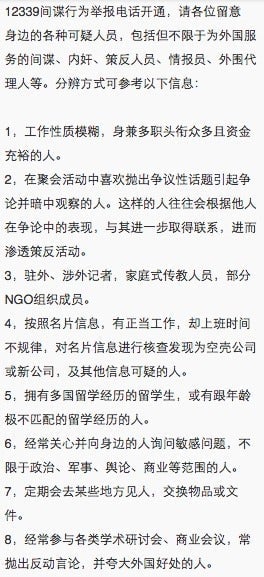
Those eight traits, should you need them, are as follows:
