(See infographic enlarged.)
(See infographic enlarged.)
Twenty years ago, the internet first served to connect consumers with travel industry brokers that no longer needed a brick-and-mortar shop to sell their wares. Yes, the economy looked bright, but the introduction of online, transparent marketplaces drove competition, eased ticket-buying and spurred demand.
Join 500,000+ readers who start their day with Quartz.
By subscribing, you agree to our Terms of Service and Privacy Policy.
Twenty years later, the ubiquity of mobile technology and the seemingly limitless data produced has redefined the way we plan and pay for our travel experiences and engage with airlines. Airlines are working hard to extract value from the troves of Big Data available to them. And consumers are demanding more personalized, intuitive and instantaneous mobile travel products and interfaces.
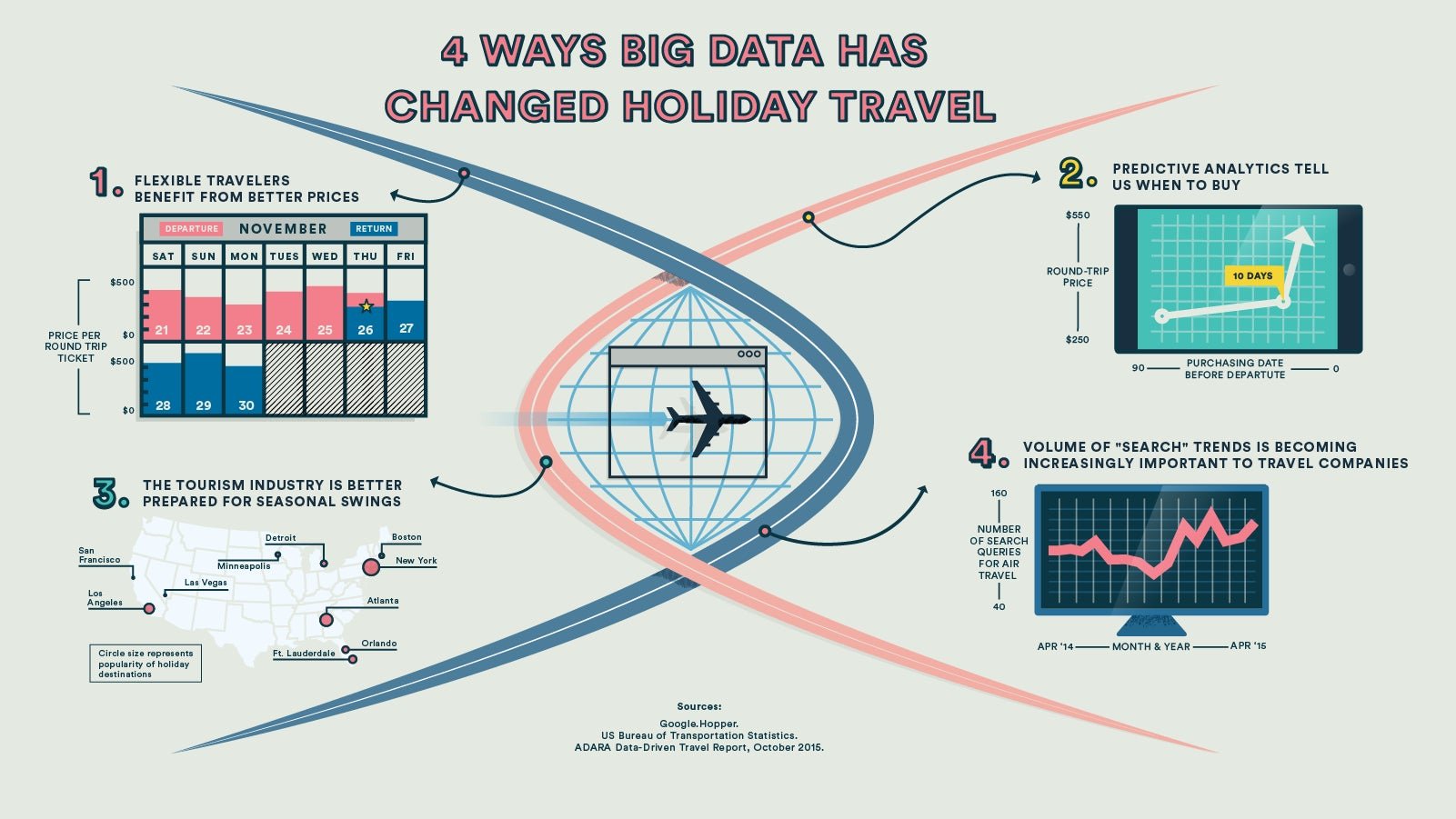
In an evolving travel space, we’re still learning how technology will affect one of the busiest travel times of the year: the winter holidays. The infographic above (and corresponding text below) is a snapshot of the data driving those trends, and how advancing analytics are harnessing it.
A systematic approach to data can help tourism boards and local shops prepare more precisely for an influx of customers. In the domestic United States, 70% of travelers are visiting the Eastern Seaboard or the Midwest over the holidays. Perhaps unsurprisingly, 60% of travelers from the Northeast travel to Florida, looking to escape the cold. And—other than NYC—folks from the Midwest are looking to warm up, mainly in Atlanta, Las Vegas, and San Francisco. These numbers are useful: Knowing when customers are booking helps local businesses adjust supplies and pricing to meet demand.
This article was produced on behalf of HPE Matter by the Quartz marketing team and not by the Quartz editorial staff.
