
A four-month-old baby born with one lung and a defective heart has celebrated her first Christmas with her family, thanks to a life-saving surgery made possible with Google Cardboard, the tech giant’s cheap virtual-reality headset.
A four-month-old baby born with one lung and a defective heart has celebrated her first Christmas with her family, thanks to a life-saving surgery made possible with Google $GOOGL Cardboard, the tech giant’s cheap virtual-reality headset.
Teegan Lexcen’s condition was deemed inoperable. Doctors were previously too afraid to press ahead with surgery as standard 2D images didn’t provide enough detail of the state of her heart.
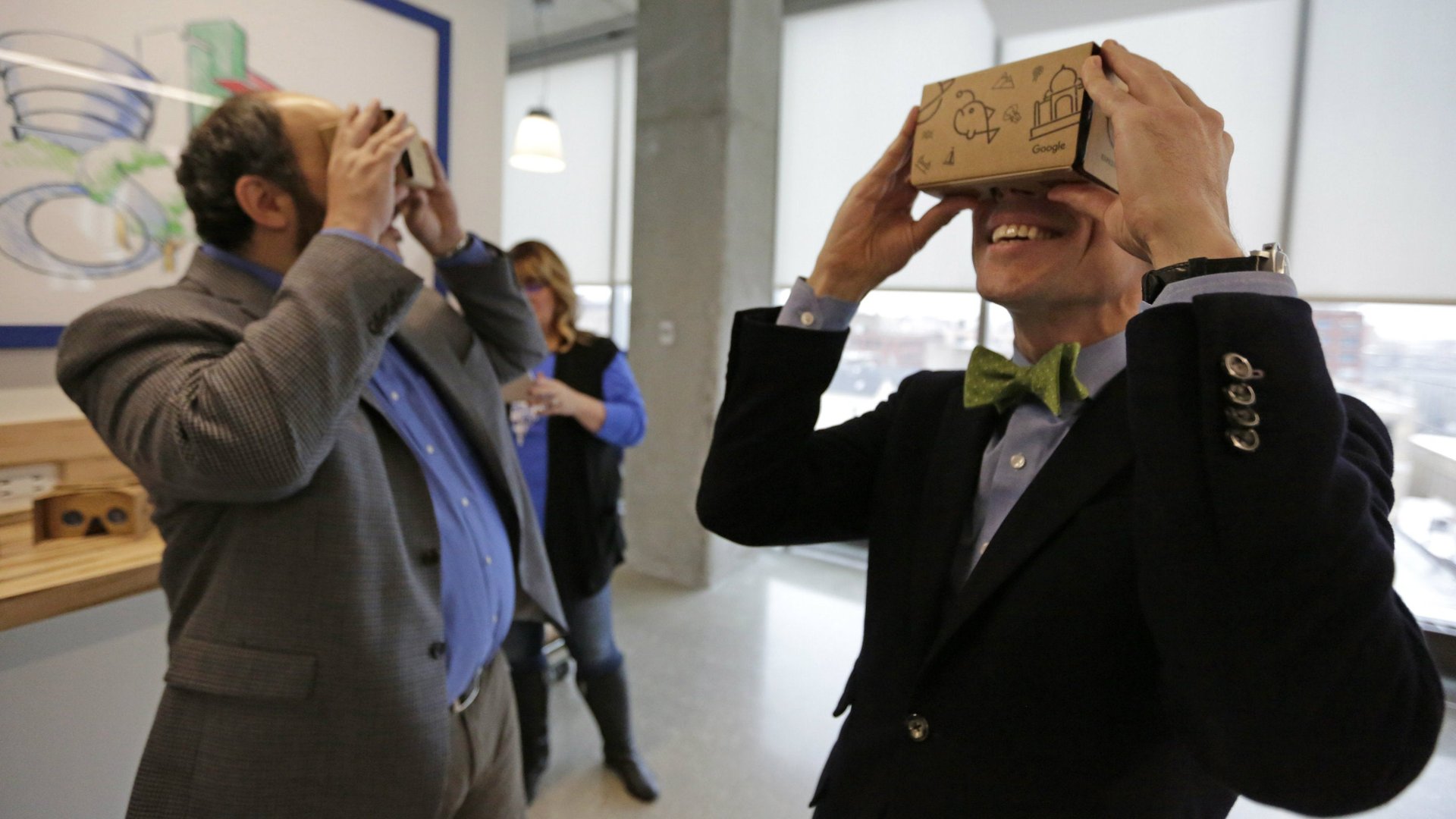
That’s when doctors from Nicklaus Children’s Hospital turned to Google Cardboard, which costs about $20 and works with any smartphone. They were able to convert 2D MRI scans of Teegan’s heart into a 3D model, upload it onto an iPhone, and view it through Google’s simple VR headset. It finally gave surgeons a chance to visualize the procedure that would go on to save Teegan’s life.
With VR imaging, doctors were able to successfully decide where to make their first incision. The doctors were able to proceed with the delicate seven-hour open-heart surgery, where they rebuilt Teegan’s aorta—the body’s main blood vessel that leads away from the heart—with donated heart tissue and then connected her aorta and pulmonary artery.
“I looked inside and just by tilting my head I could see the patient’s heart,” Dr. Juan-Carlos Muniz, head of the hospital’s MRI program, told UploadVR. “I could see it as if I were standing in the operating room.”
Join 500,000+ readers who start their day with Quartz.
By subscribing, you agree to our Terms of Service and Privacy Policy.