No one wants to be called fragile. And if you’re white, what you feel reading the title of this article may be indicative of the term. “White fragility” refers to white people’s low emotional tolerance for discussing topics of race and racism.
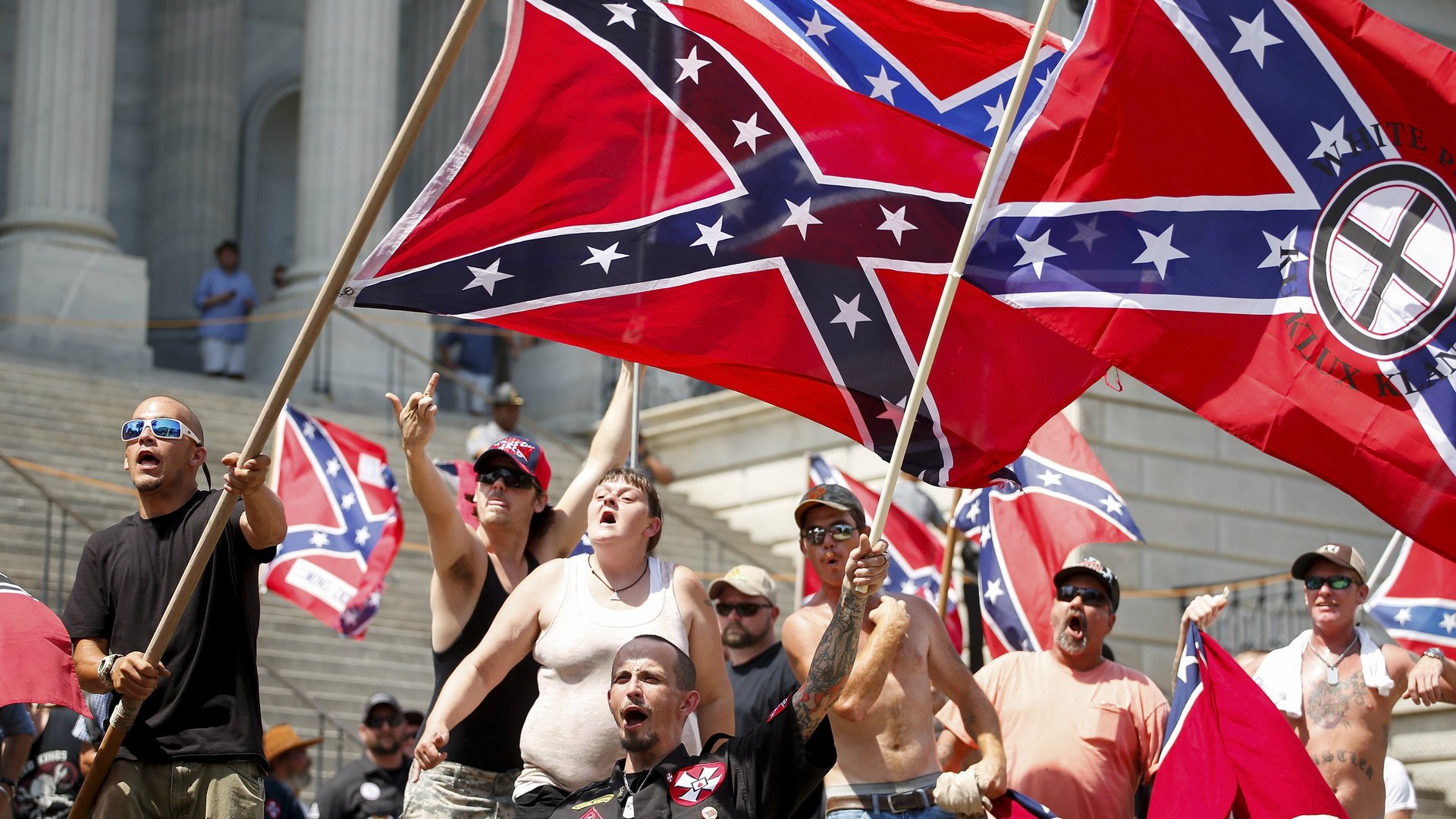
No one wants to be called fragile. And if you’re white, what you feel reading the title of this article may be indicative of the term. “White fragility” refers to white people’s low emotional tolerance for discussing topics of race and racism.
The term was coined by Dr. Robin DiAngelo in a 2011 article discussing her experience with white people in anti-racism trainings. She defines it as “a state when even a minimum amount of racial stress becomes intolerable, triggering a range of defensive moves.”
Join 500,000+ readers who start their day with Quartz.
By subscribing, you agree to our Terms of Service and Privacy Policy.
We’ve taught similar anti-oppression trainings at tech companies, where we worked as in-house psychotherapists and emotional intelligence educators, and we’ve struggled with similar challenges. In our experience, when introducing the concept of race and oppression, the first defense is usually a diversion led by the students to the topic of the oppression of red-headed people, the overweight, the disabled, or their own immigrant heritages. We aim to explain to the group how although these experiences, while indeed oppressive, are not comparable to the centuries of enslavement, race-based legislation, systematic incarceration, and unequal wealth distribution that is racism in the United States. The other class favorite is the derailment to a discussion about “reverse racism,” where we often defer to comedian Aamer Rahmen’s three minute video to resolve. What begins as a workshop often ends up feeling much more like a battle. Facilitators before us have gone so far as to outline specific participation guidelines for these workshops such as ”speak from your own experience” (i.e. no playing devil’s advocate or using hypotheticals) to nip some of the other common defense mechanisms in the bud and to promote more productive conversations.
What makes race so hard for white people to talk about? For many, topics of race and racism trigger intense emotional reactions for a few reasons:
We all have biases, regardless of our race, gender, sexuality, class, or religion, many of which are unconscious. The human brain uses split second reactions to make sense of the world using only cues in appearance and behavior, and those reactions are highly socialized by cultural norms and media influences. If you don’t believe us, check out the Harvard implicit associations test (IAT) to measure your own.
Society and media have contributed to inlaying some biases you didn’t choose to have. Does having biases make you a bad, immoral person? No. Is it good to acknowledge and work to challenge your own biases? Absolutely. Are you “bad” because you didn’t know that you had unconscious biases until now? Not at all.
In retrospect, you might realize that some of your learned behavior or speech has been pejorative, supporting a system of oppression, or exclusionary, but that’s not a definitive character judgement and recognizing that could be a really valuable moment. We’re building awareness here. Try to let go of the good/bad binary, and open yourself up to discussion and possibility that if you’re American, you almost definitely have racial biases, and if you’re white, add unearned access to privilege to that too. Still with us?
So, while it’s not your fault that you were born white, and benefit from white privilege, it is your obligation and responsibility to develop awareness of the ways in which you benefit. Whites can and should acknowledge the past and present of their own racial group—the people who look like you (whether you share a hereditary bloodline or not)—and acknowledge how racism preserves today without the need to call into question your own morality. Individualism here is not to erase history or to negate the fact that white is still part of a racially socialized group. You as an individual are not outside of socialization or messages from society about race in culture. You are not outside unequal wealth distribution by race. No one is.
