As usual, Google used the keynote at its I/O developer conference to unleash a barrage of product news. Here’s a summary of everything it announced.
As usual, Google $GOOGL used the keynote at its I/O developer conference to unleash a barrage of product news. Here’s a summary of everything it announced.
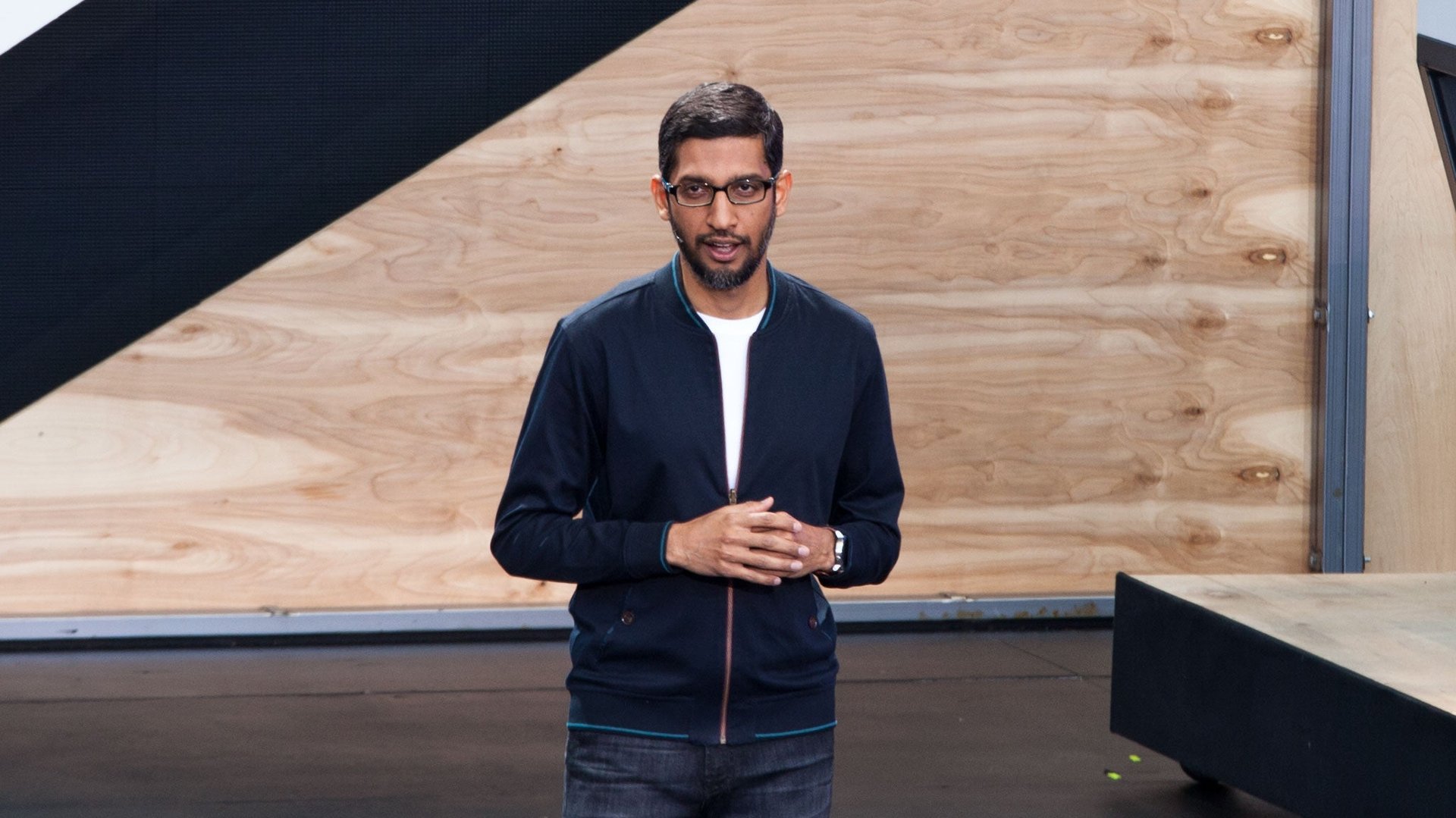
Better late than never. With chat bots dominating tech headlines in 2016, Google today debuted a new chat-based intelligent assistant that it has imaginatively named the Google Assistant. The search giant insists its assistant is smarter than others because it’s built atop Google’s work organizing information online and processing natural language. “Every single day, people say ‘OK Google’ and ask us questions that we help them with,” said CEO Sundar Pichai. “We started becoming truly conversational because of our strengths in natural language.”
Join 500,000+ readers who start their day with Quartz.
By subscribing, you agree to our Terms of Service and Privacy Policy.
To demonstrate Google Assistant’s capabilities, Pichai demonstrated the process of finding a movie to watch on a Friday night. “You normally pull out your phone, research movies, look at the reviews, find shows nearby, and try to book a ticket,” he said. But with Google Assistant, the user can start by asking what movies are playing that evening and mention wanting to bring the kids along. The assistant then suggests family-friendly options and asks if the user wants it to book four tickets.
Users will be able to access Google Assistant via its upcoming Google Home and Allo products (more details on both below.)
At I/O, Google unveiled its Amazon $AMZN Echo competitor. Google Home is a speaker that users can interact with by voice. Like the Echo, Google Home can answer questions, provide weather updates, control the smart home (including Google’s Nest devices), and of course, play music. “It will deliver rich bass and clear highs all from a beautiful compact form factor,” said vice president of product management Mario Queiroz. “Further in the future we’ll work with developers to make it possible to control things beyond the home, like booking a car, ordering dinner, sending flowers to mom, and much, much more.” The company said the speaker will be released later this year.
Android N is the next version of Google’s mobile operating system software. Google typically names its major Android releases after desserts starting with the next letter of the alphabet. For example, the latest version of Android available to consumers is Marshmallow, preceded by Lollipop, and KitKat. For this release, Google said it will open up to the public the question of what the N should stand for.
Allo is a chat app that integrates Google’s new artificial intelligence application, Assistant. The app is linked to users’ phone numbers so they can chat with friends as they would in a text message. During conversations, however, “Google is listening and ready to make suggestions,” said Erik Kay, director of engineering for communication products. “It’s an ambient experience so it’s there when you need it.”
The Allo app, which will be available for iOS and Android devices this summer, can automatically bring up reservations and respond to requests, such as book restaurant reservations or buy movie tickets. It can also analyze text and images to compose prewritten personalized replies informed by earlier conversations. In a stage demonstration, Allo was able to identify a picture of a dog as a Bernese mountain dog and a dish at an Italian restaurant as clam linguine. “There’s a lot of complex technology at work here to help you say something as simple as, ‘I love linguine,’” said Kay.
Google plans to add security features, image editing tools, and more emojis. Allo also has a “whisper or shout” feature, which increases or decreases the size of text and icons. (Kay believes this will reduce people’s use of all caps in their messages.) Google also emphasized Allo’s security features, which include end-to-end encryption, private notifications, and an “incognito mode” to protect the identity of users.
Google has yet another video-chatting app. A companion to Allo, Duo is designed to be a simple video-calling app with end-to-end encryption. What makes Duo different from existing video-calling options is a feature called Knock Knock, which provides a live video preview of the caller before the receiver picks up. Kay demonstrated this by having his two young daughters call him at the conference. Cue the awwws. Like Allo, it will be available on Android and iOS this summer.
Two years ago at I/O, Google debuted Cardboard, a lo-fi virtual-reality headset made of its namesake material. But recognizing the limitations of the device, Google today gave the world a peek at a design for a standalone headset and controller that lets people use their hands in VR. The reference design will be available later this fall.
In addition, Google also debuted a new VR platform called Daydream. With Daydream, Google is helping define the specifications, such as high-performance sensors for accurate head tracking, for VR-capable smartphones (called Daydream-ready devices). One of the main objections of these standards, which phone manufacturers will also collaborate on, is to reduce the delay between the user’s head movement and the picture seen on the screen. The latency can make some people feel motion sick when wearing a VR headset. A new VR mode in the upcoming Android version will reduce latency to less than 20 milliseconds.
Google is updating its wearables software platform, Android Wear, so “any watch can show data from any app,” said David Singleton, who oversees Google’s smartwatch efforts. The company also wants to free the watch from the smartphone tether. The next release will expand support for standalone apps that function without access to wifi, bluetooth, or cellular data. “Everything works on just the watch,” Singleton added, noting people will be able to make calls directly from their wrists.
Google wants Android apps to work just like the web. Android Instant Apps is the company’s first step toward that goal. Instead of downloading an app, Android phones will be able to selectively download only the code that’s necessary to view a certain video, ecommerce item, or other piece of content. Instant Apps work by allowing developers to slice their apps into modular chunks, which Google Play fetches and runs in a screen.
The release will be available in the fall and will be compatible with Android operating system versions dating back to 2012. “It’s a big change in how we think about apps, and we want to get it right,” said Ellie Powers, Google’s lead product manager. “That will take some time.”
Firebase, a backend developer service Google acquired in 2014, is getting more robust. Using Google Analytics as a foundation, Firebase now includes mobile analytics. Developers will also be to group users based on criteria they care about and target them with notifications and campaigns. “Firebase is the most comprehensive developer offering we have done to date and I’m glad it’s available today,” said Pichai.
Google has been investing heavily in its cloud platform to compete against Amazon and Microsoft $MSFT. Pichai had told investors in the past that it hopes to differentiate its cloud services with machine learning and artificial intelligence. He said today that developers who use Google’s cloud will have access to the company’s computer vision, speech, and translation APIs. “When you use Google Cloud Platform, not only do you get access to the great software we use internally, you also get access to specialized hardware we use internally,” he said.
