Close-up imagery of Pluto’s surface has scientists wondering how the dwarf planet’s terrain came to be. The photos, which show expansive mountain ranges and valleys, were taken by the New Horizons probe in July 2015 and were released by NASA this week.
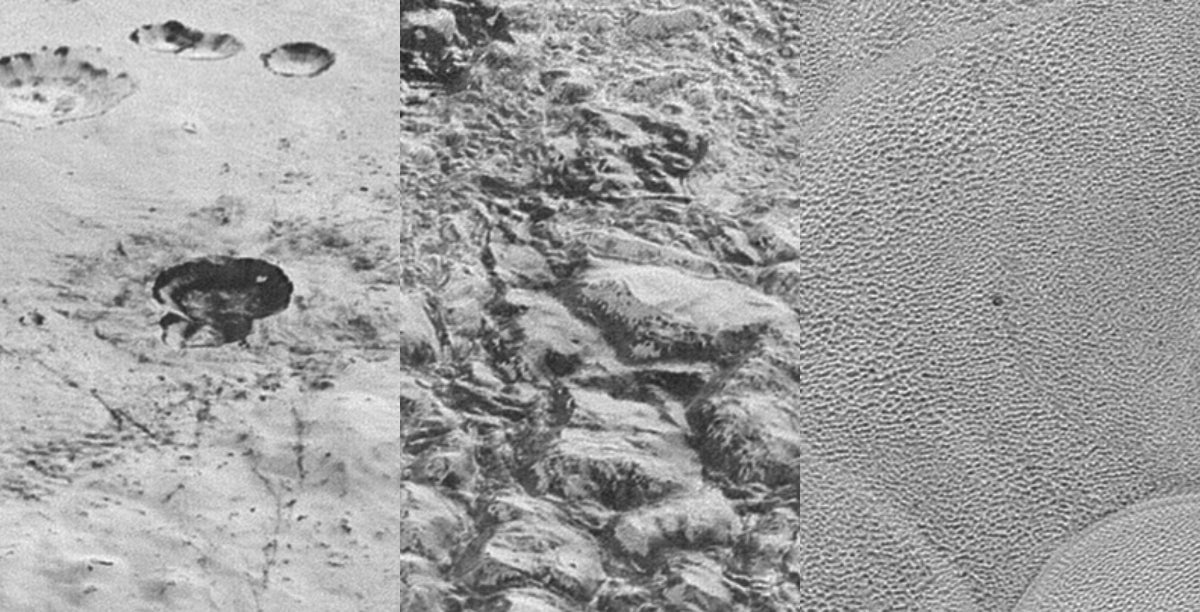
Close-up imagery of Pluto’s surface has scientists wondering how the dwarf planet’s terrain came to be. The photos, which show expansive mountain ranges and valleys, were taken by the New Horizons probe in July 2015 and were released by NASA this week.
“We traveled 3,000 miles and found something a lot like the Earth,” says Alan Stern, New Horizons’ principal investigator from Southwest Research Institute in Boulder, Colorado. “It was a big surprise.”
Join 500,000+ readers who start their day with Quartz.
By subscribing, you agree to our Terms of Service and Privacy Policy.
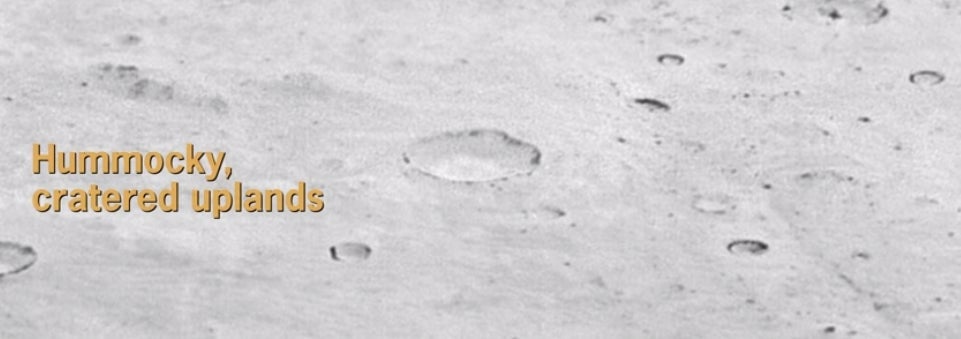
The images depict a strip of terrain that runs almost the entire length of one side of the dwarf planet and is approximately 50 miles (80.5 km) wide.
At the top of the strip, the photos depict “hummocky, cratered uplands.” These craters are about the size of Manhattan, according to Stern.
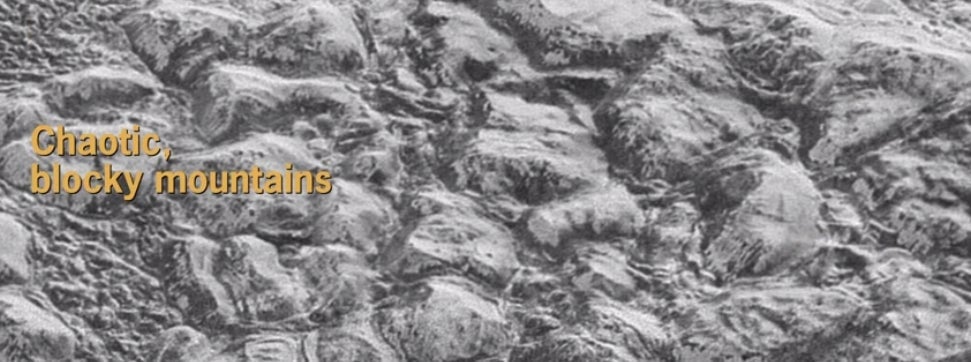
Next up, we see “washboard terrain” and “chaotic, blocky mountains.” The latter are comparable to Colorado’s Rocky mountains, according to Stern. He and his colleagues are not sure how they formed. ”We can see them and measure their sizes, but their formation is a mystery to us,” he says.
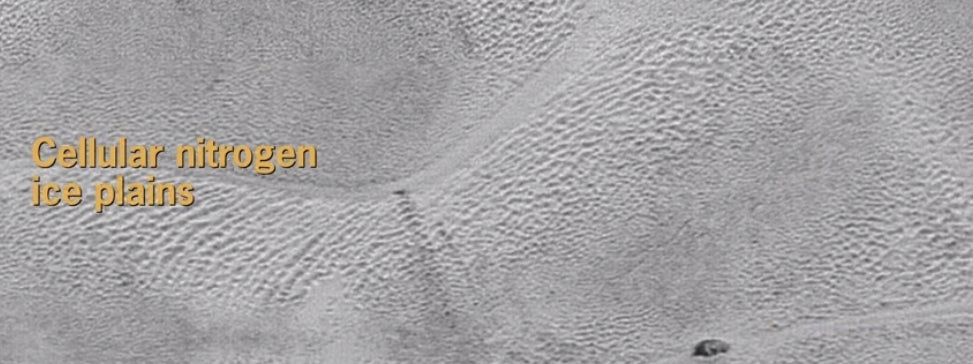
The “cellular” and “non-cellular” nitrogen ice plains that follow the mountainous region are a little less mysterious. They are the result of nitrogen snow, which forms at temperatures “about 400 degrees below zero, Fahrenheit (-240 C),” says Stern. These ice plains were discovered prior to the New Horizons probe by scientists using a telescope to look at Pluto from Earth, according to Stern.
Overall, the terrain on Pluto is much more varied than scientists expected it to be. “Pluto has a big complexity scale, which is not something you see on planets other than Earth,” says Stern. “But the reason is a total mystery—a total, complete mystery.”
You can see the images, stitched together in their entirety, here.

