Somehow, humans evolved from single cell organisms to the intelligent creatures we are today. So, is it so incredible to conceive that the next step in our evolution will see man meld with machine?
Somehow, humans evolved from single cell organisms to the intelligent creatures we are today. So, is it so incredible to conceive that the next step in our evolution will see man meld with machine?
That’s the argument two scientists from the University of Adelaide’s school of medicine put forward in their latest book,” The Dynamic Human.” Maciej Henneberg and Dr Arthur Saniotis say that human evolution is an ongoing process—one that will soon involve technology.
Join 500,000+ readers who start their day with Quartz.
By subscribing, you agree to our Terms of Service and Privacy Policy.
“There is still a tendency by some to view the current form of human beings as static, and that we will stay as such into the future unless some catastrophe causes our extinction,” said Henneberg in a statement.
In the forward to the book, Robert Eckhardt, professor of developmental genetics and evolutionary morphology at Penn State University, points out that brain-machine interfaces already exist, with at least 59,000 people who currently have neurological prosthetics. In the future, he writes, more will benefit from these “cognitive enhancement technologies.”
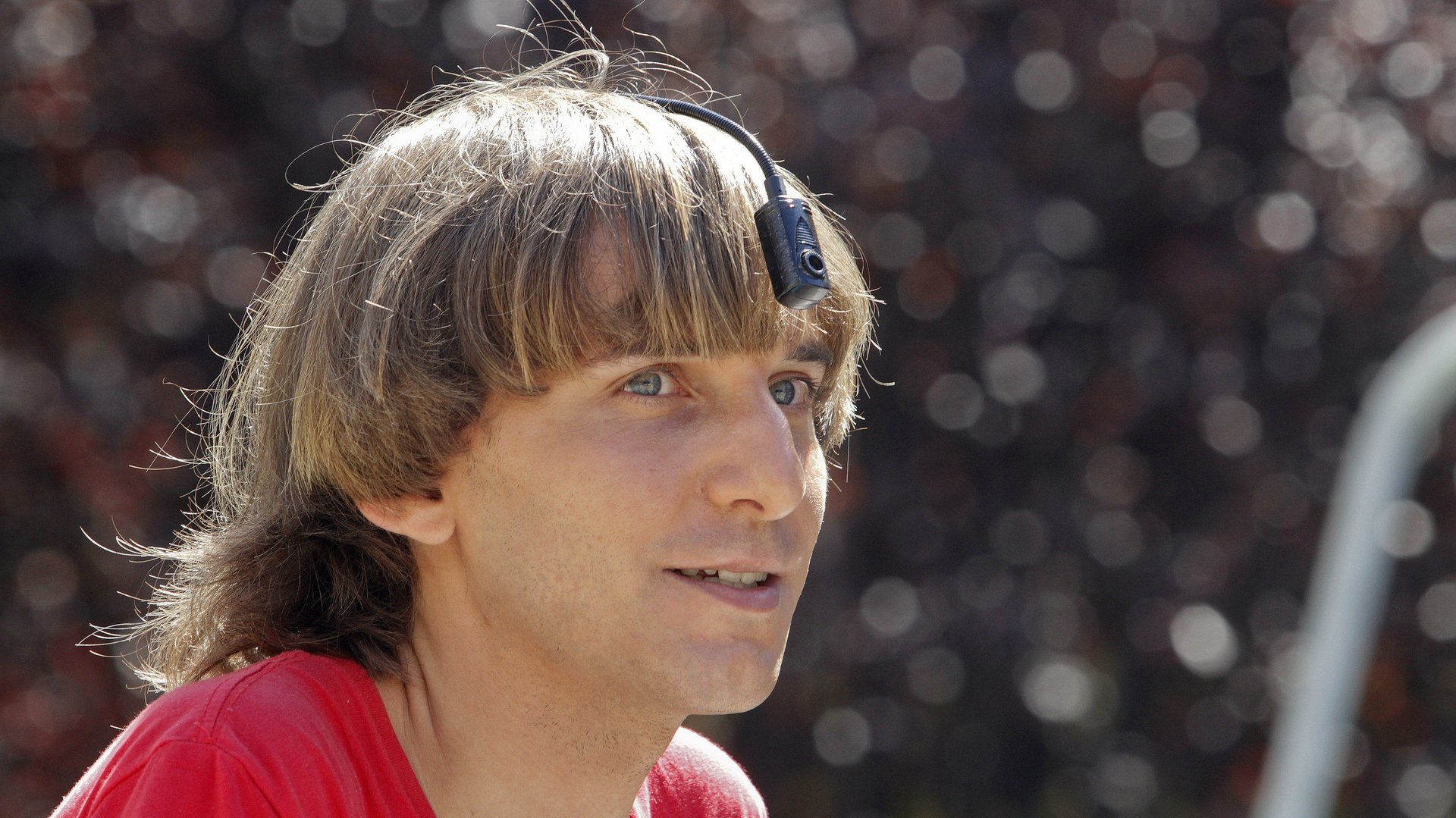
Indeed, though certain technological enhancements such as glasses, hearing aids, and bionic limbs are now commonplace, there’s growing interest in more unusual “biohacks.” Neil Harbisson, an artist with colorblindness, has a chip implanted in his head and antenna attached to his skull that allows him to hear a different frequency of sound for each color.
Meanwhile, his artistic partner Moon Ribas has an implanted magnet that allows her to feel the tremors of earthquakes around the world.
Meanwhile, SpaceX and Tesla $TSLA CEO Elon Musk said at Re/code’s 2016 Code Conference that he expects”neural lace” to become increasingly important. The futuristic-sounding concept would involve a fine, delicate mesh that is implanted into the brain to allow our mind to interact with electronic circuits.
Such developments will be key to next stage of human evolution, argue the University of Adelaide scientists.
“The advent of brain-machine interfaces may force humans to redefine where our humanity lies; it will blur the boundary between human and machine,” said Saniotis.
