You’d be forgiven for thinking that this picture is of an atom bomb exploding over Phoenix, Arizona.

You’d be forgiven for thinking that this picture is of an atom bomb exploding over Phoenix, Arizona.
Thankfully, there haven’t been any atmospheric nuclear bomb tests since 1980. The picture of a giant mushroom cloud, captured by Bruce Haffner, a freelance reporter and helicopter pilot, is a rare weather phenomenon known as a “microburst.”
Microbursts occur during thunderstorms. A storm can cause rain clouds full of water droplets or hail to mix with patches of dry air. When that happens, the dry air sucks moisture from the wet air. That makes the wet air cool down, and as it cools, it starts to sink. If the whole process occurs fast enough and over a large enough area, you get a large column of cool air sinking rapidly and spreading out over the ground with great force—a microburst.
Join 500,000+ readers who start their day with Quartz.
By subscribing, you agree to our Terms of Service and Privacy Policy.
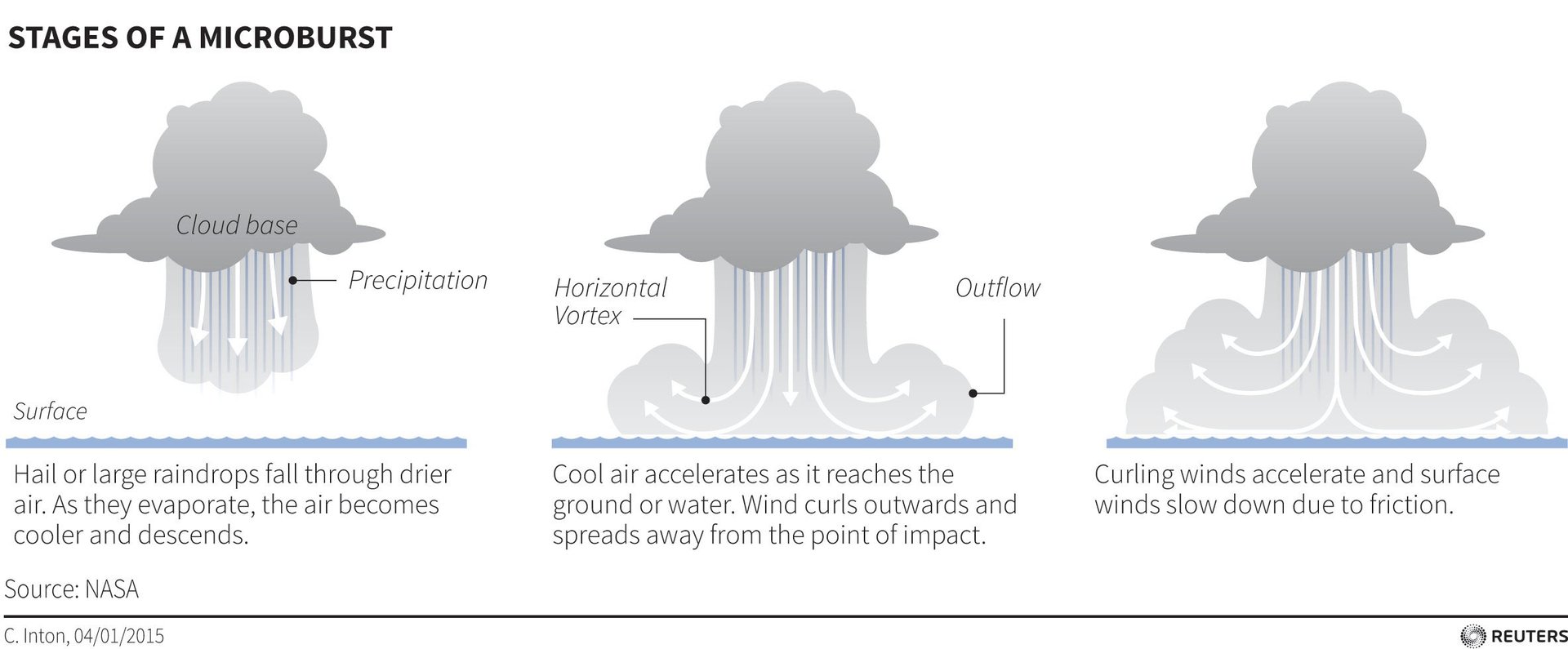
The winds generated can be as high as 170 mph (270 kph), knocking over fully grown trees. A microburst may also bring rain with it, often called a “rain bomb,” but these are relatively rare.
Though microbursts can harm people and buildings, they most damage they have caused is to airplanes. There have been nine reported cases of fatal crashes or accidents when a plane has been caught in a microburst and pushed to the ground with huge force. Recently, however, training and technology have finally enabled pilots to be able to escape microbursts before things go disastrously wrong.
Still, even for people on the ground, microbursts can be terrifying. Just look at what happened in Oklahoma in 2011:
