Sleep is perhaps the worker’s most precious commodity. There’s never enough time for it and a lack of it can lead to all kinds of terrible mistakes at work. In Japan, ‘death by overwork,’ or karoshi, is even a legally recognized phenomenon. What’s the cost of showing up for work extra tired? Do power naps actually work? And does closing your eyes during your (non-driving) commute do any good?
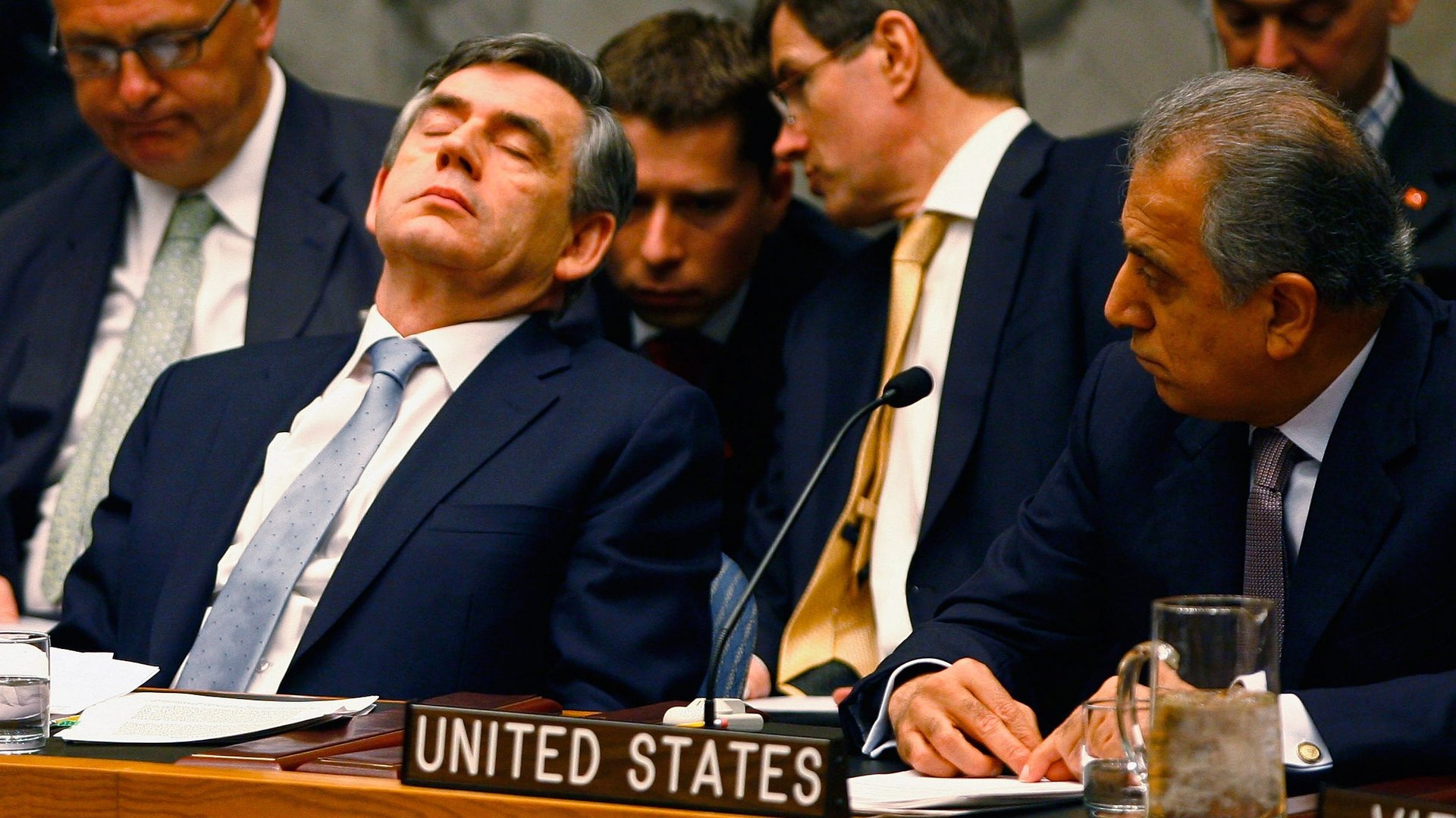
Sleep is perhaps the worker’s most precious commodity. There’s never enough time for it and a lack of it can lead to all kinds of terrible mistakes at work. In Japan, ‘death by overwork,’ or karoshi, is even a legally recognized phenomenon. What’s the cost of showing up for work extra tired? Do power naps actually work? And does closing your eyes during your (non-driving) commute do any good?
Here’s the complete guide to sleeping and the workplace.
Join 500,000+ readers who start their day with Quartz.
By subscribing, you agree to our Terms of Service and Privacy Policy.
A group of researchers from Tufts Medical Center assessed the impact of sleep disturbance on workplace productivity. Writing in the Journal of Occupational and Environmental Medicine, they unearthed the unsurprising discovery that sleep disorders have a noticeable, significant impact on job performance. They found a lack of sleep to affect alertness, memory and interpersonal skills, insomniacs being the most highly affected group. They estimated fatigue-related productivity losses cost employers $1,967 per employee per year.
Australian researchers writing in Nature Journal compared the performances of people who’d not slept for 28 hours with those with a blood alcohol level of 0.10% (the US drink-driving limit is 0.08%) and found the impairment on performance to be nearly identical.
Researchers from John Moores University in the UK (paywall) tested the effects of afternoon napping on sleep-deprived people. The subjects napped for half an hour just after lunch and then researchers measured their alertness. There have been numerous studies into the effects of power napping, but this one measured heart rates and reflexes as opposed to surveying participants. As per their hypothesis, alertness was significantly higher compared to the non-nappers.
Researchers in Japan studied ways to improve safety records in work involving night shifts. The scientists found napping to be an effective way of keeping the workers awake during these shifts. Workers who took a nap (between 30-90 minutes) during their shift were able to maintain a more consistent level of performance. They also needed less sleep during the daytime, effectively giving them more waking hours during their time off.
Dr. Carl Bazil from Columbia University Medical Center wanted to figure out whether there’s any point trying to catch 40 winks on the subway. There are different stages of sleep, stage two being the beneficial, restorative kind and stage one being little more than superficial. Bazil hooked up a colleague to a sleeping-measuring device and took him for a ride on the subway. A 23.5 minute journey on a southbound A train in New York City yielded the measly total of three and a half minutes of stage two sleep. That’s barely enough to make a difference to how tired you feel.
One of the first offices in the US to embrace an open napping culture was Yarde Metals. In 1995 company founder, Craig Yarde, noticed that his workers were snoozing at their desks. Rather than penalize them, he stuck a couch in a dark room and let them take 40 winks when they needed to recharge. Since then others have adopted the trend and created napping spaces in their offices. Google $GOOGL has become somewhat of a poster child for office napping after installing futuristic chairs in its offices.
How much nap rooms improve productivity across a company is tricky to measure. Researchers have made the case that the cost to the employer of a 20-minute nap is worth the rejuvenated work that results.
Meanwhile, the Japanese have been sleeping on the job of eons. Inemuri is the art of “sleeping while present.” It’s culturally acceptable to doze in meetings or at school (as long as you remain upright and don’t snore) because it’s a mark of hard work.
Try it out in your next meeting and let us know how it works out.
