What do cats do when their human servants aren’t around? One Austrian photographer decided to find out, and ended up with a peculiar new series in the long photographic tradition of jumpology.
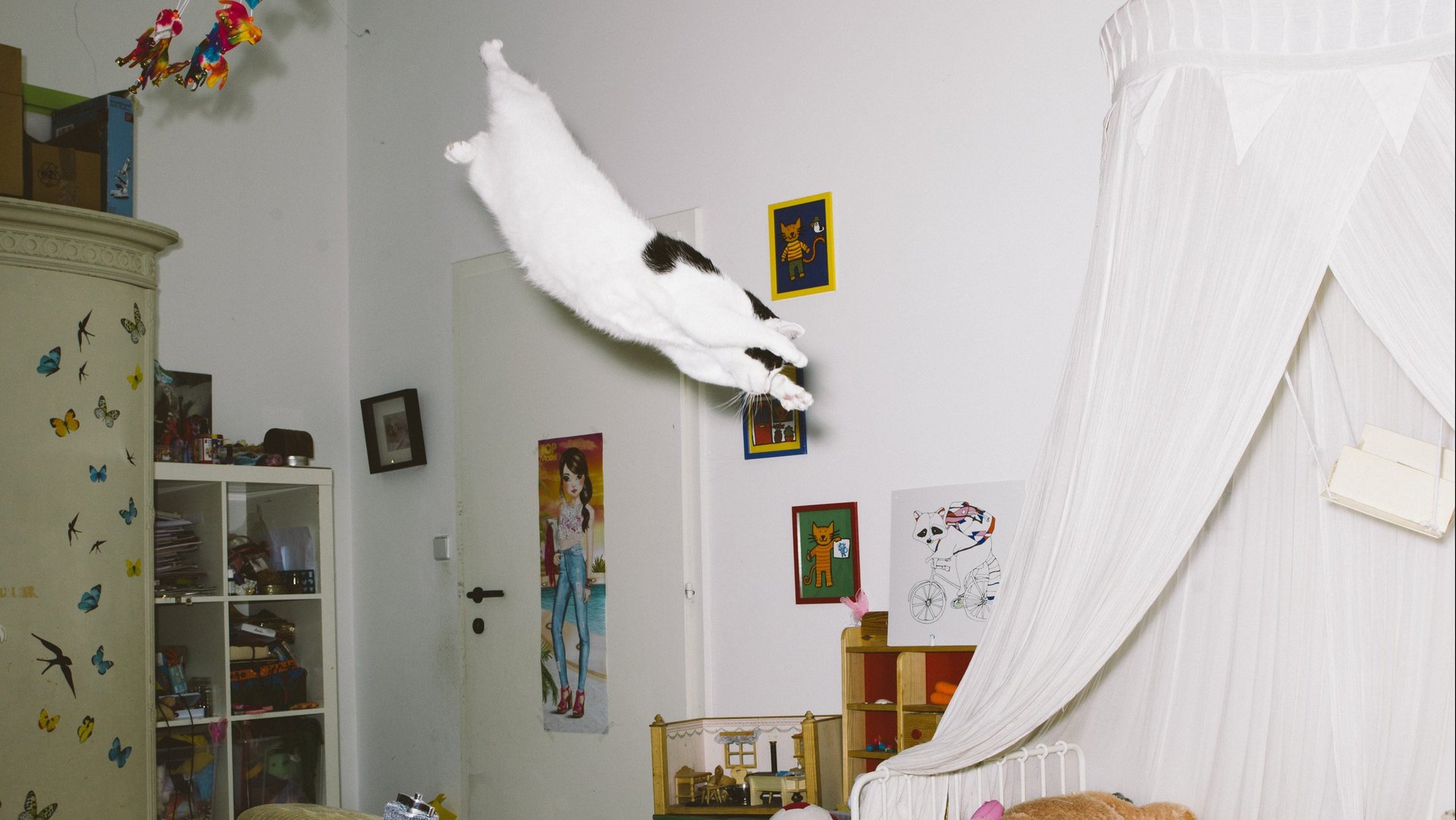
What do cats do when their human servants aren’t around? One Austrian photographer decided to find out, and ended up with a peculiar new series in the long photographic tradition of jumpology.
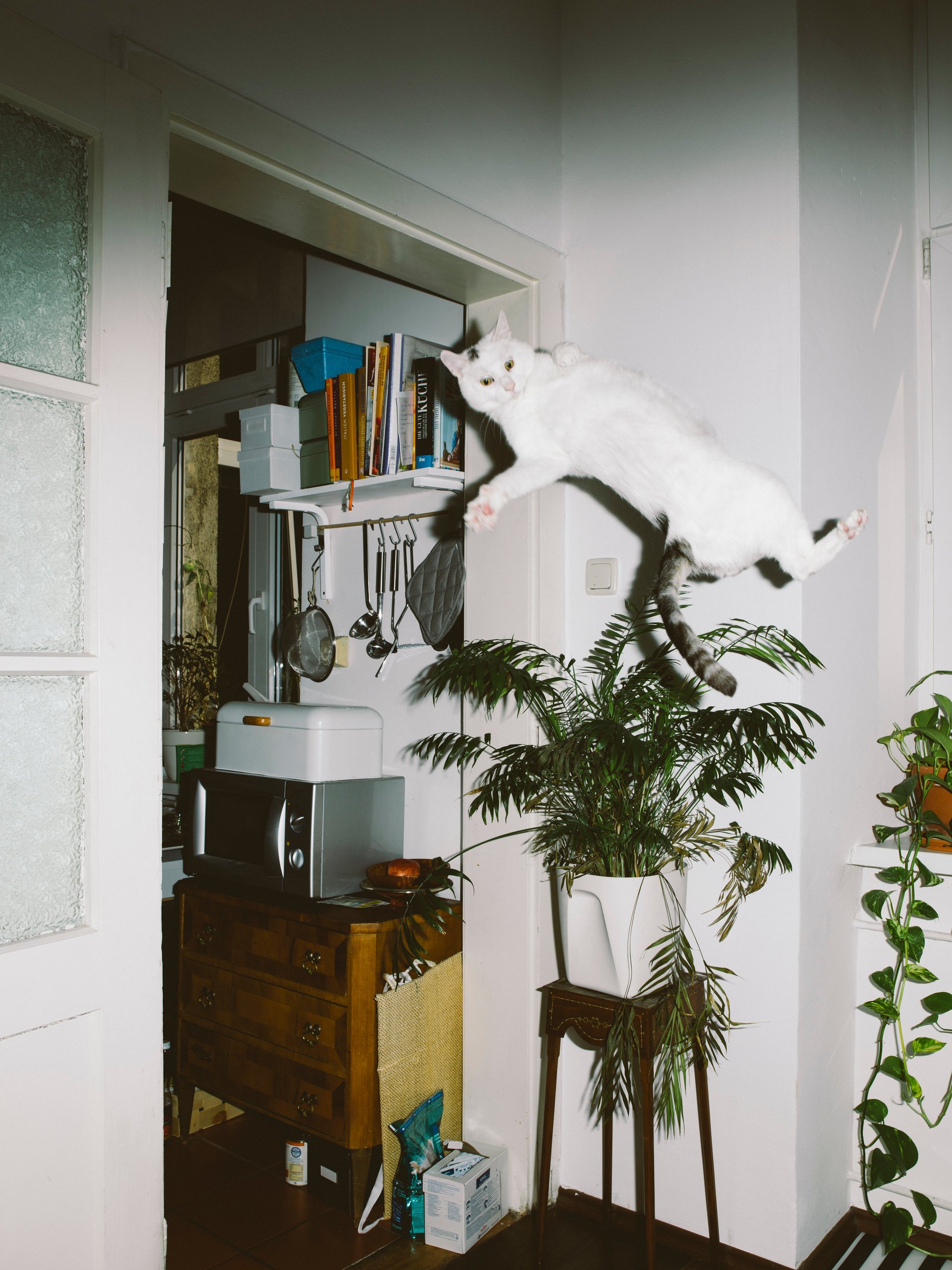
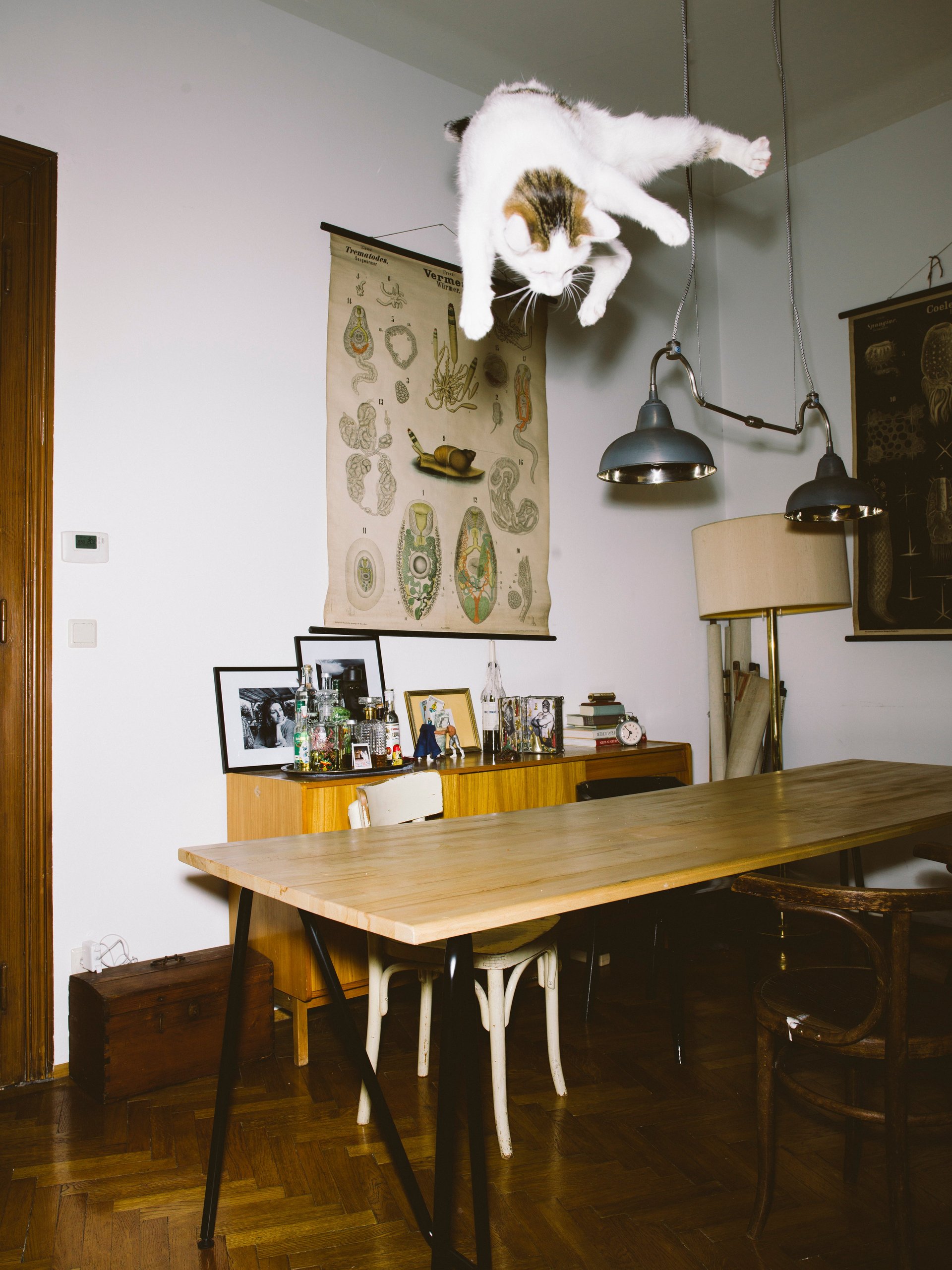
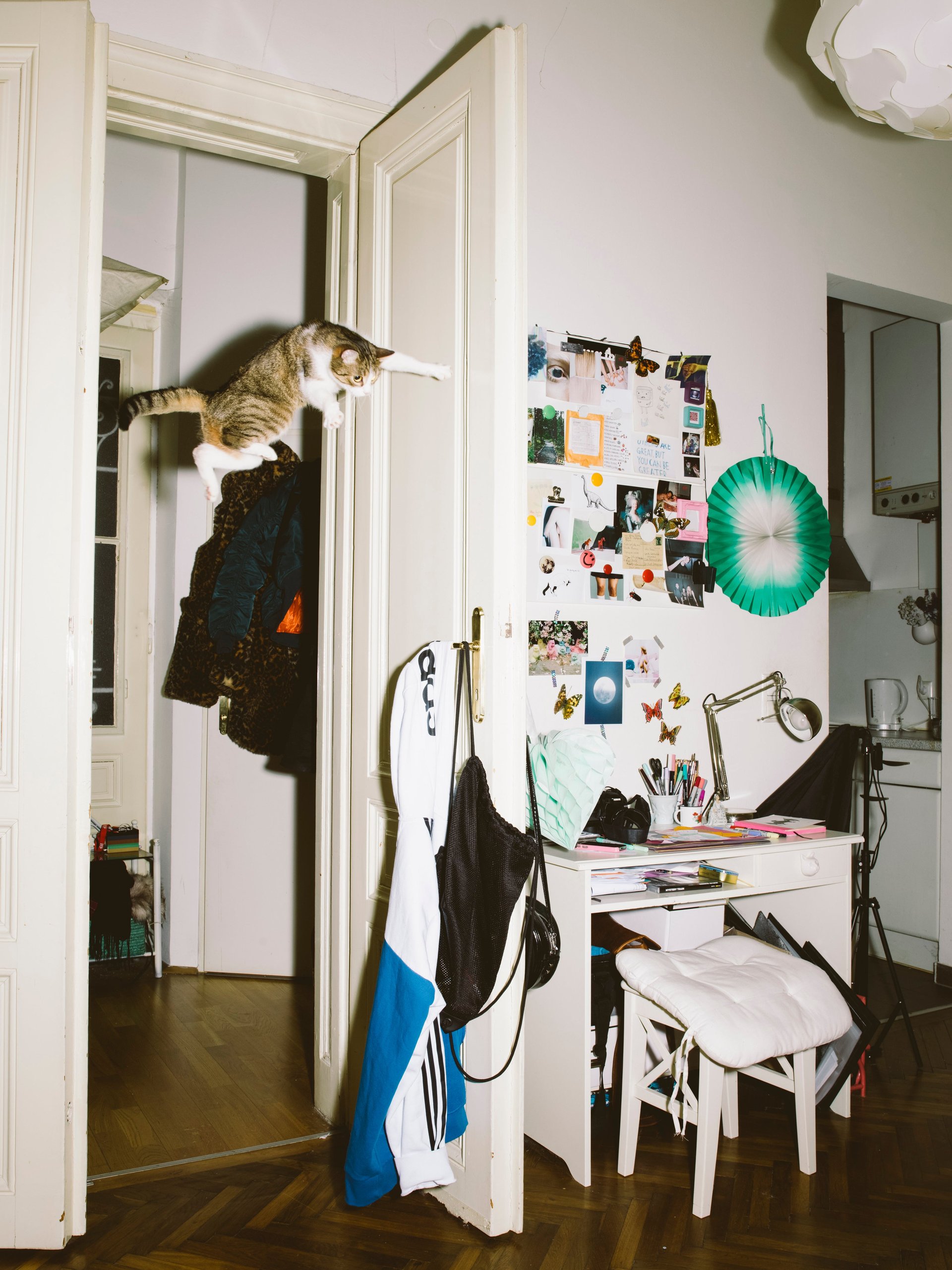
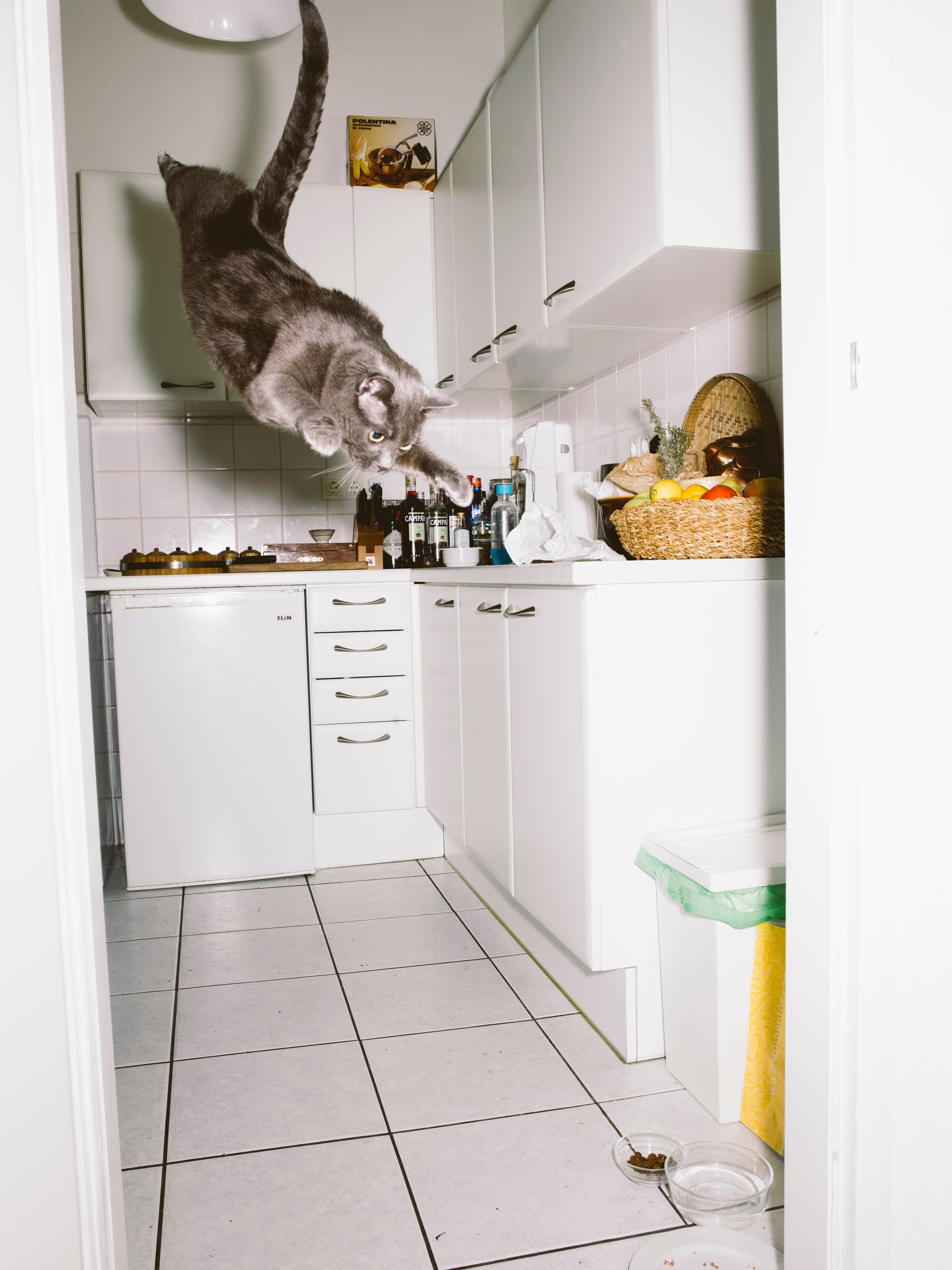
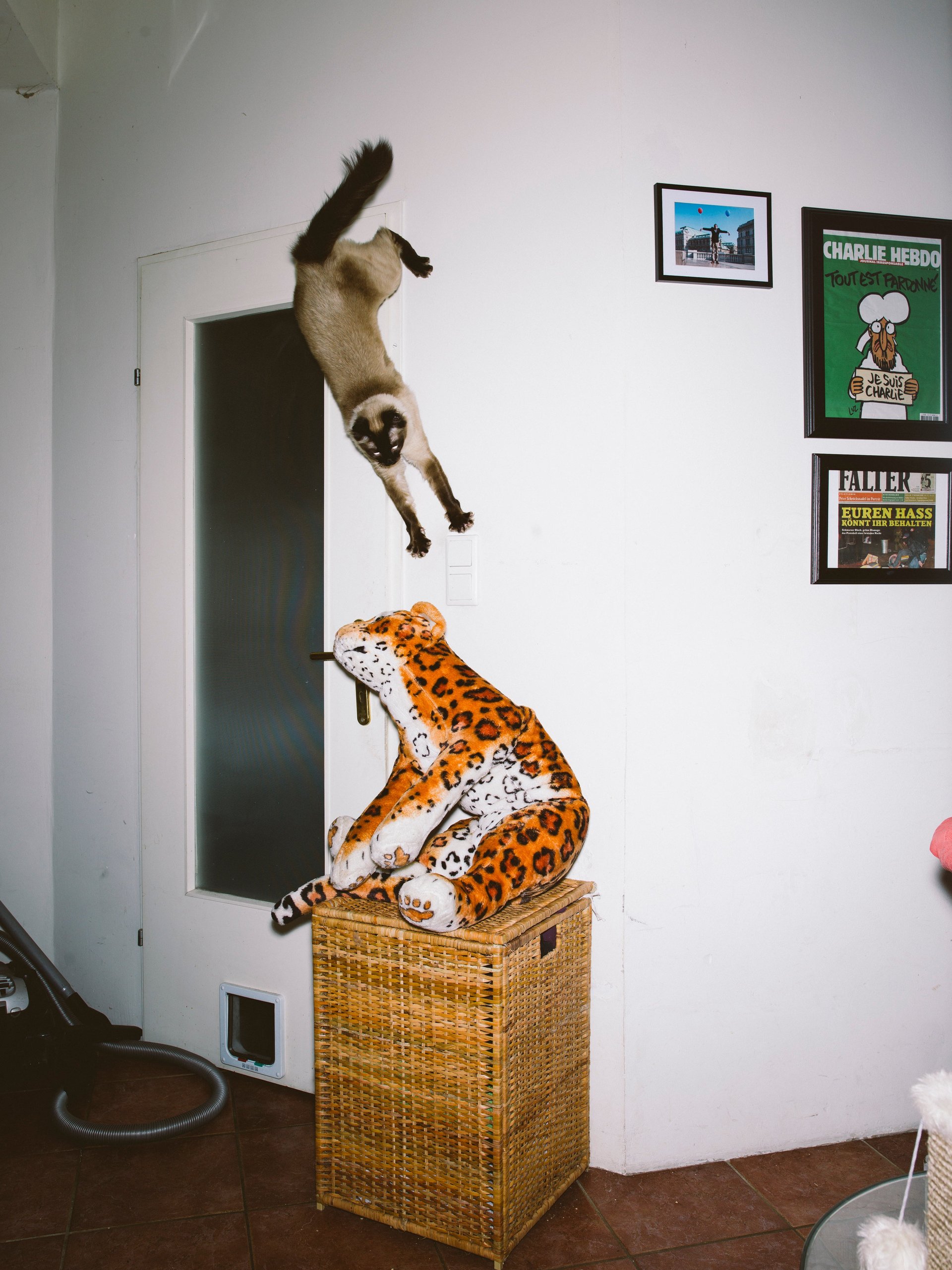
In 2010, photographer Daniel Gebhart de Koekkoek was asked to shoot a cat calendar. The Vienna-based artist began spending time with house cats, and over the course of months, found himself shooting a series of scenes of cats rocketing dramatically across rooms.
Join 500,000+ readers who start their day with Quartz.
By subscribing, you agree to our Terms of Service and Privacy Policy.
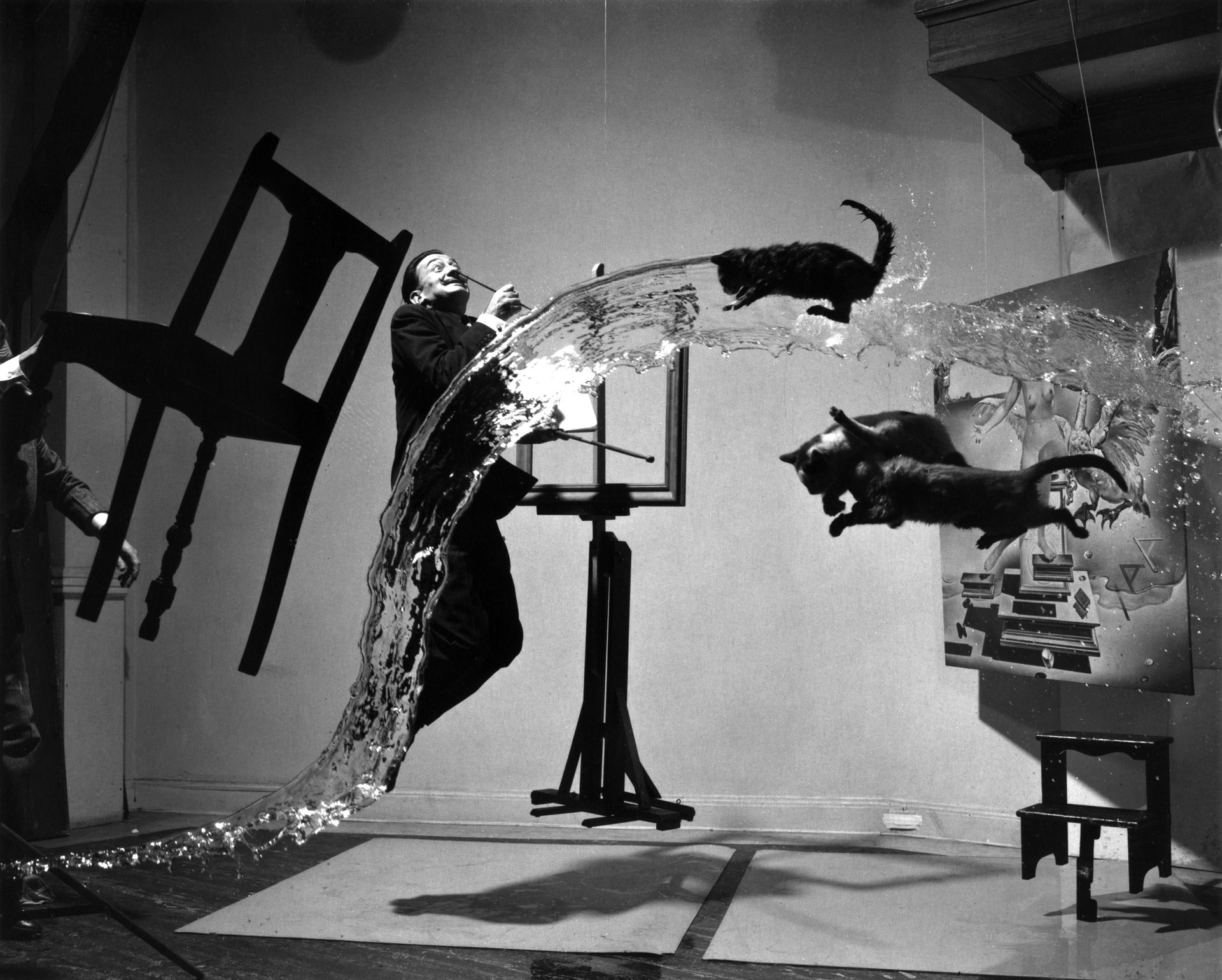
Published September this year, the un-retouched images are inspired by Philippe Halsman’s famous photograph Dalí Atomicus, says de Koekkoek. The iconic 1948 image shows Spanish artist Salvador Dalí apparently weightless, floating midair along with a chair, step-stool, easel, water and several cats. It took Halsman and Dalí 28 tries to perfect the scene.
Halsman was a Magnum photographer, famous in part for his insistence on shooting 20th century celebrities while they were jumping in the air, instead of demurely posed. His 1959 Jump Book includes 200 photos of jumpers from Audrey Hepburn and Brigitte Bardot to the Duke $DUK and Duchess of Windsor. In the book, Halsman also writes at length about his “jumpology” philosophy, arguing that it’s the photographer’s craft to break through the self-consciousness of their subjects.
People made to jump for the camera are jarred out of the passive relationship between artist and subject, Halsman explained. “The mask fell. They became less inhabited, more relaxed—i.e. more photogenic.” Today, plenty of photographers use Halsman’s once-radical jumpology trick, from professionals looking for a fresh angle, to amateurs’ #jumpstagrams.
While photos of cats mid-air have been a point of fascination for scientists since the 1800s, applying the same jumping portraiture approach to animals is less common. But de Koekkoek takes cats unusually seriously.
Like Halsman, de Koekkoek sees his jumping series as way to reveal the hidden silly side of his subjects, which he claims to know about through communicating with them. “One of the cats told me the secret of what they are doing,” he tells Quartz. ”After I was spending a very long time together with them, they let loose and they showed me that they would try to jump.”
De Koekkoek adds that no cats were thrown in the making of the images below.
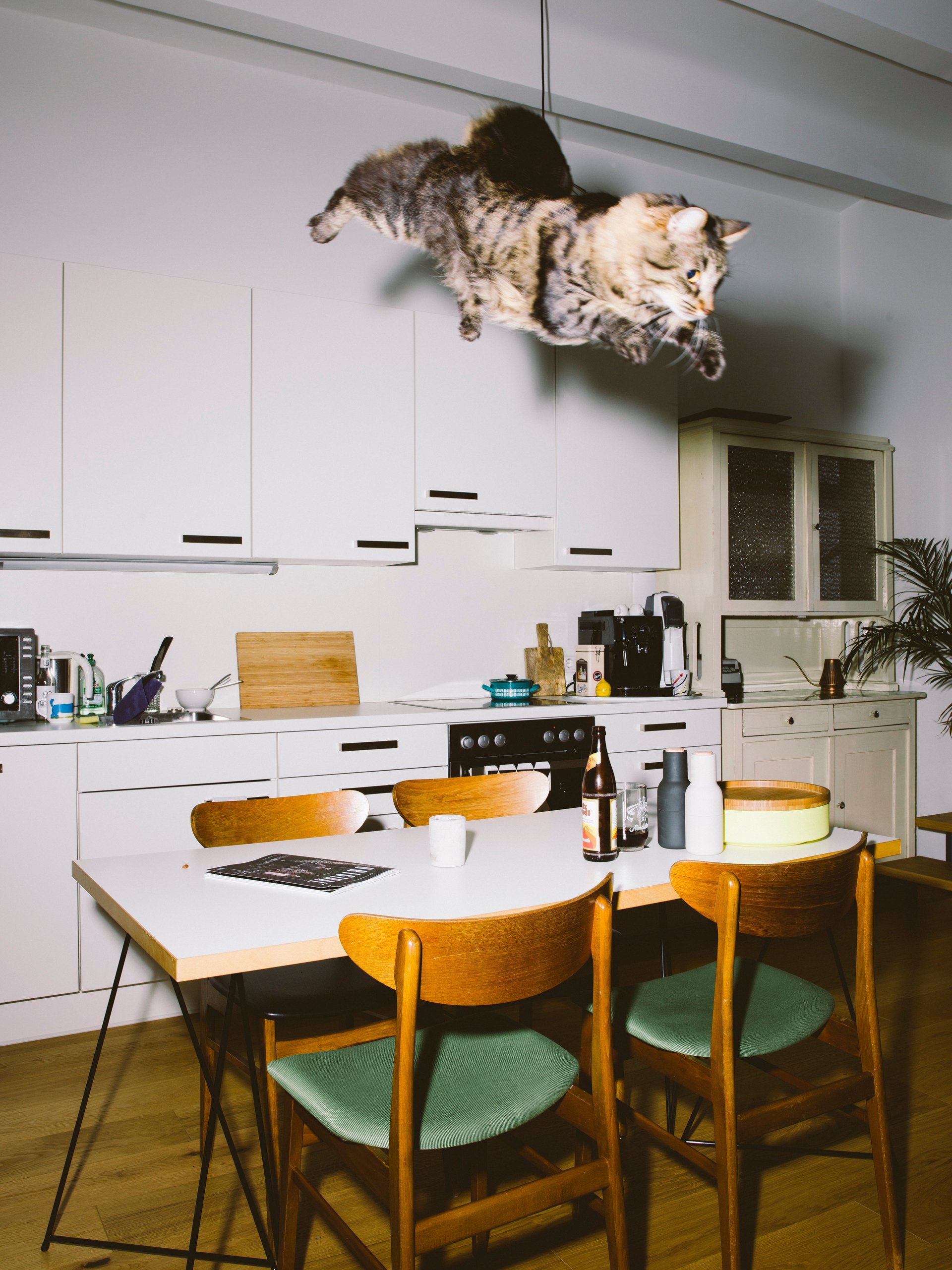
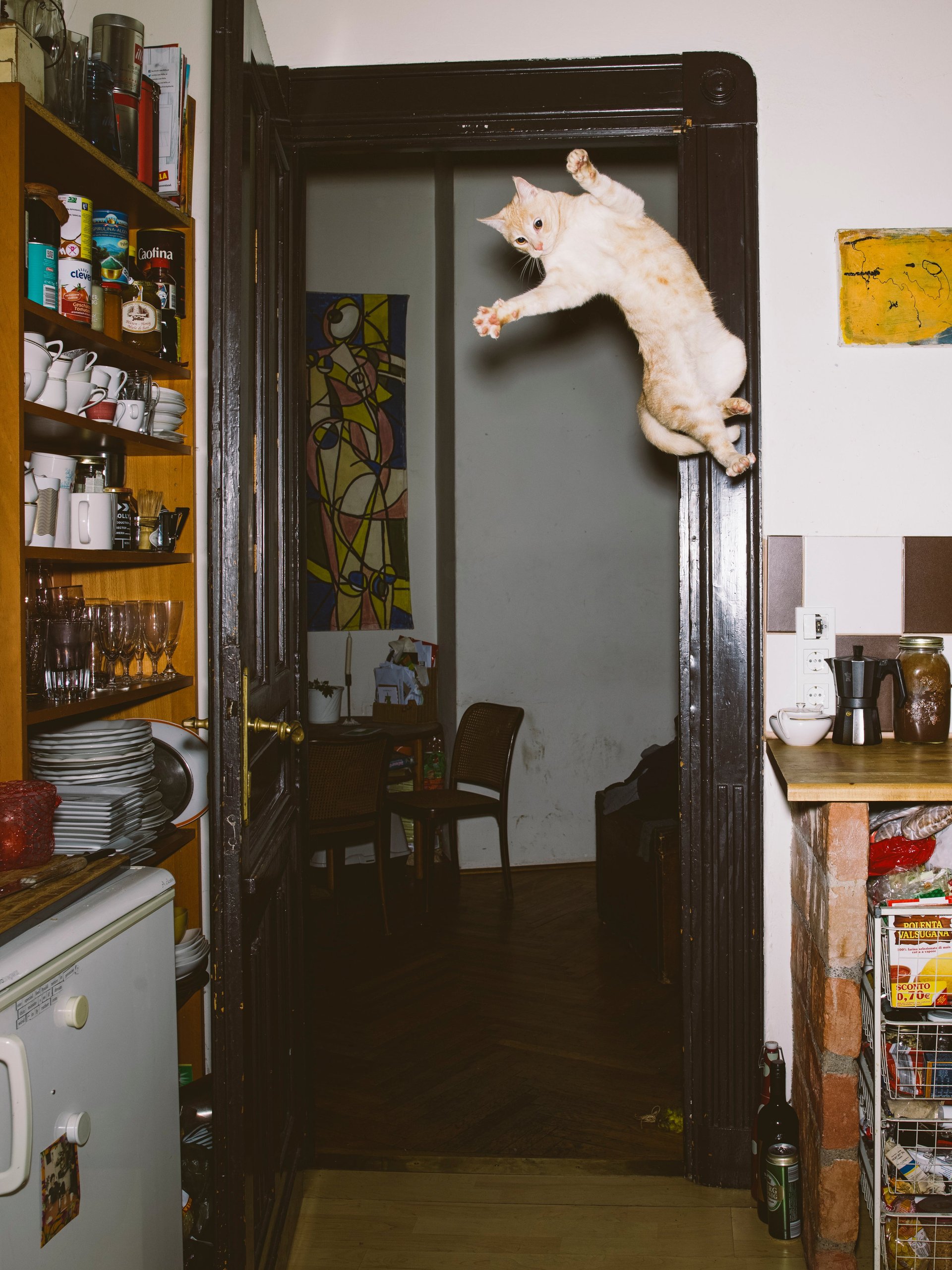
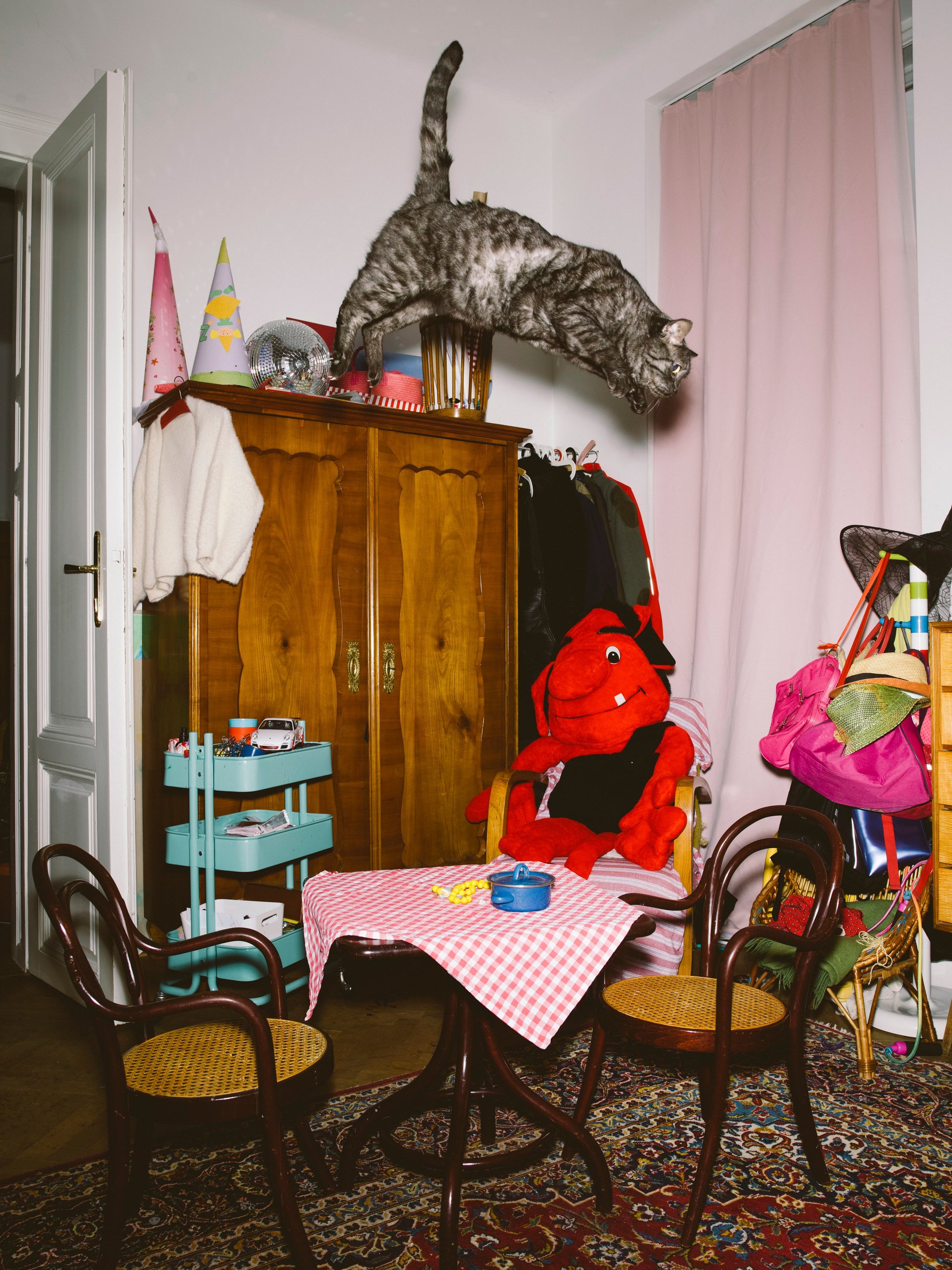
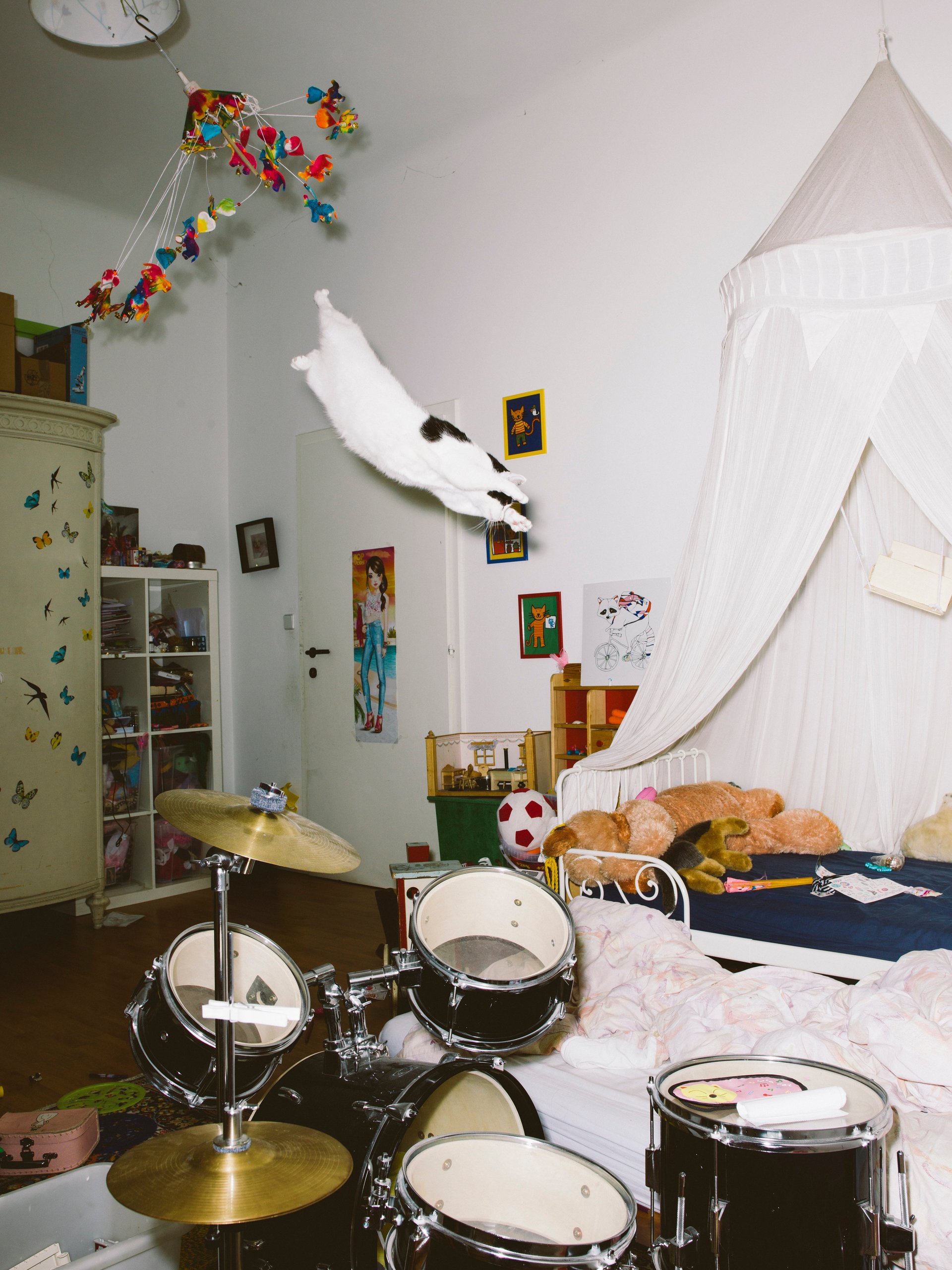
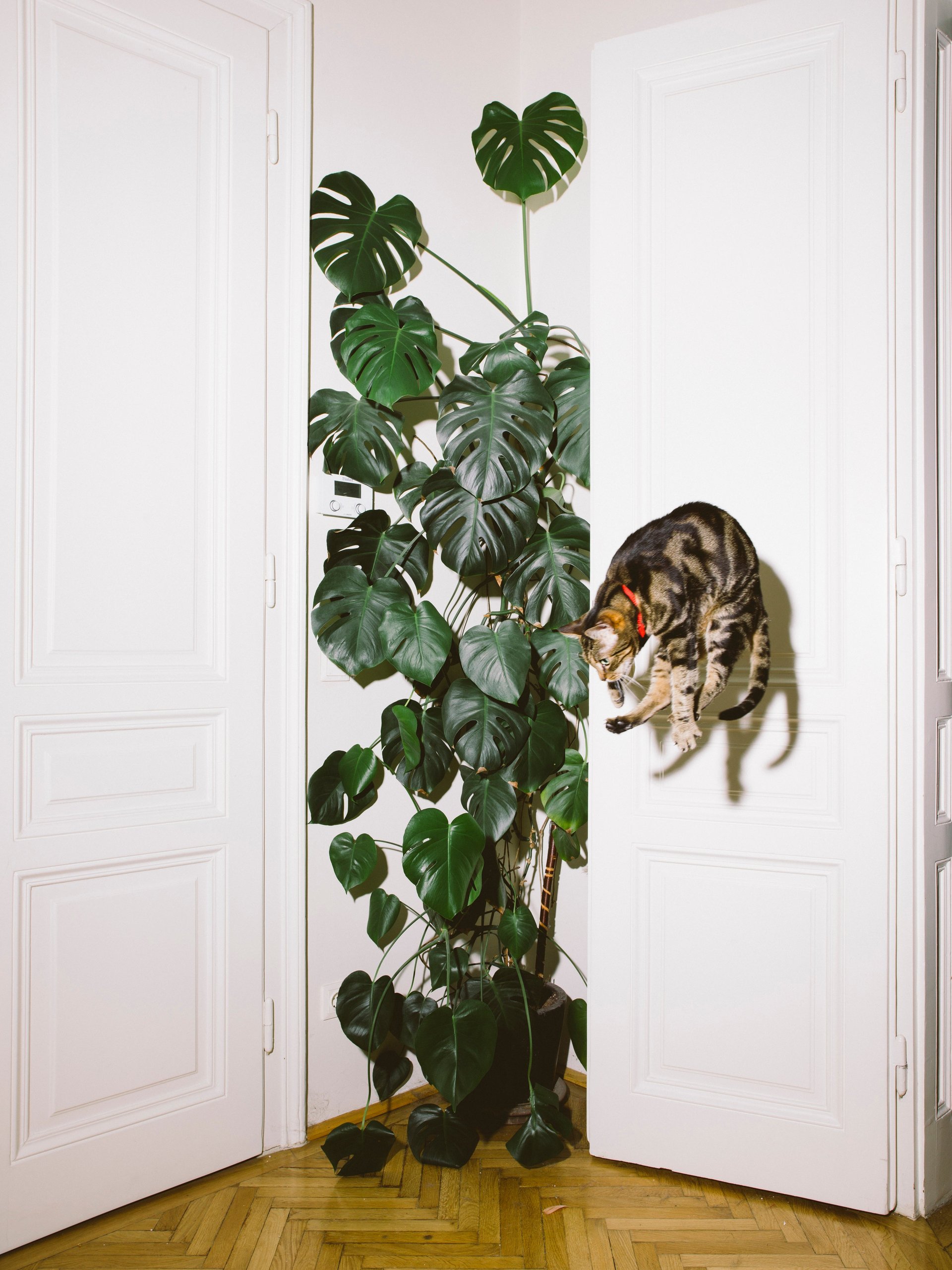
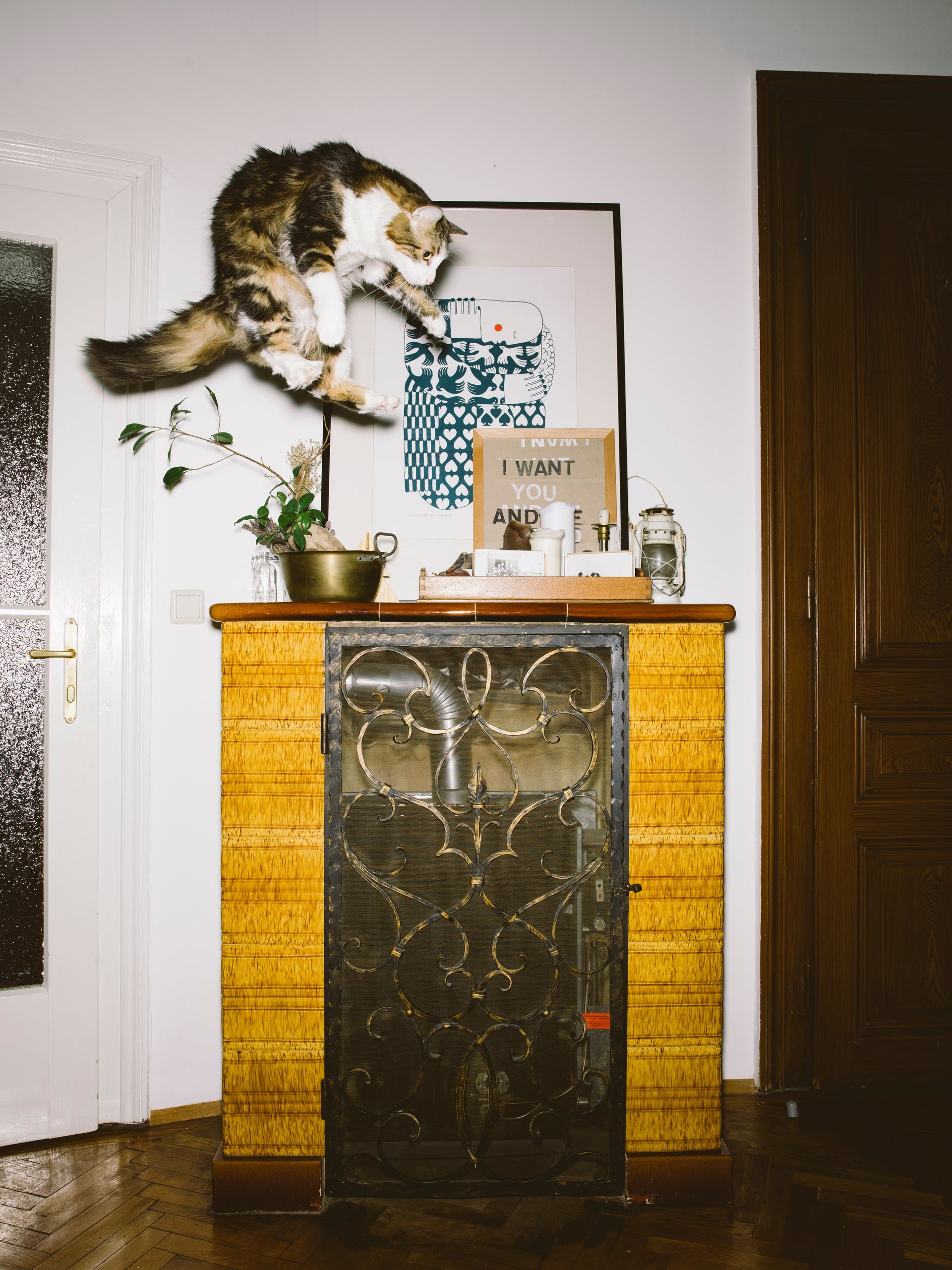
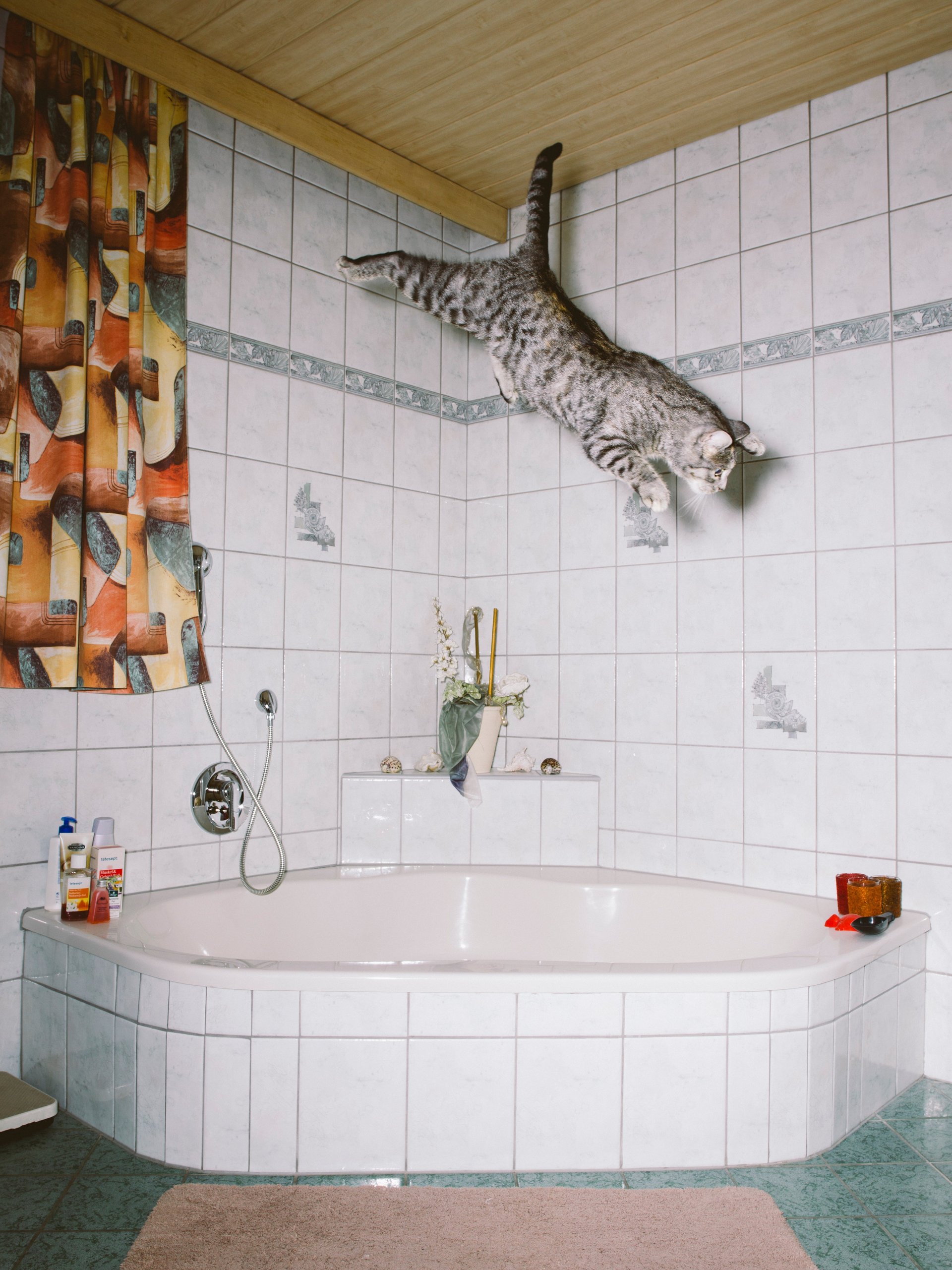
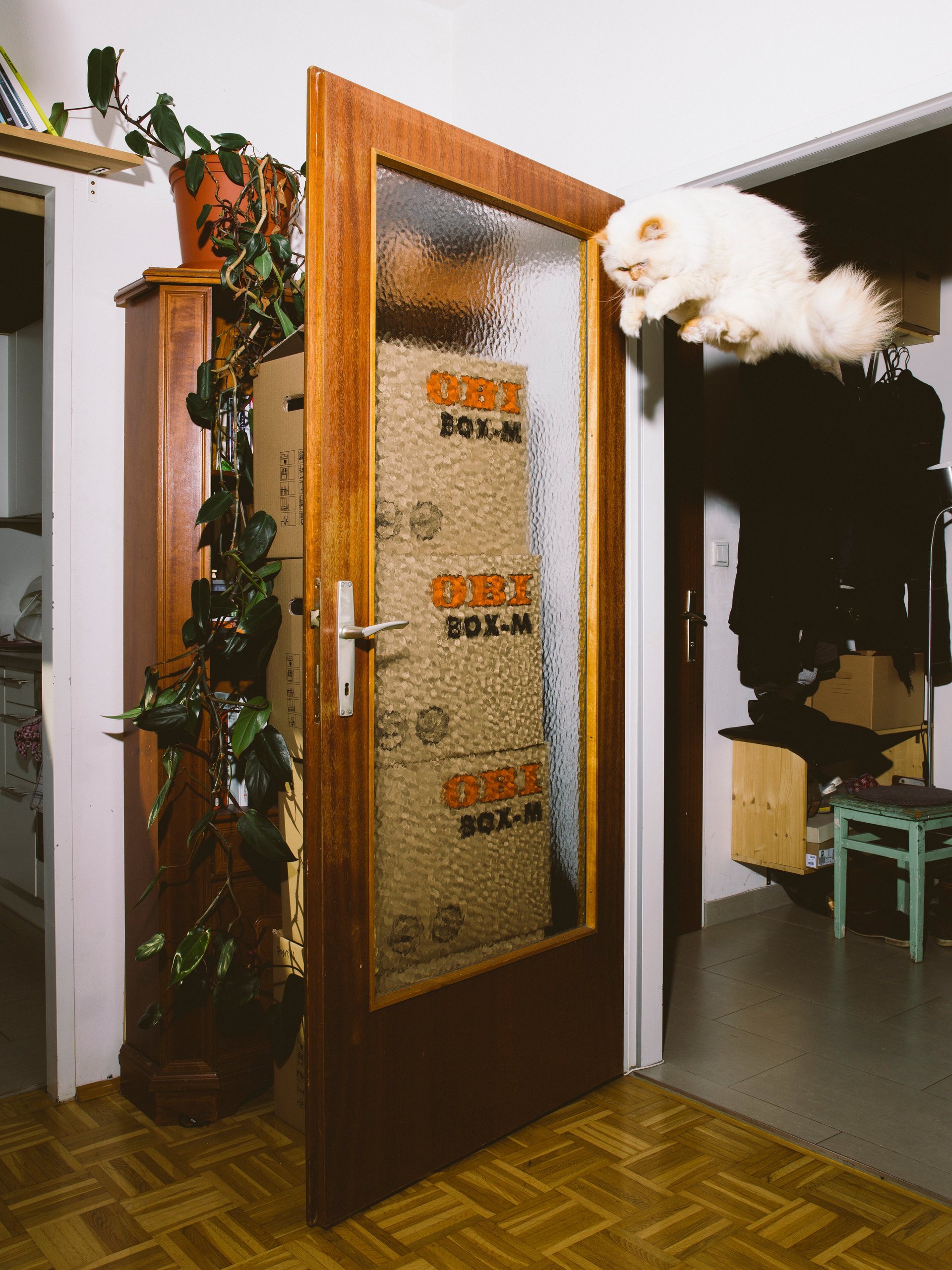
The jumping cats calendar published by Verlag für moderne Kunst, is available here. Other works by Daniel Gebhart de Koekkoek can be found on his website.
