Yaoundé, Cameroon
Yaoundé, Cameroon
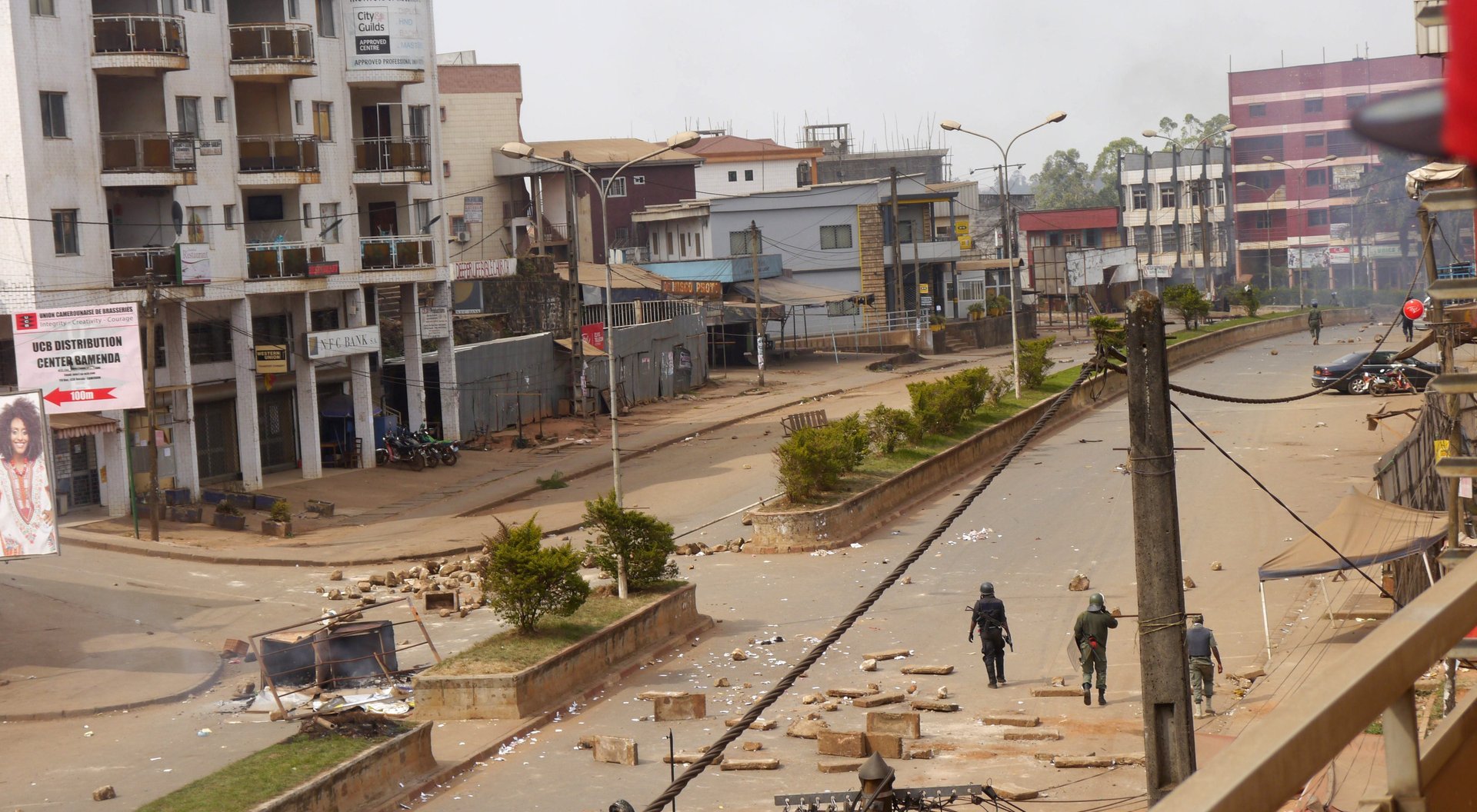
Cameroon has once again disrupted internet connection it its restive North West and South West Anglophone regions in the wake of fresh mass protests. The interference has largely affected social media sites like WhatsApp, Facebook $META and Twitter $TWTR.
Join 500,000+ readers who start their day with Quartz.
By subscribing, you agree to our Terms of Service and Privacy Policy.
For the last 24 hours local residents in towns like Buea and Bamenda had noticed slow or inconsistent connections to the popular communications platforms.
The disruption has sparked fears the Cameroonian government is again pressuring mobile operators to cut internet services in the English-speaking regions in a bid to stifle dissent. The government of 84-year-old president Paul Biya has been keen to frustrate online mobilization by activists in the diaspora and locals following months of protest against the dominance of French-language use in the bilingual country. The internet shutdown, which lasted a record 93 days, ended in April and was widely condemned by the national and international community.
“We had already been suspecting it. So when I couldn’t access WhatsApp, I knew La Republique [du Cameroun] had done it again. But they are not smarter than us,” said one Limbe-based activist who requested anonymity for security reasons. The affected user said he has installed a VPN which has unlocked the blocked apps and given him access to the social media.
Gwain Colbert Fulai, a civil society activist in the city of Bamenda, confirmed the partial internet disconnection. Gwain said it was surprising that the government could go ahead with another internet shutdown barely a few days after debunking rumours to that effect. “It is ridiculous given that Cameroon has ratified international conventions and optional protocols that promote internet as a human rights in much the same way as water, electricity and education.”
Local activists had been planning to mark Oct. 1 to acknowledge an English-speaking independent state of Southern Cameroons/Ambazonia, a state that isn’t recognized by the Cameroonian government or the United Nations, but had previously existed prior to the country’s unification. But these local activists soon realized on Sep. 30 they could no longer easily access the social media/communications platforms.
Prior to the internet disruptions, Cameroon’s minister of post and telecommunications minister promised the government had no plans to cut the internet, saying, on Sep. 27, stories of an imminent shutdown were mere rumors. Government has not claimed responsibility for the partial shutdown.
Mobile telephone network service providers in the country on their part have declined taking responsibility or clarifying the reason for the shutdown, blaming disruptions on technical issues.
“Dear customers, We are facing disturbances affecting social networks. Our teams are mobilised to restore the services. Thanks for your understanding.”
Orange Cameroun, the No.2 telecoms company sent it to subscribers mostly in the English-speaking regions. The other major service provider—MTN Cameroon—on Sep 29, informed subscribers that “recent service disturbances have been resolved,” yet their subscribers in the troubled regions have had difficulties accessing WhatsApp directly.
