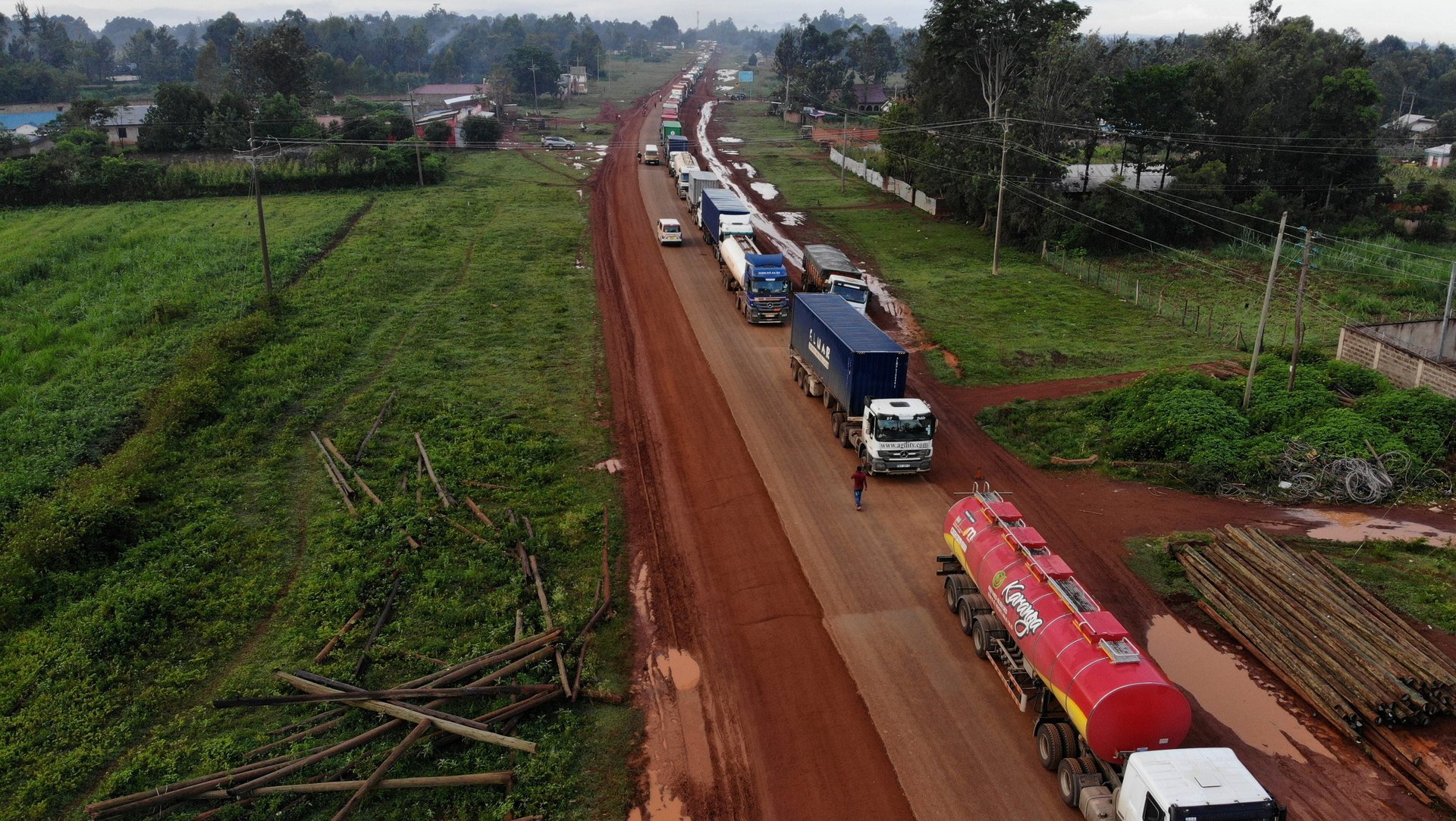
The African Continental Free Trade Area promises to open up the continent’s market of 1.2 billion people, and improve the circumstances that currently keep intra-Africa trade around 17%, versus 68% in Europe, 59% in Asia, and 55% in America. Industrialization is the next necessary step, and the key to improved industrialization is improved logistics.
That was one of the key insights to emerge from a panel at this year’s Africa CEO Forum, the largest annual gathering of Africa’s private sector. The event in Abidjan brought together close to 2,000 political, business, and thought leaders. The session on how the health crisis is revolutionizing African logistics featured speakers like Ahmed Bennis, group business development director at Tanger Med in Morocco, Africa’s biggest port complex; and Portia Derby, CEO of Transnet, one of the continent’s largest rail, port, and pipeline companies.
The panelists noted that industrialization will enable Africa to create jobs for the 8-9 million Africans joining the labor force annually, and allow the continent to capture a larger value of global commodities markets. At present, Africa mostly exports raw materials, leaving greater economic benefits to other countries that add value through processing. That’s because processing on the continent is more expensive, and that is because of high energy costs and poor infrastructure.
How can the continent overcome the challenges posed by logistics? Different panelists offered different solutions.
So how will all this be financed? “I know I am taking an unfavorable stance as everyone wants lower taxes,” quipped Transnet’s Derby. “But how will the continent afford all the infrastructure needed to improve logistics on the continent, if taxes are not increased?”
