Greenpeace says poor government communication and coordination is hurting West Africa’s ability to combat illegal fishing, costing it billions of dollars each year in the process. The problem has become so severe that it is threatening food security in the region, the environmental group says in a new report (pdf).
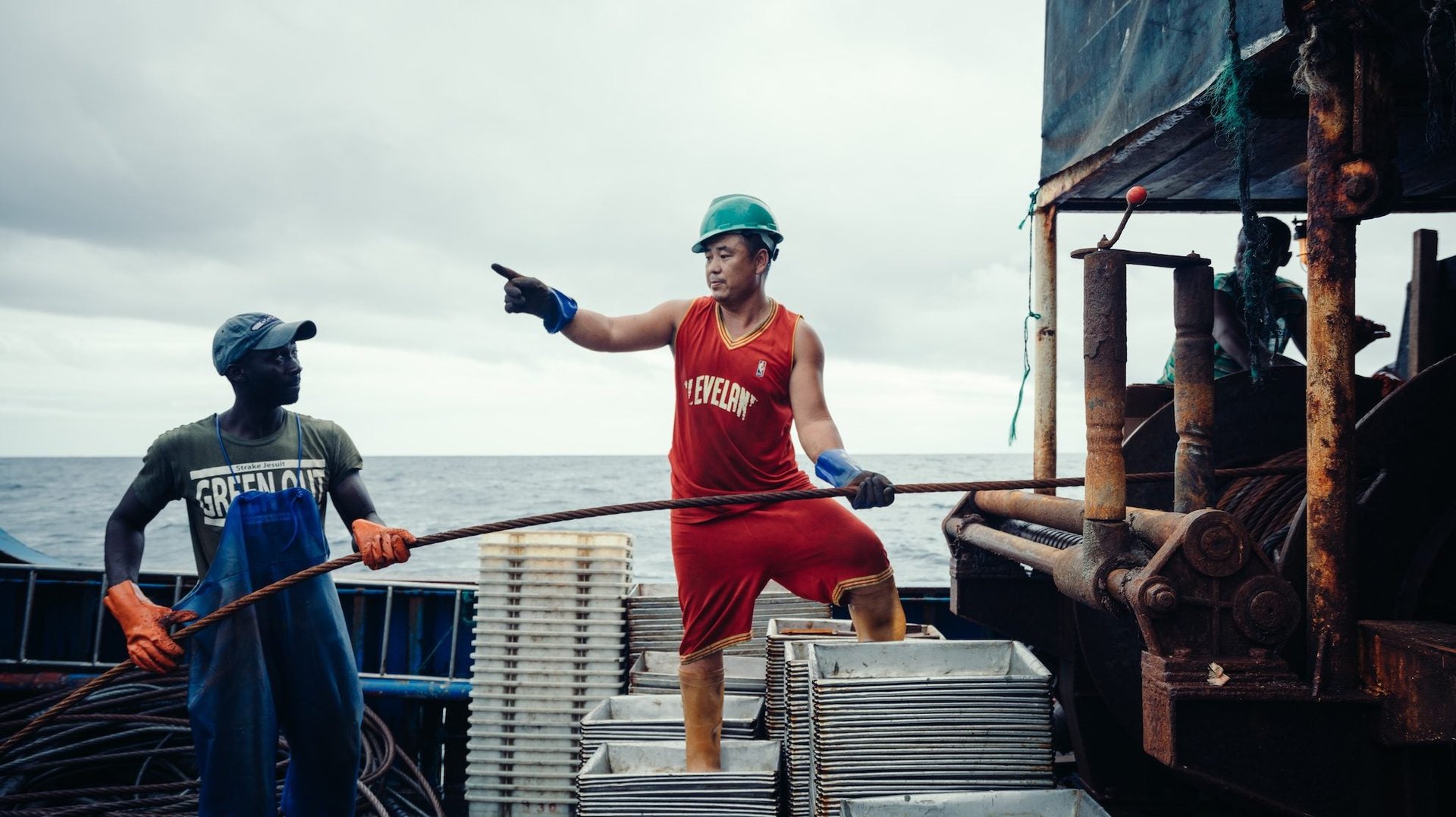
Greenpeace says poor government communication and coordination is hurting West Africa’s ability to combat illegal fishing, costing it billions of dollars each year in the process. The problem has become so severe that it is threatening food security in the region, the environmental group says in a new report (pdf).
“Fish stocks are not restricted to national boundaries, and that is why the solutions to end the overfishing of West Africa’s waters can only come from joint efforts between the countries of the region,” Ahmed Diame, Greenpeace’s Africa Oceans campaigner, said in a statement. Halting illegal fishing is only possible, Diame said, if governments pool resources and work together to standardize legislation and establish joint monitoring centers.
Join 500,000+ readers who start their day with Quartz.
By subscribing, you agree to our Terms of Service and Privacy Policy.
Both international and regional vessels are guilty of contravening existing regulations, Greenpeace found during a ten-week surveillance voyage from February to May. It documented a number of illegal, unregulated, and unreported fishing practices off the coast of Mauritania, Senegal, Cape Verde, Guinea, Guinea-Bissau, and Sierra Leone. After boarding 37 fishing vessels, the group found evidence of infractions like illegal shark finning, possession of incorrect net mesh sizes, and fishing without licenses or outside of permit areas. These illegal activities were carried out by vessels with Chinese, Italian, Korean, Comoros, and Senegalese flags.
Across the world, illegal fishing is a major problem with far-reaching environmental and socio-economic consequences. The practice threatens the livelihoods of millions of people who rely on healthy fisheries and cheats governments of billions of dollars in revenue. Unregulated fishing also depletes vulnerable species including sharks, seahorses, reef fish, and spiny lobsters.
In West Africa, the problem is even more acute—with the fishing industry already facing a heavy burden from officially sanctioned foreign vessels. The region loses an estimated $2.3 billion annually to illegal fishing, according to a recent study by Frontiers in Marine Science.
Illegal trawlers in the region use a number of strategies to pillage marine beds without being caught. In Guinea-Bissau, Greenpeace found that vessels turned off their automatic identification tracking system to move fish and supplies from one ship to another without recording the transfer. The process, known as transshipment, has long been frowned upon by the international community because it allows vessels to launder illegally caught fish and continue fishing without returning to a port.
In Guinea, a Chinese trawler was found with shark fins on board, and small net sizes, which are banned because they help bring in a bigger haul. In Sierra Leone, trawlers from South Korea, China, and Italy were caught obscuring the names of their ships and missing logs of their total catch numbers. In Mauritania, large fishing vessels were also seen operating very close to local fishermen.
This illegal activity contributes to unemployment and desperation in the region and may push fishermen into illegal activities like piracy. As the organization Oceans Beyond Piracy noted this year, the number of piracy incidents in West Africa almost doubled between 2015 and 2016. While piracy has declined in recent years in East Africa due to increased security, illegal fishing off the coast of Somalia was one of the main reasons it took off in the first place in 2009—and has contributed to its comeback this year.
