
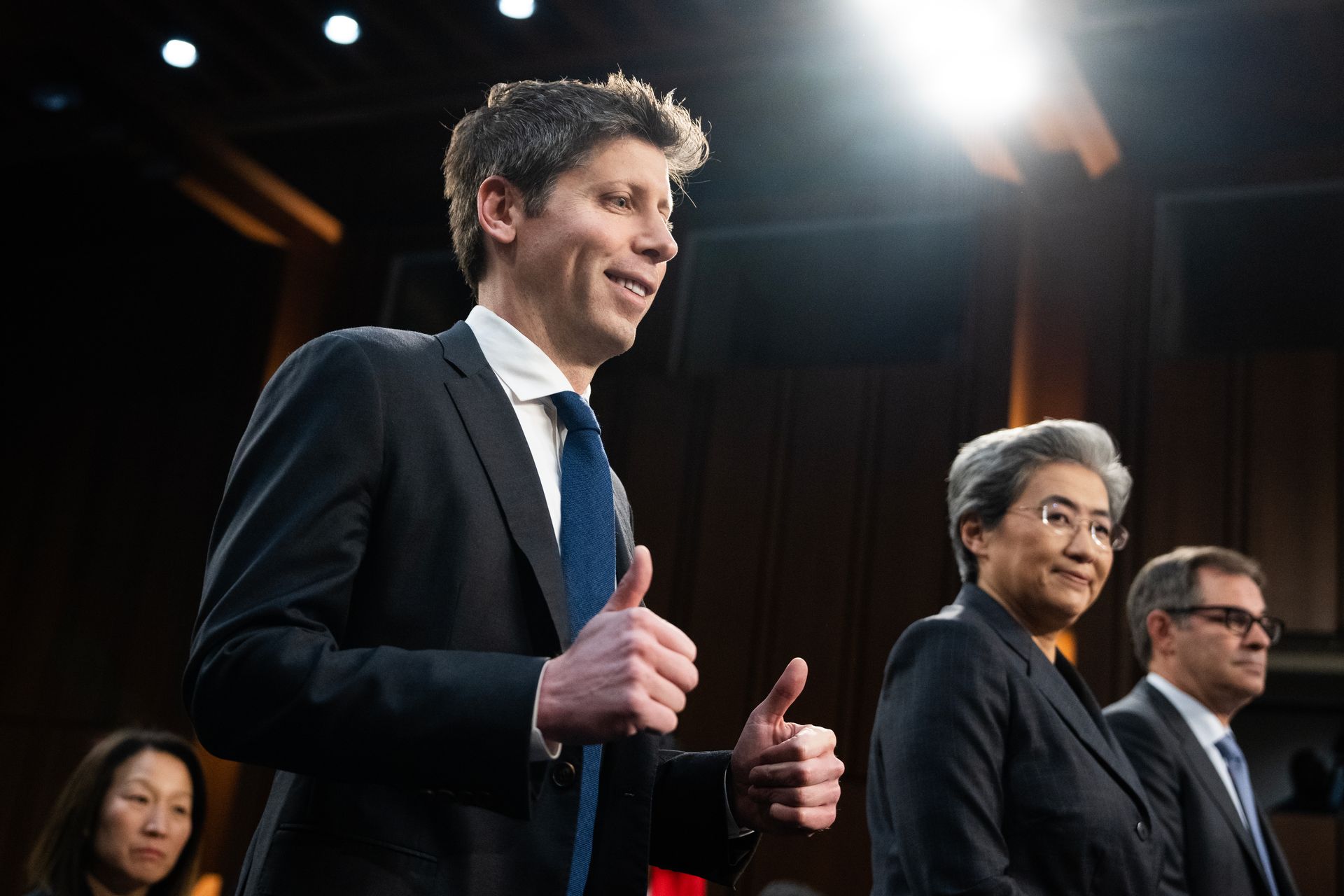
The chief executives of OpenAI, Anthropic, and Google $GOOGL DeepMind are among the signatories of an open letter calling on Congress to require mandatory screening of synthetic DNA and RNA orders to guard against the development of biological weapons.
Sam Altman of OpenAI, Dario Amodei of Anthropic, Demis Hassabis of Google DeepMind, and Mustafa Suleyman of Microsoft $MSFT AI joined scientists, national security officials, and executives from gene synthesis companies in signing the letter, which was organized by the Foundation for American Innovation and the Institute for Progress. Other prominent signatories include Meta $META Chief AI Officer Alexandr Wang and Stripe CEO Patrick Collison.
Central to the letter's argument is the concern that AI is advancing quickly enough to dismantle the technical obstacles that have long kept biological weapons out of reach for most bad actors, including claims that AI systems can now match PhD-level virologists on technical laboratory questions. Among its demands: that anyone selling or manufacturing synthetic nucleic acids be required to vet the sequences being ordered, confirm that buyers are who they claim to be, and keep comprehensive records of purchases. The letter also contends that documentation of transactions would give authorities a way to pursue any dangerous orders that slip through the screening process.
"AI systems are improving rapidly, and alongside incredible benefits to science and medicine, there is a real possibility that the knowledge barriers which have historically prevented bad actors from obtaining biological weapons will meaningfully erode," the letter states.
Many of the largest DNA synthesis providers already screen orders on a voluntary basis. Twist Bioscience and Ansa Biotechnologies, both of which have executives among the letter's signatories, belong to the International Gene Synthesis Consortium, an industry body established in 2009 that has championed voluntary screening. But the letter's authors argue voluntary compliance is insufficient and that Congress should act during the current legislative session to establish a consistent national standard rather than a patchwork of state requirements.
"If you have technology that is capable of synthesizing DNA, then you should ensure that it's used responsibly, and part of that is making sure that you understand what you're making and who you're making it for," James Diggans, vice president of policy and biosecurity at Twist Bioscience, told Wired.
Opponents of mandatory screening have argued that determining which nucleic acid combinations are dangerous is subjective and that compliance costs could burden smaller companies, according to The Wall Street Journal. Several legislative proposals that would require screening have been introduced but have not advanced.
Closing the letter, the signatories characterize the cross-industry consensus as unusual and press legislators not to let the opportunity pass.