
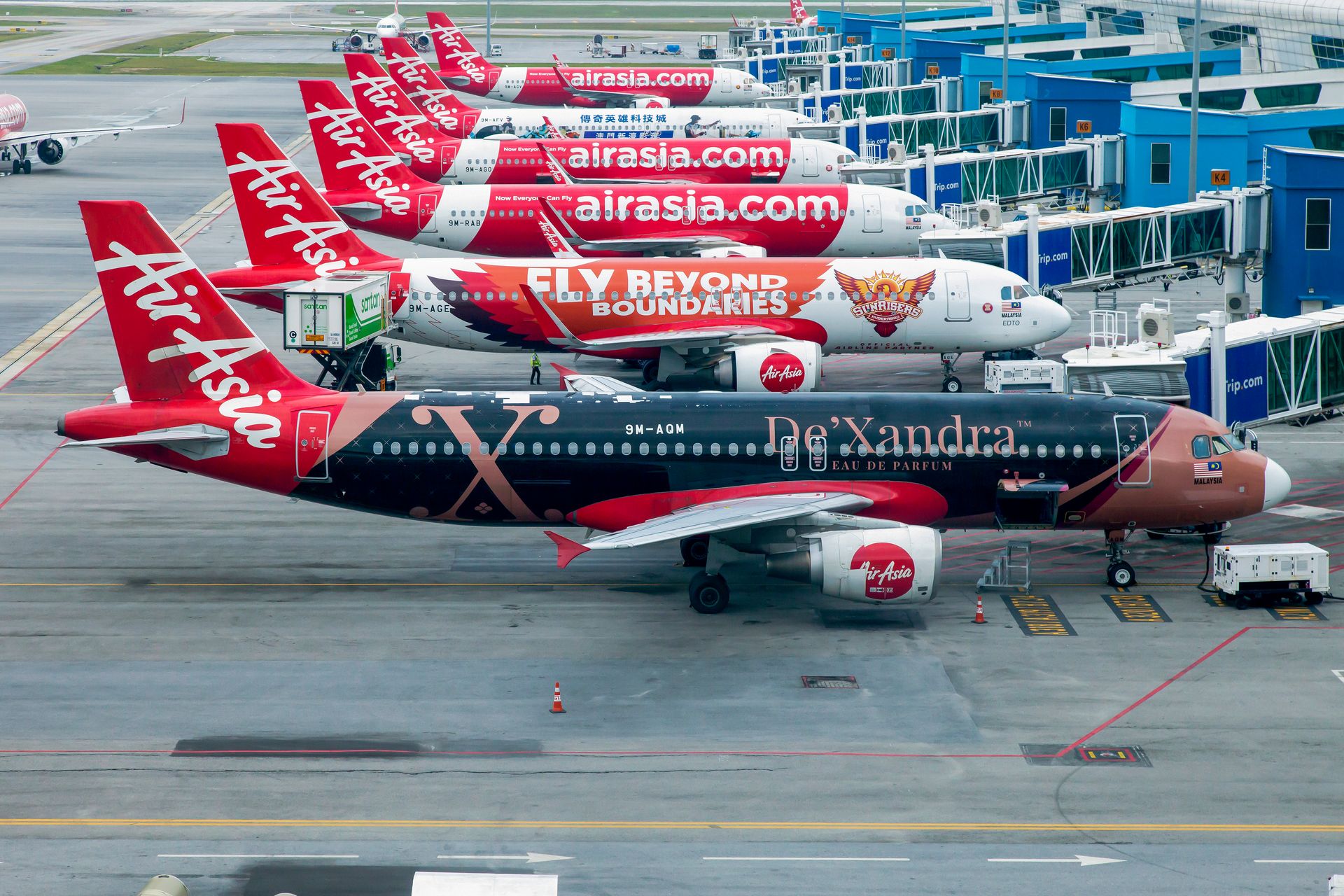
AirAsia is nearing an agreement to order about 150 Airbus A220 jets, according to Bloomberg, in what would be the largest order ever placed for that aircraft type.
Sources told Reuters that a formal announcement could come Wednesday, with Canadian Prime Minister Mark Carney expected to make an appearance at a Montreal-area event connected to the deal. Neither Airbus's Canadian operations nor Carney's office would confirm the details.
The A220, which seats between 100 and 160 passengers, is smaller than the jets AirAsia typically operates. Its existing Airbus commitments run deep: roughly 400 planes are on backlog, dominated by the A320 family, and its current operational fleet numbers around 250 narrowbody jets. Tony Fernandes, who co-founded AirAsia, had signaled to Reuters that the carrier wanted to open up routes to new destinations by introducing smaller aircraft.
According to Bloomberg, negotiations over the A220 purchase have been underway since at least the beginning of last year. Flying the A220 would open up destinations whose airport infrastructure or passenger volumes make them unsuitable for the larger narrowbodies AirAsia currently operates.
The order would be a boost for Airbus's A220 program, which has faced production challenges and financial losses. The program came to Airbus through a takeover of Bombardier's commercial jet business in 2018, and profitability has remained out of reach ever since. Production targets for this year have been trimmed to 12 aircraft per month after an earlier goal of 14 proved unworkable, with supply chain bottlenecks and demand for next-generation engines cited as the reasons for the shortfall. Competition from Brazil's Embraer has been a persistent headache: the E2 family outsold the A220 by a three-to-one margin in the previous year and picked up a high-profile Finnair order in March.
Final assembly takes place at facilities in Mirabel, Quebec and Mobile, Alabama, with the Canadian plant handling all orders from outside the United States. Quebec's provincial government is a minority shareholder in the program.
Since the outbreak of the U.S.-Israel-Iran conflict sent crude prices climbing, AirAsia shares have shed close to 40% of their value, placing the stock near the bottom of the Bloomberg World Airlines index. Without hedging contracts to cushion the blow, low-cost carriers like AirAsia have little protection when fuel prices spike.