Alex Bores is "bullish" on what AI can achieve. He's also the target of a $10 million campaign from a pro-AI group as he runs for Congress
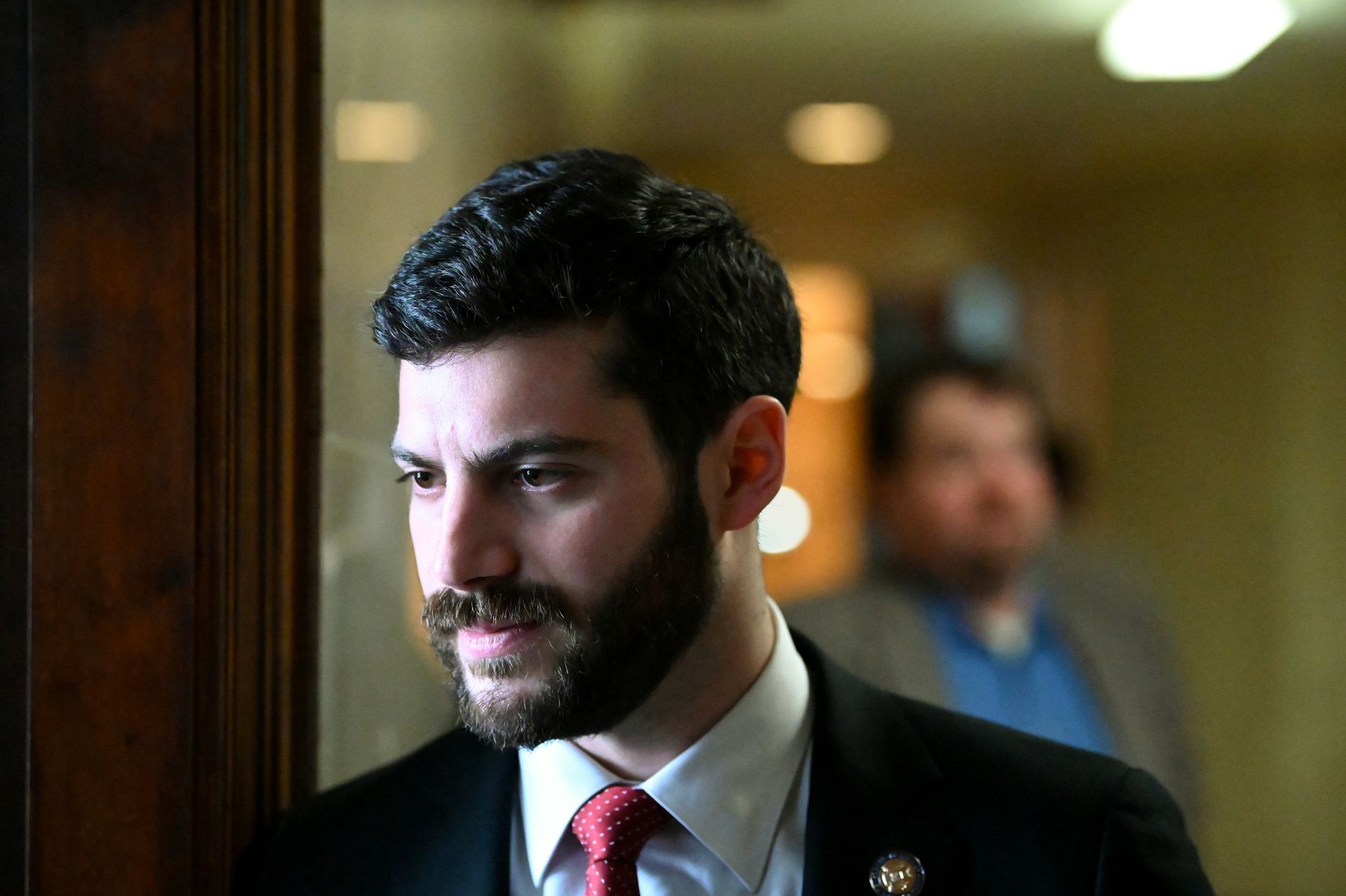
New York state Assemblyman Alex Bores. (Will Waldron/Albany Times Union via Getty Images)
New York Assemblyman Alex Bores believes artificial intelligence is on the verge of changing everything. He’s thinking outside of the box while running in the hotly-contested Democratic primary for New York’s 12th Congressional District. Part of his solution? A universal basic income.
Bores doesn’t believe it's “the sole answer” to all the disruption from AI, which hasn’t prompted an explosion in worker productivity yet. But he believes it can soften the blow for workers if AI changes everything from how Americans receive medical care to the nature of labor itself.
“So if they are producing truly untold riches, I think we need to find a way to provide some stability to the American worker, to American families,” Bores told Quartz in a 30-minute phone interview. “And UBI is going to be part of that solution.”
Join 500,000+ readers who start their day with Quartz.
By subscribing, you agree to our Terms of Service and Privacy Policy.
Bores, 35, is among the 10 candidates running to replace the retiring Democratic Rep. Jerry Nadler, who served in Congress for 34 years — almost as long as Bores has been alive. It's a crowded primary. The roster includes a Kennedy, a former journalist, and a member of Nadler's inner circle.
A two-term state lawmaker from Manhattan, Bores raised $1.2 million in the 24 hours after announcing his candidacy in late October. He’s making AI safety a major plank in his race, and it could provide a roadmap for Democratic candidates in the 2026 midterms still acquainting themselves with a technology that carries both promise and peril in its future application.
The local Democratic primary won’t take place until June 2026. Yet it didn’t take long for Bores to make powerful foes. Leading the Future — a pro-AI superPAC that has raised a $100 million campaign war chest — singled Bores out and pledged a multimillion-dollar effort to sink his candidacy.
The group took out its first campaign ad against Bores on Wednesday, casting him as an Albany bureaucrat who will handcuff the AI sector with burdensome regulations and ultimately cost jobs in the state.
Bores, though, isn’t phased by it. He believes endorsing AI safety rules will prove popular with voters. A Gallup poll from September showed 80% of U.S. adults favored AI guardrails at the expense of fast-tracking its development.
“I take that as a badge of honor,” he said. “At the end of the day, I'd rather be on the right side of history and the wrong side of this PAC.”
Bores isn’t a so-called AI doomer. Far from it. A former software engineer, he argues that AI is capable of improving people’s lives. As long as there are basic safety rules in place.
“I'm excited about the new economic opportunities, but it's exactly because I take seriously the bullish case on the capabilities that I also realize regulation is needed,” Bores said. “The same capabilities, the same pathways that could help cure disease could help you design a bioweapon.”
Bores is an architect of the RAISE Act, a major legislative package in New York state that would establish new guardrails for AI giants. It passed the New York state legislature in a robust bipartisan vote in June. Now New York Gov. Kathy Hochul has until the end of December to either sign it, veto it, or send it back to the state legislature for amendments.
The bill would bar Meta $META, OpenAI, Deepseek, and Google $GOOGL from releasing AI models that don’t meet internal safety standards or otherwise enable dangerous, criminal activities. Bores compared it to avoiding a repeat of tobacco companies knowingly selling a product that didn’t adequately disclose its risks to public health.
The New York Times reported earlier this month that Bores threw a fundraiser for Hochul’s re-election campaign that pulled in $250,000 from software engineers and AI aficionados in late October. Ethics experts described the set-up as unusual, given Bores has a major bill before the governor. He downplayed the event's significance.
“I am a team player,” Bores said. “I have helped raise funds for lots of my colleagues before. And it turns out that a lot of people are interested in forward looking AI policy.”
He also believes that an AI safety push fits into a multi-pronged affordability message that other Democratic candidates like New York mayor-elect Zohran Mamdani rode to victory. President Donald Trump's approval rating on the economy has slid in recent months, and Bores believes there's an opportunity for a party in exile at the national level to reclaim the mantle of affordability.
Bores argued there should be strings attached to future construction of data centers. Tech firms, he said, should pay for upgrades to an aging electric grid and ensure new data centers don't hike Americans’ utility bills. They must be required to use renewable energy as well.
Whomever wins the NY-12 Democratic primary next year is virtually guaranteed the seat in Congress, given the district's overwhelming blue tilt. If it’s Bores, he argues that the RAISE Act can serve as a roadmap for an eventual AI safety bill at the federal level.
He doesn't want one giant bill as has been the norm in Congress in recent years for domestic policy. Instead, he favors a piecemeal approach that recognizes AI's evolving status. Dealing with how AI is used in the classroom isn't the same as ensuring deepfakes don't proliferate before an election or guarding federal agencies against Chinese cyberattacks.
"If we want to get all the benefits of AI, we're going to need to put in place some protections to make sure that the worst-case scenarios don't happen," he said.
