
Amazon $AMZN disclosed Thursday that its global data center operations withdrew about 2.5 billion gallons of water in 2025, the company's first public accounting of its total data center water consumption.
The disclosure, Amazon's first of its kind, comes as data center companies face growing scrutiny over AI's environmental footprint
Bloomberg / Getty Images
Amazon $AMZN disclosed Thursday that its global data center operations withdrew about 2.5 billion gallons of water in 2025, the company's first public accounting of its total data center water consumption.
The figure covers the full year across Amazon's worldwide data center footprint. Even with a larger global data center footprint, the company managed to cut water use by 2% at facilities it directly owns and operates compared with 2024, Amazon said. Measured by liters drawn per kilowatt-hour of electricity, the company's efficiency stood at 0.12 in 2025 — an improvement from 0.15 the year before, Bloomberg reported, citing Amazon's sustainability report. Amazon said that figure is more than seven times more efficient than an industry average it calculated at 0.84 liters per kilowatt-hour.
For comparison, Amazon noted that Americans use roughly 3.3 trillion gallons annually to water lawns and gardens, citing the EPA — more than 1,300 times the amount its data centers used last year.
Amazon Web Services vice president Kerry Person, who oversees data center operations, pushed back on public narratives about industry water consumption. "If you look at the press right now, the data center industry is apparently consuming all of the water in the world," Person said. "When you actually look at the data and look at the details, nothing could be further from the truth."
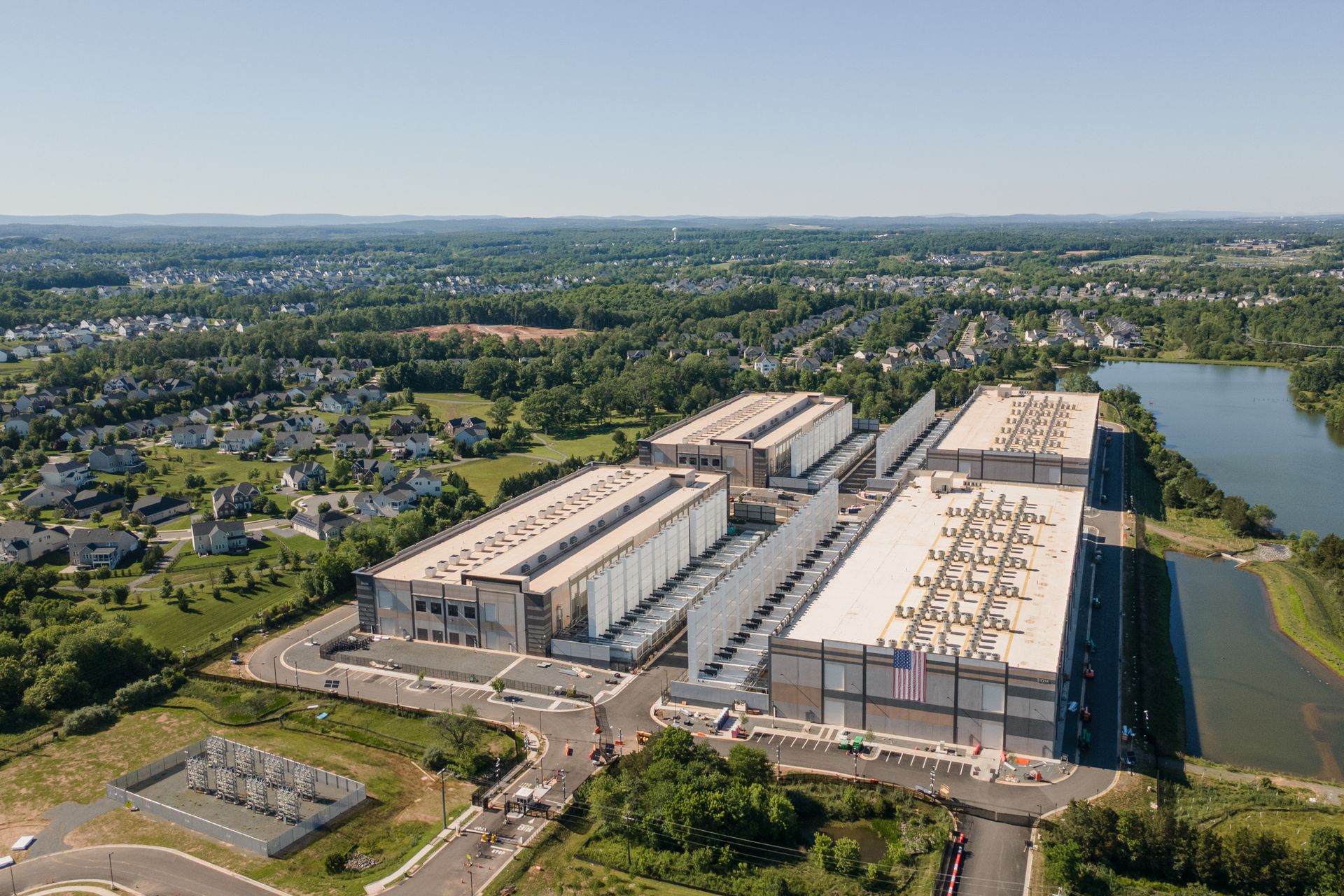
Roughly nine out of ten hours of operation, Amazon's data centers cool their servers using ambient outdoor air alone. Once outdoor temperatures climb past approximately 85 degrees Fahrenheit, the system shifts to evaporative cooling — a process in which air is drawn through a saturated filter, shedding heat and moisture before it enters the server halls. The company said it has raised the temperature threshold at which water cooling activates, cutting water use in comparable facilities by about 50%.
The way Amazon calculates water usage effectiveness sets it apart from most industry peers: the figure counts not only water lost to evaporation during cooling but also liquid routed to wastewater systems, an approach that inflates the number relative to competitors that track only evaporative loss — complicating any head-to-head comparison. Microsoft $MSFT's water usage effectiveness stood at 0.27 liters per kilowatt-hour in its most recently reported fiscal year. Left out of the accounting entirely are colocation sites — third-party facilities where Amazon rents computing capacity, which supplied about one-fifth of the company's total compute in 2024 — as well as the water consumed upstream to produce the electricity Amazon's data centers run on.
By 2030, Amazon aims to replenish more water than its operations draw — a target the company says it is 75% of the way toward meeting through a portfolio of more than 50 announced projects that, once fully operational, are expected to restore upward of 5.8 billion gallons per year. Treated wastewater is already being piped directly into 26 of its facilities, and work is underway on more than 100 further reclamation efforts.
The disclosure arrives as Amazon employees and city officials in Seattle have pressed for stricter rules on data center construction, part of a wider national debate over the resource demands of AI infrastructure. Researchers and community advocates have called for greater transparency from cloud companies, with water stress particularly acute in the American West, where data center expansion is colliding with drought conditions and strained water allocations. Google $GOOGL and Meta $META remain the only major cloud operators publishing water consumption figures broken down by individual facility.
Join 500,000+ readers who start their day with Quartz.
By subscribing, you agree to our Terms of Service and Privacy Policy.