
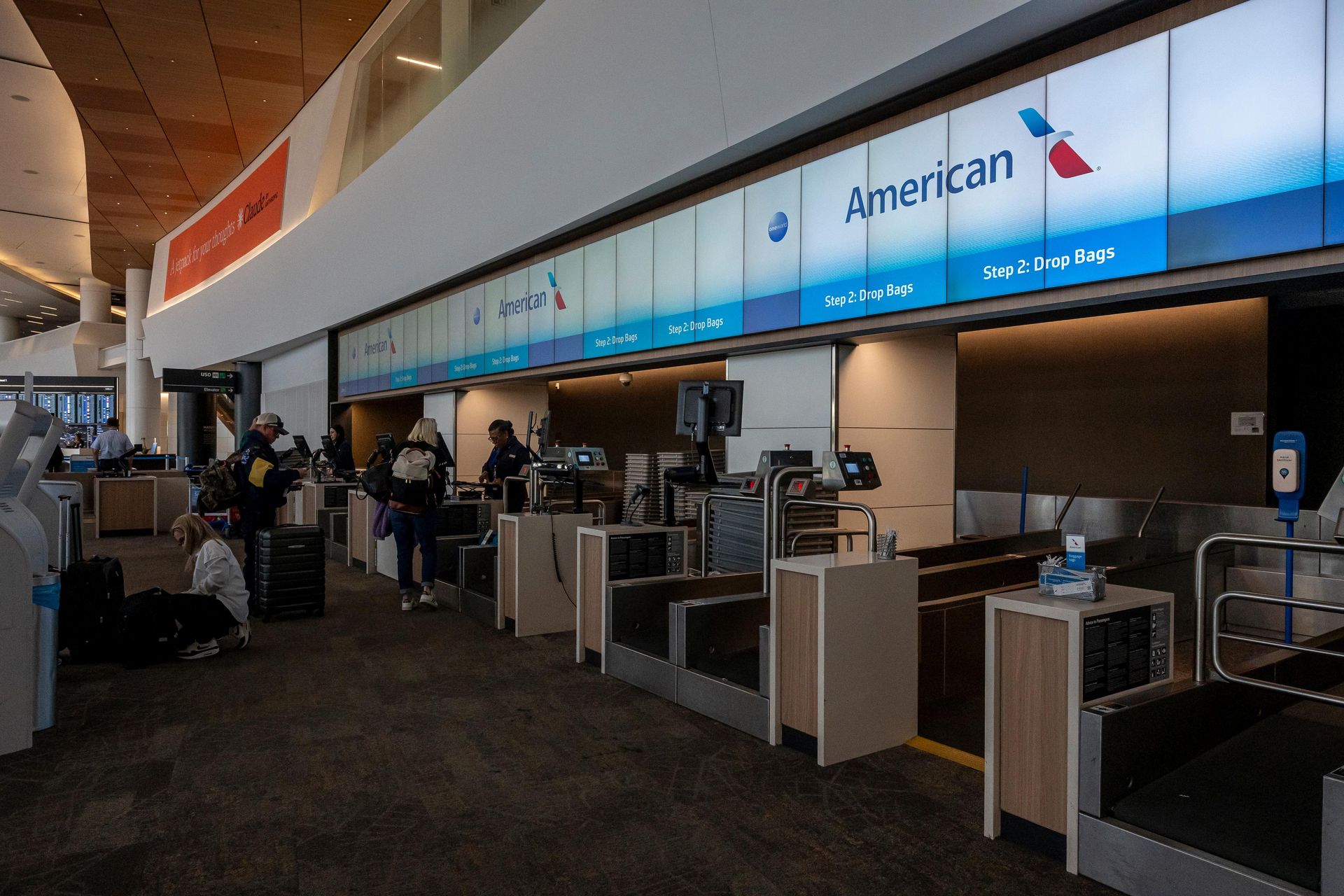
American Airlines expects to post a loss in the third quarter of 2025 — a jarring note from a major carrier that just reported record quarterly revenue.
The forecast suggests cracks could be forming in the consumer travel boom that has buoyed other airlines in recent months
David Paul Morris/Bloomberg via Getty Images
American Airlines expects to post a loss in the third quarter of 2025 — a jarring note from a major carrier that just reported record quarterly revenue.
The company on Thursday forecast a potential adjusted third quarter loss per share of $0.10 to $0.60, saying that macro weakness “not seen today” would lead it toward the lower end of the range.
While the loss remains a forecast, not a certainty, shares of the airline were down 7% before Thursday's market open.
That warning comes despite strong headline numbers for its second quarter. American reported a record $14.4 billion in revenue — its highest ever — and a GAAP net profit of $599 million, or $0.91 per diluted share. Adjusted net income reached $628 million, or $0.95 per share, on an 8% operating margin. Premium cabin demand remained robust, particularly on long-haul international routes, helping American notch its fourth consecutive quarter of industry-leading unit revenue gains.
Still, management struck a remarkably cautious tone about what lies ahead. Why? While CEO Robert Isom emphasized ongoing strength in the airline’s loyalty program and operational improvements, the guidance suggests cracks could be forming in the consumer travel boom that has buoyed other carriers in the second quarter.
Delta Air Lines recently reinstated full-year guidance, calling for modest but positive earnings — implying a measure of confidence returning after months of macroeconomic volatility brought on by President Donald Trump’s trade wars. United Airlines, for its part, posted better-than-expected second quarter results, too, saying specifically: "Airline expects less geopolitical and macroeconomic uncertainty in second half of 2025."
So what’s different at American? Its exposure to volatile weather at its hubs in Texas (weather that is often particularly volatile in the summer), differences in its debt and cost structure, or perhaps more conservative revenue assumptions may be contributing. Whatever the cause, American’s pessimism adds a layer of uncertainty to the recovery narrative otherwise taking shape across the industry — and reminds investors that the macro outlook remains cloudy.
Join 500,000+ readers who start their day with Quartz.
By subscribing, you agree to our Terms of Service and Privacy Policy.