From sewers to surgery, ancient Rome solved problems that still define how we live, build, govern, and eat today
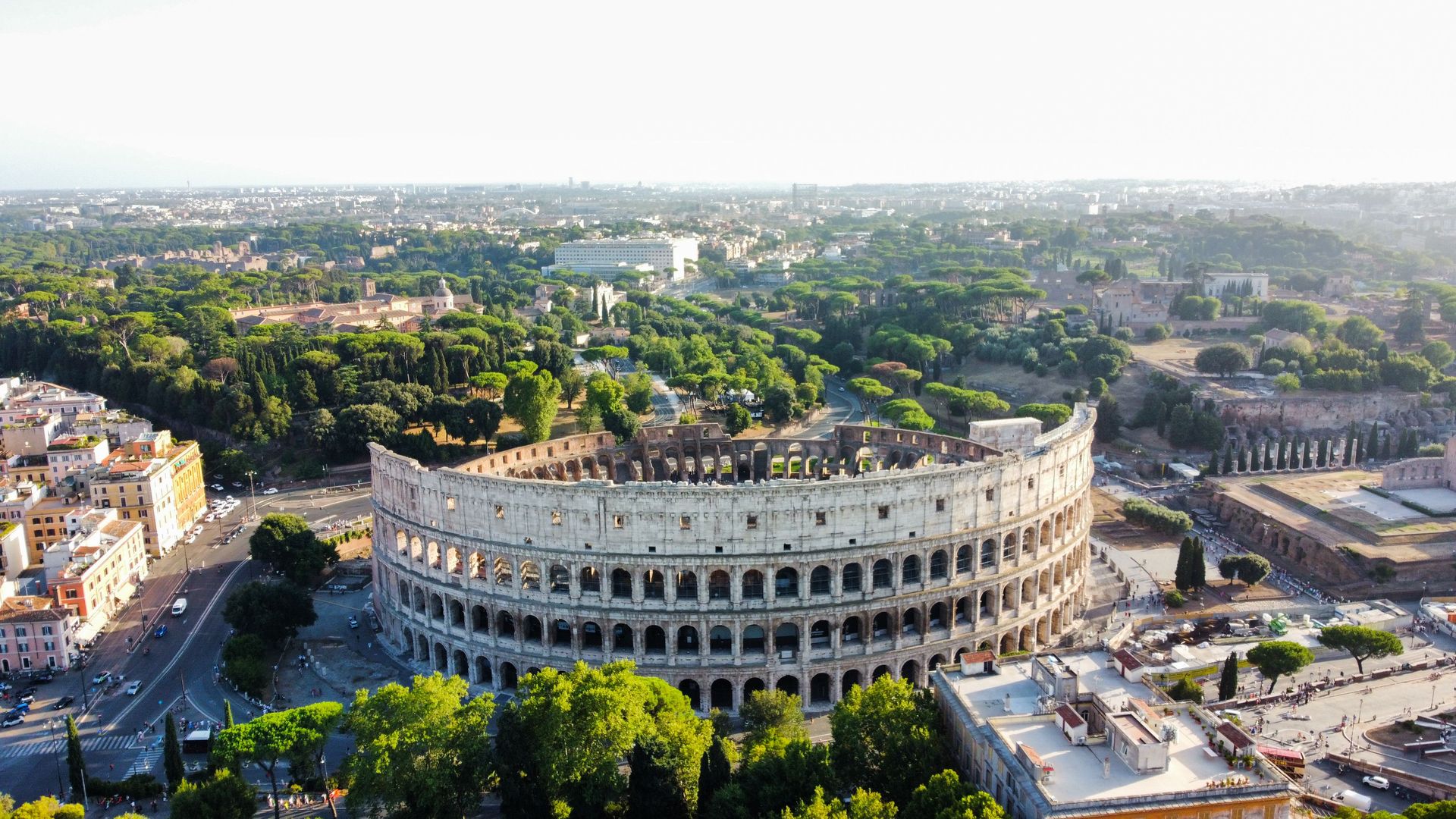
Credit: Luis Zapata / Pexels
Rome wasn't just an empire. It was an experiment in scale — a civilization that had to solve problems no one had ever faced before at that size: how do you feed a city of one million people? How do you keep an army of hundreds of thousands healthy across three continents? How do you build a road that lasts 2,000 years, or a legal system that governs hundreds of different peoples without collapsing under its own contradictions? The Romans didn't always invent from scratch. They were enthusiastic borrowers, lifting ideas from the Greeks, Etruscans, Egyptians, and anyone else they happened to conquer. But what made Rome exceptional was its ability to take an idea and industrialize it — to systematize, standardize, and replicate it across an empire stretching from Scotland to Mesopotamia.
The results were often ahead of their time in ways that still feel startling. Roman engineers built concrete that has lasted longer than most modern construction. Roman physicians understood the relationship between clean water and public health before germ theory existed. Roman lawyers developed concepts of legal personhood, contracts, and due process that flow directly into modern Western legal codes. Roman urban planners built apartment buildings, public baths, libraries, and zoning laws that would look familiar to anyone who has lived in a modern city.
None of this means Rome was utopian. It was a slave society that ran on brutal exploitation, military conquest, and the systematic extraction of wealth from subject peoples. Women had limited legal standing. The poor lived in fire-prone, overcrowded tenements. Gladiatorial combat was entertainment. The same civilization that produced Cicero's speeches on justice also produced the assassination of Julius Caesar and the reign of Caligula.
But the Romans' practical achievements remain worth examining precisely because they were achieved under real constraints — political instability, resource scarcity, pre-industrial technology — and because so many of them still work. The Pantheon's dome has stood for nearly 1,900 years. Roman aqueducts still carry water in parts of France and Spain. The Western legal tradition still draws on Roman jurisprudence. That's not coincidence. It's the result of people solving hard problems well, and the solutions outlasting the civilization that produced them. Here are 25 of the things they got right.
Credit: Magda Ehlers / Pexels
Roman concrete — known as opus caementicium — has puzzled engineers for decades. Modern concrete begins to crack and erode within 50 years. Roman structures built in seawater have been getting stronger for 2,000 years, not weaker. The difference comes down to chemistry. Roman builders mixed volcanic ash from the region of Pozzuoli with seawater and lime to create a material that, when submerged, undergoes a slow crystallization process. Over time, the seawater causes a mineral called aluminous tobermorite to grow within the concrete, reinforcing rather than degrading it. This is the opposite of what happens to modern Portland cement in saltwater environments.
The Romans didn't understand the chemistry — they couldn't have, given the state of materials science in antiquity — but they were rigorous empiricists. They knew that pozzolanic ash produced better concrete, and they used it systematically. Vitruvius, writing in the first century BCE, described four types of pozzolana and gave detailed instructions for mixing ratios. That's engineering in the full modern sense: systematic testing, documentation, and replication.
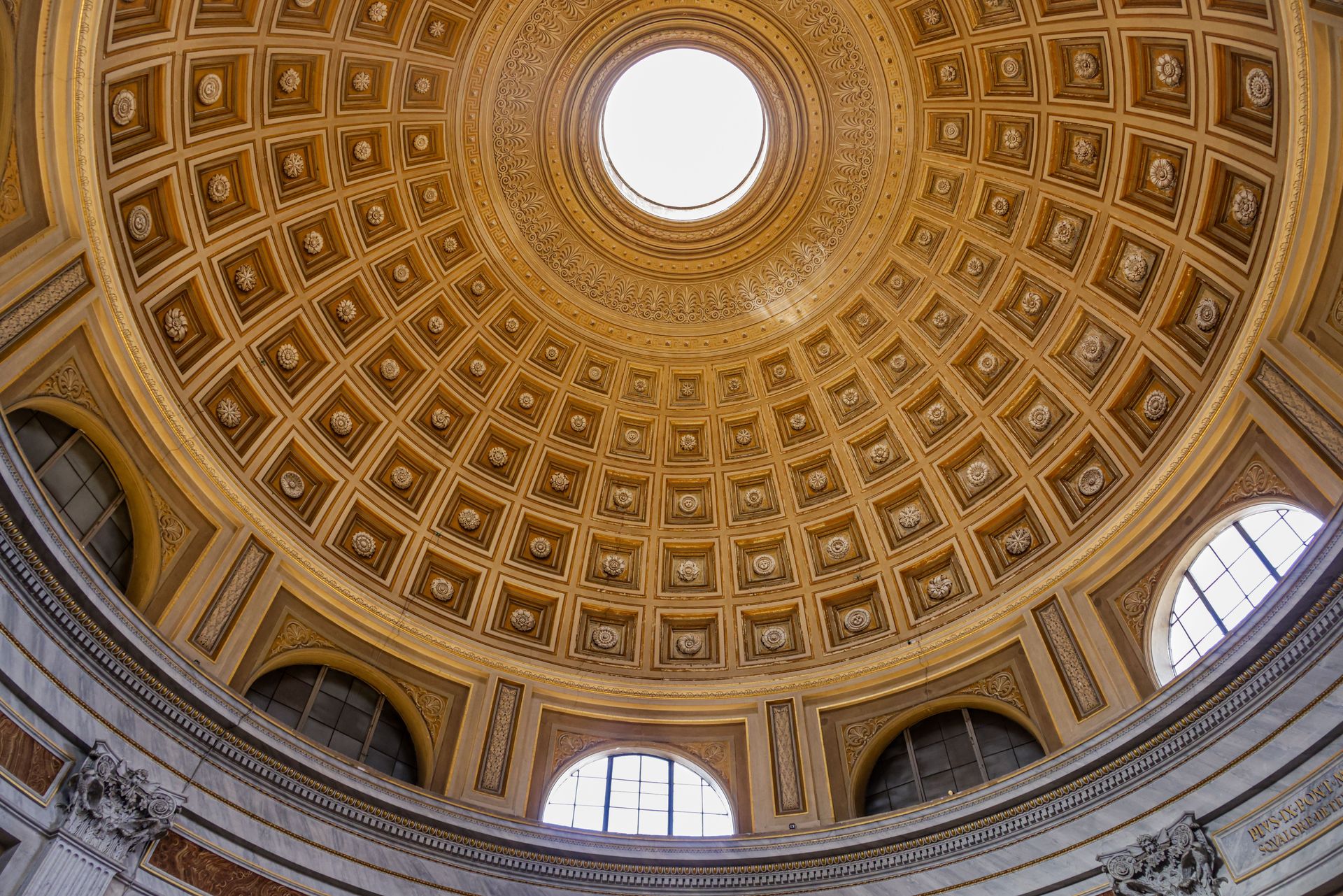
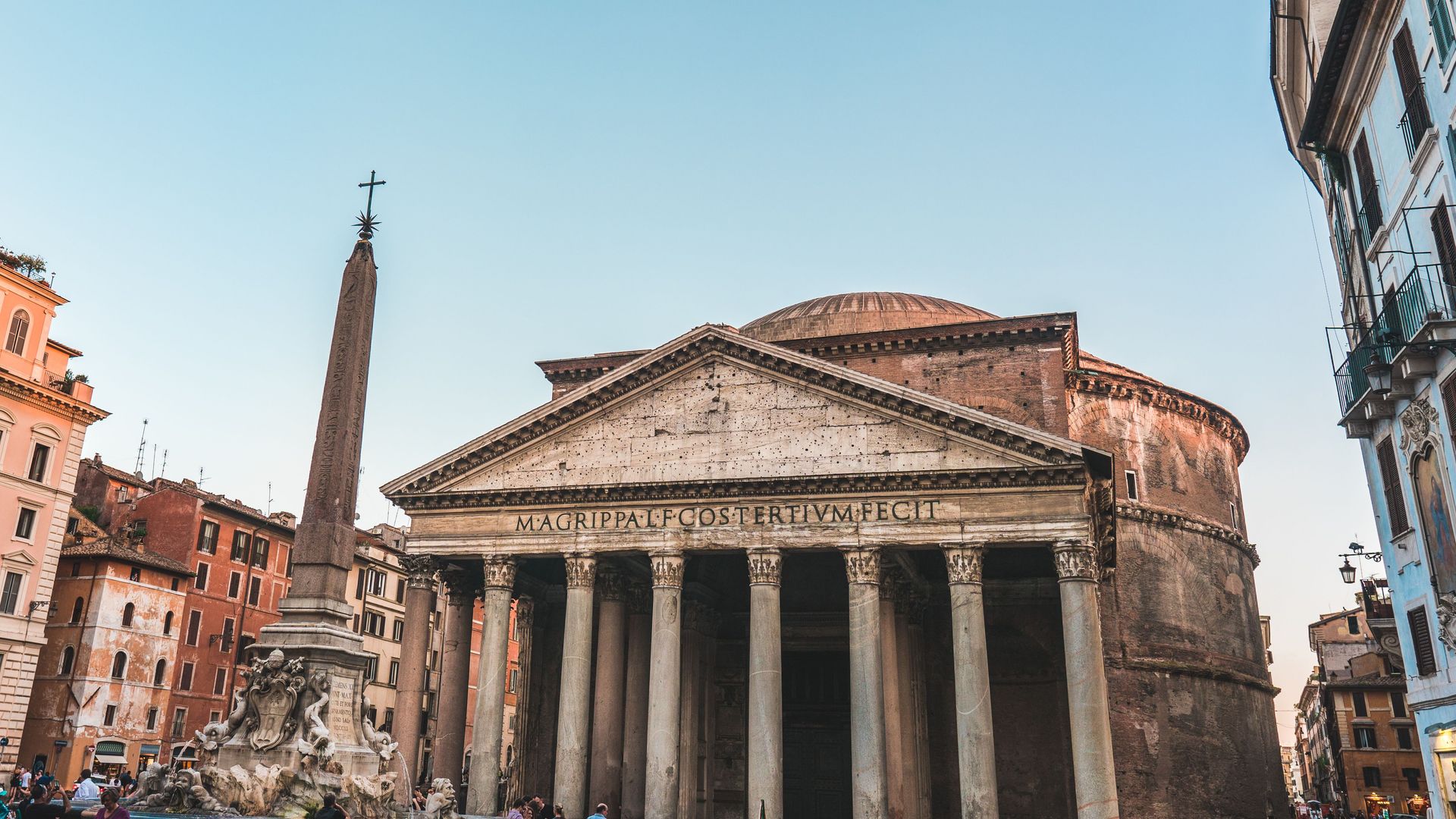
The practical results speak for themselves. The Pantheon in Rome, completed around 125 CE, has the largest unreinforced concrete dome in the world. It has never been repaired. The dome's oculus — a nine-meter-wide open hole in the top — lets in rain, which drains through the slightly convex floor. The Pantheon has survived earthquakes, floods, sackings, and centuries of neglect. It is still an active place of worship. No modern unreinforced concrete structure has lasted anything close to that long.
Roman harbor structures built in the Bay of Naples are still partially intact under the water. Researchers studying them have found that the crystalline reinforcement is ongoing — the concrete is, in a meaningful sense, still curing. Modern scientists have studied these structures and published findings on their composition, but the specific volcanic ash required is not easily available everywhere, which is one reason Roman concrete hasn't been widely replicated. There are also serious questions about scale and whether a modern supply chain could source the right materials in sufficient quantities.
What makes this achievement remarkable isn't just durability. It's that the Romans applied it consistently across their entire construction program — ports, piers, aqueducts, bridges, amphitheaters. They didn't treat concrete as a niche material. They made it the structural foundation of an empire.
-1920x1080.jpg)
Credit: SlimMars 13 / Pexels
Rome's aqueduct network at its height stretched over 800 kilometers in the city's vicinity alone, with 11 major aqueducts feeding the capital. Across the entire empire, hundreds more served cities from Britain to North Africa. The system delivered water to public baths, private homes, street fountains, and industrial facilities — and it operated entirely by gravity, with no pumps, no electrical infrastructure, and no maintenance systems we would recognize as modern.
The engineering required to move water across long distances without losing pressure or contaminating the supply was genuinely sophisticated. Roman surveyors used a device called a chorobates — essentially a long leveling board with a water channel — to measure grades with extraordinary precision. Some aqueducts maintained a gradient of just one meter per kilometer for stretches of dozens of kilometers, threading through hills, crossing valleys on arched bridges, and tunneling through mountains. The Pont du Gard in southern France, built in the first century CE, carried water across a 49-meter-high valley. It is still standing and still structurally sound.
The water wasn't just moved. It was managed. Distribution systems within Roman cities used a cascading model: water flowed first to public fountains available to everyone, then to public baths, then to private homes — with private access taxed and contingent on continued payment. If supply dropped, private connections were cut first, protecting public access. That's not just engineering. That's a water rights policy that prioritized common access over private privilege.
Romans also understood — without the germ theory of disease — that water quality mattered for health. They used lead pipes for the final distribution runs, which is a significant public health problem we now recognize, but they went to considerable lengths to keep the aqueducts themselves clean. Covered channels, settling tanks, and inspection points allowed workers to clear sediment and monitor water quality. The Aqua Virgo, built in 19 BCE, still feeds the Trevi Fountain in Rome today — the same source, the same general route, more than 2,000 years later.
The scale of Roman water use was not matched again in Europe until the 19th century. Medieval European cities, by contrast, mostly relied on wells and rivers, with the predictable consequences for public health. The fall of Rome and the decay of aqueducts is one reason plague and waterborne disease were so persistent in medieval Europe.
-1920x1212.jpg)
Credit: Rachel Claire / Pexels
The Romans built public latrines, sewage systems, and public baths not primarily out of aesthetic preference but out of a practical understanding that concentrations of human waste in cities caused illness. They didn't know why — the germ theory of disease was 1,800 years away — but they observed the correlation and acted on it.
Rome's main sewer, the Cloaca Maxima, dates to the sixth century BCE, making it one of the oldest sewage systems in the world. By the imperial period, it had been extended into a network that drained much of the city. The system was periodically flushed with water from aqueducts and was large enough, according to ancient sources, for a boat to pass through its main channel. Sewage was carried into the Tiber, which is far from ideal by modern standards, but it was a significant improvement over simply leaving waste in streets, as most ancient and medieval cities did.
Public baths — the thermae — were more than hygiene facilities. They were social infrastructure. Large imperial baths, like the Baths of Caracalla, completed in 216 CE, could accommodate 1,600 bathers at a time. They contained libraries, exercise rooms, gardens, and spaces for socializing. Entry was cheap or free, funded by the state, and available to citizens regardless of social class — though men and women typically used them at different times. The bathing culture was so deeply embedded in Roman social life that even small provincial towns had functioning public baths.
The Roman army took public health even further. Military camps were built according to standardized plans that separated latrines from kitchens and food storage, placed them downwind and downhill from sleeping quarters, and included drainage systems. Roman military medical facilities — valetudinaria — were purpose-built hospitals with individual wards for patients, separate from general barracks. The army also tracked casualty and illness rates, which is a form of epidemiological record-keeping that would not become standard in civilian medicine for another 1,800 years.
None of this means Rome was clean by modern standards. It wasn't. But the gap between Roman urban infrastructure and what came after the empire's fall makes clear that Rome got something right that took the rest of the world a long time to recover.
Credit: celal keser / Pexels
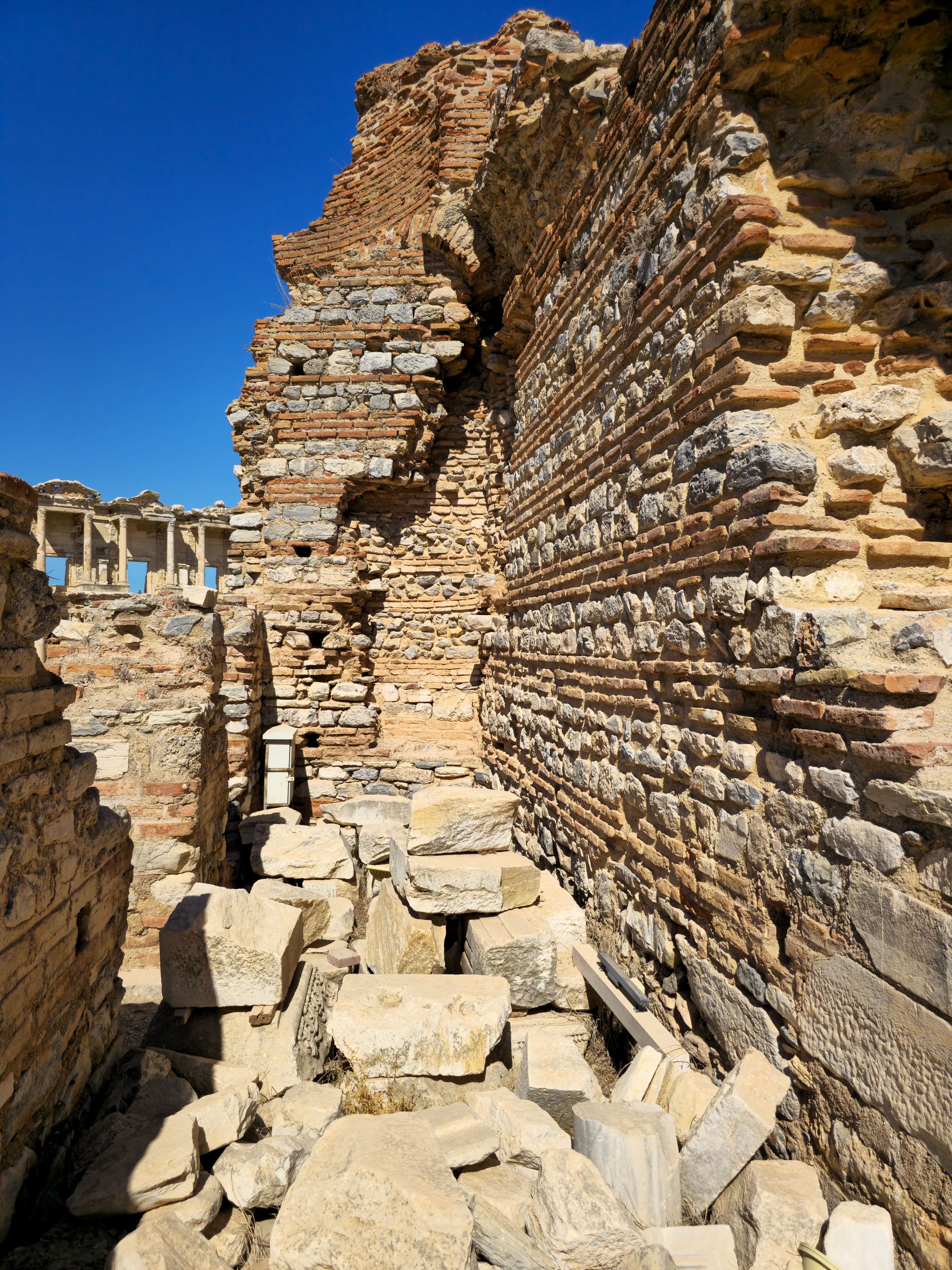
One of the less celebrated but more consequential things Rome got right was standardization. Across an empire spanning three continents, Roman builders used consistent measurement systems, standardized brick sizes, and documented engineering specifications that allowed structures to be built to predictable tolerances by workers who had never met each other.
The Roman foot — pes — was approximately 29.6 centimeters, close to the modern foot. More importantly, it was consistent. A Roman foot in Britain was the same as a Roman foot in Egypt. This sounds trivial until you consider the alternative: pre-modern measurement systems were typically local and varied by region, which made coordinated construction across long distances nearly impossible. Roman standardization meant that a prefabricated arch component made in one location could be shipped to a building site 500 kilometers away and fit.
Roman bricks were produced to standard dimensions, and the dimensions changed over time in ways that allow archaeologists to date construction precisely. Military camps were built according to a standardized plan so that any Roman soldier, arriving at any camp anywhere in the empire, would know immediately where the latrines, the commander's quarters, and the granary were. This is the same logic behind standardized military base layouts today — it reduces cognitive load and speeds up operations in unfamiliar environments.
The Romans also published engineering manuals. Vitruvius's De Architectura, written in the first century BCE, covers site selection, materials, water supply, clock-making, military engines, and architectural proportions. It's not just a theoretical text. It contains specific recipes for mortar, instructions for surveying, and practical guidance on building in different climate conditions. The book was copied and preserved through the medieval period and was rediscovered in 1414, directly influencing Renaissance architecture. Brunelleschi almost certainly consulted it before designing the dome of the Florence Cathedral.
Standardization is easy to undervalue because it produces invisible benefits. When everything fits together as expected, no one notices. What they notice is when it doesn't — and that's precisely what characterized most pre-Roman and post-Roman construction until the Industrial Revolution finally re-established consistent measurement systems.
Credit: Nuh Erkan / Pexels
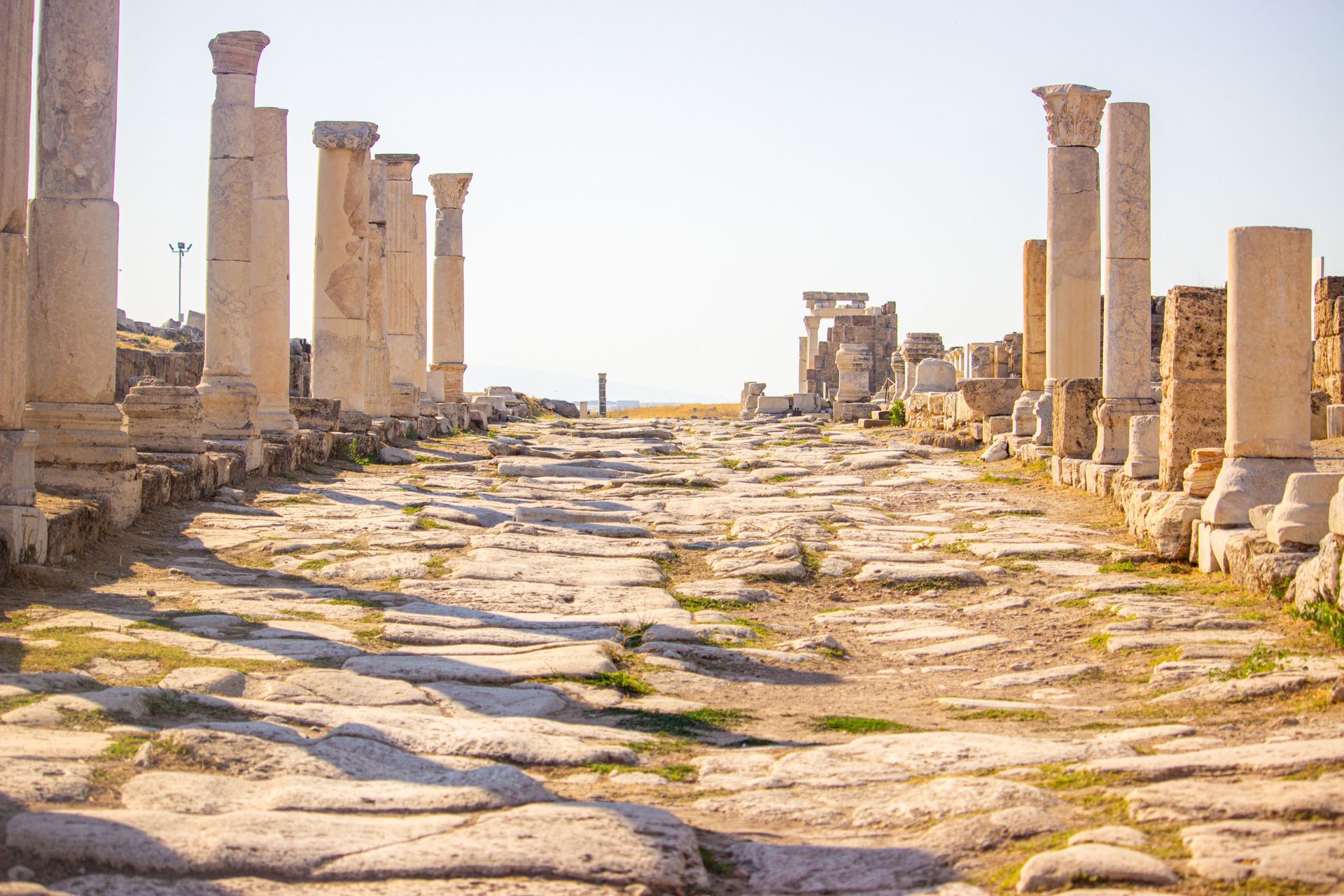
Roman roads were not just paths through the landscape. They were precision-engineered linear infrastructure built to last centuries under heavy use. The basic construction method involved digging a trench, laying a foundation of large stones, adding layers of progressively smaller stone and gravel, and finishing with a paved surface of fitted stone blocks, slightly crowned in the center to shed water. The total depth could reach a meter or more. Drainage ditches ran alongside.
The result was a surface that could carry heavy wagons, marching armies, and commercial traffic in any season. Roads were built straight wherever terrain permitted — not out of aesthetic preference but because straight roads are more efficient for military movement and easier to survey. Where terrain forced a deviation, Roman engineers typically chose to cut through hills or build embankments rather than curve around obstacles, minimizing travel distance.
At its height, the Roman road network covered approximately 80,000 kilometers of paved road, connecting every major city in the empire. Secondary roads brought the total to perhaps 400,000 kilometers. The roads were marked with milestones giving distances to major cities, maintained by local communities required by law to keep adjacent sections in repair, and patrolled by the cursus publicus — the imperial postal and transport service, which maintained relay stations with fresh horses at regular intervals.
The cursus publicus allowed messages and official dispatches to travel at roughly 75 kilometers per day under normal conditions — a speed not matched by any other European postal system until the 18th century. Julius Caesar reputedly covered 800 Roman miles in eight days while traveling by carriage, which implies sustained daily distances of over 100 kilometers. That kind of speed was not available to the rulers of medieval Europe.
Many Roman roads are still in use today in some form. The route of the Via Appia, built starting in 312 BCE, is followed by the modern Appian Way. The alignment of Roman roads underlies many modern European highways and intercity routes. In Britain, the Romans built the foundations of routes that became the A1, A2, A5, and other major roads still in daily use. The straightness of Roman road engineering left a permanent imprint on the landscape that 2,000 years of subsequent development has only partially obscured.
Credit: Josh Withers / Pexels
Roman law developed the concept of a juridical person — an entity that could own property, enter contracts, and sue and be sued — separate from any individual human being. The Roman collegium, a legally recognized association, could hold assets in its own name and continue to exist after the deaths of its individual members. This was the conceptual ancestor of the modern corporation.
The implications were vast. Once you can separate legal personhood from individual humans, you can create institutions that outlast their founders, that accumulate assets across generations, that can be held liable for obligations without requiring any individual to bear unlimited personal responsibility. The Roman state itself operated on this principle — the res publica, literally "the public thing," was a legal entity distinct from the people who ran it at any given moment.
Roman private law developed concepts that flow directly into modern civil law systems. Contracts were enforceable under specific conditions that would be recognizable today: offer, acceptance, consideration, capacity. Property law distinguished between ownership and possession. The law of obligations recognized that people could be bound not just by explicit agreements but by conduct that created reasonable expectations in others. Tort law recognized that one person could be liable for harm caused to another even without a prior contractual relationship.
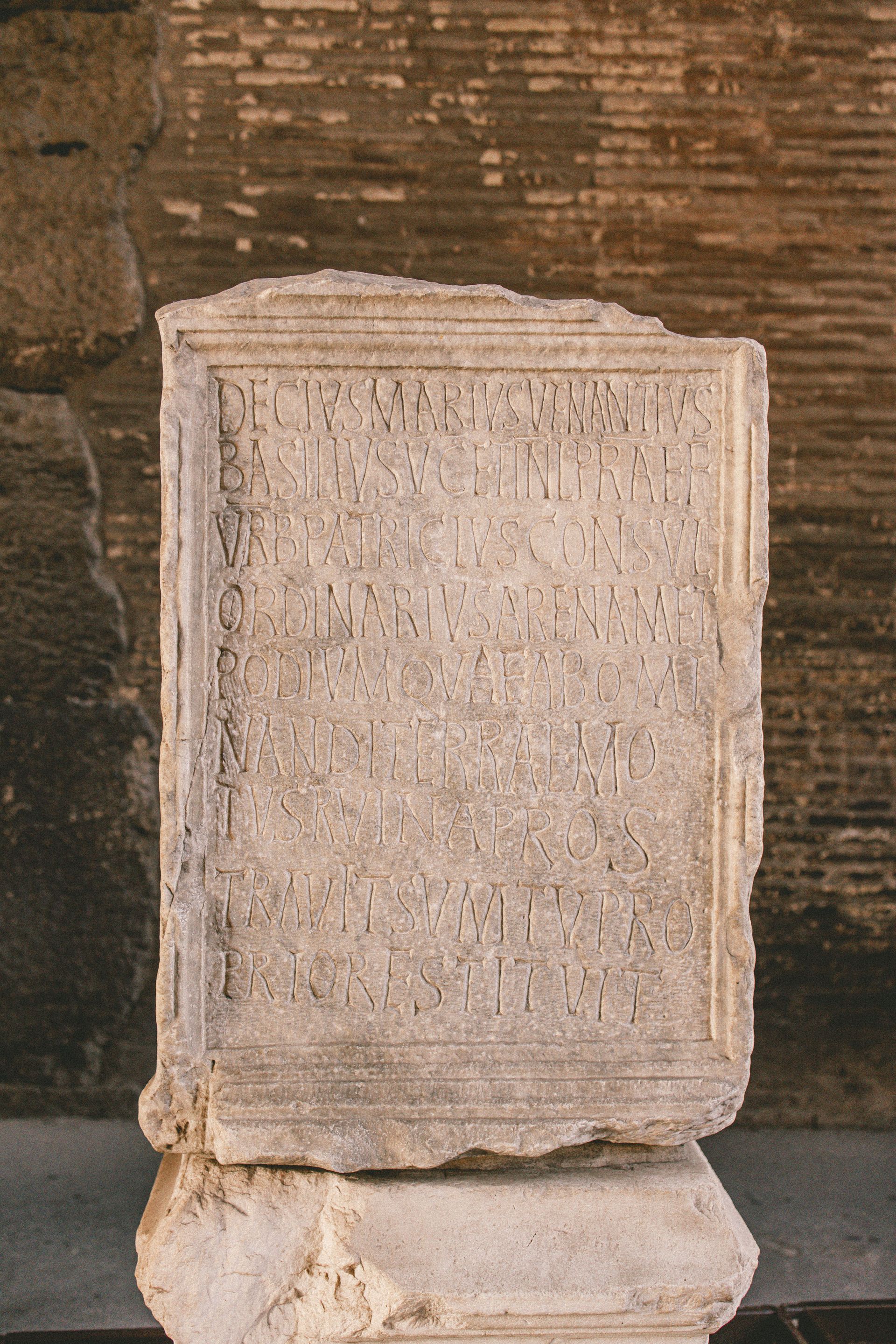
The Twelve Tables, Rome's first written legal code dating to around 450 BCE, established the principle that law should be written down and publicly available — that citizens should be able to know what the law says without having to rely on the interpretations of a priestly class. This was genuinely radical. In many ancient legal systems, law was administered by religious authorities whose rulings were not subject to challenge or appeal. Rome's written law created the possibility of legal argument: if you could read the statute, you could argue about what it meant.
Justinian's Corpus Juris Civilis, compiled in the sixth century CE, codified centuries of Roman legal development and became the foundation of civil law systems across continental Europe, Latin America, and much of the world. France's Napoleonic Code, Germany's BGB, Spain's Civil Code — all of them trace their conceptual lineage directly to Roman jurisprudence. It is not an exaggeration to say that Roman law is still governing modern commercial and civil life.
Credit: James Frid / Pexels
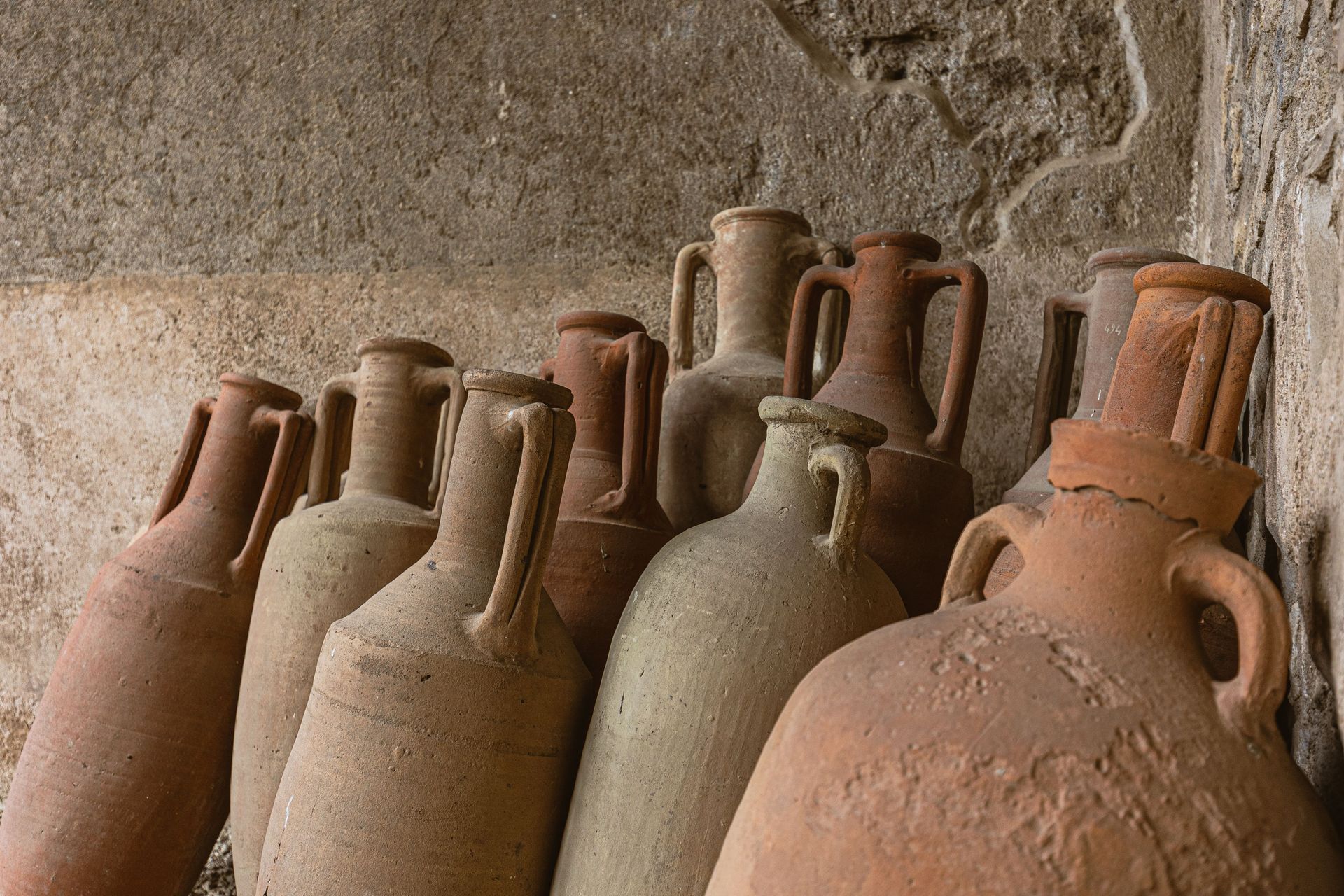
Rome faced a problem that no ancient city had faced before: how do you feed a population of around one million people in a city that cannot produce nearly enough food for itself? The answer was the annona — a state-administered grain supply system that sourced grain from Egypt, North Africa, and Sicily, shipped it to Rome, stored it in public warehouses, and distributed it to eligible citizens at subsidized or free prices.
The logistics were formidable. Egypt alone was shipping an estimated 135,000 metric tons of grain to Rome annually by the second century CE. This required a purpose-built merchant fleet, specialized grain storage facilities (horrea) that could hold tens of thousands of tons while maintaining grain quality, and administrative systems to track supply, demand, and distribution. The port of Ostia, Rome's harbor, was substantially rebuilt under Claudius and Trajan specifically to handle the volume of grain ships.
The annona was not charity in the modern sense. It was a political and logistical necessity. The grain dole — the frumentatio — provided subsidized grain to perhaps 200,000 Roman citizens. Augustus converted it into a free distribution. The political consequences of disrupting it were severe: grain shortages caused riots, and emperors who allowed the supply to fail did not last long. The annona curator, the official responsible for Rome's food supply, was one of the most important administrative positions in the empire.
The system also drove agricultural investment throughout the Mediterranean. The demand for grain stimulated the development of large commercial farming estates — latifundia — in North Africa and elsewhere, complete with irrigation infrastructure, processing mills, and storage. Roman-era farming techniques in North Africa, including dry-farming methods adapted to semi-arid conditions, allowed agriculture in regions that later reverted to marginal productivity after the empire's collapse.
The Roman model of centralized food security — government responsibility for ensuring that the urban population has access to staple foods — is the direct ancestor of modern food assistance programs, strategic grain reserves, and the agricultural price-support systems that most developed economies still operate.
Credit: Wellcome Collection / Wikimedia Commons (CC BY 4.0)
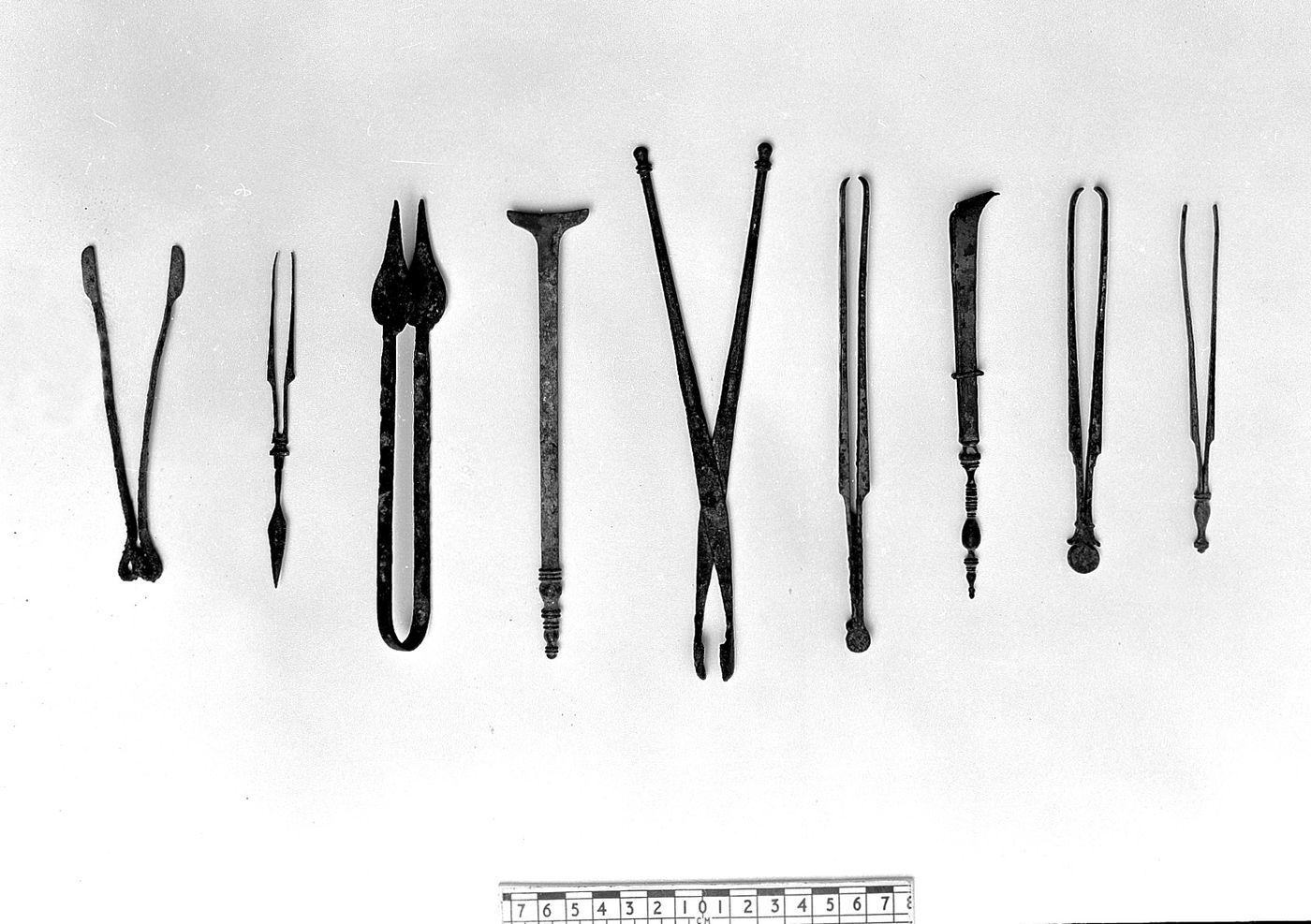
Roman military medicine developed surgical tools and techniques that were, in some cases, not significantly improved upon until the 19th century. Archaeological excavations at Roman sites have produced sets of surgical instruments that include scalpels, bone saws, forceps, surgical hooks, probes, and catheters. The instruments were made of bronze or iron, often with handles designed for precise grip. Many of them are functionally identical to instruments used in surgery before the introduction of modern stainless steel.
The Roman army needed effective field medicine not just for humanitarian reasons but for military ones. An army that can return wounded soldiers to service has a significant advantage over one that cannot. Roman military doctors — medici — were trained specialists attached to legions, not priests or general practitioners. They performed amputations, set fractures, removed arrowheads, and conducted what we would now call triage. Military hospitals, the valetudinaria, were built with individual wards, separate rooms for different categories of patient, and ventilation systems.
Celsus, a Roman writer of the first century CE, produced De Medicina, an encyclopedic medical text that covers surgery, pharmacology, and clinical practice. His descriptions of surgical procedures for cataracts, hernias, goiter, and bladder stones are clinically detailed and technically sophisticated. His four cardinal signs of inflammation — redness, swelling, heat, and pain — are still taught in medical education. Celsus wasn't primarily a physician; he was a well-read Roman writer who compiled and synthesized existing knowledge. The fact that a non-specialist could produce a text of that quality says something about the level of medical knowledge available in Rome.
Galen of Pergamon, a physician working in Rome in the second century CE, produced an enormous body of anatomical and physiological work that dominated European and Islamic medicine for over 1,000 years. Some of Galen's conclusions were wrong — he believed the liver was the center of the blood system, not the heart — but his commitment to systematic observation and anatomical dissection was genuine, and his descriptions of bones, muscles, and nerves were accurate enough to serve as medical references for centuries.
Credit: Boris Hamer / Pexels
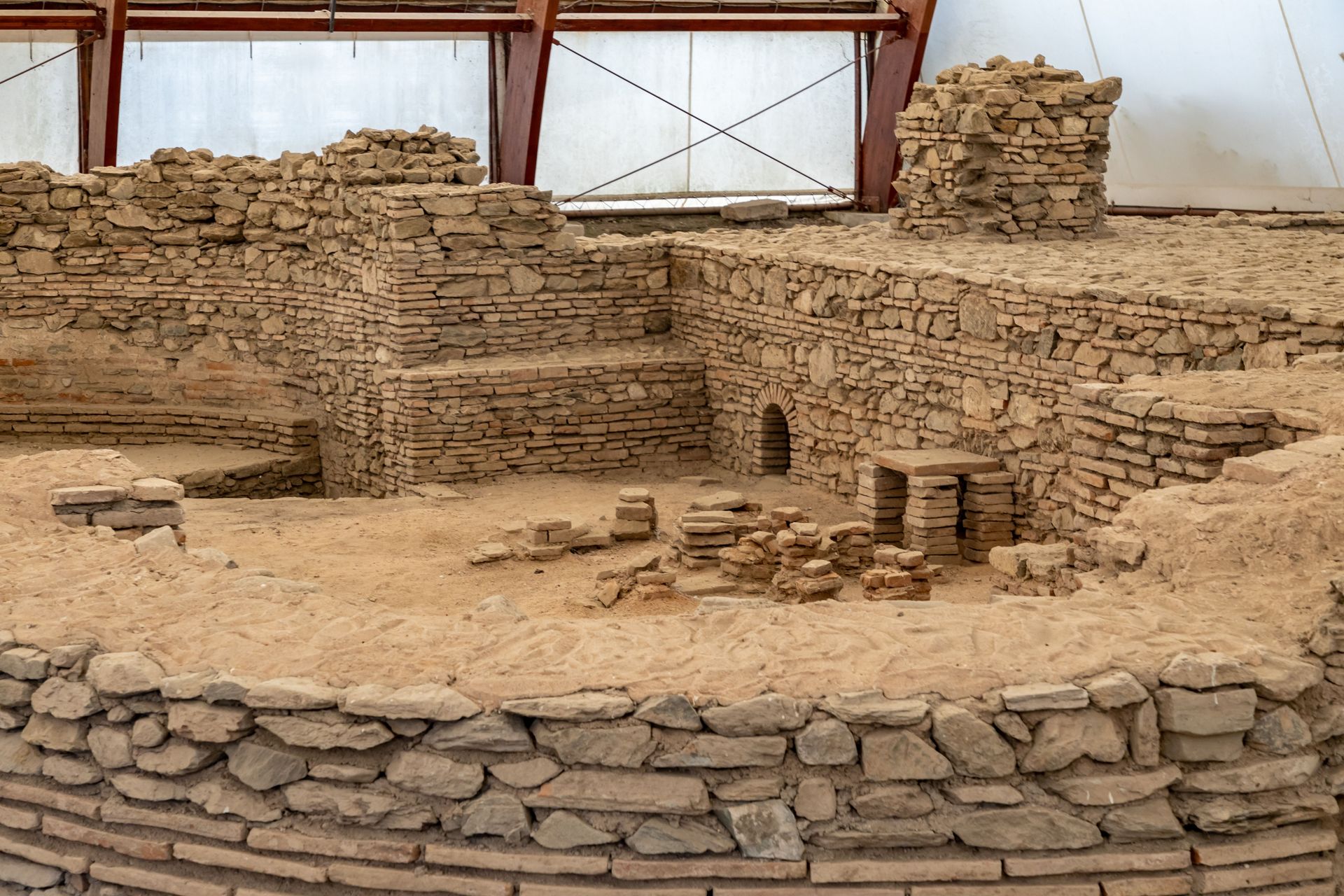
The hypocaust — Rome's underfloor and in-wall heating system — is one of the more elegant pieces of ancient engineering. The system worked by raising a floor on columns of brick or tile, creating a space underneath through which hot air from a furnace could circulate. The same air could be channeled through hollow tiles built into the walls. A room heated by a hypocaust was warm from below and from the sides, producing even, radiant heat rather than the localized warmth of a central fire.
Hypocausts appear in Roman public baths, private villas, and military structures from the first century BCE onward. The system required a slave or worker to maintain the furnace — it was not a passive technology — but for the wealthy and for public buildings, it provided a level of thermal comfort that was not matched in Europe until the introduction of central heating in the 19th century. In Britain, where Roman occupation introduced hypocausts to a climate that genuinely required them, the departure of Rome meant the disappearance of the technology for over 1,500 years.
The engineering involved is more subtle than it appears. The floor system had to distribute weight while maintaining the air gap. The spacing of the pilae — the brick columns supporting the floor — was calibrated to the load the floor would carry and the heat distribution required. Floors heated by hypocausts were often paved with thick tiles that acted as thermal mass, absorbing heat slowly and releasing it over time. The system was, in effect, an early form of radiant floor heating, which is now considered one of the most efficient home heating methods available.
Some Roman villas in Britain show evidence of sophisticated temperature zoning — different rooms maintained at different temperatures for different purposes. Bath suites typically had a cold room (frigidarium), a warm room (tepidarium), and a hot room (caldarium), each at a different point in the heating circuit. Managing that kind of graduated temperature control without thermostats or modern control systems required careful design of the furnace, the flue arrangement, and the floor thickness in each room.
The concept was not complicated, but the consistent, widespread application of it across an empire represents a genuine contribution to the history of human comfort.
Credit: Magda Ehlers / Pexels
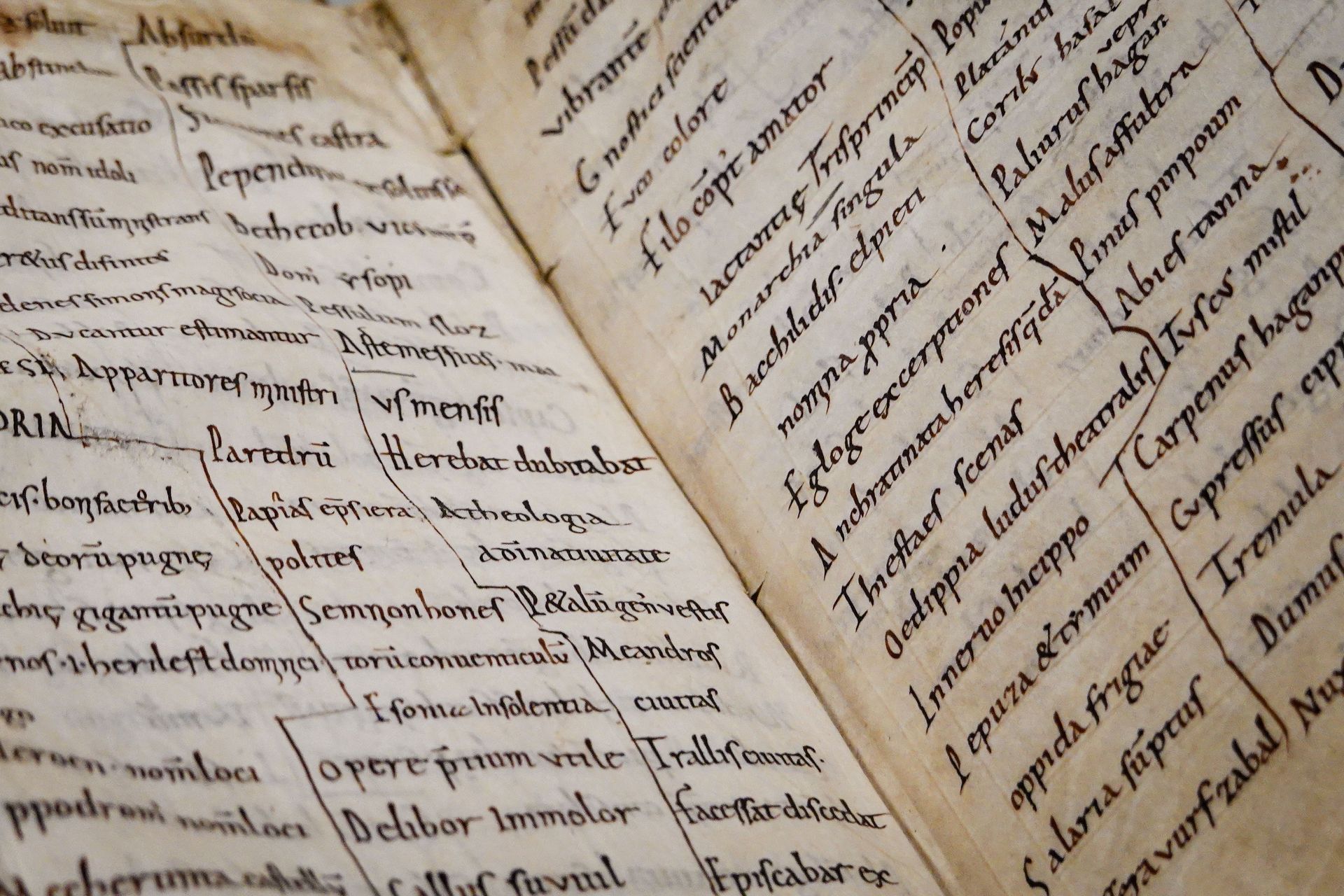
Before Rome, books were scrolls — rolls of papyrus or parchment that had to be unrolled to read, that couldn't be easily indexed, and that were difficult to consult at specific passages. The codex — sheets of material folded and bound together, like a modern book — was a Roman invention, emerging in the first century CE from the wax tablet notebooks (pugillares) that Romans used for everyday note-taking.
The advantages of the codex over the scroll were practical and significant. A codex could be opened at any page without having to scroll through the preceding material. It could be held in one hand while the other hand wrote. It stored more text per unit of weight and volume than a scroll. It was easier to protect — a wooden cover shielded the pages from damage in ways that a scroll could not easily achieve. And critically, it could be indexed: a codex can have a table of contents pointing to page numbers. A scroll cannot.
Early Christian communities were among the first to adopt the codex enthusiastically, partly for these practical reasons and partly because it distinguished their texts from the scroll-format texts of Jewish and pagan traditions. By the fourth century CE, the codex had largely displaced the scroll for book production throughout the Roman world. The scroll survived in some administrative contexts — legal records, some religious uses — but the codex had won the broader competition.
The shift from scroll to codex transformed how knowledge was organized and accessed. A library of codices can be searched, cross-referenced, and consulted at specific points in ways that a library of scrolls cannot. The development of scholarly commentary, annotation, and the footnote all follow from the codex form. When medieval monks preserved classical learning through the dark ages, they preserved it in codex form — and the codex they used was functionally the same object as the book you might be reading today.
The entire modern ecosystem of text — books, magazines, legal documents, academic papers — descends from that first-century Roman decision to fold a wax tablet and stitch it into a spine.
Credit: K / Pexels
Rome had laws governing how buildings could be used, how tall they could be, and what activities were permitted in residential areas. Julius Caesar and later Augustus established height limits for residential buildings — Augustus capped apartment buildings at 70 Roman feet — in response to fires and collapses caused by poorly built, overly tall insulae. Trajan later reduced the limit to 60 feet.
The legal concept of the urban plan as something that could and should be regulated by public authority is a Roman one. Rome's building codes addressed setbacks — the requirement that buildings not extend too far into streets — fire separation requirements, construction quality standards, and the prohibition of certain noisy or dangerous trades in residential neighborhoods. Tanners, smiths, and others whose work produced significant noise, smell, or fire risk were expected to operate in designated areas away from dense housing.
This was not merely theoretical. Rome had urban planning officials — the aediles — whose responsibilities included oversight of public and private construction, maintenance of roads and public spaces, and enforcement of building regulations. The aediles also oversaw the grain supply, weights and measures, and public games, making them something like a combined department of public works, weights and measures, and city administration.
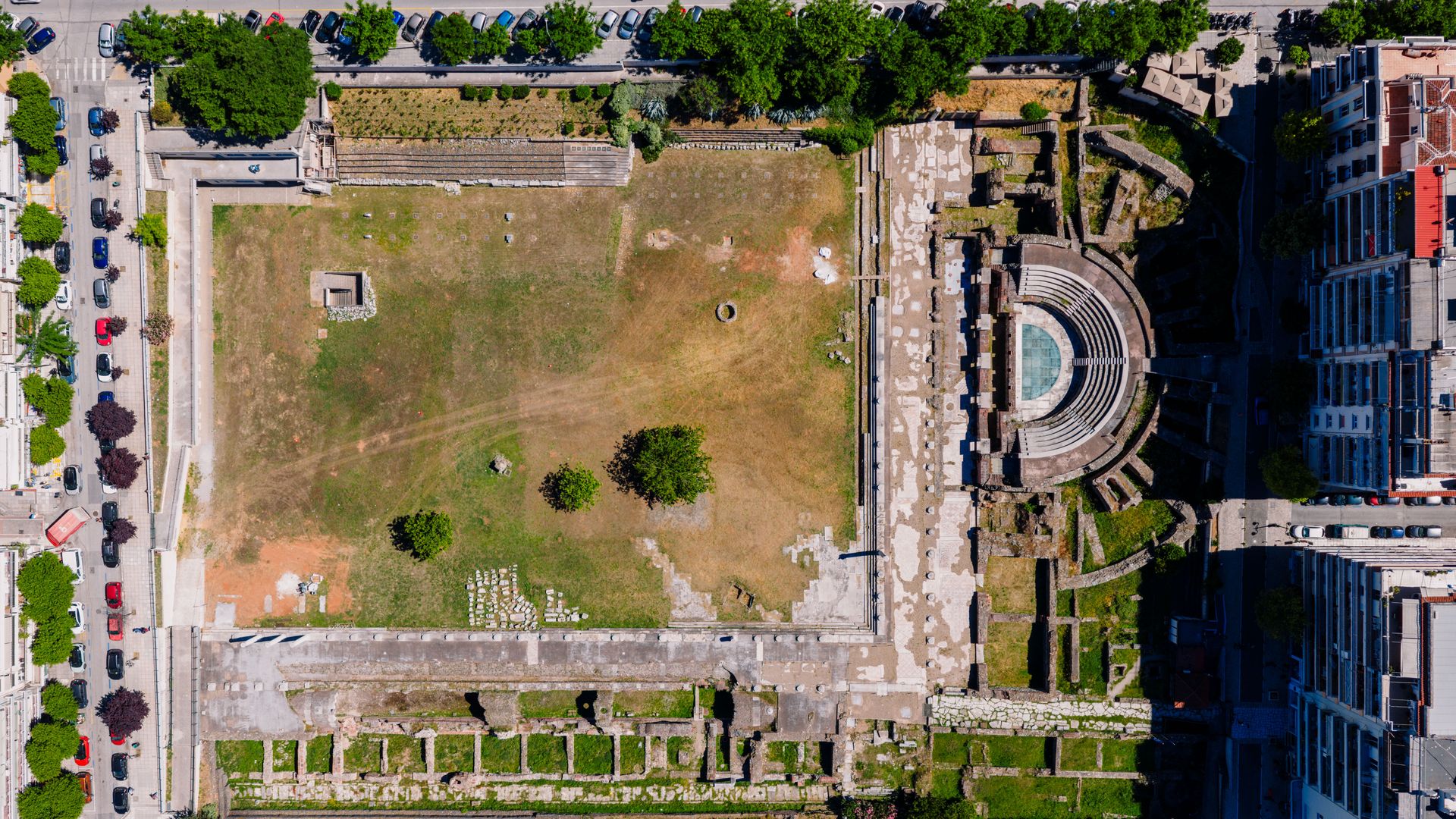
Roman cities throughout the empire were laid out according to a standardized grid system adapted from Greek models. The cardo maximus ran north-south; the decumanus maximus ran east-west; they intersected at the forum. Public buildings — the basilica, the temple, the baths — occupied specific zones in the plan. This systematic approach to urban layout is why so many European cities founded under Rome still have street patterns that follow the Roman grid, detectable from the air even where Roman structures have long since been demolished and replaced.
The idea that a city is something that can be planned, regulated, and managed as a coherent system — rather than simply growing in whatever direction commerce and building happen to push it — is one of Rome's practical contributions to the modern world.
Credit: Alexandru B / Pexels
The cursus publicus, established by Augustus around 20 BCE, was the first state-run communications and transport network in Western history. It maintained relay stations — mansiones and mutationes — at regular intervals along Roman roads throughout the empire, providing fresh horses, vehicles, food, and lodging to official travelers. The system was available to those carrying imperial authorization — a diploma or certificate issued by the emperor or a senior official — and its primary purpose was moving information.
The speed at which official information moved through the Roman Empire was genuinely extraordinary by pre-modern standards. A message dispatched from Rome could reach the Rhine frontier in roughly seven to nine days under good conditions. It could reach the eastern provinces — modern Turkey, Syria, Egypt — in three to five weeks. These speeds assumed the cursus publicus was functioning normally and that the roads were open. They were, in practice, much faster than any subsequent European communication system until the telegraph.
Augustus used the system to build something that had not previously existed: an imperial information network. Governors in distant provinces were required to submit regular reports. The emperor could issue binding orders that reached distant commanders within days. The speed of Roman communications was a significant factor in Roman administrative coherence — the empire held together in part because its governor could communicate with the center faster than any rival power could organize a response.
The cursus publicus also served commercial and diplomatic functions. Merchants with the right connections could use it to ship time-sensitive goods. Diplomats and foreign emissaries were given access. The system's physical infrastructure — the roads, the relay stations, the bridges — was also available to private travelers moving at their own expense, which stimulated commercial activity across the network.
What Rome built was the basic architecture of a modern communications state: a physical network, an administrative system for managing it, and a political commitment to maintaining it as imperial infrastructure. The medieval period had nothing comparable. It was not until the emergence of royal postal systems in the 15th and 16th centuries that anything approaching the cursus publicus reappeared in Europe.
Credit: Görkem Cetinkaya / Pexels
In 59 BCE, Julius Caesar ordered the publication of the Acta Diurna — the "daily acts" — a handwritten official gazette that was posted in public spaces throughout Rome. It recorded senatorial debates, legal proceedings, births, deaths, military dispatches, public events, and other official information. Copies were made and distributed to provincial cities, where they were posted and read aloud.
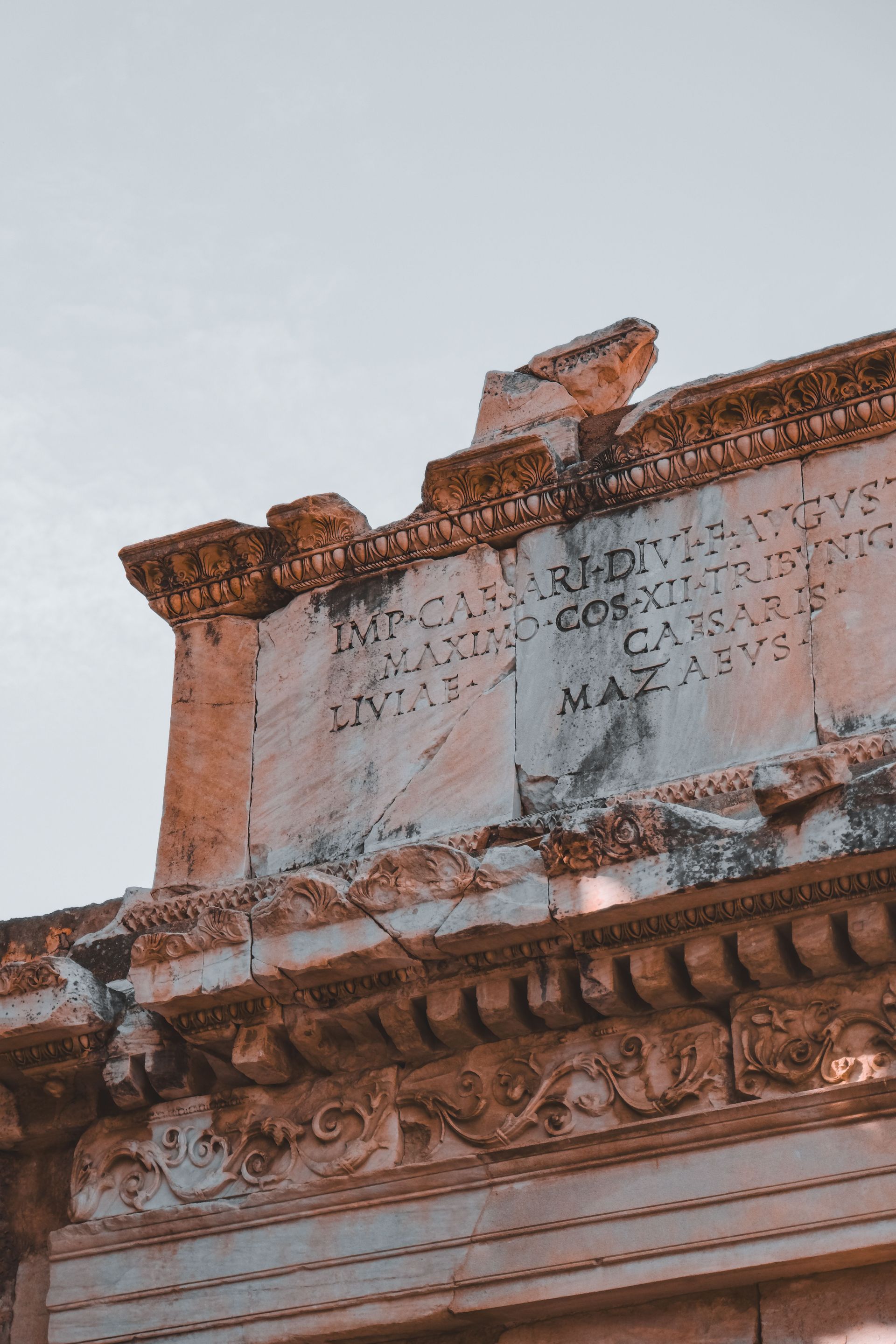
The Acta Diurna is the earliest known example of a government-produced public information document intended for mass distribution. It is not a newspaper in the modern sense — it was handwritten, not printed, and its contents were controlled by the state — but it established the concept of regular, publicly available written records of public affairs. Before this, public information in Rome circulated through word of mouth, public criers, and carved inscriptions — all of which were slower, less reliable, and less accessible.
The Senate had its own parallel document, the Acta Senatus, which recorded the proceedings of Senate debates. The Acta Senatus was more restricted in circulation — it was initially a classified record, though Caesar ordered it opened to the public for a period — but its existence demonstrates that Rome had developed the concept of institutional record-keeping as a form of accountability.
These documents survived as a form for centuries. During the Republic, politically active Romans — Cicero, for instance — corresponded with friends and agents throughout the empire, passing along summaries of the Acta and commentary on public affairs. This informal network of political correspondence functioned something like a distributed editorial operation. Cicero's letters, many of which survive, are one of the best records of Roman political life precisely because they transmitted and analyzed public information with something close to journalistic intent.
The practical value of the Acta Diurna was that it made government activity harder to conceal from the literate public. Senate proceedings that were published could be commented on, criticized, and quoted against their authors. The concept of a public record as a check on government power traces directly to this Roman practice.
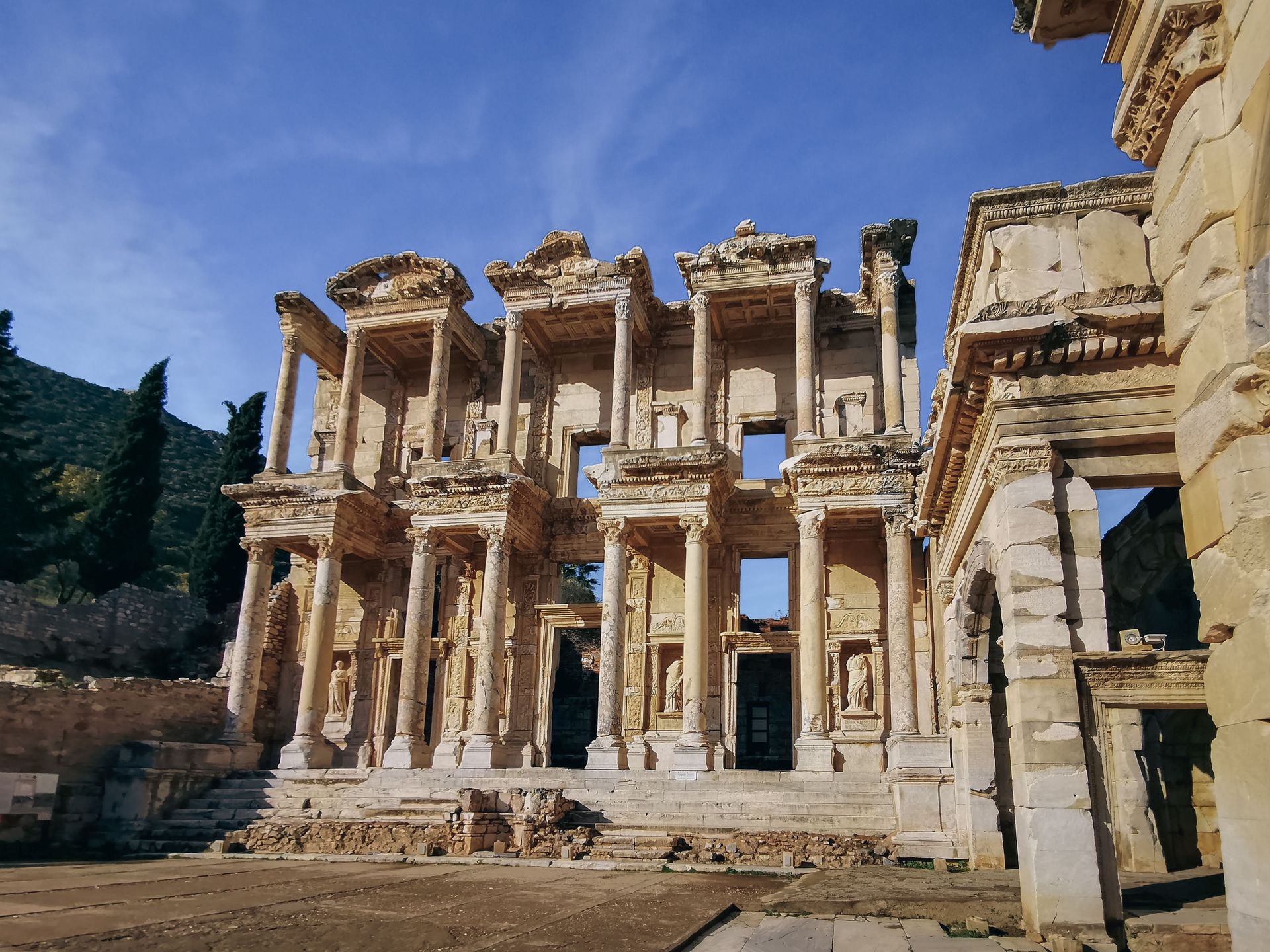
Credit: Mehmet Turgut Kirkgoz / Pexels
The first public library in Rome was established by Julius Caesar's associate Gaius Asinius Pollio around 39 BCE — making Rome the first city in the Western world to offer free public access to books as a matter of policy. Augustus subsequently established two more public libraries. By the fourth century CE, Rome had 28 public libraries. Most major cities in the empire had at least one.
These weren't private collections opened to the public. They were purpose-built institutions with dedicated reading rooms, staff to retrieve books, and separate sections for Greek and Latin texts. They were funded by the state and admission was free. The libraries held scrolls initially and, later, codices, and they were used by students, writers, lawyers, and anyone with enough literacy to use them.
The libraries of Rome and Alexandria (under Roman administration for much of the relevant period) were repositories of something genuinely irreplaceable: the accumulated written knowledge of the ancient Mediterranean world. When the Library of Alexandria suffered various losses over the centuries — through fire, civil unrest, and eventual abandonment — and when the Western Roman library network decayed after the fifth century, the knowledge those institutions preserved was lost or scattered. The recovery of classical texts during the Renaissance was largely the recovery of copies that had survived in monastic libraries or in the Arabic-speaking world.
Roman public libraries were also architectural statements about the value of knowledge. The library attached to Trajan's Forum, built around 113 CE, was a two-story building with niches for book cabinets along the walls, a balcony with additional shelving, and a central reading space lit by large windows. It was built from the finest materials and positioned adjacent to Trajan's Column, which suggests its builders considered the library as significant as a monument celebrating military victory.
The modern public library system — the Carnegie libraries, the New York Public Library, the British Library reading room — descends conceptually from this Roman decision to fund public access to written knowledge as a civic responsibility.
Credit: Russ Stoneback / Pexels
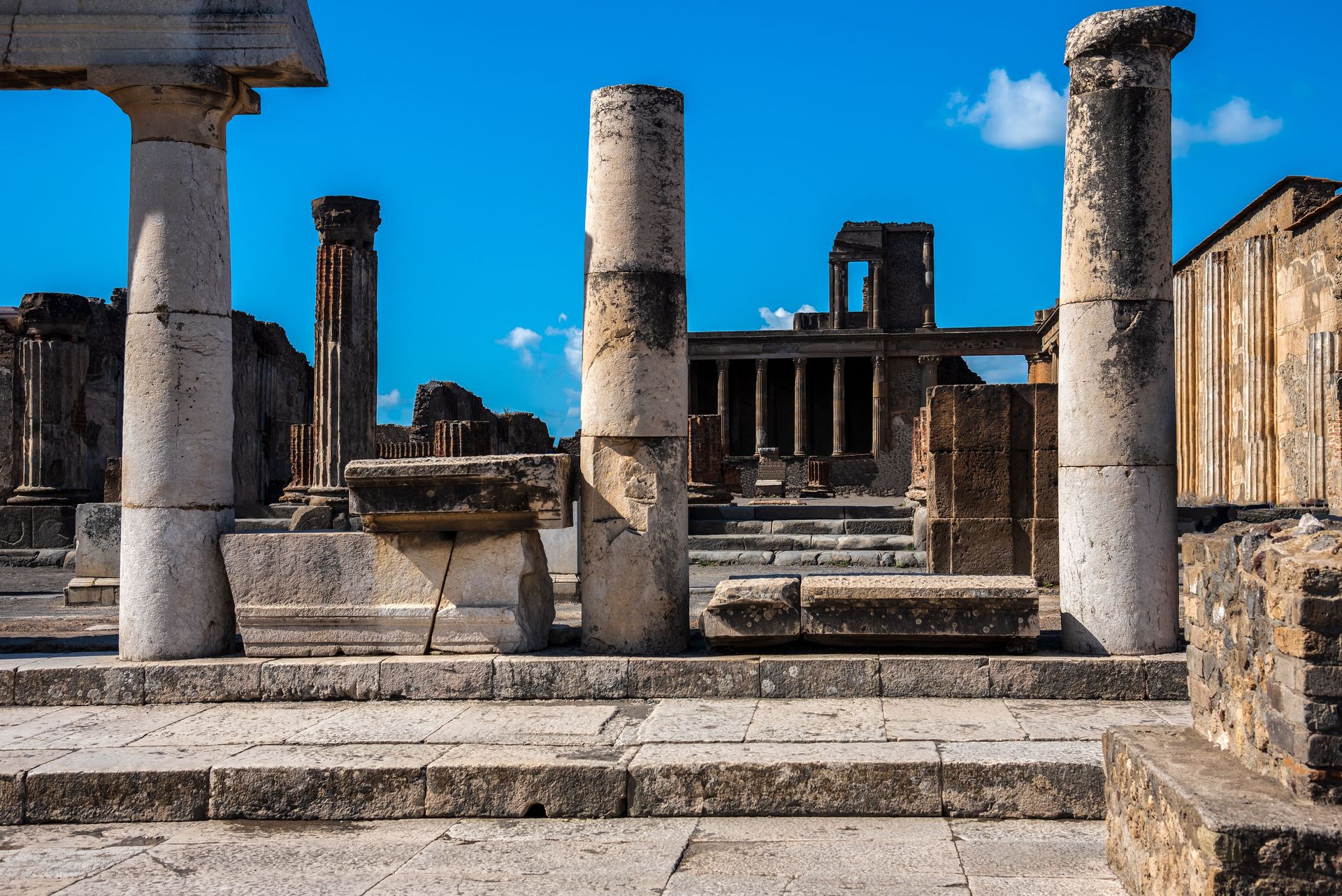
The Roman insula — multi-story apartment building — was the dominant housing form for Rome's urban population. At the city's height, Rome had hundreds of thousands of residents living in insulae, typically renting rooms or small apartments from landlords who owned the buildings. The ground floors were usually given over to shops and workshops; residential units occupied the upper floors. The tallest insulae reached six or seven stories, which is why Augustus and Trajan imposed building height limits.
The insula form solved a problem that every dense city must eventually solve: how do you house large numbers of people in a limited geographic area at an accessible price? Rome arrived at the same answer that 19th-century Paris, 20th-century New York, and 21st-century Tokyo arrived at: dense, multi-family, multi-story housing with ground-floor retail. The specific form — a central courtyard, shops on the street level, apartments above — is still one of the most common urban housing types in the world.
Roman insulae had significant problems. They were fire risks — the upper floors were typically timber-framed construction, and fires were frequent and destructive. The great fire of Rome in 64 CE destroyed large sections of the city's housing stock. Insulae lacked running water above the ground floor, meaning residents carried water up from street-level fountains. Sanitation was limited. The Juvenal's descriptions of insula life in his Satires give a picture of noise, smell, danger of falling objects from upper floors, and general urban misery that is not unfamiliar to anyone who has lived in a poorly maintained urban apartment.
But the basic concept worked. It allowed Rome to concentrate one million people in a relatively compact area, within walking distance of the Forum, the markets, the baths, and the entertainments that made city life valuable. The alternative — low-density housing spread over a much larger area — would have made the city functionally unworkable. The spatial efficiency of the insula was not a luxury; it was a prerequisite for urban life at Roman scale.
Credit: Ahu Çiçek / Pexels
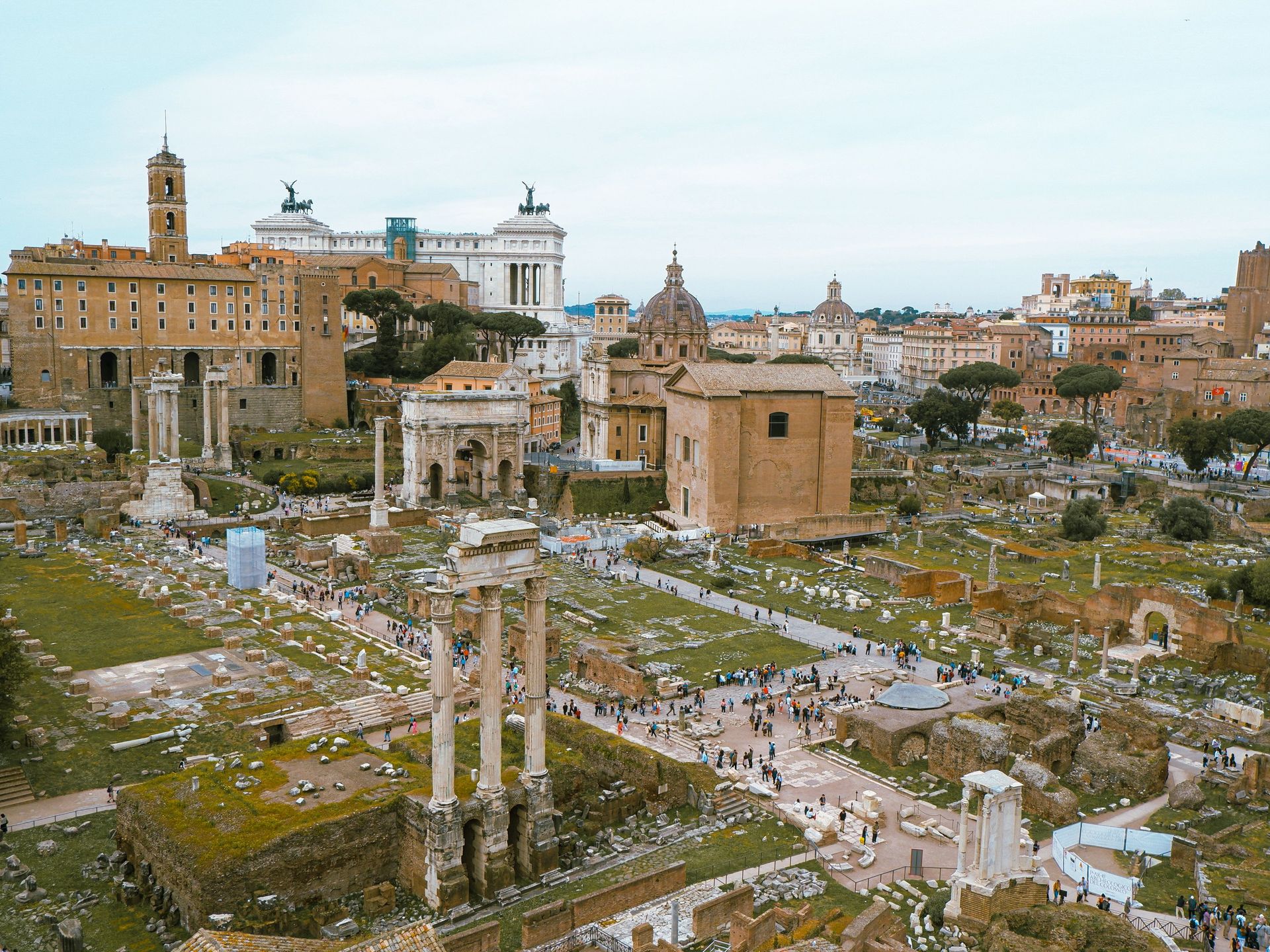
The Roman concept of what the state owed its citizens in material terms was more developed than is often recognized. The grain dole — frumentatio — provided free grain to roughly 200,000 Roman citizens by the imperial period. Augustus, in his Res Gestae, records that he personally distributed grain to between 200,000 and 320,000 people on various occasions. The dole was not means-tested in the modern sense — it went to registered citizens, not specifically to the poor — but it functioned as a baseline food security guarantee for a large portion of Rome's population.
Beyond grain, Roman emperors funded public baths, which were free or nearly free to enter, and public games — the ludi — which included theatrical performances, chariot races at the Circus Maximus, and gladiatorial combat at the Colosseum. The phrase panem et circenses — bread and circuses — attributed to the satirist Juvenal, is typically used pejoratively, as a critique of using entertainment to pacify citizens. But the underlying policy — that the state should ensure the population has both food and leisure — reflects a genuine theory of social stability that most modern governments still operate on.
Rome also had mechanisms for poor relief beyond the grain dole. The alimenta, instituted by Trajan around 98 CE, was a program that provided food and financial support to poor children in Italian cities. It was funded through a system of loans to landowners, with the interest payments going to local administrators to distribute. The program was expanded under subsequent emperors and represents one of the earliest state-run child welfare programs in Western history.
Roman cities also had collegia — associations of workers, merchants, or neighbors — that provided burial costs for members, a form of mutual aid that softened some of the worst consequences of poverty in a world without insurance or pension systems. The state regulated collegia and sometimes suppressed them when they became politically active, but their basic social insurance function was recognized and tolerated.
The Roman state was not a welfare state in the modern sense, and its obligations were selective in ways that would be unacceptable today — tied to citizenship, gender, and social status. But the principle that the state had material obligations to the population it governed, beyond simply maintaining order, is Roman in origin.
Credit: Emrehan Dikmenli / Pexels
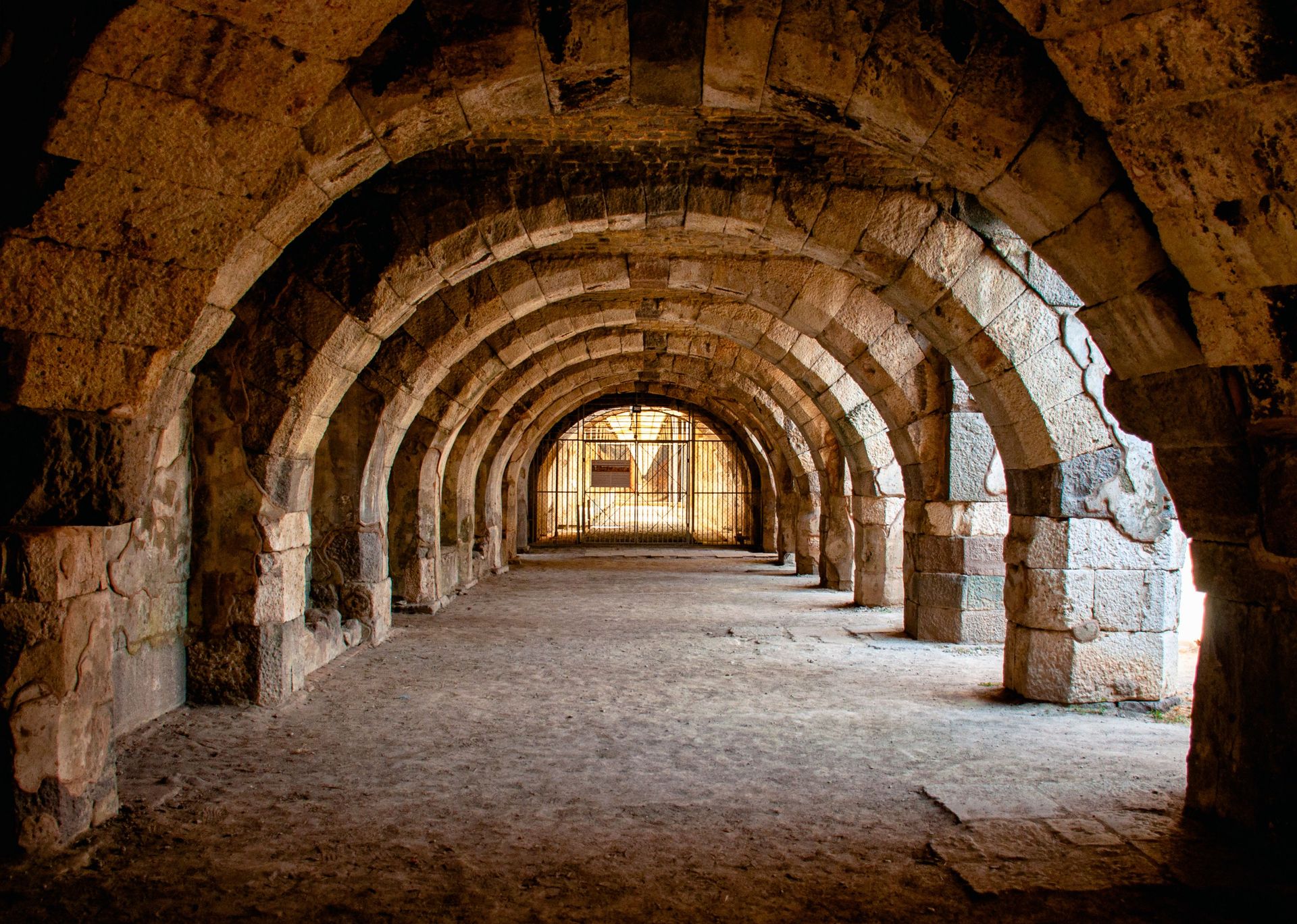
The Roman arch — technically borrowed from Etruscan and earlier Near Eastern precedents — was developed by Roman engineers into a structural system that allowed them to build spans, heights, and spaces that no timber or flat-lintel construction could achieve. The key innovation wasn't the arch itself but the Romans' systematic, large-scale application of arched construction across every building type: bridges, aqueducts, warehouses, amphitheaters, triumphal gates, sewers, and basilicas.
A true arch transfers the weight of the structure above it outward and downward through the curved members into the supporting piers, rather than directly downward as in post-and-lintel construction. This means that the arch can span much wider openings than a horizontal stone beam, which would crack under its own weight above a certain span. The Pont du Gard's largest arch spans about 24 meters. Flat stone lintels of that span would have been impossible.
The barrel vault — a continuous arch extended into depth — allowed the Romans to build large covered spaces without interior columns. The groin vault — two barrel vaults intersecting at right angles — concentrated structural loads at four points rather than along continuous walls, allowing the walls between the piers to be opened up with windows. This structural logic is what made large, light-filled interior spaces possible, and it is the direct ancestor of the Gothic cathedrals of medieval Europe.
The dome is the rotational extension of the arch. The Pantheon's dome, spanning 43 meters, used a coffered interior surface not just as decoration but to reduce weight, with thinner coffers near the crown where the concrete is thinnest. The oculus at the crown eliminated the heaviest point entirely while introducing the light source that makes the space work. It is a structure that solves its own structural problems with its own design elements.
Medieval and Renaissance builders studied Roman arched and vaulted structures and learned from them. The architectural vocabulary of Western architecture — arches, vaults, domes, colonnaded facades — is fundamentally Roman.
Credit: Lespinas Xavier / Unsplash
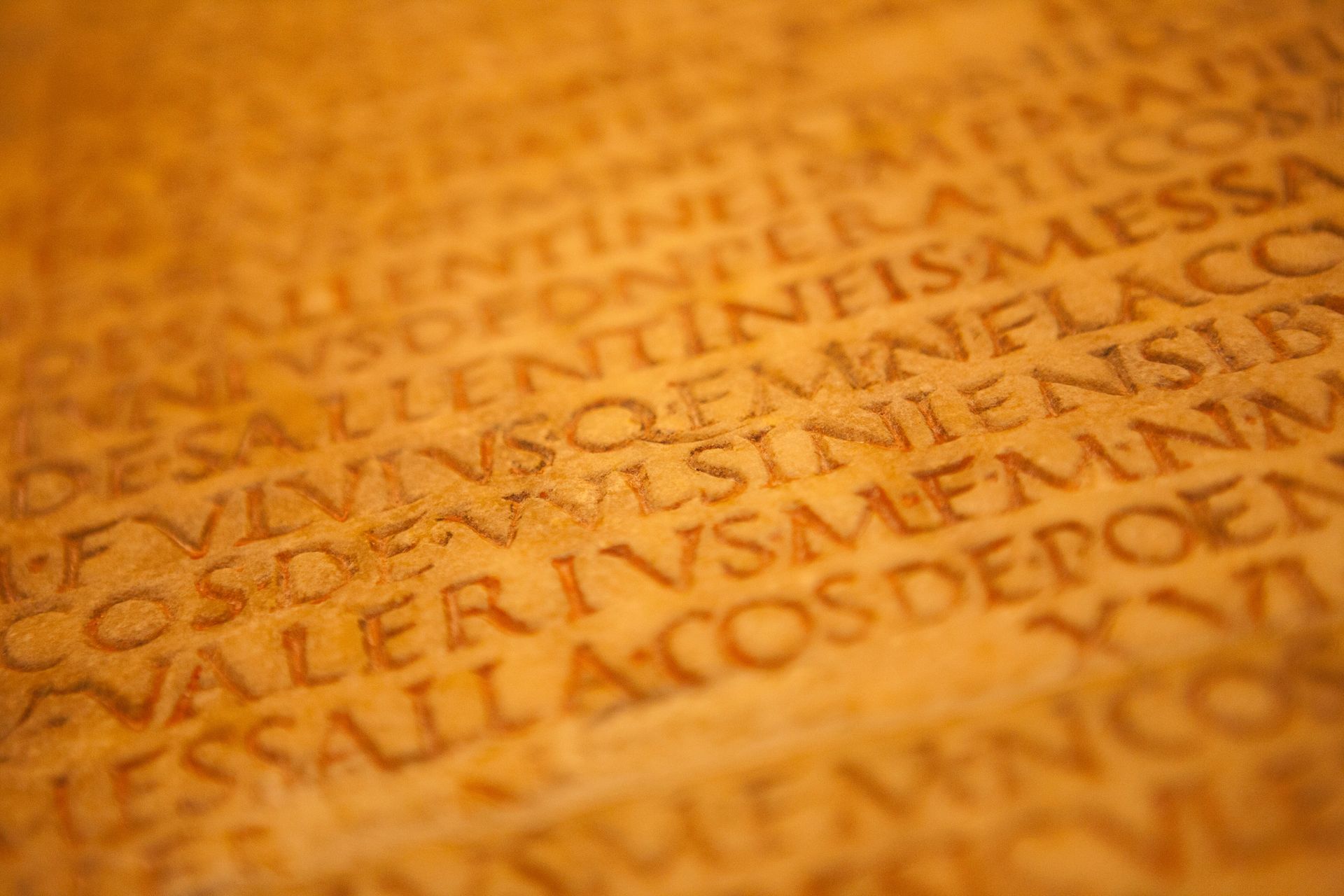
Rome conducted regular censuses — the census Romanus — that counted citizens, registered their property, classified them by social and military class, and established the tax and voting rolls. The census had been held periodically since the time of the kings, but Augustus turned it into a regular, systematic imperial tool. His census extended to the provinces, making it the first attempt in Western history to count the population of a large multi-ethnic empire.
The census served several practical purposes simultaneously. It established who was eligible for the grain dole, the vote, and military service. It assessed the taxable wealth of citizens, which was the basis for direct taxation. It tracked population movements and could identify regions of growth or decline that required administrative attention. And it produced records — the tabulae censoriae — that formed the official legal identity of citizens. Being registered in the census was, in effect, being recognized as a person with legal standing.
The mechanics of the Roman census required a substantial administrative apparatus. Census officials were dispatched to provinces with instructions and forms. Returns were collected, verified, and compiled into central records. The process took years for a full imperial census. Augustus records in the Res Gestae that he conducted three censuses, producing figures of approximately four million, over four million, and nearly five million Roman citizens respectively — numbers that, while debated by historians, represent the first attempt at systematic national demographic accounting.
The modern census — the decennial count conducted by most national governments as the basis for legislative apportionment, tax policy, and social planning — descends directly from this Roman practice. The word "census" itself is Latin. The conceptual framework — counting people as an administrative act with legal and political consequences — was Roman.
Credit: Jorge Urosa / Pexels
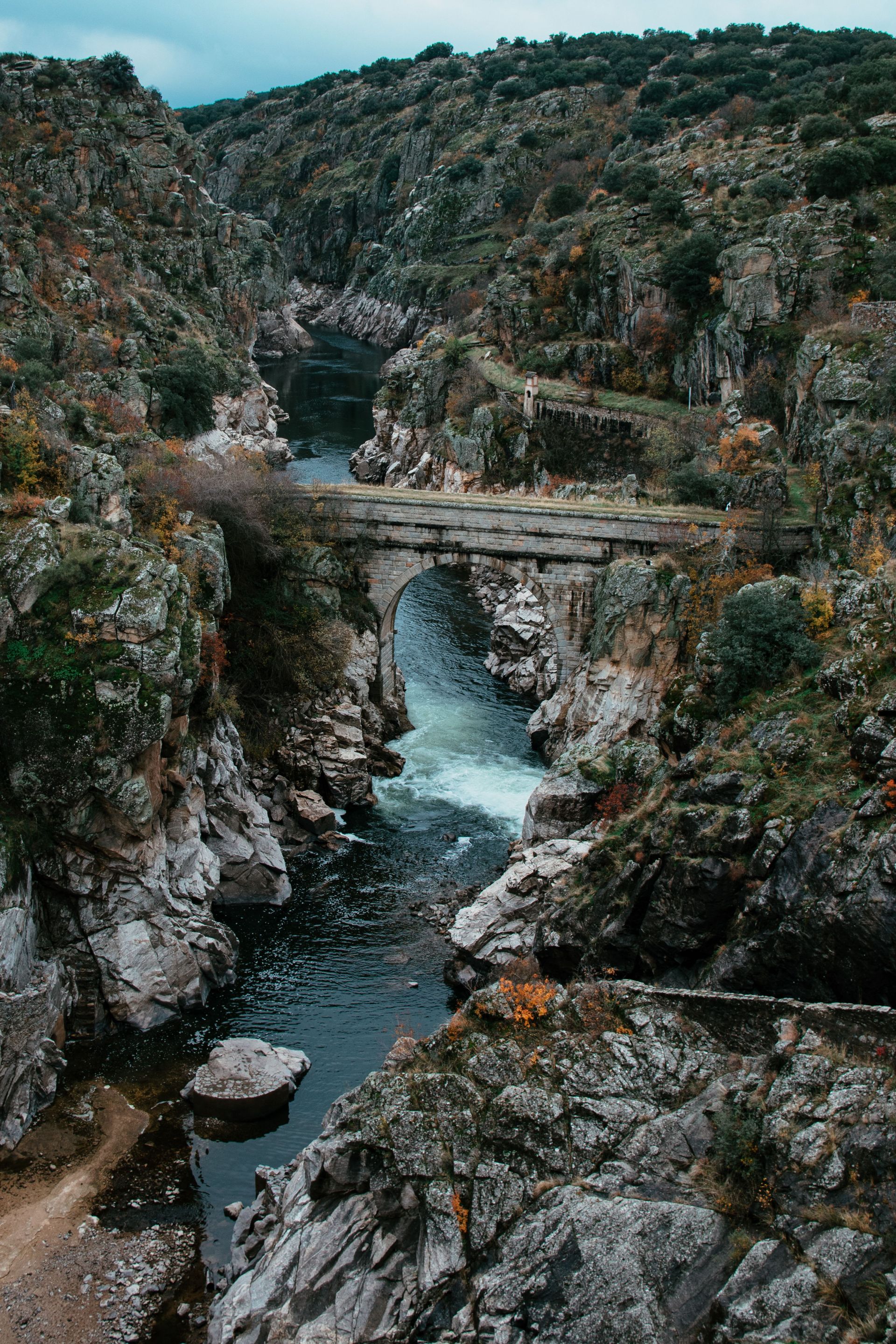
Rome built hundreds of bridges across the empire, from small timber crossings to multi-arch stone structures spanning major rivers. The most technically sophisticated of them — the Pont du Gard, the bridges at Alcántara in Spain, the Pons Fabricius in Rome — were built to last, and they have. The Pons Fabricius, built in 62 BCE, still carries pedestrian traffic across the Tiber today. The Alcántara bridge in Spain, completed around 106 CE, still carries traffic — modern vehicular traffic — across the Tagus River gorge at a height of 48 meters.
Roman bridge engineering was sophisticated in ways that go beyond simply stacking stones. The piers were designed to minimize water resistance — pointed on both the upstream and downstream sides to reduce the risk of scour, the erosion of the riverbed around the foundation that causes bridge failures. Foundations were often built inside coffer dams — temporary water-exclusion structures — that allowed workers to excavate and build in dry conditions. Caesar's descriptions of his Rhine bridge, built in just ten days by his legions during the Gallic Wars, include enough engineering detail to allow modern engineers to estimate the dimensions and construction method.
The scale of Roman bridge construction across the empire had significant economic consequences. Bridges allowed wheeled traffic to cross rivers, which made commercial transport faster and cheaper than ferries. They allowed armies to move quickly without dependence on river conditions. They connected road networks that would otherwise have been severed at every major water obstacle. A bridged road network is fundamentally different in economic terms from one where every river crossing requires a ferry — travel is faster, more predictable, and cheaper.
The Alcántara bridge's inscription records that the architect was one Gaius Julius Lacer. Roman engineers were sometimes named in public inscriptions, which reflects a degree of professional status and institutional recognition for engineering expertise that was not common in the ancient world and did not become standard again until the modern era.
Credit: Chait Goli / Pexels
Rome's religious policy throughout most of its history was one of active pluralism. The Roman state did not typically require subject peoples to abandon their own gods when they were incorporated into the empire. Instead, Rome practiced a form of religious syncretism — the identification of local deities with Roman ones, or simply the accommodation of local cults within the broader imperial religious framework. The pantheon of Rome's gods expanded regularly as new peoples were conquered.
This policy was pragmatic, not idealistic. Religious suppression of conquered peoples was expensive and generated resistance. Allowing people to continue their religious practices maintained social stability and transferred loyalty to Rome without requiring cultural assimilation. The Roman empire at its height contained dozens of active religious traditions — Egyptian cults, Mithraic mysteries, Judaism, Druidism (though the Romans suppressed Druidism in Gaul and Britain, largely for political rather than theological reasons), and eventually Christianity — all operating more or less openly.
There were limits. Rome required that certain official religious acts — sacrifices to the gods of Rome, and later veneration of the emperor — be performed by inhabitants of the empire as acts of civic loyalty. Most religious communities could accommodate this without difficulty. Judaism was given a formal exemption from imperial cult participation, recognizing its monotheistic character. Christianity's refusal to participate in imperial cult, combined with its rapid growth and social organization, was a primary reason for periodic Roman persecution.
The Roman model of pluralism-within-limits influenced subsequent thinking about religious toleration. When European thinkers in the 16th and 17th centuries were trying to find ways to end the religious wars that followed the Reformation, they looked partly to Rome as a historical example of a diverse empire that had maintained civil peace across religious difference. The Peace of Westphalia and later theories of religious toleration draw on Roman precedents.
Credit: Jiří Dočkal / Pexels
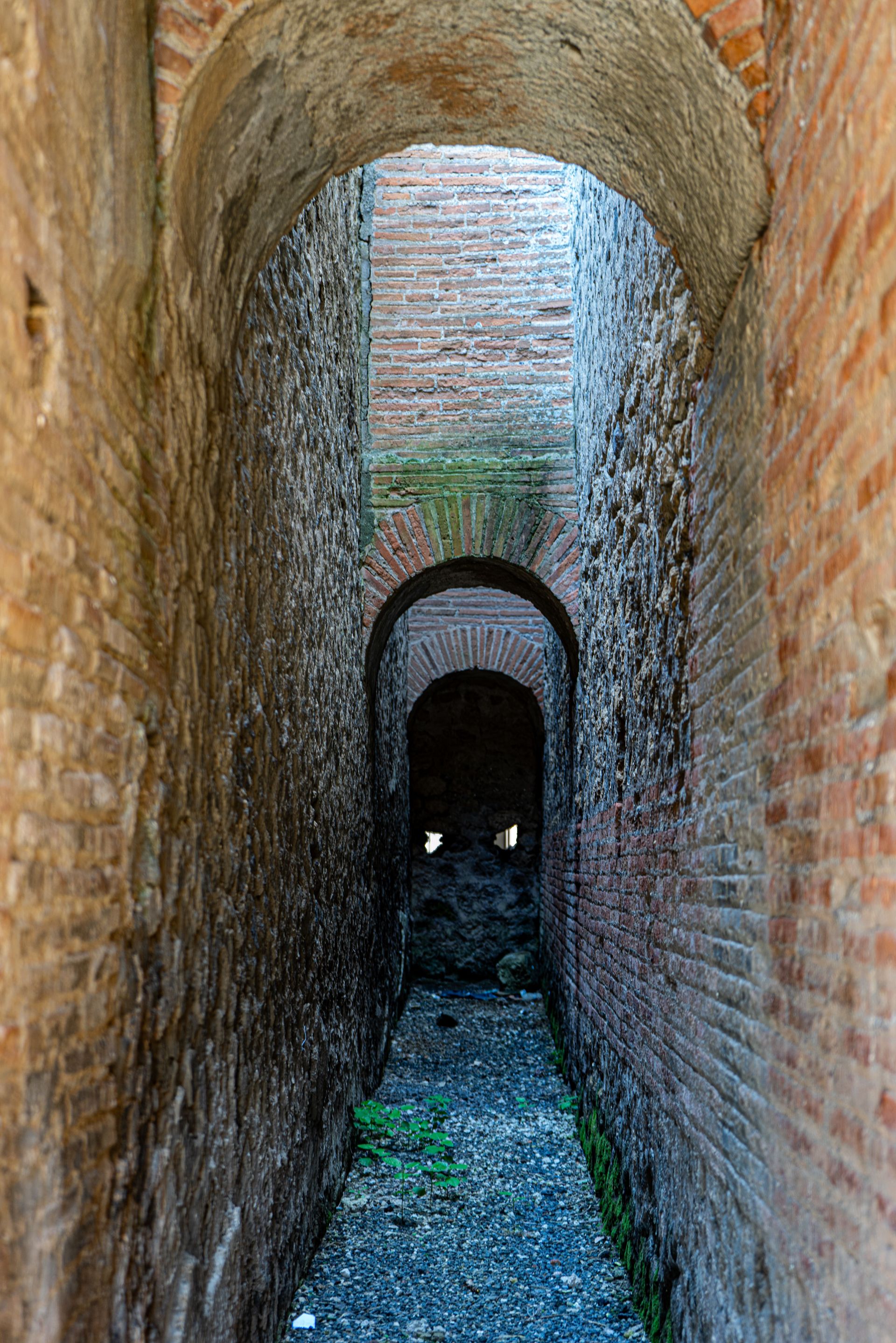
The Romans didn't just move sewage — they managed it with a degree of civic organization that most cities wouldn't match for another 1,800 years. The Cloaca Maxima, Rome's main sewer, required regular maintenance, and Roman law assigned responsibility for that maintenance to specific public officials and private property owners whose land abutted the sewer. When sections collapsed or became blocked, they were repaired under public authority and public expense.
Beyond the main sewer, Roman cities managed waste in several ways that reduced the concentration of disease vectors in populated areas. Public latrines — foricae — were built at intervals throughout the city and used running water to flush waste. The largest could accommodate dozens of users simultaneously in rows of seats over a continuous water channel. They were social spaces as well as functional ones. Waste from the latrines fed into the sewer network.
Street cleaning was an official responsibility. Aediles were responsible for keeping streets clean, and Romans who dumped waste from upper-floor windows into the street faced legal liability for injuries caused to passersby. This is not a modern standard of cleanliness — Roman streets were far dirtier than anything acceptable today — but the existence of a legal framework placing responsibility for street cleanliness on building owners and city officials represents a meaningful public health commitment.
Roman cities also developed systems for managing the bodies of the dead outside city limits. Roman law prohibited burial within city walls — the dead were interred in cemeteries and columbaria along the roads leading out of the city. This segregation of the dead from the living had practical sanitary consequences: decomposing bodies in populated areas are a disease vector, and the Roman practice of keeping them outside the city reduced that risk. The Via Appia's famous lining of tombs and mausoleums is the visible remnant of this practice.
Credit: fotoinformator pl / Pexels
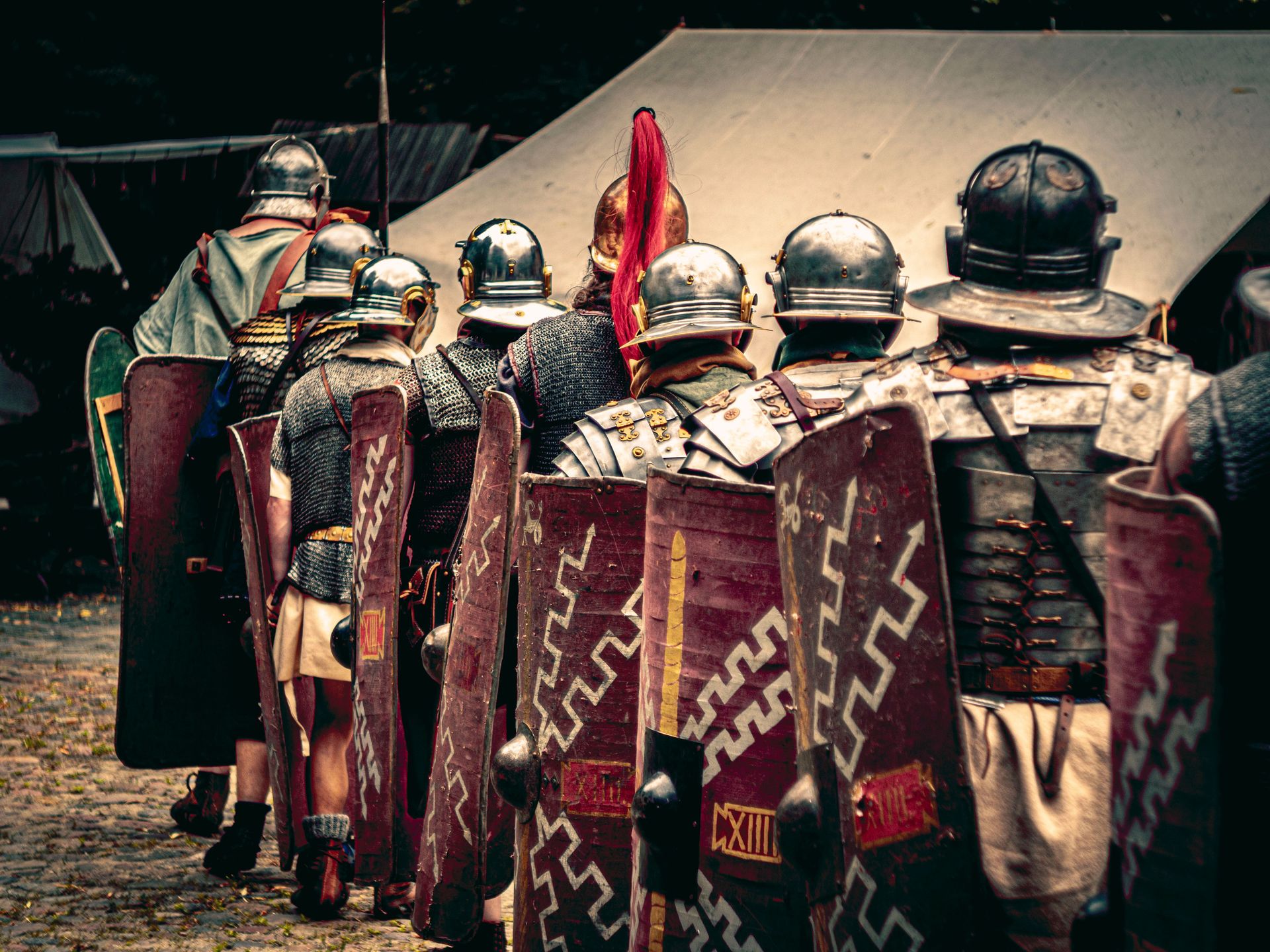
The Roman legionary was not simply a conscripted farmer given a spear. He was the product of a training system that standardized physical conditioning, weapons handling, tactical formation, and camp construction across an army that operated on three continents. The training program described in Vegetius's Epitoma Rei Militaris — written in the late fourth or early fifth century CE but drawing on earlier sources — includes details that read like a modern military training manual: daily exercises, marching with weighted equipment, swimming, weapons practice against stakes, and the gradual introduction of tactical formations.
The manipular system — and later the cohort system that replaced it — organized the legion into flexible tactical units that could operate independently or in combination. The cohort, consisting of about 480 men, was small enough to maneuver as a unit but large enough to be tactically significant. Ten cohorts made a legion of roughly 5,000 men. This organizational structure — the nesting of small, medium, and large tactical units with clear chains of command — is recognizably the ancestor of modern military organization.
Roman military engineers were as important as Roman soldiers. Every legion included specialists who could build bridges, siege engines, fortifications, and military camps. The camps themselves were built to a standardized plan that could be constructed by any legion anywhere, producing a defensible fortification in a single day's work. This ability to fortify quickly and reliably was a significant tactical advantage that allowed Roman armies to hold the initiative even in unfamiliar terrain.
Roman military doctrine also emphasized psychological dominance — the use of speed, engineering capability, and demonstrated invincibility to discourage resistance before combat began. Sieges were conducted methodically, with circumvallation walls and supply interdiction rather than simply assaulting fortifications. The Roman way of war was systematized, patient, and logistically sophisticated in a way that most of its opponents could not match.
Credit: Magda Ehlers / Pexels
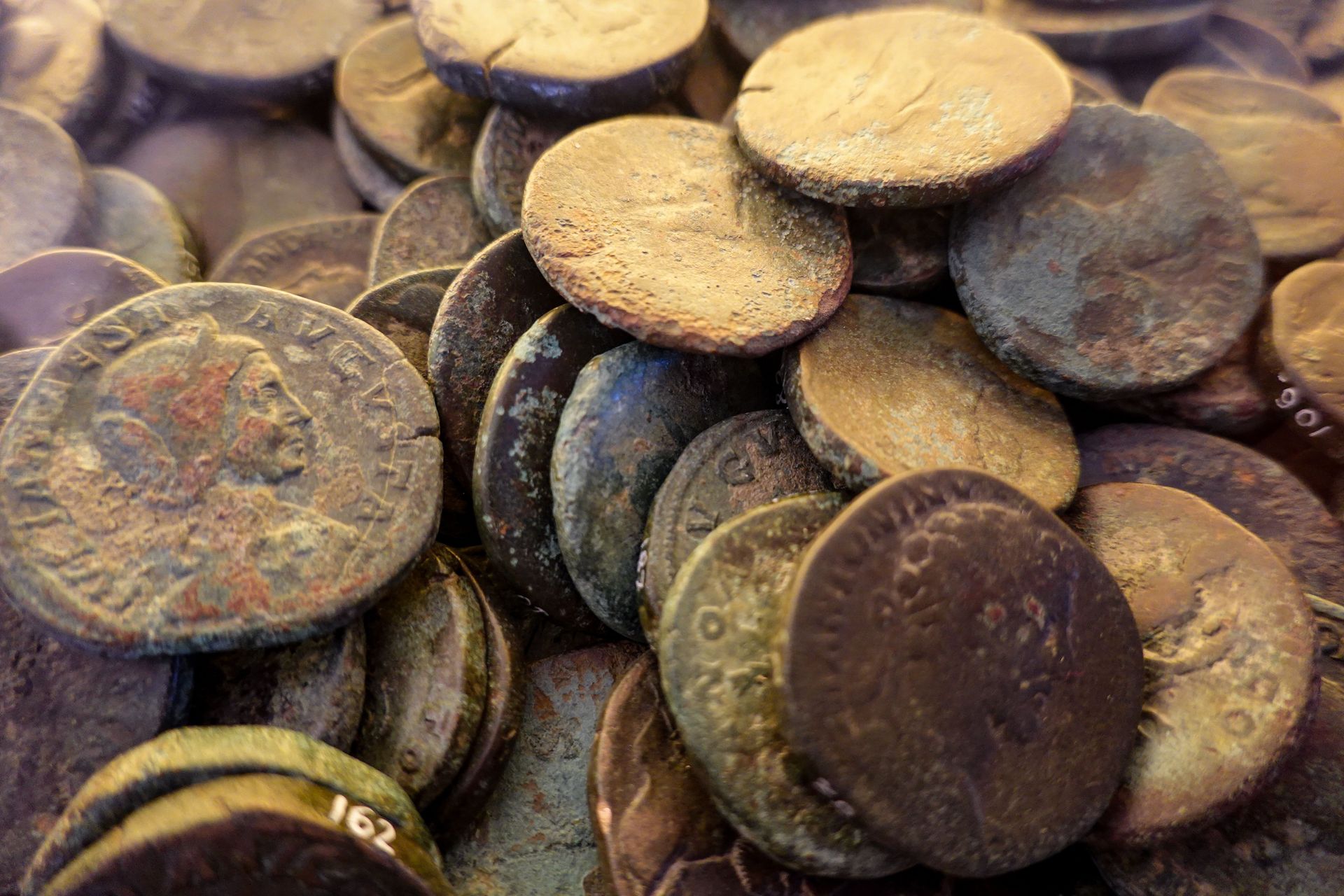
The Roman state developed tax collection and fiscal administration systems that were more sophisticated than anything operating in the Western world for the following millennium. The Roman tax system included direct taxes on land and property — assessed through the census — and indirect taxes on trade, inheritance, and manumission of slaves. The system varied between citizen and non-citizen provinces, with different rates and collection mechanisms applying to different parts of the empire.
Augustus's fiscal reforms in the late first century BCE and early first century CE standardized the system considerably. He established a permanent treasury — the fiscus — under imperial control, separate from the older senatorial treasury (aerarium). He created a professional administrative class — the equestrian procurators — to manage tax collection and financial administration in provinces, replacing the earlier system of tax farming in which private contractors bid for the right to collect taxes in a region and kept anything above their bid.
Tax farming — the publicani system that preceded Augustus's reforms — was predictably corrupt and extractive. Private collectors had incentives to over-assess and over-collect, and the publicani were among the most hated figures in Roman provincial life. Augustus's shift to salaried officials with defined responsibilities and auditable accounts was a genuine improvement in fiscal governance. It didn't eliminate corruption, but it changed the incentive structure.
The Roman concept of annual budgeting — revenues projected, expenditures allocated, and results reviewed — is documented in administrative papyri from Egypt and in the records of provincial finances. The Res Gestae of Augustus is partly a fiscal document: it records in careful detail how much he spent on public buildings, games, grain distributions, and military campaigns, and from which of his personal or public sources each expenditure came. That level of financial accountability was not standard practice among rulers before Rome.
Credit: Alfred Franz / Pexels
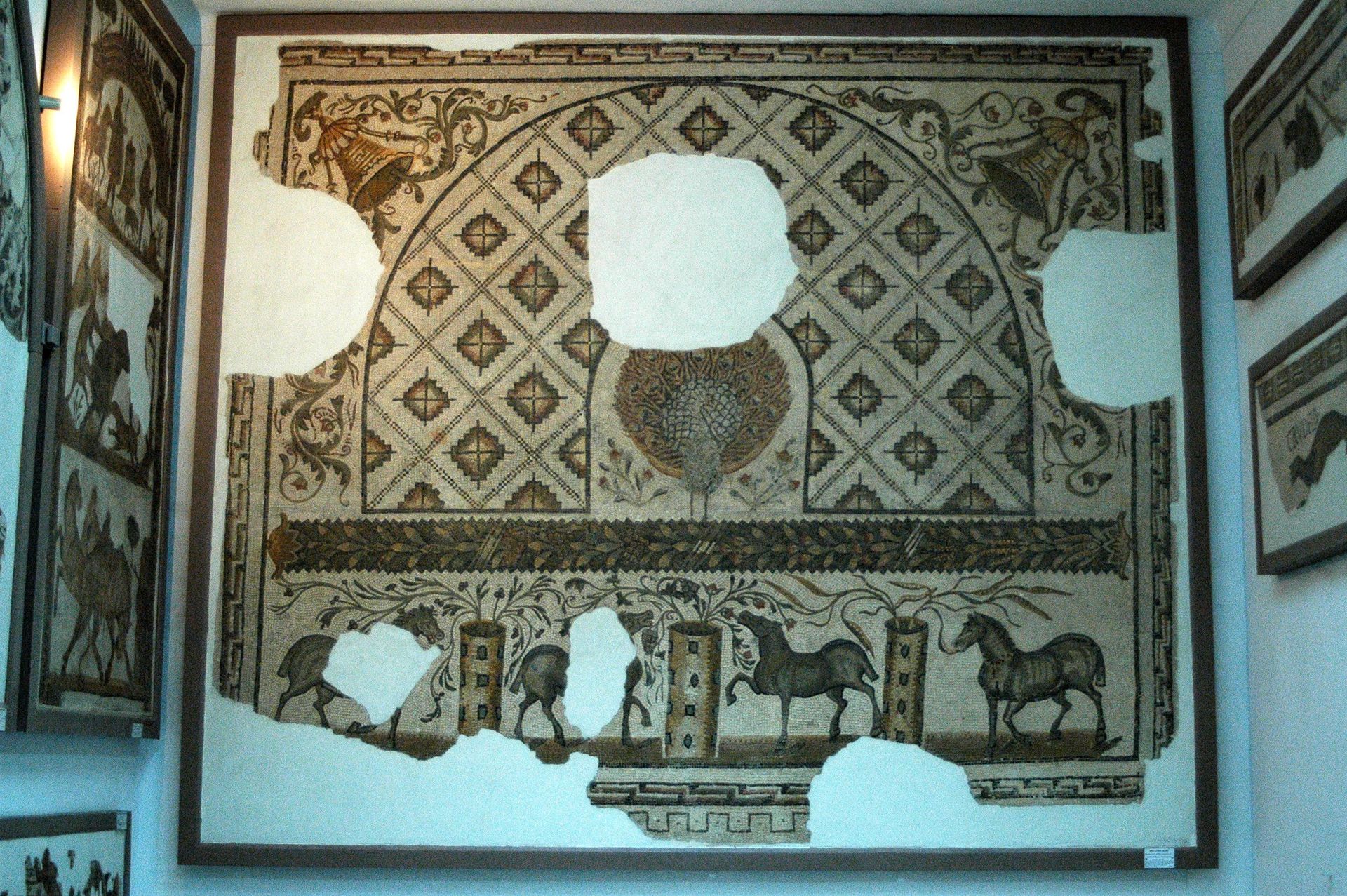
Roman agricultural writers — Columella, Varro, Cato the Elder — devoted considerable attention to the health of livestock, and their works represent some of the earliest systematic treatment of animal medicine in Western literature. Columella's De Re Rustica, written in the first century CE, contains detailed descriptions of diseases affecting cattle, horses, sheep, and goats, along with treatment recommendations that combine empirical observation with the standard remedies of the day.
The Roman army had particular interest in equine health, since horses and mules were essential for cavalry, transport, and artillery. Roman military manuals included guidance on identifying soundness in horses before purchase, recognizing early signs of illness, and treating common conditions. The mulomedici — mule doctors — were a recognized professional category in the Roman military, and their work extended to all draught animals.
Vegetius, whose military handbook has been cited above, also wrote the Mulomedicina, the most extensive surviving work on animal medicine from antiquity. It covers external diseases, internal conditions, surgical procedures for animals, and pharmacological treatments. The text draws on earlier Greek and Roman sources, some of which survive only in quotations within Vegetius's compilation. It remained in use as a practical veterinary reference throughout the medieval period.
What distinguishes Roman veterinary practice from pure folk medicine is the attempt at systematic classification and the commitment to recording treatments and their outcomes. The writers knew what they didn't know — Columella frequently acknowledges uncertainty about the causes of disease — but they documented what they observed carefully enough that their descriptions of specific animal diseases can sometimes be matched to conditions recognized in modern veterinary medicine.
Credit: Mahmoud Yahyaoui / Pexels
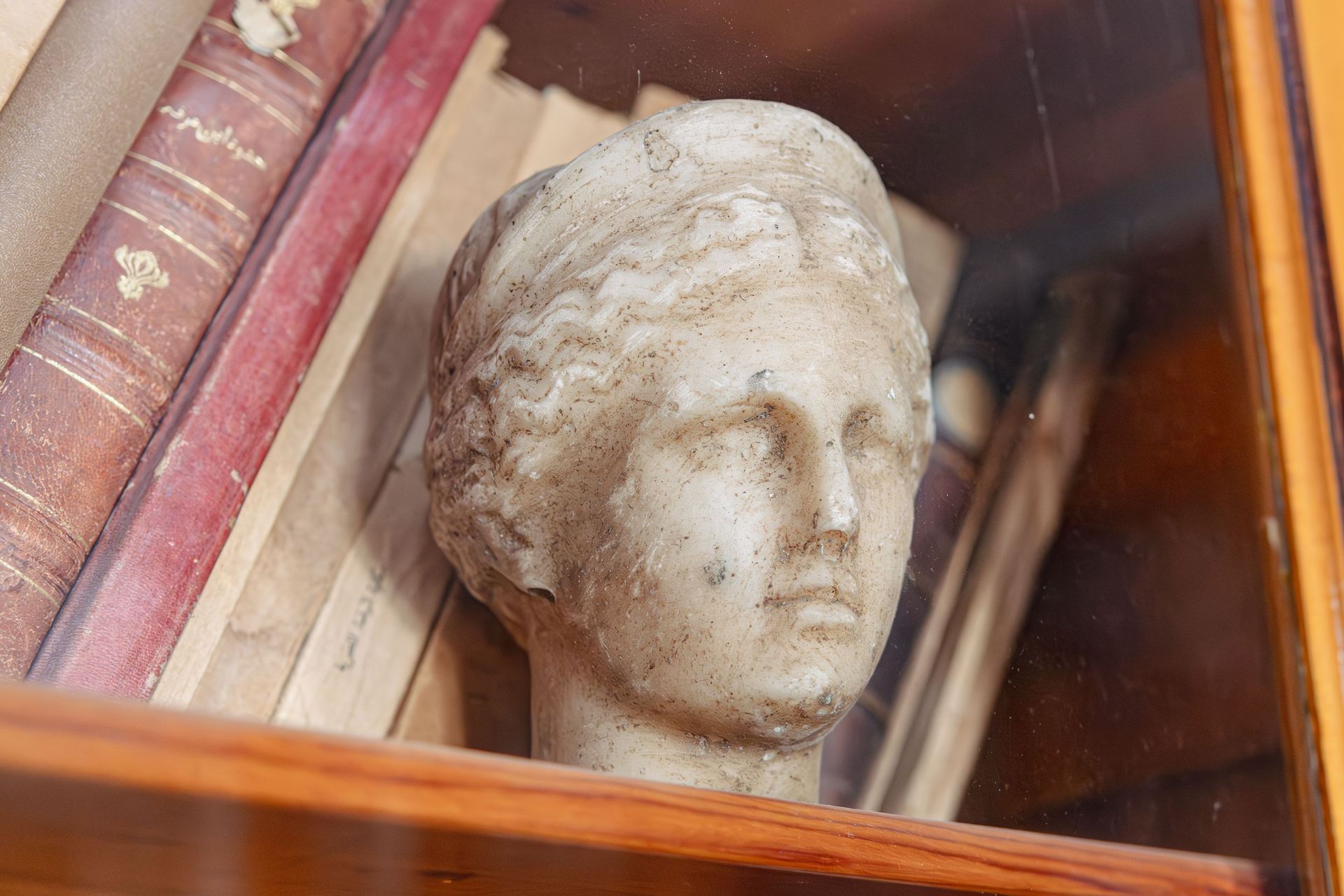
The Roman concept of due process — the idea that legal procedures must be followed, that accused persons have rights that cannot simply be overridden by executive authority, and that the law should be applied consistently rather than at the discretion of whoever happens to hold power at a given moment — was not consistently honored in practice but was consistently articulated as a standard.
The Twelve Tables established that no person could be condemned to death by a law applying to them alone — a principle against bills of attainder. The concept of provocatio — the right of a Roman citizen to appeal a magistrate's death sentence to the popular assembly — dates to the early Republic. The Lex Porcia of 195 BCE prohibited the flogging of Roman citizens without trial. Paul of Tarsus, in the Acts of the Apostles, invokes his Roman citizenship to claim the right to be tried in Rome rather than in Judaea — demonstrating that these rights were understood to have practical force even in the provinces.
Roman legal procedure in civil cases developed a sophisticated adversarial system. The praetor — a judicial magistrate — issued formulae that defined the legal question to be resolved. A private iudex — a layman appointed to hear the case — then heard the parties' arguments and evidence and delivered a verdict. Legal advocates — the ancestors of modern lawyers — represented parties in court. The system was not perfectly fair, and wealth and influence distorted outcomes as they do in any legal system, but its procedural structure was more developed than anything that preceded it or followed it in the West for many centuries.
The Roman principle that law exists independently of the ruler — that even the emperor is bound by law, at least in theory — was articulated most clearly by the jurist Ulpian's statement that the emperor is legibus solutus, "released from the laws," which was a legal status requiring justification precisely because the default assumption was that rulers were subject to law. The principle of legal supremacy over arbitrary power flows directly from this Roman tension between imperial authority and legal constraint.
