A second term for Joao Lourenco cements Angola under one party rule.
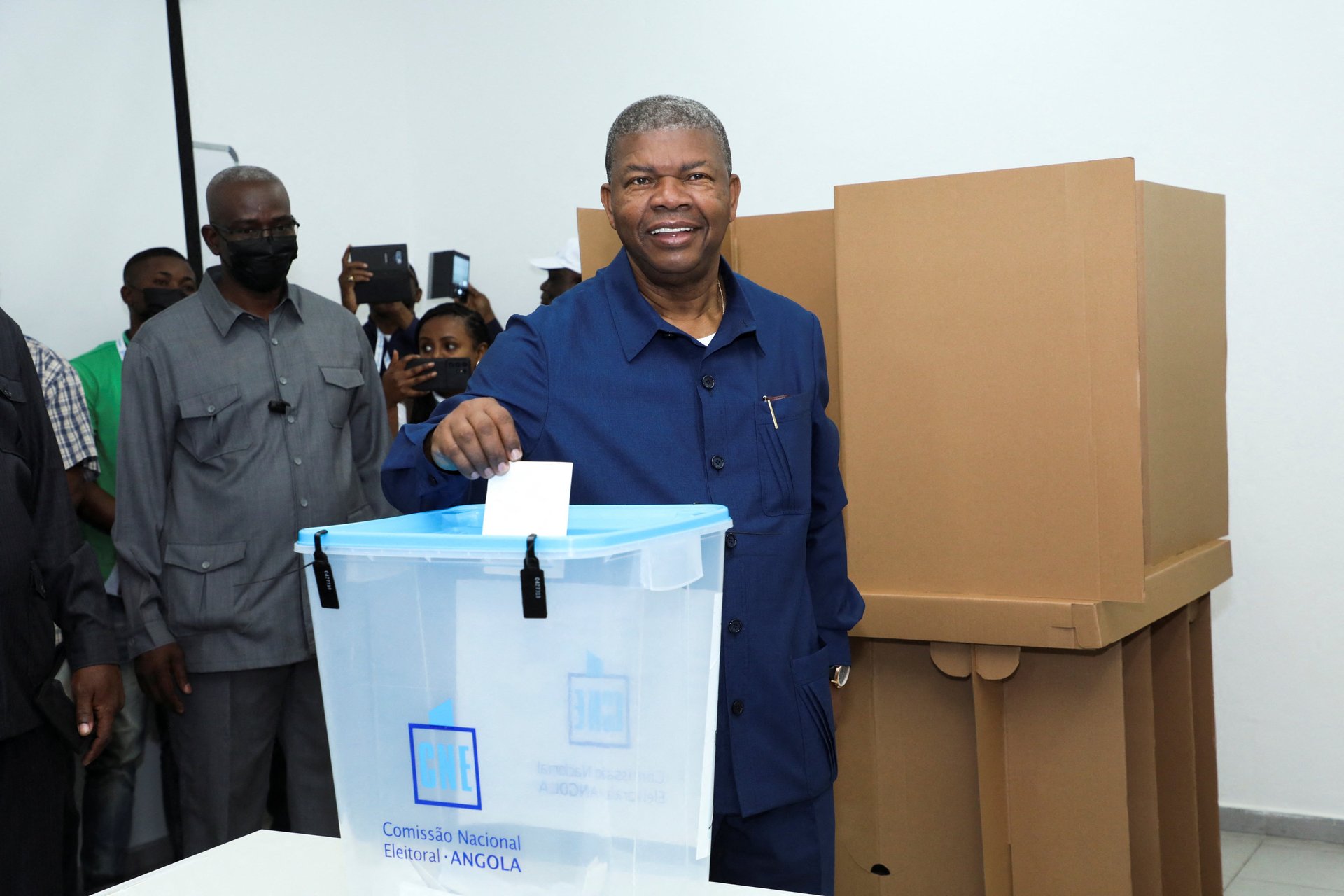
Joao Lourenco was returned for a second term as Angola’s president this week in elections that saw the Popular Movement for the Liberation of Angola (MPLA) party consolidate its decades-old grip on the southern African country. The result means the party, which led a 13-year independence war against the Portuguese army, will have governed Angola for more than 50 years when the next elections come around in 2027.
Angola’s oil production capacity, at times the largest in Africa this year but usually behind Nigeria’s, will remain under one party’s control. Lourenco’s MPLA won 51.07% of the vote against the main opposition’s 44.05% while also nabbing 56% of 220 legislative seats, enough to remain in charge of the policies that steer the country’s wealth of 9 billion barrels of crude oil reserves and 11 trillion cubic feet of natural gas reserves.
Join 500,000+ readers who start their day with Quartz.
By subscribing, you agree to our Terms of Service and Privacy Policy.
The wealth doesn’t often go around the country, however. Angola’s poverty rate is estimated at 40% by the Oxford Poverty and Human Development Initiative, a policy center of the University of Oxford. More than half of Angola’s workforce is unemployed.
Besides the effects of a devastating war that ended two decades ago, state capture and large-scale theft—notably by Isabel dos Santos, the daughter of ex-president José Eduardo dos Santos who was Africa’s wealthiest woman for a time—have deepened Angola’s poverty and inequality.
Lourenco became president in 2017 with the now deceased former president’s approval, though the new boss turned on his predecessor once in power. With his re-election, Angola’s vital oil sector may continue to be challenged by the opacity that has made competition and efficiency difficult. “If a businessperson or a company is not recommended by a renowned person or high-profile individual, it can hinder the advancement of even the best projects,” says the US Department of Commerce’s assessment.
