From the passenger pigeon to the Formosan clouded leopard, these 20 species disappeared within the last two centuries — most due to human activity
_2-1920x1130.jpg)
Credit: James St. John / Flickr (CC BY 2.0)
The sixth mass extinction is not a future event. It is already under way. Scientists who study biodiversity loss have documented a rate of species disappearance that is tens to hundreds of times higher than the natural background rate — the pace at which species have come and gone throughout Earth's geological history. What makes the current crisis different from the five previous mass extinctions is its cause: one species, Homo sapiens, is responsible for the vast majority of it.
The last 200 years have been particularly devastating. The Industrial Revolution opened vast new frontiers to hunting, logging, and agriculture. Steamships and railways allowed humans to reach habitats that had remained isolated for millennia. Colonialism drove the exploitation of wildlife across Asia, Africa, Australia, and the Americas at scales previously impossible. And as the 20th century progressed, habitat destruction, introduced species, pollution, and climate change accelerated losses that earlier centuries had set in motion.
Extinction is permanent. That is the fact that distinguishes it from every other form of environmental damage. A polluted river can be cleaned. A logged forest can regrow. A hunted population can, in some cases, recover. But when the last individual of a species dies, nothing can undo it. The genetic lineage that evolved over millions of years — the behaviors, the ecological relationships, the unique biological adaptations — disappears entirely.
The 20 animals in this list represent a cross-section of that loss. They include mammals, birds, and an amphibian. They lived on every inhabited continent and in the world's great rivers and oceans. Some were hunted to extinction deliberately. Others lost their habitat. A few fell to introduced predators or disease. Several died out so recently that living people remember them. All of them are gone.
These are not ancient creatures from a remote prehistory. The passenger pigeon filled the skies of North America within living memory of people born in the mid-1800s. The last thylacine died in a Tasmanian zoo in 1936. The Pyrenean ibex was cloned — briefly — in 2003. These extinctions are recent enough to feel like failures of a world we still inhabit. In many ways, they are.
Credit: James St. John / Flickr (CC BY 2.0)
The passenger pigeon was once the most numerous bird in North America, and possibly the most numerous bird on Earth. Estimates of the population before European colonization range from three billion to five billion individuals. Flocks were so large they darkened the sky for hours as they passed overhead. Early accounts describe them blocking out the sun, the sound of their wings like rolling thunder, their droppings falling like snow.
The bird, Ectopistes migratorius, was a medium-sized pigeon with a slate-blue head, a rust-red breast, and a long, tapered tail. It was a nomadic species, moving constantly in search of the mast forests — oak, beech, and chestnut — that provided its food. Nesting colonies covered hundreds of square miles. Individual trees held dozens of nests. The sheer density of the flocks was a form of defense: predators could not make a dent in a population that large.
That calculation collapsed when humans entered the equation at industrial scale. Commercial hunters discovered that passenger pigeons were extraordinarily easy to kill in large numbers. They roosted in trees, where they could be knocked down with poles. They gathered around water sources. They were slow to recognize danger when in flocks. A single hunter could kill hundreds in a day. The meat was cheap, and demand from cities was high. By the mid-19th century, professional hunting operations were shipping millions of birds to markets in New York, Boston, and Chicago every year.
At the same time, the forests the pigeons depended on were being cleared across the eastern and midwestern U.S. The destruction of the mast forests removed not just food but the habitat structure the birds needed to breed successfully. Passenger pigeons appear to have required enormous colony sizes to trigger breeding behavior. As numbers fell, the colonies shrank below whatever threshold was necessary, and reproduction slowed even before the last birds were gone.
The decline was catastrophic in its speed. A species numbering in the billions in 1800 was functionally extinct in the wild by the 1890s. The last known wild passenger pigeon was shot in Ohio in 1900. Martha, the last surviving individual, died at the Cincinnati Zoo on September 1, 1914. She was approximately 29 years old. Her death marked the end of a lineage that had defined the ecology of eastern North American forests for thousands of years.
The passenger pigeon's extinction became a catalyst for the early conservation movement in the U.S. The Lacey Act of 1900, which restricted interstate commerce in wildlife, was passed partly in response to the bird's collapse. It was among the first federal wildlife protection laws in American history.
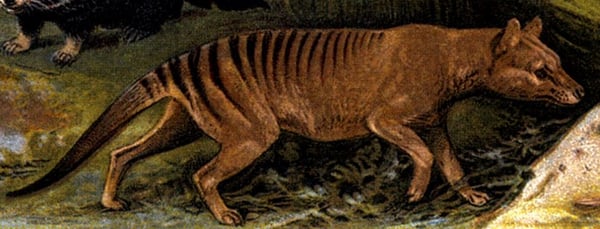
Credit: Historical illustration via Zeno.org. / Picryl
The thylacine — known commonly as the Tasmanian tiger — was neither a tiger nor closely related to any living canine. It was a marsupial, a pouched mammal that evolved in isolation on the island of Tasmania after becoming extinct on mainland Australia roughly 2,000 years ago, likely due to competition with dingoes and pressure from Aboriginal hunters. In Tasmania, without those pressures, it survived into the modern era.
Thylinus cynocephalus looked, at first glance, like a large dog. It had a tawny coat marked with 15 to 20 dark stripes across its back and hindquarters — the stripes that earned it the "tiger" nickname. But it was unmistakably a marsupial. Its gait was stiff and somewhat awkward. Its jaws could open to an extraordinary angle, nearly 90 degrees. It could balance on its hind legs and tail in a tripod stance. Females carried young in a backward-facing pouch.
When British colonists arrived in Tasmania in the early 19th century, the thylacine was seen as a threat to sheep. The Van Diemen's Land Company began paying bounties for thylacine skins as early as the 1830s. The Tasmanian government formalized bounty payments in 1888, offering one pound per adult and ten shillings per pup. Between 1888 and 1909, more than 2,100 bounties were claimed. That figure almost certainly understates the actual number killed, since many hunters did not bother to collect the bounty.
Habitat clearing, disease, and competition from introduced dogs added to the pressure. By the early 20th century, the thylacine was rarely seen. The last known wild individual was captured in 1933. It was sent to the Hobart Zoo. On September 7, 1936 — just 59 days after the species had finally received official protected status in Tasmania — the animal died, reportedly of exposure after being locked out of its sleeping quarters on a cold night.
Film footage of the last captive thylacine survives and has been viewed by millions of people. The animal paces its enclosure, yawns to show those extraordinary jaws, and moves with a gait unlike any living carnivore. It is one of the most-watched pieces of extinction footage in history.
Tasmania still receives occasional unverified reports of thylacine sightings. None has been confirmed. A scientific effort to de-extinct the thylacine using ancient DNA and gene-editing technology is currently under way, led by a team at the University of Melbourne in partnership with a U.S. biotech company. Whether it will succeed — and whether the result would genuinely be a thylacine rather than a genetically modified approximation — remains deeply debated.
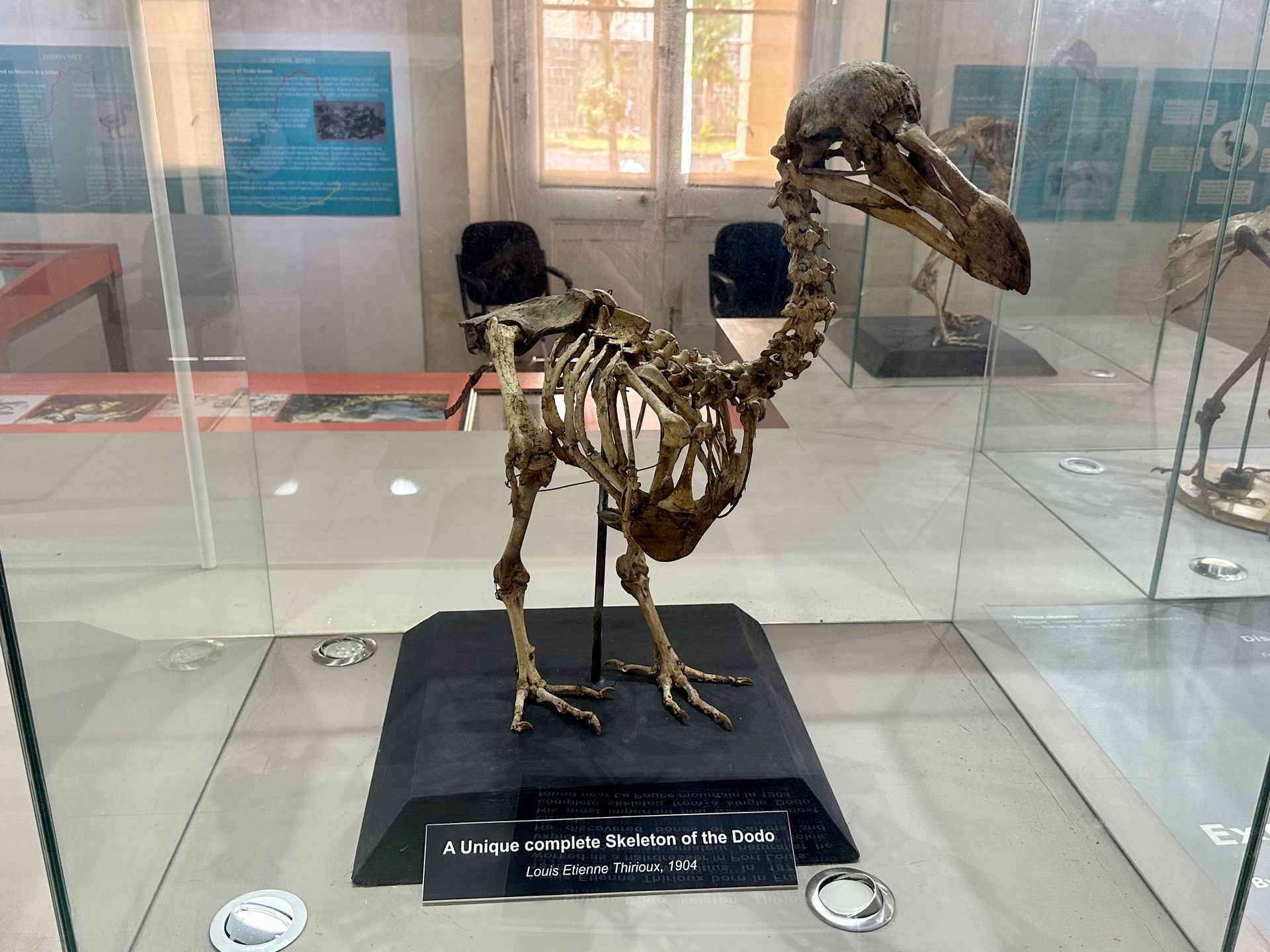
Credit: Richard N Horne / Wikimedia Commons (CC BY 4.0)
The dodo occupies a peculiar place in the history of extinction. It has become a cultural shorthand for foolishness — "dead as a dodo," "dumb as a dodo" — an animal remembered more as a punchline than as a creature that actually existed. That reputation is undeserved and inaccurate. The dodo was not stupid. It was an island bird that had never encountered mammalian predators, and it paid for that evolutionary innocence with its life.
Raphus cucullatus was a large flightless bird that lived on the island of Mauritius in the Indian Ocean. It stood roughly one meter tall and weighed around 10 to 18 kilograms. Its wings were vestigial — too small for flight, used only for balance and display. Its beak was large, hooked, and robust. It fed on fallen fruit, seeds, and possibly crabs and shellfish along the shoreline. With no natural predators on Mauritius, it had no reason to fear large animals approaching on foot.
Dutch sailors first encountered the dodo in 1598. By 1681 — within 83 years of first contact — it was gone. The speed of the extinction was driven by a combination of factors. Sailors killed dodos for food. More destructively, the animals they brought with them — pigs, rats, cats, and monkeys — ate dodo eggs and chicks at a rate the birds could not sustain. Dodos nested on the ground and laid a single egg per clutch, making them particularly vulnerable to nest predation.
The dodo's image is known primarily from a handful of paintings and drawings made by Dutch sailors and artists in the late 16th and early 17th centuries. These depictions vary considerably, and scientists have debated how closely they reflect the bird's actual appearance. Subfossil remains found in Mauritius have allowed researchers to reconstruct its skeleton in detail. The composite picture suggests a bird more agile than the waddling, rotund creature of popular imagination — perhaps leaner, and capable of moving quickly when necessary.
No complete dodo specimen survives. Scattered bones and a few dried remains — a head and foot at the Oxford University Museum of Natural History, isolated bones at other institutions — are all that remain. The dodo's extinction was one of the first to be clearly documented and recognized as permanent, making it a foundational case in the history of conservation science.
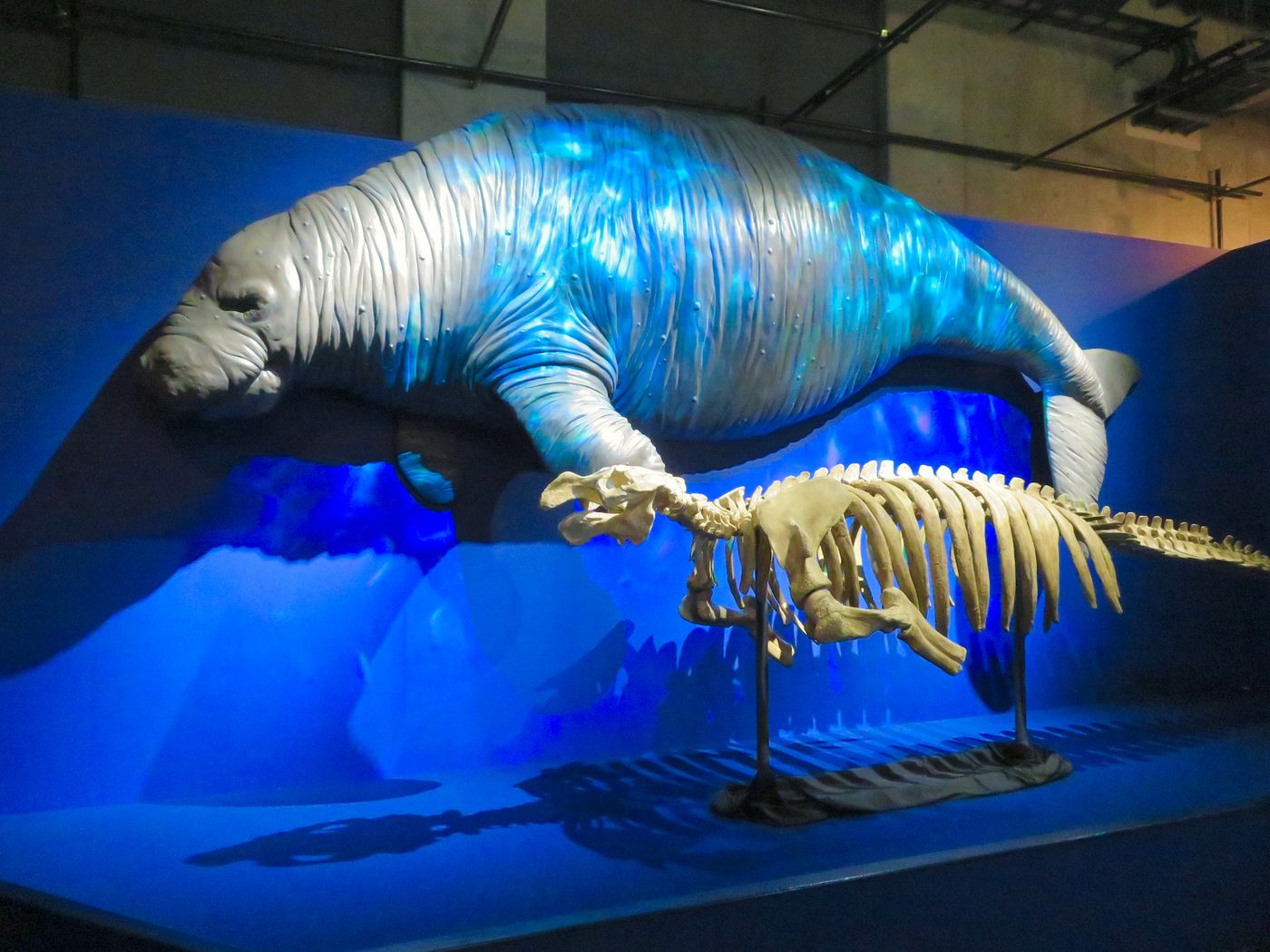
Credit: KKPCW / Wikimedia Commons (CC BY-SA 4.0)
Steller's sea cow was the largest member of the order Sirenia — the group that includes manatees and dugongs — and one of the largest animals to have lived in recent geological time. Adults reached lengths of eight to nine meters and weighed an estimated eight to ten metric tons. For comparison, a modern West Indian manatee averages about three meters and 400 to 550 kilograms.
Georg Wilhelm Steller, the German naturalist for whom the animal is named, first described it in 1741 during Vitus Bering's second Kamchatka expedition. The ship was wrecked on what is now Bering Island, in the Commander Islands chain between Russia and Alaska, and the crew spent the winter there. Steller observed the sea cows extensively during that time, producing the only detailed scientific account ever written of the living animal. He noted that they fed exclusively on kelp, that they lived in family groups, and that they showed signs of distress when one of their number was harmed — a behavior he interpreted as something like social bonding.
By the time Steller encountered them, Steller's sea cows were already restricted to the shallow waters around the Commander Islands. They had once ranged more widely across the North Pacific, but hunting pressure from indigenous peoples and earlier commercial hunters had already reduced their range dramatically. The Commander Islands population numbered perhaps 1,500 to 2,000 animals when Steller made his observations.
Russian fur hunters discovered the Commander Islands shortly after Bering's expedition. Sea cows were large, slow, and easy to kill from small boats. Their meat was reportedly palatable and their fat was useful for oil lamps and as a food source during long sea voyages. Hunting began almost immediately. Within 27 years of Steller's first description — by 1768 — the species was extinct. No other large marine mammal in recorded history has been driven to extinction so quickly after its first scientific documentation.
Steller's sea cow left behind only scattered skeletal material and Steller's written account. No verified image of the living animal exists. Reconstructions are based entirely on bone measurements and Steller's descriptions. It remains one of the most dramatic examples of how quickly an isolated population can be eliminated once commercial exploitation begins.
_(lipotes_vexillifer)_&_narrow-ridged_finless_porpoisespecimen_(4)-1400x1050.jpg)
Credit: FlyingBatt / Wikimedia Commons (CC BY 4.0)
The baiji — Lipotes vexillifer — was a freshwater dolphin endemic to the Yangtze River in China. It was one of only five freshwater dolphin species in the world, and it had lived in the Yangtze for an estimated 20 million years. By the time scientists launched a systematic survey to find it in 2006, it was almost certainly already gone.
The baiji was a small dolphin by ocean standards, reaching roughly two to two and a half meters in length. It had a long, slightly upturned beak, tiny, nearly functionless eyes — it navigated the turbid Yangtze almost entirely by echolocation — and a pale bluish-gray coat. In Chinese tradition, it was known as the "Goddess of the Yangtze" and was associated with protection and good fortune for fishermen.
The Yangtze River transformed rapidly over the second half of the 20th century. The construction of dams — including the Gezhouba Dam completed in 1981 and the Three Gorges Dam, which began operations in 2003 — disrupted the river's hydrology and blocked migration routes. Heavy boat traffic created underwater noise that interfered with the baiji's echolocation. Illegal fishing using rolling hooks and electrofishing killed dolphins as bycatch. Industrial and agricultural pollution contaminated the river with heavy metals, pesticides, and fertilizer runoff. Overfishing depleted the fish populations the baiji depended on.
By the 1980s, the population was estimated at no more than 400 animals. By the 1990s, surveys were finding fewer than 100. The 2006 survey — a six-week expedition covering the entire length of the river using boats equipped with optical and acoustic equipment — found none. A single unverified sighting was reported in 2007, but no confirmed observation has been made since.
The baiji is classified as "critically endangered (possibly extinct)" by the International Union for Conservation of Nature. In practice, conservation biologists regard it as functionally extinct. It is the first cetacean — the group that includes whales, dolphins, and porpoises — to be driven to extinction in modern times, and the first large vertebrate to disappear from China in 50 years at the time of its disappearance.
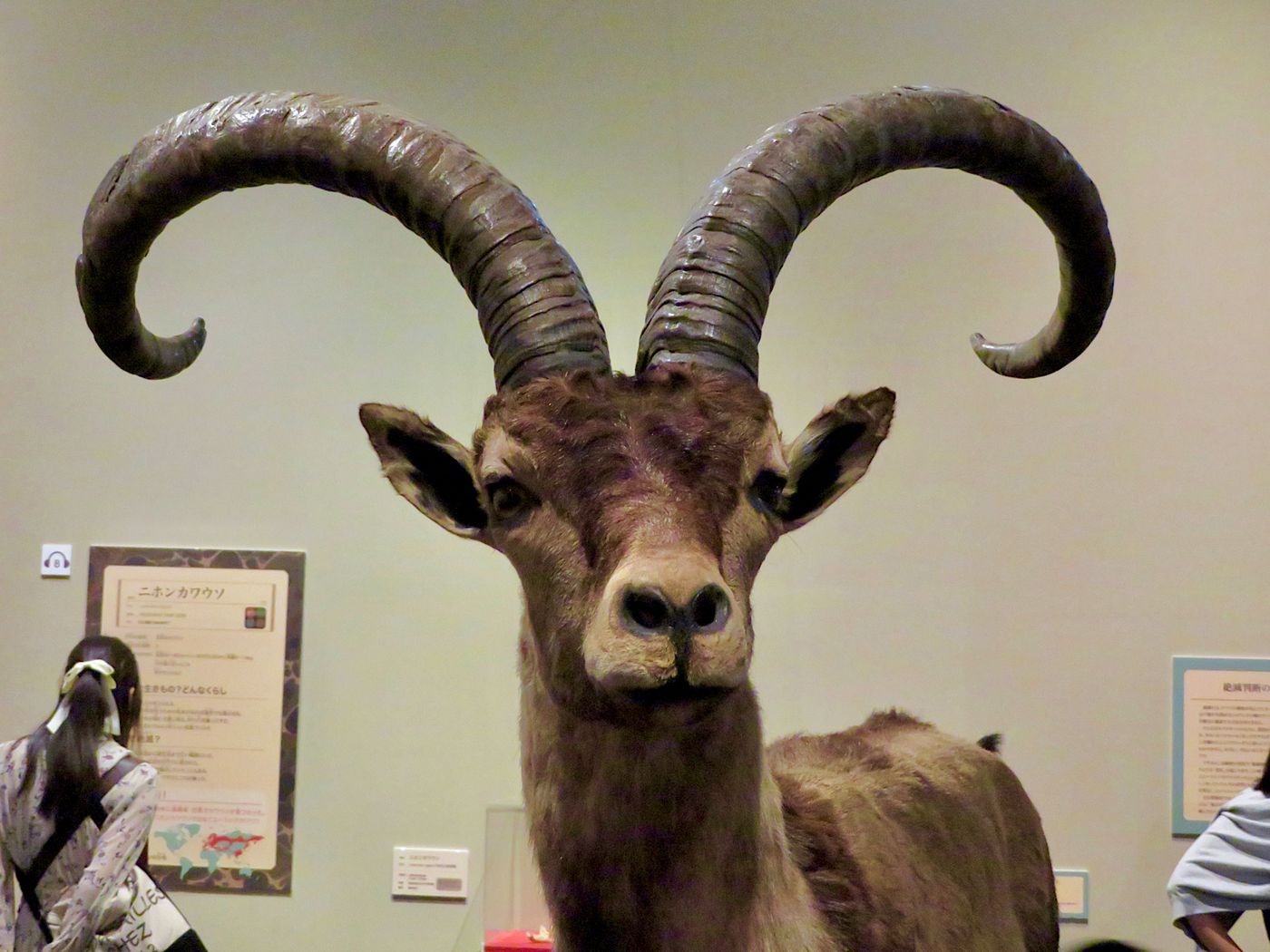
Credit: KKPCW / Wikimedia Commons (CC BY-SA 4.0)
The Pyrenean ibex, known in Spanish as the bucardo, holds a distinction no other extinct animal shares: it was brought back to life, however briefly. On July 30, 2003, a cloned bucardo was born at a veterinary facility in Zaragoza, Spain. It lived for seven minutes before dying of lung defects. The clone was the first animal of an extinct species ever to be born alive, and its death returned the bucardo to extinction — twice.
Capra pyrenaica pyrenaica was one of four subspecies of the Iberian ibex, a wild mountain goat native to the Iberian Peninsula. The Pyrenean subspecies occupied the high mountain terrain of the Pyrenees, the range that forms the border between Spain and France. It was a large, heavily built animal, with the males carrying massive, curved horns that could reach 75 centimeters in length. It lived at elevations above 1,500 meters, grazing on grasses, herbs, and lichens in the alpine zone.
The decline of the Pyrenean ibex began in the medieval period, when hunting pressure from European nobility reduced populations across its range. By the 19th century, it was restricted to a small area around the Ordesa Valley in the Spanish Pyrenees. Hunting continued into the 20th century despite nominal legal protections, and competition with domestic livestock for grazing resources further weakened the remaining population. Disease may also have played a role in the final collapse.
By the 1990s, only a handful of individuals remained. Conservationists captured the last known female, named Celia, in 1999 and collected tissue samples for cryopreservation before releasing her. On January 6, 2000, Celia was found dead beneath a fallen tree in the Ordesa National Park. She was approximately 13 years old. Her death made the bucardo the first subspecies to go extinct in the 21st century.
The cloning attempt that produced the seven-minute-old calf used a cell nucleus from Celia's preserved tissue, inserted into the enucleated egg of a domestic goat. The failure highlighted how difficult it is to clone animals from preserved rather than fresh tissue. Researchers have continued to work on the problem, and the bucardo is frequently cited in discussions of de-extinction as a candidate for revival.
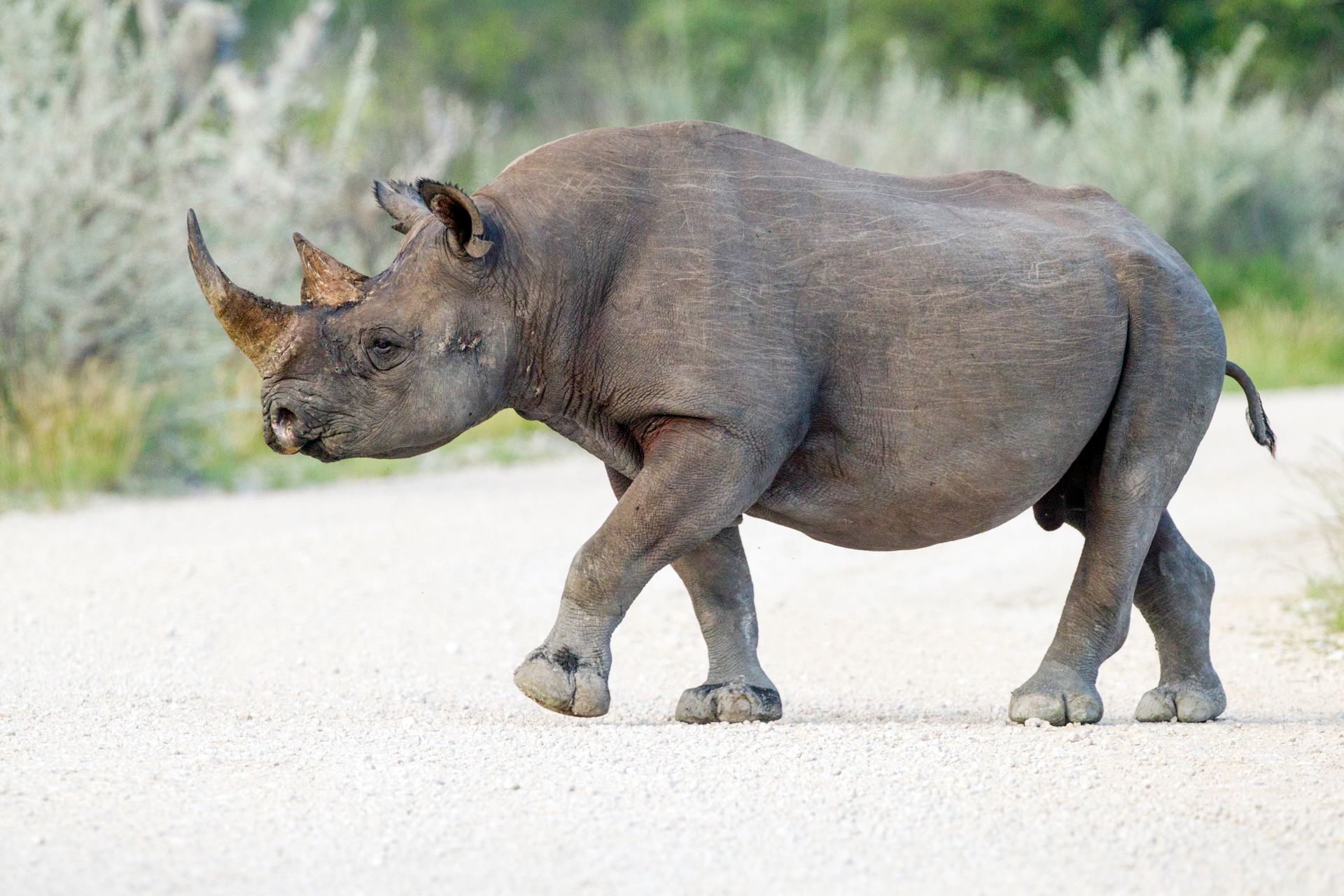
Credit: Yathin S Krishnappa / Wikimedia Commons (CC BY-SA 3.0)
The West African black rhinoceros — Diceros bicornis longipes — was a subspecies of the black rhinoceros that once ranged across the Sahel region of central-west Africa, from Chad westward through Cameroon, Nigeria, and the Central African Republic. It was declared extinct by the International Union for Conservation of Nature in 2011, following surveys that found no surviving animals.
The black rhinoceros as a species has four recognized subspecies. Three survive today, in varying states of endangerment. The West African subspecies was the last to go. It was distinguished from other black rhino subspecies by subtle morphological differences and by its geographic range, which placed it in the dry woodland and savanna habitats of the Sahel rather than the wetter forests and grasslands farther south and east.
Poaching drove the West African black rhino to extinction. Rhinoceros horn commands extraordinarily high prices in illegal wildlife markets, primarily due to demand in parts of East Asia where it is used in traditional medicine, and in Yemen where it was historically used to make ornamental dagger handles. A single horn could be worth more than the annual income of a park ranger in the countries where the rhinos lived. Anti-poaching efforts were chronically underfunded and understaffed.
By the 1980s, the West African black rhino population had already collapsed dramatically. A survey in northern Cameroon in the 1980s found around 100 animals. By 2000, that number had fallen to an estimated 10. A 2006 survey of the Cameroon region where the last known animals had been seen — the Bénoué Complex of protected areas — found no individuals, no fresh tracks, and no other evidence of living rhinos. Subsequent surveys confirmed the absence. The IUCN declared the subspecies extinct five years later.
The loss of the West African black rhino is part of a broader catastrophe for rhinoceros species globally. All five living rhinoceros species are either endangered or vulnerable. The northern white rhinoceros — a separate species from the black rhino — has only two individuals remaining, both female and both incapable of natural reproduction. The illegal horn trade, which continues despite international bans, remains the primary driver of rhino decline worldwide.
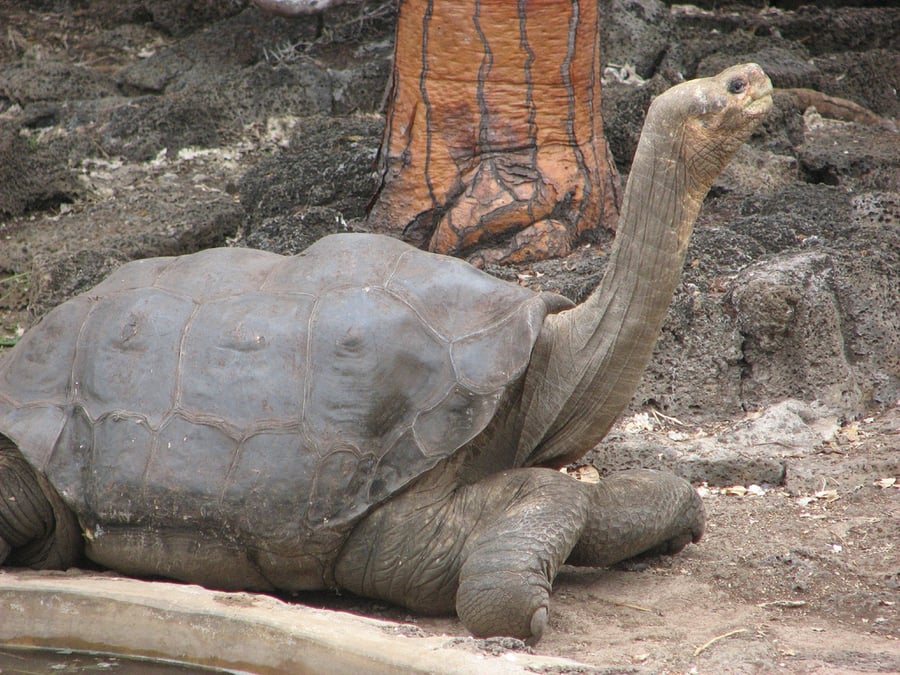
Credit: Mike Weston / Wikimedia Commons (CC BY 2.0)
Lonesome George was the last known Pinta Island tortoise and one of the most famous individual animals of the 20th century. He lived at the Charles Darwin Research Station on Santa Cruz Island in the Galápagos for more than four decades, becoming a symbol of extinction and the impossibility of turning back certain kinds of loss. On June 24, 2012, his keeper found him dead in his enclosure. He was estimated to be between 100 and 112 years old.
Chelonoidis abingdonii — the Pinta Island tortoise — was one of at least 14 subspecies of Galápagos giant tortoise that evolved in isolation on different islands in the archipelago over millions of years. Each subspecies developed distinct shell shapes and body sizes adapted to the specific vegetation and terrain of its island. The Pinta subspecies had a saddleback shell, an adaptation that allowed it to reach higher to browse on cactus and tall vegetation on Pinta's relatively dry terrain.
Pinta Island tortoises were heavily exploited by whalers and other sailors throughout the 19th century. Giant tortoises were prized as living food supplies — they could survive for months on ships without food or water — and hundreds of thousands were taken from the Galápagos across all subspecies during the whaling era. Pinta's tortoise population was already severely reduced by the time the island was largely abandoned by human visitors.
The final blow came from goats. Fishermen introduced goats to Pinta Island in 1959. The goats multiplied rapidly and consumed the vegetation the tortoises depended on, stripping the island's plant cover. By 1971, when Hungarian malacologist József Vágvölgyi found a single old male tortoise on Pinta, the rest of the population was gone.
That surviving animal — Lonesome George — was brought to the research station in 1972. For decades, conservationists attempted to breed him with females from closely related subspecies. None of the eggs that resulted ever hatched. After his death, genetic analysis of other tortoise populations in the Galápagos found individuals on Wolf Volcano, on Isabela Island, that carried partial Pinta Island tortoise ancestry — evidence that hybrid individuals with some Pinta genetics still exist. A breeding program has been established to try to recover the subspecies through selective breeding of those hybrids.
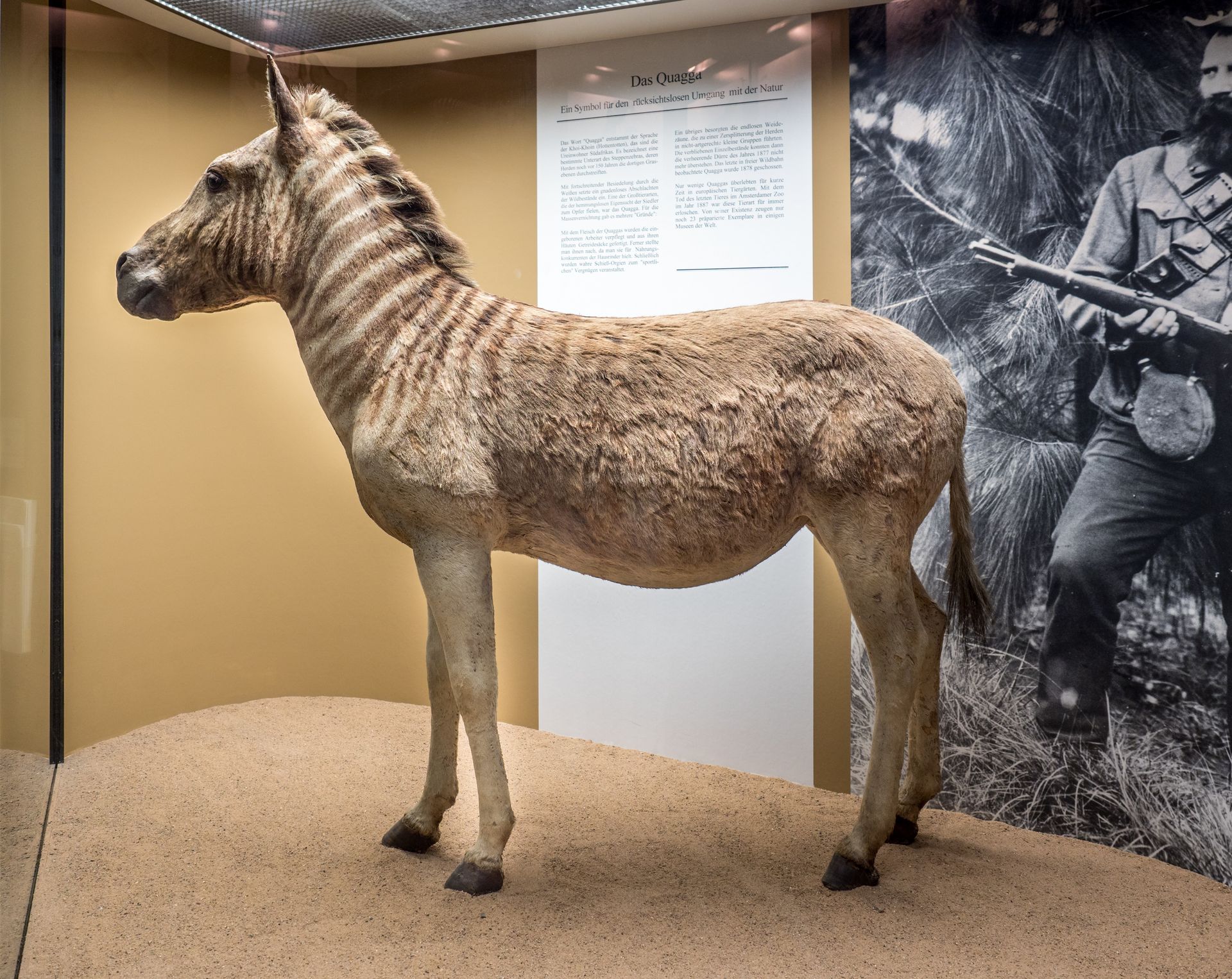
Credit: Ermell / Wikimedia Commons (CC BY-SA 4.0)
The quagga was a subspecies of the plains zebra, Equus quagga, that once roamed in large numbers across the Karoo and southern Free State regions of what is now South Africa. It is distinguished from other zebra subspecies by its coat pattern: stripes were present on the head, neck, and front of the body, but faded toward the hindquarters, which were plain brown. The name comes from a Khoikhoi word that approximated the sound of the animal's call.
European settlers hunted the quagga extensively from the 17th century onward. The reasons were practical: quagga competed with livestock for grazing, their hides were useful for making grain sacks and shoes, and their meat fed farm laborers. There was no conservation framework in colonial South Africa, and no recognition that the quagga's abundance was finite. Hunting continued until the animals were gone.
The last wild quagga was killed sometime in the 1870s, though the exact date is not established. The last known captive individual — a mare held at the Artis Magistra zoo in Amsterdam — died on August 12, 1883. At the time, her death attracted little attention. The quagga had not yet been formally recognized as distinct from other zebra subspecies, and the idea that a large African mammal could simply cease to exist had not fully entered public consciousness.
The quagga achieved a second life in conservation history when DNA analysis in the 1980s confirmed that it was indeed a subspecies of the plains zebra — not a separate species. That finding raised the possibility of selectively breeding plains zebras to recover the quagga's coat pattern. The Quagga Project, founded in South Africa in 1987, has been doing exactly that. Through selective breeding of plains zebras with reduced striping, the project has produced several generations of animals that closely resemble historical descriptions and images of the quagga. Whether these animals can be considered a genuine restoration of the quagga — rather than a lookalike — is a question that touches on deep questions about what a subspecies actually is.
The project's animals, informally called "Rouwkuil quaggas" after the farm where much of the breeding takes place, now number in the dozens and have been reintroduced to nature reserves. The coat patterns have become more quagga-like with each generation. The genetics, however, will never fully replicate those of the original animal.
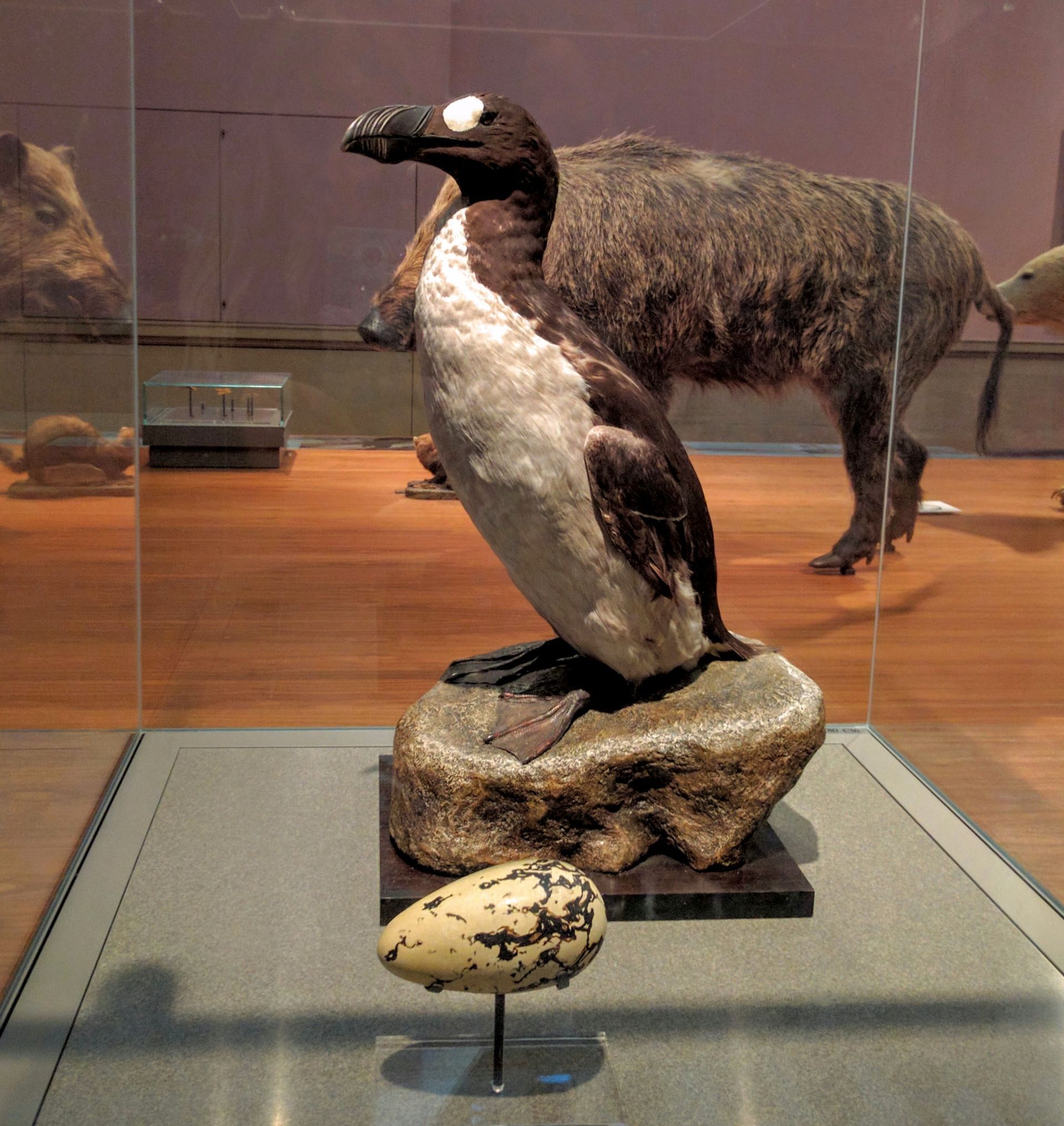
Credit: amanderson2 / Wikimedia Commons (CC BY-SA 2.0)
The great auk was the original penguin — or rather, it was the bird to which the word "penguin" was first applied by European sailors, before that name migrated to the unrelated flightless birds of the Southern Hemisphere. Pinguinus impennis was a large, flightless seabird of the North Atlantic, standing roughly 75 to 85 centimeters tall, with a black back, white front, and a heavy, grooved bill. It bred in colonies on rocky islands and spent most of its life at sea, diving to remarkable depths to hunt fish.
Great auks were once abundant across the North Atlantic, with breeding colonies on islands from eastern Canada to Scotland, Iceland, the Faroe Islands, and Norway. They were hunted by indigenous peoples of the northeastern coast of North America for thousands of years, a sustainable pressure their populations absorbed. European contact changed the equation entirely.
From the 16th century onward, European fishermen and explorers killed great auks by the thousand. The birds were used for food, for bait, and — most destructively — for their down feathers, which were in high demand for mattresses and pillows. Because great auks could not fly, they could be herded directly onto boats. The hunting was industrial in scale and required no particular skill. Breeding colonies that had existed for millennia were stripped in a matter of years.
By the early 19th century, the great auk's range had collapsed to a few small islands. The last large breeding colony in the North Atlantic was on Funk Island, off Newfoundland, which was destroyed by hunters in the late 18th century. A surviving colony on Eldey Island, off Iceland, was the final refuge. As the birds became rarer, their value to museum collectors and private buyers increased sharply. The last two confirmed great auks were killed on Eldey Island on June 3, 1844, by three Icelandic fishermen acting on behalf of a collector. One bird was pregnant. The third man reportedly stepped on and crushed the single egg.
The killing of the last two great auks is one of the most precisely documented moments of deliberate extinction in history. Their bodies were sold, dissected, and distributed among European natural history collections, where specimens remain today.
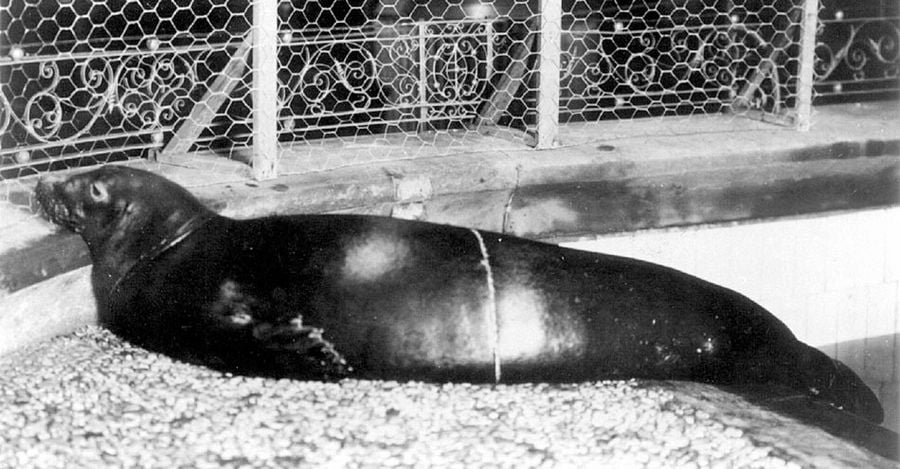
Credit: New York Zoological Society, ca. 1910. / Smith College / PICRYL
The Caribbean monk seal — Neomonachus tropicalis — was the only seal species native to the Caribbean Sea and the Gulf of Mexico, and the only seal to have lived in tropical waters in the western Atlantic. It was declared extinct by the U.S. National Oceanic and Atmospheric Administration in 2008, following a review that found no confirmed sightings since 1952. The last known colony was observed on Serranilla Bank, a remote reef between Jamaica and Nicaragua, in that year.
The animal was medium-sized by seal standards, reaching roughly two to two and a half meters in length and weighing up to 170 kilograms. Its coat was brown-gray on the back, paler on the underside. It had a broad, blunt muzzle and the characteristic monk seal body shape — rotund, with relatively small front flippers. It fed on fish, lobster, and other reef species in the shallow tropical waters surrounding the islands and cays of its range.
Christopher Columbus and his crew encountered Caribbean monk seals on his second voyage to the Americas in 1494, near what is now the Dominican Republic. His men killed eight of them for food. It was the first recorded killing of the species by Europeans, and it set the tone for everything that followed. Sailors quickly established that monk seals were easy to approach and kill — they had no instinctive fear of humans, having evolved without terrestrial predators. Hunting for meat, oil, and pelts proceeded for centuries across their range.
By the 18th and 19th centuries, colonies had been eliminated from island after island across the Caribbean. The seals that remained retreated to the most remote and inaccessible reefs. Even there, hunters followed. Fishing expeditions to Serranilla Bank and other remote cays continued well into the 20th century. The last scientific expedition to find living animals was in 1952. No confirmed sighting has been made since.
Unlike the thylacine or the passenger pigeon, the Caribbean monk seal never attracted significant conservation attention before it vanished. No captive breeding program was ever attempted. No protected area was established in time to make a difference. Its extinction passed largely without public notice. Two related species survive — the Hawaiian monk seal and the Mediterranean monk seal — both critically endangered, both facing versions of the same pressures that eliminated their Caribbean relative.
-900x600.jpg)
Credit: Charles H. Leh / U.S. Fish and Wildlife Service / Wikimedia Commons / PICRYL
The golden toad holds a specific and grim distinction in the history of extinction: it was the first species whose disappearance was directly attributed to climate change. Bufo periglenes lived in a single cloud forest location — a roughly ten-square-kilometer area around Monteverde in the mountains of Costa Rica — and nowhere else on Earth. It was last seen on May 15, 1989. A single male was observed. No golden toad has been recorded since.
The male golden toad was one of the most visually distinctive amphibians ever documented. Its skin was a uniform, lacquer-bright orange-red, smooth and glossy, with no markings. Females looked entirely different — dark olive or black with irregular red and yellow blotches edged in yellow. The sexual dimorphism was so extreme that early observers thought males and females might be different species. The species was formally described by herpetologist Jay Savage in 1966, just 23 years before its extinction.
Golden toads spent most of the year underground or in moist leaf litter, emerging only briefly during the April and May breeding season to gather in temporary pools on the forest floor. Males arrived first and waited for females in large, densely packed groups. The explosive breeding aggregations — dozens of bright orange males clustered around a single female — were among the most vivid wildlife spectacles in Central America. They lasted only a few days each year.
The population appeared stable through the 1970s and early 1980s. Then, in 1987, unusually dry conditions reduced the temporary pools the toads needed for breeding. The 1988 breeding season was also poor. By 1989 the population had collapsed entirely. Researchers who had studied the species for years returned to Monteverde and found nothing.
The leading explanation is that rising temperatures associated with climate change altered the cloud base over Monteverde, reducing the frequency of the mist and cloud cover the forest — and the toad — depended on. A fungal disease, chytridiomycosis, caused by Batrachochytrium dendrobatidis, has also been implicated. The disease has devastated amphibian populations worldwide and may have delivered the final blow to a population already weakened by drought. The golden toad is frequently cited as the first documented casualty of 21st-century climate disruption, even though it disappeared in the 20th.
-900x396.jpg)
Credit: Andries Hoogerwerf, published in "Ujung Kulon: The Land of the Last Javan Rhinoceros." / Wikimedia Commons / PICRYL
The Javan tiger — Panthera tigris sondaica — was a subspecies of tiger endemic to the Indonesian island of Java, one of the most densely populated islands on Earth. It was smaller and more slender than mainland tiger subspecies, an adaptation to the prey available on a relatively small island. The last confirmed sighting was in 1976, in the Meru Betiri forest reserve in eastern Java. Unverified reports continued into the 1980s, but no physical evidence has been found since.
Java is approximately 132,000 square kilometers — roughly the size of North Carolina. In the early 19th century, when Dutch colonial rule was consolidating control of the island, much of it was still forested. The Javan tiger lived across a wide range of forest habitats, from lowland forests to montane zones above 1,500 meters. It preyed on deer, wild pigs, and other forest mammals that shared its habitat.
The Dutch colonial administration actively encouraged the clearing of Javan forests for agriculture — primarily sugar, coffee, and rubber plantations. The transformation was rapid and nearly total. By the mid-20th century, Java had lost the vast majority of its original forest cover. The deer and pig populations the tiger depended on collapsed along with the forest. Tigers that came into contact with villages and farms were killed as threats to livestock and people. A bounty system encouraged killing.
By the 1950s, the Javan tiger was restricted to a handful of protected areas in the most remote parts of the island. A survey in the Ujung Kulon peninsula in 1955 estimated no more than 25 animals remained across all of Java. By the 1960s, that estimate had fallen to fewer than 10. The last confirmed physical evidence — tracks and other signs — was recorded at Meru Betiri in the mid-1970s.
The Javan tiger received almost no conservation attention while it still existed. The resources and political will that might have preserved a viable population were never mobilized. By the time the severity of the situation was widely recognized, the population was already below the threshold from which recovery was possible. Its closest living relative, the Sumatran tiger, is itself critically endangered with fewer than 400 individuals remaining in the wild.
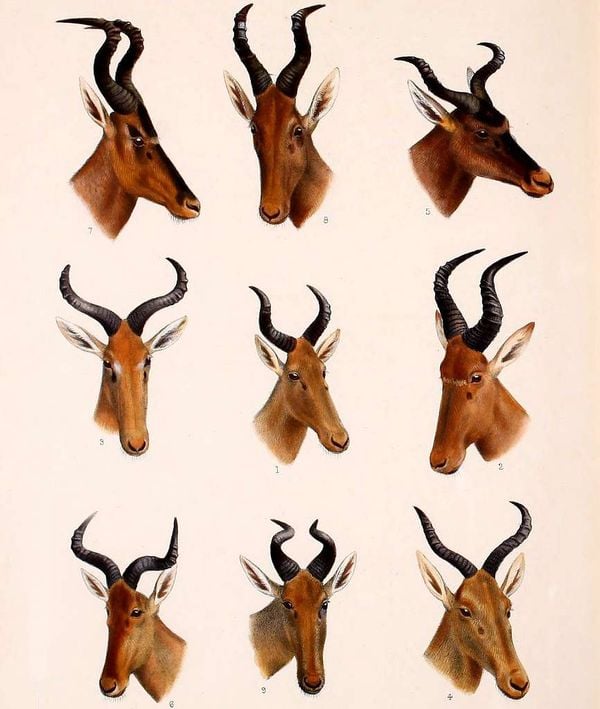
Credit: Zoological illustration, via Wikimedia Commons / PICRYL
The bubal hartebeest — Alcelaphus buselaphus buselaphus — was the northernmost subspecies of the hartebeest, a large African antelope. While other hartebeest subspecies occupy sub-Saharan savannas, the bubal ranged across the semi-arid grasslands and scrublands of North Africa, from Morocco and Algeria east through Tunisia, Libya, and Egypt, and possibly into parts of the Middle East. The last confirmed wild populations were in Algeria. The last known individual — a female held at the Paris Zoo — died around 1902.
The bubal was a large, robust antelope, standing roughly 1.2 meters at the shoulder. Like all hartebeest, it had an elongated, narrow face, a high-shouldered profile that sloped downward toward the hindquarters, and distinctive bracket-shaped horns that curved outward and then inward at the tips. It was a grazing animal, adapted to the dry, open habitats of the North African steppe. It was capable of surviving in arid conditions where water was scarce.
The animal had a long history of human interaction in North Africa. It appears in ancient Egyptian art and was known to classical writers. Roman-era hunting in North Africa was intensive — large-scale hunts supplied animals for the games held in Roman amphitheaters across the empire — and likely reduced bubal hartebeest populations significantly across their range. The species never recovered the numbers it had held before Roman-era exploitation.
European colonization of North Africa in the 19th century brought firearms, expanded agricultural settlement, and systematic hunting. French colonial hunters in Algeria pursued the bubal hartebeest along with other large mammals across the region. Habitat loss as grasslands were converted to farmland removed the open terrain the species depended on. By the 1880s, the bubal hartebeest had been eliminated from most of its range. The last wild animals were reported in Algeria in the final decades of the 19th century.
The Paris Zoo individual — the last of its kind — died without having produced any offspring in captivity. No tissue samples were preserved. The bubal hartebeest left behind only bones, historical accounts, and illustrations. It is one of the least-documented large mammal extinctions of the modern era.
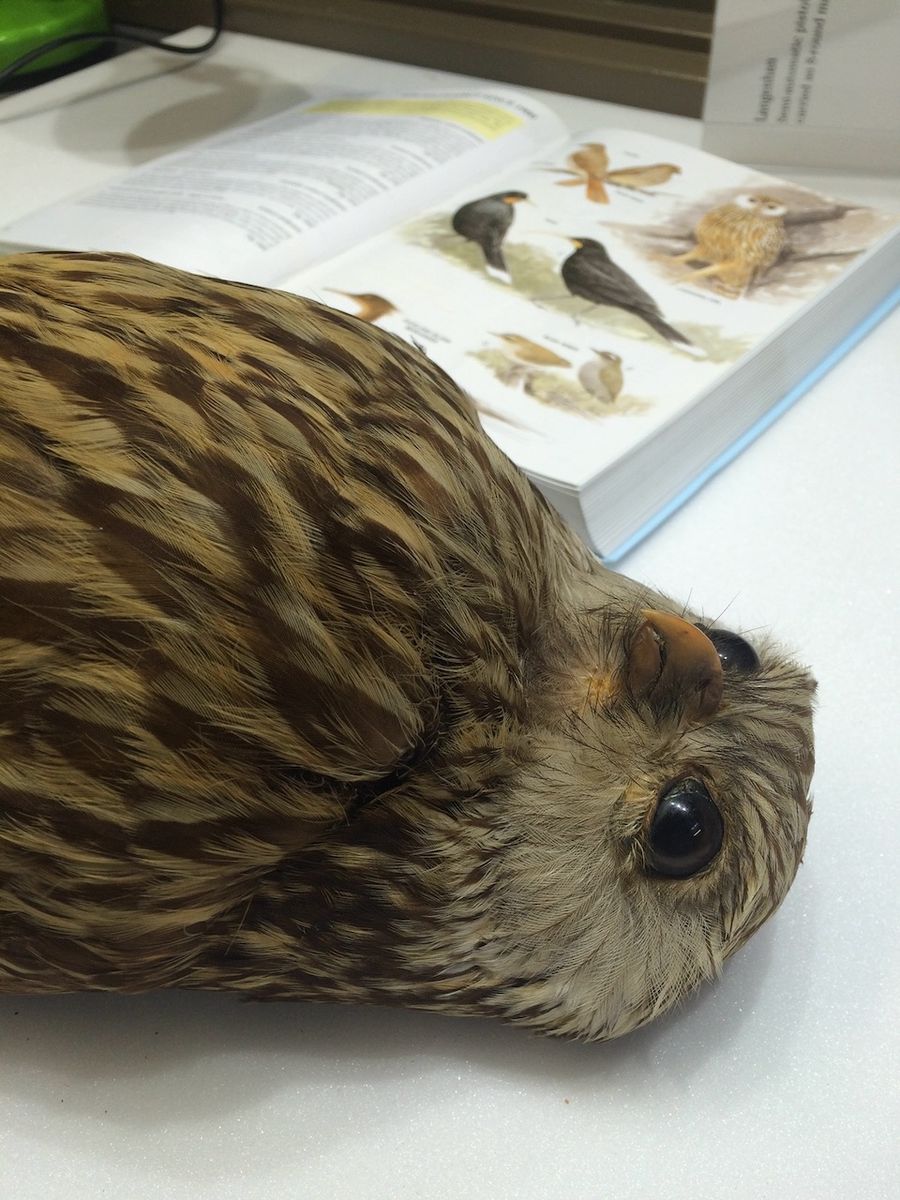
Credit: Mike Dickison / Wikimedia Commons (CC BY 4.0)
The laughing owl — Sceloglaux albifacies — was a medium-sized owl endemic to New Zealand, named for its call, which early European settlers described as a series of loud, dismal shrieks resembling manic laughter. It lived across both the North and South Islands of New Zealand in a range of habitats, from rocky limestone outcrops and low scrubland to forest edges. The last confirmed specimen was found dead at Blue Cliffs Station in Canterbury, on the South Island, in July 1914.
The laughing owl was a ground-hunting bird, pursuing lizards, small birds, large insects, and — after their introduction — mice and rats across open and rocky terrain. It nested in rock crevices and on the ground beneath dense vegetation. It was not a strong flier and spent much of its time walking and running across the landscape. That ground-dwelling habit, which served it well in the predator-free environment New Zealand had been for millions of years, made it acutely vulnerable to introduced mammalian predators.
Polynesian settlers brought rats and dogs to New Zealand roughly 700 years before European contact. European settlers arrived in the early 19th century and introduced cats, ferrets, stoats, and weasels — animals that had evolved as efficient predators of ground-nesting birds. The laughing owl's eggs and chicks were easy targets. Adults on the ground were vulnerable to cats and ferrets in ways that tree-nesting or cliff-nesting species were not.
Habitat clearance accelerated the decline. As New Zealand's forests and scrublands were converted to farmland, the rocky habitats and forest edges the owl depended on shrank. Collectors added further pressure — laughing owls were sought by museums and private collectors, and their rarity made them more valuable to collectors even as that rarity signaled collapse.
By the 1880s the laughing owl was already rare across most of its range. It persisted longest in the South Island's drier eastern districts, where rocky limestone terrain provided some shelter. After 1900, confirmed sightings became vanishingly rare. The 1914 specimen found at Blue Cliffs — a female, apparently freshly dead — is the last verified record of the species. Audio recordings of the call were never made. The laughing owl is known to science entirely through specimens, bones, and written accounts.
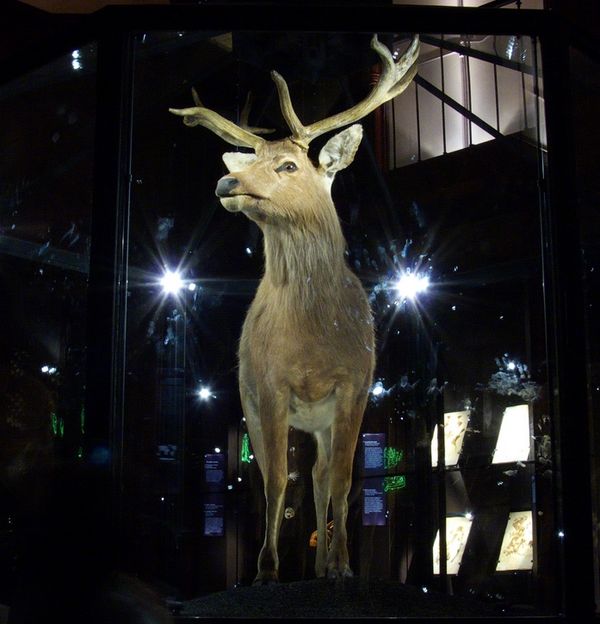
Credit: mf9000 / Wikimedia Commons (CC BY-SA 3.0)
Schomburgk's deer — Rucervus schomburgki — was a large deer native to the central plains of Thailand, particularly the flood-prone grasslands and swamp forests of the Chao Phraya River basin. It was named after Sir Robert Hermann Schomburgk, the British consul in Bangkok who first brought specimens to the attention of Western science in the 1860s. The last confirmed wild individual was killed in 1932. The last known captive animal — held at a temple in Bangkok — was reportedly killed for medicine in 1938.
The species was distinctive for its antlers, which were among the most elaborate of any deer. The main beams swept outward and upward, branching repeatedly into a basket-like structure that could carry a dozen or more tines. Males in prime condition carried antlers that were both large relative to body size and architecturally complex. Females were smaller and antlerless. The body was dark brown with a paler underside. The deer were well adapted to the seasonally flooded grasslands of their range, capable of swimming between islands of vegetation during flood periods.
The Chao Phraya basin was one of the most agriculturally productive regions of Southeast Asia, and as Thailand's population grew through the 19th and early 20th centuries, the wetland grasslands the deer depended on were steadily converted to rice paddies. The transformation was comprehensive. By the early 20th century, the deer's natural habitat had largely ceased to exist outside a few remote areas.
Hunting compounded the habitat loss. The deer's large, distinctive antlers were valued for traditional medicine and as decorative trophies. As the population declined, individual animals became easier to find because the survivors were concentrated in whatever habitat remained. Hunters followed them into those last refuges.
No coordinated conservation effort was made to preserve the species. By the time the severity of its decline was apparent, the population had already been reduced below viable levels. Schomburgk's deer is one of several Southeast Asian deer species that disappeared in the 20th century with minimal documentation and almost no public awareness.
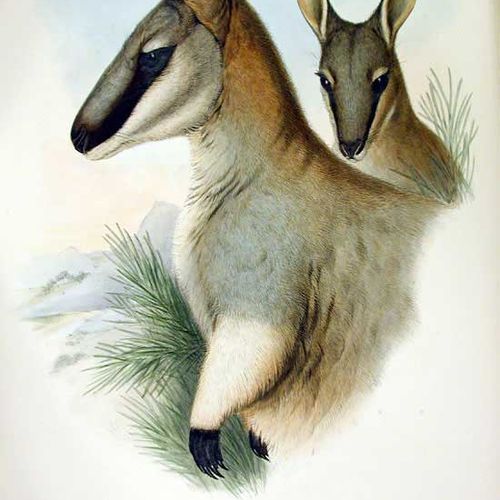
Credit: Illustration by John Gould, F.R.S. From The Mammals of Australia, Vol. II, Plate 19. London, 1863 via Wikimedia Commons / PICRYL
The toolache wallaby — Macropus greyi — was once described as the most elegant and beautiful of all Australian wallabies. It was a slender, swift animal with a pale grey-buff coat marked with faint darker stripes across the hindquarters, long legs built for speed, and a distinctive bounding gait that made it exceptionally difficult to catch. It occupied the open grassy plains and low scrubland of southeastern South Australia and a small area of adjacent Victoria. By 1939, it was gone.
European settlers arrived in southeastern South Australia in the 1830s. The toolache's open habitat was exactly what farmers needed for sheep grazing, and land clearing proceeded rapidly across its range. But habitat loss alone did not drive the toolache to extinction — it was hunting, combined with predation by introduced foxes and dogs, that collapsed the population.
The toolache was considered by hunters to be one of the most sporting animals in Australia. Its speed and stamina made it a challenging quarry. Groups of hunters on horseback with dogs pursued them across the plains, a practice that became a regular social activity in the region. The hunts were often described as spectacular — the wallabies could sustain speeds that tired horses and outran most dogs. But the hunts were relentless and the population could not absorb the losses.
By the early 20th century, the toolache was recognized as extremely rare. A small population survived near Robe in South Australia. In 1923, conservationists attempted to capture the remaining animals and relocate them to a protected area on Kangaroo Island. The operation was badly managed. Of the 14 animals captured, 10 died from stress and injuries during the attempt. The four survivors were released back into their original habitat. The operation, intended to save the species, almost certainly accelerated its end.
The last confirmed sighting of a wild toolache wallaby was in 1924. A small group was reported at Mundulla, South Australia, in the late 1920s, but these were never confirmed. The last captive individual died in 1939. The toolache wallaby was declared extinct in 1970.
Credit: Peter Maas / Wikimedia Commons (CC BY-SA 3.0)
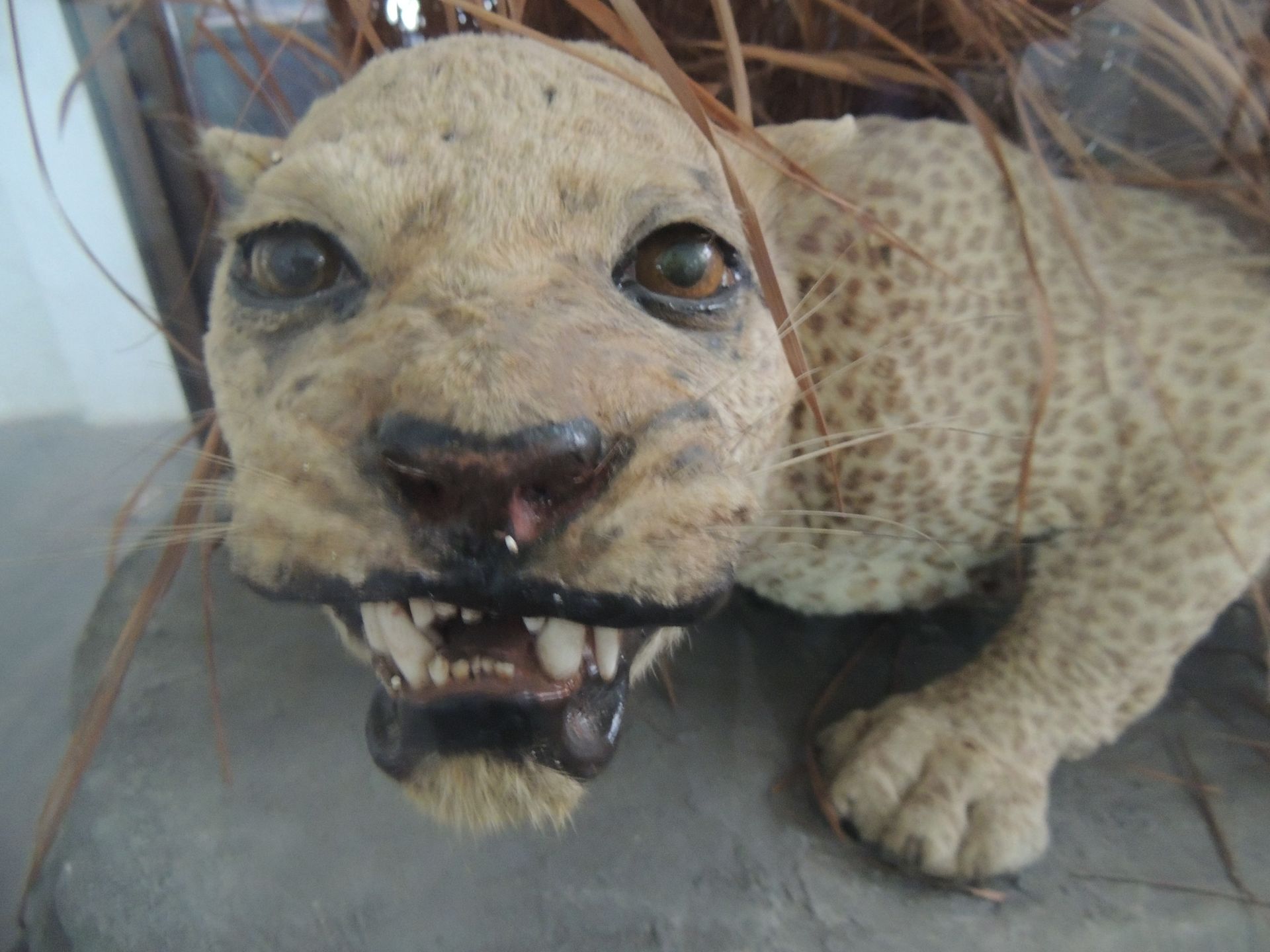
The Zanzibar leopard — Panthera pardus adersi — was a subspecies of leopard found only on Unguja, the main island of the Zanzibar Archipelago off the coast of Tanzania. It was smaller than mainland African leopards, an expected adaptation for island populations. It is listed as extinct by the International Union for Conservation of Nature, though the precise date of its disappearance is uncertain. Most wildlife biologists believe the last individuals died sometime in the 1990s.
The leopard's decline on Zanzibar was driven not primarily by hunting for sport or commercial trade, as with many other big cat extinctions, but by a systematic eradication campaign rooted in local belief. A widespread conviction held among parts of the Zanzibari population that the leopards were kept and sent by witches to harm people and livestock. This belief shaped attitudes toward the animal for decades. Government-sponsored eradication programs in the 1960s and 1970s trained and deployed leopard hunters specifically to eliminate the remaining population. The campaign was effective.
Habitat loss contributed. As Zanzibar's human population grew, the forests and dense vegetation that provided leopard habitat were cleared for agriculture and settlement. The island's forest cover shrank significantly through the 20th century, reducing both the leopard's territory and the prey populations it depended on.
By the 1980s, confirmed sightings of Zanzibar leopards had become rare. A small research effort in the early 1990s found evidence of leopard activity — tracks, kills, and local reports — in the forested interior of Unguja, but no animals were captured or photographed. By the mid-1990s, even those signs had largely ceased.
A brief moment of attention came in 2018, when camera trap footage emerged that some claimed showed a living Zanzibar leopard. The footage was disputed and no follow-up expedition confirmed the sighting. The IUCN classification remains extinct. The Zanzibar leopard is one of the few large mammal extinctions driven primarily by deliberate cultural persecution rather than commercial exploitation or habitat destruction.
-300x197.jpg)
Credit: U.S. Fish and Wildlife Service / Hawaii Department of Land and Natural Resources (DLNR), via dlnr.hawaii.gov
The po'ouli — Melamprosops phaeosoma — was a small, brown bird with a distinctive black mask across its face, found only in the rainforests of the eastern slopes of Haleakalā volcano on the island of Maui in Hawaii. It was discovered by science in 1973, making it one of the last bird species to be formally described in the United States. It was last seen alive on September 9, 2004, when the final known individual died in captivity at the Maui Bird Conservation Center in Olinda. It was estimated to be at least nine years old.
The po'ouli occupied a very specific ecological niche. It fed primarily on native tree snails of the genus Partulina, using its short, slightly curved bill to extract snails from bark and leaf litter. It also consumed other invertebrates and some plant material. Its dependence on native snails made it acutely vulnerable to any decline in snail populations — and those populations were themselves collapsing due to introduced predators and habitat change.
When the species was first formally documented in 1973, the population was already small — surveys estimated fewer than 200 individuals in a restricted area of high-elevation native forest. The forest itself was under pressure from feral pigs, which uprooted vegetation and created pools of standing water that bred mosquitoes. Those mosquitoes transmitted avian malaria, to which Hawaiian honeycreepers have little resistance. The po'ouli's high-elevation habitat provided some protection — mosquitoes cannot survive above a certain altitude — but climate change has pushed that boundary steadily upward.
By the 1990s, the population had collapsed to single digits. By 2002, only three individuals were known to survive, each occupying a separate home range with no apparent contact with the others. Conservationists captured one bird in 2004 in a last attempt to initiate a captive breeding program. No mate could be found. The bird died that September.
The po'ouli's extinction illustrates a particular kind of conservation failure — one in which the species was known to be critically endangered for decades, the threats were clearly identified, and the interventions attempted came too late and with insufficient resources to make a difference.
-1920x1279.jpg)
Credit: zoofanatic / Wikimedia Commons (CC BY-SA 2.0)
The Formosan clouded leopard — Neofelis nebulosa brachyura — was a subspecies of the clouded leopard found only on the island of Taiwan, known historically as Formosa. It was declared extinct by Taiwanese and international wildlife authorities in 2013, following a 13-year camera trap survey conducted by researchers from Taiwan and the U.S. that failed to produce a single confirmed image of a living animal. The survey covered the most remote remaining forest in Taiwan's southern mountain ranges and is the most thorough extinction assessment ever conducted for a Taiwanese carnivore.
The clouded leopard is one of the most distinctive of the world's wild cats. It has a relatively long body, short legs, and the largest canine teeth relative to skull size of any living felid — proportionally larger even than those of lions or tigers. Its coat is marked with large, irregular cloud-shaped patches outlined in black, which give the species its name. The Formosan subspecies was smaller than mainland clouded leopards, consistent with the pattern of island dwarfism seen in other carnivores.
Taiwan's aboriginal Rukai people had a deep cultural connection with the Formosan clouded leopard. The animal appeared in traditional stories and was considered a sacred creature associated with ancestral spirits. The Rukai did not hunt clouded leopards. Their pelts were worn only by tribal chiefs as a mark of high status, and only pelts obtained through trade or as gifts. This cultural protection may have helped sustain the population in the south of the island for longer than would otherwise have been possible.
The primary driver of extinction was habitat destruction. Taiwan's lowland and mid-elevation forests — the clouded leopard's preferred habitat — were extensively logged during the Japanese colonial period from 1895 to 1945, and logging continued after Taiwan came under the Republic of China government in 1949. The forest that remained was fragmented and increasingly disturbed. The deer and smaller mammals the leopard preyed on declined along with the forest.
Hunting added to the pressure. Clouded leopard pelts were traded commercially, and the animal was caught in traps set for other species. By the mid-20th century, confirmed sightings had become rare. The last physical evidence — a skin and bones — was recorded in 1983. The 13-year camera trap survey that began in 2000 confirmed what the absence of sightings had suggested for years.
In 2019, members of the Rukai community reported seeing clouded leopards in the forests of southern Taiwan, prompting renewed interest. No photographic evidence has emerged. Taiwanese conservationists and indigenous leaders have called for the reintroduction of clouded leopards from mainland populations to Taiwan's recovering mountain forests, where deer populations have rebounded significantly. The proposal remains under discussion.
