Sen. Bernie Sanders introduced legislation Thursday that would give the American public a direct 50% ownership stake in the country's largest artificial intelligence companies through a one-time tax on their stock.

The Vermont senator's bill would create a roughly $7 trillion fund through a one-time stock transfer from the largest AI firms
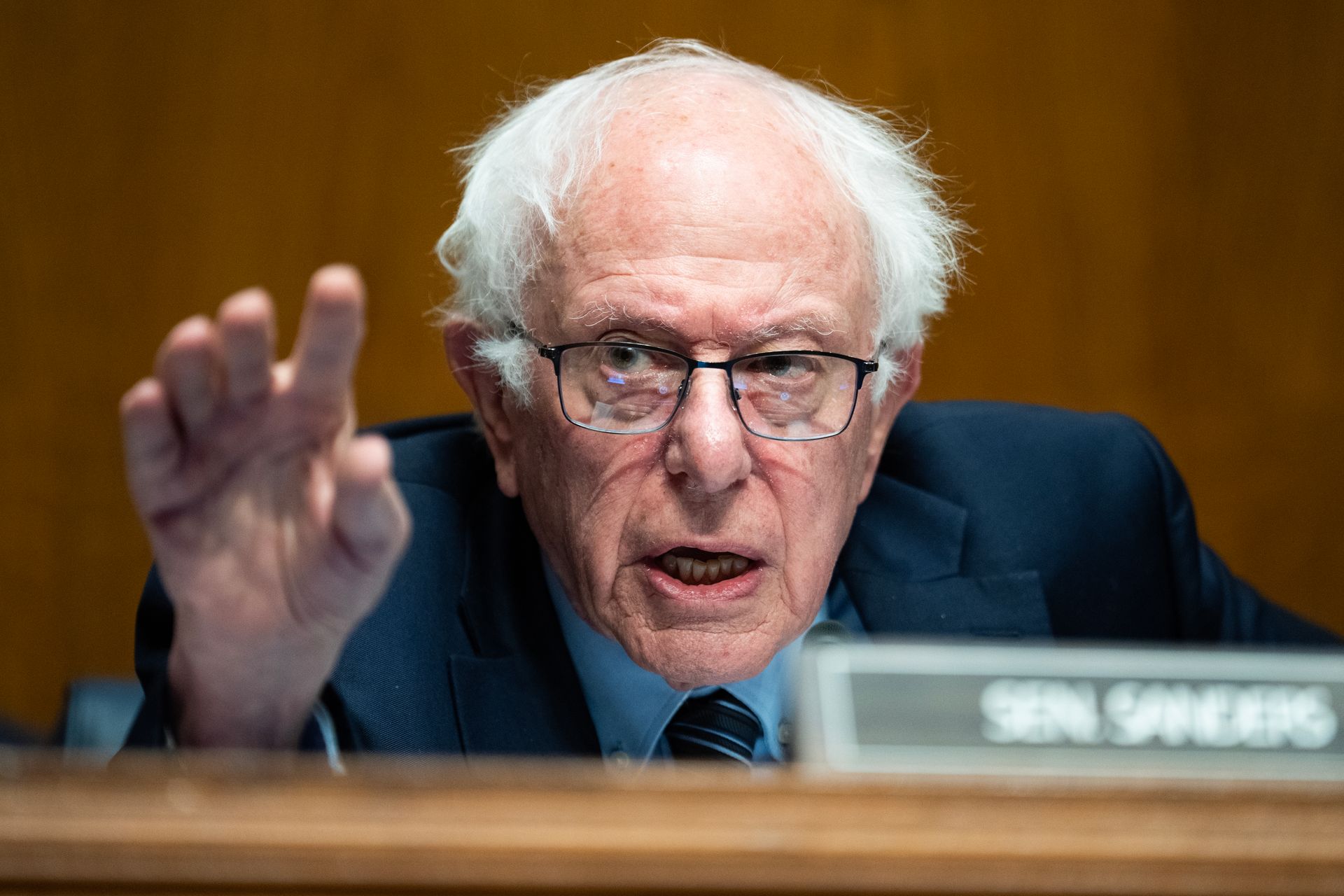
Tom Williams / Getty Images
Sen. Bernie Sanders introduced legislation Thursday that would give the American public a direct 50% ownership stake in the country's largest artificial intelligence companies through a one-time tax on their stock.
Under the legislation, firms crossing the $200 million annual AI revenue threshold would be required to hand over half their shares to a new federally managed fund, The Associated Press reported, with Sanders pegging the total value of the resulting fund at approximately $7 trillion.
Oversight of the fund would fall to an independent, seven-person commission whose members would go through presidential nomination and Senate confirmation; that body would wield the fund's voting shares to push back against corporate actions seen as harmful to ordinary Americans, according to the senator. Every American would receive direct payments exceeding $1,000 annually, Sanders projects, drawn from a 5% dividend the fund would be required to distribute. Companies entering the AI sector and later hitting that revenue mark would face the same equity transfer requirement.
"The benefits cannot simply go to the handful of wealthy corporations. They will be shared by the American people," Sanders said.
The bill would also require large companies that operate both AI and non-AI businesses to separate those operations, ensuring the public receives an ownership stake in the AI portion, Sanders said. He argued that if AI company valuations fall, the companies — not the federal government — would bear the losses.
The idea of government taking a stake in AI companies has drawn interest from figures across the political spectrum, though Sanders' proposal goes further than most. OpenAI CEO Sam Altman has called for establishing a public wealth vehicle to distribute AI gains broadly across the citizenry, while Anthropic's Dario Amodei has signaled openness to comparable arrangements, having written that taxes on AI companies could fund universal basic income. Trump, too, has floated the notion of the government holding a position in AI developers, remarking publicly that the concept resembles a kind of partnership with the American people.
Distancing his legislation from those softer approaches, Sanders drew a sharp contrast in remarks to the AP. "I think people like Sam Altman and Trump may be sympathetic to this are saying: 'Okay, look, we're making zillions of dollars so we're going to be nice guys and maybe we'll buy off the public,'" he said. "That's not what we're talking about."
The idea of the federal government taking equity stakes in private AI companies has been under broader discussion, with the Trump administration previously in talks about acquiring financial stakes in leading AI firms after Altman first pitched the idea in 2025. Sanders' proposal is more aggressive, calling for outright public ownership of half of the largest AI companies and direct influence over corporate governance.
When asked about his political strategy going forward, Sanders made clear he intends to put AI ownership and economic inequality at the center of his midterm campaigning.
Join 500,000+ readers who start their day with Quartz.
By subscribing, you agree to our Terms of Service and Privacy Policy.