The best all-inclusive family resorts in the U.S., from a Maine lakeside lodge with century-old traditions to a 37,000-acre Montana cattle ranch

Thomas Barwick / Getty Images
Planning a family vacation involves a specific kind of logistical labor that most travel doesn’t require. Children need meals at predictable times. They need supervision when parents want a quiet dinner. They need age-appropriate activities that keep them engaged without exhausting the adults responsible for them. They need accommodation with enough space for everyone to sleep without a shared wall becoming the primary memory of the trip. The all-inclusive resort format addresses most of these pressures at once: a single nightly rate covers food, activities, and entertainment, removing the per-decision billing that turns a vacation into an accounting exercise.
The American all-inclusive family resort landscape is more varied than most travelers realize. The category runs from Pocono Mountain retreats, less than two hours from New York City, to a 37,000-acre working cattle ranch in Montana and a private island off the Georgia coast. Some properties serve as summer camps for children while parents recover in the lodge; others build their identity around horse culture or Western dude-ranch life. Some require minimum stays of a week; others accept three-night bookings. The common thread is a rate structure that covers accommodation, meals, and a programmed activity calendar. The infrastructure turns a family trip from a series of negotiations into something resembling a shared vacation, and it explains why these properties draw repeat visitors at rates that standard hotels rarely achieve.
The 10 resorts below come from U.S. News & World Report’s list of the top all-inclusive family resorts in the U.S., which evaluated properties based on the breadth and quality of their family-oriented amenities and activities, the inclusiveness of their rate structures, the suitability of their accommodations for family groups of different sizes, and the overall experience that recent guests report for families traveling with children of different ages.
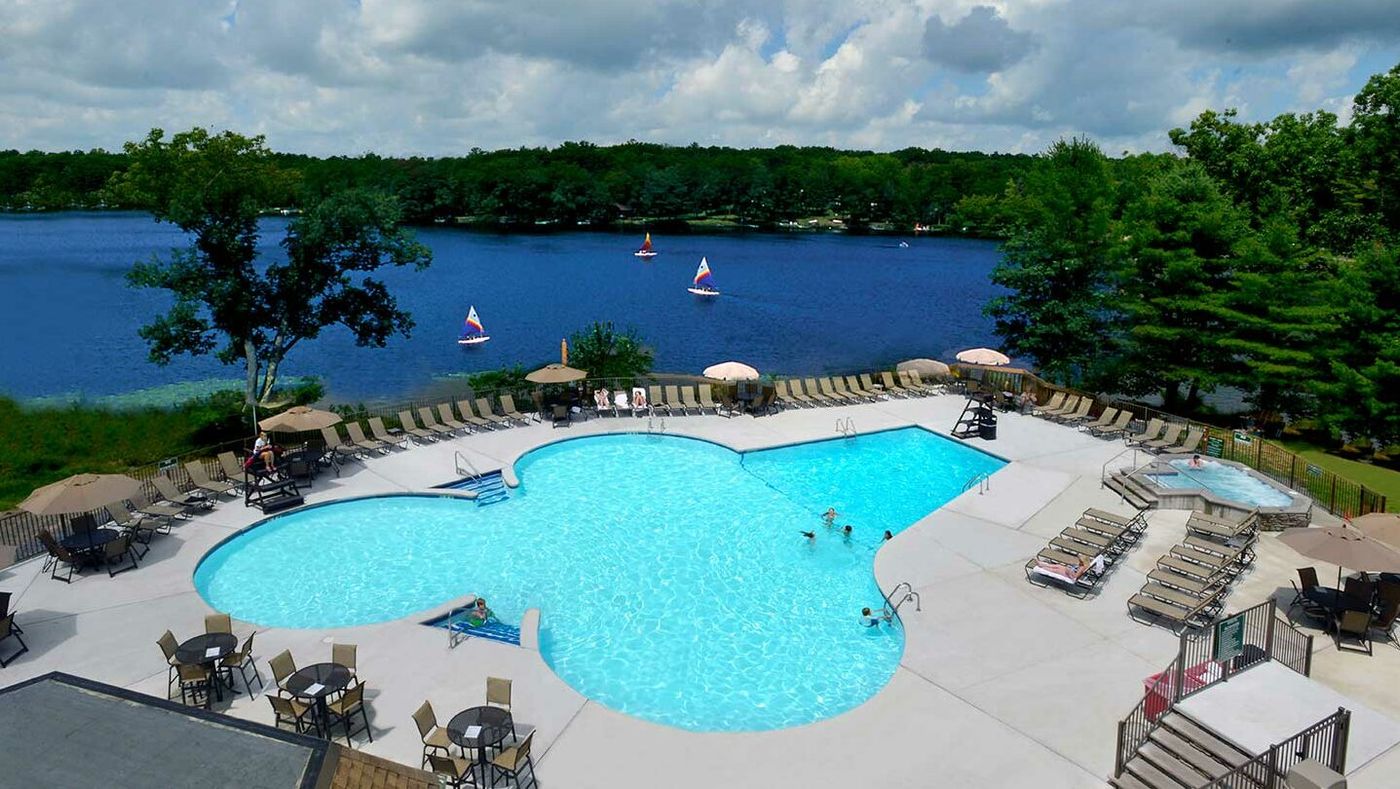
Credit: Woodloch Pines Resort
Woodloch Pines Resort in Hawley, Pennsylvania, sits less than 100 miles northwest of New York City in the Pocono Mountains, making it among the most practically accessible all-inclusive family resorts on this list for the largest concentration of East Coast families. The resort’s activity calendar runs year-round, with water sports available in summer and snow tubing in winter, giving families a reason to visit across multiple seasons without repeating the same experience. Recent guests — many of them repeat visitors — praise the breadth of activities, the quality of the food, and the friendliness of the staff across the full range of ages the resort serves.
Accommodations at Woodloch Pines are designed to serve different family configurations. Traditional guest rooms and suites suit nuclear families traveling with younger children, while privately owned vacation rentals extend the options for larger groups or family reunions. The largest vacation rentals accommodate up to six bedrooms, a scale that gives extended families or combined households a single property option that most hotels cannot match. The rental format also gives families with teenagers or picky eaters the option to prepare some meals independently, as guests can choose to include two or three meals per day in their rate.
The dining flexibility distinguishes Woodloch Pines from more rigidly all-inclusive properties. A resort that allows guests to opt out of some included meals — and save on the nightly rate by preparing food in their vacation rental — treats families as having genuine preferences about meal timing and cost, not as captive customers of a bundled service. The proximity to New York City also makes Woodloch Pines a long-weekend destination that urban families can reach without flying, giving it a practical reach that the Montana and Wyoming ranches on this list cannot match for the Northeast corridor. The repeat guest rate reflects both the activity quality and the logistical convenience of a property that requires no airport, no connecting flight, and no significant time change to reach.
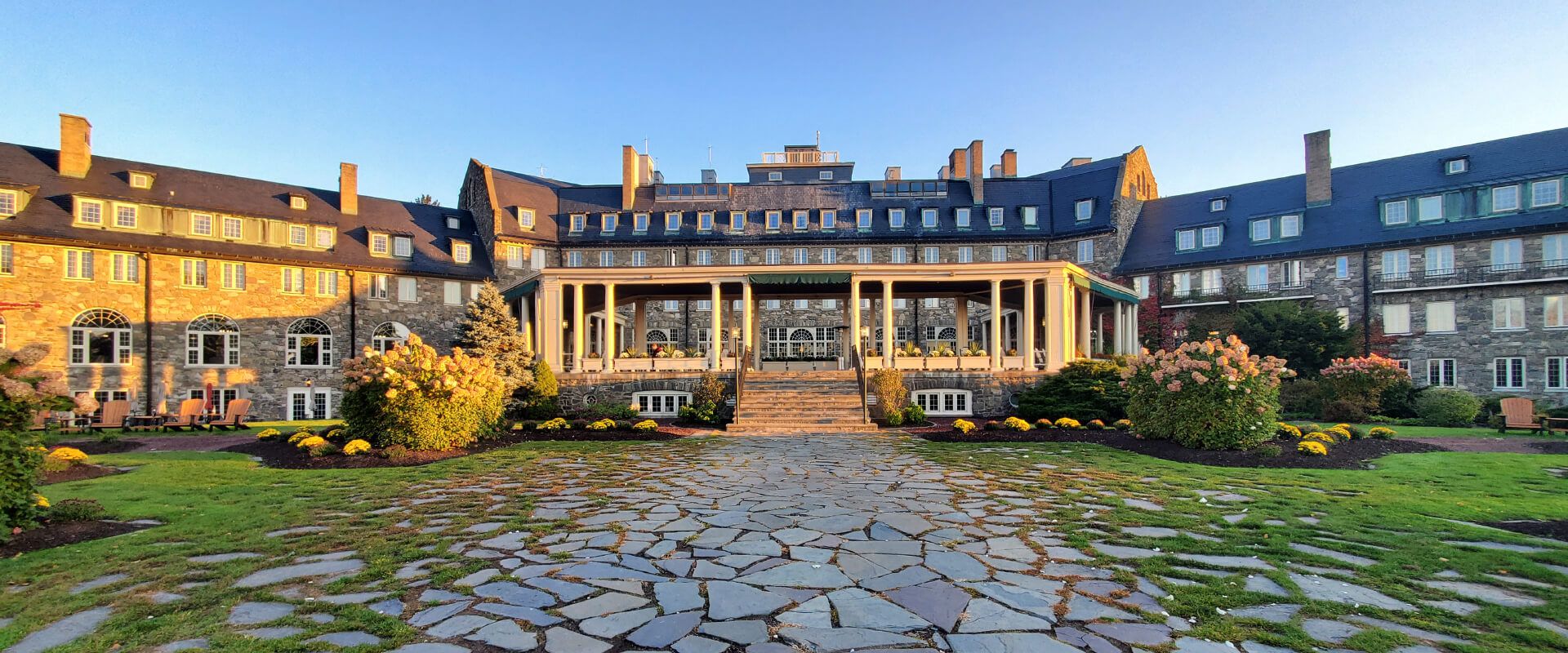
Credit: Skytop Lodge
Skytop Lodge in the Pocono Mountains holds an AAA Four Diamond designation, giving it a formal luxury rating that distinguishes it from the broader category of Pocono family resorts. The 5,500-acre property gives the resort a physical scale that supports activities requiring genuine terrain: hiking trails, a golf course, a zip line, a treetop adventure course, and West Mountain skiing are all available on-site. The Adventure Center coordinates these activities, providing families with a single hub for a day’s outdoor programming and eliminating the need to navigate multiple vendors or departure points.
The lodge’s accommodation is divided into three settings that cater to different family preferences. The Cottages offer multi-room cabins suited to families who want kitchen access and private outdoor space. The Inn offers a lakeside location for guests seeking a quieter, more intimate environment. The Lodge houses the property’s historic core. The hotel opened in 1928, giving guests a sense of connection to a century-long tradition of resort hospitality in the Poconos. Seven dining and drinking options span the full range from sit-down restaurants to grab-and-go formats and a library-style lounge, with the Modified American Plan covering breakfast and dinner in the nightly rate.
The evening campfires and seasonal arts-and-crafts classes give Skytop a social programming layer that extends the resort day beyond physical activity. A family that spends the morning on a zip line and the afternoon on a hike has a campfire as the evening’s natural conclusion. The resort’s programmed offerings facilitate that sequence without requiring families to plan it themselves. Skytop’s AAA Four Diamond designation, alongside its adventure-forward activity calendar, makes it the most comprehensive pairing of luxury and adventure among the two Pocono resorts on this list. The 1928 opening date also gives the Lodge building a historical authenticity that newer resort developments cannot replicate. Families who stay in the original structure sleep in the same rooms generations of Pocono vacationers have occupied before them.
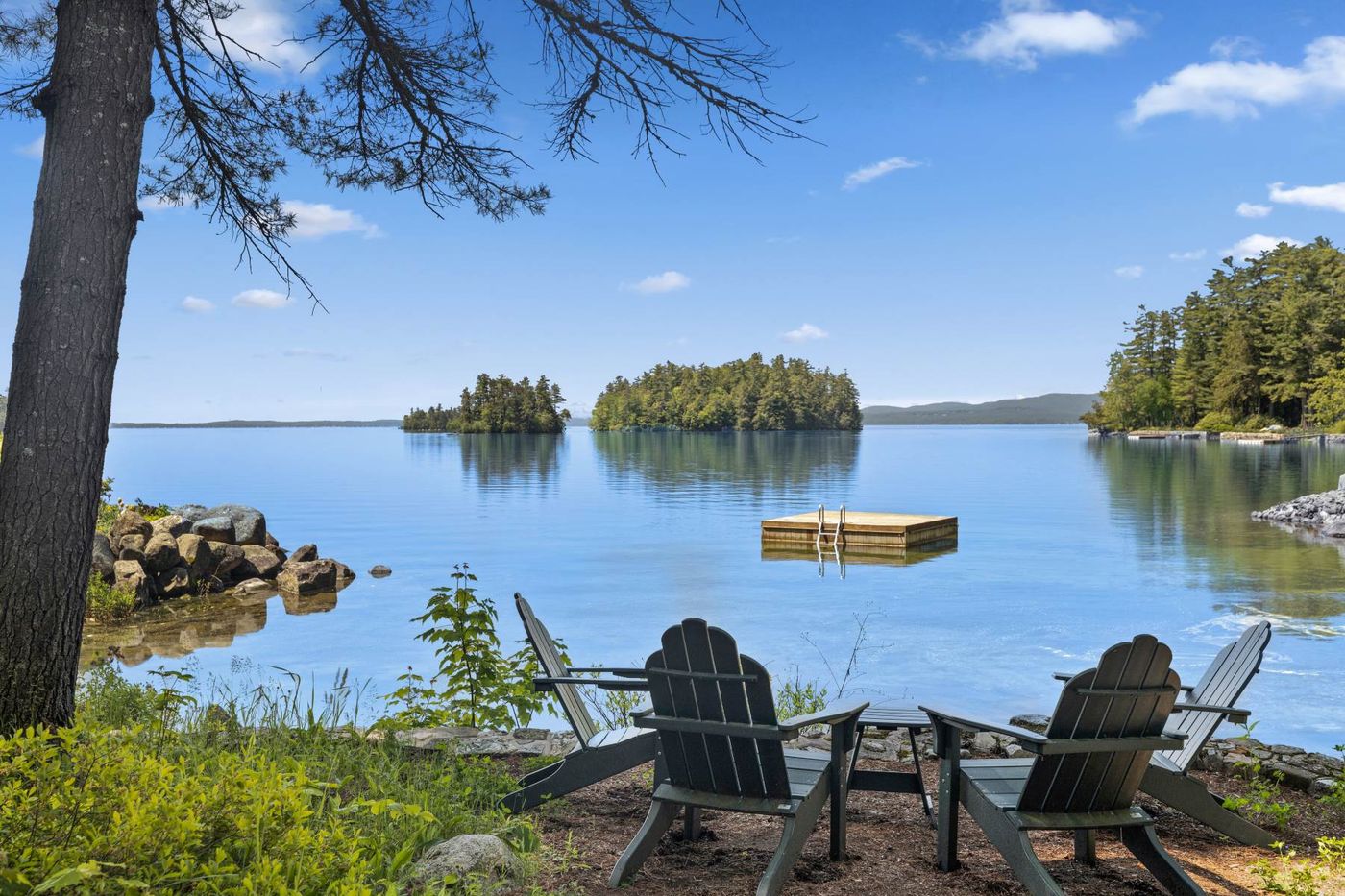
Credit: Migis Lodge
Migis Lodge on Sebago Lake in South Casco, Maine, has operated as an all-inclusive family resort for more than a century, giving it a generational depth that newer properties cannot match. The all-inclusive rate covers lodging, three daily meals, and access to the full amenity and activity roster. The lakeside cookouts and lobster bakes are signature experiences, not optional add-ons. Children’s programming divides into Migis Kids’ Camp for ages four through six and Adventure Camp for children seven and older, and supervised evening programs give parents a scheduled time apart from their children without arranging independent babysitting.
Accommodations range from rooms in the main building to 35 private cottages, the largest of which sleeps up to 10 guests. Two lakeside homes expand the capacity for the largest family groups. Every accommodation includes a fireplace and a balcony or elevated porch with lake views. The fireplace and lake-view balcony give even the standard lodging a specific character tied to the Maine lakeside environment. The combination of the fireplace and lake-view balcony gives families a consistent outdoor retreat at their lodging, regardless of the accommodation category they book.
Recent guests consistently identify the scenic setting — not the meals, not the activities, not the programming — as the reason they return. A resort that earns this distinction through its activities and food has done something more difficult than putting together a good activity roster: it has chosen a location whose natural character makes the property worth visiting on environmental grounds alone. The 100-year history of Migis Lodge means that families who visited as children now bring their own children, creating a multigenerational return dynamic that distinguishes it from properties without that temporal depth. The supervised evening programs for children, which give parents a guaranteed block of independent time each day, represent the operational feature that most consistently draws repeat bookings from families with younger children who need reliable coverage.
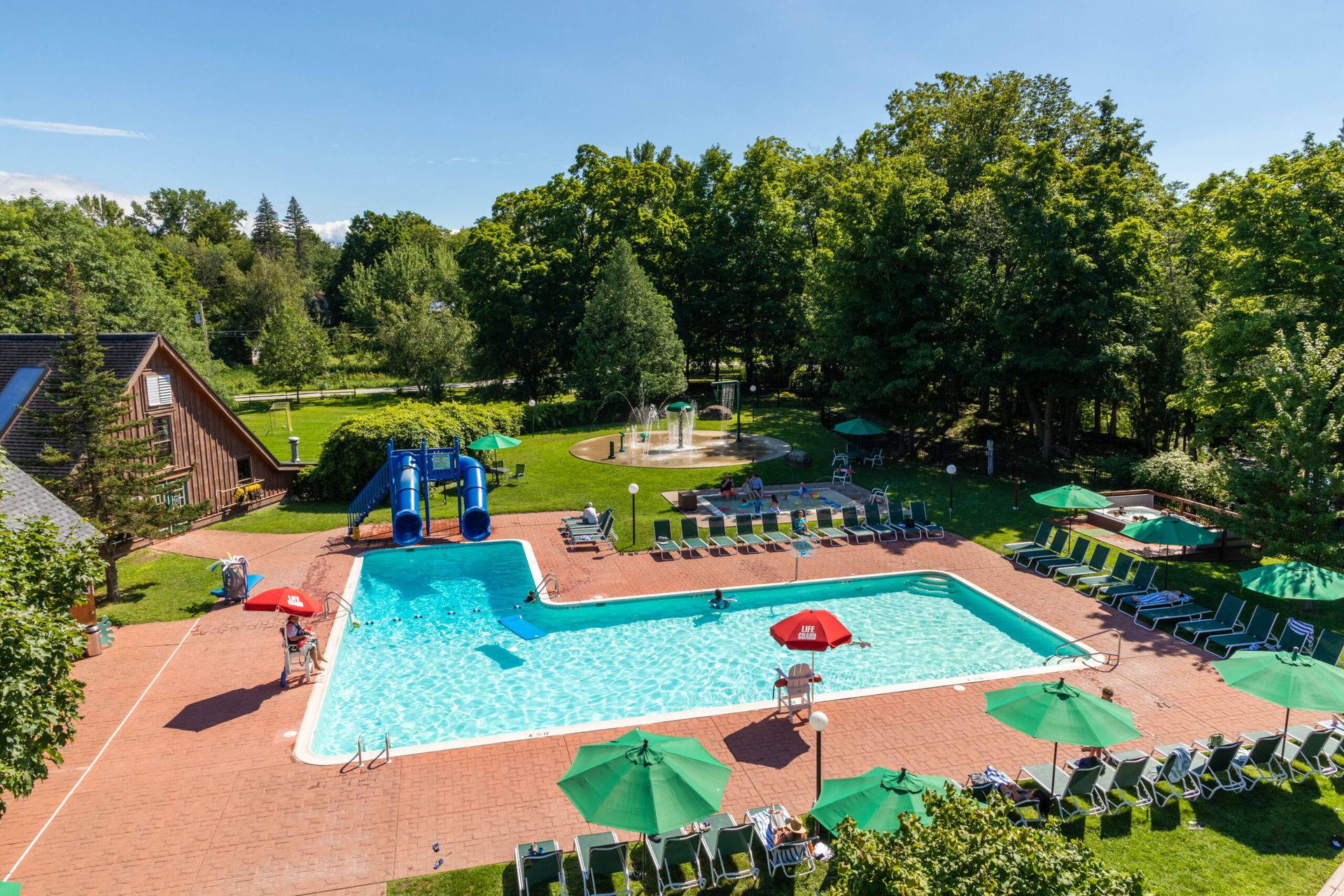
Credit: The Tyler Place Family Resort
The Tyler Place Family Resort in Highgate Springs, Vermont, on the shores of Lake Champlain, structures its entire experience around a community model that a standard hotel format cannot produce: all guests check in and check out on the same Saturday, creating a cohort of families who share the full arc of a week together. The source describes the intention as building a sense of community, and the Saturday-to-Saturday booking requirement is the mechanism that enables it. Exceptions apply on Memorial Day and Labor Day weekends.
The included programming separates children by age group for morning and evening activities — from babies and toddlers through 9th and 10th graders — with each group receiving age-appropriate activities such as tubing, puppet shows, nature hikes, and farm tours. Afternoons are reserved for family programming, when all ages come together for field days, pontoon boat rides, ice cream socials, and fishing trips. The daily rhythm alternates between age-separated programming and family-wide activities, giving parents time with their peers, their children’s peers, and their own children.
The dinner arrangement captures the resort’s most praised feature: parents can dine quietly while children eat at an earlier sitting under counselors' supervision and play with friends afterward. The source notes that past guests consistently praise this aspect of the resort experience, and many have returned year after year. A resort whose guests return repeatedly for a single week each summer, with the same booking requirement, functions less as a hotel and more as an annual community gathering. The Tyler Place model has maintained that community identity long enough that some visiting families arrived as children themselves. The Saturday-to-Saturday cohort structure creates a social circumstance that most resort guests will never experience at any other property: arriving and departing with the same set of families, sharing the full arc of a week together, and leaving with relationships that did not exist seven days earlier.
Credit: C Lazy U Ranch
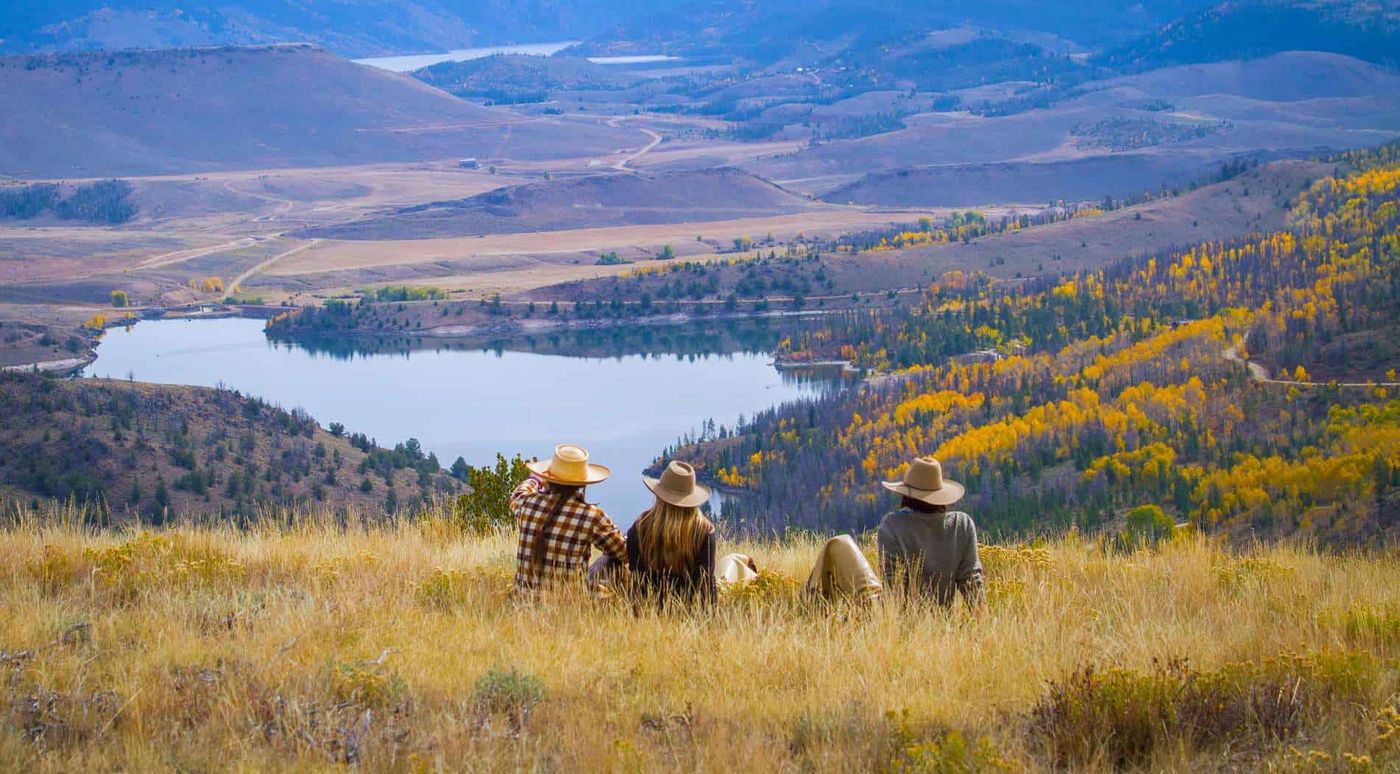
C Lazy U Ranch in Granby, Colorado, opens each day with the Jingle — the movement of roughly 200 horses leaving and returning to the ranch — which the source identifies as a spectacle compelling enough to justify a visit on its own. The scale of the horse operation gives the ranch an identity that purely activity-focused resorts cannot replicate: the horses are not an amenity but the organizing principle of the place. The all-inclusive programming covers activities for children ages three through 17, with teen-specific options including whitewater rafting excursions, cattle clinics, and go-kart racing.
The broader activity roster spans Orvis-endorsed fly-fishing, zip lining, swimming, beehive tours, trap shooting, and hatchet throwing for all guests, with winter adding snowmobiling and cross-country skiing. The Orvis endorsement for the fly-fishing program gives that activity a credentialed quality standard that most ranch fly-fishing operations do not carry. Gourmet meals with wines selected by the resort’s in-house sommelier are included in the rate, as are campfire s’mores. The pairing of culinary ambition and campsite simplicity captures the ranch’s overall character.
The cabin accommodations have no televisions, which the source frames as an encouragement to disconnect from technology. A family that cannot default to a screen after dinner occupies itself differently: the fireplace, the stars above a mountain ranch, and the other guests become the evening’s options by default. C Lazy U Ranch’s dining structure mirrors the Tyler Place model for summer evenings. Adults eat separately while children dine together with new friends, which gives parents a structured adult social experience at dinner. The summer and winter activity rosters give the ranch a genuine two-season identity, and the absence of televisions in the cabins removes the option of spending the evening on a screen. Family attention redirects toward the landscape, the stars, and each other. For most families visiting a mountain ranch, this is the reason they came.
Credit: Paws Up Montana
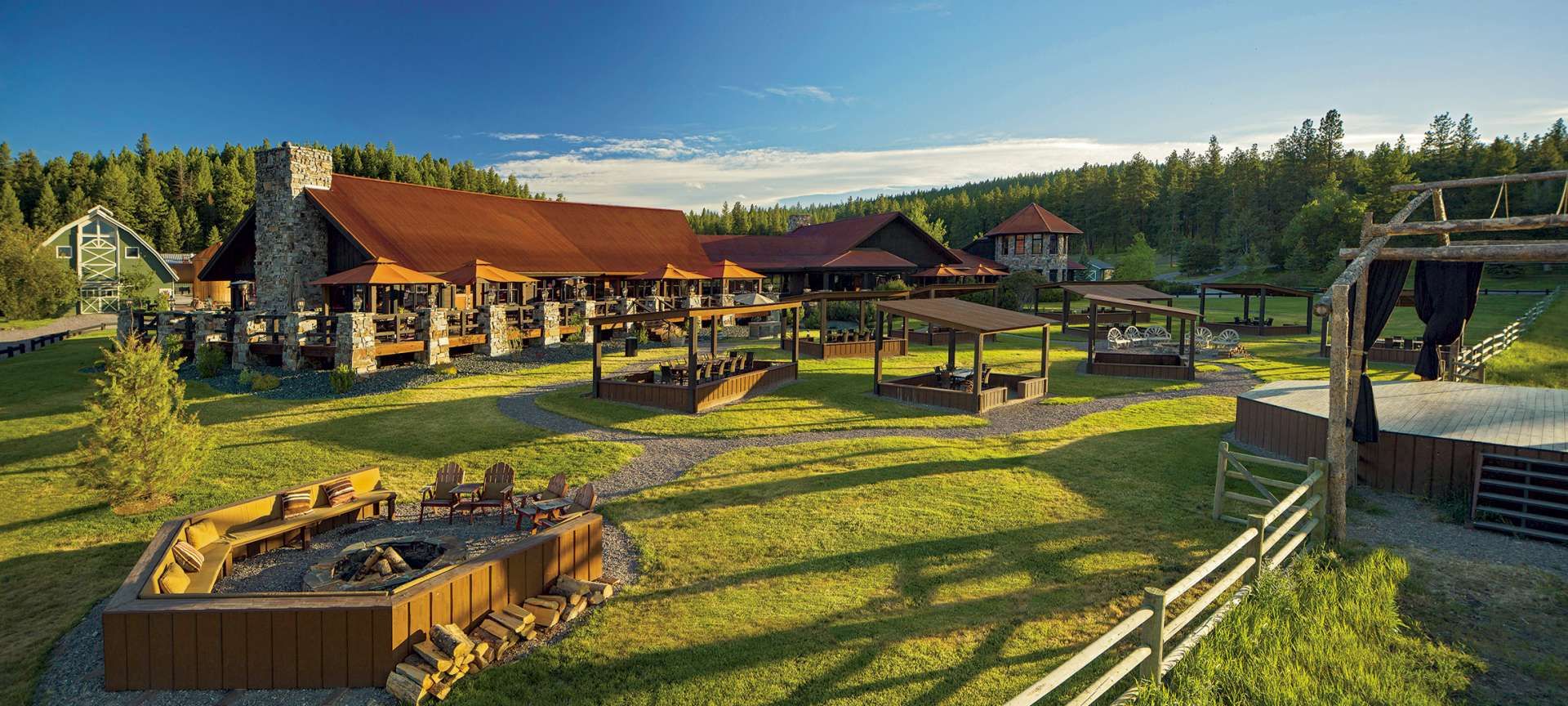
The Resort at Paws Up in Greenough, Montana, occupies a 37,000-acre working cattle ranch. The footprint gives the resort a scale of terrain and wildlife habitat that no other property on this list approaches. The activity roster reflects this scale, offering unique options such as winter snowmobiling and curling, and summer fly-fishing and canoeing, alongside a variety of equestrian experiences throughout the year. Some activities carry additional fees beyond the all-inclusive rate, and spa services — including children’s treatments — require a separate booking.
The accommodation formats span a range that suits both luxury-seeking families and those who prefer a more immersive outdoor experience. Multi-bedroom vacation homes, equipped with a Lexus personal vehicle, give families the privacy and kitchen access of a stand-alone house. Glamping with butler service, available from mid-May through mid-October, offers families an outdoor lodging experience at a level of service that camping does not. Fine dining and a chuck wagon dude ranch experience represent the two poles of the dining range, with live music during al fresco summer dinners adding an entertainment dimension to the evening meal.
The all-inclusive rates at Paws Up are among the highest on this list, and recent guests consistently note that the cost reflects the experience. The 37,000-acre scale means that families who want solitude, wildlife viewing, and a sense of genuine wilderness can have all three within the ranch’s own property without leaving. Working cattle ranch operations, a spa with children’s treatments, and butler service glamping together give Paws Up the widest range of experience registers — from rugged to refined — of any resort on this list. A family with a teenager who wants to fly-fish from a canoe and a toddler who needs a spa-caliber children’s treatment can accommodate both on the same 37,000-acre property without logistical compromise. The glamping option with butler service, specifically, offers families who want outdoor immersion without tent-camping logistics a category of accommodation that no other ranch on this list provides at the same service level.
Credit: Blackberry Farm
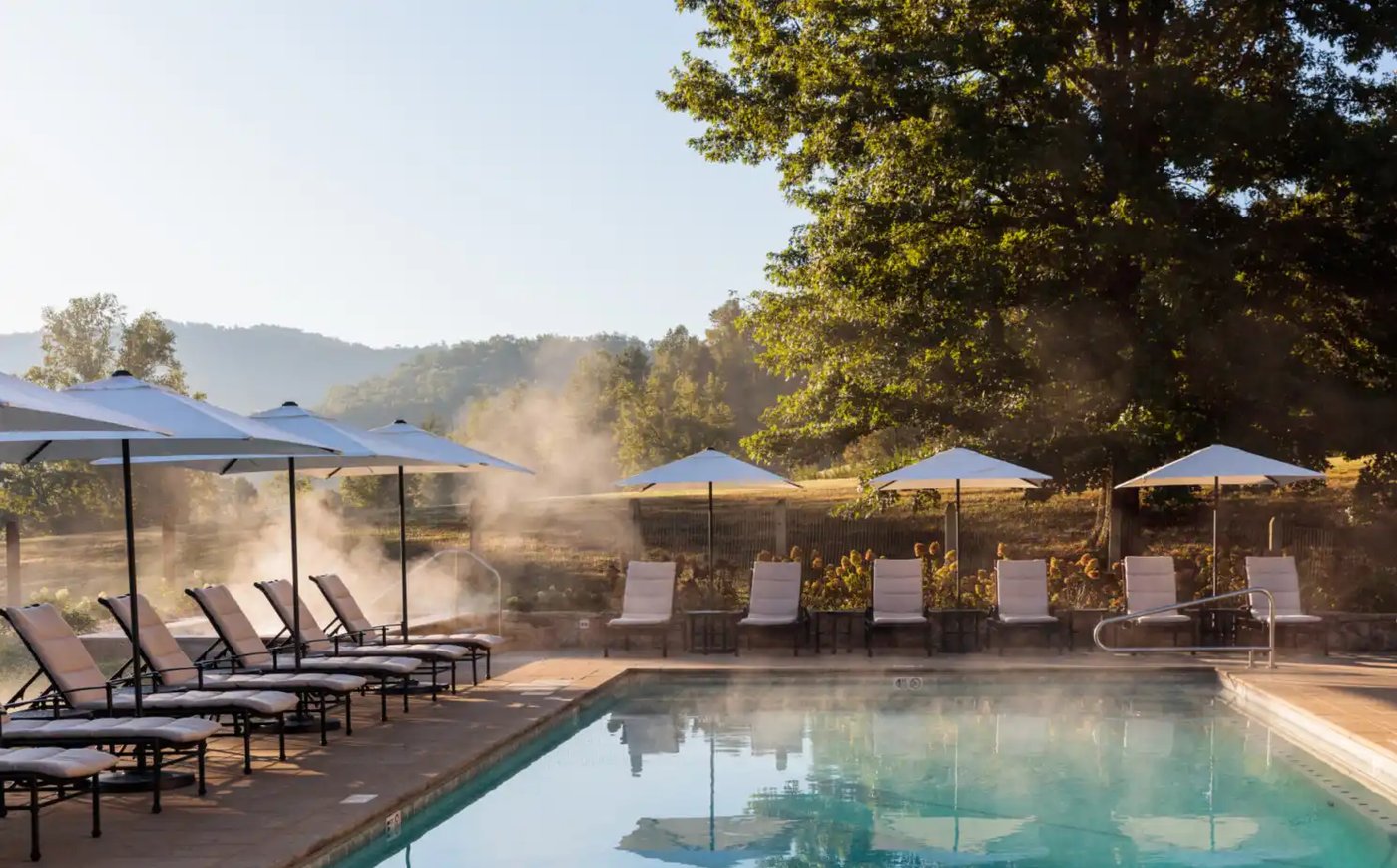
Blackberry Farm in Walland, Tennessee, in the foothills of the Great Smoky Mountains, organizes its culinary identity around James Beard Award-winning chefs, who design the multicourse dinners and seasonal menus served each evening. The made-to-order breakfast and lunch dishes included in all room rates give every meal of the day a culinary ambition that most family resorts do not attempt. The Barn, Blackberry Farm’s dedicated fine dining restaurant, serves guests 10 and older, with other dining options available for younger children.
The Family Adventure Series gives Blackberry Farm a structured approach to family-wide outdoor programming. Themed itineraries focus on stream exploration, wildlife, navigation, geocaching, archery, canoeing or kayaking, and farm life. The activities engage children in the specific ecology and agricultural character of the Tennessee foothills setting. Camp Blackberry serves children ages four and up with programming designed to encourage creativity through exploration, while Blackberry Youth Discovery serves older children ages 10 and up and includes hands-on activities such as painting, ceramics, gardening, and jewelry-making.
The age-based fee structure at Blackberry Farm gives it a specific financial character among the properties on this list. Children younger than four stay at no additional charge, while children four and older incur a $250 nightly surcharge. The pricing model makes the resort meaningfully less expensive for families with only very young children and meaningfully more expensive for families with several older ones. The James Beard culinary standard, alongside the farm-based and stream-based adventure programming, gives Blackberry Farm a dual identity as both a gastronomic destination and an outdoor education experience. Few all-inclusive family resorts can pull off that pairing, and the $250-per-night child surcharge for ages four and older means families should factor that cost into their planning before booking. It significantly changes the total rate for families with multiple school-age children. A family with three school-age children spending five nights at Blackberry Farm should calculate the child surcharges alongside the room rate before comparing the property’s cost to alternatives.
Credit: The Ranch at Rock Creek
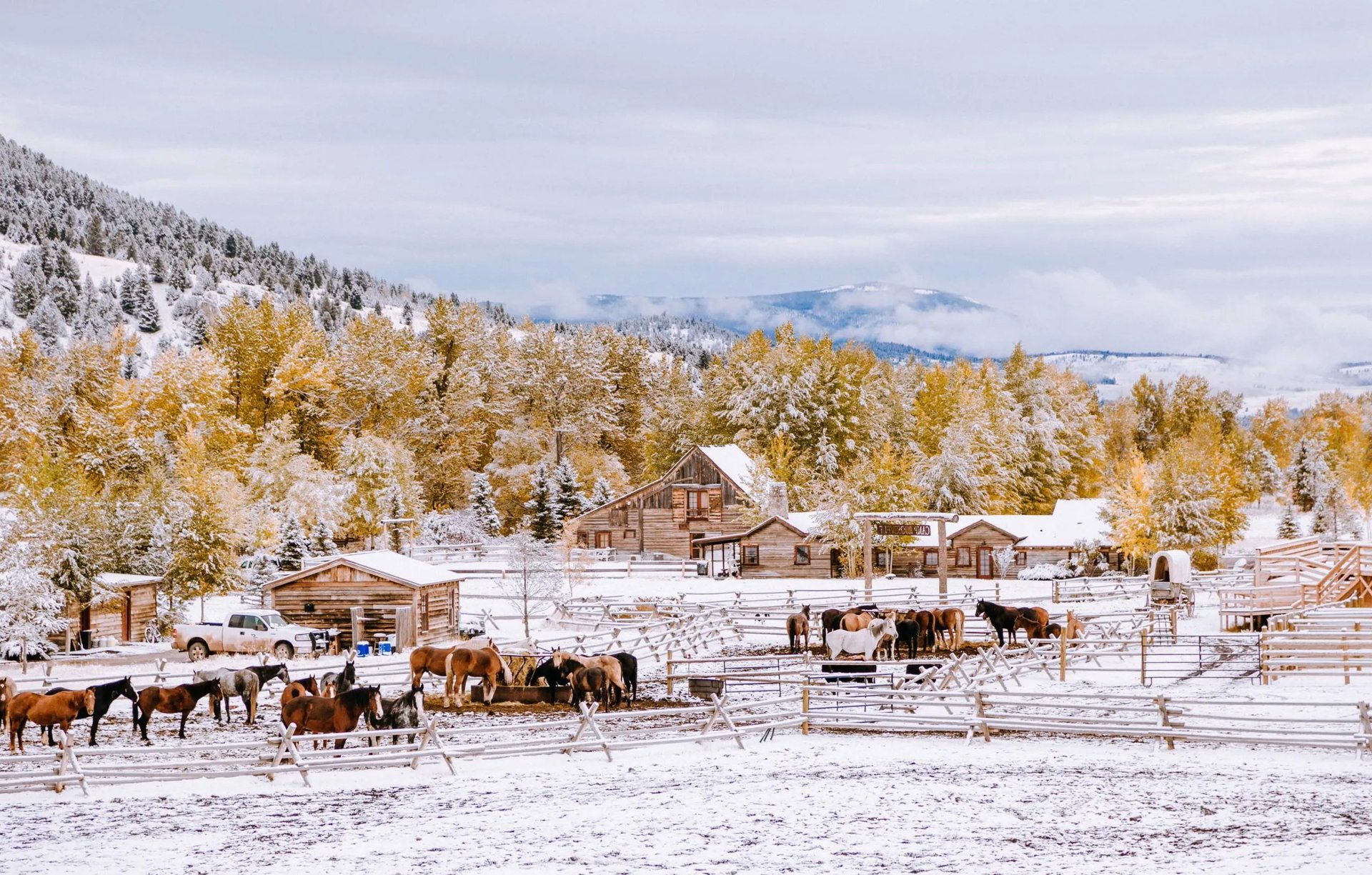
The Ranch at Rock Creek in Philipsburg, Montana, builds its all-inclusive rate around daily farm-to-table meals, a social hour, pool and hot tub access, daily activities, and evening entertainment options including karaoke, bowling, billiards, and bonfires. The Flint’s Forest Rangers Kids Club offers outdoor programming for children ages four to 12 on themed days focused on fishing, ranch life, outdoor survival, and related topics. The children’s program follows a curriculum rather than a simple activity list.
The adult and teen activity menu spans target sports — both firearms and archery — fly-fishing, hiking, and horseback riding. The breadth of that list gives the ranch an activity range suited to families with different physical abilities and interest profiles: a teenager interested in marksmanship and a parent who prefers trail hiking can each find their preferred engagement within the same all-inclusive structure. The accommodation options reflect the same range in physical register: lodge rooms, cabins, a historic barn, glamping tents, and luxury log homes give families genuinely different choices about how rustic or comfortable their lodging will be.
Recent guests cite the staff’s hospitality as a defining characteristic of the Ranch at Rock Creek experience, describing the welcome as comparable to arriving at a family member’s home. The farm-to-table meal standard alongside a staff culture of personal hospitality gives the ranch a food quality and human warmth that guests tend to remember as the sum of the experience, not any individual activity or meal. The Ranch at Rock Creek’s Montana location, its farm-to-table dining, and its wide accommodation range make it one of the most accommodation-flexible ranches on this list. A family that wants to glamour camp one night and sleep in a log home the next can make that choice within the same property, and the farm-to-table kitchen standard holds across both formats. The Ranch at Rock Creek’s appeal to guests who describe the welcome as comparable to arriving at a family member’s home also suggests a hospitality culture that the physical property and the food reinforce but do not create on their own.
Credit: White Stallion Ranch
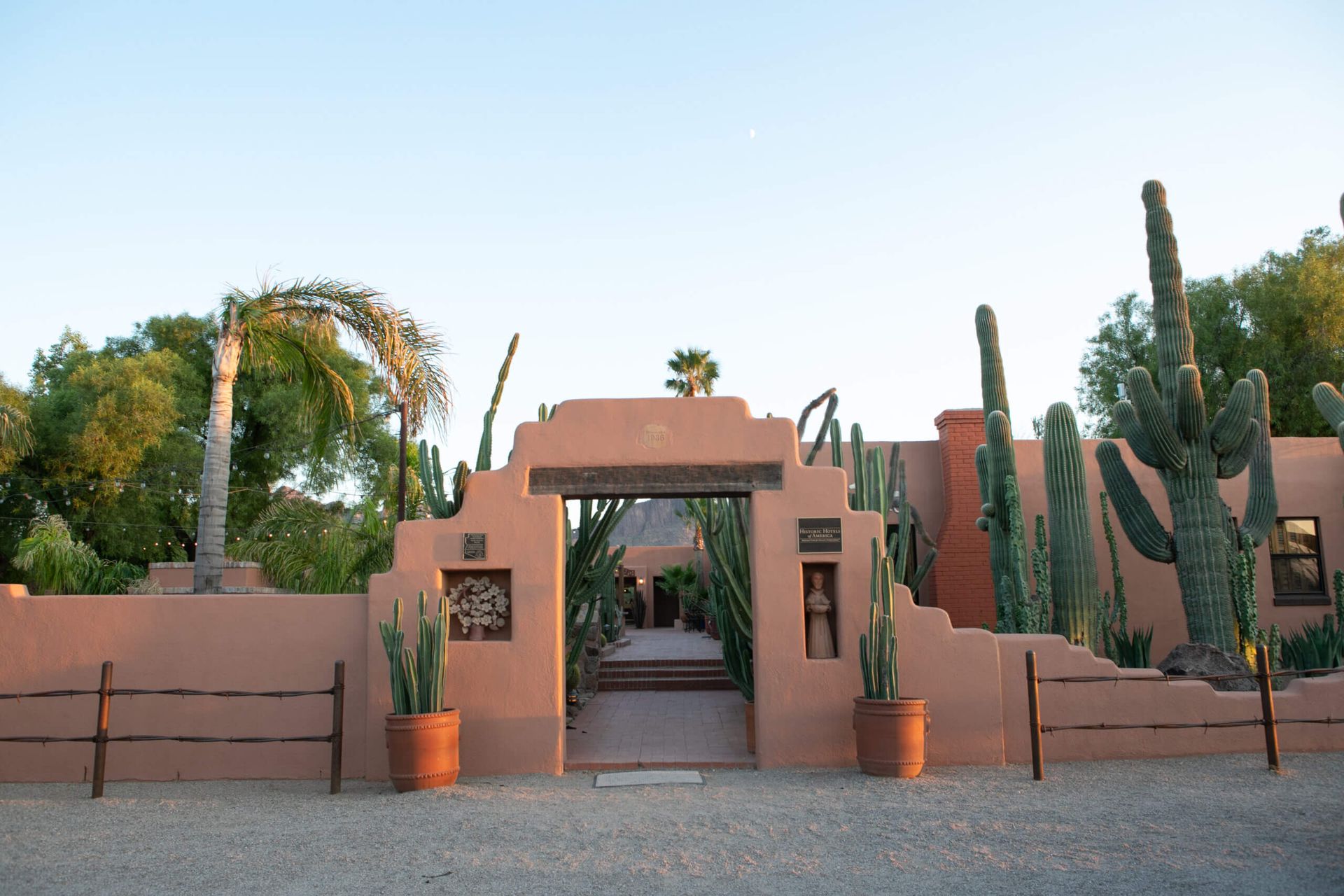
White Stallion Ranch in Tucson, Arizona, requires a minimum four-night stay to access the Full American Plan, which packages lodging, three daily meals, horseback riding, evening entertainment, and airport transfers in a single rate. The four-night minimum ensures that guests have enough time to develop a relationship with the horses and the trails. Both activities reward multiple exposures across a stay and do not deliver their full value in a single outing. An alternative Full American Plan Outdoor Package adds rock climbing and fat tire e-biking to the standard rate.
The daily activity roster includes hiking, horseback riding, archery, and rock climbing, with a pool, a recreation room, and a petting zoo with rescued animals serving younger children. Parents access the ranch’s bar, sports court, hot tub, and spa services. The source identifies the rescued animal petting zoo as a specific draw for children, which gives White Stallion a wildlife encounter that most dude ranches do not maintain at the same scale of daily accessibility. The Southwest aesthetic runs through the accommodations — earthen hues and colorful textiles — giving the rooms a visual connection to the Arizona landscape that surrounds the property.
Children ages four and younger stay free year-round, making White Stallion among the most financially accessible ranches on this list for families with very young children. The Tucson location within the Sonoran Desert gives the ranch a landscape and wildlife context distinct from the Montana and Colorado ranches on this list: saguaro cactus, desert birds, and warm year-round temperatures extend the usable season well into months when northern ranches close. Recent guests specifically highlight time with the horses as the most memorable element of the White Stallion experience, and the rescued-animal petting zoo offers children a daily wildlife encounter that requires no advance booking or additional fee. The Full American Plan Outdoor Package, which adds rock climbing and fat tire e-biking to the base rate, makes White Stallion one of the few dude ranches on this list where the activity expansion is structured as a formal package upgrade with a clear price rather than a series of individual add-on charges.
Credit: Rocking Horse Ranch
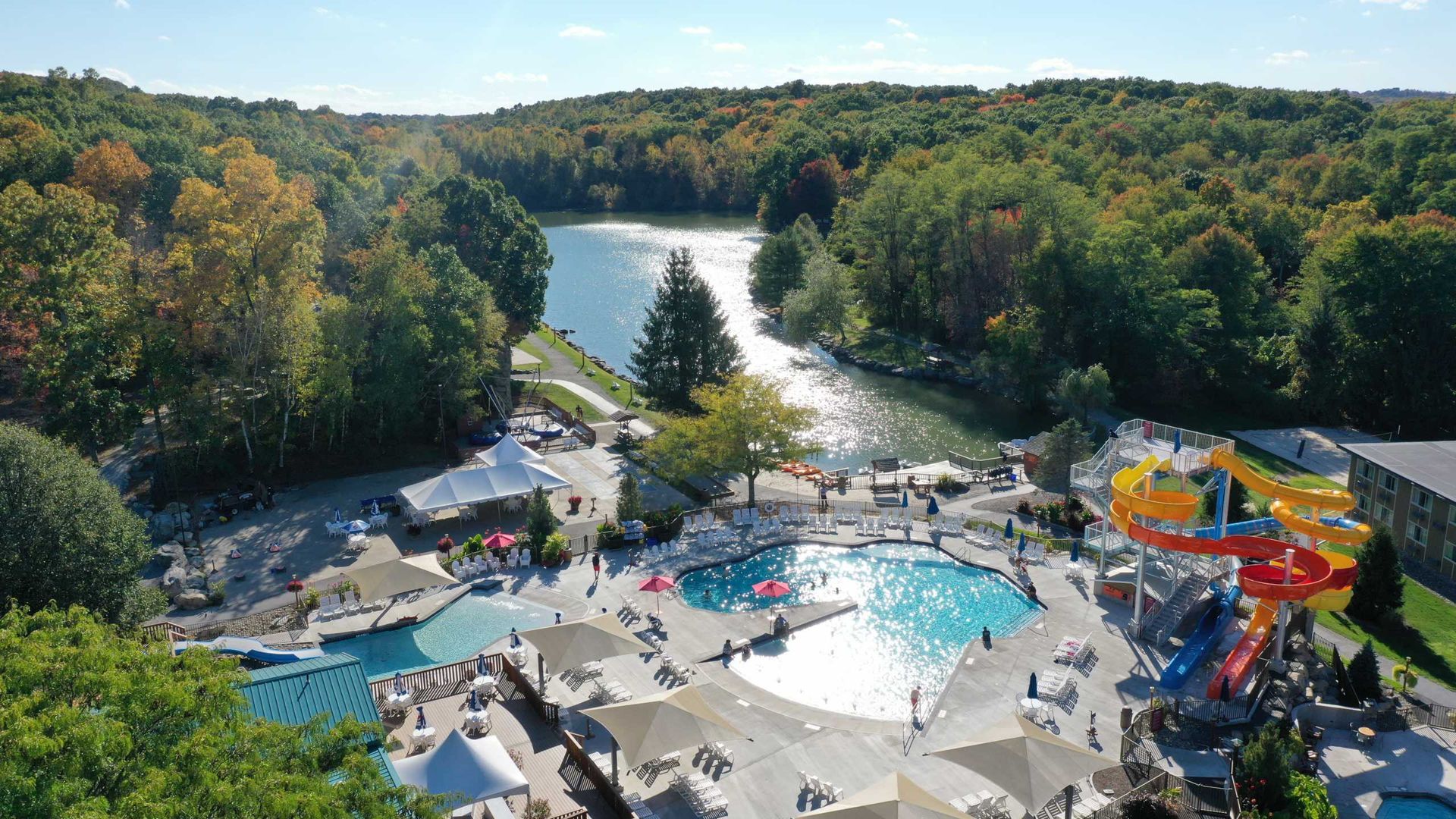
Rocking Horse Ranch in Highland, New York, delivers a dude ranch experience in the Hudson Valley — within practical driving range of the New York City metropolitan area — with a full all-inclusive rate that covers horseback riding, a shooting gallery and archery range, rock climbing, Super Bungee Jumpers, water sports, snow tubing, ice skating, an indoor water park, laser tag, an arcade with mini bowling, and nightly entertainment. The breadth of the activity list at a single Hudson Valley property gives it a practical argument for East Coast families who cannot justify transcontinental travel for a western ranch experience.
The dining model is all-you-can-eat throughout the day, with barbecue, pizza, fajitas, and other options continuously available. The Silverado Saloon serves Shirley Temples from a spigot. The source identifies this as a specific highlight for children, and it functions as the kind of detail that sticks in a family’s memory of the visit long after the horseback rides and water slides have faded into a general impression of fun.
The AAA Three Diamond rating gives Rocking Horse Ranch a credentialed hospitality standard alongside its activity-first identity. Guest rooms in the Main Lodge and Oklahoma building offer plush mattresses, minifridges, and suite configurations with separate parent bedrooms or standard lodge rooms sleeping up to six guests. The size range covers families from a couple with one young child to an extended family requiring multiple beds. Recent guests consistently praise the staff, the activities, and the food. Rocking Horse Ranch’s Hudson Valley location makes it the strongest practical choice on this list for East Coast families who want a structured, all-inclusive ranch experience without a cross-country flight. The indoor water park, the shooting gallery, and the laser tag also give the resort a wet-weather contingency plan that outdoor-only ranch destinations cannot offer — a meaningful advantage for families who cannot afford to lose days to rain.
