
From a restored Colorado ghost town with five natural hot springs to a Vermont property with a private ski hill and spirits included in the rate
Credit: Castle Hot Springs
The all-inclusive resort has a beach problem: the category and the coastline have become so synonymous in the American travel imagination that the genuine depth and variety of the non-beach all-inclusive market go largely unnoticed by the travelers who would benefit most from it. The ranch property in Montana that covers three meals, a curated wine list, horseback riding through alpine meadows, and fly-fishing on blue-ribbon trout water is structurally identical to the Caribbean all-inclusive in its pricing logic, and it offers experiences that the beach alternative cannot provide at any price. The Victorian castle in the Shawangunk Mountains, which has been feeding and entertaining guests since 1869, is doing what the all-inclusive resort does, in a mountain-lake setting that predates the modern resort concept by the better part of a century.
The value case for the inland all-inclusive is also different from the beach version in specific ways that reward attention. Many of these properties operate on limited room counts and seasonal schedules, which means the per-night rates, while substantial, buy a level of exclusivity and personal attention that the large-format Caribbean resorts cannot match. The activity programs at the ranch and mountain properties tend toward the genuinely active and the genuinely local, fly-fishing the actual river, riding actual working horses, foraging with an actual naturalist, not the organized entertainment that fills the time between the beach and the buffet at the coastal all-inclusive.
The 10 resorts below appear in Travel + Leisure, covering properties across 10 states from Arizona to Vermont, each confirmed as including meals and activities in the nightly or package rate. The specific coverage of each all-inclusive rate varies and should be verified directly with the property before booking, as what is included in the standard rate at some properties is offered as a package add-on at others.
Credit: Castle Hot Springs
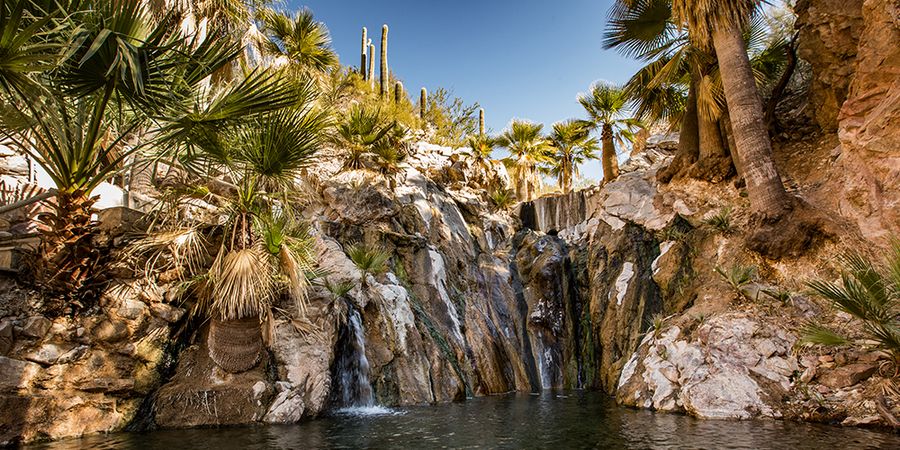
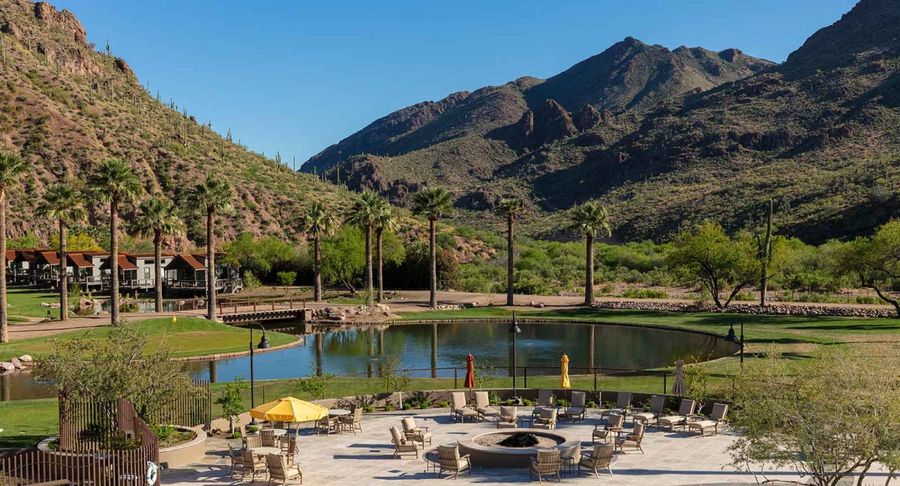
Castle Hot Springs in Morristown, Arizona, about an hour northwest of Phoenix, was built in the 1800s around a cluster of natural mineral hot springs whose water flows into three pools maintained at temperatures between 86 and 106 degrees Fahrenheit. The property was named the best hotel in Arizona in Travel + Leisure’s 2025 World’s Best Awards and sits on more than 1,000 acres of Sonoran Desert landscape whose specific character, saguaro-studded hillsides, the Bradshaw Mountains visible to the east, and the particular clarity of the desert sky after dark, give the property a setting whose natural drama is doing significant work before any amenity is encountered.
The all-inclusive rate covers breakfast, lunch, a multicourse tasting dinner, and poolside snacks, all prepared from produce grown on the property’s own farm. The farm-to-table dining program gives the meals a provenance specificity that the generic resort food program does not approach, and the tasting dinner format gives the culinary experience an ambition appropriate to a property at this level. The activity program extends the desert setting into the daily schedule: guided hikes through the Bradshaw Mountains, stargazing sessions that the desert sky’s darkness makes specifically productive, archery, axe-throwing, and pickleball give the non-soaking hours their program.
The mineral spring pools are the property’s most specific asset and the primary reason to choose this property. The three pools at different temperatures give the soaking experience a progression whose physiological effects, improved circulation, muscle relaxation, and the specific mineral content of the water, give the hot spring visit a wellness dimension that the heated resort pool cannot replicate. The desert setting gives Castle Hot Springs a climate and visual environment specific to the Sonoran Desert, unlike any other North American landscape a resort of this quality occupies. The saguaro cacti that dominate the surrounding hillsides, which take 150 years to grow the iconic arms that define the species’ silhouette, give the landscape a specific biological time depth that the visitor oriented to shorter natural cycles will find disorienting and compelling in equal measure.
Credit: Dunton Destinations
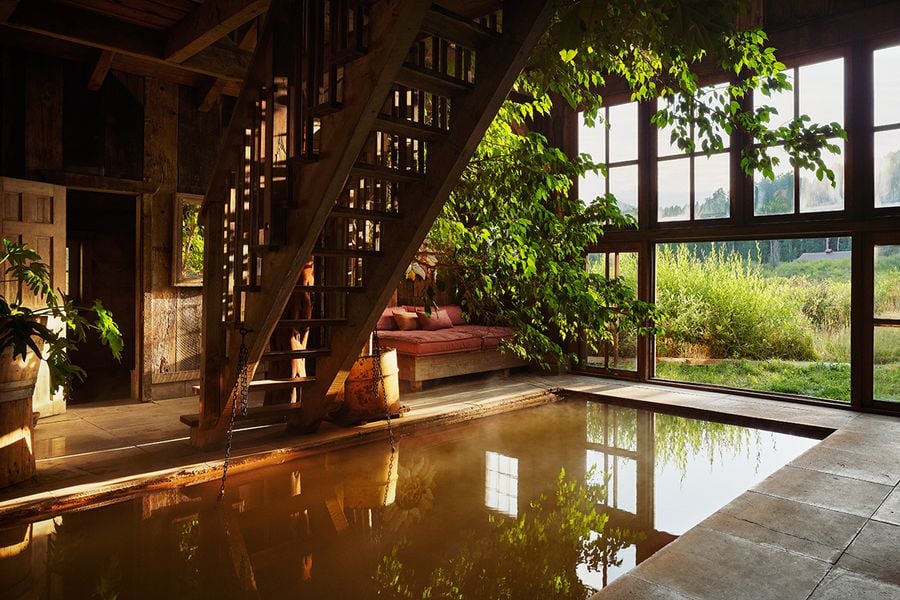
Dunton Hot Springs in Dolores, Colorado, is a restored 1800s mining ghost town tucked into the San Juan Mountains that has been converted into a 14-cabin resort whose all-inclusive rate covers farm-to-table meals, wine, and cocktails, along with access to five natural hot spring-fed soaking spots and a full outdoor activity program. The ghost town origin gives Dunton its most distinctive physical character: the hand-hewn log cabins that serve as guest accommodations are authentic 19th-century structures whose restoration preserved the original building material while adding heated floors and soaking tubs whose comfort level is contemporary. The absence of cell service and the remoteness of the location give the stay its most important quality: genuine disconnection, which the more accessible mountain resorts cannot provide in the same terms.
The activity program includes horseback riding, mountain biking, fly-fishing, and guided Jeep tours of the surrounding San Juan Mountains, which feature some of the most dramatic high-country landscapes in Colorado. The San Juan Mountains’ 14,000-foot peaks, the alpine lakes accessible from the property’s trail network, and the Weminuche Wilderness that borders the resort’s land provide the outdoor program with a natural backdrop whose scale and quality are unique to this corner of Colorado. The sustainability commitment gives Dunton an operational credential: the resort runs entirely on renewable electricity and produces dairy products, including in-house yogurt and cream cheese, giving the farm-to-table dining program a local production component that extends beyond the garden.
The 14-cabin capacity gives Dunton its defining logistical character: with only 14 guests at maximum occupancy, the resort operates at a scale that ensures every guest receives personal attention and a level of quiet that larger all-inclusive properties cannot maintain. The buy-out option, which allows a single group to take the entire property, gives Dunton a specific appeal for private gatherings whose exclusivity the small room count makes uniquely achievable and whose pricing reflects the complete and total privacy that a full property takeover provides to the group.
Credit: Triple Creek Ranch
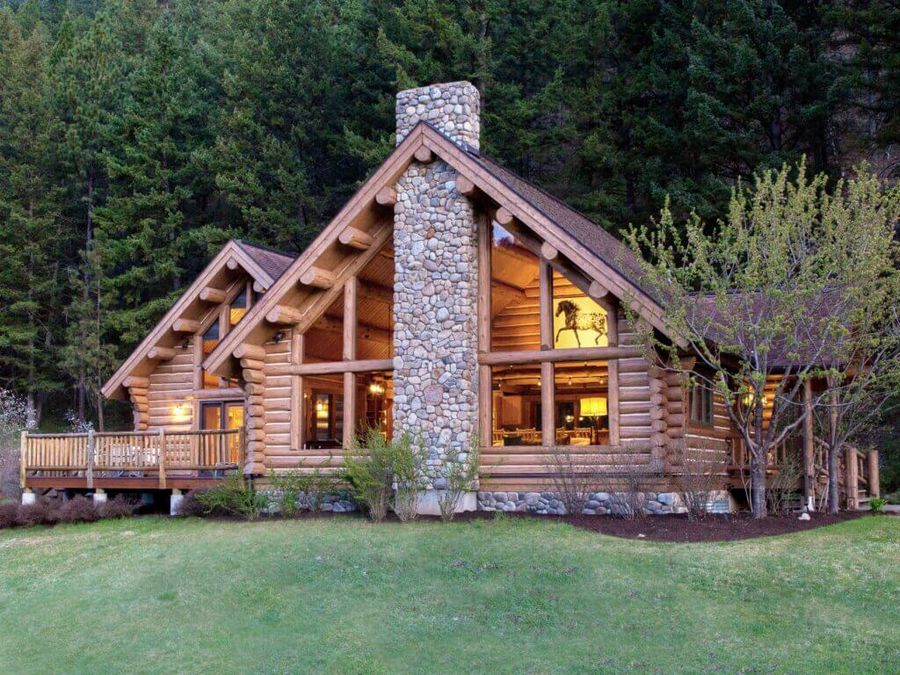
Triple Creek Ranch in Darby, Montana, is an adults-only, all-inclusive property in the Bitterroot Mountains that was named the number one resort in Montana in the 2025 World’s Best Awards. The all-inclusive rate covers three meals and a curated wine list whose selection reflects the property’s culinary ambition, and the activity program gives guests access to the Bitterroot Mountains’ most rewarding outdoor experiences: horseback riding through alpine meadows, fly-fishing on the Bitterroot River, backcountry hiking, and whitewater rafting on the nearby Selway and Salmon rivers.
The adults-only policy gives Triple Creek its most deliberate differentiation from the family ranch resort: the quiet that the policy produces, the absence of children at the fire pit in the evening and on the trail during the day, gives the property an atmosphere whose specific quality is the dominant reason for many guests’ return visits. The Bitterroot Mountains that surround the ranch provide the horseback riding with its most compelling natural setting: the alpine meadows accessible from the ranch’s trail system, with wildflowers in summer and gold aspens in autumn, give the riding experience a visual quality specific to this Montana valley.
The evening program gives Triple Creek its most social dimension: the wood-burning fire pit, the well-stocked bar, and the night sky above the Bitterroot Valley, far enough from any significant light source to show the Milky Way with a clarity that the more accessible Montana resort properties cannot match, giving the after-dinner hours a specific quality. The Bitterroot Valley’s position in western Montana, accessible by flight to Missoula and a scenic drive south, gives Triple Creek a logistical approach whose beauty begins before the property is reached. The valley’s agricultural landscape, visible from the road south of Missoula, gives the drive a pastoral Montana character, with working farms, ranch fences, and a mountain backdrop that establishes the property’s specific geographic context and agricultural setting well before the gates are reached.
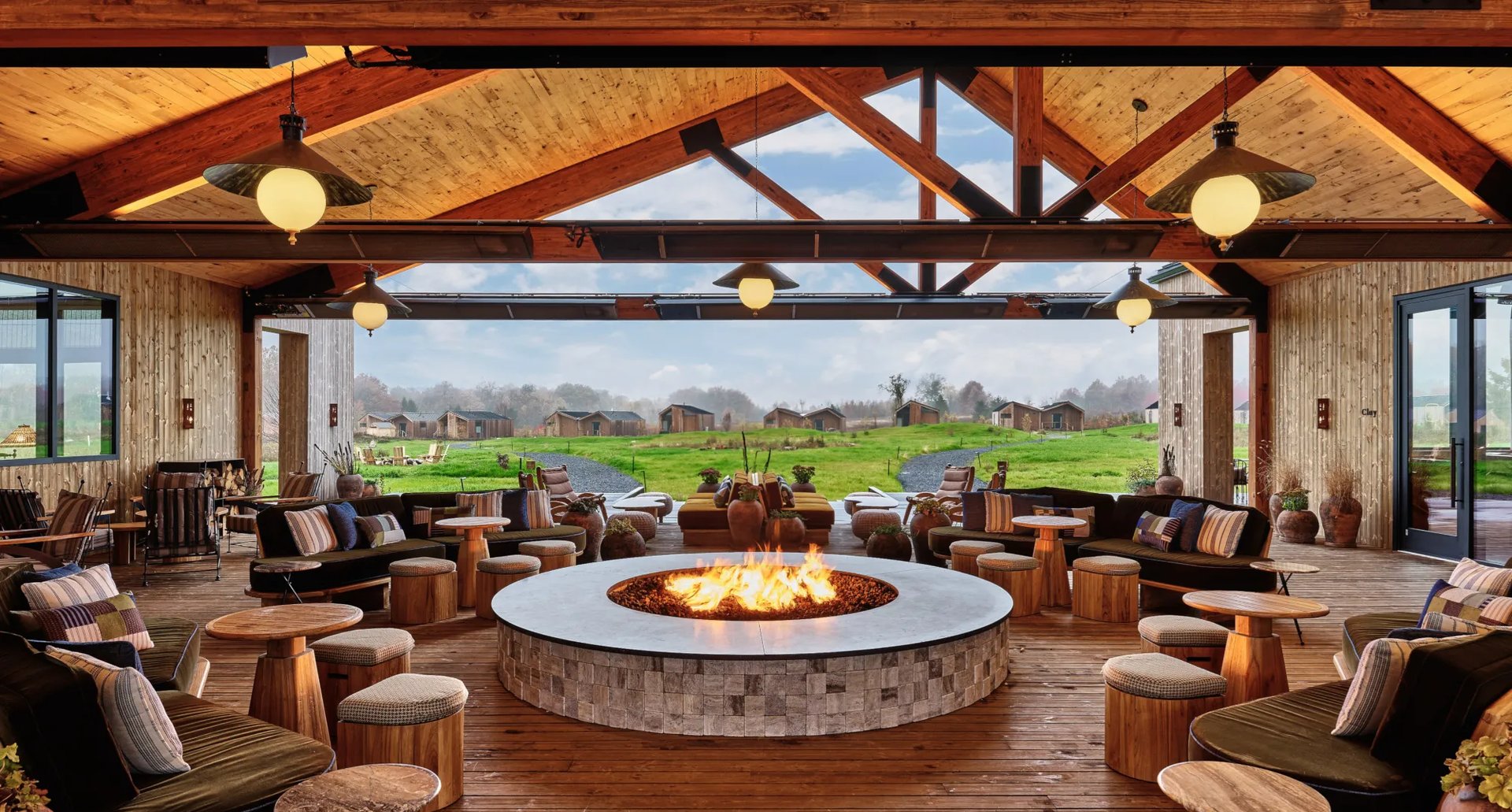
Credit: Auberge Collection
Wildflower Farms, Auberge Collection, in Gardiner, New York, was named one of the best resorts in the continental United States in the 2025 World’s Best Awards and sits less than 90 miles from Manhattan in the Hudson Valley, making it the most accessible property on this list for the largest concentration of potential guests in the country. The 65 cabins, cottages, and suites are scattered among orchards, gardens, and wildflower fields whose seasonal cycle, apple blossoms in spring, sunflowers in summer, foliage in autumn, gives the property a visual program that changes entirely across the year, and rewards repeat visits.
The property is not technically billed as all-inclusive but offers package bundles that cover dining at the on-site farm-to-table restaurant, spa access, and guided experiences, including foraging walks and cooking classes. The foraging program gives guests a specific engagement with the Hudson Valley landscape that the standard farm-to-table dining experience does not extend in the same active, participatory form: walking the property with a naturalist to identify and collect the wild ingredients that will appear in the evening meal gives the food program a provenance encounter specific to this valley’s specific edible landscape.
The Shawangunk Ridge, which rises above the property, provides Wildflower Farms with its most dramatic natural backdrop and connects it geographically to the Mohonk Preserve’s trail system. The proximity of New Paltz, Woodstock, and the Catskills gives the property a broader Hudson Valley cultural context, with galleries, restaurants, and outdoor recreation complementing the resort’s own programming for guests who want to explore beyond the property’s boundaries. The Shawangunk Ridge above the property, one of the most celebrated rock-climbing areas in the eastern United States, offers the adventurous guest a climbing destination accessible by trail from the property, which the Mohonk Preserve also serves from its own adjoining position on the ridge. The Hudson Valley’s agricultural identity, expressed in the farm stands, orchards, and cideries that line the county roads near the property, gives the drive to and from Wildflower Farms its own edible program specific to the valley’s seasonal harvest.
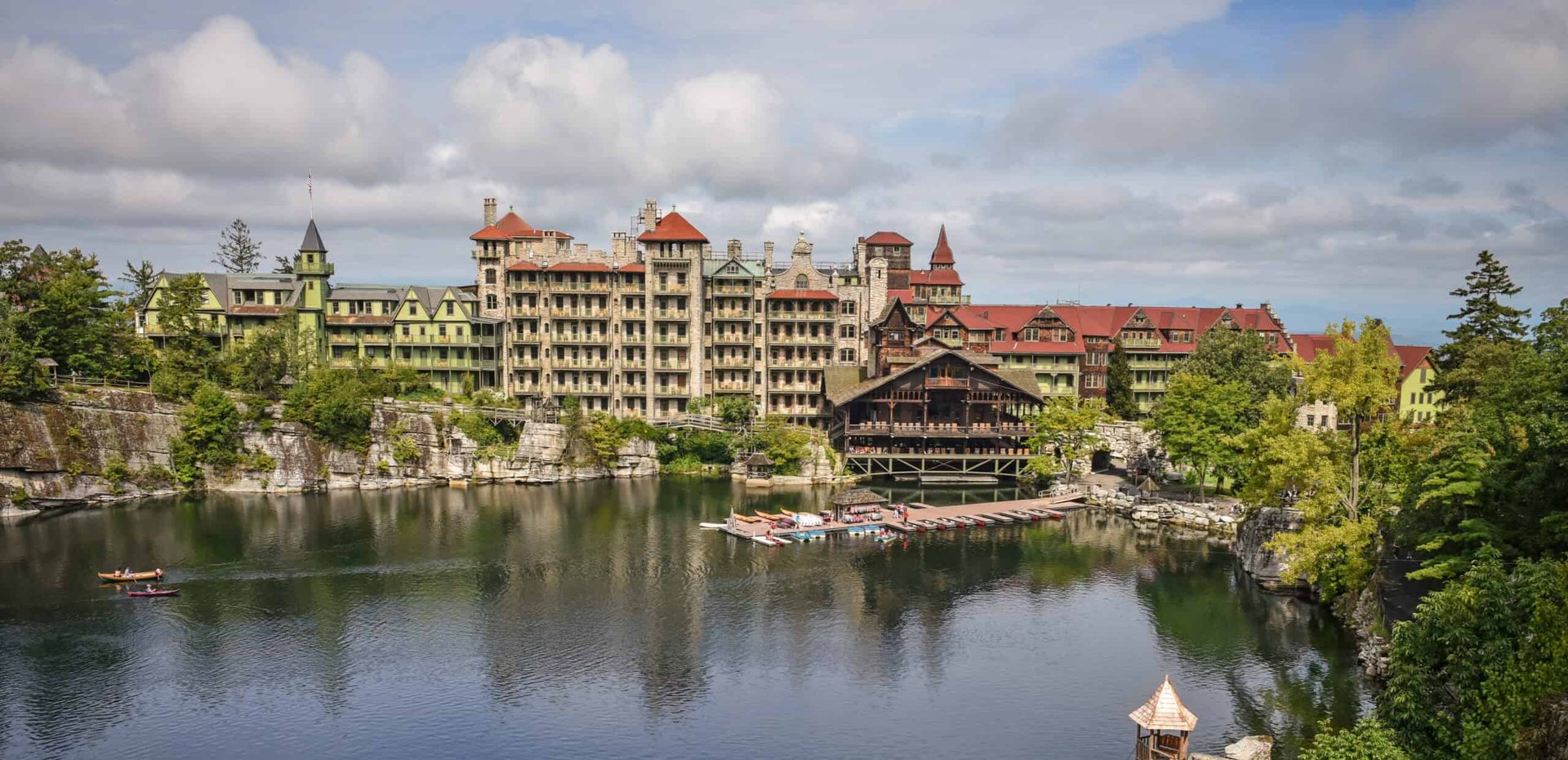
Credit: Mohonk Mountain House
Mohonk Mountain House in New Paltz, New York, has been welcoming guests since 1869, making it the oldest continuously operating resort on this list and one of the oldest in the United States. The Victorian castle perches on the edge of a glacial lake in the Shawangunk Mountains, at an elevation that gives the property its defining visual quality: the lake, the surrounding ridge, and the forest, which has been protected as the Mohonk Preserve since the Smiley family first began managing it in the late 19th century. The property was named the number two resort in New York in the 2025 World’s Best Awards.
The all-inclusive package covers three meals daily, plus afternoon tea with sweets, which gives the food program a Victorian hospitality completeness that is specific to the property’s historical identity. The 85 miles of adjoining trails in the Mohonk Preserve give the hiking and biking program a range that most resort properties, however large their acreage, cannot match by connecting directly to a preserved natural landscape of this scale. The 259-room property offers year-round activities, with seasonal offerings ranging from rock scrambling and lake canoeing in summer to tomahawk throwing throughout the year and ice skating on the lake in winter, giving the activity calendar a completeness that a single-season resort cannot provide.
The Shawangunk Ridge above the property, one of the most celebrated rock-climbing destinations in the eastern United States, offers adventurous guests a world-class climbing environment accessible by trail from the resort grounds. The property’s scale, 259 rooms on a glacial lake with 85 miles of trails, gives Mohonk a program depth and a natural setting that few resorts anywhere in the country match in the same combined form. The afternoon tea, included in the all-inclusive rate, gives the Victorian hospitality tradition its most specifically Mohonk expression: the sweets, the lake view from the parlor, and the social ritual of the tea service give the 3 p.m. hour a programmatic anchor specific to a resort that has been refining the tradition since the 19th century.
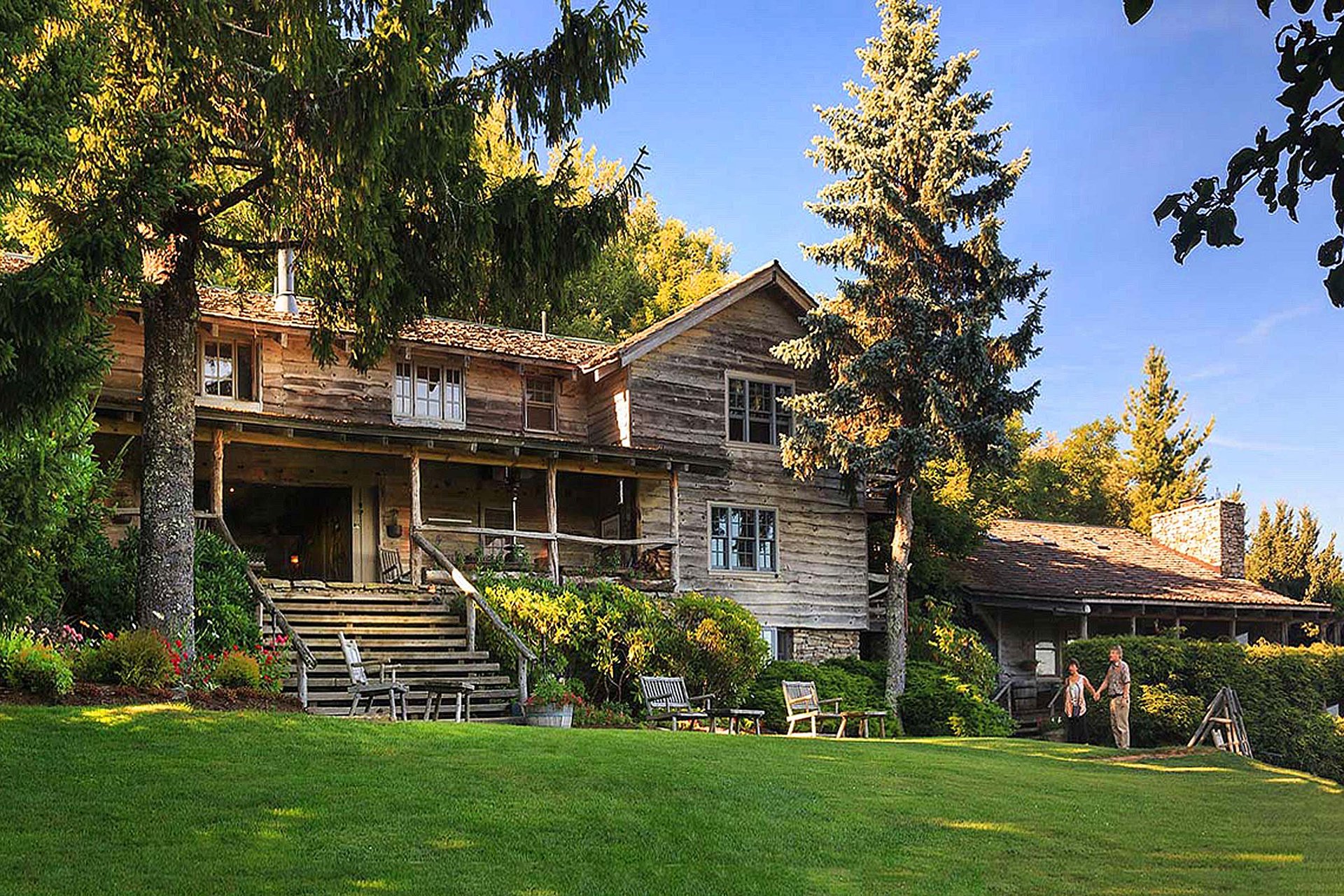
Credit: The Swag
The Swag in Waynesville, North Carolina, sits at 5,000 feet on a ridge bordering Great Smoky Mountains National Park and was named the number one resort in the South in the 2023 World’s Best Awards. The Relais and Châteaux property covers 250 acres of mountain terrain, with its immediate adjacency to the national park giving the hiking program access to the park's trail system without the trailhead parking and visitor center experience that public access points provide for day hikers. The property’s elevation gives summer temperatures a distinct quality: mornings at 5,000 feet in the southern Appalachians are cool enough for a fleece in July, which provides the hiking program with physical comfort that the valleys below do not share.
The all-inclusive rate covers a cooked-to-order breakfast, a packed picnic lunch, and a four-course dinner, along with complimentary yoga classes, guided hikes, and evening s’mores around the bonfire. The picnic lunch format is a specific Swag amenity whose practical value goes beyond the food itself: the packed lunch gives hikers the ability to spend the full day on the trail without returning to the property for the midday meal, which expands the accessible hiking range to the deeper backcountry routes that a lunchtime return would preclude. The individually designed rooms, cabins, and suites feature wood-burning fireplaces, steam showers, and private balconies.
The Swag operates seasonally, reopening each April, so the winter months are unavailable, and the booking calendar concentrates the property’s considerable demand in the spring, summer, and autumn seasons. The limited room count gives the property its defining qualities of quiet and personal attention, and the elevation provides sunset and sunrise views from the private balconies with a perspective across the Smoky Mountains that valley-floor properties in the region cannot offer at the same elevation. The property’s full name, The Swag, refers to the Appalachian term for a low ridge between two peaks, and the specific topographic position it names gives the property its most accurate geographic description and its most memorable single fact.
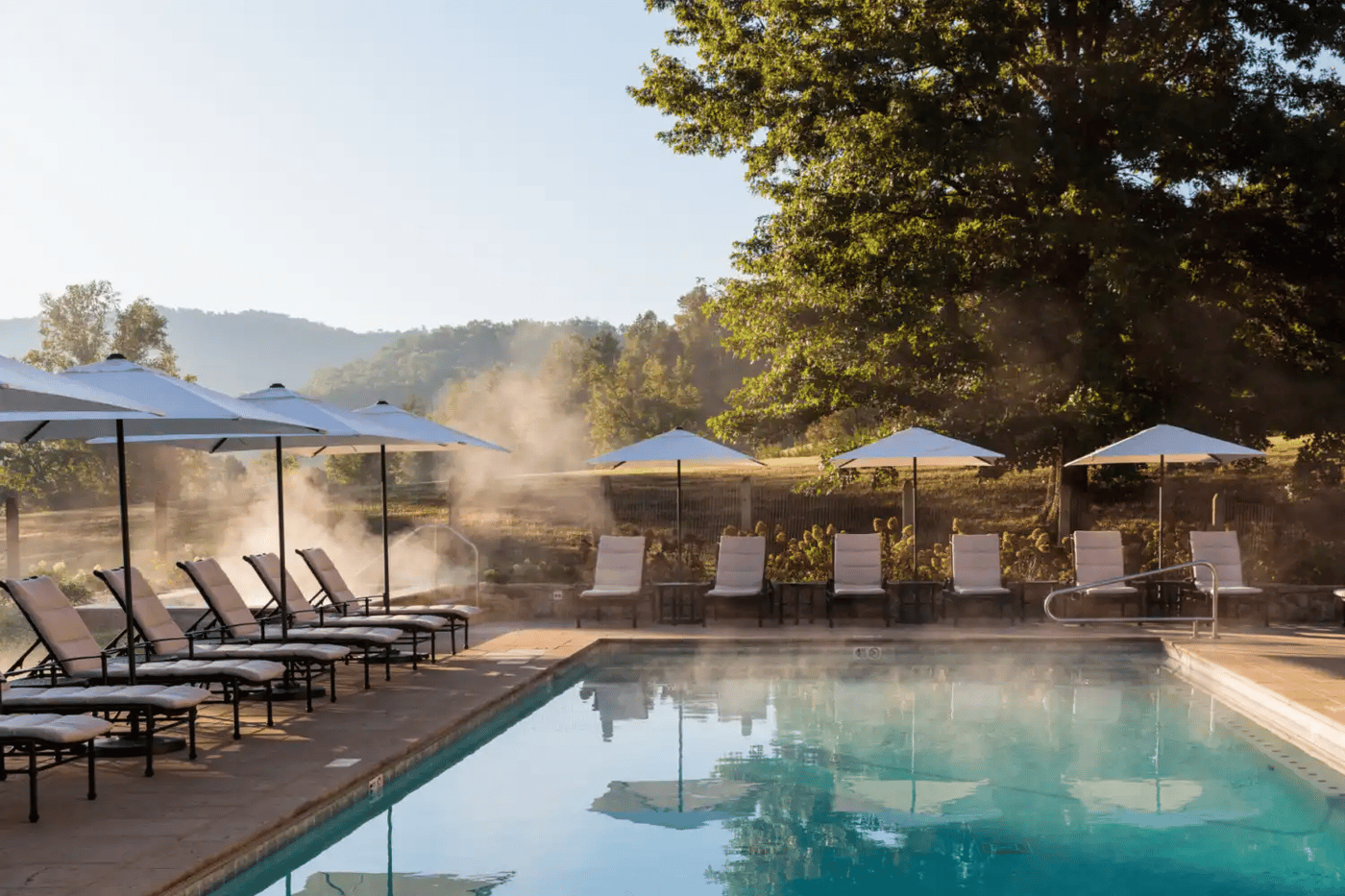
Credit: Blackberry Farm
Blackberry Farm in Walland, Tennessee, is a 4,200-acre working estate at the foot of the Great Smoky Mountains that was named the number one resort in the South in the 2024 World’s Best Awards. The property’s signature Foothills Cuisine program gives the food identity its most specific expression: the culinary tradition draws heavily from the on-site four-acre garden and locally sourced Appalachian ingredients, and the all-inclusive rate covers breakfast through a multicourse dinner whose ingredient provenance and culinary execution give the farm-to-table program its most rigorous example among the properties on this list.
The 4,200-acre scale gives Blackberry Farm its activity program: fly-fishing on the estate’s private stretch of Hesse Creek, horseback riding through the property’s pastures and forested trails, archery, and cooking classes whose curriculum reflects the Foothills Cuisine tradition, giving the daily schedule a program dense enough to fill a week without repetition. The cooking classes give guests an engagement with the food program that extends beyond consumption to production, and the curriculum’s grounding in the specific culinary traditions of the Tennessee mountain region gives the class a geographical specificity that the generic resort cooking demonstration does not approach.
The accommodations range from historic rooms in the main house to multi-bedroom private houses scattered across the estate, and the property’s scale means that guests in the more remote cottage accommodations experience the estate as a private landscape, not a resort campus. The Great Smoky Mountains that rise above the property give the dawn and dusk light a specific mountain quality, and the estate’s position at the park’s edge gives the hiking program the same national park adjacency that The Swag offers from its higher elevation on the opposite side of the mountains. The Foothills Cuisine cooking classes give the food program its most participatory extension: the curriculum’s grounding in the specific culinary traditions of the Tennessee mountain region, using the estate’s own garden and the local Appalachian pantry, gives the class a geographical specificity that the generic resort cooking demonstration cannot match.
Credit: Lake Austin Spa Resort
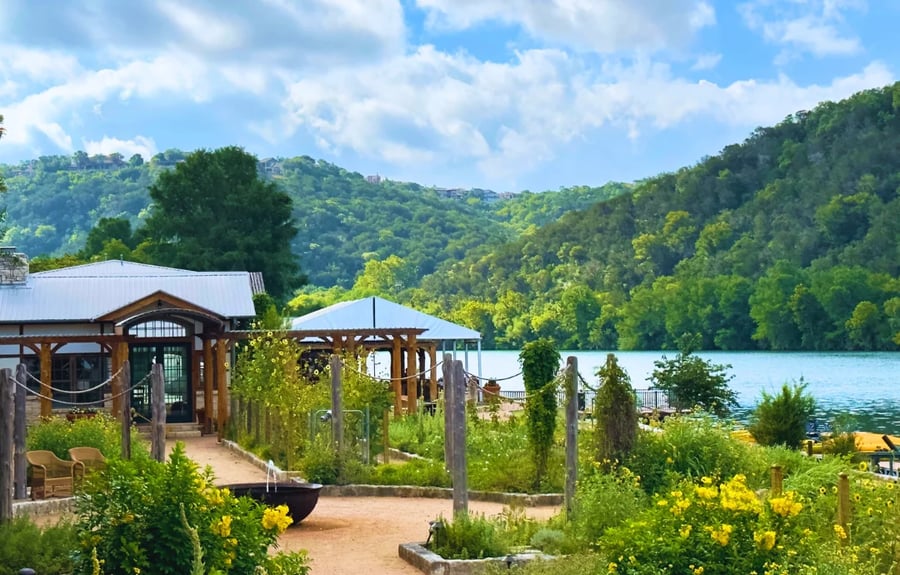
Lake Austin Spa Resort in Austin, Texas, gives the all-inclusive wellness resort its most complete American example: the 25,000-square-foot LakeHouse Spa, the daily fitness and wellness programming, and the three locally sourced meals included in the all-inclusive rate give the property a health-focused structure that distinguishes it from the adventure-oriented ranches and mountain properties elsewhere on this list. The 40 suites, nearly all with a lake view and a private porch, give the accommodation a water-adjacent quality specific to the lakefront setting, a quality the property’s inland classification shares with the beach resort in form if not in geography.
The wellness programming gives Lake Austin its operational identity: stand-up paddleboarding on the lake, lakeside yoga, cooking demonstrations, and mindfulness hikes make up the daily activity calendar, whose consistency and variety reflect a resort that has built its reputation on the quality of its wellness curriculum. The vitamin C-infused showerheads and soaking tubs add a specific detail to the room’s personal wellness infrastructure, signaling the property’s attention to the health dimension of the guest experience. The age minimum of 16 gives the property an adult-focused atmosphere, which the family resorts on this list does not maintain at the same level.
The Austin, Texas, location gives Lake Austin a geographic advantage specific to its city setting: the full restaurant, music, and cultural program of one of the most creatively active mid-size American cities is accessible within a short drive for guests who want to extend the resort experience into the broader Austin context. The property’s position on the lake within the Texas Hill Country, whose spring-fed rivers, cedar and live oak landscape, and specific limestone geology give the region a natural character distinct from the rest of Texas, gives the spa resort a natural setting that the urban resort typically sacrifices for proximity to the city’s commercial districts. The lake’s spring-fed tributaries and the surrounding Hill Country terrain provide a natural water environment specific to the Texas limestone aquifer system that supplies the Hill Country’s rivers and lakes.
Credit: Auberge Collection
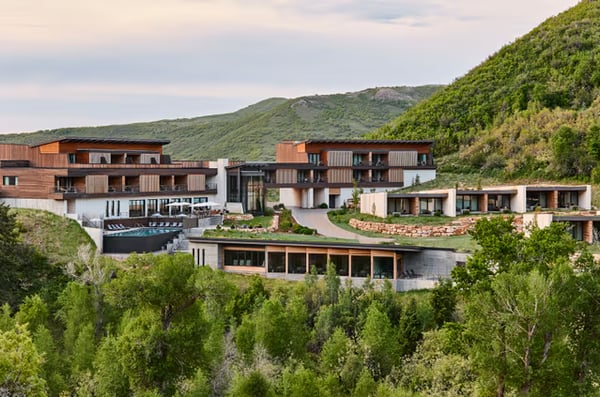
The Lodge at Blue Sky, Auberge Collection, in Wanship, Utah, sits on 3,500 acres of ranchland outside Park City and was named the number three resort in Utah by Travel + Leisure readers in the 2025 World’s Best Awards. The all-inclusive adventure package covers accommodations, three meals a day, and a seasonal activity roster that gives the property a year-round program: horseback riding, fly-fishing, mountain biking, and guided backcountry hiking in the warmer months, and easy access to Park City’s ski resorts in winter. The Wasatch Range that surrounds the property provides visual context for every season, and the 3,500-acre scale gives the trail network a scale that the smaller ranch properties cannot offer.
The Earth Suite accommodations offer the luxury tier its most specific physical experience: heated bathroom floors, outdoor showers facing the mountain views, and private fire pits that give the suite a sensory engagement with the Utah landscape that the standard room program does not approach. The private fire pit in particular gives the evening outdoor experience a controlled intimacy specific to the high desert climate, where the evening temperature drop that follows sunset makes a fire more than decorative from late spring through early autumn. The Wasatch Range’s sunset colors, from the fire pit’s vantage point, give the evening hour its most rewarding visual program.
The Park City ski access gives The Lodge at Blue Sky its most significant winter differentiator from the other properties on this list: the proximity to multiple ski resorts, including Park City Mountain and Deer Valley, gives the winter guest an alpine skiing program that the Montana and Vermont ranches on this list provide in modified form through their own hills. The 3,500-acre ranch setting and the world-class ski access together give the property a seasonal versatility that most all-inclusive ranch properties cannot match within the same geography. The Earth Suite accommodations give the property’s top-tier rooms a physical relationship with the Wasatch landscape, heated floors, outdoor showers with mountain views, and private fire pits, which makes the suite itself a landscape experience as much as an accommodation.
Credit: Twin Farms
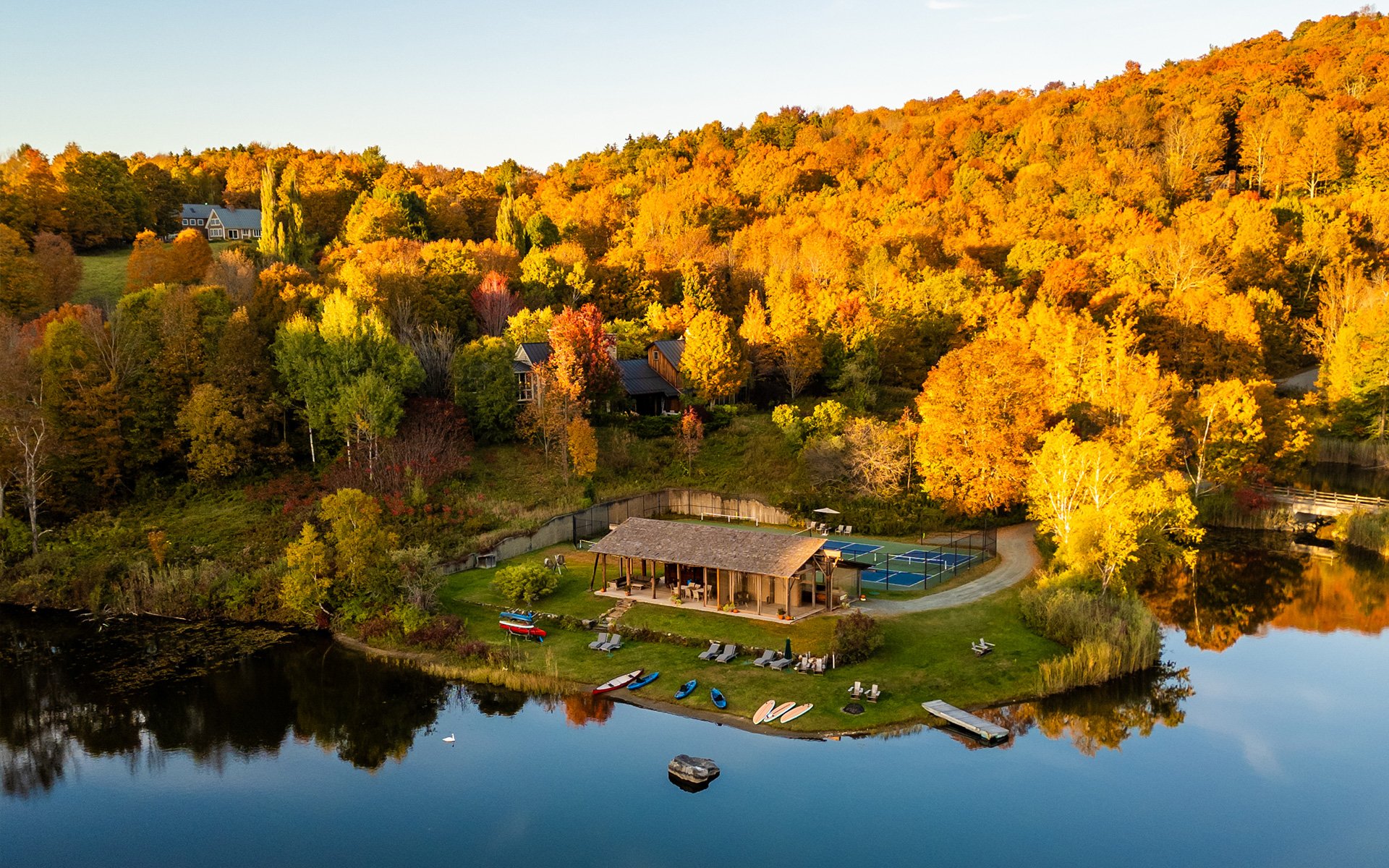
Twin Farms in Barnard, Vermont, spreads across 300 acres of Vermont countryside and offers one of the most genuinely all-inclusive packages on this list: all meals, wines, spirits, and non-motorized activities are covered in the nightly rate, giving the total cost calculation a completeness that eliminates the supplemental charges that the partial all-inclusive model accumulates across a week’s stay. The 28 cottages and suites, each individually designed, offer a variety that ranges from Japanese-inspired interiors with soaking tubs and rice-paper screens to suites with rustic stone fireplaces and hand-stitched quilts, making each a distinct experience within the same 300-acre property.
The winter program gives Twin Farms its most exclusive single amenity: the private ski hill, equipped with a surface lift and groomed runs, gives guests a skiing experience whose intimacy and exclusivity no commercial ski resort can replicate. A private ski hill, accessible exclusively to the property’s maximum 28 guests and their companions, produces the skiing conditions that every skier desires and that the popular Vermont resorts cannot provide: uncrowded runs, no lift lines, and a return to the main house for lunch, whose walk takes minutes. The snowshoeing and sledding that complement the skiing give the winter program a range appropriate to the Vermont landscape.
The warm-weather program gives Twin Farms a second seasonal identity: canoeing on the nine-acre pond, fly-fishing on the property’s streams, and picnic baskets packed by the kitchen team for lunch on the grounds give the summer stay a pastoral Vermont character specific to the property’s agricultural countryside. The kitchen’s willingness to pack a picnic for guests who want to take their meal into the landscape, not the dining room, gives the food program a flexibility that the structured meal service of the more formal resort properties does not provide in the same casual, self-directed terms. The Vermont countryside surrounding the property, with its dairy farms, maple sugarhouses, and covered bridges, gives the drive to Twin Farms a specific regional character that the property’s 300-acre setting extends in curated form within its own boundaries.