
From a Mustang Mach-E that holds the budget AWD spot to a Lucid Gravity with a perfect 10 rating and 450-mile range
Credit: Tesla
All-wheel drive was once a reason not to buy an electric vehicle. Early EVs were predominantly rear-wheel-drive, and the transition to AWD was either unavailable or cost-prohibitive compared to what conventional AWD vehicles offered. The landscape has shifted completely. All-wheel drive is now standard on many of the most compelling EVs on the market, and the performance it enables — dual electric motors can vector torque independently to each axle with precision that mechanical differentials cannot replicate — makes AWD electric vehicles some of the most capable all-weather cars available at any price.
The practical stakes of AWD for everyday buyers extend beyond performance. Drivers in northern climates who previously ruled out EVs because winter traction felt unacceptable now have a growing list of AWD options that address the concern directly. The charging infrastructure that once made EV ownership a burden has also improved substantially, and range figures across the AWD segment have reached levels that make long-distance travel feasible without constant planning anxiety. The intersection of these improvements — better AWD availability, longer range, faster charging, and broader charging networks — has made AWD electric vehicles genuinely practical for a wider audience.
The 10 vehicles below come from U.S. News & World Report, which evaluated all-wheel-drive electric cars using U.S. News Ratings that measure overall vehicle quality, combining expert and consumer assessments across performance, interior, technology, safety, and value.
Credit: Lucid
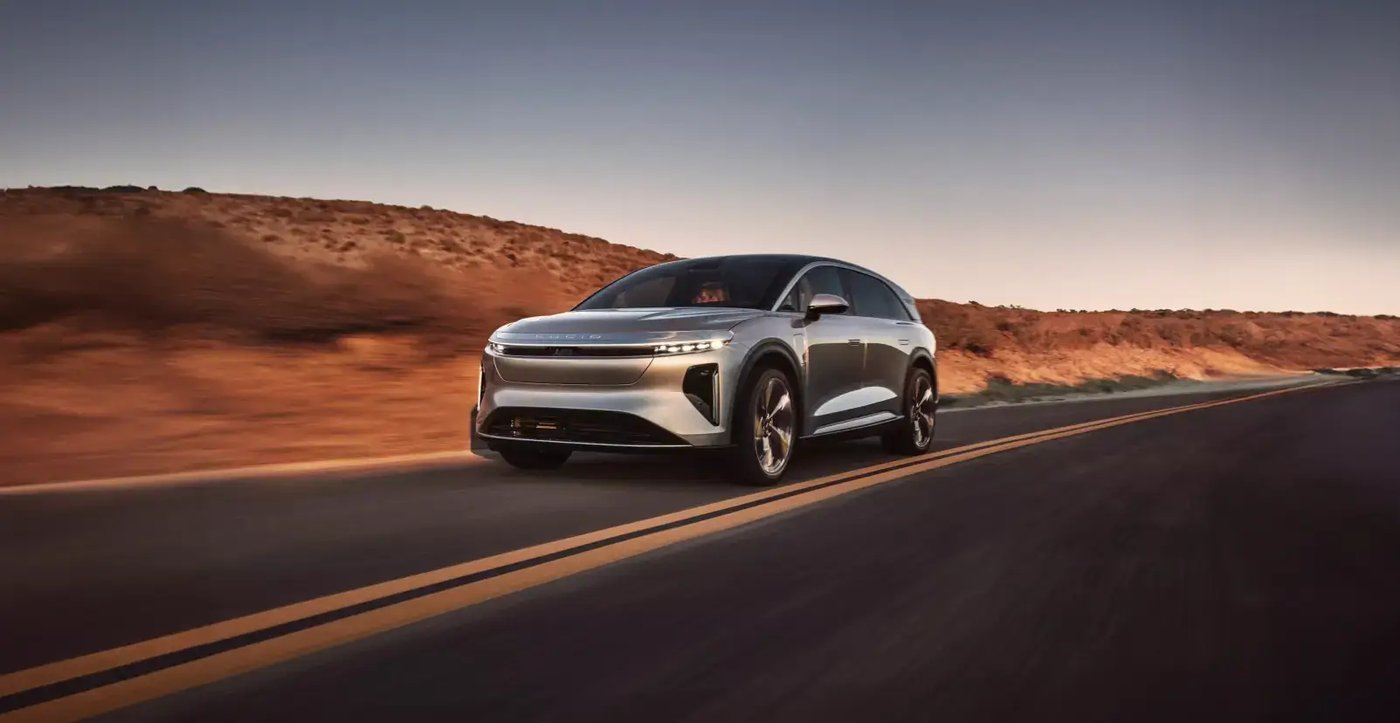
The 2026 Lucid $LCID Gravity earns a perfect U.S. News Rating of 10 out of 10 and comes with all-wheel drive standard across the entire lineup, eliminating the upgrade decision that AWD buyers face on most competing vehicles. Senior Vehicle Testing Editor John M. Vincent describes the Gravity as offering “more than ample muscle to put a silly grin on your face” in either of its available configurations, and characterizes it as capable of serving as both an efficient minivan substitute and an upscale touring car. The source identifies a few meaningful weaknesses, with the infotainment interface cited as the primary area where Lucid still has room for improvement.
The range figures vary across the Gravity lineup depending on wheel size and trim level. The base Touring configuration delivers 337 miles of range, a figure the source describes as modest for a luxury EV in this segment. Upgrading to larger wheels reduces the Touring to 301 miles, while premium configurations can reach 450 miles. The spread across configurations is wider than most comparable vehicles offer, meaning the range experience varies meaningfully depending on which version a buyer selects.
Fast-charging capability addresses the base Touring’s more conservative range figure by reducing the practical time cost of charging stops. Vincent specifically notes the fast-charging system’s ability to get the vehicle back on the road quickly, even in the least expensive configuration, which reframes the 337-mile base range in the context of how long a charge interruption actually lasts. The Gravity’s perfect 10 rating, standard AWD across the entire lineup, and the top-tier 450-mile range available in premium configurations position it as the strongest all-around AWD electric vehicle on this list for buyers who want the best available and can accommodate the premium pricing that comes with it. No other vehicle on this list matches the Gravity’s perfect 10 rating or its standard AWD policy across every trim.
Credit: Hyundai
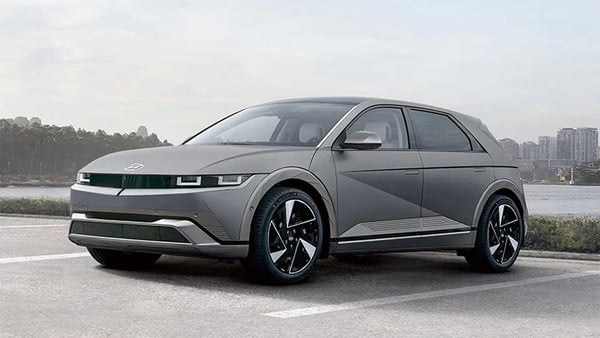
The 2026 Hyundai Ioniq 5 earns a U.S. News Rating of 9.3 out of 10 and the 2026 Best Compact Electric SUV for Families award, a designation that reflects its value-oriented pricing, approachable technology, and family-suitable practicality. The source frames the Ioniq 5 as an important vehicle in making EV ownership more accessible to a broader audience, citing Hyundai’s sustained efforts to lower barriers to entry through its EV lineup. The AWD configuration in the SE trim delivers 290 miles of range and 320 horsepower.
The Ioniq 5’s driving character prioritizes comfort and ease over outright performance. The handling is competent and the ride composed, though the turning radius runs wider than what compact SUV buyers might expect from a vehicle of its dimensions. The front trunk — commonly called a frunk — is small, limiting its practicality for stowing cables and charging equipment, but the rear cargo area matches competitors in the segment.
The source highlights a specific pricing relationship between the Ioniq 5 and the Ford $F Mustang Mach-E, noting that the SE AWD Ioniq 5 sits just a few hundred dollars above the Mach-E’s base AWD configuration. The close pricing reflects two genuinely competitive options at the accessible end of the AWD EV market, with the Ioniq 5 offering more range and power in its AWD trim. The source also points out that the base rear-wheel-drive Ioniq 5 undercuts the Mach-E on price but gives up meaningful performance. Buyers who want Hyundai’s value case with AWD performance will find the SE AWD configuration the most defensible point in the Ioniq 5 lineup for buyers who prioritize that set of needs. The Ioniq 5’s award recognition and approachable technology make it the most natural first EV for buyers new to the category. The 320-horsepower AWD setup also gives the Ioniq 5 more outright performance than its approachable character might suggest.
Credit: Ford
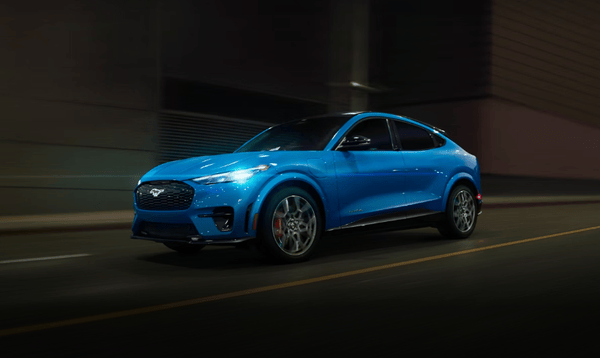
The 2026 Ford $F Mustang Mach-E earns a U.S. News Rating of 9.2 out of 10 and holds the budget pick designation for AWD electric vehicles among the models on this list. Senior Editor John M. Vincent’s assessment acknowledges that the Mach-E does not deliver the dominant competitive performance it originally promised when the nameplate launched, but describes it as a relatively sporty and comfortable compact electric SUV that delivers reasonable value in the AWD configuration.
The Mach-E comes standard with rear-wheel drive, so AWD buyers need to step up to a higher trim. The upgrade adds all-wheel drive and increases total power output, giving AWD buyers more performance than the base RWD configuration provides. The range story is the Mach-E’s weakest point in the AWD segment: with AWD and an extended-range battery upgrade, the maximum range is 300 miles, a figure that trails several competitors at the same or higher price. At the base AWD configuration, the range drops further to 240 miles.
The 240-mile figure at the base AWD level is the lowest range on this list, which means Mach-E AWD buyers who want a competitive range need to invest in the extended-range battery upgrade. The source positions the Mach-E as the most affordable AWD entry on the list, with the Hyundai Ioniq 5 close behind. Buyers whose primary concern is getting AWD electric vehicle capability at the lowest possible starting point will find the Mach-E the appropriate option, with the understanding that the base AWD range figure requires either the range extension upgrade or comfort with more frequent charging stops. The Mach-E’s value case is strongest for buyers who will opt for the range extension upgrade anyway, which brings the AWD range to a more competitive 300 miles. The Mach-E’s 9.2 U.S. News rating also demonstrates that competitive vehicle quality and budget pricing are not mutually exclusive in the current AWD EV market.
Credit: Lucid
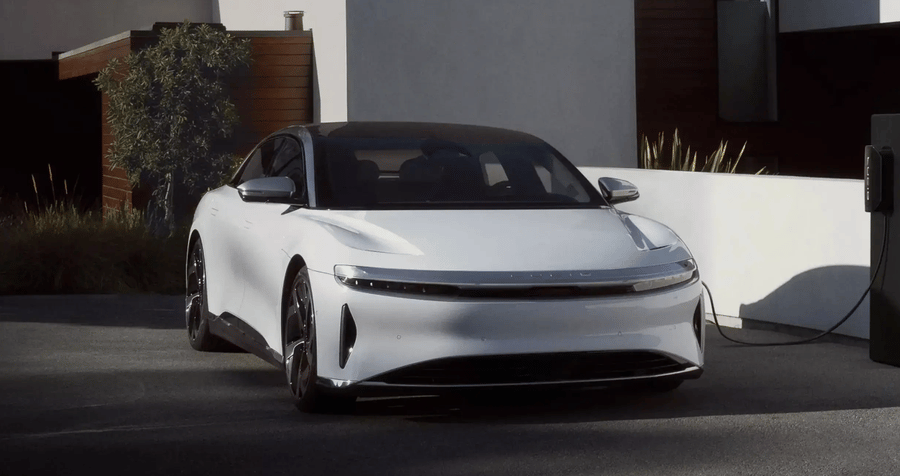
The 2026 Lucid $LCID Air holds a U.S. News Rating of 9.6 out of 10 and delivers the highest range of any vehicle on this list in its AWD Touring configuration at 431 miles. Managing Editor Alex Kwanten describes the Air as a standard-setter in the luxury electric sedan segment, a characterization that holds despite the model’s five-year market tenure, during which competitors have introduced successive updates without displacing the Air’s range leadership. The source notes that Lucid designed the Air from the outset to outperform the Tesla $TSLA Model S across every metric, and Kwanten observes that Tesla’s trajectory has changed substantially since then.
The AWD Touring trim represents a meaningful upgrade over the base rear-wheel-drive configuration. The drivetrain upgrade adds not just all-wheel drive but also increases output from 430 to 620 horsepower, a substantial performance gain alongside the range and traction advantages. The Touring also includes interior upgrades and additional comfort features relative to the base, making the step-up a comprehensive improvement. The upgrade cost is high, and the source acknowledges it is not an inexpensive option.
Kwanten’s driving assessment emphasizes agility and quickness across all Air configurations, including the base versions. The Air’s handling character reflects a car designed for driver engagement alongside its luxury and range credentials, distinguishing it from other high-end luxury EVs that prioritize isolation and comfort over dynamic feedback. The Air’s 431-mile AWD range, 620-horsepower output in the Touring trim, and the source’s description of it as the segment’s ongoing benchmark give it the strongest case for long-distance and performance among the non-SUV entries on this list. The Air’s five-year tenure in the market without losing its benchmark status also suggests that Lucid built lasting benchmark quality into the design from the outset. The Air’s 431-mile AWD range also remains the single highest range available in any all-wheel-drive electric car across this entire ranked list of 10 vehicles.
Credit: Hyundai
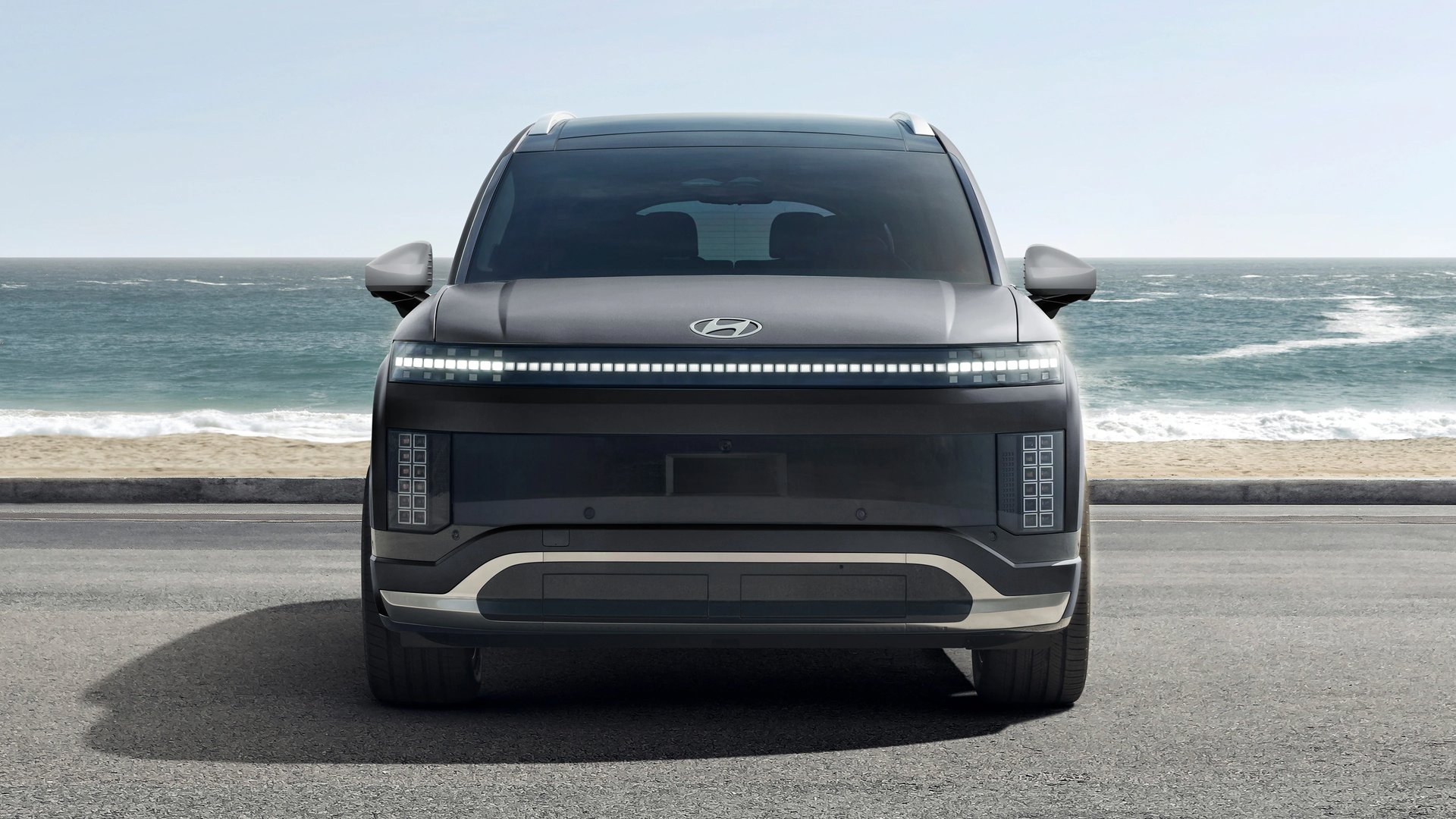
The 2026 Hyundai Ioniq 9 debuts with a U.S. News Rating of 9.5 out of 10 and the 2026 Best Midsize Electric SUV for Families award. Senior Editor John M. Vincent describes the three-row SUV as roomy, airy, and comfortable, and notes that with the right powertrain, it is “pretty quick.” The SE AWD trim delivers 320 miles of range, 303 horsepower, and 446 pound-feet of torque. The source suggests the torque figure compensates meaningfully for the horsepower rating, which sounds modest relative to the Ioniq 9’s size.
Vincent frames the Ioniq 9 as worthy of flagship status in Hyundai’s lineup, a characterization that acknowledges the vehicle’s positioning at the upper end of what Hyundai charges for a single model. The SE AWD trim sits one step above the base rear-wheel-drive configuration, giving buyers AWD traction and a torque increase without moving to the higher trims that the source notes can approach entry-level prices for competing luxury electric three-row SUVs from Rivian $RIVN, Volvo, and Cadillac.
The 446 pound-feet of torque in the SE AWD configuration enables what Vincent calls movement with authority, a driving character that translates the substantial torque advantage into confident acceleration from a stop and on highway ramps. The three-row layout and the family award give the Ioniq 9 a specific positioning that most other vehicles on this list cannot occupy: a genuinely spacious family hauler with AWD traction, over 300 miles of range, and a compelling value case relative to the luxury three-row competition. Its debut-year status also means that buyers considering it early in the model’s lifecycle should note that some refinements may come in subsequent model years. The Ioniq 9’s torque advantage and three-row spaciousness give it a genuinely compelling case as the only AWD electric family SUV on this list with over 300 miles of range.
Credit: Tesla
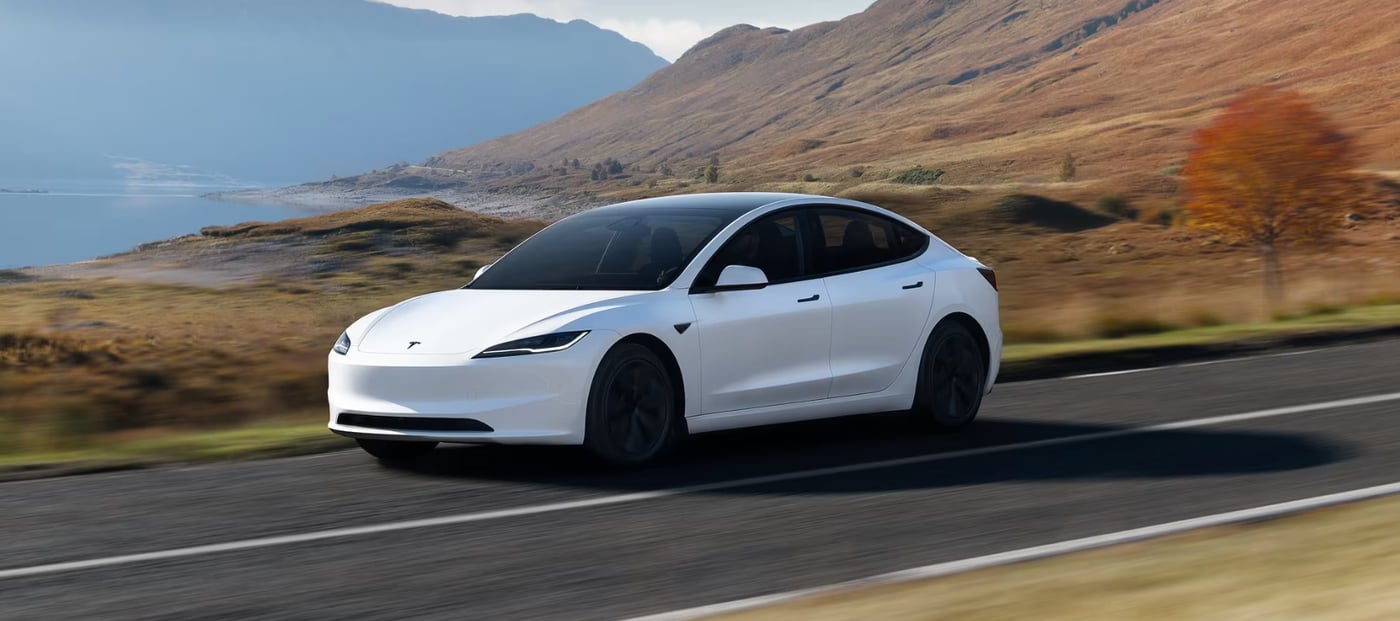
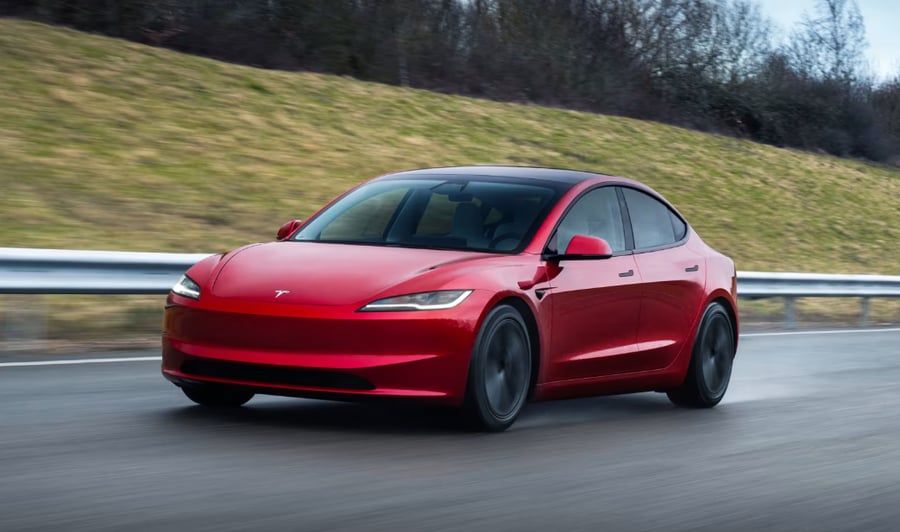
The 2026 Tesla $TSLA Model 3 earns a U.S. News Rating of 9.1 out of 10 and delivers 346 miles of range in its Performance AWD configuration, a figure that Vehicle Testing Editor Zach Doell notes positions the Model 3 as the range leader at the entry-level of the luxury electric car segment. Doell’s assessment acknowledges the ongoing controversy surrounding the Tesla brand but argues that the Model 3 retains its competitive standing on the merits of the vehicle itself, describing it as still the benchmark in its segment despite a broadening field of value-priced competitors.
The dual-motor powertrain in the Performance trim delivers the Model 3's responsive acceleration, which Doell found wholly satisfying. He describes the car as never leaving him wanting for additional power. The electric motor setup and the overall vehicle dynamics give the Model 3 a driving character that its competitors in the segment have narrowed but not eliminated as a differentiator.
The Model 3’s most-discussed quirk is the shift-by-wire system that replaces the physical gear selector with touchscreen controls: drivers swipe up for Drive, swipe down for Reverse, and tap a P icon for Park. Doell acknowledges that familiarity eventually reduces the friction, but maintains that the design is more complicated than it needs to be. The design reflects Tesla’s practice of implementing software-driven control schemes that eliminate physical controls, whether or not those simplifications serve the driver. The Model 3’s 346-mile range, dual-motor performance, and market-leading position in its segment make it the strongest option on this list for buyers who specifically want a luxury electric sedan with competitive range at the entry tier of that category. The Model 3’s ability to maintain benchmark status five years into the AWD EV expansion demonstrates the scale of the competitive head start that Lucid $LCID, Hyundai, and other entrants have spent years attempting to close.
Credit: BMW
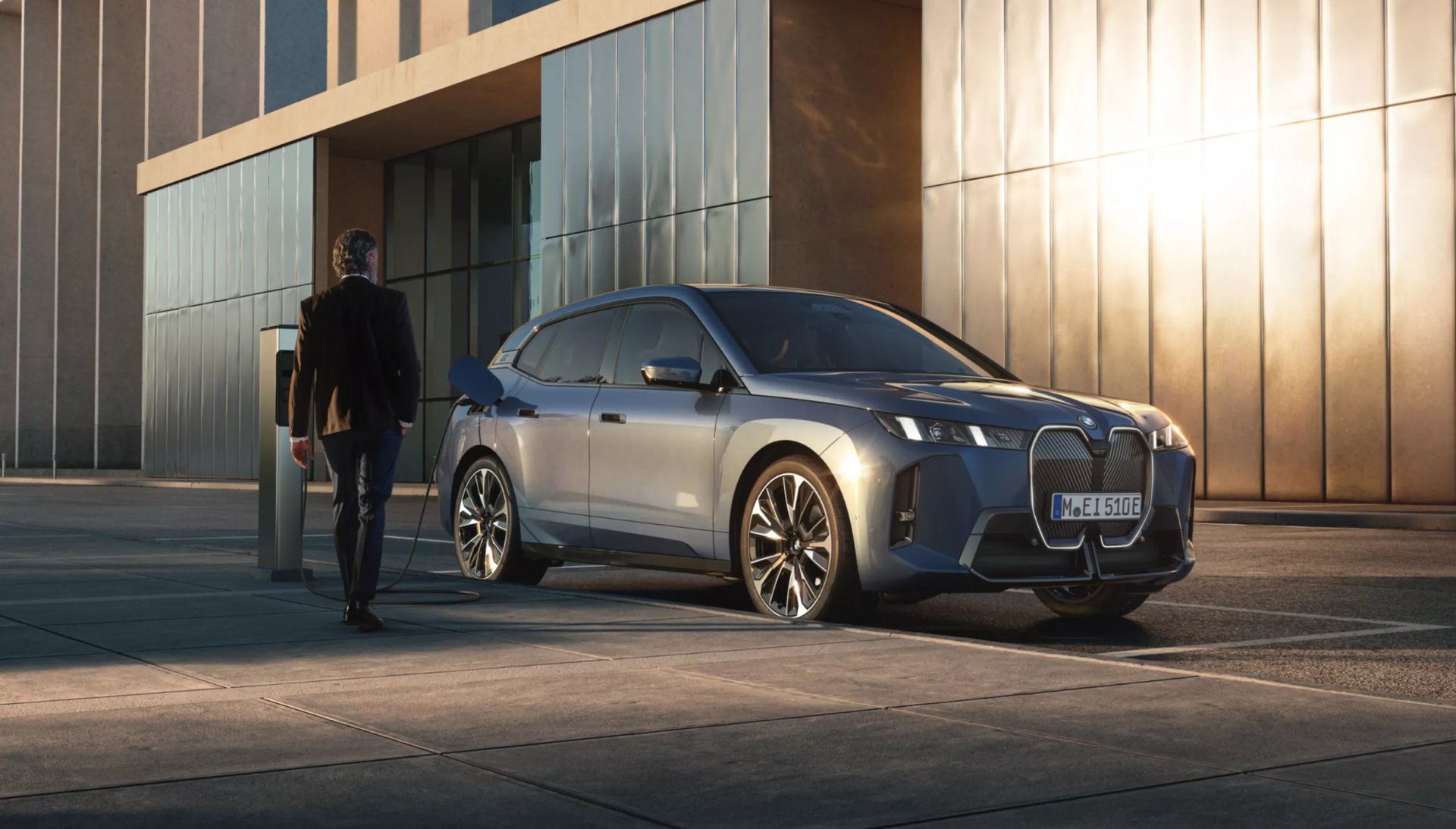
The 2026 BMW iX earns a U.S. News Rating of 9.1 out of 10 and comes standard with all-wheel drive across its lineup via the xDrive system. Reviewer Jill Ciminillo recommends the base xDrive45 configuration, which she identifies as the best value among the three iX models. The xDrive45 delivers 402 horsepower and 312 miles of range, with standard AWD removing the traction upgrade consideration that buyers face on rear-wheel-drive base models elsewhere on this list.
The iX’s styling divides opinion, and the source does not soften that reality. The front end features a massive grille and unconventional angles that Ciminillo acknowledges will not appeal to all buyers. The interior, by contrast, sits closer to BMW’s established luxury norm: spacious across two rows, with the premium materials and refinement that BMW’s positioning requires. The vehicle’s practical profile is reasonable for a two-row luxury electric SUV.
Ciminillo’s test vehicle included rear-wheel steering and an adjustable air suspension system as optional upgrades. Her driving assessment describes an iX that handles its mass competently and rides smoothly over urban surfaces, while acknowledging that the vehicle lacks the driver connection that BMW’s combustion-engine models typically provide. The weight of the electric platform and battery reduces the communicative steering feel that defines the driving experience in BMW’s traditional lineup. The iX’s 402 horsepower, standard AWD, 312-mile range, and BMW’s luxury credentials together give it a strong position for buyers who want European premium quality in an AWD electric SUV without the compromises associated with first-generation electric platform vehicles. The standard AWD policy of the xDrive45 also removes the trim-upgrade decision that rear-wheel-drive base models on this list impose on AWD buyers. The iX’s two-row layout also gives it a more focused interior than the three-row family SUVs on this list, resulting in better per-passenger space and a more refined cabin environment for drivers who do not need a third row.
Credit: BMW
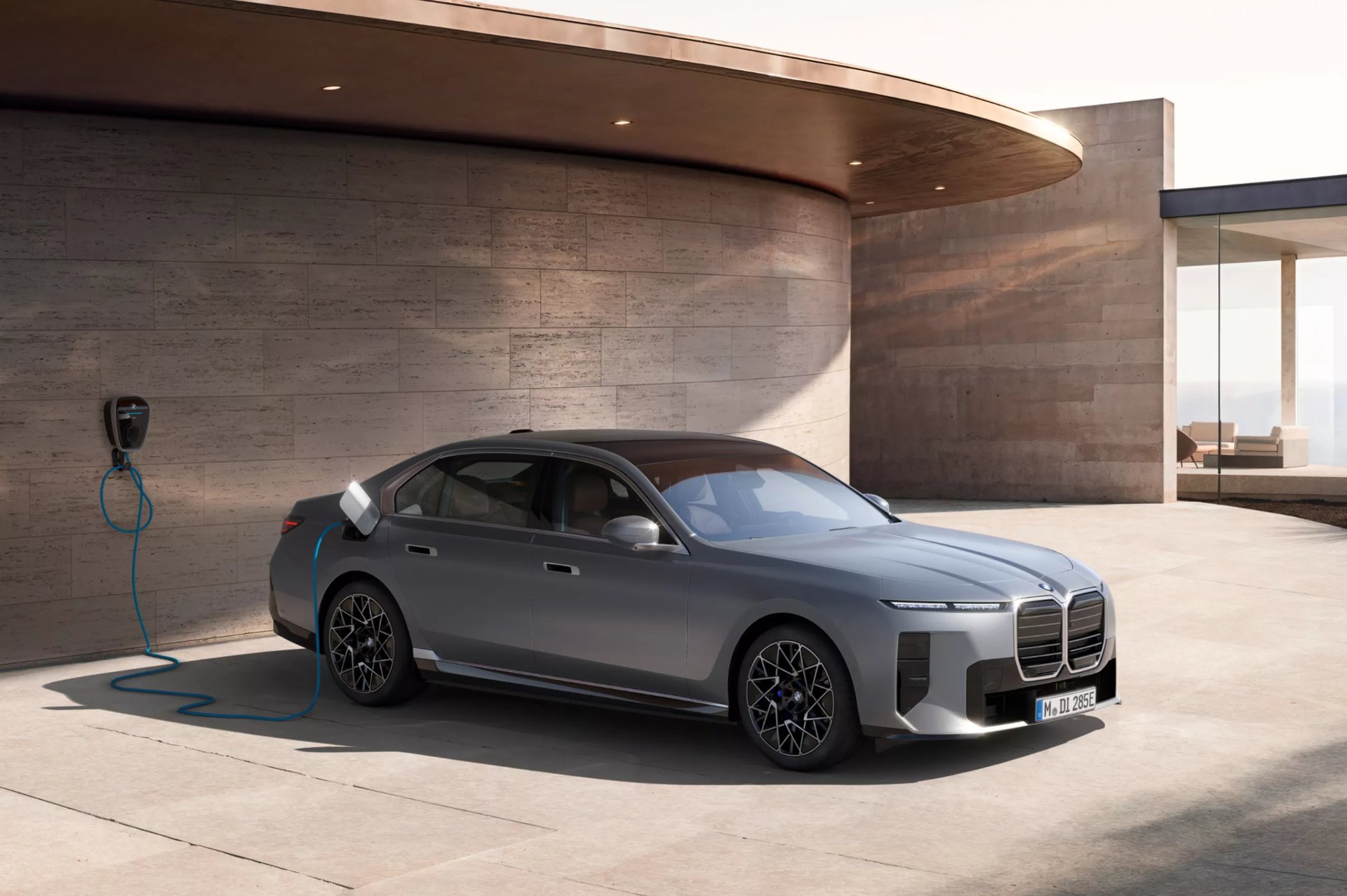
The 2026 BMW i7 carries a U.S. News Rating of 9.1 out of 10 and pairs 536 horsepower with 311 miles of range in its dual-motor xDrive60 configuration, which represents the AWD version of BMW’s 7 Series flagship sedan in electric form. Managing Editor Alex Kwanten’s assessment notes that the i7 inherits both the strengths and the weaknesses of the 7 Series platform, including an infotainment interface that Kwanten describes as overly complex in the standard 7 Series and even more burdensome in the i7, where additional electric vehicle settings compound the navigational complexity.
The xDrive60 delivers substantially more power than the corresponding gasoline 7 Series trim level, and Kwanten confirms that the i7 is quick across all configurations, reflecting the electric powertrain’s ability to deliver maximum torque immediately from rest. The electric platform adds significant weight compared to the combustion equivalent, and Kwanten acknowledges that the additional mass affects handling, though he stops short of describing it as a serious compromise to the driving experience.
The i7’s positioning at the highest price point among the non-Lucid $LCID vehicles on this list reflects the premium that BMW charges for its flagship sedan heritage, the 7 Series interior quality, and the electric powertrain together. Buyers considering the i7 are typically choosing between the driving experience and interior quality of a 7 Series and the alternative electric sedan options at lower price points. Kwanten’s assessment suggests the i7 is a successful execution of an electric flagship sedan, with the infotainment complexity and the weight penalty as the primary considerations buyers should evaluate relative to the alternatives. The xDrive60’s 536-horsepower output is also the highest of any non-Lucid vehicle on this list, giving performance-focused buyers a specific reason to consider the i7 for buyers who want BMW’s flagship interior quality with electric performance at the top of what the brand currently offers in that format.
Credit: Hyundai
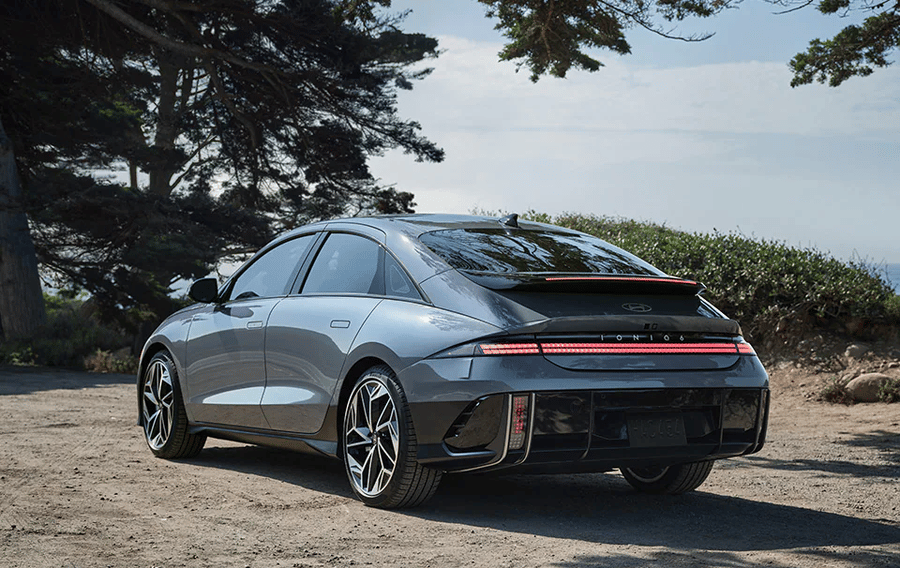
The 2025 Hyundai Ioniq 6 earns a U.S. News Rating of 9.0 out of 10 and delivers a driving character that contributing reviewer Matt DeLorenzo describes as extremely quick off the line, with a strong balance between handling precision and ride comfort. The dual-motor AWD setup produces 320 horsepower in the base SE trim upgraded with all-wheel drive and the larger battery. DeLorenzo attributes the car’s handling stability to its low center of gravity, which keeps the Ioniq 6 feeling grounded through corners, unlike taller electric crossovers.
The Ioniq 6’s styling generates more divided opinion than the source’s other Hyundai entries. DeLorenzo describes a fastback-styled silhouette that tapers from a Tesla $TSLA-like front end to a rear loaded with details he finds confusing. The visual complexity does not affect the driving or passenger experience, but buyers who prioritize a clean, cohesive exterior design may find the Ioniq 6’s styling harder to appreciate than that of the Ioniq 5 or Ioniq 9.
The cabin is quiet, which DeLorenzo specifically notes contributes to a hushed, relaxed interior environment. Electric vehicles typically suppress mechanical noise well, but the Ioniq 6 goes further through suspension tuning calibrated for smoothness and the low seating position that reduces wind noise at speed. The fastback roofline, which generates some styling controversy, also contributes to aerodynamic efficiency, which supports the competitive range figures the Ioniq 6 achieves with its larger battery and dual-motor setup. Buyers who want Hyundai’s value positioning combined with a car-like electric sedan body style, aggressive acceleration, and a composed interior will find the Ioniq 6 the most driver-focused offering in Hyundai’s AWD EV lineup. The fastback roofline that divides styling opinion also enhances aerodynamic efficiency, contributing to competitive range in the dual-motor AWD configuration. The Ioniq 6 also benefits from Hyundai’s 800-volt charging architecture, which reduces the time spent at charging stops compared to 400-volt alternatives in the same price range.
Credit: Cadillac
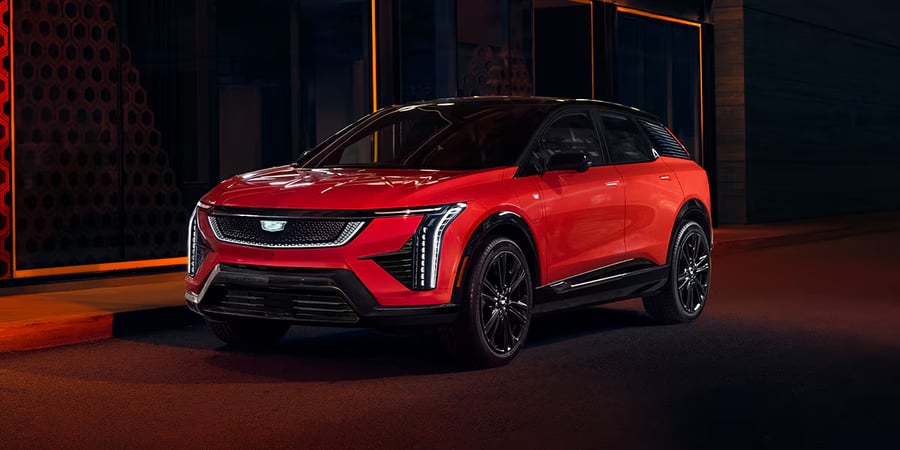
The 2026 Cadillac Optiq earns a U.S. News Rating of 8.9 out of 10 and arrives in 2026 with a new dual-motor all-wheel-drive powertrain that produces 440 horsepower and 498 pound-feet of torque, along with 303 miles of range. Reviewer Nicole Wakelin describes the Optiq as enjoyable to drive, though the taut suspension calibration results in an uncomfortable ride on rough pavement. The trade-off reflects Optiq’s more performance-oriented chassis setup, given its luxury positioning.
The Optiq sits at the smaller end of the luxury electric SUV class, which means rear passenger accommodation is snug for adults on longer trips. The vehicle’s dimensions suit urban driving and shorter commutes more comfortably than extended family road trips, where rear-seat space matters over several hours. Wakelin’s characterization of the rear cabin as on the snug side reflects an honest assessment of how the Optiq’s size constraints interact with the expectations buyers bring to a luxury SUV price point.
The 2026 model year brings significant updates to the Optiq lineup beyond the new AWD option. A new standard rear-wheel-drive powertrain joins the range alongside the dual-motor AWD setup, and a high-performance Optiq-V variant sits at the top of the lineup. The dual-motor AWD configuration’s 440-horsepower output and 498 pound-feet of torque give the Optiq strong performance credentials for its size, and the 303-mile range keeps the vehicle competitive in the luxury compact EV SUV segment. Buyers who want Cadillac’s luxury brand identity in a smaller electric SUV with AWD performance will find the 2026 update cycle delivers a more complete and powerful package than the original Optiq offered at launch. The Optiq-V variant at the top of the refreshed lineup also signals Cadillac’s intent to extend the model into genuine performance territory beyond the luxury-comfort end of the EV spectrum. The 2026 update cycle’s addition of a standard RWD option also gives buyers who do not need AWD a lower-cost entry point while keeping the dual-motor upgrade clearly defined.