
The best ancient sites and ruins to visit in Greece
From the Acropolis above Athens to the stone archway entrance of the original Olympic stadium at Olympia
Constantinos Kollias / Unsplash
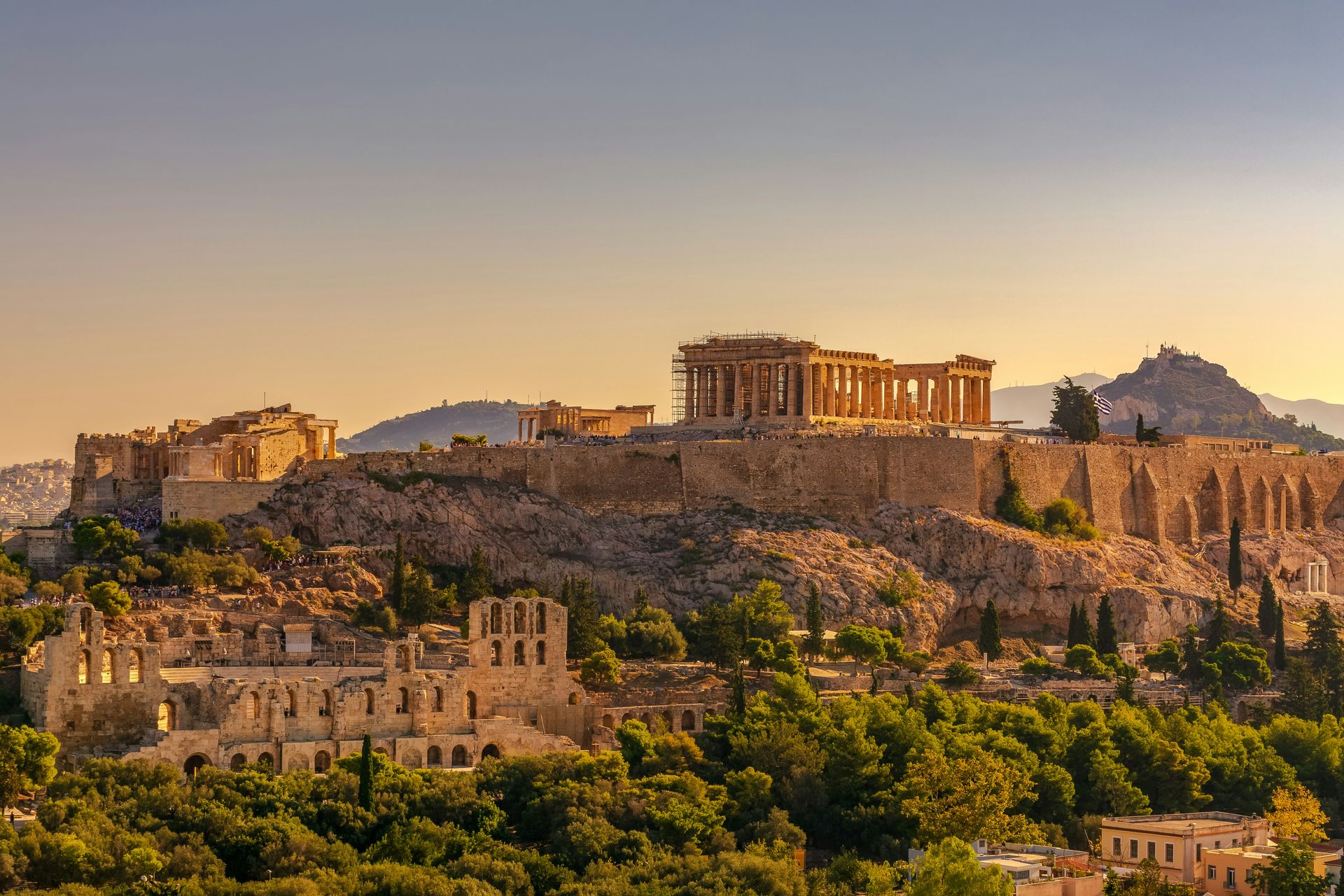
Greece carpets the country with world-renowned ancient sites, some of which served as settings for the myths that have shaped Western storytelling for nearly 3,000 years. Every excavated layer at these sites reveals another civilization underneath the last, and the architecture and artifacts built to honor Athena, Poseidon, Apollo, and Zeus remain standing for visitors to walk through and marvel at directly, not just read about. Few countries on earth offer this density of accessible, well-preserved antiquity within a few hours’ travel of each other.
What separates these five sites from the dozens of other ruins scattered across Greece is historical significance paired with physical preservation. The Acropolis remains visible from nearly anywhere in central Athens. Delphi’s Sacred Way still winds uphill, exactly where ancient pilgrims walked. Olympia’s stone archway still frames the entrance to the original Olympic stadium. Visiting these places means standing in spaces whose function and meaning haven’t required much imagination to reconstruct, because so much of the physical evidence survives intact.
The sites below appear in Lonely Planet, adapted from the 17th edition of Lonely Planet’s Greece guidebook. The five sites cover most of the Greek mainland and islands. A typical itinerary would touch on the Peloponnese and Crete, and the Cyclades, and combining two or three of them on a single trip is straightforward, given the country’s well-developed ferry and rail connections between regions. Visiting more than three sites in a single week tends to feel rushed, since each one genuinely rewards several unhurried hours, not a quick walkthrough. A reasonable pace of one major site every day or two, with rest days for travel and exploring the surrounding towns, makes for a far more memorable trip than treating these locations as boxes to check off a list.
1. The Acropolis in Athens anchors the ancient Western world
Spencer Davis / Unsplash
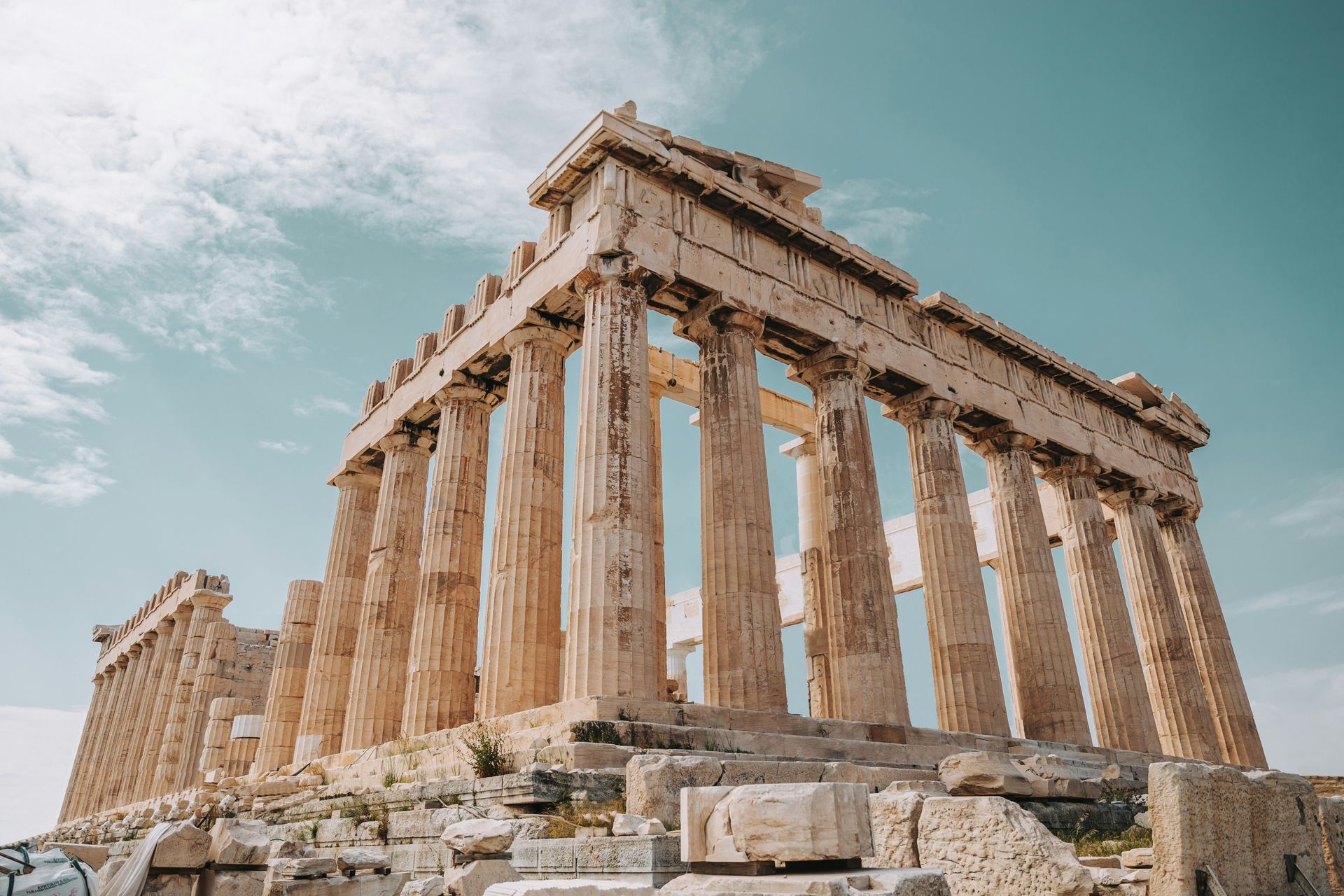
The Acropolis is one of the most visually familiar ancient sites on earth, reproduced on postcards and textbook covers for so long that most visitors arrive thinking they already know what to expect. The first actual glimpse tends to override that expectation anyway. Crowned by the Parthenon, this sacred rock and natural fortress is visible from almost everywhere in central Athens, and its Pentelic marble monuments shift color throughout the day: gleaming white at midday, taking on a honey hue as the sun sets, and standing illuminated against the night sky as a kind of permanent sentinel over the city below.
The Parthenon, whose name means “virgin’s apartment,” is dedicated to Athena Parthenos and remains the site’s central monument, but the Erechtheion and the Odeon of Herodes Atticus both deserve real time as well. The Odeon, popularly known as the Herodeon, is a 5,000-seat amphitheater built into the Acropolis’s southwestern slopes, and the best way to experience it isn’t just walking through but attending an actual performance. The Athens Epidaurus Festival stages drama, music, and dance here between June and August, occasionally supplemented by larger pop concerts and other major events that put modern audiences in a 2,000-year-old theater.
The southern slopes hold a modern museum offering an intimate look at the Acropolis’s key treasures, a useful complement to the open-air site itself. Crowds are unavoidable here regardless of timing, but booking an early timed-entry slot for 8 a.m., right when the site opens, and the temperature is still manageable, helps considerably. Visiting later in the day works as an alternative strategy, and the site’s southeast entrance near Akropoli metro station tends to see noticeably fewer visitors than the main approach. The walk up to the summit itself, along a winding marble path that’s been worn smooth by millions of footsteps over centuries, takes roughly twenty minutes from the main entrance and rewards patience with views over Athens that stretch all the way to the Saronic Gulf on a clear day. Wearing proper shoes matters more here than at most ancient sites, since the marble surfaces underfoot can become genuinely slippery, particularly after rain or in polished sections worn down by centuries of foot traffic.
2. Ancient Delos in the Cyclades was a sacred treasury
Arthur Yeti / Unsplash
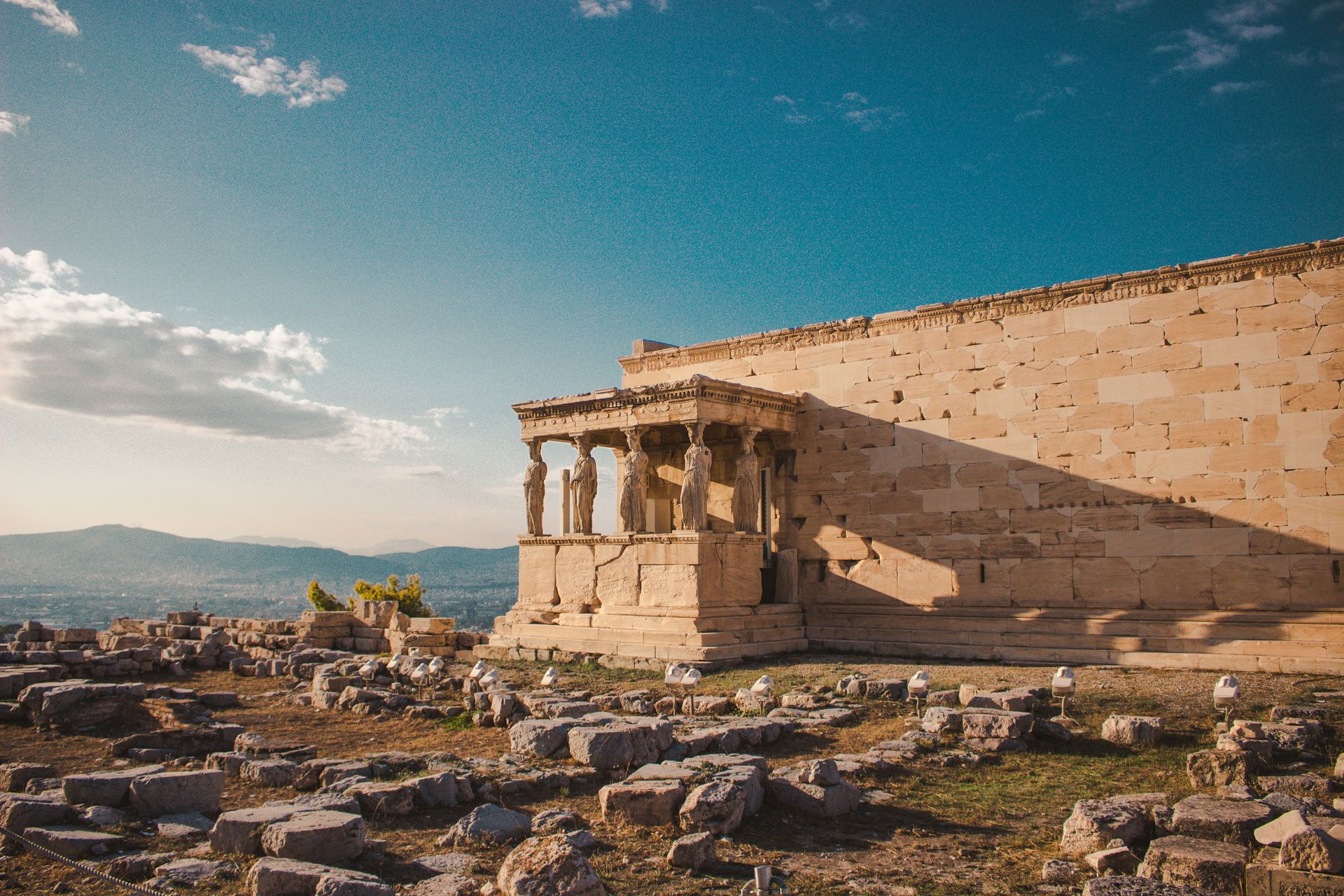
The Cyclades earned their collective name, kyklos, meaning "circle," by literally encircling the sacred island of Delos, the mythical birthplace of the twins Apollo and Artemis. What started as a religious shrine grew into a sacred treasury and commercial center, and the resulting UNESCO World Heritage Site ranks among the most archaeologically important locations in Greece. Standing among the sprawling ruins today takes some imaginative effort to reconstruct the original splendor, but the scale of what remains makes that effort considerably easier than at most ancient sites.
The Sanctuary of Apollo, the spiritual heart of the complex, sits to the left of the ferry dock and functions as the natural starting point for any visit. Two large stoas once lined the Sacred Way leading to the Propylaea, the monumental gateway into a complex of temples and treasuries, and three separate temples to Apollo once stood side by side facing a colossal nine-meter statue of the god. The Artemision, housing the Temple of Artemis, sits within the same compound.
The Terrace of the Lions, beyond the main sanctuary, draws the most consistent crowds for good reason. These proud marble beasts arrived as offerings from the people of Naxos in the 7th century BCE, positioned to guard the Sacred Lake where Leto gave birth to Apollo and Artemis. The lake itself was drained in 1925 to control mosquito breeding that spread malaria, but the lions remain exactly where their original donors placed them. Many of Delos’s most significant finds now live in the National Archaeological Museum in Athens, but the island’s own museum retains a genuinely interesting collection, including the original frescoes, mosaics, and statues that were replaced on-site with replicas. Reaching Delos requires a separate ferry trip from Mykonos, the most common departure point, and since the island has no overnight accommodation for visitors, the entire trip needs to be planned as a day excursion timed around the ferry schedule. Summer heat on Delos can be intense, with almost no natural shade across most of the site, so bringing water and sun protection is essential, not optional, for anyone planning to explore the full extent of the ruins.
3. The Palace of Knossos reveals Crete’s Minoan civilization
Qingqing Cai / Unsplash
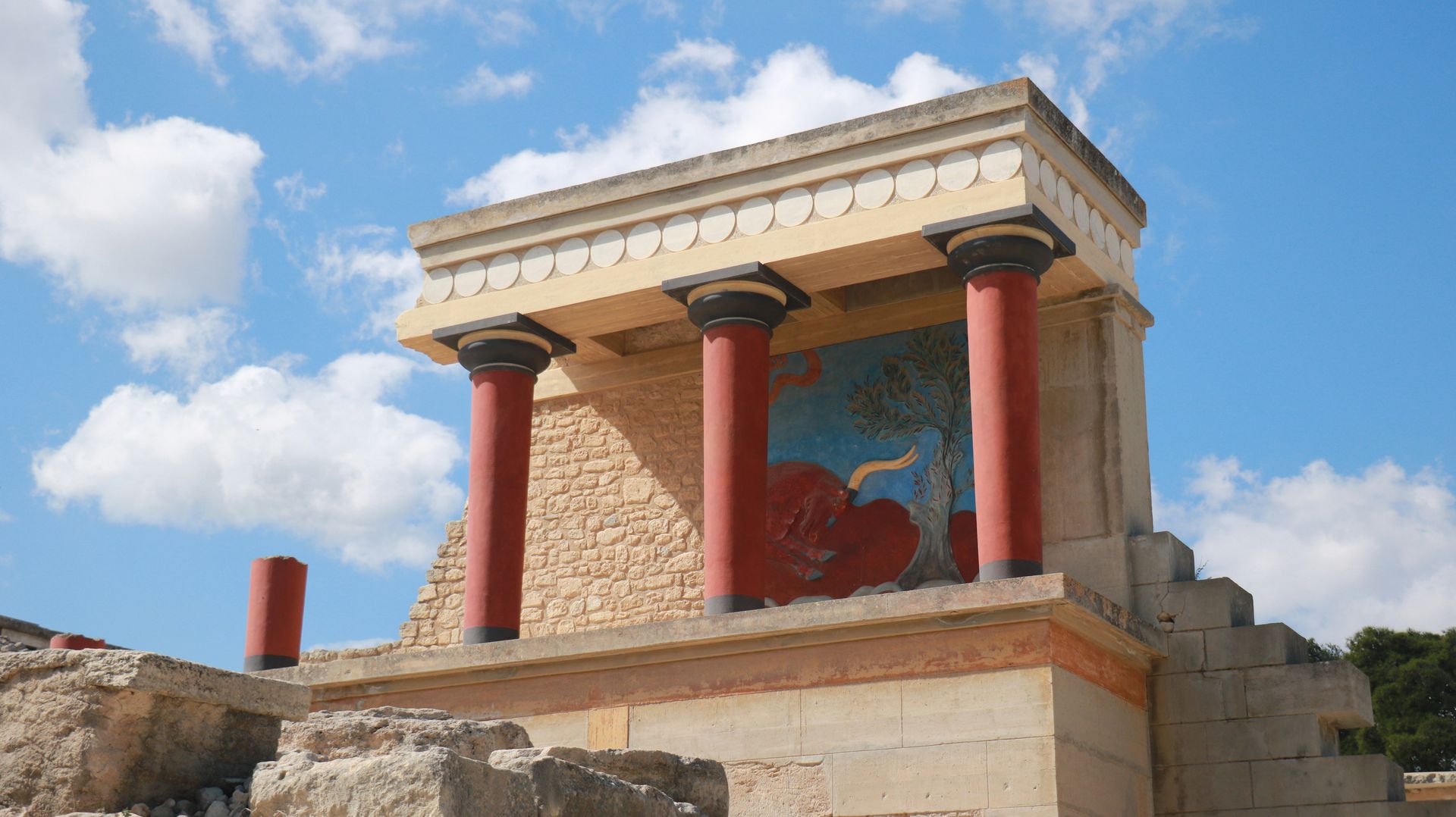
Knossos is Crete’s essential historical stop, a palace complex with a genuinely turbulent construction history. The first palace, built around 1900 BCE, was destroyed by an earthquake roughly two centuries later and rebuilt on a grander, more sophisticated design. That second version was partially leveled again between 1500 and 1450 BCE again, inhabited for another fifty years afterward, and eventually burned down entirely, a layered destruction history that’s visible in the archaeological record even now.
British archaeologist Sir Arthur Evans excavated most of the site between 1900 and 1930, and his reconstruction choices remain genuinely controversial among modern archaeologists, many of whom believe he prioritized a vivid imagination over strict historical accuracy when rebuilding certain sections. Visitors should approach the more elaborately reconstructed areas of Knossos with that context in mind: some of what’s visible reflects Evans’s interpretation as much as the actual Minoan original.
Beating both the crowds and the Cretan heat means arriving either at 8 a.m. or after 3 p.m., and timed-entry tickets need to be purchased online in advance, not at the gate. Pairing a Knossos visit with the Heraklion Archaeological Museum gives a far more complete picture of Minoan civilization than the palace site alone provides, since many of the artifacts excavated at Knossos now live in the museum’s collection, not at the original site. The famous throne room and the reconstructed frescoes depicting bull-leaping and marine life are among the most photographed sections of the palace, though visitors should remember that much of what’s visible reflects Evans’s early-20th-century reconstruction rather than the unaltered Bronze Age original. Knossos sits just a short bus ride from Heraklion, Crete’s largest city, making it an easy half-day trip for anyone based there for a longer island stay. Heraklion itself has a substantial Venetian fortress and a working harbor worth exploring for an hour or two before or after the Knossos visit, giving the day a natural second stop beyond the palace ruins alone.
4. Delphi still draws the devotion its oracle once commanded
Pavle Đurakić / Unsplash
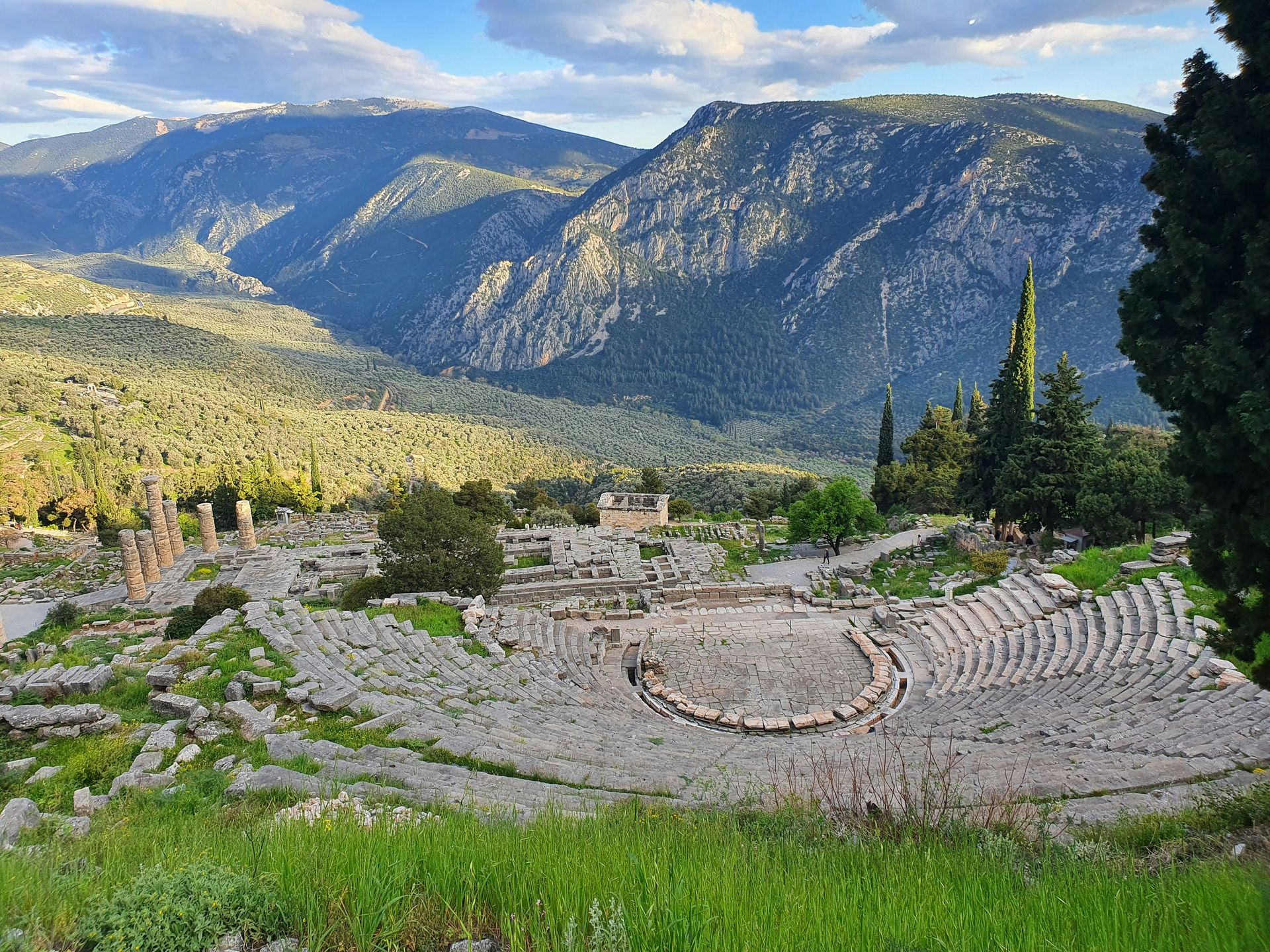
Cicero wrote that the oracle at Delphi would never have become so famous, so crowded with offerings from kings and peoples across every land, if its prophecies hadn’t proven reliable over time. The site still draws tens of thousands of modern visitors annually, devotees of a different kind now, but devotees nonetheless. Following the original pilgrims’ route means starting at the circular Classical-era Tholos of Athena Pronaia southeast of the main site, Delphi’s most photographed single monument, dating to 380 BCE, and the spot where the faithful once offered sacrifices before purifying themselves at the nearby Castalian Spring, where a fountain still lets modern visitors quench their thirst in roughly the same spot.
Entering the main site means following the stone-paved Sacred Way as it winds uphill, passing numerous treasuries that nations and city-states gifted in gratitude for Pythia’s counsel, the high priestess whose prophecies, delivered on Apollo’s behalf, shaped political and personal decisions across the ancient Greek world. The Athenian Treasury, built from fine Parian marble in the late 6th or early 5th century BCE, is visually the most impressive structure along the way, but the Temple of Apollo carries the greater historical weight: a 4th-century BCE Doric pavilion that once held an enormous statue of Apollo along with invaluable votive offerings, and beneath which Pythia is thought to have delivered her prophecies in a hidden chamber.
The Delphic maxims “know thyself” and “nothing in excess,” inscribed on a vestibule within the temple, are worth pausing on while surveying the ruins, since both phrases have outlived the religious context that originally produced them and entered the broader vocabulary of Western philosophy. Staying directly in the town of Delphi means everything, ancient sites and museums alike, are within easy walking distance. The drive from Athens takes about two and a half hours along well-maintained coastal roads, and travelers without a car can take the train to Amfiklia, followed by an hour-long taxi ride, or ride a KTEL intercity bus directly from Athens’s Liosion terminal.
5. Ancient Olympia is where the Olympic Games actually began
Nikolaos D. Nomikos / Pexels
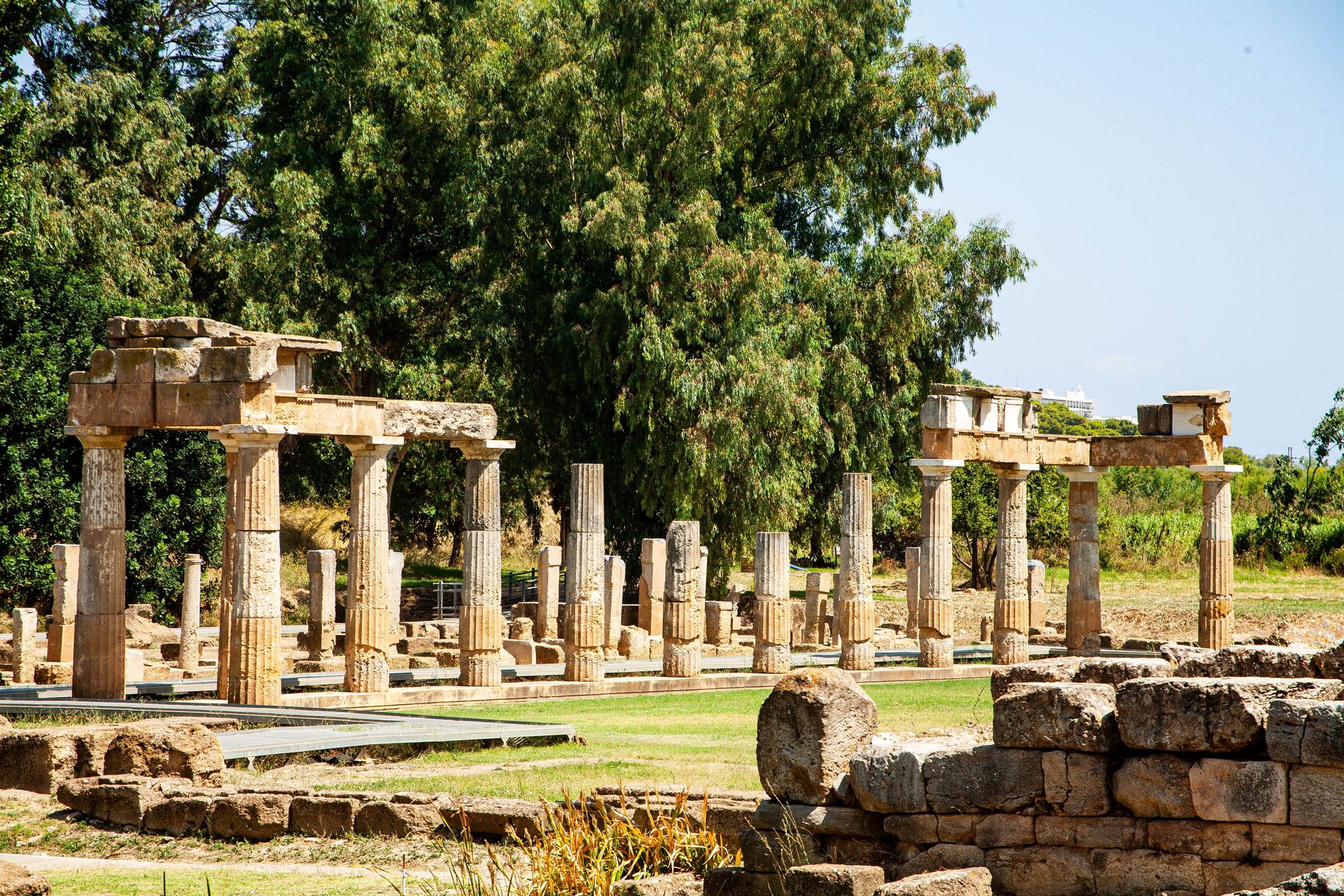
Olympia, known as the Valley of the Gods, holds the distinction of being the birthplace of the Olympic Games and the site of the original ancient Olympic stadium, making it one of the largest and most significant ancient sites in Greece by reputation alone. Starting in 776 BCE, the best-known recurring sporting event in human history took place here every four years, a tradition that, in its modern revived form, continues to this day. The site sits in the Alfios Valley, spread across the banks of the Alpheus, the largest river in the Peloponnese, and the smaller Kladhios.
The ancient Olympic Games ran in this stadium every four years for more than 1,100 consecutive years before Emperor Theodosius I abolished them in 393 CE as part of a broader suppression of pagan religious practices. Earthquakes have eroded much of what remained afterward, and relatively little of the original temples and athletic facilities survives, but the stadium itself, entered through a stone archway that still stands, lets visitors walk the same ground and genuinely imagine the roar of ancient crowds cheering on competitors.
Appreciating Olympia’s significance doesn’t require deep expertise in Greek history. The site’s rural setting and overall stillness lend it enough quiet reverence to function as a worthwhile destination entirely on its own terms, independent of any specific historical knowledge a visitor brings. The village of Olympia itself is flat and easy to navigate on foot, with buses departing from the train station a block east of the main street, though the site’s gravel paths mean only some sections are wheelchair accessible. Onward buses connect Olympia to Pyrgos, from which most other major cities in the Peloponnese and beyond are reachable. Combining Olympia with a broader Peloponnese road trip makes practical sense given the site’s location, since the peninsula’s other major attractions, from the Mani Peninsula’s stone towers to the medieval fortress town of Mystras, sit within a reasonable driving distance and reward travelers willing to spend several days exploring the region beyond the ancient ruins alone.