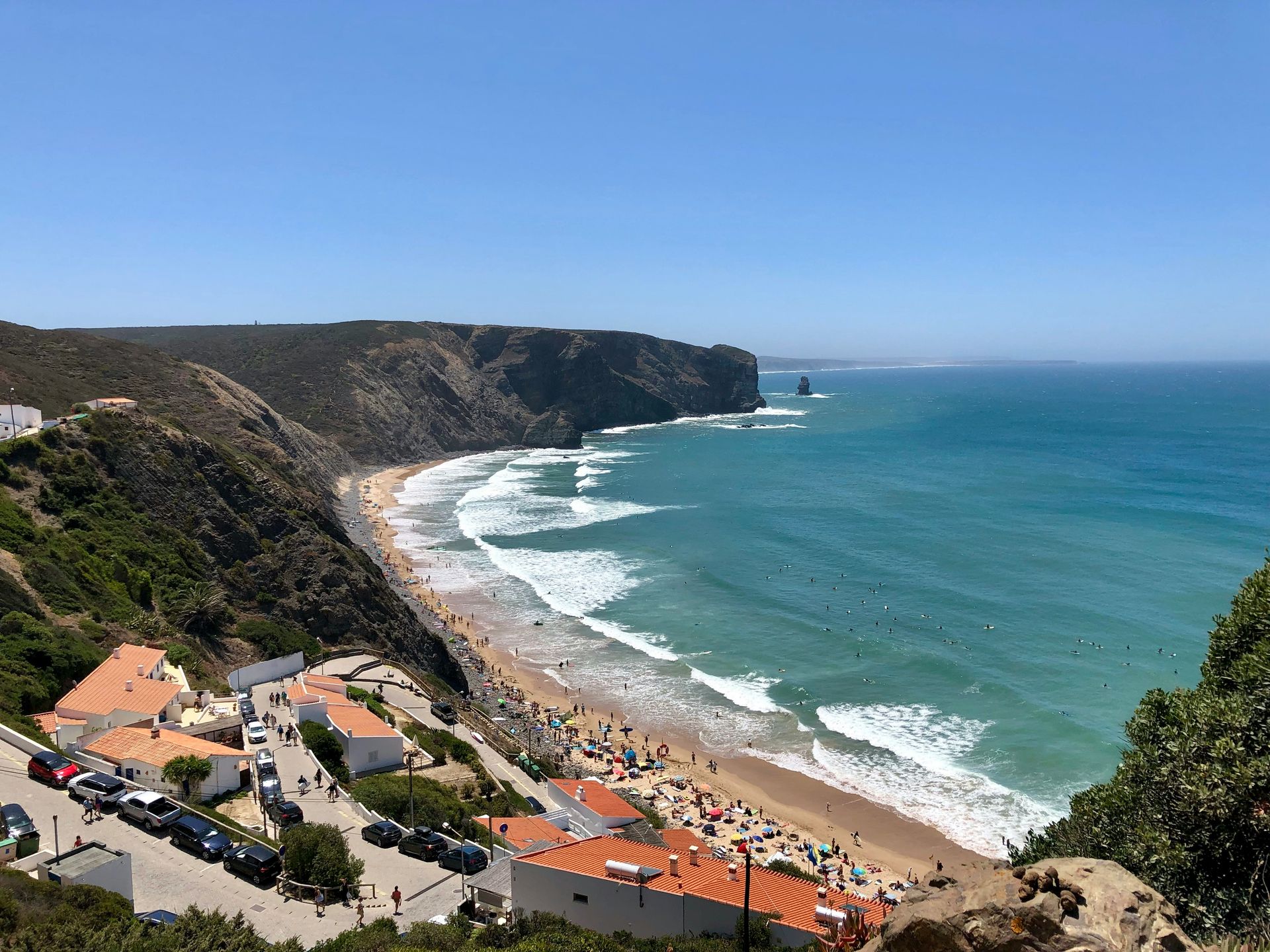
Mondo Generator / Unsplash
Portugal’s coastline runs for more than 1,793 kilometers, but its quality is what sets it apart from other Atlantic-facing European destinations. The surf is real: world-class in several spots, and accessible even to beginners in others. The fishing villages are not theme-park approximations but working towns where boats still go out at dawn, and the catch shows up in the market by morning. The beaches range from crowded and cosmopolitan to empty enough that a visitor can spend an afternoon without seeing another person, and the architecture that frames them — whitewashed walls, blue azulejo tilework, cobblestone lanes — gives every town a distinct visual grammar.
What unites the beach towns on this list is the specific quality that Helder Martins, general manager of the Pine Cliffs Resort in the Algarve, describes as soul. The towns here deliver not just scenery but a texture of daily life that repeats across the country: the fish market on Saturday morning, the cold beer after a long surf session, the restaurant perched above the water where the sunset arrives on schedule. Some towns are within half an hour of Lisbon, making them easy day trips. Others require a drive to the far southwest of the country, where the Atlantic asserts itself most forcefully.
These 10 beach towns come from Travel + Leisure’s selection of the best coastal towns in Portugal, drawn from the recommendations of local residents, hotel general managers, tour operators, and others who live and work along the Portuguese coast year-round, not just those who visit it for research or review purposes, which gives the recommendations a specific authority grounded in daily experience of the coastline across different seasons, weather conditions, and levels of tourist activity throughout the calendar year, and who return to the same towns across multiple visits.
1 / 10
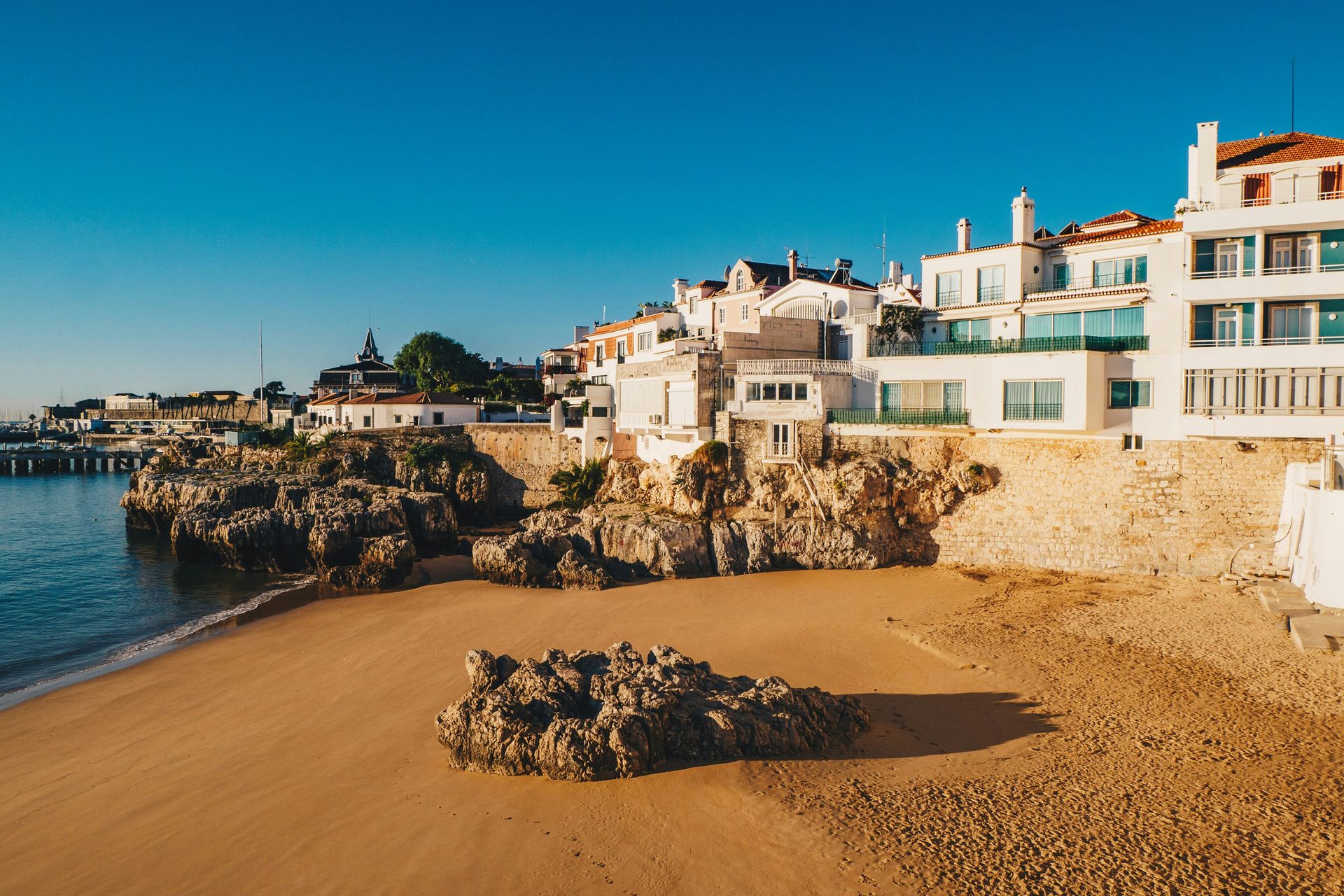
CALIN STAN / Unsplash
Cascais sits roughly 30 minutes from Lisbon by car, and the train line that connects them runs directly past several of the town’s best surf breaks. Surfboard shaper Lucas Adee, who lives and works in Cascais, notes that the town’s position near both south- and west-facing beaches makes it possible to find surfable waves on nearly any given day. When conditions are small, the beaches at Guincho or just north toward Sintra offer alternatives. When conditions are big, the waves run all the way from Cascais toward Lisbon, with most breaks accessible directly from the train line.
Duarte Gonçalves Cunha, general manager of Octant Praia Verde and a native of Cascais, describes the town as an elegant coastal destination with a cosmopolitan rhythm and a rich maritime legacy. The proximity to Lisbon keeps the energy vibrant and the range of restaurants strong — golden beaches line up alongside seafood spots that reward repeat visits, while the surrounding natural beauty offers a consistent counterpoint to the urban pull.
Visitors looking for accommodation with an artistic bent can stay at the Pestana Cidadela Cascais, an art hotel set within a historic citadel and surrounded by galleries and studios. The Cascais experience is less about a single unmissable attraction and more about the rhythm of alternating between the water and the town, a pattern that the train connection makes easy to sustain across multiple days without a car. Surf access, seafood restaurants, and a walkable town center together also make Cascais one of the most self-sufficient beach towns on this list for a visitor who wants to stay in one place and explore it thoroughly. The Pestana Cidadela Cascais also positions the art hotel experience alongside the surf-and-seafood identity, making Cascais feel less like a one-note beach town and more like a genuinely layered destination that holds interest beyond the first or second visit.
2 / 10
-1920x1440.jpg)
Adam Hornyak / Unsplash
Ericeira is Portugal’s surf capital in both reputation and daily atmosphere. Lorena Carrillo Perez, Lisbon tour manager for Devour Tours, describes it as a town whose surf identity is palpable whether or not a visitor ever touches a board: the energy of an active surf community saturates the cafes, the beachfront, and the narrow cobblestone streets that run through the old center. Cold beers, delicious seafood, and the kind of crowd that forms around consistent waves define the social texture.
Beyond the surf, Ericeira rewards slower exploration. The tiled facades and whitewashed buildings that line the lanes are characteristic of traditional Portuguese coastal architecture, and the shops and cafes that punctuate the walk through town offer plenty of reasons to stop. The waves themselves are an attraction even for non-surfers: watching experienced surfers navigate the Atlantic swells from a perch above the beach is a genuinely compelling afternoon.
Travelers $TRV looking for accommodation that goes beyond the standard surf-town hostel can stay at Immerso, a wellness-focused hotel with strong ocean views and a yoga program. Surf culture, a historic townscape, and upscale accommodation options together give Ericeira a range that appeals to groups with different travel priorities, provided they share a general appreciation for the Portuguese coast at its most alive. Ericeira also draws a specifically international crowd: the recognition of its waves by the World Surf League has brought competitive surfing to the town and with it a level of surf culture infrastructure — board shapers, surf schools, surf film evenings — that few European towns can match. The cobblestone streets that run through the old center retain their original character despite the surf-town overlay, which keeps Ericeira interesting even on flat days when the waves are not worth watching, which is the real test of any surf town’s depth as a place to spend genuine time without running out of reasons to stay.
3 / 10
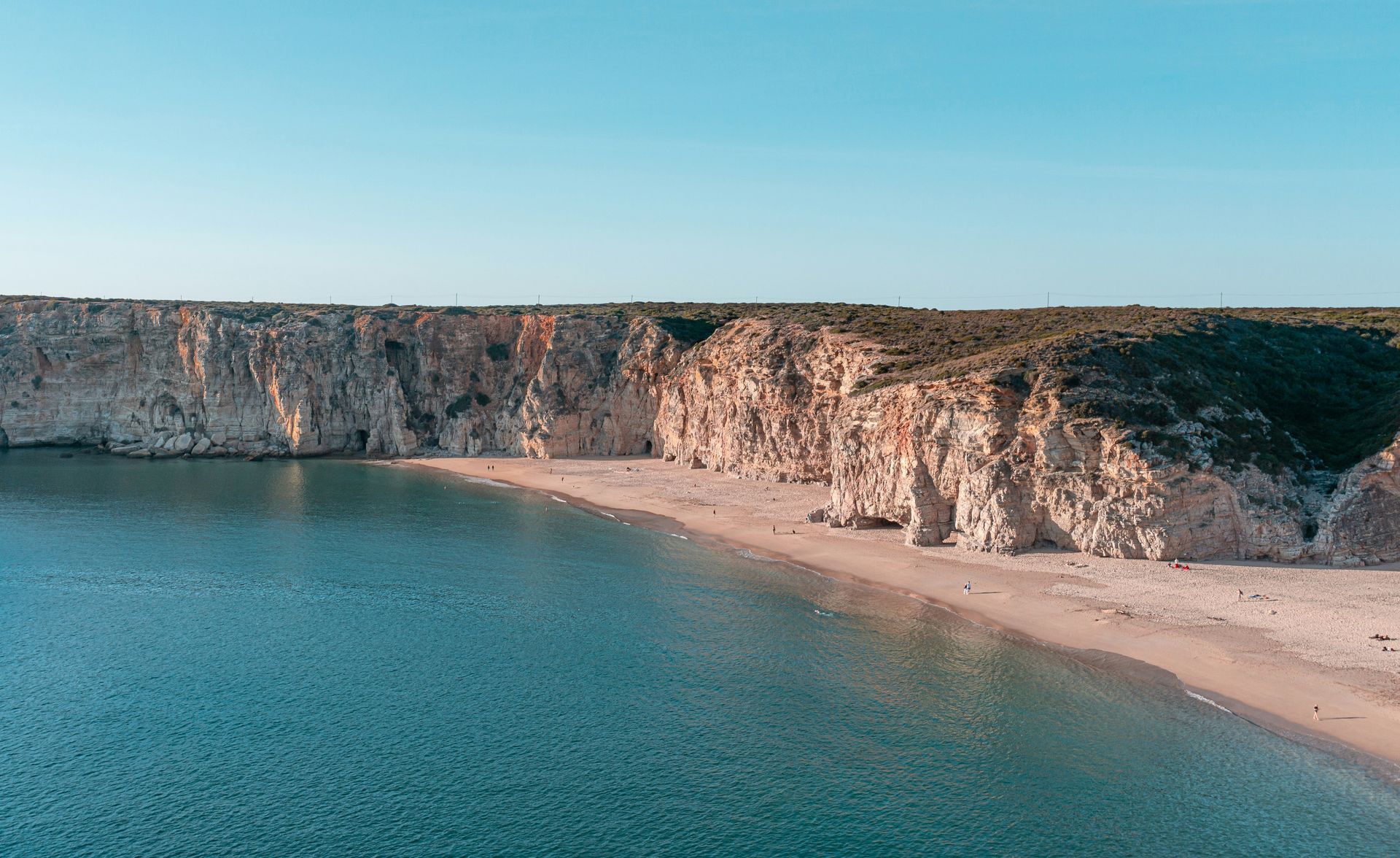
Johannes Mandle / Unsplash
Sagres occupies the southwestern corner of the Algarve, which places it at the meeting point of two distinct Atlantic exposures, producing the kind of consistent surf conditions that draw dedicated wave-seekers from across Europe. Chitra Stern, the CEO of Martinhal Resorts, identifies the town as a destination for surfers, hikers, and anyone seeking an unspoiled and unhurried atmosphere. Martinhal Beach, which sits near the Martinhal Sagres resort, is the family-friendly option in a town whose beaches otherwise tend toward the more exposed and dramatic.
The town itself is unfussy in the best sense: low-rise, relaxed in its pace, and organized around the outdoor pursuits that its position makes possible. Stern recommends Three Little Birds for craft beers and burgers, and The Laundry Lounge — which offers yoga classes on the terrace, fresh seasonal cooking, creative cocktails, and a laundry service — for an afternoon that efficiently covers an unlikely range of needs.
The raw, windswept quality of Sagres sets it apart from the more polished Algarve towns further east. The landscape here is genuinely dramatic, with steep cliffs and views across open ocean that remind visitors how far south and west they have traveled. For the traveler who wants the Algarve without the resort infrastructure that defines much of it, Sagres offers the coast at its most elemental. The town’s position at the very tip of the Algarve also makes it a natural endpoint for travelers driving the length of Portugal’s southern coast, giving it a distinct finality that adds to its atmospheric weight. Travelers $TRV who reach Sagres after driving the length of the Algarve arrive at the kind of dramatic, this-is-the-end-of-something viewpoint that most coastal towns on the Algarve’s gentler eastern stretch cannot provide. Sagres rewards visitors who arrive with few plans and a willingness to let the conditions of the day determine the activity.
4 / 10
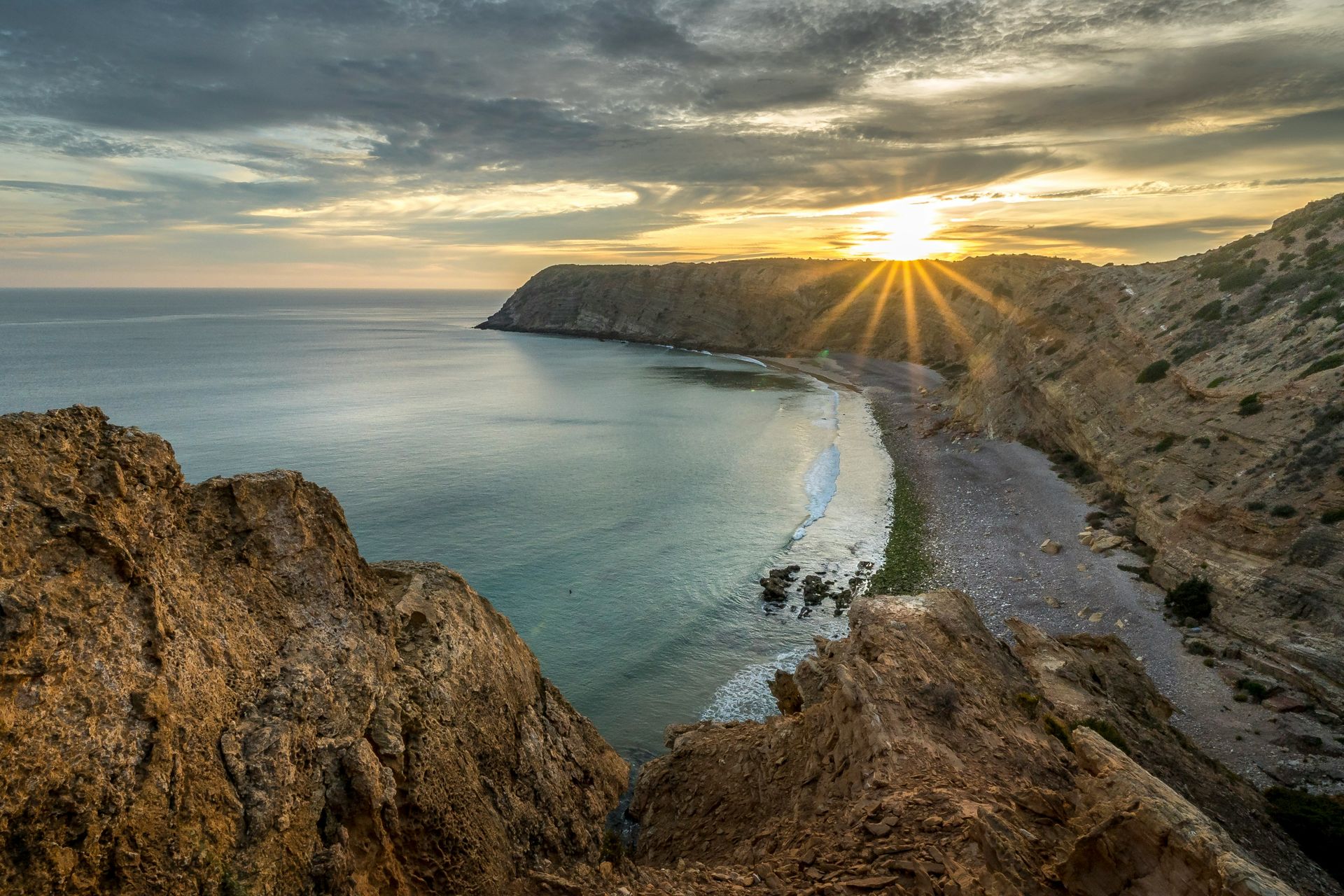
Marc Wieland / Unsplash
Burgau sits about 30 minutes east of Sagres along the southern Algarve coast, but the distance in character from its neighboring surf town is greater than the drive suggests. Stern describes it as a picturesque fishing village with cobbled lanes and whitewashed houses that offer a genuine blend of authenticity and low-key tourism, a formulation that applies perfectly to a place where the primary attraction is the texture of the village itself, not any particular amenity or landmark.
The town’s small size means hotels are scarce, but the quality of short-term rental options compensates fully: a well-positioned one-bedroom apartment or cottage with ocean views can be found without difficulty, and the rental format suits a village-scale destination better than a hotel would in any case. For meals, Corso is the recommended stop, positioned high above the beach with views across the bay and a simple menu that includes reliable pizza alongside the expected seafood. The sunset from Corso’s terrace is the kind of experience that travelers come to the Algarve to find.
Burgau is the sort of place that rewards the traveler who has already seen the busier Algarve towns and wants something quieter. The absence of crowds and the village scale create the conditions for the kind of slow, unprogrammed afternoon that is increasingly rare in southern Portugal’s more visited destinations. Burgau also benefits from its position between Sagres and Lagos, which means visitors can reach more tourist amenities within a short drive without those amenities defining the village itself. That positioning — within reach of everything but insulated from the noise of it — is a specific combination that is harder to find in southern Portugal than it sounds, as most quiet villages in southern Portugal are also genuinely remote, requiring long drives for basic supplies, a logistical challenge that Burgau’s position between two well-known towns avoids entirely.
5 / 10
Crownlan - Filippo & Nadia / Unsplash
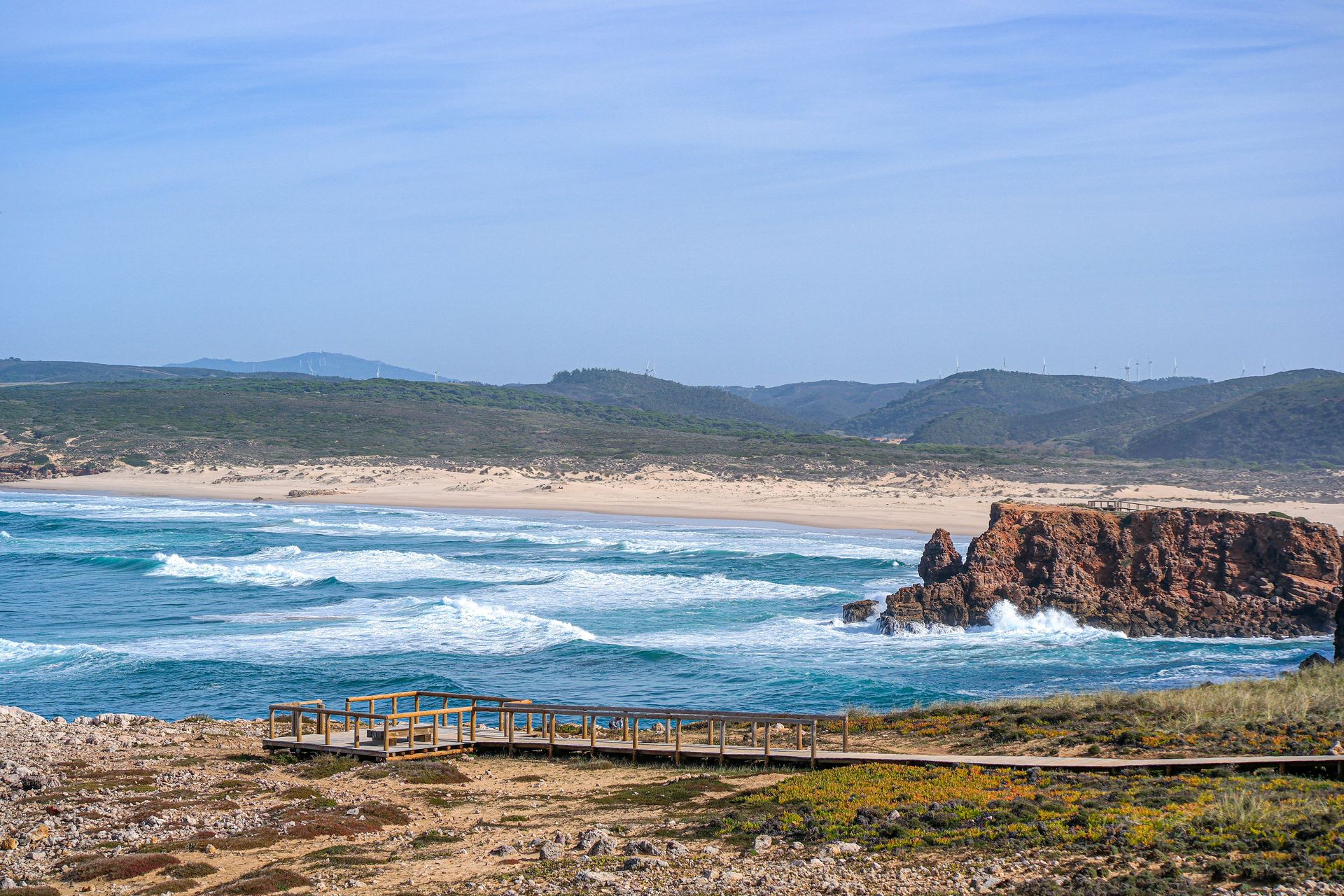
Carrapateira sits within the Costa Vicentina natural park on the west-facing Atlantic coast, surrounded by the protected landscape of wild dunes, cliffs, and open heath that defines this section of Portugal’s shoreline. Stern calls it a laid-back bohemian surf village, an accurate description of a place whose appeal is almost entirely environmental, not amenity-driven. Two beaches anchor the experience: Praia do Amado, one of Portugal’s most celebrated surf breaks, and the expansive Praia da Bordeira, where the beach stretches widely enough that finding an uncrowded section of sand is straightforward even in summer.
The honest description of Carrapateira is that there is not much happening here beyond the surf, the landscape, and the specific pleasure of disconnecting from everything that requires a signal or a schedule. Stern’s recommendation for visitors is direct: put the phone away and bring a book. The town’s scale makes it unsuitable as a base for exploring the broader region, but as a destination in itself, it delivers exactly what its reputation promises.
Overnight visitors should consider Hortas do Rio, a boutique property with private nooks and a design sensibility that suits the surrounding landscape. The accommodation reinforces the destination’s character: quiet, considered, and organized around the pleasure of sitting still in a remarkable natural setting. The Costa Vicentina natural park designation, which covers the area around Carrapateira, also means the development pressure that has altered many coastal towns elsewhere in Portugal has been largely kept at bay, which is why the landscape here retains its original character. The protected status also means visitors should make the effort to walk the cliff paths and dune systems around the beaches, which constitute a genuine natural spectacle that the beaches alone do not fully reveal. The landscape around Carrapateira is as much the destination as the beaches themselves, and walkers who miss the cliff paths miss a substantial part of what makes the place worth the drive.
6 / 10
Tommy Carnilleau / Unsplash
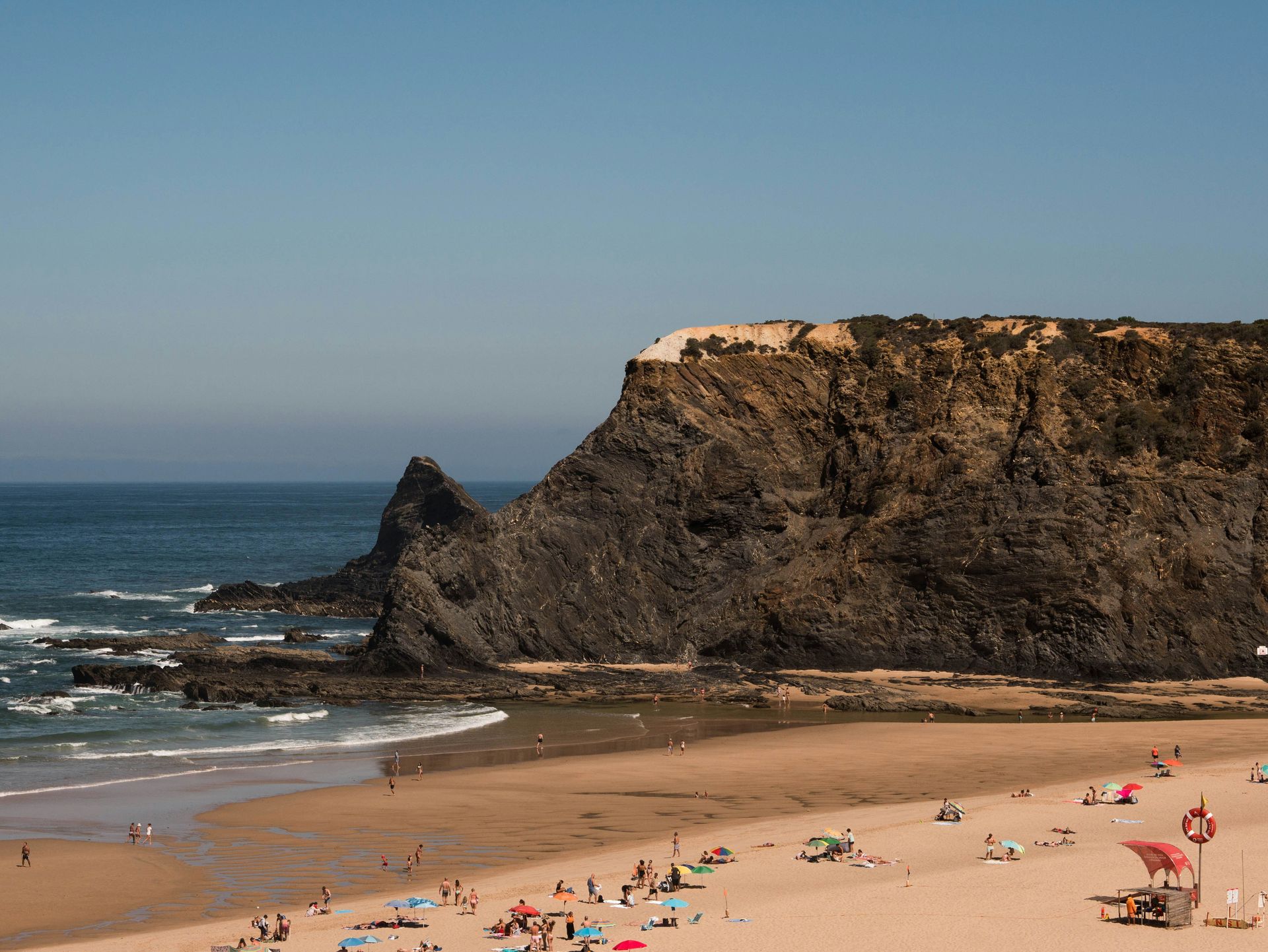
Odeceixe sits at the northern edge of the Algarve, perched above a winding river valley that meets the Atlantic at one of the most beautiful beach junctions on the entire Portuguese coast. Stern describes it as one of Portugal’s most picturesque towns, and the elevated village, dramatic landscape, and accessible beach together give it a character that distinguishes it from the flatter coastal towns further south.
The dining scene here punches above the town’s size. Stern recommends Altinho Restaurant for vegetarian-friendly cooking and sunset views. The more exceptional option is Näperoñ, a restaurant recognized by the Michelin guide that offers multicourse tasting menus, a level of culinary ambition rarely encountered in a village of this scale. Visitors who want to extend the meal into an overnight stay can book Casas do Moinho, the attached accommodation that makes a stay here into a complete experience, not a detour.
Odeceixe is the kind of town that reveals itself slowly. The immediate impression is of beauty and quiet, but the discovery of the Michelin-noted restaurant, the beach below the valley, and the general quality of daily life in the village turns a brief stop into a longer argument for returning. For visitors who have traveled the length of the Algarve and want a finale that combines natural beauty with serious cooking, Odeceixe provides both. The presence of a Michelin-recognized restaurant in a village this size is an anomaly that reflects the general quality of the food culture running through the Alentejo coast, a region whose agricultural richness and Atlantic access together produce some of the most interesting eating in Portugal outside of Lisbon and Porto, and the Näperoñ tasting menu in a village the size of Odeceixe is as good an illustration of that regional ambition as any single example in the country. The town’s overlook position above the river valley also means the view from within Odeceixe is as good as the view of the beach from below.
7 / 10
Richard James / Unsplash
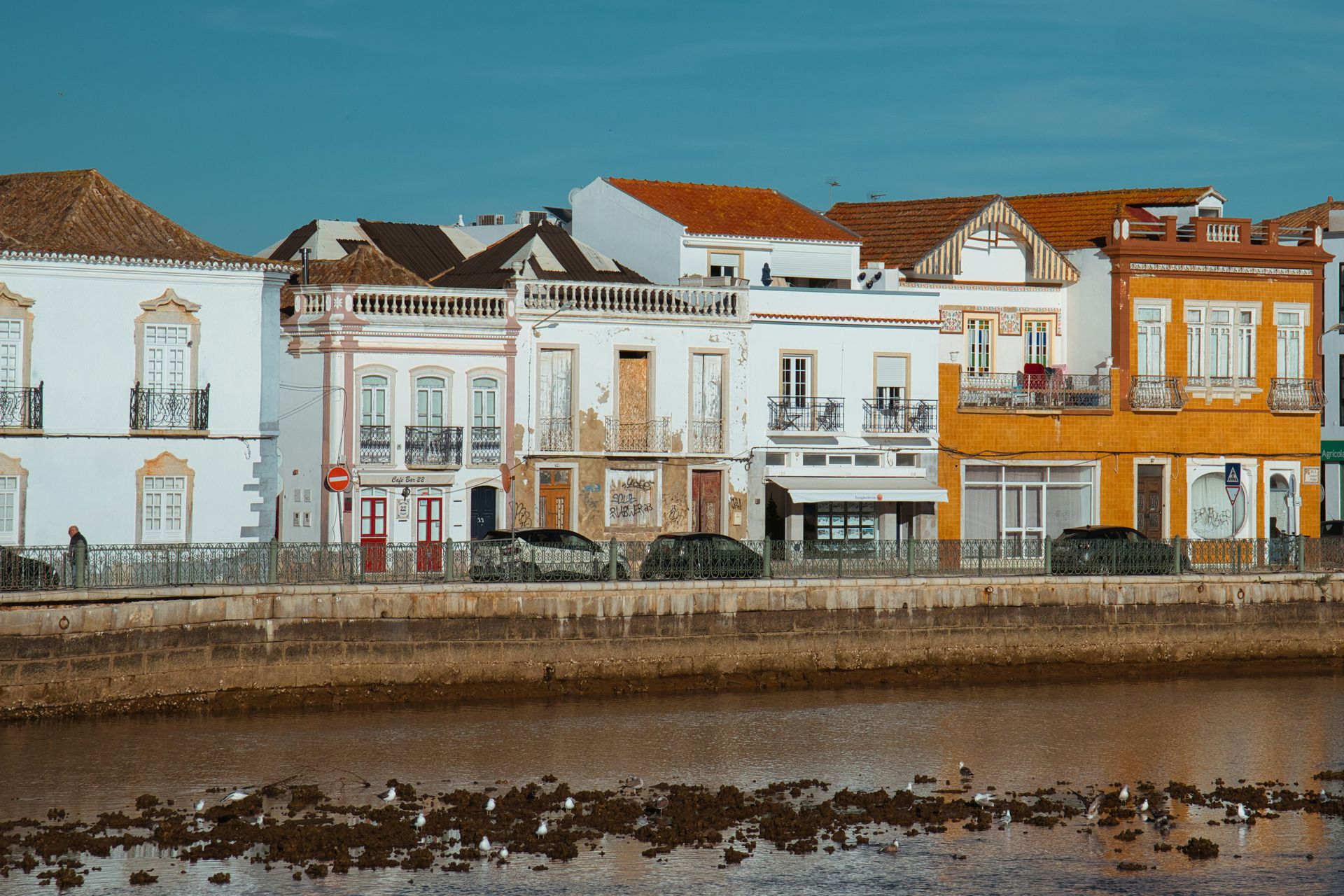
Tavira sits within 30 minutes of the Spanish border in the eastern Algarve, and is positioned beside the Ria Formosa natural park,, whose barrier islands offer some of the most remote beach access on the southern coast. Emma Campus, co-owner of the nearby Austa restaurant, describes the town as a historic fishing village where fishermen still live and work, a distinction that matters in an Algarve where many fishing ports have tilted toward tourism at the expense of the original industry.
The town is walkable and rewarding on foot. Xisto, a sleek bakery, provides the recommended starting point for the day. Campus suggests walking through the cobblestone streets, grabbing lunch, and then catching a small boat to the barrier islands, where empty sandbanks stretch for miles, and the beach access is as uncrowded as anywhere in southern Portugal. The boat trip itself is short and inexpensive.
Happy hour in Tavira carries specific recommendations: Nano Brewery for local craft beer, and Wild Thing in nearby Cabanas for Portuguese natural wines. Historic architecture, working fishing culture, boat access to the islands, and a solid drink program together make Tavira one of the more complete Algarve towns for a multi-day visit. Stay at Vila Galé, centrally located for easy walking access to everything Campus recommends. Tavira’s position near the Ria Formosa park also means the boat trip to the barrier islands is never far: the sandbanks accessible from here are among the most remote and uncrowded beaches in the entire Algarve, and the boat ride itself gives visitors a perspective on the Ria Formosa that no land-based approach can replicate. The sandbanks of the Ria Formosa are also dramatically different from the open Atlantic beaches elsewhere on this list, giving Tavira access to a beach typology that most Portuguese beach towns, including most in the Algarve, cannot offer their visitors.
8 / 10
Anthony R. / Unsplash
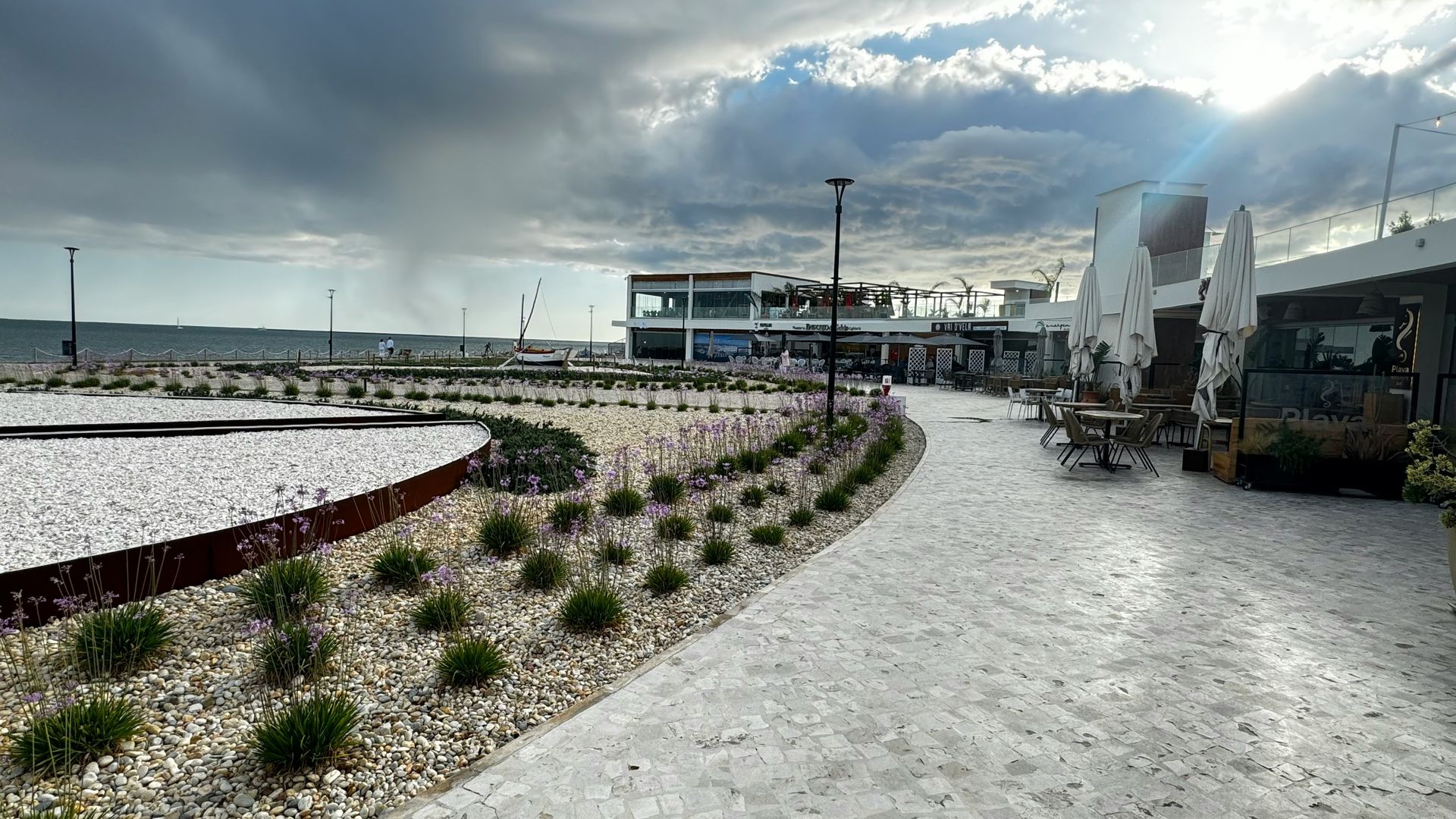
Olhão lies less than 20 miles west of Tavira, along the Ria Formosa, and operates at a pace that locals describe in terms more suited to a place outside normal time than to a typical Portuguese coastal town. The organizing event of the weekly calendar is the Saturday morning fish and produce market, where the catch and the vegetables arrive together, and the town convenes to buy both. Joy Jung, from the nearby Vila Joya, considers the market a non-negotiable stop for anyone visiting the town.
The rhythm of Olhão outside market mornings runs toward the unhurried end of the spectrum. Jung recommends evening strolls through the town and specifically advocates for securing a rooftop terrace seat somewhere — any of several options will do — to watch the tide and the fishing boats coming in and going out while the sound of seagulls provides the ambient soundtrack. It is, she says, as close to heaven as this kind of simple coastal observation gets.
The Real Marina hotel positions its loungers facing the ocean, which means the visual experience continues from check-in through checkout. Olhão’s appeal is partly about the market and partly about the permission the town gives visitors to do very little productively and feel entirely satisfied with that outcome. For travelers who have been moving quickly through the Algarve’s more active towns, Olhão offers a welcome and specific deceleration. The town’s Saturday market is also worth planning a visit around specifically: markets of this quality and scale are becoming rarer in coastal Portugal as fishing communities shift toward tourism, and Olhão’s has so far maintained its original character and provides a model for what coastal markets can be when they have retained their working purpose and commercial function as fishing ports not converting to tourist consumption of the town’s working character. The Saturday morning timing also matters: arriving at the market when it opens and then spending the rest of the day in Olhão creates a more complete Olhão experience than arriving at any other time of the week.
9 / 10
Thibault Mokuenko / Unsplash
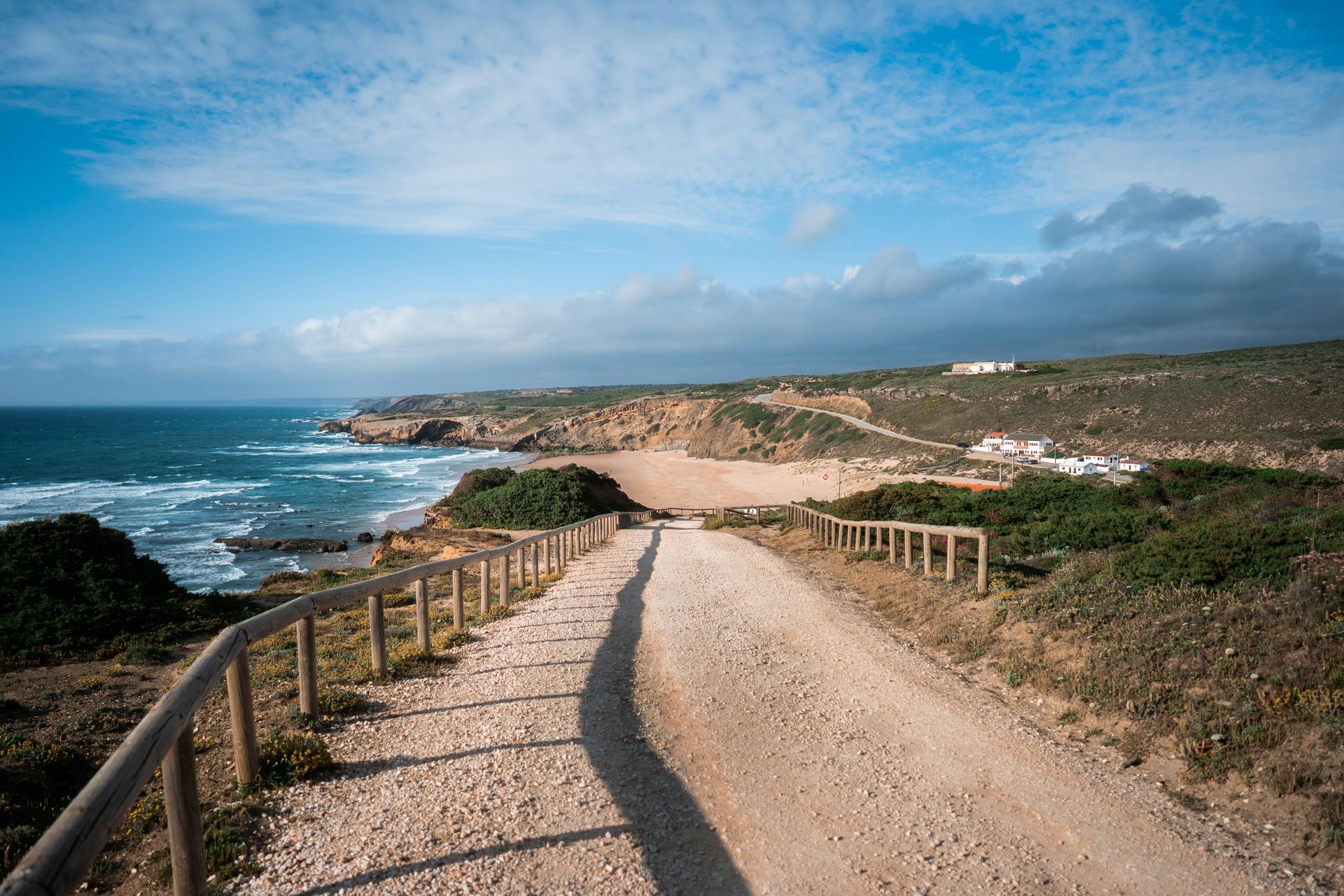
Aljezur sits inland enough from the coast to feel like a proper agricultural town, not a surf destination with a beach attached, which is part of what makes it distinctive. David Campus, co-owner of Austa restaurant, describes heading to Aljezur with his partner when they need to escape and recover from long weeks of work, an endorsement that speaks to the town’s capacity to restore energy and not consume it. The town draws surfers, expats, and locals in roughly equal numbers, and the surrounding region is notable for agriculture, including what the author describes as some of the best sweet potatoes in Portugal.
The natural wine connection is specific: local surfer and winemaker Filipo of Atlas Land offers tastings of his harvest from a land that produces wines with the character of the surrounding landscape. Dinner options in the area include Eira do Mel or Pisco in nearby Vila do Bispo. Koyo Specialty Coffee provides the caffeine anchor for mornings, with a back patio that serves as the gathering point for the town’s most interesting residents.
Monte do Sol, a rural retreat property, is the recommended overnight option, a place designed to connect visitors to the agricultural and natural landscape of the region, not insulate them from it. Aljezur rewards the traveler who is willing to move a little slower and look a little more carefully at what the coastal hinterland produces. The Atlantic beach access — close to several excellent surf breaks — keeps Aljezur connected to the coast without letting tourism define the town’s identity in the way that more transactional beach destinations tend to become. The natural wine angle — a surfer growing grapes — also gives Aljezur a story that visitors can follow beyond the beach and into the surrounding landscape, which is the best version of what coastal hinterland towns can offer at this scale.
10 / 10
Tiago Eira / Unsplash
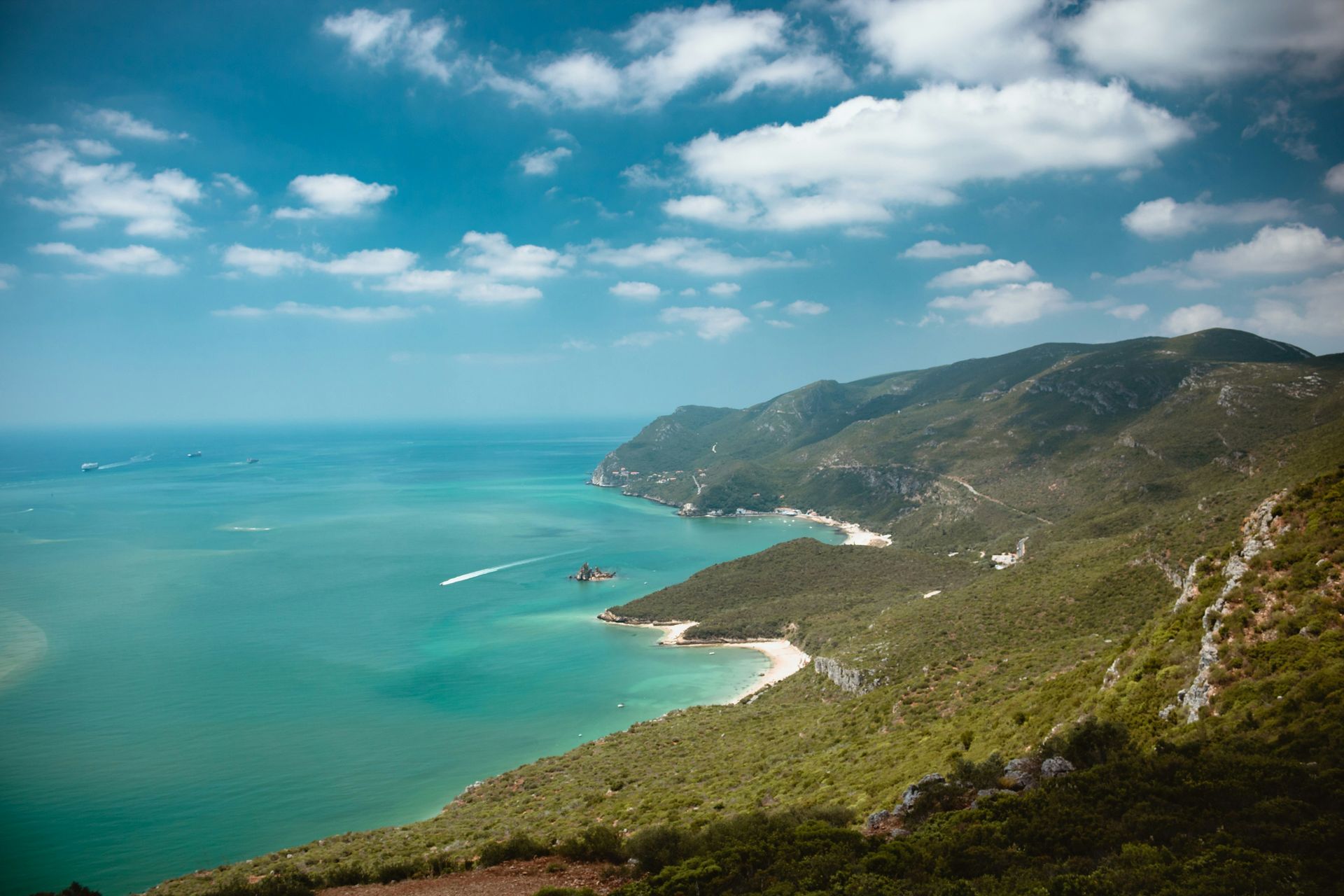
Setúbal is a working fishing port 45 minutes south of Lisbon, and its reputation among Portuguese food travelers rests primarily on its oysters. Gail Curley, co-owner of Palacio Príncipe Real, identifies the oysters as the town’s signature offering, and Mercado do Livramento is the place to encounter them in context: a traditional covered market where fishermen haul in the day’s catch in the morning, and visitors can watch the selection process and purchase directly.
The coastline of Arrábida Natural Park is 15 minutes away by boat, and the water quality in that protected stretch of the Setúbal Peninsula achieves gin-clear visibility, making it one of the better places for a summer or early fall swim anywhere within easy reach of Lisbon. Dolphins have established a resident population in the bay, and boat trips from Setúbal regularly encounter them offshore.
For accommodation, Casa Palmela is the choice: a 17th-century house converted into a luxury hotel that brings historical character to an overnight stay in a town that could otherwise read as purely functional. Setúbal’s case for inclusion among Portugal’s best beach towns rests not on the beach itself but on the full package of market culture, protected coastline access, wildlife, and the specific pleasure of eating some of the best oysters in a country that takes its seafood seriously. The protected water of the Arrábida coastline also offers a swimming experience that the more exposed Atlantic beaches elsewhere in Portugal cannot reliably match: calm, clear, and warm enough by late summer to stay in well past any reasonable excuse to leave. Market culture, natural park access, and dolphin-watching together position Setúbal as a beach town for travelers who want more than beach: a place where the coast is the frame for a broader range of experiences, and the oysters, the dolphins, and the protected natural park coastline are all within reach of each other on the same day.
