From a 14-story trapdoor slide in New Jersey to Vermont hot tubs with a view of falling snow, the best indoor water parks in the U.S.
Credit: Splash Lagoon
An indoor water park solves a problem that outdoor pools and water parks cannot: weather. The rain that cancels a day at the lake, the cold front that arrives mid-July and drops temperatures below swimsuit range, the February school break that falls in the dead of winter — none of these affect a visit to a facility that maintains its own climate regardless of what is happening outside. The best indoor water parks in the U.S. have turned this premise into fully realized resorts, with wave pools, multi-story slides, lazy rivers, and hot tubs operating under glass domes and retractable roofs that let in sunshine without sacrificing climate control.
The geography of indoor water parks reflects where year-round weather unreliability intersects with family travel demand. Wisconsin Dells has become the country’s most concentrated water park destination, with multiple competing facilities in a small area. Ski resorts in Vermont and Pennsylvania have added indoor water parks that give guests something to do after the slopes close or on rest days. Gulf Coast parks with retractable glass roofs operate in climates where outdoor swimming is possible most of the year, but where the indoor option extends the season further. Each facility serves a slightly different travel profile, from the dedicated water park resort to the ski resort add-on to the urban hotel attraction.
The 10 parks below appear in Travel + Leisure, drawn from a list spanning states from Vermont to Texas. Each earns its place through a specific combination of scale, signature attractions, and the quality of experience it delivers for the visitors it targets most directly.
Credit: American Dream
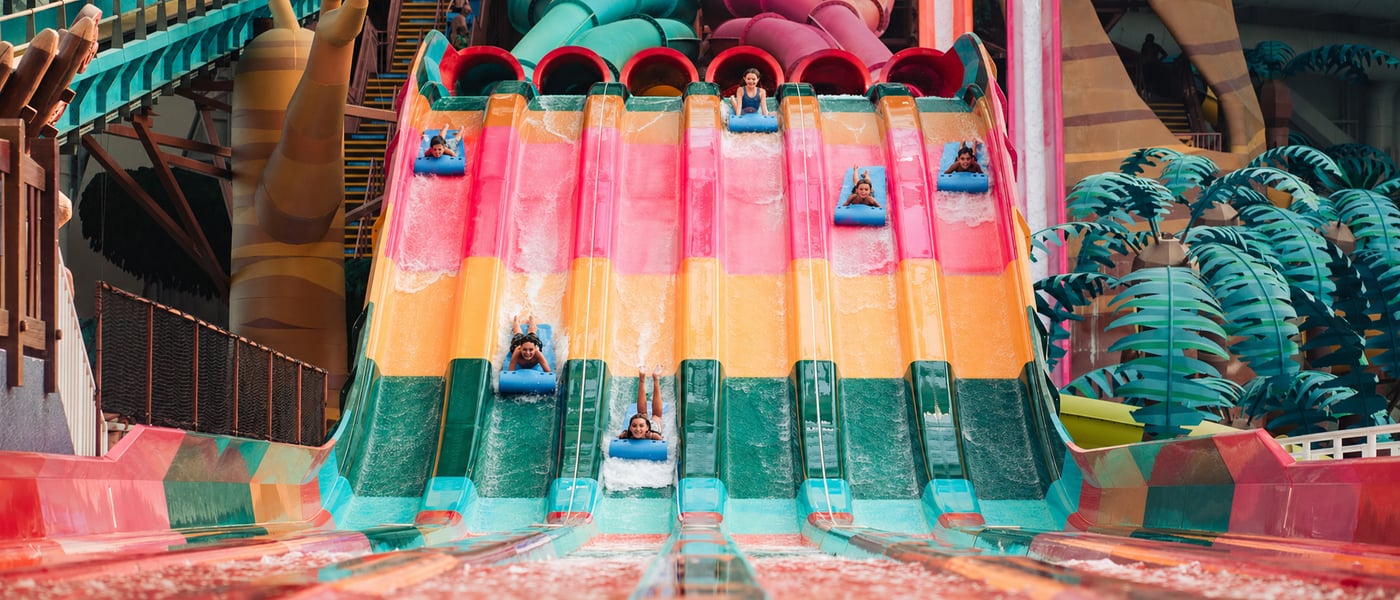
DreamWorks Water Park at American Dream in New Jersey operates under a glass dome that floods the pool area with natural light, producing an indoor environment that the glass ceiling’s transparency makes easy to forget is not outdoors. The facility claims the largest selection of water rides in the world, a distinction it supports with record-breaking attractions that include a 1.5-acre indoor wave pool, one of the largest enclosed wave pools built anywhere, and a 14-story-high trapdoor slide that constitutes the kind of attraction that visitors travel specifically to experience. The trapdoor format — a platform that drops without warning — produces a free-fall sensation at the moment of opening that conventional slides do not replicate.
The DreamWorks animation studio theming that runs throughout the park gives it a character that distinguishes it from facilities whose attractions are organized around generic tropical or adventure themes. Shrek, Po from “Kung Fu Panda,” and King Julien from “Madagascar” appear as character encounters and in the park's environmental design, giving younger visitors a connection to recognizable films alongside the water attractions. The combination of world-record rides and family-facing IP theming positions the park as a destination for groups whose members have different thrill tolerances but share the film references.
The New Jersey location at American Dream mall provides DreamWorks Water Park with logistical context that standalone parks lack: the surrounding retail, dining, and entertainment complex offers families who spend more than one day in the area additional programming beyond the water park without requiring a separate destination. For visitors from the New York metropolitan area, the accessibility of American Dream by road and public transit from the city makes DreamWorks Water Park the most convenient major indoor water park in the region.
Credit: Mt. Olympus
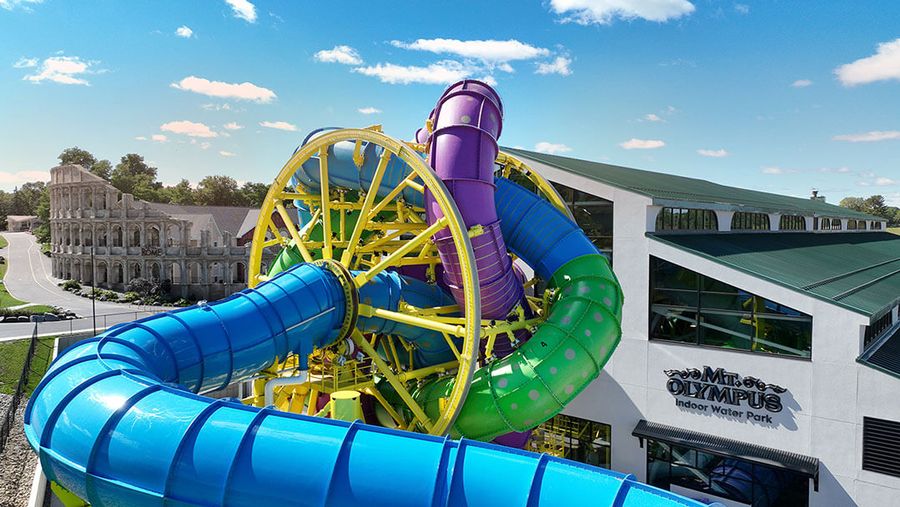
Mt. Olympus in Wisconsin Dells combines indoor and outdoor water park facilities, with the indoor portion operating year-round and housing Medusa’s Slidewheel, the first rotating waterslide built in the United States. The rotating mechanism generates speeds up to 25 miles per hour and occasionally produces airtime — the brief weightless sensation of leaving the slide surface — which gives the attraction physical feedback that conventional tube slides do not. The rotation itself, which the slide’s design uses to maintain momentum through directional changes, gives riders a different proprioceptive experience than the linear descent of a standard waterslide.
The outdoor facility extends the park’s scale with The Rise of Icarus, a waterslide whose 145-foot platform makes it the tallest waterslide in the country. Available from mid-May to mid-September, the outdoor slide makes the park a seasonal peak attraction, while the indoor facility gives the destination year-round viability. The combination of the country’s first rotating slide indoors and the tallest waterslide outdoors gives Mt. Olympus a record-holding identity that competing Wisconsin Dells parks do not replicate.
The indoor Serpent’s Pool, an expansive kiddie area with two slides and additional water-play features, offers families with younger children a lower-intensity indoor option alongside the thrill attractions. The scale of the overall resort, which extends beyond the water parks into a theme park with additional attractions, gives multi-day visitors enough programming to fill an extended stay without repeating the same experiences.
Credit: Kalahari Resorts
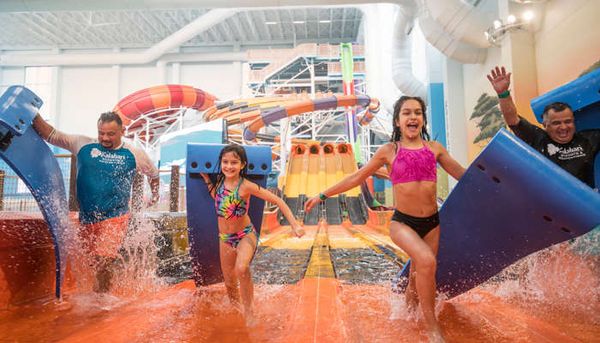
The Kalahari Resort’s indoor water park in Wisconsin Dells spans 125,000 square feet, making it one of the largest indoor facilities in a state that already concentrates water park density at a level unmatched by any other region in the country. The 920-foot lazy river that circles the facility offers a passive attraction on a scale most indoor parks do not attempt, and the group raft ride on the Victoria Falls waterslide gives families a shared experience that solo slides do not. The African safari theming that runs through the Kalahari brand gives the facility a visual consistency that differentiates it from generic tropical or resort-themed competitors.
The swim-up bar for adults within the facility gives the park a specific amenity that parents traveling with children value, as it acknowledges that the adult experience of an indoor water park differs from the child’s. Crocodile Cove, the water basketball area that offers older children a competitive activity between slides, extends the park’s programming beyond the slides and pools that make up most of the attraction inventory. The combination of a record-length lazy river, family raft rides, adult amenities, and children’s programming gives Kalahari an offering completeness that smaller facilities cannot match.
The Wisconsin Dells location places Kalahari within the market of dedicated water park destination travelers rather than visitors passing through or combining the water park with another primary attraction. The Dells market rewards facilities that justify multi-day stays, and Kalahari’s scale and the broader resort’s accommodation and dining give it the infrastructure to function as a self-contained destination for families who plan the trip around the water park rather than adding it to an existing itinerary.
Credit: Soundwaves GO
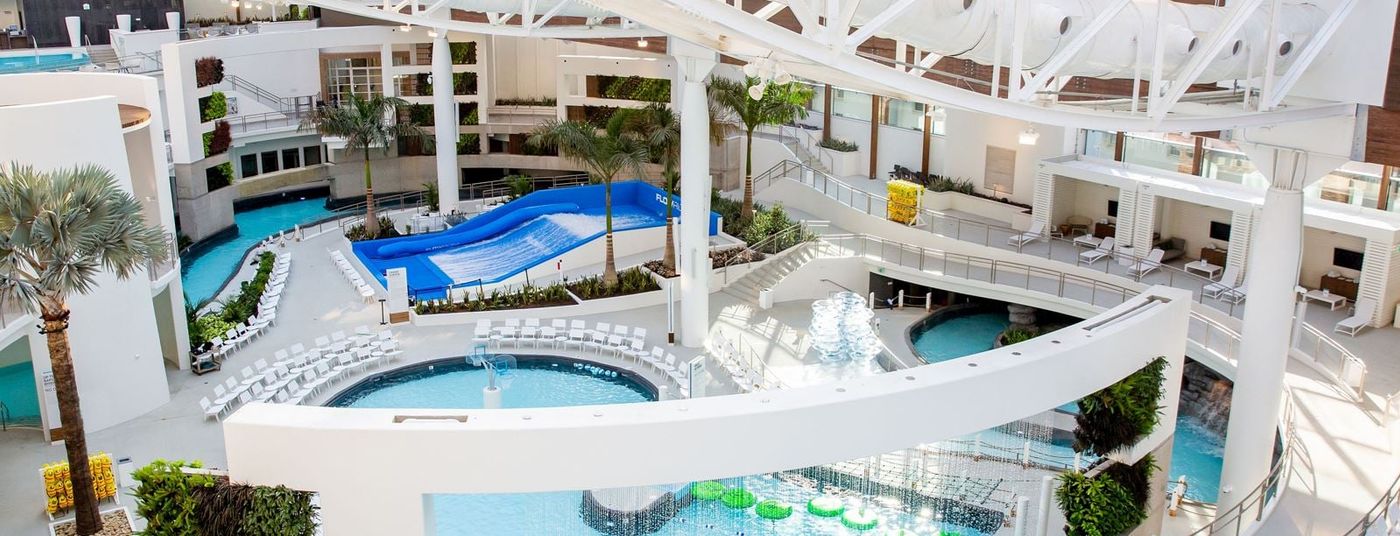
Soundwaves, the water park at the Gaylord Opryland Resort and Convention Center near Nashville’s Grand Ole Opry, spans nine acres across three stories and integrates real plants into its interior design rather than the synthetic tropical vegetation most indoor water parks use. Two lazy rivers, body slides, small children’s coves, and an adults-only area offer a range of programming that covers the full spectrum of visitor ages and activity preferences in a single visit. The adults-only section gives parents and groups without children a dedicated space within the park that the family-oriented areas do not encroach on.
The Gaylord Opryland context gives Soundwaves a guest population shaped by the resort’s broader identity: Nashville visitors who arrive for the music and entertainment programming discover that the resort includes a full-scale water park, which gives Soundwaves access to a visitor base that did not necessarily plan for a water park visit. The atrium gardens that the resort is known for — acres of indoor gardens under a glass ceiling — give the property an environment that the water park extends rather than contradicts, both operating as controlled natural environments within a large-scale hotel and convention complex.
The Nashville location gives Soundwaves a geographic accessibility from major southeastern and Midwest population centers that Wisconsin Dells water parks, concentrated in a more regionally specific destination, do not match. Visitors who travel to Nashville for reasons unrelated to water park tourism can add a Soundwaves visit to their itinerary without restructuring the trip, which gives the park a broader potential audience than destination-specific facilities reach.
Credit: Jay Peak Resort
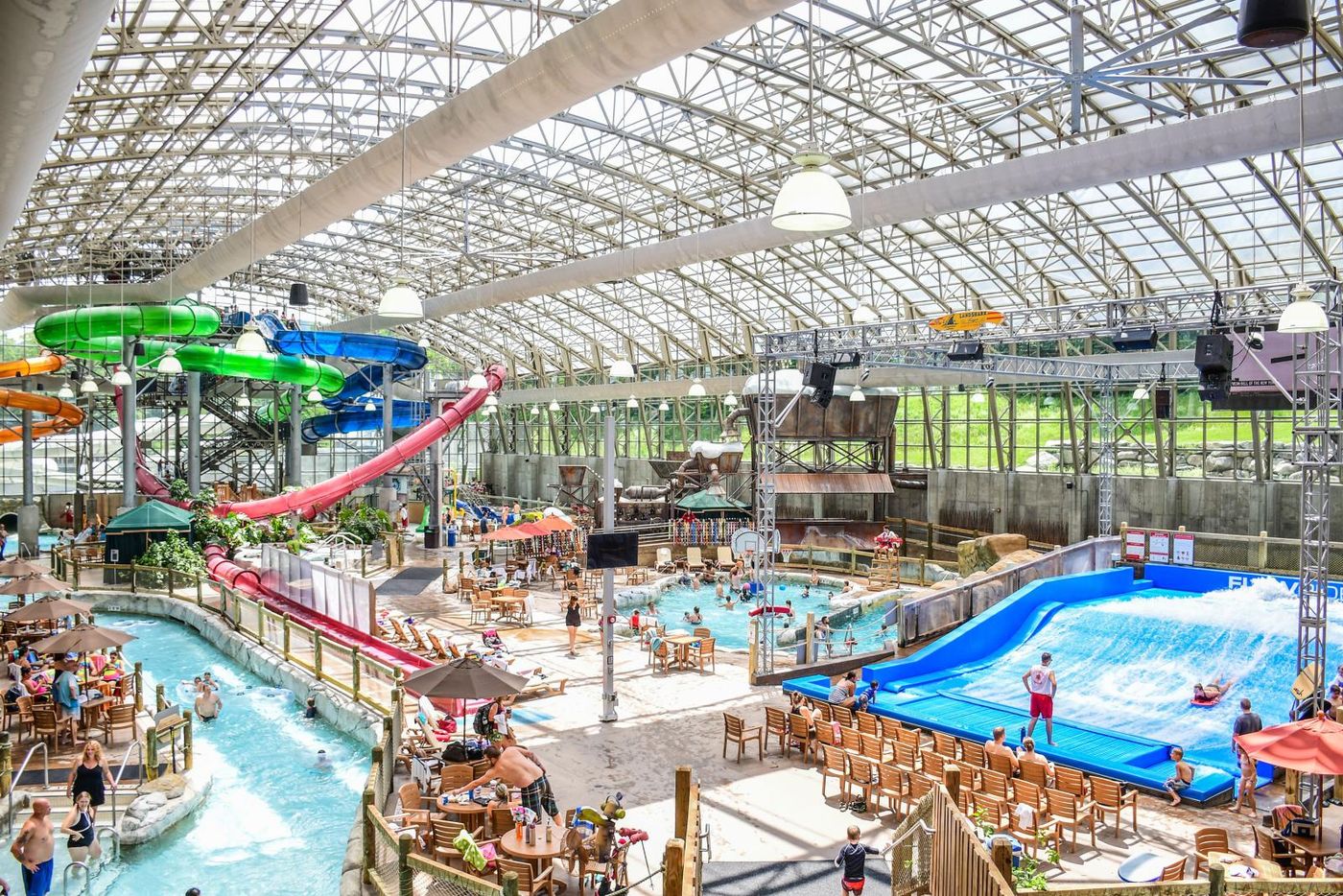
Jay Peak Resort’s Pump House indoor water park gives Vermont’s ski guests an activity that operates regardless of ski conditions, weather, or the physical fatigue that a full day on the mountain generates. The La Chute slide, standing 65 feet high and reaching 45 miles per hour, delivers thrill-ride credentials that match the ski resort’s broader identity as a destination for guests who approach outdoor recreation at the higher end of the intensity spectrum. The slide’s speed — higher than most indoor water park attractions — gives it a specific draw for guests who want an adrenaline experience after the slopes rather than a purely recuperative one.
The indoor and outdoor hot tubs that allow guests to soak while watching snow fall give the Pump House an experience specific to the ski resort context that no urban indoor water park can replicate. The physical contrast between the warm water and the visible winter landscape outside produces a sensory pairing that ski resort water parks have developed as their specific competitive advantage over standalone facilities. The Big River, which the Pump House describes as a non-lazy river — marked by rapids and strong currents rather than the gentle current that conventional lazy rivers maintain — gives the flow attraction a more active character suited to a ski resort’s guest profile.
Jay Peak’s location in northern Vermont, near the Canadian border, gives the resort a geographic positioning that draws visitors from Montreal and the broader Quebec market, as well as from the northeastern U.S., providing the Pump House with a cross-border audience that most domestic indoor water parks do not reach. The ski resort’s reputation as one of Vermont’s snowiest mountains gives the Pump House a strong base of winter guests who need an alternative to outdoor activity during storm days or rest days.
Credit: Camelback Resort
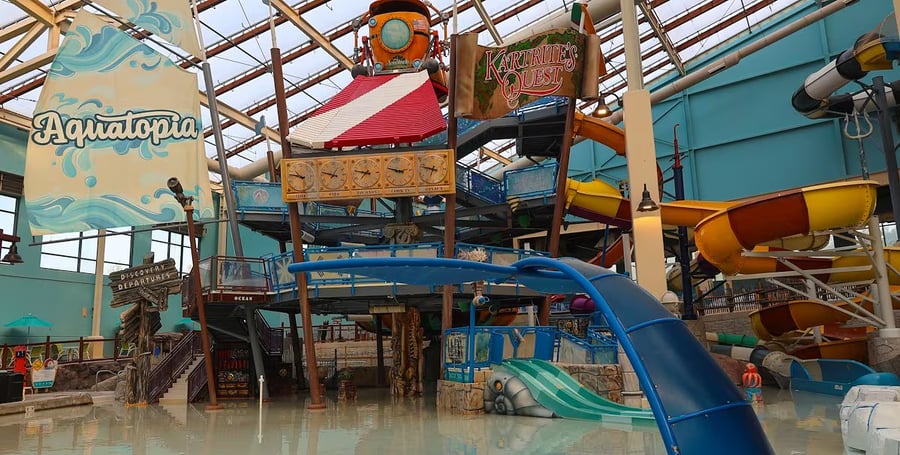
Aquatopia at Camelback Resort in the Pocono Mountains gives Pennsylvania skiers the same ski-and-swim combination that Jay Peak offers Vermont guests, with a facility that operates year-round but whose winter pairing with the adjacent ski mountain gives it the most distinctive seasonal identity. The 60-foot Skydive Plummet delivers the vertical drop credential that resort water parks use to distinguish themselves from leisure facilities, and the Lost River lazy river — designed to look like the site of ancient ruins — gives the flow attraction a thematic specificity that generic lazy rivers lack.
The Penguin Play Bay, a shallow adventure lagoon maintained at warmer temperatures than the main pool areas, provides young children a safe and comfortable entry point into the water park environment that the taller, faster attractions surrounding it would otherwise make inaccessible to them. The Mystic Springs hot pool gives adults a recuperative option within the facility that the ski resort context makes particularly relevant: guests whose legs ache from a day on the mountain can soak without leaving the water park’s controlled environment for the outdoor cold.
Camelback Resort’s Pocono Mountains location gives Aquatopia accessibility from the Philadelphia and New York metropolitan areas that Vermont and Wisconsin ski resorts do not match for the mid-Atlantic population. The relatively short drive from two of the country’s largest metropolitan areas gives Aquatopia a potential audience of weekend visitors who can reach the resort without a flight, creating a day-trip and weekend-trip market that more remote competitors cannot access as easily.
Credit: OWA Parks & Resort
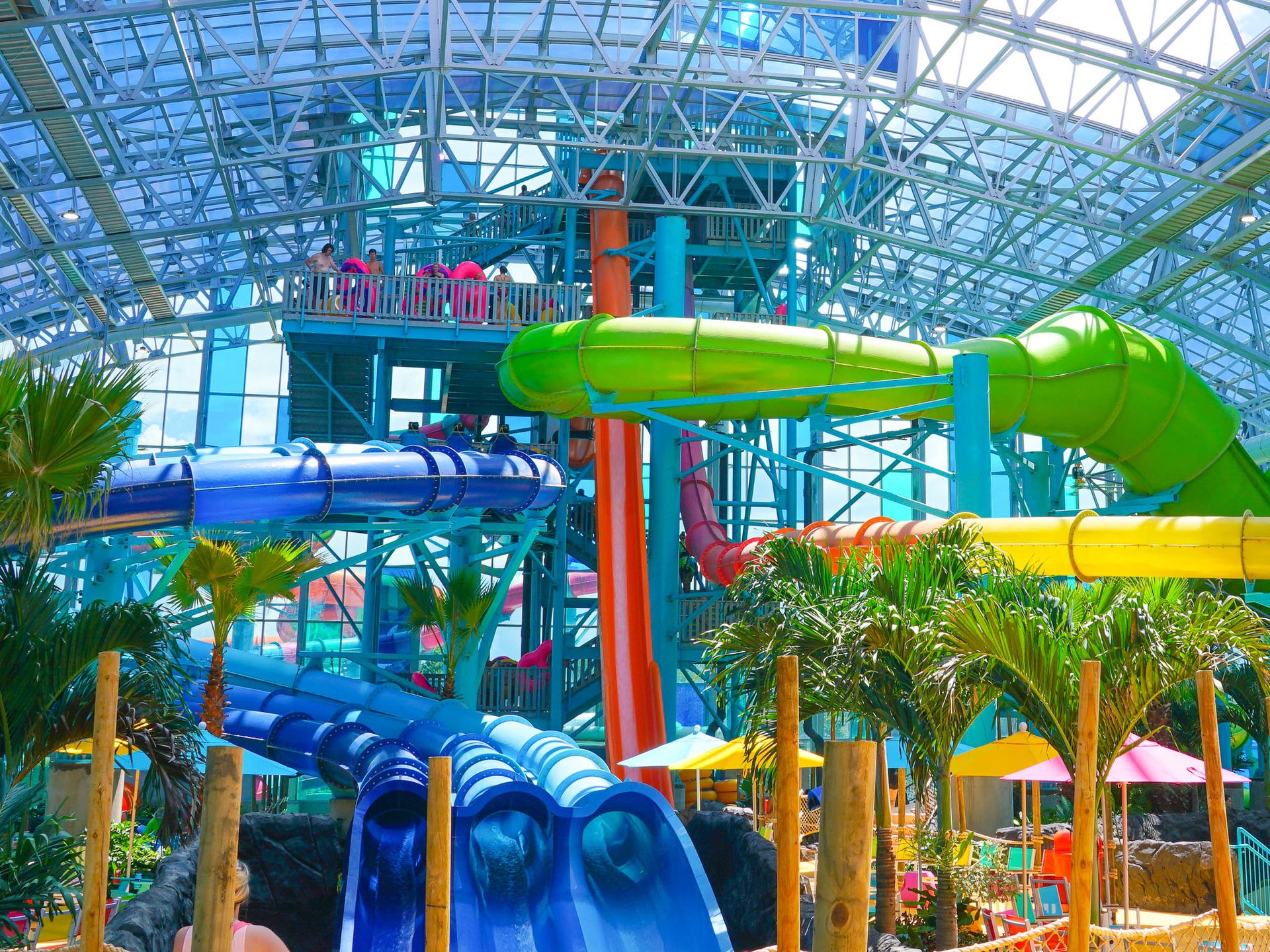
Tropic Falls in Foley, Alabama, operates under a glass roof that retracts when conditions allow, allowing the facility to switch between a fully indoor water park and an open-air one on any given day. The name Owa, derived from the Muscogee Creek term for “big water,” gives the broader entertainment complex a cultural reference that aligns with the park’s Alabama Gulf Coast location. The 23 attractions within the indoor water park include 75-foot-tall slides, a wave pool, and a surf simulator, giving the facility a slide height and variety that most regional indoor water parks do not offer.
The retractable roof that defines Tropic Falls’ architectural identity gives it a flexibility that fixed-dome parks cannot match. On clear days, the roof opens to bring natural light, fresh air, and the warmth of the Alabama climate into the facility; on overcast or rainy days, it closes to maintain the controlled environment promised by the indoor designation. The ability to operate in either mode gives Tropic Falls a year-round identity that acknowledges the Gulf Coast’s typically mild climate without being fully dependent on it.
The connection to the larger Tropic Falls Theme Park that surrounds the water park provides visitors who spend multiple days in Foley with additional programming that the water park alone does not offer. The combined resort gives families the option to spread their visit across different attraction types rather than focusing entirely on water activities, extending the length of a stay and giving the destination a completeness that standalone water parks in smaller markets typically lack.
Credit: Splash Lagoon
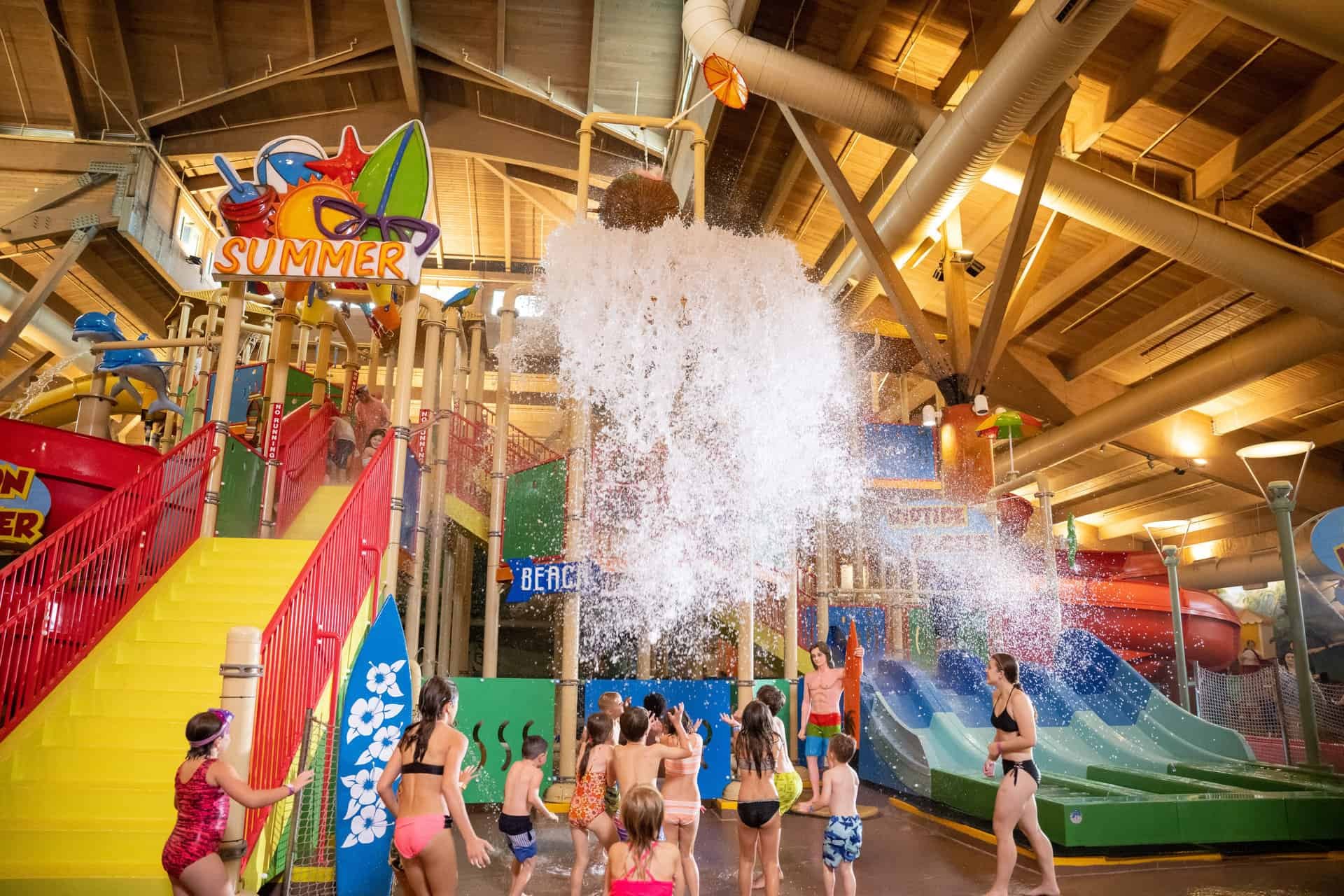
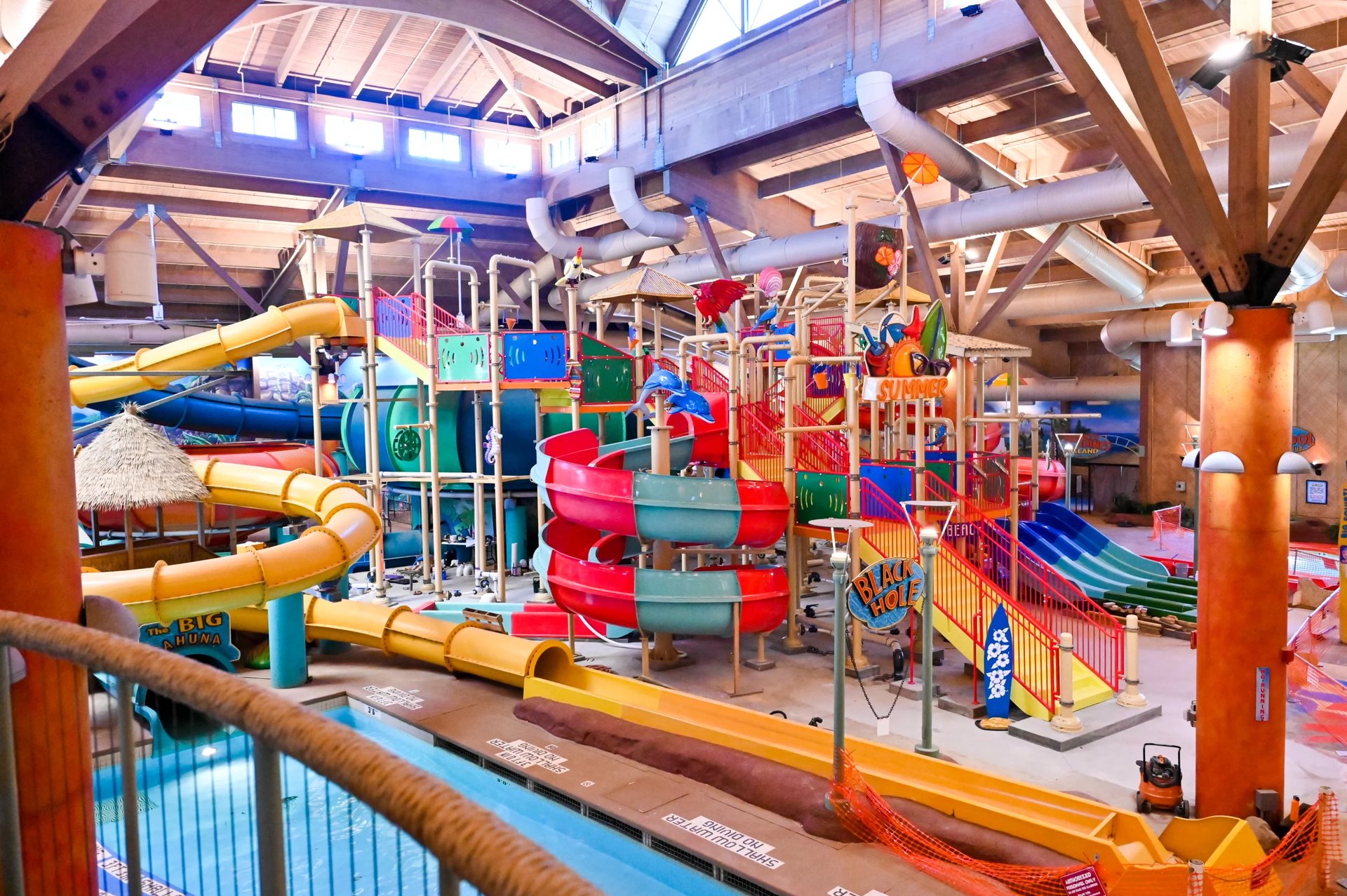
Splash Lagoon in Erie County, Pennsylvania, is built around a three-story treehouse structure that organizes the park’s smaller attractions and provides younger visitors with a navigable environment within the larger facility. The lodge-like aesthetic that the treehouse anchors gives Splash Lagoon a visual character distinct from the tropical or theme-park aesthetics that dominate the indoor water park category. The Cyclone slide, which spins riders four times before propelling them into the pool below, delivers the disorientation of rotation, combined with the ejection of an abrupt descent, that few slides in this category replicate at the same intensity.
The Black Hole, a tube slide that sends riders through complete darkness, gives the park an attraction whose experiential quality depends entirely on the sensory deprivation of the dark rather than the visual stimulation that most waterslides use. The absence of visual information during the slide eliminates the rider’s ability to anticipate direction changes or duration, producing a fundamentally different kind of physical engagement than a transparent or lit slide of equivalent speed and height would.
The Treasure Island Arcade, integrated into Splash Lagoon's broader facility, provides visitors who need a break from the water attractions with an indoor gaming option that extends the visit without requiring a departure from the building. The self-contained nature of the facility, with water attractions, dry attractions, and food options within a single structure, gives Splash Lagoon the programming depth for a full day of family activity without the logistical complexity that moving between separate venues introduces.
Credit: Wilderness at the Smokies
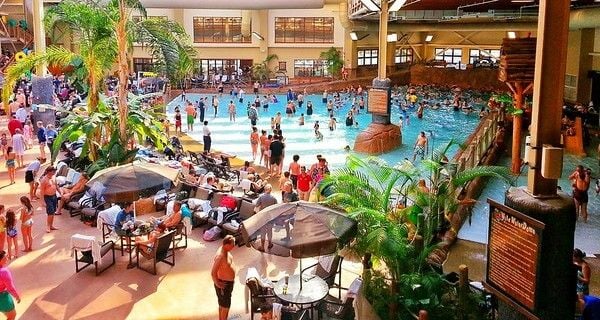
Wilderness at the Smokies operates Wild WaterDome, a 66,000-square-foot indoor water park under a glass roof, which the facility keeps open year-round to let natural light into the space. The Tennessee location near the Smoky Mountains gives the resort a geographic context that the Great Smoky Mountains National Park anchors as one of the country’s most visited natural attractions, which gives Wilderness at the Smokies access to visitors who come to the region for hiking and nature tourism and find the water park an additional activity option.
The Runaway Canyon raft ride, which runs five stories high and includes 450 feet of tunnels and loops before a drop approaching 60 feet, is the facility's primary family attraction. The Storm Chaser, which sends riders into a zero-gravity fall before catching them in a funnel and depositing them in a pool, delivers the disorienting free-fall experience that trapdoor and near-vertical slides produce by similar mechanisms. The combination of a tunneled-raft ride for groups and a solo near-zero-gravity attraction gives the park thrill credentials across two ride formats.
The glass roof that distinguishes Wild WaterDome architecturally gives the facility a light quality that solid-roof indoor water parks cannot replicate. The natural light that the glass ceiling transmits shifts with the time of day and the weather outside, giving the indoor environment a dynamism that artificial lighting maintains at a constant level. On sunny days, the light entering through the glass gives the water’s surface and the surrounding space a quality more associated with outdoor swimming than indoor pool environments.
Credit: Epic Waters Indoor Waterpark
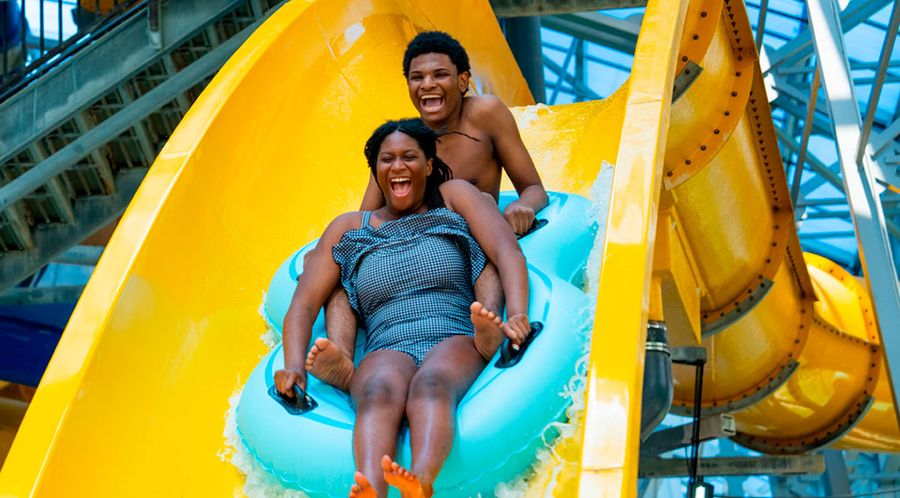
Epic Waters in Grand Prairie, Texas, operates under a giant glass dome that gives the facility the feeling of swimming outdoors in the Texas sunshine while maintaining the temperature control required for indoor facilities. The lazy river, which the park highlights as a primary attraction, runs long enough to justify its reputation in the regional market, and the six slides, surf simulator, and arcade room provide a full range of activities for different age groups and physical preferences.
The Yellow Jacket Drop, which connects the Constrictor and Boomerango slides and delivers riders onto a near-vertical wall that produces near-zero gravity, gives Epic Waters its signature high-intensity attraction. The sequence that deposits a rider from a conventional slide into a near-vertical wall, where the loss of gravity registers as a momentary physical sensation before the water catches the descent, represents a specific engineering approach to the zero-gravity experience that the facility uses as its primary thrill credential.
The Grand Prairie location, just outside Dallas, gives Epic Waters access to a metropolitan audience in one of the country’s fastest-growing population centers. The accessibility of the facility without the destination travel that Wisconsin Dells or resort-based facilities require makes Epic Waters a viable option for Dallas-Fort Worth residents whose indoor water park visits would otherwise involve a flight or a long drive. For a region whose outdoor swimming season runs most of the year but whose summer temperatures make outdoor activity genuinely uncomfortable for extended periods, an indoor park that maintains a comfortable temperature regardless of the Texas heat gives Epic Waters a year-round relevance specific to its climate and market.
