
The best budget-friendly river cruises you can book right now
From a $180-per-night Rhine cruise with Black Forest cake demos to an all-inclusive Mississippi sailing that departs from New Orleans' French Quarter
-1920x1080.jpg)
Tudor Stanica / Unsplash
River cruising has a reputation for being expensive, and it's largely deserved. The intimate ship format, the all-inclusive structure, the port-intensive itineraries, and the high staff-to-passenger ratios that define the category’s quality standard do not come cheap. The standard argument against the category is that a week on the Danube will cost more than a week at a European beach resort, which is true, and the standard counterargument is that the Danube week includes accommodation, food, beverages, and shore excursions in a single package whose per-component pricing, when disaggregated, compares more favorably to the beach resort than the headline figure suggests.
The more useful frame is timing. River cruise lines price their inventory the way airlines price seats: early and late departures cost less, shoulder-season dates cost less, and the same cabin on the same ship sailing the same itinerary can cost dramatically less in March than in June. The sailings below exploit this pricing dynamic by combining shorter itineraries, off-peak timing, and comprehensive all-inclusive structures that minimize the out-of-pocket costs that make a nominally affordable cruise more expensive in practice. A sailing that covers excursions, beverages, gratuities, and port fees within the fare is a different financial product from one that covers only the cabin and meals.
The 6 sailings below appear in U.S. News and World Report, selected for their balance of itinerary quality and per-night cost across Europe, Southeast Asia, and the U.S. The per-night figures cited throughout reflect published promotional fares at the time of publication and should be verified directly with each cruise line, as river cruise pricing adjusts continuously based on demand, remaining cabin inventory, and seasonal promotional schedules that can change the per-night figure significantly from what initial research at the time of booking produces.
1. CroisiEurope’s Rhine Gone Wild costs about $180 per night
Credit: CosiEurope
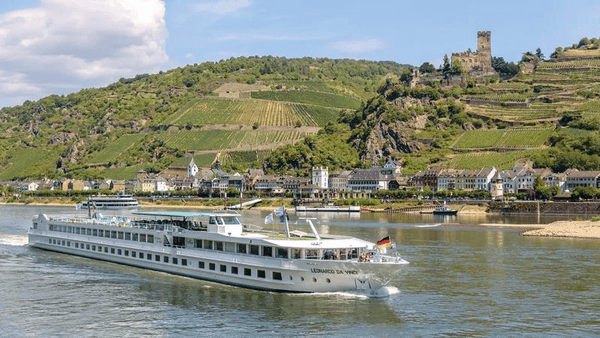
CroisiEurope’s five-day Rhine Gone Wild sailing departs round-trip from Strasbourg, France, and stops in Koblenz, Rüdesheim, and Mannheim in Germany, threading through some of the most photogenic stretches of the Rhine Valley. The itinerary earns its name through a programming approach that leans into German and Alsatian cultural traditions: a live demonstration of traditional Black Forest cake assembly, a hands-on Alsatian Spätzle cooking lesson, a Bavarian evening with a classic regional menu, Schlager music, folk dancing, a tea dance, and a gala evening give the five days an entertainment density that the scenery-focused Rhine itineraries typically do not approach.
The all-inclusive structure makes Rhine Gone Wild the most affordable per-night sailing on this list. The fare covers all meals, the gala dinner, all drinks with meals and at the bar, Wi-Fi, excursion headsets, and all port fees. With 2026 sailings starting at the equivalent of a little more than $180 per night, the all-in package gives the value calculation its clearest expression: every drink, every meal, every port fee is already paid for before the ship departs. The CroisiEurope model, which the French river cruise line has applied across its large European fleet for decades, delivers a product that the higher-profile river cruise brands match in itinerary quality but rarely at this per-night cost.
The Rhine Valley setting gives the cultural programming its geographic anchor: the vineyard-covered hillsides above Rüdesheim, the Loreley rock formation between Koblenz and Bingen, and the cathedral-dominated skylines of the German riverside cities are some of the most recognized river scenery in Europe. The round-trip format from Strasbourg means the journey begins and ends in one of Alsace’s most beautiful cities, and the half-timbered architecture of Strasbourg's old town provides embarkation and disembarkation days with their own sightseeing program without an additional tour cost. Strasbourg’s position on the France-Germany border gives it a specific cultural duality that the Rhine itinerary’s German stops amplify by contrast: the Alsatian dialect, the half-timbered Petite France quarter, and the Franco-German cuisine give the city an identity specific to this border region.
2. Riviera’s Amsterdam tulip cruise includes six excursions
Credit: Riviera Cruises
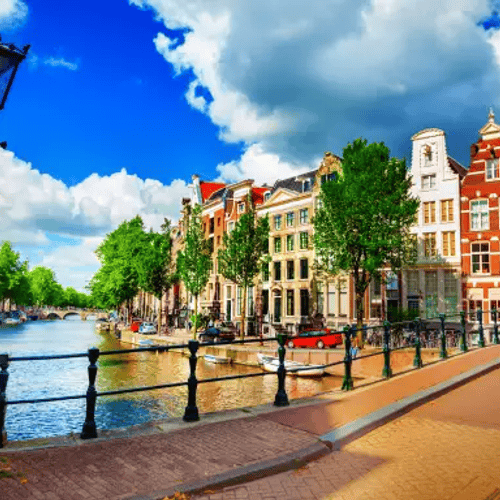
Riviera River Cruises’ five-day Spring in the Netherlands: Amsterdam and the Tulips River Cruise is built around one of Europe’s most season-specific travel experiences: the Dutch tulip bloom, which peaks in April and colors the landscape that has defined the Netherlands’ tourism identity for generations. The Keukenhof gardens, which open only from late March to mid-May and display millions of tulips across 79 acres of designed landscape, anchor the itinerary’s most concentrated single-day visual experience. The windmill village of Zaanse Schans and the open-air Zuiderzee Museum provide the remaining days with a historical and architectural program.
The Amsterdam canal tour gives the itinerary its city exploration component: a guided walk through the canal district covers the 17th-century merchant houses, the bridges, and the specific water-level perspective on Amsterdam’s architecture that the city’s layout makes available only to those moving through it on foot or by boat. The six guided excursions included in the fare are the specific logistical detail that makes the per-night cost meaningful: six organized tours in five days, with no per-excursion charges, give the active itinerary a value structure that the cruise-then-pay-per-tour model cannot match at the same total cost.
The fare is almost entirely inclusive, covering all dining, a comprehensive drinks package, Wi-Fi, and all port charges and taxes. At the nightly rate the itinerary produces, the package gives the traveler who wants maximum cultural content in minimum time a compressed Dutch experience whose seasonal specificity, available only in the narrow spring window when the tulips are in bloom, gives the trip a once-a-year character that justifies the timing commitment. The Amsterdam canal system, which the guided tour covers at street level, is a UNESCO World Heritage site whose 17th-century merchant house facades and canal bridge geometry give the walking tour a visual density that the same streets, navigated by smartphone without a guide, deliver less efficiently and with less historical context.
3. Emerald’s Danube Explorer offers luxury quality off-peak
Credit: Emerald Cruises
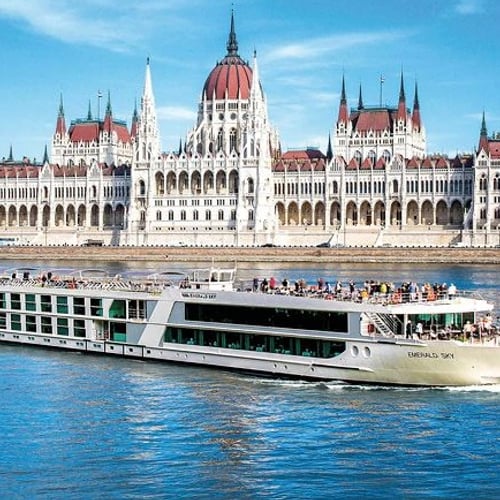
Emerald Cruises’ eight-day Danube Explorer sailing runs from Budapest, Hungary, to Passau, Germany, covering five countries across Central Europe with a port list that includes the capital cities and the smaller historically significant towns that the capital-only itineraries bypass. Budapest, Vienna, and Bratislava anchor the major stops, and the Wachau Valley’s vineyard landscape and the medieval town of Český Krumlov provide the itinerary with its most visually distinctive regional content. The Wachau Valley, a UNESCO World Heritage site, is the Danube’s most celebrated single stretch, and the early spring timing that makes this sailing affordable is also the period when the apricot trees for which the valley is known bloom along the riverbanks.
The budget argument rests entirely on timing. An early March departure produces a per-night cost well below what the summer high-season rates generate for the same cabin and the same itinerary, and the shoulder-season tradeoff is manageable: average high temperatures in Budapest and Vienna in early March hover in the 50s Fahrenheit, which is cold for al fresco dining but perfectly adequate for walking tours and sightseeing in the heated interiors of Schönbrunn Palace, the Grand Market, and Bratislava’s 18th-century old town. The crowds that the summer season brings to these cities are also absent, which gives the off-peak visitor a quality of experience at the major attractions that the peak-season traveler pays more to receive in less comfortable conditions.
The fare covers transfers to and from the ship, all onboard meals, a selection of drinks with lunch and dinner, Wi-Fi, some shore excursions, port charges, and onboard gratuities. The gratuity inclusion is worth noting specifically: on river cruises whose base fares exclude gratuities, the end-of-cruise tip calculation can add a meaningful sum to the total cost, and the Emerald structure removes that calculation from the budgeting exercise. The off-peak timing also gives the Wachau Valley visit a distinct advantage: the spring landscape, with the valley’s apricot trees in blossom against the terraced vineyards, gives the scenic cruise section a visual character that the summer’s greener, but less florally dramatic, version does not replicate.
4. Viking’s Danube Waltz averages roughly $343 per night
Credit: Viking River Cruises
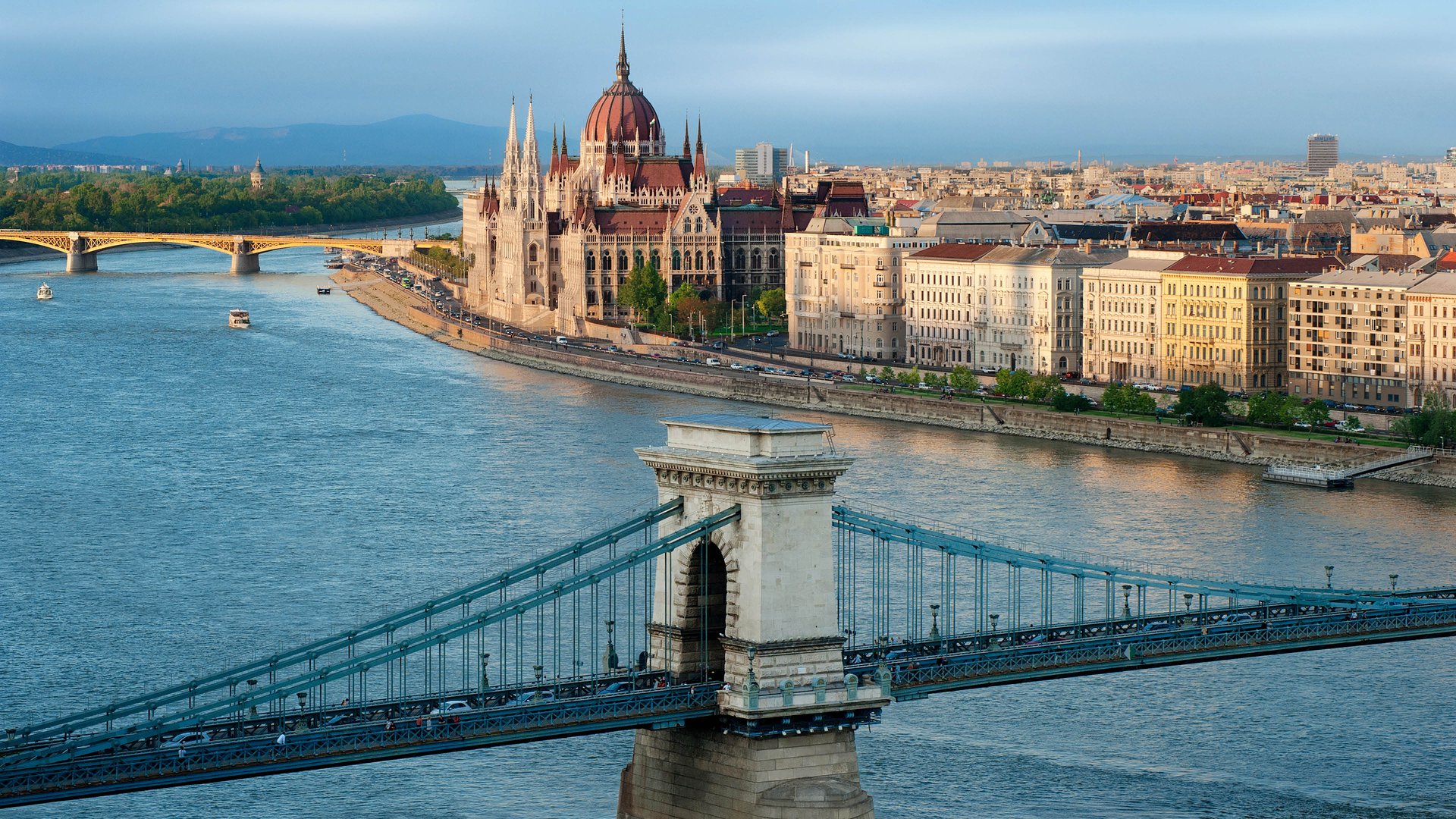
Viking River Cruises’ eight-day Danube Waltz itinerary runs from Budapest to Passau, covering Hungary, Slovakia, Austria, and Germany, and features a mix of European capitals and smaller towns that makes it the most balanced version of the Danube itinerary. The Wachau Valley, Vienna’s Habsburg architecture and classical music heritage, Passau’s ornately decorated St. Stephen’s Cathedral, and the quieter towns between the major stops give the eight days a variety that the capital-city-only itinerary does not provide. The Austro-Hungarian culinary tradition, embedded in the regional menus served onboard, gives the dining program its geographic coherence.
Viking’s all-inclusive model is the specific mechanism that makes the Danube Waltz a value proposition. The base fare covers six guided tours in the ports of call, which is the detail that most directly affects the total cost of the itinerary: six organized excursions at no additional charge means the traveler arrives in Vienna, Budapest, and the Wachau Valley with the sightseeing infrastructure already paid for. The base fare also covers all onboard meals, eliminating the per-meal calculation from the daily experience and giving the ship dining its intended function as a regional culinary program. The per-night rate this produces, averaged across the eight-day sailing, makes the Danube Waltz Viking’s most accessible European river cruise itinerary in the current lineup.
Viking’s brand position in the river cruise market sits above the budget end of the category, and the Danube Waltz is a value proposition within that premium context. The product quality the brand delivers, covering ship design, onboard programming, and guide selection, is not compromised by the more accessible price point that the specific itinerary produces within the broader Viking fare structure. The Danube Waltz’s Budapest departure gives the itinerary a strong opening: the Hungarian capital’s Buda Castle district, the Fishermen’s Bastion, and the Chain Bridge across the Danube give the first day ashore a sightseeing program whose visual quality sets a high standard for the cities that follow.
5. AmaWaterways’ Mekong cruise runs about $307 per night
Credit: AmaWaterways
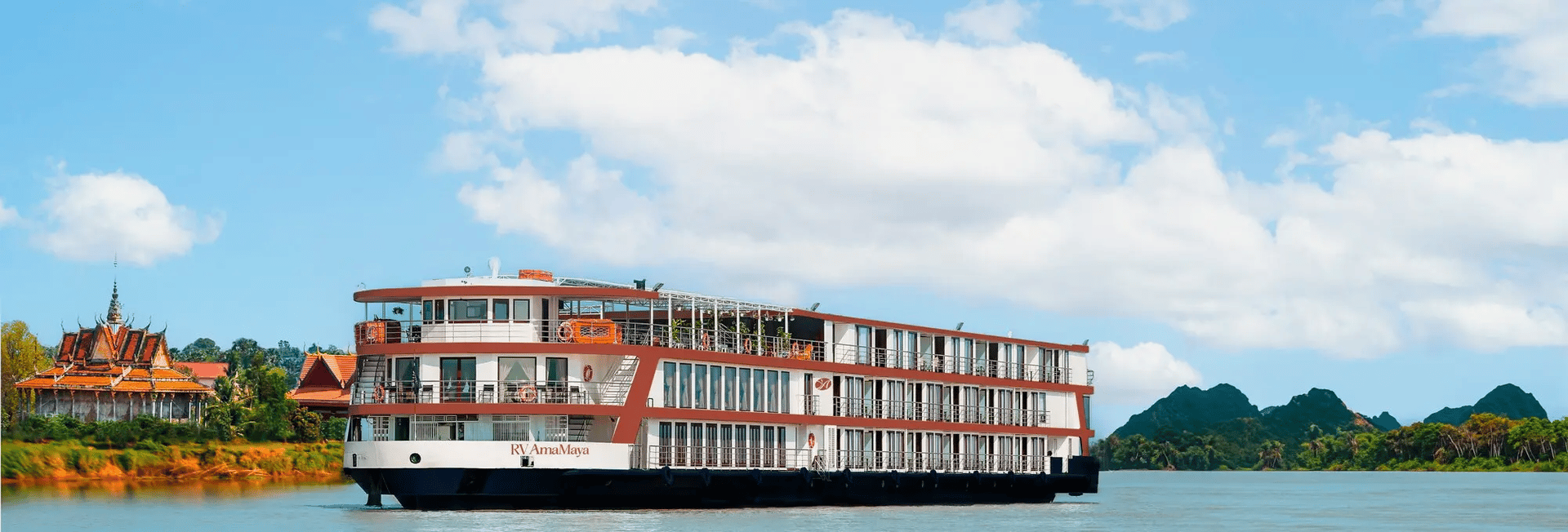
AmaWaterways’ eight-day Riches of the Mekong itinerary navigates between Ho Chi Minh City, Vietnam, and Siem Reap, Cambodia, giving the Southeast Asia river cruise its most culturally specific routing. The Mekong River’s passage through the Vietnamese delta and the Cambodian interior covers a geographic and historical range that no other river in Southeast Asia concentrates in the same eight-day stretch: the Mekong Delta’s intricate waterway network, the riverside villages of Angkor Ban, and the capital of Phnom Penh with its complex and significant 20th-century history give the itinerary a cultural depth that the European river routes deliver through architecture and wine culture but the Mekong delivers through a living encounter with a less-visited part of the world.
The all-inclusive structure includes daily guided shore excursions in every destination, which is the specific detail that makes the per-night rate meaningful in the Southeast Asia context: excursions in Cambodia and Vietnam that are organized and guided by a reputable operator carry a quality and safety assurance that the self-arranged alternative, however cheaper on paper, does not consistently provide in the same terms. The fare also covers upscale onboard dining and wine and beer with lunch and dinner, which gives the beverage program a scope appropriate to the dining quality the AmaWaterways brand sustains across its fleet.
The Siem Reap terminus gives the itinerary its most significant single day: the temples of Angkor Wat, accessible from Siem Reap by the excursion that the fare covers, are among the most extraordinary archaeological sites in the world, and the cruise’s terminus there gives the traveler a logical extension to the Angkor complex that the Cambodian capital’s own heritage more than justifies. The Mekong River’s character in this stretch, narrower and more intimate than the broad European rivers whose bank-to-bank vistas define the traditional river-cruise visual, gives the onboard experience a closer, more immersive encounter with the riverside settlements and the daily life of the communities along the banks.
6. American Cruise Lines sails the Mississippi domestically
Credit: American Cruise Lines
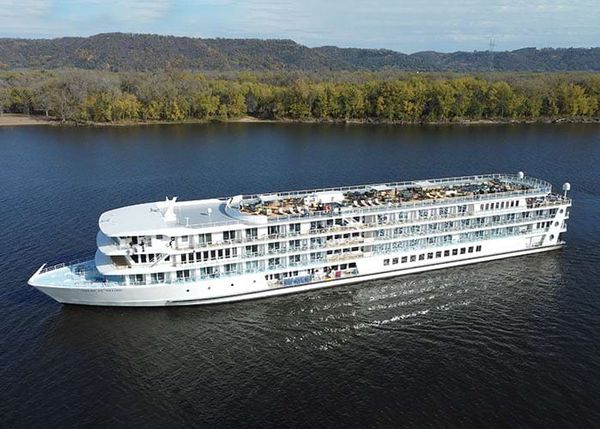
American Cruise Lines’ eight-day Highlights of the Mississippi cruise departs round-trip from New Orleans, giving the domestic river cruise its most advantageous starting point: the city itself. Before the ship departs, it offers a glimpse of the French Quarter, the Garden District, and the music and food culture that make New Orleans one of the most distinctive destinations in the United States. The round-trip format means the same city anchors the return, giving both the departure and arrival days their own program without additional travel planning.
The Mississippi itinerary covers Oak Alley’s live-oak-lined plantation avenue, the Civil War battlefields of Vicksburg, and Baton Rouge’s riverfront and state capital architecture. Regional experts provide onboard storytelling and historical context that gives the Mississippi’s Civil War and antebellum history the interpretive depth that a self-guided visit to these sites would require significant research to replicate. The Cajun and Creole cuisine served throughout the cruise gives the food program its regional specificity: the culinary tradition of southern Louisiana, delivered aboard a ship sailing the river whose geography shaped that tradition, gives the dining a coherence that the European river cruise’s regional menu achieves in its own terms.
The all-inclusive fare covers a hotel night in New Orleans the day before departure, every onboard meal and premium beverage, at least one shore excursion per port, all gratuities, and all port charges. Off-peak November and December departures, which occasionally include complimentary airfare in promotional packages, give the domestic river cruise its strongest value argument: a New Orleans-based sailing that includes the pre-cruise hotel night, all onboard costs, and the return airfare from a major hub in a single package gives the budget-conscious traveler a total-cost calculation that the headline per-night rate understates. The American Cruise Lines paddlewheeler format, specifically designed for the Mississippi’s shallow-draft navigational requirements, gives the ship a historical character specific to the river’s navigational and cultural heritage that a deep-water ocean cruise ship could not replicate.