
From a Mazda3 with a near-luxury interior under $25,000 to a Hyundai Ioniq 5 with 300 miles of range
Credit: Mazda
College students shopping for a car face specific constraints that most car-buying guides do not address directly. The budget ceiling is lower than for most buyers. Fuel economy matters in a way that it may not for someone with a dedicated work vehicle expense account. Reliability matters in a way it might not for a buyer with roadside assistance on speed dial and a service center nearby. And safety matters more than it does for buyers who are not, statistically, among the highest-risk driver demographics. U.S. News and World Report assembled the list below specifically for this buyer profile, and all vehicles on it have good safety scores and starting prices at or below $35,000.
The models span sedans, hatchbacks, hybrids, a subcompact SUV, a compact SUV, an electric vehicle, and a compact pickup truck, meaning the list covers genuinely different transportation needs, not 10 variations on the same small sedan. Several models earn specific U.S. News awards in their categories, and the reliability scores come from J.D. Power’s predicted reliability data, not from long-term ownership surveys that would not yet apply to new model years.
These 10 models come from U.S. News and World Report’s list of the best cars for college students in 2026, evaluated on safety scores, reliability data, fuel economy, and starting price, not on luxury content or performance alone, a deliberate choice that makes this list different from most car recommendation lists that prioritize power, equipment breadth, or luxury content at the expense of value and overall per-mile and per-year total cost of ownership profile within the tighter budget constraints that most college students and their families navigate when purchasing, financing, or maintaining a vehicle over a typical multi-year ownership period.
Credit: Honda
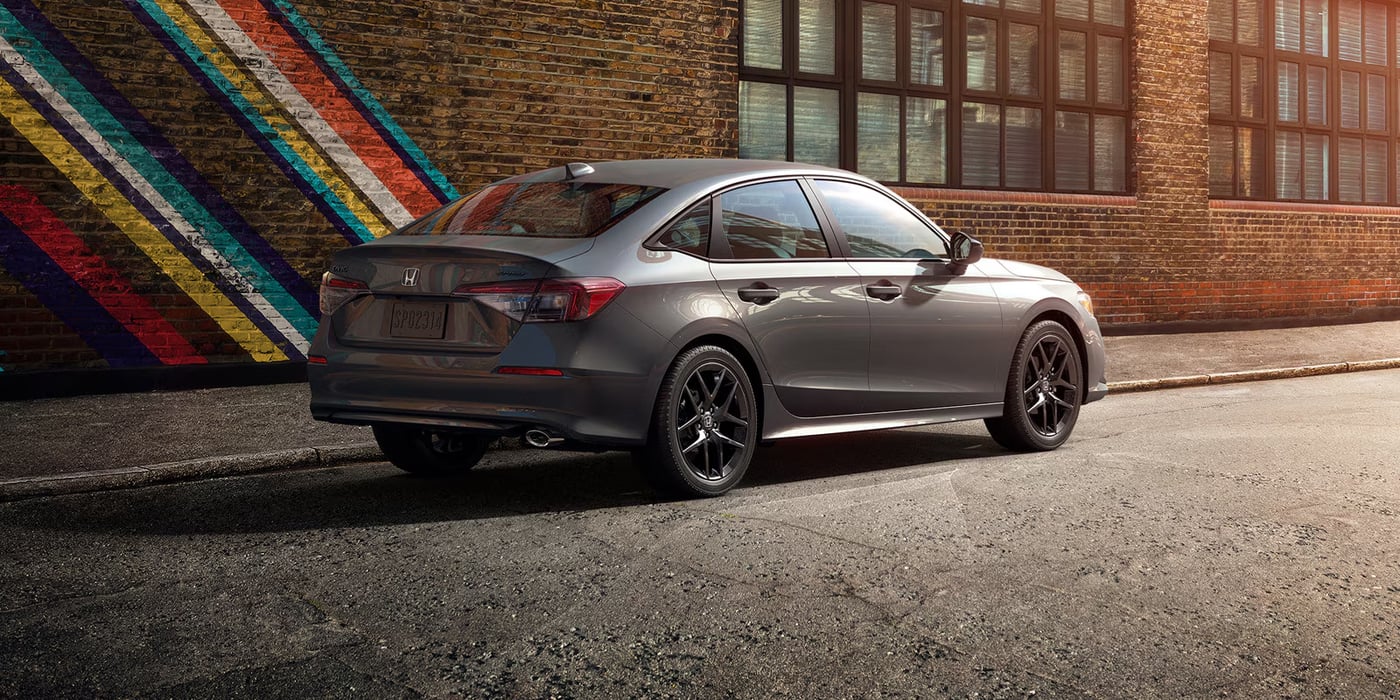
The Honda $HMC Civic earns a U.S. News rating of 9.4 out of 10 and an overall safety score of 9.3 out of 10, with a J.D. Power reliability rating of 84 out of 100. It achieves 34 mpg combined. The Civic is available in sedan and hatchback body styles, which gives buyers flexibility depending on whether cargo space or a cleaner silhouette is more important. Reviewer Perry Stern tested the Civic Sport on back roads outside Ann Arbor, Michigan, and described agile performance with good steering response and a suspension that delivers a smooth ride while keeping the car stable when pushed hard in corners.
The performance-oriented Si and Type R trims add substantially to the driving engagement for buyers who care about that dimension. The base Civic addresses the core college student brief: affordable, safe, reliable, and fuel-efficient. The Civic Hybrid is also worth noting: it costs more than the non-hybrid but delivers significantly better fuel economy, and shares the same basic character as the standard model. U.S. News names the Honda Civic the best overall pick for college students on the 2026 list.
The Civic’s position at the top of the list reflects how much ground a single model can cover when it executes all of its core tasks well. It is not the cheapest car on the list, nor does it have the highest reliability score or the best fuel economy, but it scores well across all those dimensions simultaneously, which is exactly the profile that college students who cannot optimize for a single variable need. The availability of both sedan and hatchback body styles also gives the Civic more flexibility in form factor than most other cars on the list. The hatchback body style, in particular, provides significantly more cargo space for college students who need to move belongings between the dorm and home at the end of a semester.
Credit: Acura
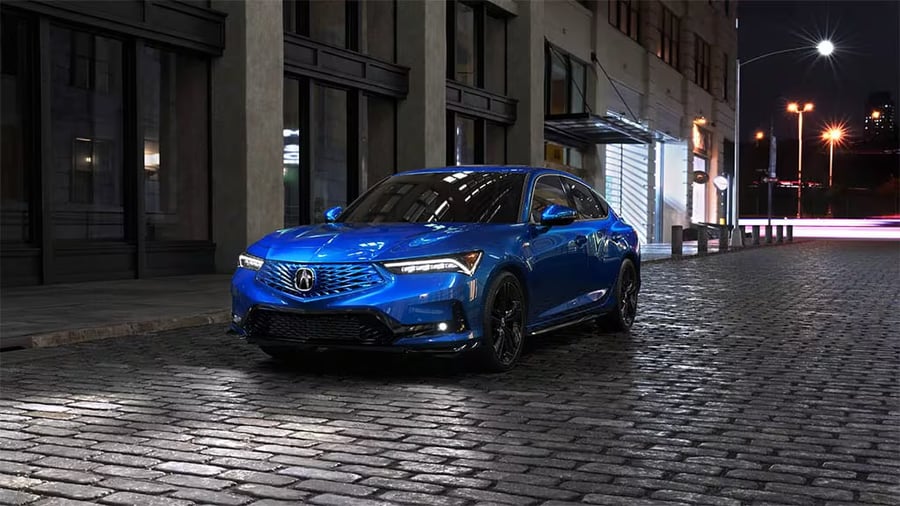
The Acura Integra carries a U.S. News rating of 9.3 out of 10, a safety score of 9.8 out of 10, and a reliability score of 82 out of 100. It achieves 32 mpg combined. The Integra’s presence on a college student list requires some explanation: it starts around $33,000, which is at the higher end of the list, and it carries the Acura badge, Honda $HMC’s luxury brand. But at that price, it tops the luxury small car class rankings, and only one other luxury small car in its class starts below thirty-nine thousand dollars.
Reviewer Mike Hagerty tested the manual transmission version and described terrific handling without excessive sacrifice of ride comfort, with short positive throws and a light clutch that made the car easy in traffic and entertaining on back roads. His one criticism: the weight savings that likely enabled the sporting dynamics came at the cost of sound insulation. The manual transmission is available at no extra cost, which is a meaningful benefit for buyers who want a more connected driving experience without paying a premium.
For college students who want something that feels genuinely aspirational without exceeding a moderate budget, the Integra addresses that preference more directly than any other car on the list. The luxury badge and the sport performance combine in a car that U.S. News names its Editor’s Choice pick for the college student category. The Integra’s top-class rankings, manual transmission availability, and sub-luxury pricing together make it one of the most genuinely compelling arguments on this list for spending a little more. For buyers who can stretch the budget, the Integra demonstrates that luxury-class quality and college-student affordability can coexist in the same package. The high 9.8 safety score also means buyers who stretch for the Integra get better safety scores than the Honda Civic itself, making the Integra the safer choice by a meaningful margin.
Credit: Mazda
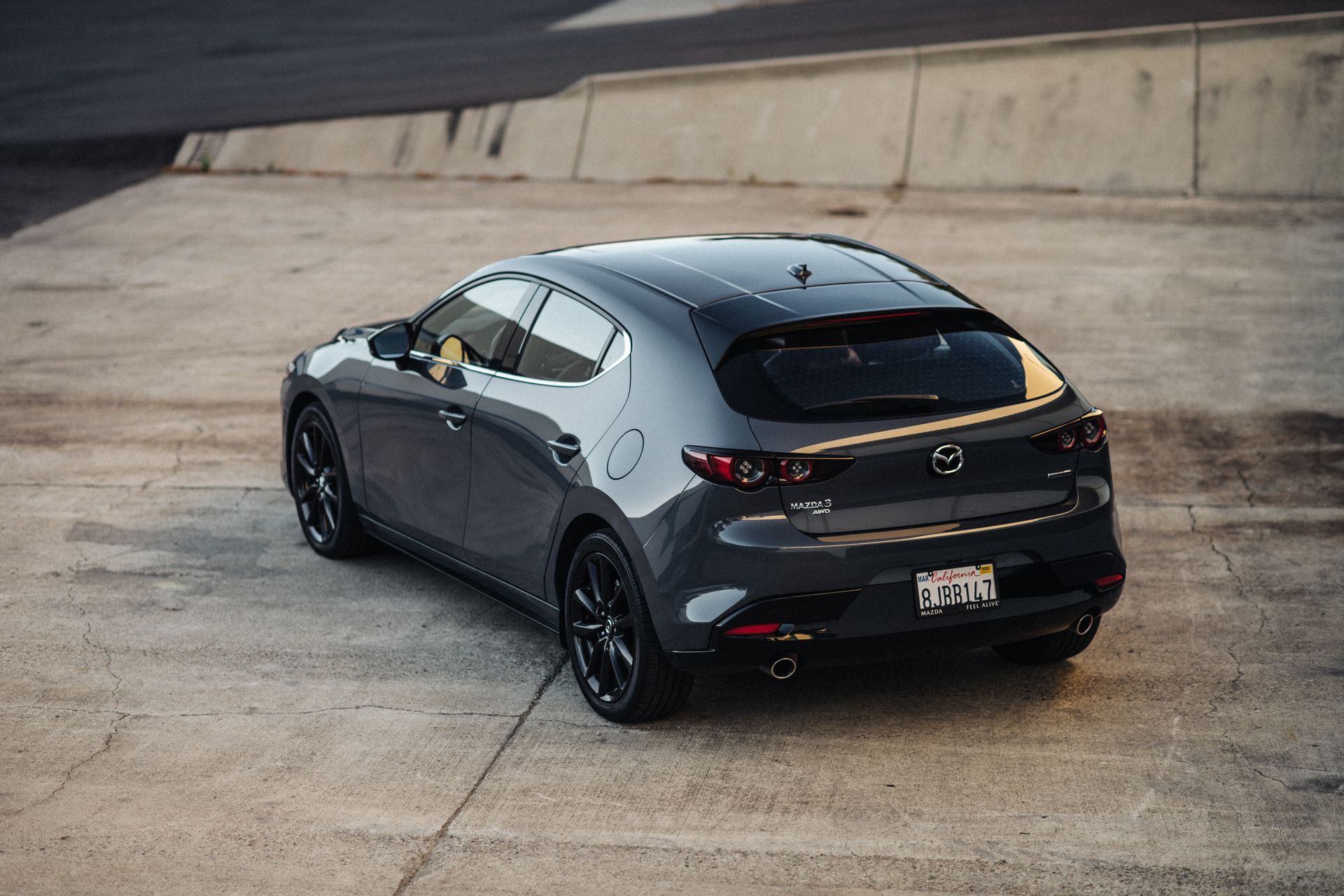
The Mazda3 earns a U.S. News rating of 9.3 out of 10, a reliability score of 77 out of 100, and achieves 30 mpg combined. It carries no current safety score due to data availability. The Mazda3 holds the distinction of having the narrowest starting price on the entire list, which makes its interior quality particularly striking: reviewer Mark Takahashi describes it as refined enough to easily be mistaken for an entry-level luxury car. He also identifies it as his personal choice in the compact car class, specifically for performance and driving engagement.
The Mazda3 is available in both hatchback and sedan body styles. All-wheel drive is available as an option, which is unusual for the compact car class and gives winter drivers a practical reason to choose it over most competitors. Some rivals have roomier rear seats, and the front seats are comfortable without being exceptional, but the overall interior refinement gives the Mazda3 a level of quality its price does not suggest.
U.S. News names the Mazda3 the best budget option on the college student list, which is a slightly misleading category label: the Mazda3 earns the designation because of its narrow pricing advantage over the Civic, but its character is anything but budget in the typical sense. It delivers a premium driving and interior experience at a price point most compact-car shoppers associate with less distinguished products. The AWD availability is also worth flagging as a direct comparison point with the Subaru Forester: for buyers who need all-wheel drive in a small car format, the Mazda3 is the most refined option on the list for buyers who need AWD in a compact car body without moving to an SUV or crossover or accepting the fuel economy penalty that AWD typically brings to the compact car class when added as an option on competing compact car models in the same price range.
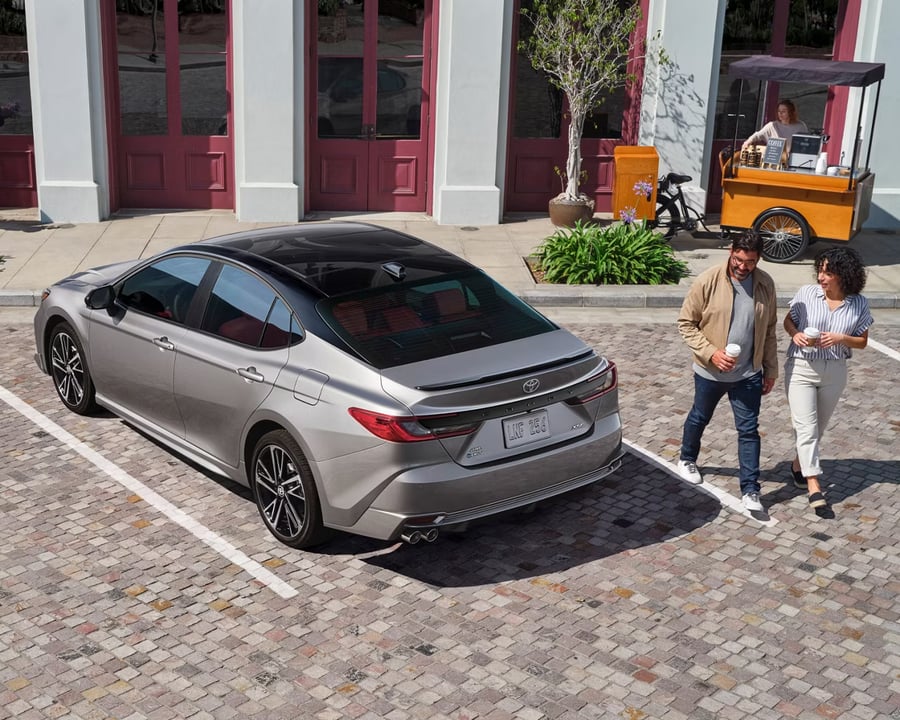
Credit: Toyota
The Toyota $TM Camry earns the highest safety score on the list at 9.9 out of 10, which reflects both its U.S. News safety rating and its Insurance Institute for Highway Safety designation as a Top Safety Pick+, the IIHS’s highest honor. It also carries a U.S. News overall rating of 9.4 out of 10 and a J.D. Power reliability score of 80 out of 100. Its fuel economy is 51 mpg combined, reflecting that every current Camry model features a hybrid powertrain.
Reviewer Robert Duffer describes the Camry as roomy, well-equipped, safe, and historically reliable, adding that it is punchy off the line and quiet around town until driven hard, when noise increases. He identifies it as one of the most well-rounded cars on sale. U.S. News gave the Camry its 2026 Best Midsize Hybrid Car for the Money award, and its starting price is below $30,000.
For college students whose primary concern is safety — because of a parent’s condition of purchase, because of genuine concern about their own driving risk profile, or simply because a near-perfect safety score is an objectively good feature — the Camry addresses that priority more comprehensively than any other car on the list. The hybrid powertrain’s fuel economy also means the Camry has the lowest fuel cost per mile of any non-electric vehicle on this list. The Toyota Camry’s near-perfect safety, standard hybrid powertrain, and award-winning value credentials together make it the most broadly defensible single choice for buyers whose parents or guardians have strong opinions about safety, and that demographic accounts for a meaningful share of college car purchase decisions. The Camry’s IIHS Top Safety Pick+ is the most specific and credible external safety credential available on any car on this list, validated by the Insurance Institute for Highway Safety as an independent testing organization with a rigorous crash test and safety systems evaluation protocol.
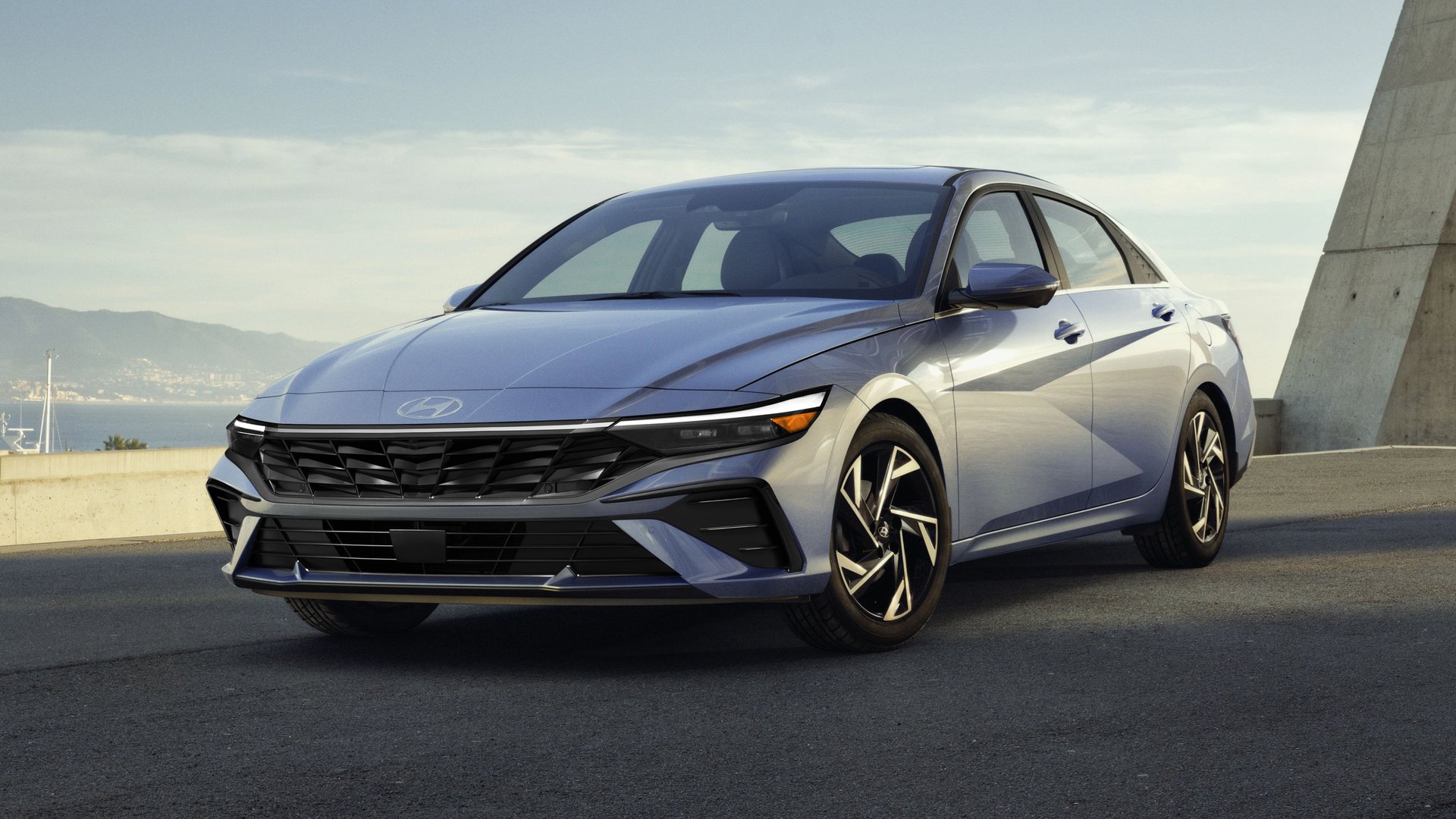
Credit: Hyundai
The Hyundai Elantra Hybrid carries the highest J.D. Power predicted reliability score on the entire list at 86 out of 100, which U.S. News identifies as the defining credential for its Most Reliable designation. It also earns a U.S. News overall rating of 9.2 out of 10, a safety score of 9.3 out of 10, and achieves 54 mpg combined, the second-highest on the list after the Prius. Its starting price is among the lowest on the list.
U.S. News also awarded the Elantra Hybrid its 2026 Best Compact Hybrid Car for the Money designation. Reviewer Cameron Aubernon praised the car for delivering on value and fuel efficiency, describing it as well-suited to daily driving without drama or high cost. The interior quality does not match the Mazda3’s premium feel: the Elantra Hybrid uses noticeable amounts of hard plastics in some areas. However, it comes well-equipped with standard features, which offset some of the material quality deficit.
For college students who prioritize long-term ownership economics — low fuel costs, high predicted reliability, strong award credentials, and a low starting investment — the Elantra Hybrid makes a particularly coherent case. The 54 mpg figure, the 86 reliability score, and the low starting price together give it a total cost of ownership profile that the more aspirational cars on this list cannot match. The 86 out of 100 reliability score specifically is also a meaningful number in the context of college car ownership, where unplanned repair costs are more disruptive to tight student budgets than they would be for buyers with more financial cushion. The Best Compact Hybrid Car for the Money award also signals that the value case extends beyond the reliability rating into the full ownership cost picture. The 54 mpg combined figure, in particular, represents significant real-world fuel savings compared to a standard commuter car across most driving patterns.
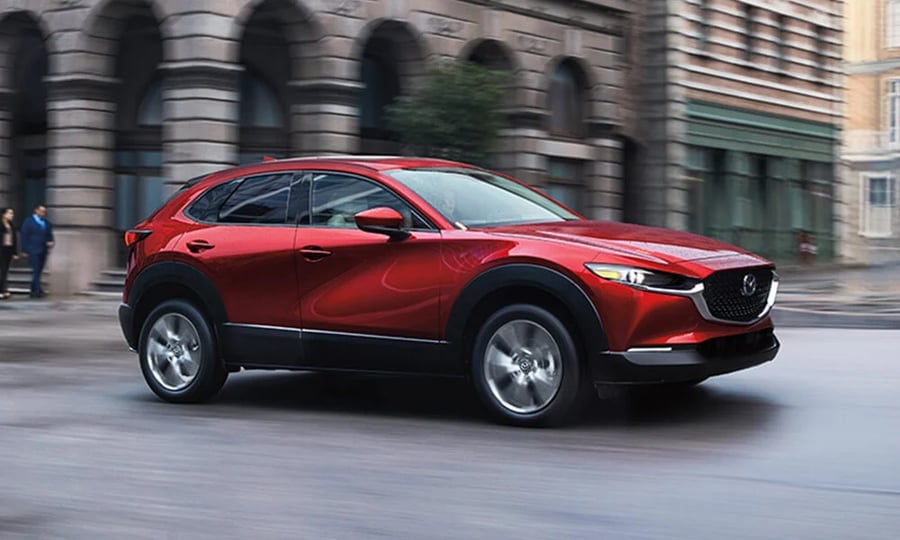
Credit: Mazda
The Mazda CX-30 earns a U.S. News rating of 9.1 out of 10, a safety score of 9.8 out of 10, and a reliability score of 80 out of 100. It achieves 27 mpg combined. The CX-30 is U.S. News’s highest-rated subcompact SUV, and it comes standard with all-wheel drive, an unusual inclusion for the class that gives it a practical advantage in winter or mixed-terrain conditions without requiring an upgrade option. Vehicle Testing Editor Zach Doell describes the interior as suave and modern, with the visual character of an entry-level luxury vehicle and a matching feel, and the driving dynamics as fun, with a mix of precise handling and snappy acceleration.
The seats are comfortable and supportive, and the standard features are strong. Rivals offer more rear-seat room and cargo space, which means the CX-30 is not the right choice for buyers who regularly carry multiple passengers or need to move large items. But those who prioritize driving quality and interior character over maximum practicality will find the CX-30 delivers both at a price point well below thirty thousand dollars.
The CX-30 occupies a specific position on this list: it is the only subcompact SUV, which makes it the default recommendation for college students who prefer the higher seating position and body-on-frame-adjacent character of an SUV over a sedan or hatchback. Within that category, it is the highest-rated option available. The 9.8 safety score also makes the CX-30 one of the safest vehicles on the entire list, which is a credential it shares with the Integra and underscores how much ground the Mazda brand covers in the college student context with two distinct vehicles at two price points, the Mazda3 and the CX-30 together covering the compact car and subcompact SUV segments simultaneously and without any form of direct pricing, class, or feature overlap between the two Mazda models that appear on this list at very different price points.
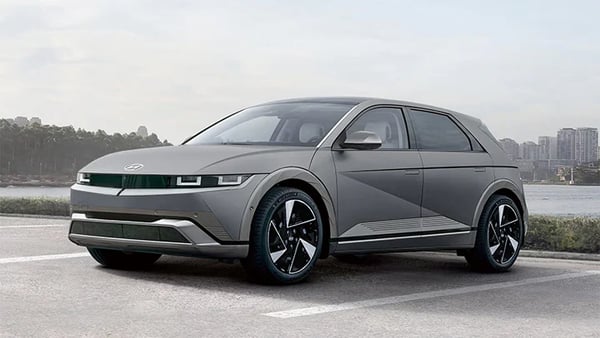
Credit: Hyundai
The Hyundai Ioniq 5 earns a U.S. News overall rating of 9.4 out of 10, a safety score of 9.7 out of 10, and a reliability score of 75 out of 100. It achieves 115 miles per gallon equivalent combined. The Ioniq 5 is the only fully electric vehicle on the list, starting at approximately $35,000 and delivering a maximum range of over 300 miles per charge. The U.S. News editor describes it as one of the most affordable EVs on the market and, in the editor’s view, the best nonluxury EV available.
Zach Doell describes the driving experience as quiet, zippy, and relaxing, and praises the head-turning styling, the cavernous interior, and the tech features as simultaneously cutting-edge and easy to use. The Ioniq 5 charges quickly, reducing the range anxiety that affects drivers on long trips.
For college students who drive primarily around campus or within a metro area, and who have reliable access to charging either at home or on campus, the Ioniq 5 converts its electric powertrain into a genuine economic advantage: no gasoline costs, lower maintenance requirements, and a 115 MPGe figure that means the cost per mile is lower than any hybrid on the list in electricity-priced terms. The 300-plus-mile range also addresses the road-trip use case that concerns EV skeptics who worry about running out of charge far from home. The tech features that Zach Doell identifies as cutting-edge and easy to use also give the Ioniq 5 a cabin experience that college students who spend significant time in their cars will appreciate. The Ioniq 5 also qualifies for federal EV tax credits, depending on buyer income and vehicle configuration, which can meaningfully reduce the effective first-year ownership cost for qualified buyers.
Credit: Toyota
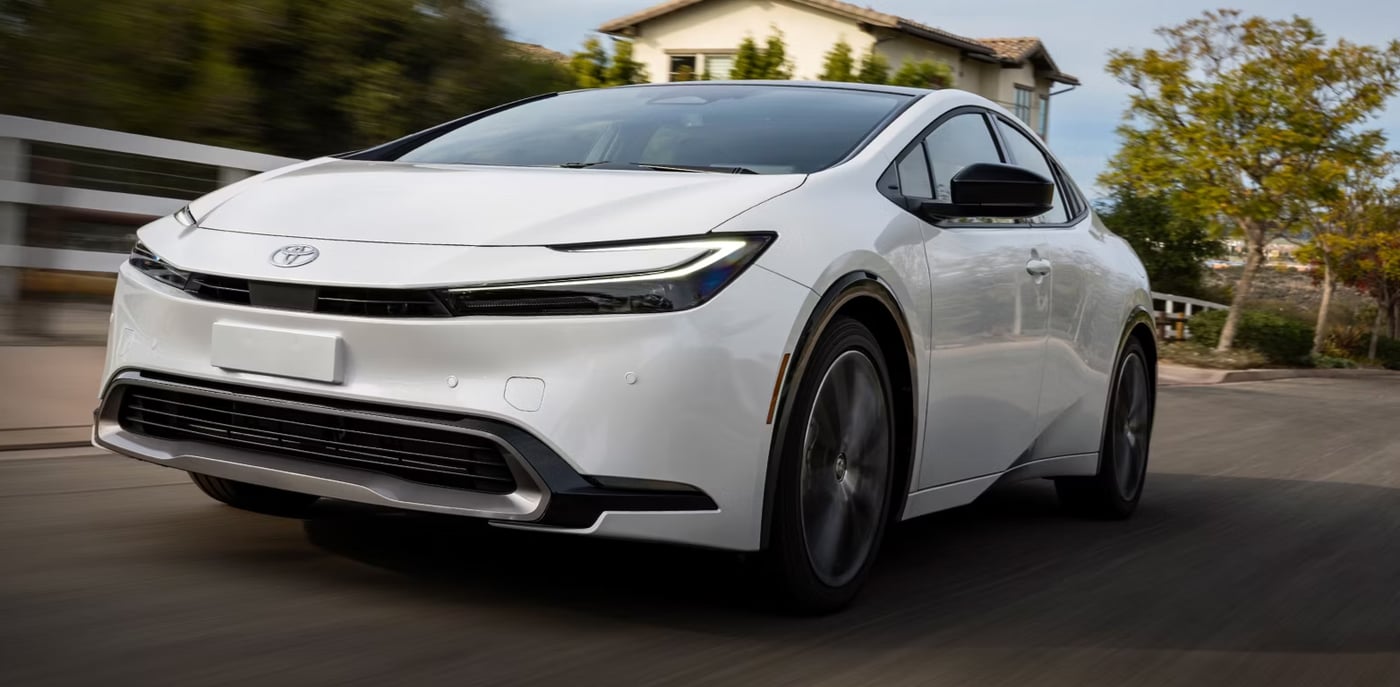
The Toyota $TM Prius carries a U.S. News rating of 8.8 out of 10, a safety score of 9.7 out of 10, and a reliability score of 75 out of 100. It achieves 57 mpg combined, the highest on the list. The Prius has been through a redesign that substantially changed its character from the tall, tip-prone profile that defined it for most of its history: reviewer Mike Hagerty notes that acceleration is decent with a 0-to-60 time of 7.2 seconds, the ride is comfortable, handling borders on fun, and the Prius now enjoys a winding road in a way earlier versions never did. He also notes it looks far sportier than any previous iteration.
The interior is a bit bland and lets in considerable road noise at high speeds, which are genuine weaknesses. But the interior is well-built, comes standard with plenty of features, and the front seats are roomy and supportive. Some rivals have more spacious rear seats.
The Prius occupies a specific position on this list because of its fuel-economy leadership: at 57 mpg combined, it delivers the lowest per-mile fuel cost of any non-electric car on the list, and it does so at a starting price below $30,000. For college students whose driving consists primarily of commuting and city travel, the Prius's fuel economy advantage compounds meaningfully over time, making it one of the more economically rational choices on the list for students who commute daily. The redesign’s success in making the Prius genuinely engaging to drive also means the car no longer requires buyers to sacrifice driving enjoyment for the sake of fuel economy. The sub-thirty-thousand-dollar starting price also means the Prius delivers its fuel economy advantage at a more accessible entry cost than most other hybrids in the compact or midsize hybrid car categories available today.
Credit: Ford
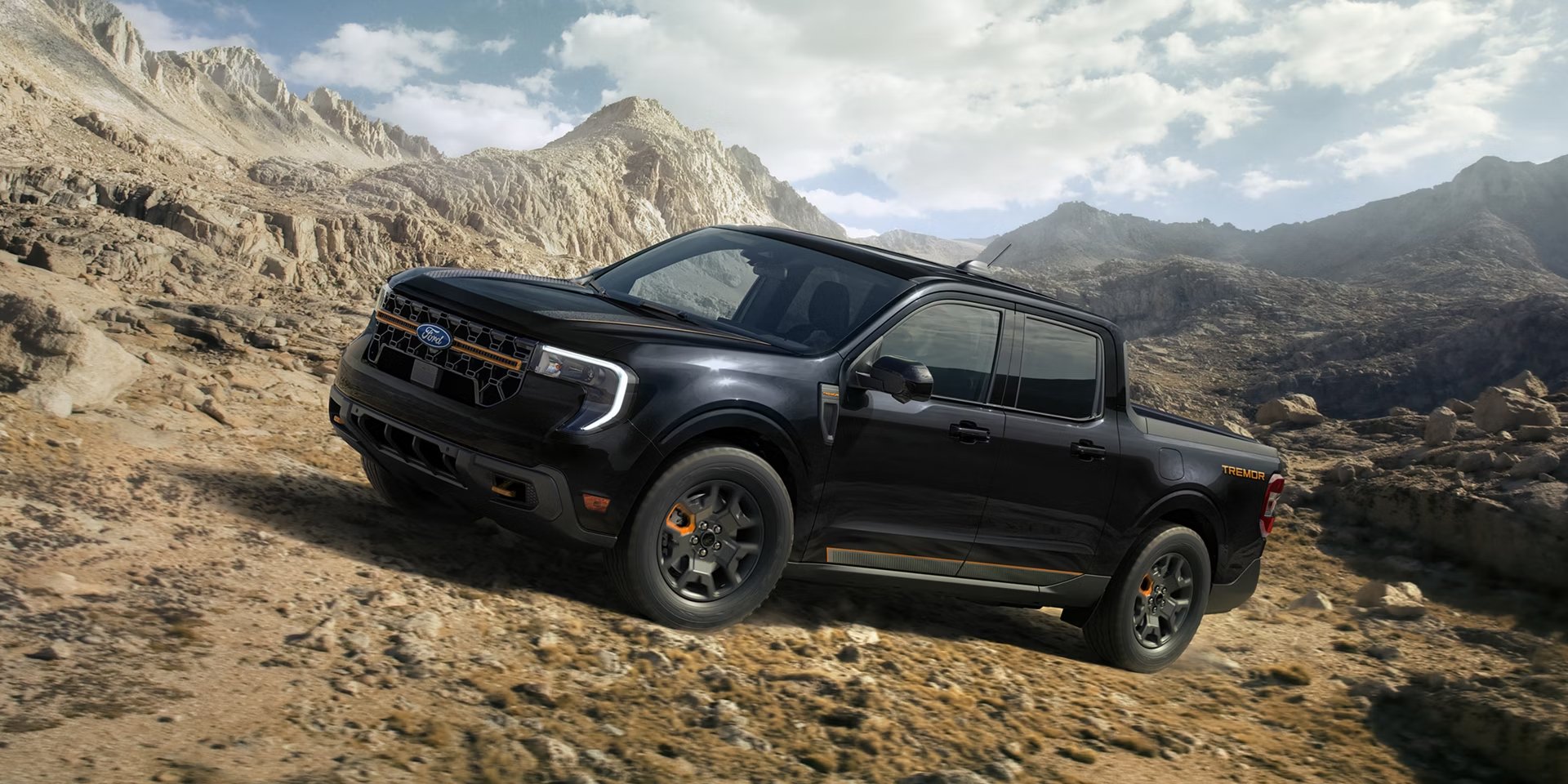
The Ford $F Maverick earns a U.S. News rating of 9.0 out of 10, a safety score of 8.5 out of 10, and a J.D. Power reliability score of 85 out of 100. It achieves 38 mpg combined from its standard hybrid powertrain. The Maverick is the only pickup truck on the list and one of the most affordable on the market. Reviewer Zach Doell describes it as a capable compact truck with enough hauling capability for hobbyists and those who do their own home projects: the payload capacity is 1,500 pounds, and the tow rating is 4,000 pounds. He also notes that it offers a blend of ride comfort and handling agility rarely found in pickups.
The cabin is well-built, if somewhat plain in design, and the front seats have plenty of headroom and legroom. Standard features are numerous, and the infotainment system is user-friendly. The safety score of 8.5 is the lowest on the list, which is worth noting for buyers who use that metric as their primary filter.
For college students who need a truck — for a side business, for hauling equipment to outdoor activities, for moving apartments, or simply because a truck suits their lifestyle — the Maverick provides that utility at a price and fuel economy figure that no full-size or mid-size truck can match. The 38 mpg combined figure from the hybrid powertrain is significantly better than any other truck on the market, regardless of size, and the strong 85 out of 100 reliability score gives Maverick owners a basis for expecting the fuel economy advantage to persist over years of ownership without major mechanical surprises. The Ford Maverick’s appeal to college students goes beyond just utility: it is the only truck on the list, and for buyers who need truck capability, no other option on this list addresses that specific need.
Credit: Subaru
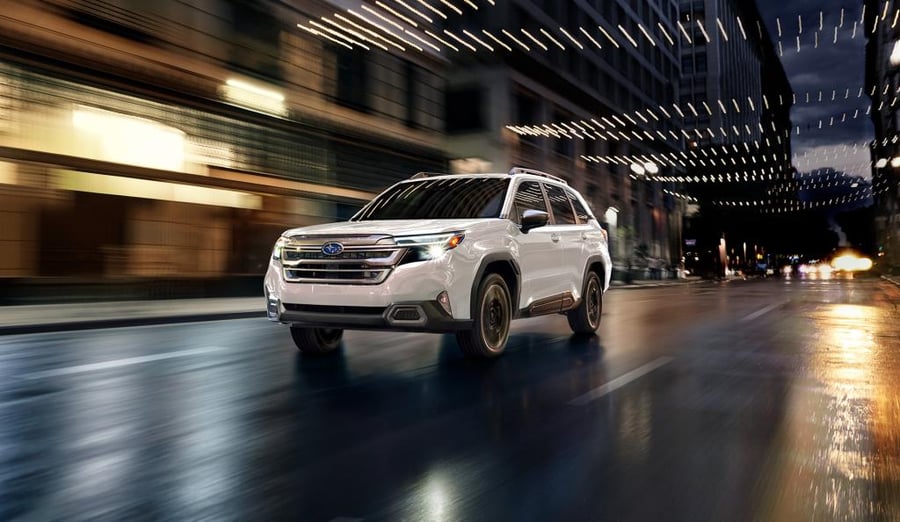
The Subaru Forester earns a U.S. News rating of 8.6 out of 10, a safety score of 9.6 out of 10, and a reliability score of 81 out of 100. It achieves 29 mpg combined. The Forester’s defining credential is its standard all-wheel-drive system, which gives it genuine off-road and adverse-weather capability that most compact SUVs in its price range can only access through optional upgrade packages. Reviewer James Gilboy describes it as a refined, comfortable SUV with strong driving dynamics and an outdoors-tailored interior, concluding that the Forester remains above average in more ways than not.
The Forester strikes a balance between handling capability and ride comfort that suits a wide range of driving conditions. Some rivals have more user-friendly infotainment setups, and the Forester does not match the all-around excellence of the top compact SUVs in the class. But a standard AWD, outdoor-oriented design, strong safety scores, and a reliable mechanical reputation together give it a loyal audience, as consistent sales data year over year confirms.
For college students who want a compact SUV with genuine all-season and light off-road capability — and who may be attending school in regions where winter driving conditions make AWD a practical necessity — the Forester addresses that need at a starting price below $30,000. The balance of capability, safety, and value makes it a logical final entry on a list built around exactly those priorities, and the Forester’s consistent strong performance across safety, reliability, and AWD capability makes it a reliable recommendation for students in snow-belt schools, mountain regions, or anywhere regular rain or gravel roads make all-wheel drive a practical necessity, not a luxury upgrade. The Forester’s 9.6 safety score also means it does not trade safety credentials for the outdoor-oriented character that defines the Forester’s appeal to buyers in regions where seasonal weather makes it a consistent practical asset throughout the academic year.