The best cars for tall people to buy in 2026
From a $24,595 Honda Civic with class-leading rear legroom to a Lincoln Navigator with 30-way adjustable seats, the best cars for tall drivers
Brandon Woyshnis / Getty Images
Finding a comfortable car when you are tall involves a set of problems that most automotive reviews do not address directly. Headroom measurements in spec sheets tell only part of the story. The angle of the roofline, the height of the seat cushion above the floor, and the shape of the ceiling above the driver’s head all affect whether someone over six feet can actually sit comfortably. Seat-bottom length matters for drivers with long legs, as does the range of the seat’s rearward travel. The steering wheel’s telescoping range determines whether a driver who pushes the seat back to make room for their legs can still reach the wheel safely. None of these factors appear prominently in standard vehicle comparisons.
The author of the source, a 6’1" driver who describes his height as evenly distributed between torso and legs, has spent years testing vehicles with tall-driver comfort as a specific evaluation criterion. His experience reflects a counterintuitive truth that many tall drivers discover only after sitting in a car: overall vehicle size bears little relationship to interior fit. A driver who struggles in a full-size crossover may fit easily in a sports car, because the sports car’s designers prioritized seat position and headroom geometry in ways the crossover’s designers did not. The differences between vehicles that work for tall drivers and those that do not come down to specific interior design decisions, not to the overall footprint.
The 10 vehicles below come from U.S. News & World Report, which selected them based on personal testing by a tall reviewer across a mix of sedans, SUVs, and sports cars. The list spans price points from $24,595 to $99,995 and body styles from compact cars to full-size luxury trucks. Each vehicle addresses the tall-driver challenge in a distinct way, and the source identifies the specific design features that make each one work.
1 / 10
1. BMW X5 extends thigh bolsters into its second row
Tramino / Getty Images
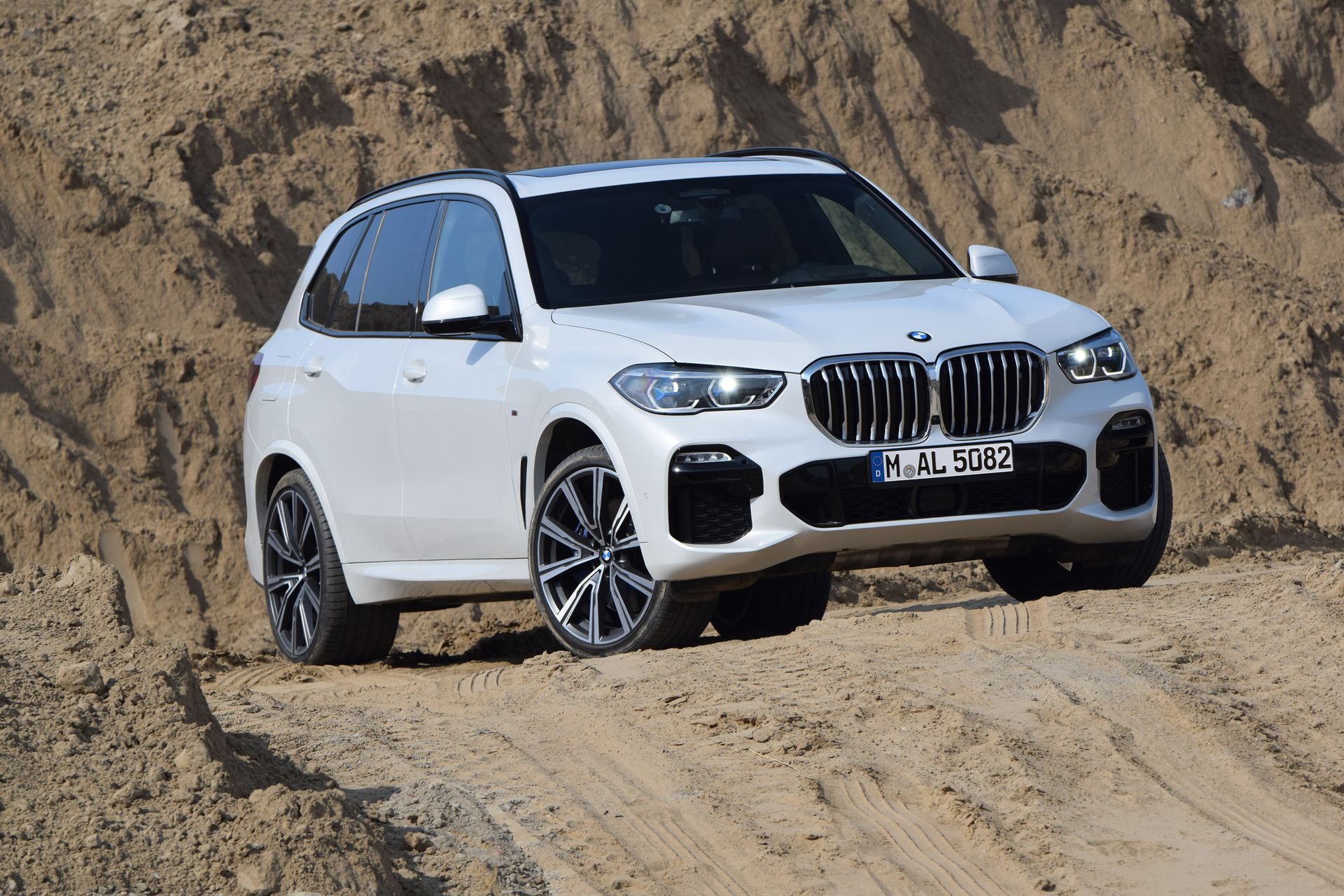
The 2026 BMW X5 earns a U.S. News rating of 9.0 out of 10 and starts at $66,300, making it a luxury midsize SUV that works for tall drivers in both the front and rear seats. The front seats feature well-cushioned construction with extendable thigh bolsters that allow drivers with longer legs to find a supported seating position, and the steering wheel telescopes out far enough that pushing the seat rearward does not compromise reach. An interior score of 8.3 out of 10 reflects a well-appointed cabin that balances the ergonomic needs of tall occupants with the broader luxury features the X5 offers.
The second row retains meaningful legroom even when the front seats slide fully rearward, which addresses one of the most common complaints of tall passengers traveling with tall drivers. In a vehicle designed around one primary user’s fit, rear passengers often bear the consequence of maximizing front-seat space. The X5’s design avoids that trade-off, giving rear occupants genuine room, not a token allowance.
Beyond its tall-driver credentials, the X5 justifies its price through its broader capability. A tow rating of up to 7,500 pounds makes it genuinely useful for owners who pull trailers or boats, not just capable on paper. BMW offers multiple powertrain choices and balances its chassis between sporting dynamics and everyday comfort, giving the X5 a well-rounded profile that extends beyond seating geometry. The source frames the X5 as a “one car to do it all” solution for tall drivers who also transport tall passengers. The description captures the X5’s dual strengths in front- and rear-seat accommodations alongside its driving capability. The X5's towing capacity of up to 7,500 pounds gives it working capability that most luxury midsize SUVs cannot match, and its plentiful cargo space makes it functional for extended travel without a careful packing strategy. BMW calibrates the X5’s chassis between sporting response and everyday comfort, giving it a driving character that earns its price through the full experience, not a single standout quality.
2 / 10
2. Honda Civic beats tall-driver limits for compact cars
NurPhoto / Getty Images
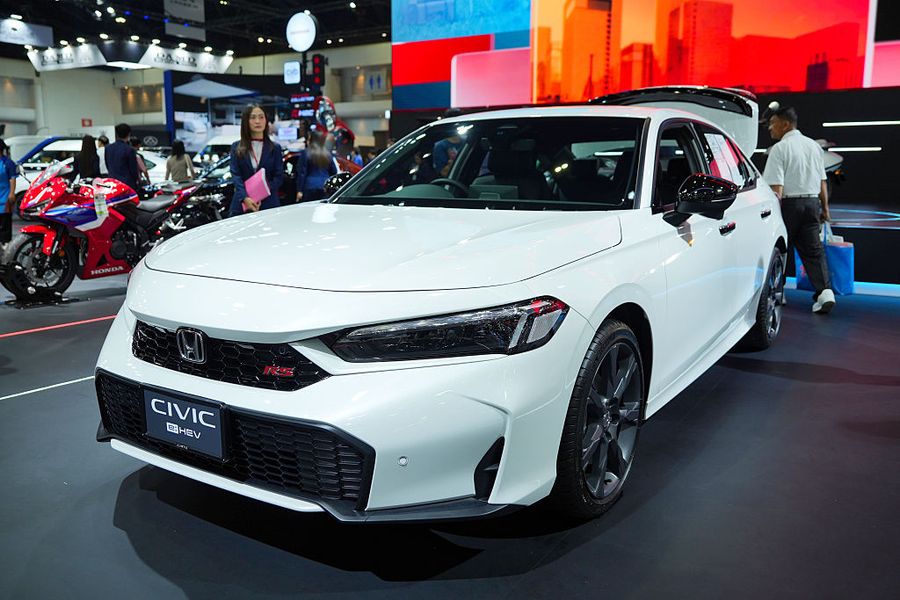
The 2026 Honda $HMC Civic earns a U.S. News rating of 9.4 out of 10 — the highest on this list — and starts at $24,595, making it the most affordable vehicle in the group. Compact cars are generally the most difficult to fit for tall drivers, and the Civic’s ability to work in this segment is its core distinction. Despite exterior dimensions that classify it as a compact, the Civic delivers ample head- and legroom in the front seats, with seat travel sufficient for longer legs and a steering wheel that telescopes to match extended seating positions.
The rear seat offers nearly three inches more legroom than the Toyota $TM Corolla, a specific comparison that puts the Civic’s rear accommodation in a direct competitive context. Three inches represents a substantial difference in a segment where legroom tends to cluster within a narrow range, and the gap makes the Civic meaningfully more useful for tall rear passengers than its primary competitor in the compact sedan space.
Honda offers the Civic in both sedan and hatchback body styles. The hatchback’s sleeker roofline, which might be expected to compromise rear headroom, does not reduce it at all, preserving the sedan's full headroom. All Civic variants share the same high-quality interior, meaning the tall-driver benefits extend across the lineup regardless of which body style or powertrain a buyer chooses, including the hybrid and the performance-oriented Type R. The Civic’s price, its rating, and its tall-driver accommodations together make it the most accessible option on this list for buyers who do not want to compromise on interior fit. Honda’s consistency across all Civic body styles means tall buyers can choose the sedan, hatchback, hybrid, or performance-focused Type R without losing the interior dimensions that make the model work. The 9.4 out of 10 U.S. News rating confirms that the Civic’s accommodations for tall occupants go hand in hand with an excellent overall package.
3 / 10
3. Mercedes-Benz E-Class tailors seating for tall drivers
Sjoerd van der Wal / Getty Images
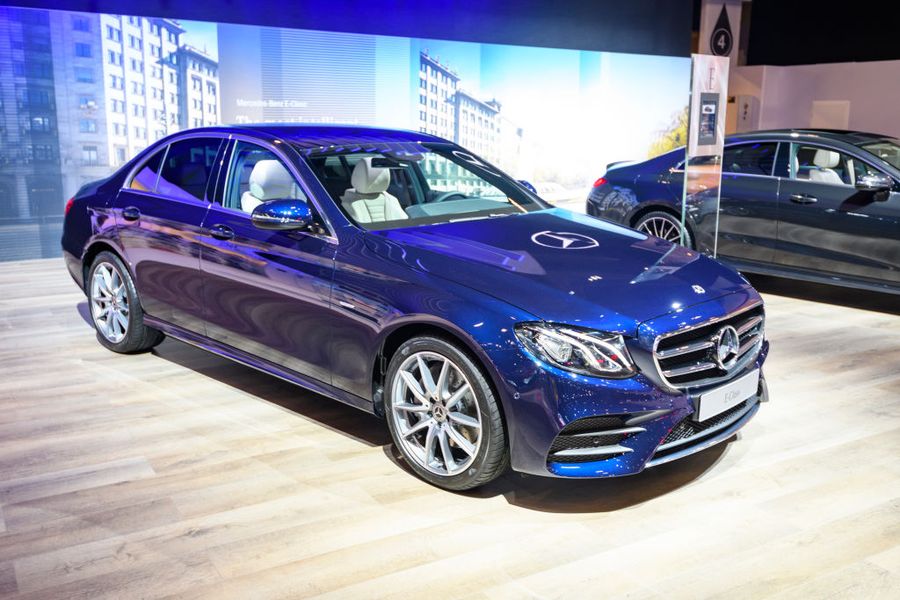
The 2025 Mercedes-Benz E-Class earns a U.S. News rating of 9.1 out of 10 and starts at $62,450, making it the most luxurious option on this list for buyers who prefer a sedan over an SUV. The front seats feature extendable thigh support and adjustable bolsters, allowing tall drivers to dial in a precise fit across multiple dimensions simultaneously. The steering wheel telescopes a significant distance, and the armrests sit at a height that suits drivers who ride high or need substantial reach. The interior score of 8.6 out of 10 reflects the E-Class’s standing as one of the more refined cabins in the luxury midsize car segment.
The second row sits slightly low, but the source characterizes overall comfort and space as quite good despite that observation. A low second-row seat height can cause discomfort for passengers who prefer a more upright position, though it does not reduce legroom itself. Tall passengers with long legs will find adequate room, even if the seating feels different from the more accommodating ergonomics of the front row.
The E-Class comes standard with a turbocharged inline-six engine, which the source describes as contributing to a strong overall package. The performance-focused E53 variant adds more power and additional driver-oriented features for buyers who want the luxury sedan’s tall-driver accommodations alongside more engaging driving dynamics. An optional Burmester 4D sound system represents the upper end of the cabin’s available technology, reinforcing the E-Class’s luxury positioning. The all-terrain wagon variant adds a third-row seat that faces rearward. The source notes that it suits shorter passengers, given the space constraints created by tall occupants in the front and second rows. The E-Class’s armrest height and the generous steering wheel telescoping range together address two ergonomic failures that eliminate sedans from a tall driver’s consideration in other vehicles. Buyers who want a luxury sedan with extendable thigh support, adjustable bolsters, and a powertrain range from a standard turbocharged inline-six to the performance-focused E53 will find the E-Class the most complete answer in the category.
4 / 10
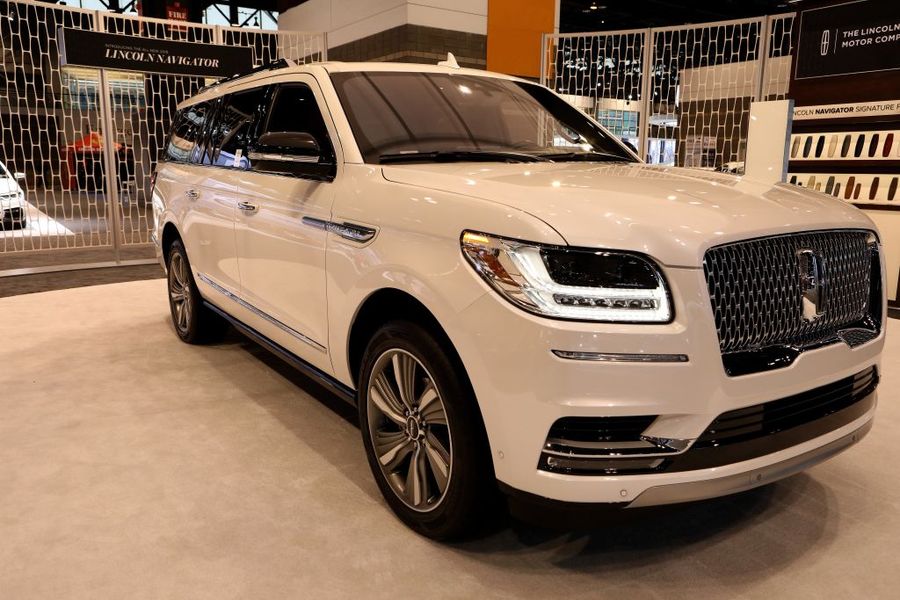
4. Lincoln Navigator features 30-way Perfect Position Seats
Raymond Boyd / Getty Images
The 2025 Lincoln Navigator earns an interior score of 9.3 out of 10 — the highest on this list — and starts at $99,995 as a recently redesigned full-size luxury SUV. The defining tall-driver feature is the optional Perfect Position Seats, which offer 30-way adjustment. The range of adjustment positions available through those 30 settings allows tall drivers with long legs to tune the seat to an extent that competitors’ fewer adjustment points cannot match. The source describes the seating comfort as fabulous for those with longer legs, a characterization that reflects the seat’s specific engineering toward this need.
Second-row comfort in the Navigator is similarly high, though headroom is slightly reduced compared to the prior generation. The reduction is a modest concession given the Navigator's overall interior volume. Six-foot occupants can fit in the third row, the source notes, a claim few three-row SUVs of any size can make honestly. The acknowledgment that six-footers will fit “if only just” is an honest characterization of a genuinely tight fit that still surpasses what most rivals offer.
The Navigator’s truck-based underpinning gives it a towing capacity of up to 8,700 pounds, distinguishing it from car-based three-row SUVs that offer similar interior dimensions but less capability. The optional Navigator L body extends the already-large cargo volume by another 14.5 cubic feet behind the third row. Lincoln’s interior carries a tech-forward presentation that the source describes as somewhat overwhelming but appropriately luxurious, a balance that reflects the Navigator’s positioning at the top of the non-exotic luxury SUV segment. Buyers who want maximum tall-driver comfort with maximum towing capability in a single vehicle will find the Navigator the most specifically engineered option on this list for those paired requirements. The Navigator L’s additional 14.5 cubic feet of cargo space behind the third row gives large families the storage that a standard Navigator already offers, making it more generous than most rivals.
5 / 10
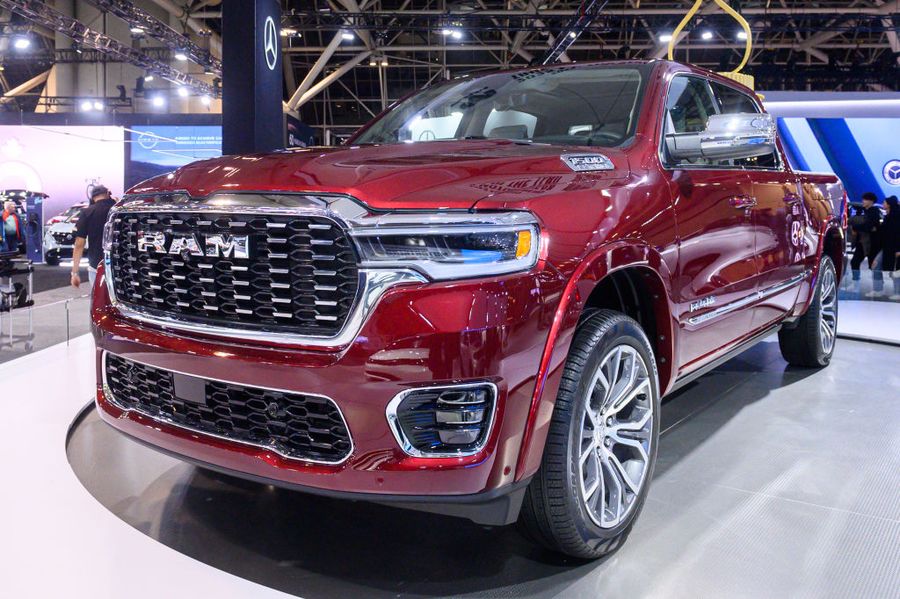
5. Ram 1500 suits tall drivers with its cab proportions
Informa Plus Photo Agency / Getty Images
The 2025 Ram 1500 earns a U.S. News interior score of 9.4 out of 10, tied with the Navigator for the highest on this list, and starts at $40,275 as a full-size pickup. Among full-size trucks — a category where all competitors occupy considerable physical space — the source identifies the Ram 1500 as the best personal fit. Front seats are well-sized and supportive for tall occupants, with construction that accommodates longer legs without the driver feeling pinched against the steering column or door. Center and side armrests reach appropriate heights for tall drivers whose elbows sit higher than average.
Second-row passengers in the Ram 1500 retain ample legroom even when the front row is pushed fully rearward, a feature the X5 also delivers and one that separates genuine tall-friendly vehicles from those that simply prioritize front-row occupants. Full-size truck second rows tend to be large in absolute terms, and the Ram’s version takes full advantage of the available space.
The source notes that shorter drivers may find the turn signal and wiper stalk difficult to reach, a detail that reflects the cab’s calibration toward larger occupants. The 2026 model year brings the Hemi V8 back to the Ram 1500 lineup alongside the existing 3.6-liter V6 and 3.0-liter turbocharged inline-six engines, giving buyers a choice that includes the engine most associated with the Ram’s character. The Ram 1500’s interior score of 9.4 out of 10 makes a strong case that the truck’s cabin quality extends beyond its tall-driver accommodation, rewarding the full occupant experience across all seating positions. The Hemi V8 returns for 2026, joining the V6 and the turbocharged inline-six, giving Ram buyers the engine choice most closely associated with the model’s identity. Center and side armrests at appropriate heights for tall occupants reflect deliberate design decisions that smaller-handed drivers notice as calibrated for larger hands, a trade-off the source names directly.
6 / 10
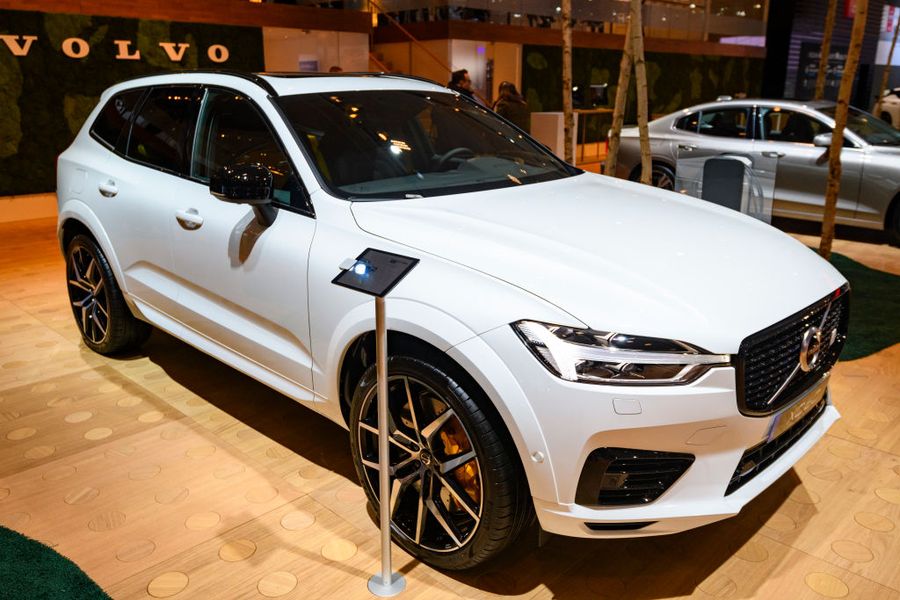
6. Volvo XC60 bundles thigh, lumbar, and bolster controls
Sjoerd van der Wal / Getty Images
The 2026 Volvo XC60 earns a U.S. News rating of 8.9 out of 10 and an interior score of 8.9 out of 10, starting at $49,700. The front seats represent the XC60’s standout tall-driver feature: they offer extendable thigh support, adjustable lumbar support, and adjustable side bolstering, allowing tall occupants to tune three distinct dimensions of seat fit simultaneously. Few vehicles at this price point offer all three adjustments together, and the availability of the full set within a single seat distinguishes the XC60 in the luxury compact SUV segment.
The telescoping steering wheel extends far enough to accommodate drivers with longer arms and longer legs who push the seat back substantially. Headroom is generous in both rows, meaning the tall driver benefits are not confined to the driver’s position. The one limitation the source identifies is cabin width: the XC60’s interior feels slightly narrow to some occupants, which makes the rear seat most comfortable for two passengers. Buyers who routinely carry three adults in the back should note this characteristic.
The 2026 model year brought infotainment updates to the XC60, including a faster processor and revised software. Other changes address exterior styling. A turbocharged four-cylinder engine serves as the standard powertrain, with a plug-in hybrid available for buyers who want electrified efficiency alongside the tall-driver accommodations. The XC60 is Volvo’s best-selling model, a position that reflects broader market appeal beyond its tall-driver credentials, though those credentials stand among the strongest in the luxury compact SUV class. The front seats’ extendable thigh support, adjustable lumbar, and adjustable side bolstering together address three distinct aspects of fit that shorter seats resolve by default for smaller drivers but that taller drivers need specifically tuned. The plug-in hybrid option gives buyers who want electrified efficiency a powertrain that does not compromise the tall-driver seating package. The XC60’s cabin width limitation applies only to the rear, not the front, meaning the tight three-passenger rear seat is the sole ergonomic caveat for tall buyers.
7 / 10
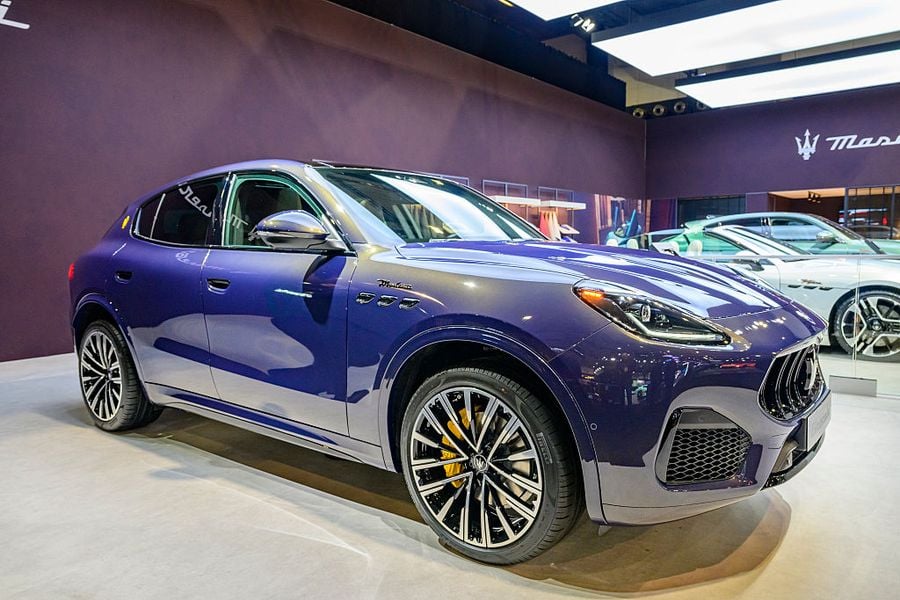
7. Maserati Grecale swings all 4 doors wide for easy entry
Sjoerd van der Wal / Getty Images
The 2025 Maserati Grecale earns a U.S. News rating of 8.5 out of 10 and starts at $84,500 as a compact luxury SUV with a specific entry-and-exit advantage: all four doors open wide, making ingress and egress considerably easier for tall occupants. The door opening angle matters more to tall drivers than many buyers realize, as a door that does not swing far enough forces a contorted entry that negates the interior fit advantages a vehicle might otherwise provide. The Grecale avoids this by designing the door sweep to accommodate a tall driver’s natural movement.
Front seats include both adjustable thigh support and adjustable side bolsters, giving tall drivers a precise fit option in a segment where many competitors offer only one or neither adjustment. The steering wheel telescopes a significant distance, which allows tall drivers who push the seat rearward to maintain safe reach without sacrificing leg clearance. The interior score of 8.8 out of 10 reflects an interior that the source describes as supple with numerous luxurious touches.
The second-row space is generous despite the Grecale’s classification as a compact SUV. The source identifies it as providing both head- and legroom that exceeds what the external dimensions suggest. Maserati tuned the Grecale’s suspension for firmness and handling response, giving it a sportier character than the comfort-focused competitors in its class. All 2026 Grecale models use a 3.0-liter turbocharged V6 in two power levels. The source acknowledges the Grecale is more expensive than rivals in the compact luxury SUV segment, a consideration that buyers must weigh against its specific advantages: wide-opening doors, seat adjustability, and rear-row roominess. The 3.0-liter turbocharged V6, available in two states of tune for 2026, gives buyers a performance-focused powertrain that complements the Grecale’s firm, handling-oriented suspension calibration, making it the sportiest vehicle on this list for tall drivers who prioritize driving engagement alongside overall interior fit.
8 / 10
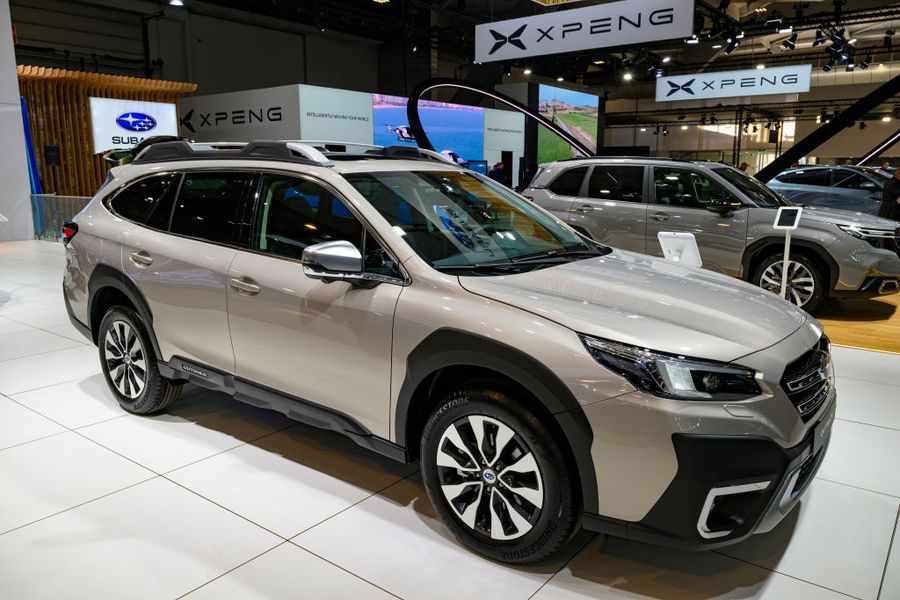
8. Subaru Outback gains headroom in both rows for 2026
Sjoerd van der Wal / Getty Images
The 2026 Subaru Outback earns a U.S. News rating of 9.3 out of 10 and starts at $34,995, delivering what the source describes as a cavernous interior for a vehicle that's modestly sized. The 2026 redesign increased headroom in both the front and rear rows over the previous generation, directly addressing tall-driver needs as part of the model’s update. Front seats offer ample room, and cargo space remains generous relative to the Outback’s exterior dimensions, a hallmark of Subaru’s interior packaging philosophy that the redesign preserved.
One limitation applies to the thigh support: only the driver’s seat offers the extendable thigh bolster. Passengers in the front right seat do not have access to the same adjustment. Buyers who share driving duties with another tall person should factor in this asymmetry when evaluating. The source also recommends bypassing the base engine in favor of the turbocharged XT variant if the budget allows, citing a meaningful improvement in performance.
The 2026 redesign returned physical switchgear to the Outback’s interior, replacing the previous generation’s more software-dependent controls. The change improves the usability of climate and audio functions while driving, reducing the visual attention required by touch-based interfaces. Outward visibility, which the source identifies as another Subaru strength, remains a feature of the redesigned model. The infotainment system received a faster processor alongside the return to physical controls. The Outback’s balance of interior volume, the increase in headroom from the redesign, and its price point well below most competitors on this list make it the strongest value argument for tall drivers seeking a midsize crossover. At $34,995, it undercuts every other SUV on this list by a significant margin. The return of physical switchgear reduces the visual distraction that tall drivers managing legroom and seat position face when adjusting climate and audio controls while in motion. Strong outward visibility, which Subaru preserved through the redesign, further helps tall drivers with wide shoulder frames, which can limit sightlines in narrower cabins.
9 / 10
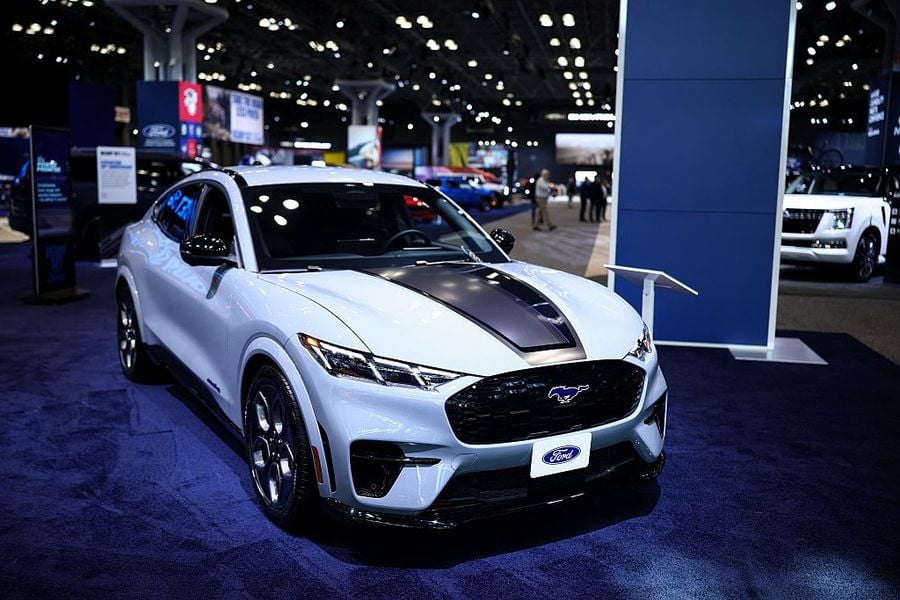
9. Ford Mustang seats helmeted drivers in its front row
CHARLY TRIBALLEAU / Getty Images
The 2026 Ford $F Mustang earns a U.S. News rating of 9.0 out of 10 and starts at $32,320, making it the sports car on this list with the most practical claim to tall-driver usability. Head- and legroom in the front seats are generous enough that tall drivers can wear a full helmet for track use. The accommodation extends beyond everyday driving needs and reflects deliberate headroom engineering in a body style not known for it. Multiple front seat options offer varying levels of bolstering and support, allowing buyers to match seat character to their intended use.
Several engine choices define the Mustang’s range. The 5.0-liter V8 delivers the sound and character most associated with the nameplate, while the base EcoBoost turbocharged four-cylinder produces a lighter, more European handling character, described as giving the Mustang agility comparable to that of European sports cars. Both options coexist within the same body, allowing buyers to choose the powertrain that fits their priorities without sacrificing the tall-driver accommodations either way.
The backseat is small. The source acknowledges this directly, framing it as an expected trade-off for a vehicle of this type. Buyers choosing the Mustang do so for the front-seat experience, the powertrain options, and the sports-car character the body style provides. The front-row tall-driver accommodations are the Mustang’s specific contribution to this list, and the helmet-room capacity signals that the interior geometry serves enthusiast use cases beyond ordinary commuting. At $32,320, the Mustang offers a tall-friendly front-row seating position at a price below most other vehicles on this list. The several front-seat options with varying bolstering levels allow buyers to match the seat’s lateral support to whether they plan to use the car on track or primarily on public roads. The EcoBoost four-cylinder’s lighter weight gives the front-engine, rear-drive platform a different handling balance from the V8 version, and the source describes both as valid choices without a clear hierarchy.
10 / 10
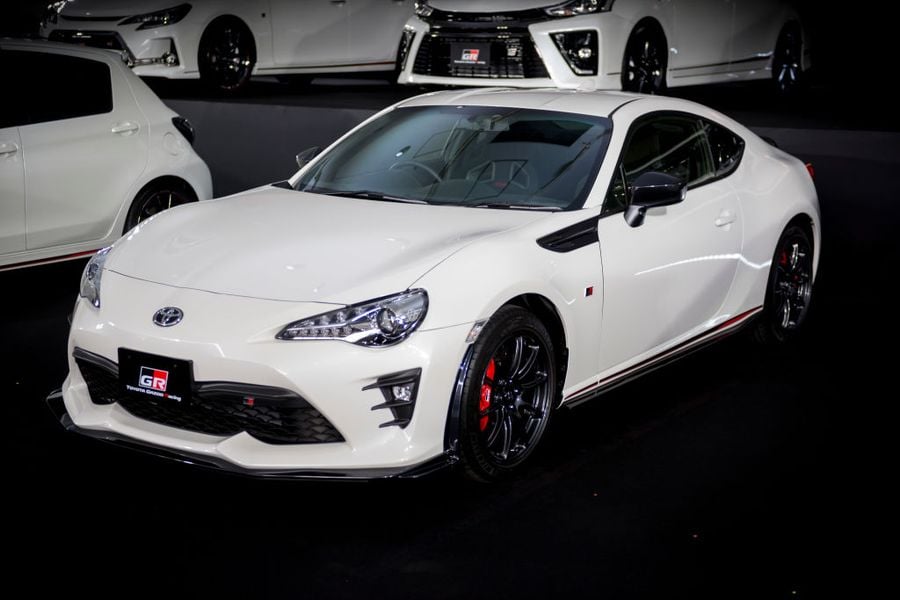
10. Toyota GR86 adds a double-bubble roof for helmet room
NurPhoto / Getty Images
The 2026 Toyota $TM GR86 earns a U.S. News rating of 9.4 out of 10 and starts at $30,800, making it the most affordable vehicle on this list, alongside the Civic. The GR86’s tall-driver solution is architectural: a slight double-bubble design built into the roof adds helmet clearance at the front seating positions, giving tall occupants more vertical space than the roofline’s profile would otherwise allow. The source notes that head- and legroom are generous even on the street without a helmet, meaning the design benefit extends to everyday use, not just track applications.
The steering wheel telescopes outward to meet the seating position that longer-legged drivers require, allowing the driver to push the seat back for leg clearance without sacrificing reach to the wheel. The source describes the clutch and brake pedals as easy to operate and well-positioned, which matters for tall drivers whose feet can sometimes extend past the intended pedal placement in smaller cars. The GR86 and its mechanically related sibling, the Subaru BRZ, offer better tall-driver accommodation than the Mazda MX-5 Miata, which the source identifies as too small for comfortable tall-driver use.
The rear seat of the GR86 is effectively unusable when tall people occupy the front seats. The source suggests treating it as a nicely upholstered parcel shelf or folding it flat to accommodate four wheels and tires with the trunk closed, a characterization that sets accurate expectations without condemning the vehicle. Sports cars in this class prioritize front-occupant experience by design, and the GR86 delivers a front-seat environment that accommodates tall drivers while remaining genuinely engaging to operate. The starting price of $30,800 places the GR86 at the accessible end of this list, making its tall-driver engineering available at a price comparable to ordinary compact cars. The GR86 and the Civic together show that tall-driver accommodation at the affordable end of the new-car market is achievable, and the GR86’s approach through roof geometry — not interior volume — makes it the more architecturally interesting solution.
