
The best cars for Uber and Lyft drivers in 2026
From a Kia Soul with an 88 reliability score to a Honda Odyssey whose rear doors open from the driver's seat
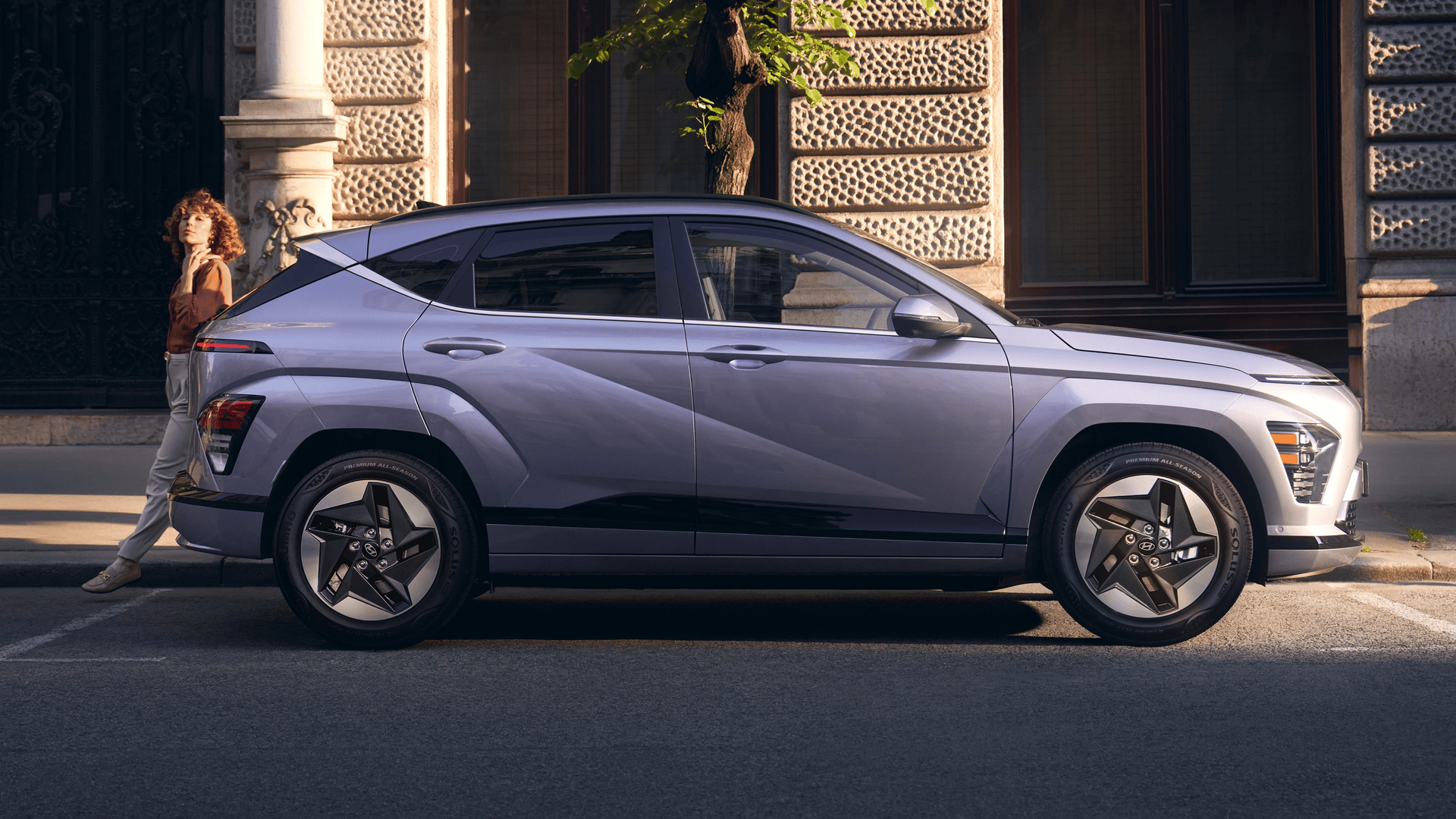
Credit: Hyundai
The car a rideshare driver buys is a business decision, not a personal one. Fuel economy determines the operating cost per mile. Reliability determines how many days the vehicle earns money versus sitting in a shop. Interior quality shapes the passenger experience directly, which connects to ratings and tips in ways that a worn seat or a noisy cabin reflect immediately. Rideshare platforms also impose eligibility requirements — vehicle age, door count, condition standards — that narrow the field before a driver even makes a comparison. Within that filtered set, the best rideshare vehicle is one that keeps costs low, keeps passengers comfortable, and keeps running.
The vehicles on this list earn their positions across multiple dimensions that matter specifically to drivers, not general buyers. An efficient hybrid or electric powertrain reduces fuel costs, which accumulate fastest at high annual mileage. A high reliability score reduces unplanned maintenance expenses, which can eliminate a week of earnings. A spacious, well-finished interior with ample USB ports and a quiet ride addresses the passenger experience factors that translate into ratings. Several vehicles on this list also qualify for premium service tiers — Uber $UBER XL, Lyft $LYFT Green, Uber Comfort — that allow drivers to command higher fares from the same vehicle.
These 10 vehicles come from U.S. News & World Report’s ranking of the best cars for Uber and Lyft drivers, selected for their fuel economy, reliability scores, interior quality, and fit across multiple rideshare service categories. The list spans sedans, subcompact SUVs, compact SUVs, three-row midsize SUVs, a minivan, and a full EV, covering the full range from a small-footprint city car to a full three-row people-mover, with both hybrid and full-electric options represented across the selections at various price tiers.
1. Honda Accord Hybrid achieves 51 mpg city in EX-L trim
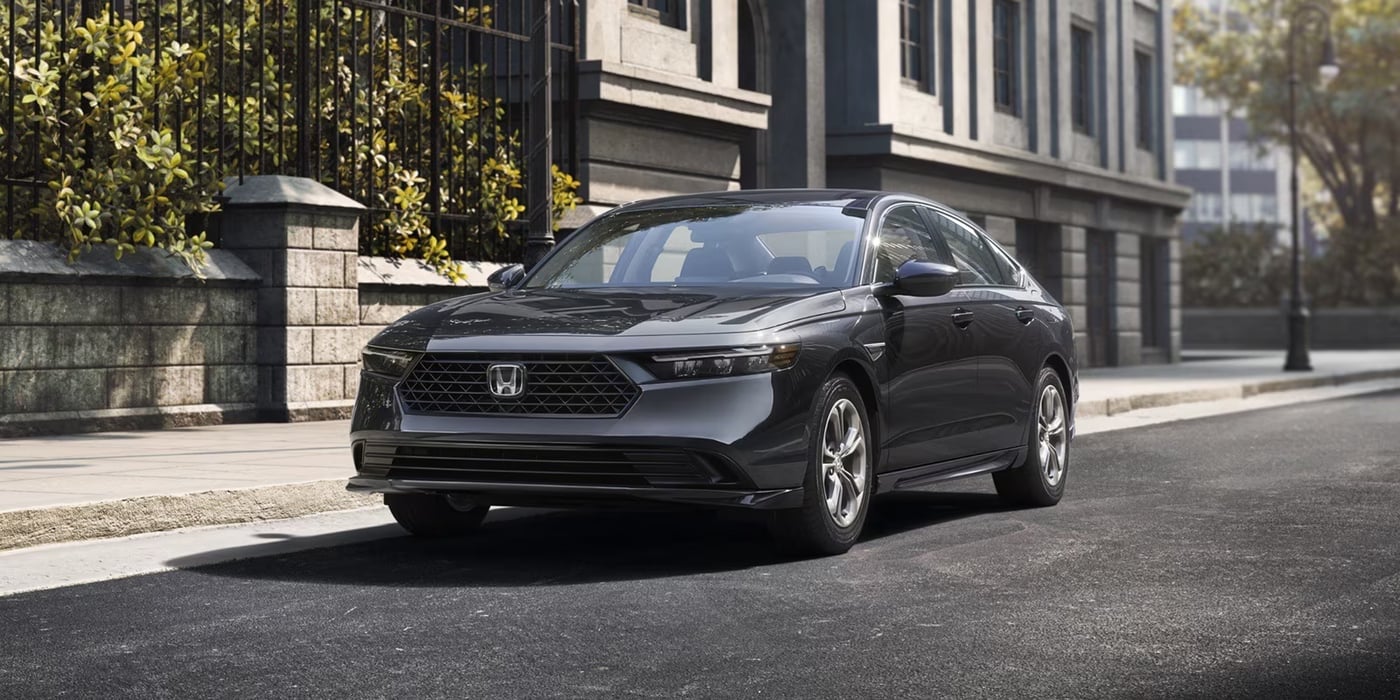
Credit: Honda
The 2026 Honda $HMC Accord Hybrid earns a U.S. News Rating of 9.2 out of 10 and a reliability score of 80 out of 100. The hybrid powertrain delivers quick acceleration and strong fuel economy, with base models returning 48 city and 42 highway miles per gallon. The mid-tier EX-L trim improves those figures to 51 city and 44 highway due to smaller wheels. The Accord Hybrid won the 2026 Best Hybrid Car for Families award and reached finalist status for Best Midsize Hybrid Car for the Money.
The interior is quiet and well-designed with generous legroom across all seating positions. The sleek finish wipes down easily, a practical quality that accumulates value over thousands of rideshare trips. Standard features include a 12.3-inch touchscreen, a 10.2-inch digital driver display, wireless smartphone connectivity, and a Wi-Fi hotspot. Safety features include blind-spot monitoring, rear cross-traffic alert, and adaptive cruise control.
The Accord Hybrid’s fuel economy, interior refinement, and standard technology together make it the most versatile sedan on this list for drivers who want a vehicle that qualifies broadly, runs efficiently, and keeps passengers comfortable without requiring an SUV-sized parking footprint. The test driver’s assessment — that the Accord Hybrid is the best hybrid option in its class — reflects a vehicle that executes the rideshare brief well across every dimension that matters to the business case. The 12.3-inch touchscreen and the Wi-Fi hotspot in particular address what passengers now expect as baseline amenities in any rideshare above the economy tier. The Accord Hybrid’s stable handling and smooth suspension keep the ride quality consistent across the varied road surfaces urban drivers encounter daily throughout long shifts. The Accord Hybrid’s finalist standing for the Best Midsize Hybrid Car for the Money award also signals strong value, given the fuel economy and comfort it delivers at that price point in the midsize sedan class.
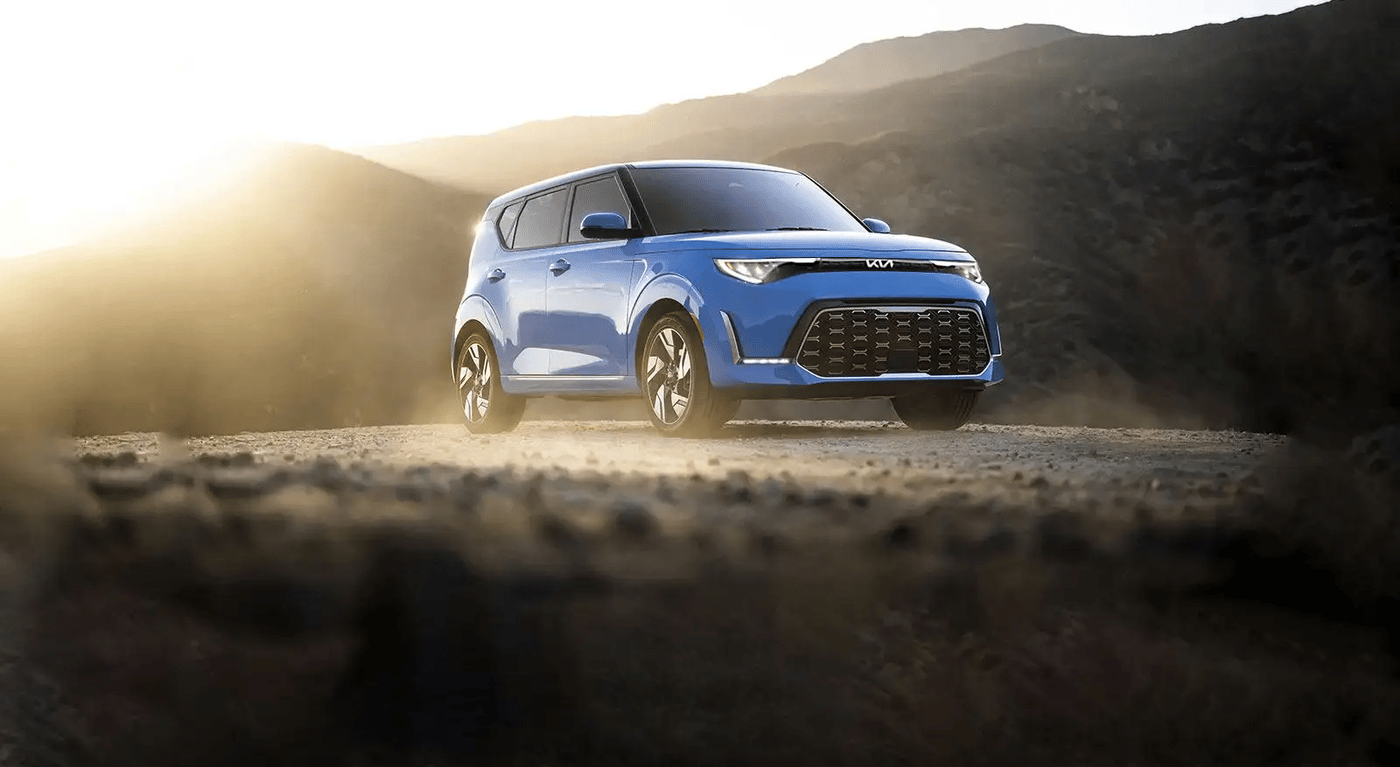
2. Kia Soul fits 24.2 cubic feet of cargo in a compact body
Credit: Kia
The 2025 Kia Soul earns a U.S. News Rating of 9.1 out of 10 and a reliability score of 88 out of 100, the highest reliability figure on this list. It holds the 2025 Best Subcompact SUV for the Money award for the second consecutive year. The squared-off roofline creates headroom that belies the vehicle’s compact exterior dimensions, and the second row of seating is notably spacious relative to the class.
The Soul’s small footprint lets it maneuver into tight parking spaces and narrow designated pickup zones that larger vehicles cannot access. Despite that compact size, it offers 24.2 cubic feet of cargo space with all seats in place, one of the largest cargo areas in the subcompact SUV class. Fuel economy estimates reach up to 29 city and 35 highway miles per gallon, though base models return slightly lower figures. The four-cylinder engine handles city driving well, with highway acceleration somewhat modest.
One critical scheduling note: Kia is discontinuing the Soul after the 2025 model year. Drivers who want one should act on that decision promptly, as inventory will not replenish. The Soul’s 88-out-of-100 reliability score is the most directly relevant credential for rideshare use. A vehicle that does not require unscheduled maintenance keeps earning at the times a shop visit would otherwise interrupt. For urban drivers whose routes stay mostly within city limits, the Soul’s maneuverability, cargo capacity, and class-leading reliability make a compelling operational case while inventory remains available. Kia’s decision to discontinue the Soul makes timing the purchase important, but for a driver who secures one, the reliability and cargo credentials hold for years of rideshare use. Drivers who buy a Soul now lock in the class-leading 88 reliability score on a platform that Kia will no longer produce, making it a finite but strong option for the right driver. The Soul’s second consecutive Best Subcompact SUV for the Money win also reflects consistent performance across two model year evaluations.
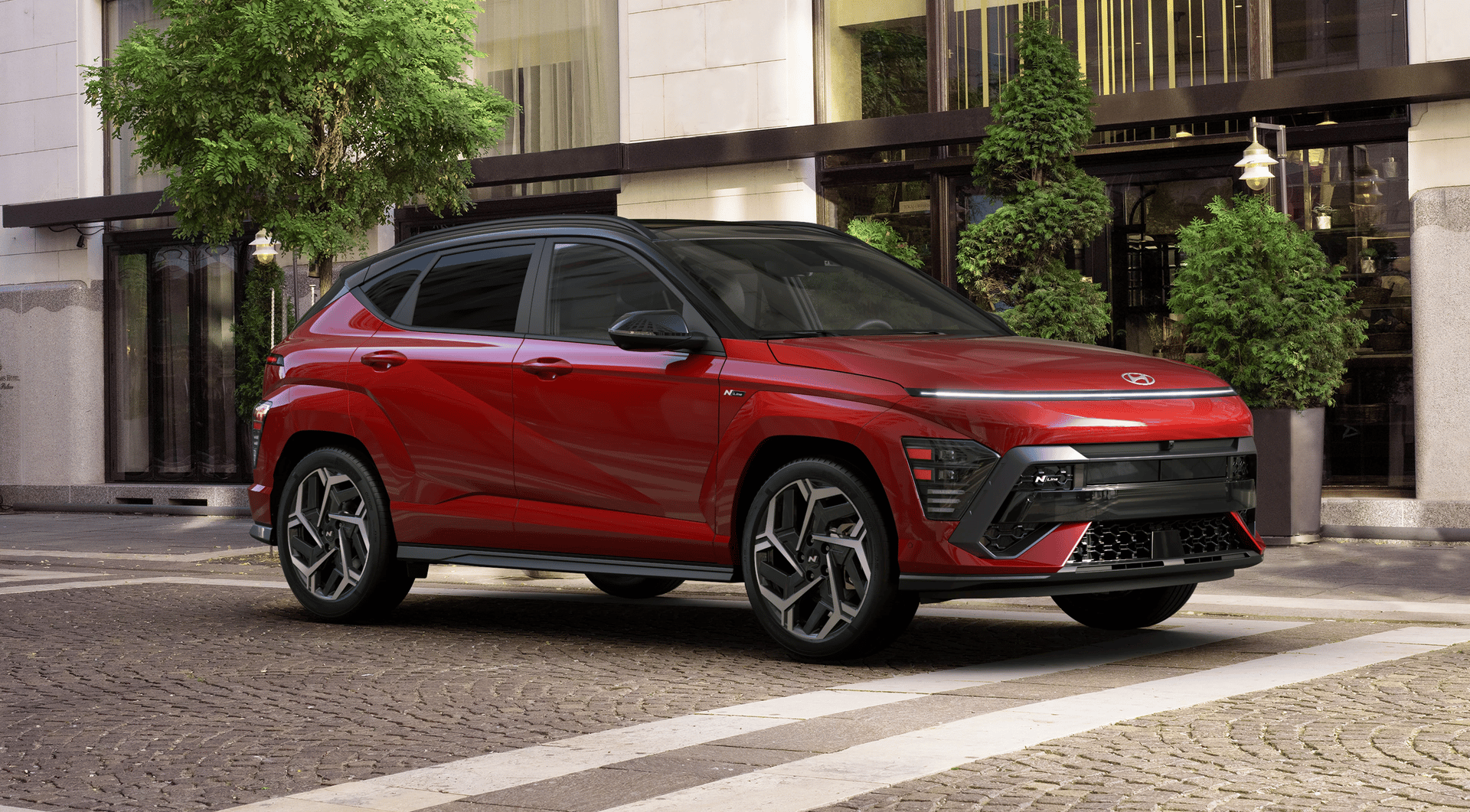
3. Hyundai Kona Electric charges to full in under 6 hours
Credit: Hyundai
The 2026 Hyundai Kona Electric earns a U.S. News Rating of 8.6 out of 10 and costs less than most other EVs in its category. The combined miles-per-gallon-equivalent rating exceeds 100 MPGe, with 131 city and 105 highway figures. Driving range reaches 200 miles per charge. Using a Level 2 home charger, the battery goes from 10 percent to full in under six hours, making an overnight charge sufficient to begin each driving day at full capacity.
The interior provides adult-sized room in both rows, with excellent rear legroom and strong driver visibility. A small front trunk — a frunk — provides the driver with dedicated storage for personal gear, leaving the main cargo area clear for passenger luggage. Standard stop-and-go adaptive cruise control reduces fatigue during slow urban traffic, one of the most tiring conditions in high-volume rideshare driving.
The Kona Electric’s fuel cost advantage compounds significantly at the mileage levels that rideshare drivers accumulate. A driver who covers 50,000 miles annually pays for electricity instead of gasoline on every mile of that total, and the difference in cost per mile between a 100-plus MPGe EV and a 30 mpg gasoline vehicle is substantial enough to affect annual earnings meaningfully. The 200-mile range suits drivers whose daily mileage stays within that window, which covers most urban rideshare patterns. Drivers with access to a Level 2 home charger will find the under-six-hour charge time compatible with a standard overnight routine. The frunk’s value as a dedicated driver storage space is a small but real operational benefit: keeping personal items separate from passenger luggage reduces the mixing and retrieval time that would otherwise slow turnaround at each stop. The Kona Electric’s strong rear legroom also gives passengers in the back a genuinely comfortable ride, which matters most on the airport runs and longer trips where EV efficiency saves the most money.
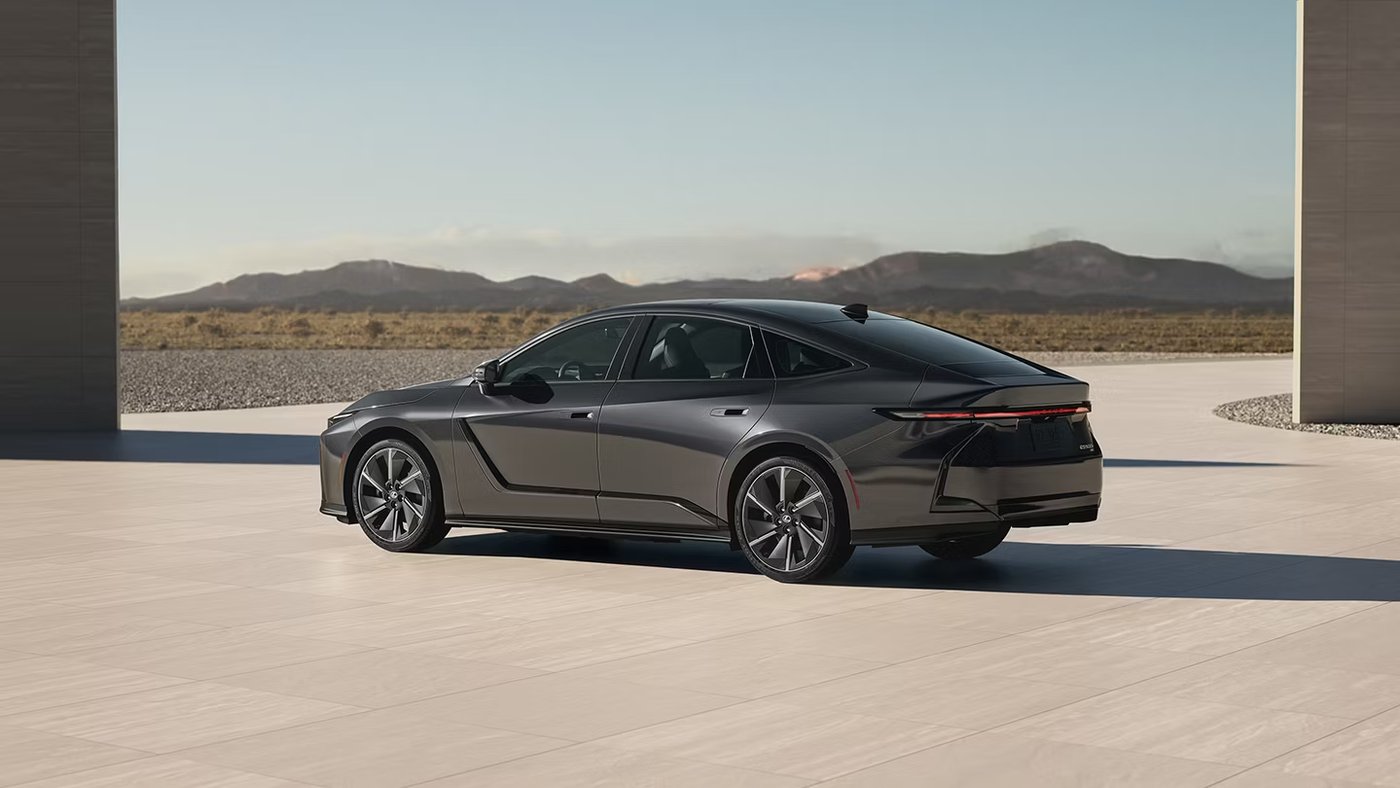
4. Lexus ES Hybrid ships with 6 USB ports as standard
Credit: Lexus
The 2025 Lexus ES Hybrid earns a U.S. News Rating of 8.9 out of 10 and a reliability score of 89 out of 100, the second-highest on this list. It carries a below-average starting price for a midsize luxury sedan. Senior Vehicle Testing Editor John Vincent describes the driving experience as buttery smooth, with world-class build quality and interiors comfortable enough for a transcontinental trip.
The standard interior includes synthetic leather upholstery and an 8-inch touchscreen with wireless smartphone connectivity and a Wi-Fi hotspot. Six USB ports come standard across all trim levels, enough for multiple passengers to charge devices simultaneously, a specific amenity that business travelers boarding after a flight appreciate immediately and that contributes to five-star ratings. The rear seats offer generous room across body types, and the driver’s seat adjusts across multiple dimensions for all-day comfort. Fuel economy reaches 43 city and 44 highway miles per gallon.
The Lexus ES Hybrid’s positioning as a luxury vehicle at a below-luxury price opens Uber $UBER Comfort and similar premium service tiers, which allow higher per-ride fares from the same operating cost base. The ES Hybrid’s 89 reliability score gives it a low unscheduled maintenance profile despite its luxury positioning, which matters more over three or four years of rideshare use than the initial purchase decision. Vincent’s assessment of the interior quality reflects a cabin that passengers in the premium tier expect, and the ES Hybrid delivers without the operating costs of a fully bespoke luxury sedan. The 43 and 44 mpg city and highway figures also make the ES Hybrid one of the most fuel-efficient luxury sedans available, keeping the per-mile cost advantage over gasoline-only competitors across the vehicle’s full working life. The driver’s seat adjustability across multiple dimensions is also worth noting: drivers who spend eight or more hours behind the wheel need a seat that accommodates their posture over a full shift, and the ES Hybrid’s adjustments address that requirement.
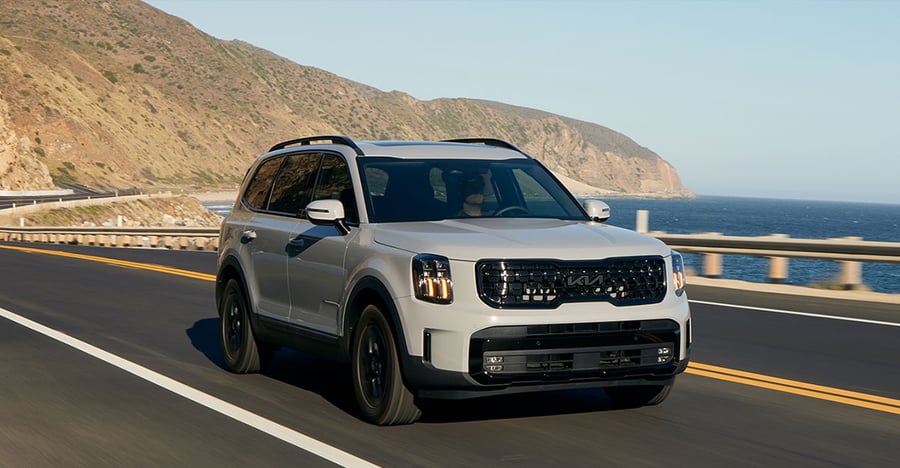
5. Kia Telluride seats 8 and holds a Top Safety Pick Plus
Credit: Kia
The 2025 Kia Telluride earns a U.S. News Rating of 9.5 out of 10 — the highest rating on this list — and a reliability score of 85 out of 100. It holds the Best 3-Row SUV for the Money award across multiple years and serves as the top pick in the midsize SUV class. Seating accommodates eight passengers, and cargo room exceeds what most midsize SUVs offer. Fuel economy comes in at 20 city and 26 highway miles per gallon, average for the class.
The Insurance Institute for Highway Safety awarded the Telluride its Top Safety Pick Plus designation, the organization’s highest rating. Highway Driving Assist pairs adaptive cruise control with lane centering to reduce fatigue on longer trips between airports, stadiums, and other high-demand destinations. A 12.3-inch touchscreen and five USB ports come standard. The cabin is easy to maneuver through city streets and on winding roads despite the Telluride’s full three-row dimensions.
Eight-passenger capacity and the highest U.S. News rating on this list together give the Telluride a specific advantage for Uber $UBER XL and similar high-capacity service tiers, where the per-ride fare premium for extra seats translates directly into higher revenue per trip. The Top Safety Pick Plus designation also supports the vehicle’s rating profile with passengers who notice and value safety credentials. For drivers who want a three-row SUV that earns across premium fare categories while maintaining strong ratings, the Telluride provides the most complete case on this list for high-capacity rideshare. The five standard USB ports further support the premium service positioning by ensuring every passenger can charge a device regardless of where they sit. The Highway Driving Assist system’s lane-centering capability also reduces the micro-corrections that highway driving demands on long airport transfers, lowering driver fatigue over a full day of rides. The Telluride’s multi-year Best 3-Row SUV for the Money record also means its value proposition has held across sustained competitive pressure.
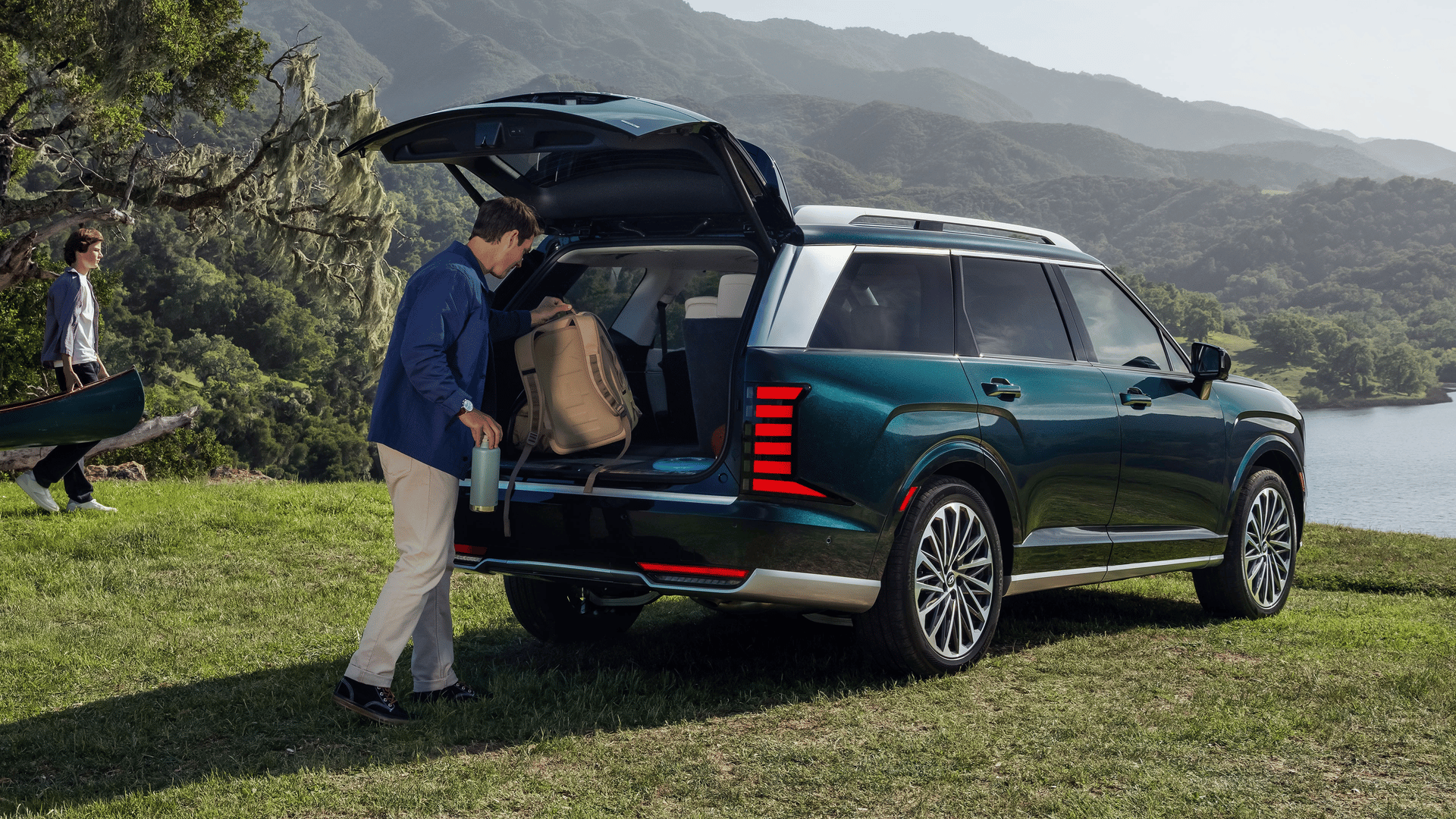
6. Hyundai Palisade debuts its second generation in 2026
Credit: Hyundai
The 2026 Hyundai Palisade earns a U.S. News Rating of 9.0 out of 10 and a reliability score of 84 out of 100. The 2026 model year marks the beginning of the Palisade’s second generation, and the test driver’s assessment is direct: the fully redesigned three-row midsize SUV improves on a first generation that was already one of the best crossovers available. Seating reaches eight passengers, and the cargo area behind the third-row seats measures 19.1 cubic feet, expanding to a maximum of 86.7 cubic feet.
The 12.3-inch touchscreen comes standard with an intuitive infotainment interface. The ride quality feels cushioned, and the engine provides sufficient power for passing on the highway despite below-average fuel economy ratings for the class. The standard safety feature list includes stop-and-go adaptive cruise control and junction-turning detection, which assists with navigating busy intersections safely, a relevant capability for drivers covering high-traffic urban routes.
The Palisade’s second-generation redesign gives 2026 buyers an updated platform, not a carry-over model, which matters for the multi-year ownership horizon that rideshare use demands. The Palisade's 86.7 cubic feet of maximum cargo capacity also makes it competitive for airport runs where passengers arrive with substantial luggage. Eight-passenger capacity qualifies the vehicle for premium-tier service categories, and the intuitive infotainment system lets the driver manage navigation and calls without the attention cost that complex systems impose during active rides. The junction-turning detection feature is also worth noting for urban drivers: busy intersections are where accident risk concentrates in rideshare driving, and automated assistance with those maneuvers has direct safety value beyond the convenience benefit. The fully redesigned second-generation platform also means the Palisade enters its next production cycle with fresh engineering, not the accumulated aging that affects late-lifecycle vehicles. The 86.7 cubic feet of maximum cargo capacity further supports airport use, where passenger luggage volumes vary widely and the ability to accommodate oversized bags without rearranging seats matters.
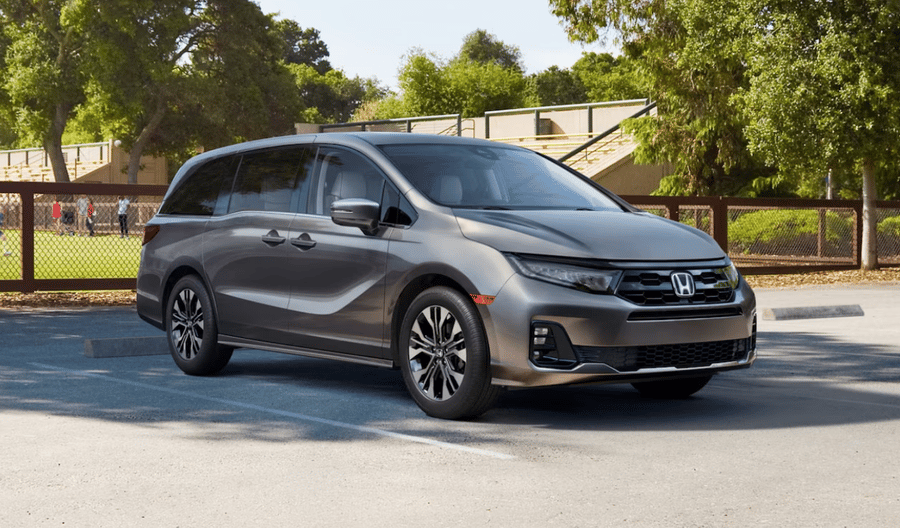
7. Honda Odyssey opens its rear doors from the driver’s seat
Credit: Hyundai
The 2026 Honda $HMC Odyssey earns a U.S. News Rating of 9.3 out of 10 and a reliability score of 80 out of 100. The power liftgate and Magic Slide second-row seats simplify getting passengers and their luggage in and out of the van. The power sliding rear doors can be operated directly from the driver’s seat, enabling seamless pickups and drop-offs without the driver leaving their position, a workflow advantage that accumulates across dozens of rides per day.
The infotainment system received an update that added a larger touchscreen alongside a digital driver display, wireless smartphone connectivity, multiple USB ports, and a Wi-Fi hotspot. Adaptive cruise control and forward automatic emergency braking are standard safety features. The interior ranks among the highest-rated and most spacious on this list, giving passengers in every row generous room.
Minivans carry an aesthetic reputation that their practical credentials do not deserve, and the Odyssey is the clearest example of a vehicle where the category prejudice costs drivers real money. The sliding rear doors, the Magic Slide seat configuration, the driver-operated door controls, and the roomy interior together create a passenger-loading experience that no SUV on this list can match in efficiency. For drivers running airport routes or group rides where multiple passengers board simultaneously with luggage, the Odyssey’s operational format reduces time per pickup in ways that comparable-capacity SUVs do not. The Magic Slide second-row seats also allow the driver to reconfigure the cabin between rides to maximize either passenger comfort or cargo access, giving the Odyssey flexibility that fixed-seat SUVs cannot match. The standard Wi-Fi hotspot also allows passengers to continue working during transit, a feature that business travelers on airport runs specifically value and mention in positive reviews. The Odyssey’s infotainment update for 2026 also ensures the vehicle’s technology aligns with current passenger expectations in connectivity and screen quality.
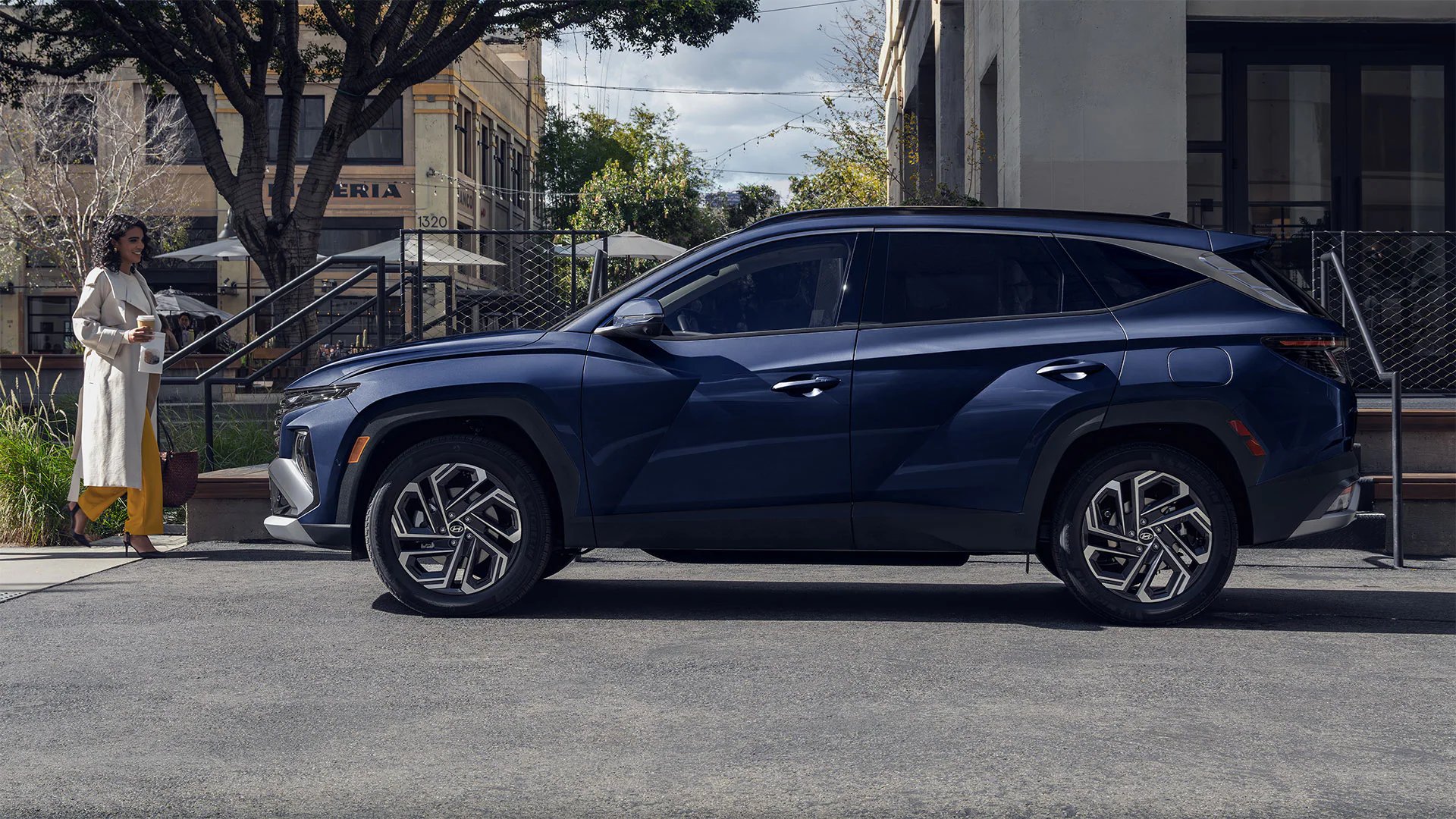
8. Hyundai Tucson Hybrid returns 38 combined mpg with AWD
Credit: Hyundai
The 2026 Hyundai Tucson Hybrid earns a U.S. News Rating of 9.4 out of 10 and a reliability score of 83 out of 100. The test driver’s description is specific: quicker, more responsive, and quieter than the non-hybrid Tucson, which is itself a highly regarded vehicle. The base model returns 38 miles per gallon in combined driving. Standard all-wheel drive gives the vehicle a sure-footed feel across road conditions, and the low center of gravity makes it surprisingly easy to maneuver given its SUV proportions.
Rear seat passengers have enough room to sit comfortably regardless of height. The cargo area holds 38.7 cubic feet with all seats in place, sufficient for airport luggage on most rides. The hybrid powertrain’s responsiveness and fuel economy together reflect an engineering balance that serves rideshare use well: the electric assist handles the low-speed acceleration that dominates urban stop-and-go driving, and the combined 38 mpg keeps fuel cost per mile competitive with vehicles in smaller classes.
The Tucson Hybrid’s standard AWD is a specific credential for drivers in regions with winter weather or wet conditions, where traction matters for both safety and passenger confidence. Most AWD competitors charge a premium for the configuration that the Tucson Hybrid includes at the base level, which affects the total cost comparison beyond the sticker price. The test driver’s quieter characterization also matters for passenger experience: a cabin that reduces road and powertrain noise into the interior directly supports the five-star ride quality that ratings-conscious drivers want to deliver. The Tucson Hybrid’s high 9.4 U.S. News Rating also reflects a vehicle that performs well across all the dimensions passengers and reviewers assess, which aligns with the rideshare rating framework. The sure-footed AWD handling also contributes to the smooth, confident driving feel that passengers perceive even when they cannot identify its mechanical source, which is exactly the kind of invisible quality that drives positive ratings.
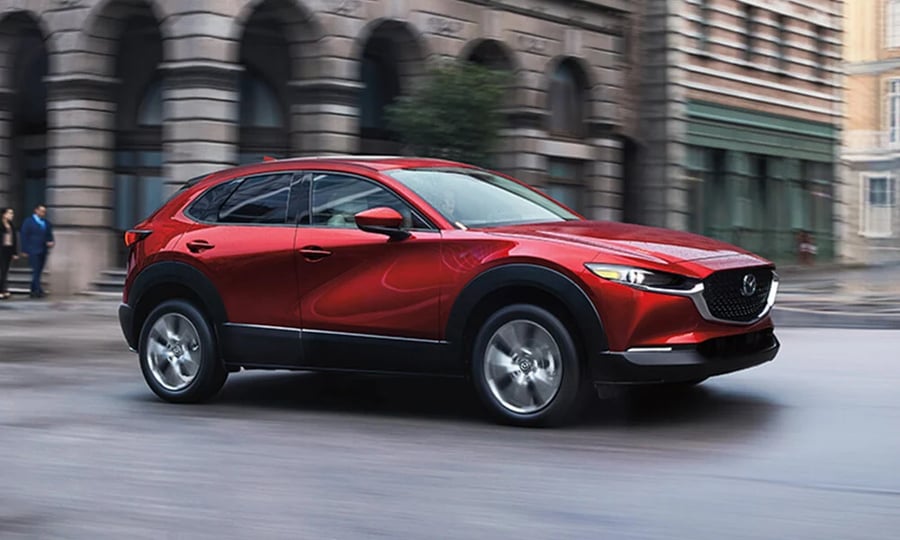
9. Mazda CX-30 matches entry-level luxury with its interior
Credit: Mazda
The 2026 Mazda CX-30 earns a U.S. News Rating of 9.1 out of 10 and a reliability score of 80 out of 100. The interior stands above most rivals in the subcompact SUV class, with high-quality materials throughout that the source describes as resembling an entry-level luxury SUV. Rear seat headroom exceeds even the spacious front row, an unusual characteristic in a vehicle of this size that gives taller passengers a specific reason to rate their experience positively.
The infotainment system uses a rotary knob as its primary input, providing tactile control that drivers can operate without taking their eyes off the road. Smartphone connectivity enables touchscreen interaction when the devices are connected. Standard safety equipment includes adaptive cruise control and a rear-seat alert that reminds passengers to retrieve their belongings, a feature with practical value in rideshare, where left items create return trips and scheduling disruption. An available head-up display projects navigation information into the driver’s line of sight.
The CX-30’s interior quality relative to its size class is the defining credential for rideshare use. Passengers who expect a basic small SUV and encounter a cabin with luxury-grade materials and more rear headroom than the front seats tend to notice and comment, which translates into the positive reviews that drive ratings upward. The rotary infotainment control also reduces the distraction that touchscreen-only systems create, supporting safety during the continuous attention demands of rideshare driving. The rear-seat alert also addresses a practical liability: when a passenger forgets a bag, the driver typically handles the return or the dispute, and a feature that reduces forgotten-item incidents saves that time and friction. The CX-30’s compact footprint also allows access to pickup zones that larger vehicles cannot reach, giving drivers flexibility in urban environments where designated pickup areas can be tight. The CX-30’s wide-opening cargo hatch also makes loading and unloading passenger bags straightforward despite the cargo area being modestly sized against some class rivals.
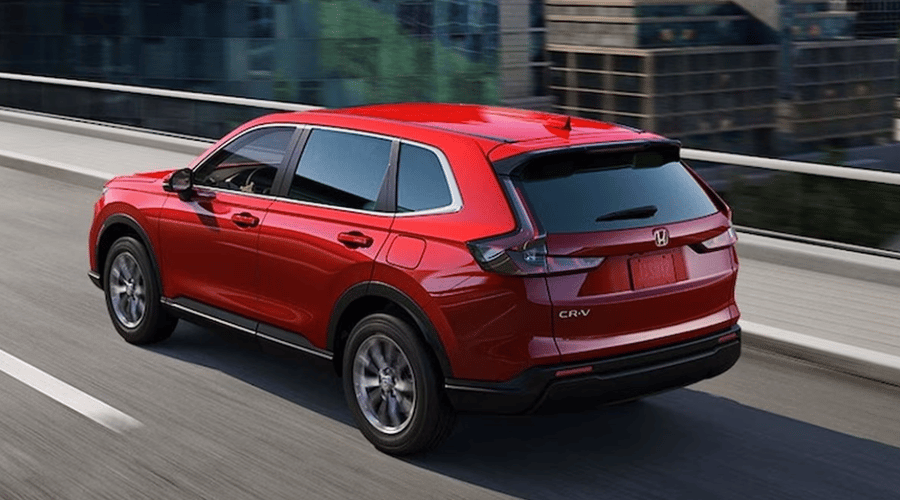
10. Honda CR-V Hybrid updates its screen size for 2026
Credit: Honda
The 2026 Honda $HMC CR-V Hybrid earns a U.S. News Rating of 8.9 out of 10 and a reliability score of 83 out of 100. The 2026 refresh brings a larger infotainment screen and a new TrailSport trim to what U.S. News Managing Editor Alex Kwanten describes as affordable, handsome, hugely roomy, nice to drive, and well-equipped. Fuel economy reaches 43 city and 36 highway miles per gallon.
The interior uses high-quality, stain-resistant materials, a specific practical advantage in rideshare, where spills and soil accumulate with high annual mileage. The infotainment system retains physical knobs and buttons alongside the screen, giving the driver tactile controls that do not require visual attention to operate during a ride. The cargo area is large enough to accommodate multiple passengers’ luggage, and the rear USB ports allow passengers to charge devices throughout the trip.
The CR-V Hybrid’s stain-resistant interior addresses one of the maintenance realities of rideshare use that standard interior reviews do not weigh heavily. A cabin that resists staining requires less frequent deep cleaning and maintains its appearance longer under heavy daily use, reducing the time and cost of keeping the vehicle in the condition that platform standards require. The 43 mpg city figure also makes the CR-V Hybrid one of the more fuel-efficient non-electric options on this list, which compounds into meaningful savings over the mileage a rideshare vehicle accumulates annually. The TrailSport trim added in the 2026 refresh also broadens the CR-V Hybrid’s appeal for drivers who want a slightly more rugged appearance without sacrificing the fuel economy and interior quality that rideshare use requires. The physical knobs and buttons retained in the 2026 infotainment system are a genuine safety differentiator in a field where many competitors have moved all controls to touchscreens that demand visual attention to operate. That safety-by-design choice reflects engineering priorities that align directly with the requirements of continuous rideshare driving.