From Windsor's nine centuries of royal occupation to Highclere Castle's Downton Abbey rooms, the best castles near London for a day trip
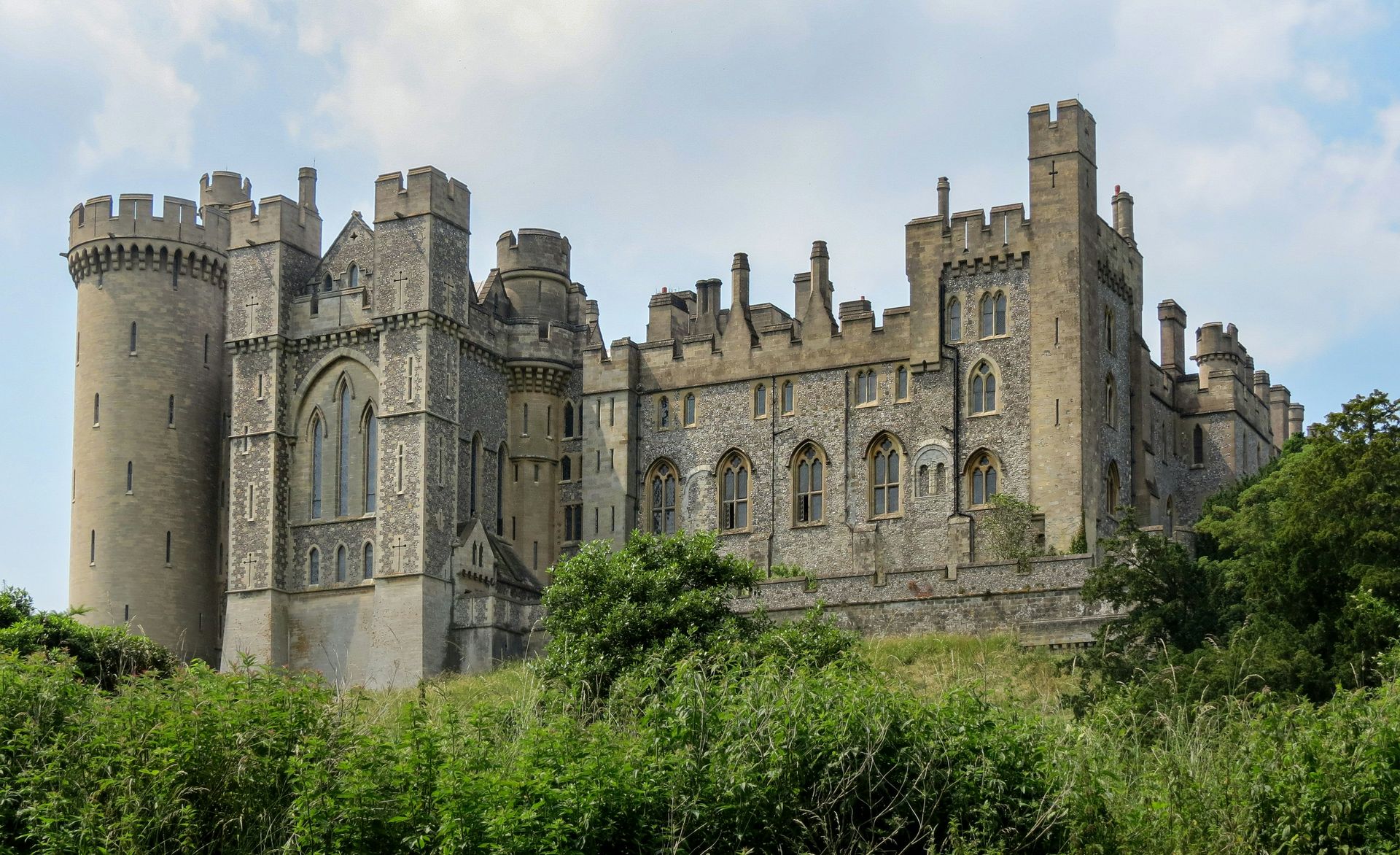
Ray Harrington / Unsplash
London is not short of castle history on its own: the Tower of London, Buckingham Palace, and Kensington Palace are all within the city’s boundaries, and Hampton Court Palace sits 30 minutes to the southwest. But the surrounding counties extend that inheritance considerably. Within a 90-minute drive in any direction, the landscape around London includes royal residences still occupied by the reigning family, Baroque palaces designated by UNESCO, medieval fortresses that withstood sieges by English kings, and the estates of aristocratic families who have owned their properties for 500 years or more. The density of historically significant castles and palaces within the day-trip range of the city is genuinely unusual, a consequence of London’s long history as the center of English political power, which drew construction and patronage into its orbit for centuries.
Day trips to these properties can be taken by car, train, bus, or organized tour, depending on the destination and the traveler’s preference. Some properties require advance ticket purchase. Some are open year-round while others close seasonally or during official functions. Gardens, mazes, and grounds extend the visit beyond the castle interiors at several of the properties listed here, often warranting more time than the building alone requires.
These nine castles come from Travel + Leisure’s selection of the best castles near London that can be visited on a day trip, all reachable from the city by car, train, bus, or organized tour. The range spans Norman fortresses, Tudor palaces, Baroque country houses, and a Victorian Gothic estate turned television landmark, and each site carries a historical identity specific enough to reward more than surface-level engagement. Visiting more than one in a single trip is straightforward given the distances involved, and several pairs are naturally grouped by geographic region.
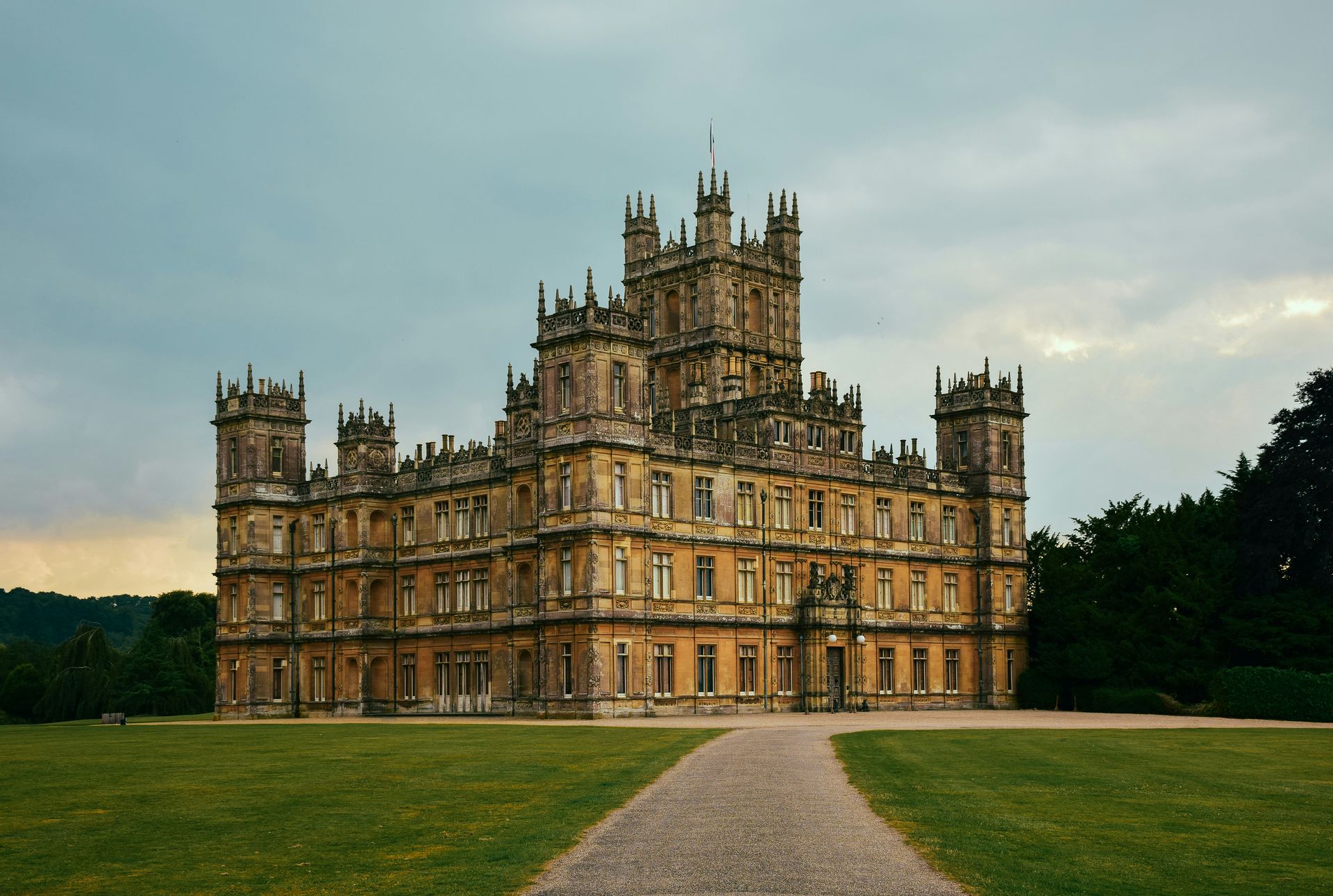
Tim Alex / Unsplash
Highclere Castle sits about 90 minutes by car from central London on more than 1,000 landscaped acres, with over 200 rooms in a Victorian structure that the Carnarvon family has occupied since 1679, when the earlier house on the site — dating to 749 — was rebuilt as a castle. Visitors can tour bedrooms, the lavish library, the saloon, the drawing room, and the smoking room, among other parts of the property.
The castle’s most immediate association for many visitors is as the filming location for the television series Downton Abbey, where it served as the on-screen home of the fictional Crawley family. That connection draws visitors who might not otherwise seek out Victorian country houses, and the interior delivers on the expectation: the rooms shown in the series are the actual rooms, not reconstructed sets.
The Carnarvon family’s continuous ownership since 1447 — combined with the site’s documented history dating back more than 12 centuries — gives Highclere a depth of layered occupation that other famous castles do not always match. The grounds themselves warrant time beyond the house tour: more than 1,000 acres of landscaped parkland surrounding a Victorian Gothic castle create a visual setting that the television production clearly understood when choosing the location. The 200-plus rooms give even a partial tour substantial visual range: the library alone, with its collection and decoration, is the kind of room that requires time to absorb, not a single glance. Highclere’s opening schedule is seasonal and limited by the family’s private use of the property, so checking availability before planning a visit is important. The estate’s television association, alongside its genuine historical depth, means it attracts visitors with very different primary motivations, and both groups tend to find that the property delivers beyond the dimension for which they came. For visitors primarily interested in the Downton Abbey association, the 200-plus-room Victorian interior provides context that the series rarely conveys.
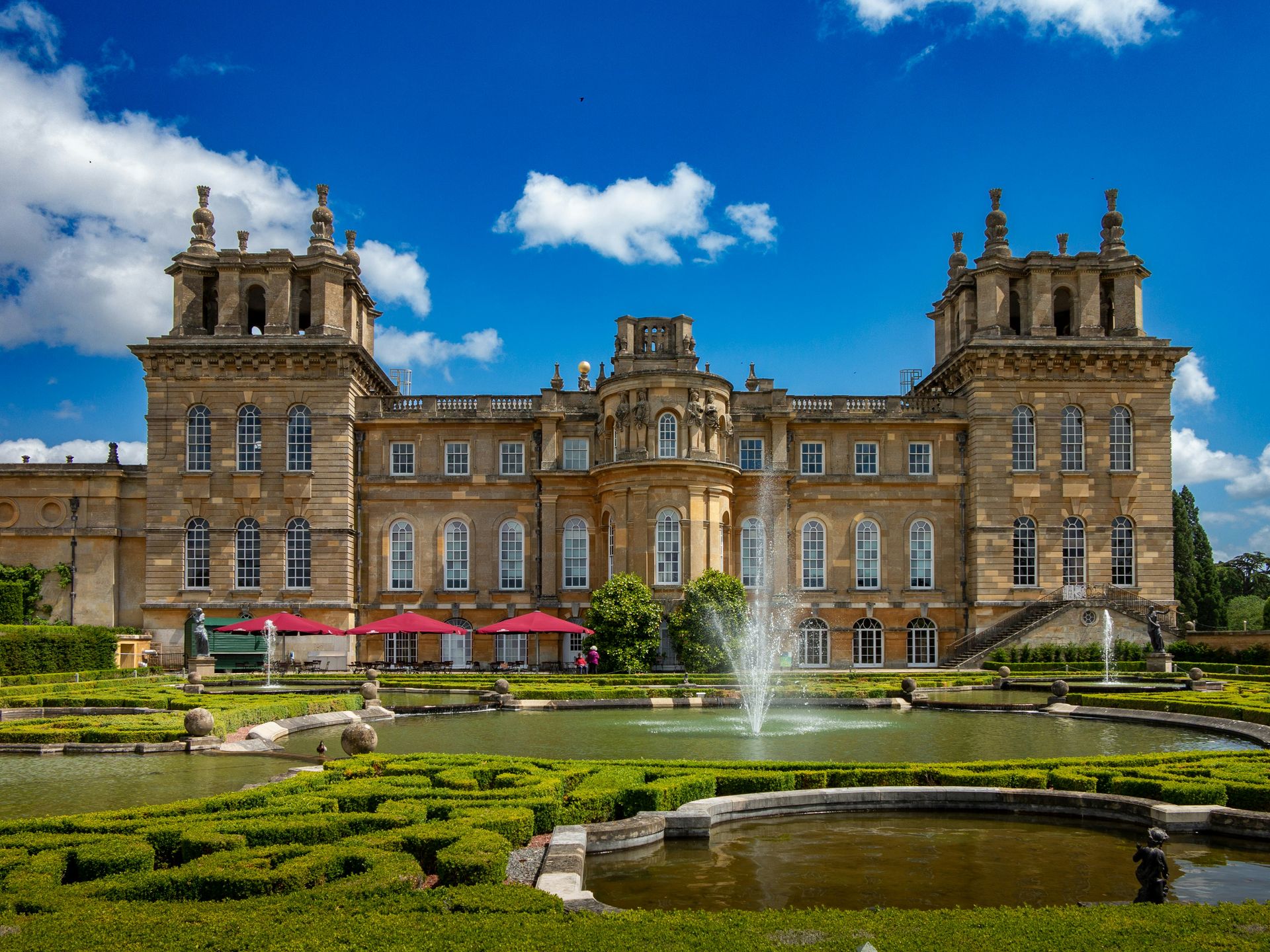
Einar H. Reynis / Unsplash
Blenheim Palace is about 90 minutes northwest of London by car and holds UNESCO World Heritage designation, awarded in 1987, recognizing it as the finest example of Baroque architecture in Great Britain. John Vanbrugh designed the palace, built between 1705 and 1724, which has remained in the Churchill family since its construction. It was the boyhood home of Winston Churchill.
All tickets must be purchased in advance, and visits are largely self-guided, with customizable audio narration provided through the Archie app. The standard Palace, Park and Gardens Pass covers twice-daily guided tours of the lavish state rooms, which is valid for a full year, a practical detail for visitors who want the option to return without repurchasing entry. Several themed tours are available at an additional cost. Beyond the palace, the Walled Garden, Formal Gardens, and Marlborough Maze extend the visit into the grounds.
The UNESCO designation gives Blenheim a specific international recognition beyond the usual category of English heritage properties. The palace’s claim as the finest Baroque example in the country reflects a building that the art-historical community has rigorously assessed, not a marketing designation. For visitors with an interest in architecture specifically, Blenheim offers a concentration of Baroque design at a scale and quality unmatched by any other English country house. The Marlborough Maze, in particular, rewards visitors who enjoy physical navigation through its landscape design: a full-scale puzzle in topiary that extends the visit well beyond the palace rooms themselves. Blenheim’s grounds, designed in part by Capability Brown, are as significant a piece of English landscape design as the palace is of Baroque architecture. The year-long ticket validity also means visitors who engage with Blenheim’s grounds, gardens, and maze in a single day are likely to return with the appetite for more, and the standing ticket accommodates that return at no additional cost. Churchill’s birthplace connection also gives Blenheim a transatlantic appeal that pure English heritage properties do not always share.
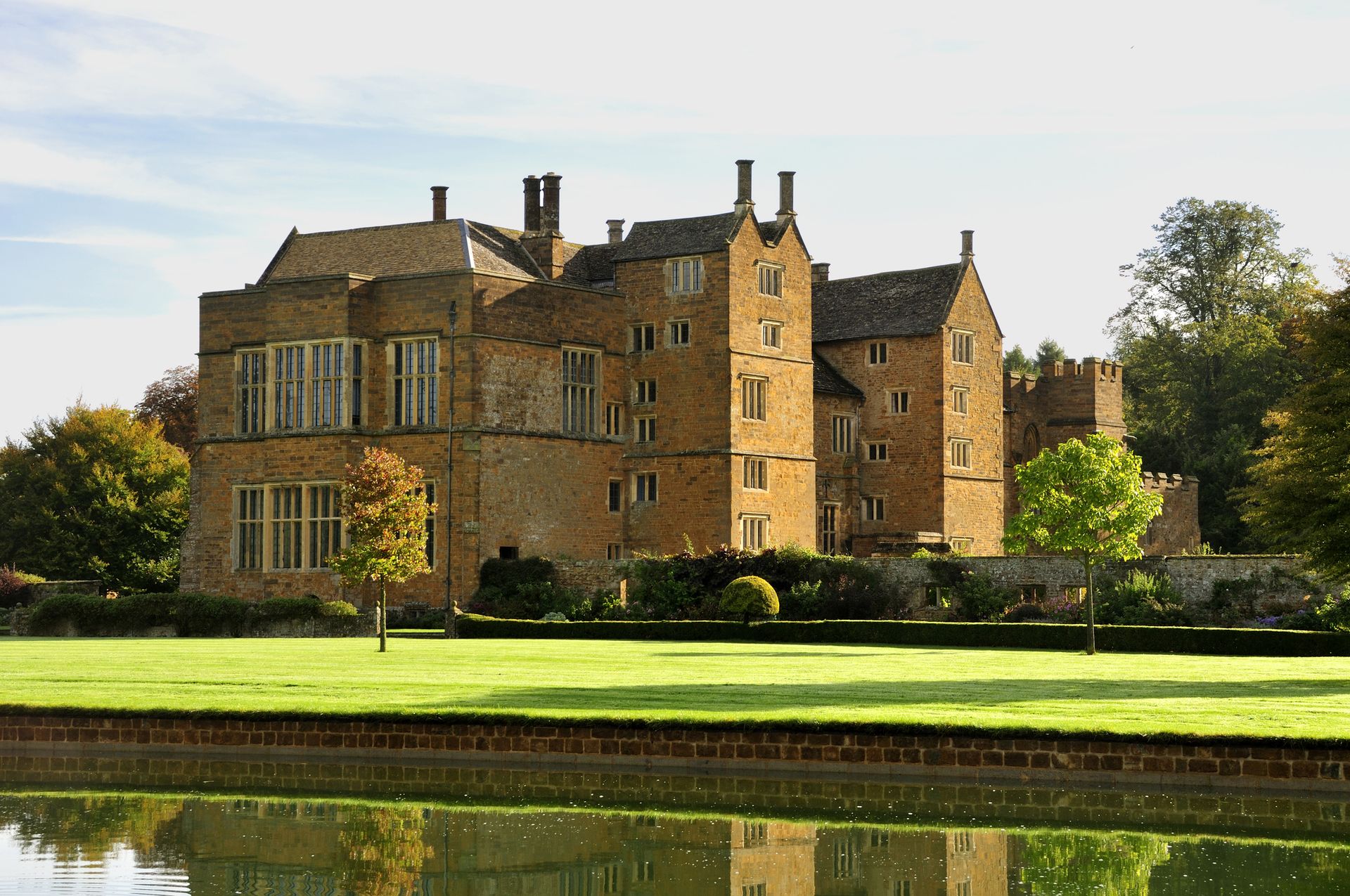
AlexMcGuffie / Getty Images
Broughton Castle sits about 80 miles from London, constructed from local Hornton ironstone and surrounded by a moat. The house dates to 1306, though most of what visitors tour today reflects the 1550s rebuilding. Historically, it served as a center of opposition to King Charles I, giving it a specific political significance beyond its architectural interest. The castle, its garden, and a tearoom are open to the public.
The same family has held Broughton Castle since 1447, an unbroken ownership spanning nearly six centuries that has kept the property in genuine habitation rather than institutional preservation. That continuity shows in the interior, which carries the character of a lived-in house alongside its historical exhibits. Broughton has also served as a filming location for multiple productions, including the 1998 film Shakespeare in Love and Netflix $NFLX’s The Crown, which gives it recognition beyond the heritage tourism audience.
The moat, the ironstone construction, and the medieval origins, layered with Tudor-era modifications, create a physical depth visible in the building itself. Visitors who approach Broughton expecting a straightforward period interior will find something more complex: a house that reflects continuous habitation and use across seven hundred years, with the physical evidence of different eras present simultaneously in the same walls and rooms. The garden and tearoom are accessible to visitors who want to extend their visit beyond the interior tour, and the gardens reflect a similar layering of cultivation and design across different periods. The film's connections to Shakespeare in Love and The Crown also give the property contemporary visibility, drawing visitors who would not otherwise seek out medieval Oxfordshire. The tearoom adds a practical reason to spend unhurried time at the property, and the garden’s layered planting across different historical periods of cultivation gives horticulturally inclined visitors a separate layer of engagement from the castle itself. The moat at Broughton is also fully intact and functional, not merely decorative, giving the castle a defensive quality that is immediately perceptible on approach.
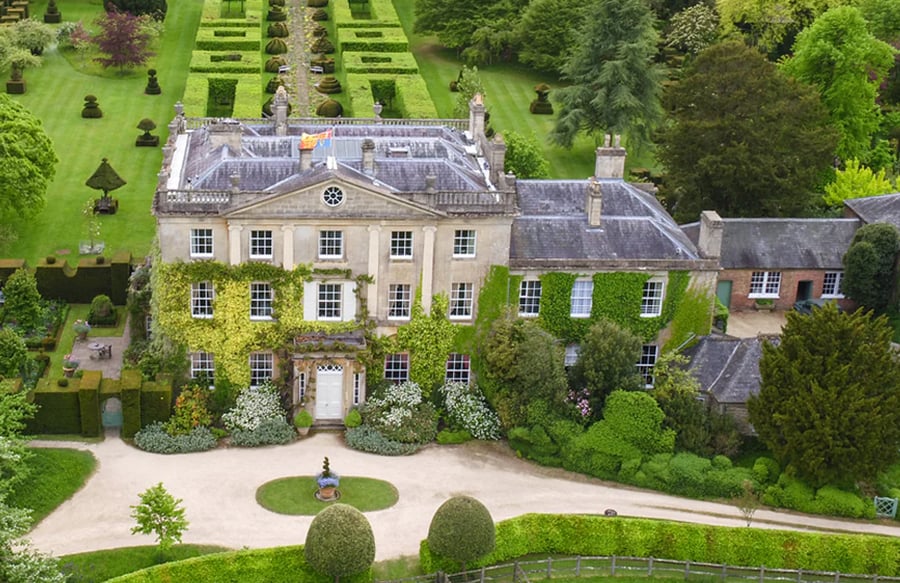
Credit: Highgrove Gardens
Highgrove House sits about two hours from London by car and has served as the family residence of King Charles III and the Queen Consort since the then-prince arrived in 1980. The house itself is not open to the public. It is a Georgian neoclassical property that functions as a private royal residence, but the gardens welcome thousands of visitors each year. The king’s arrival in 1980 prompted a dramatic transformation of the grounds, which have become a haven for wildlife and include a center for organic farming.
The garden’s significance goes beyond ornamental landscaping. The organic farming operation at Highgrove reflects a decades-long commitment to sustainable agriculture that preceded mainstream interest in the subject by years, and the garden's wildlife habitat elements represent deliberate ecological stewardship rather than incidental planting. Visitors who come expecting a conventional country house garden will find something with a more specific philosophy.
The limitation — house not open, gardens only — is worth understanding clearly before booking. Highgrove is not a conventional castle tour, and visitors whose primary interest is the historic architecture of royal residences will find Windsor Castle a more complete experience. For visitors whose interest extends to royal history, garden design, and the ecological commitments that have defined King Charles’s public identity for decades, the Highgrove gardens offer a visit that no other property on this list provides. The organic farming center also provides visitors with context for the agricultural philosophy King Charles has publicly advocated for decades, adding a dimension to the garden visit that transcends ornamental interest. Garden tours must be booked in advance due to high demand and limited entry slots. The garden’s year-round maintenance as a working organic estate also means the visit changes in character across different seasons, with spring flowering and late summer growth presenting quite different versions of what the king and his team have built over more than four decades.
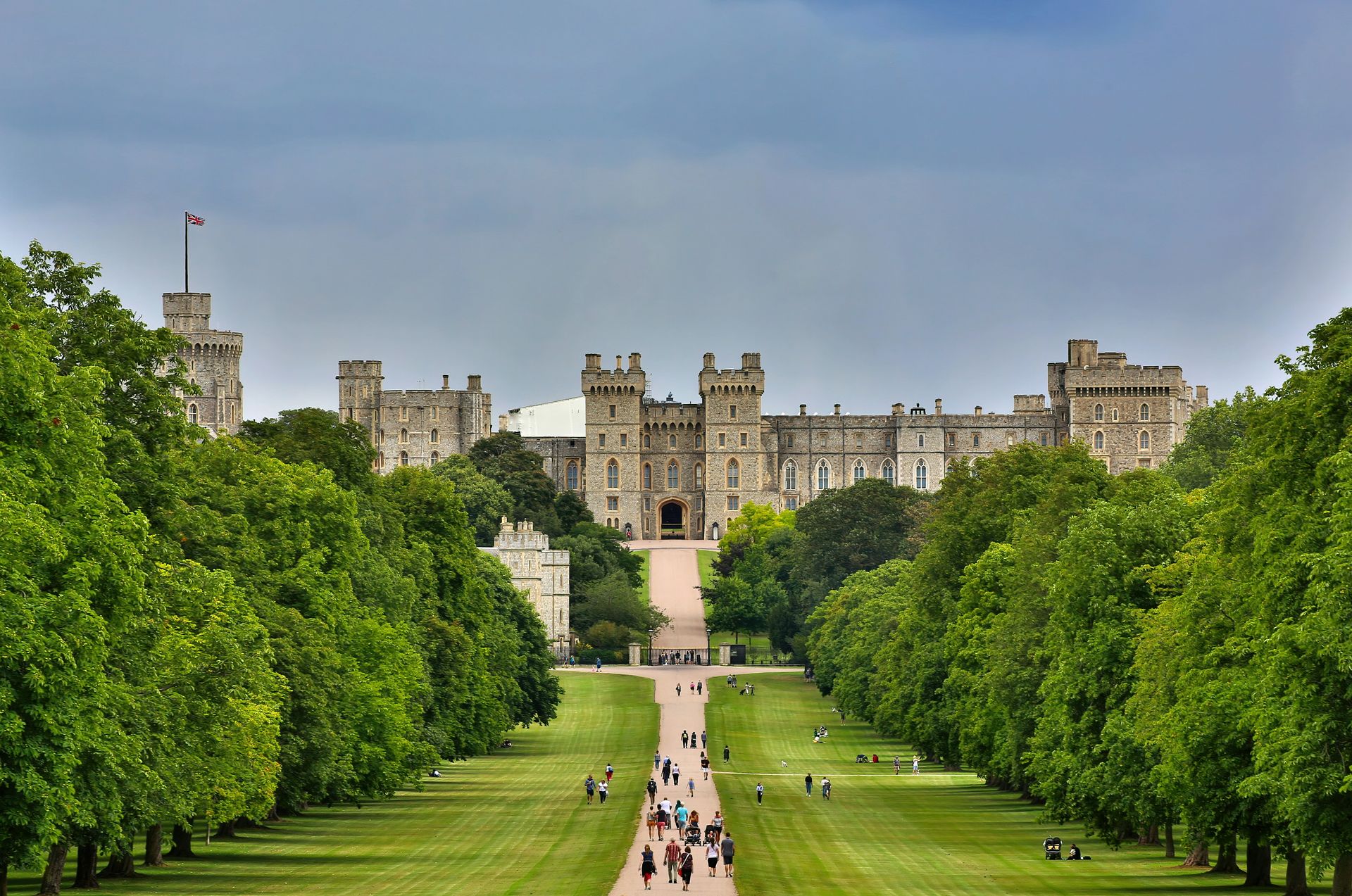
Simon Hurry / Unsplash
Windsor Castle sits less than 25 miles west of London and holds the distinction of being the world’s largest occupied castle. William the Conqueror founded the site in the 11th century with timber fortifications, and the Round Tower was rebuilt in stone in 1170. The castle has grown continuously since then. Henry VIII, Elizabeth I, and Queen Victoria are among the 40 monarchs who have called Windsor home, a succession of occupants across nine centuries of English and British history.
Much of the castle is open to visitors year-round, but some sections close seasonally or during official royal functions, and the source recommends checking the website before booking to confirm what will be accessible on any specific date. The castle’s ongoing status as a working royal residence — members of the royal family live and work at Windsor — means its public access schedule responds to the demands of institutional function over visitor convenience alone.
The scale of Windsor’s history is difficult to convey in summary. A castle that has been continuously occupied and expanded by 40 monarchs over nine centuries accumulates a physical complexity that reflects its actual use as a center of English and British royal life. The Round Tower, the State Apartments, St. George’s Chapel, where several monarchs lie entombed, and the grounds together make Windsor less a single historic attraction and more a compressed architectural survey of English royal history from the Norman period to the present. The Changing of the Guard ceremony at Windsor, which takes place at the castle rather than at Buckingham Palace, is also a spectacle worth timing a visit around, combining the castle’s royal heritage with the military pageantry the British monarchy has maintained across the centuries. Windsor’s dual function as tourist destination and working royal residence gives it an atmosphere unlike any other castle on this list: it is not a preserved monument but a living institution, and that distinction is perceptible on a visit.
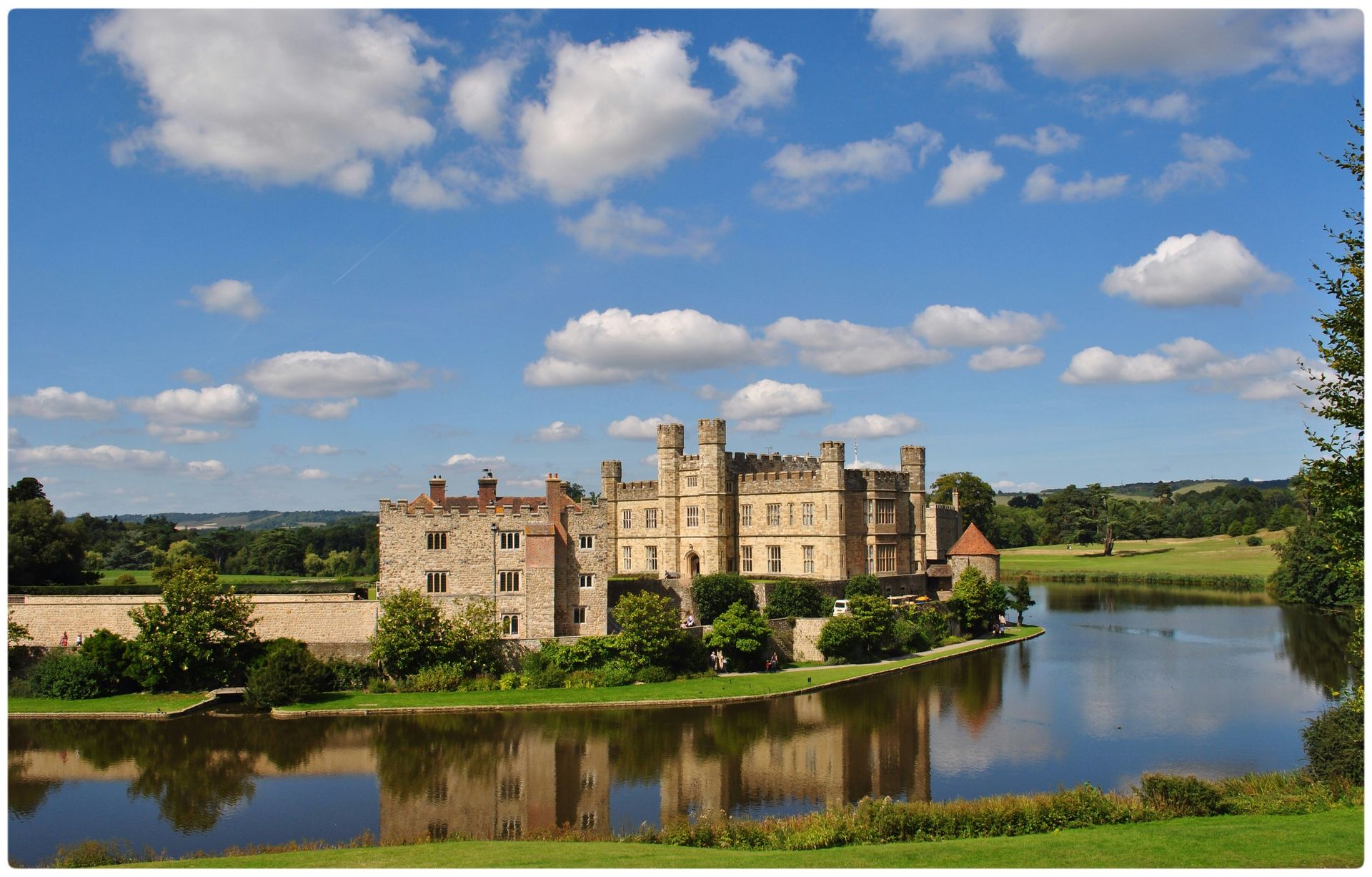
Ian Simpson / Unsplash
Leeds Castle sits just over an hour from London and has a history that ranges from a Norman stronghold in the 11th and 12th centuries to the private ownership of seven medieval queens, to its role as a palace for Henry VIII and his first wife, Catherine of Aragon. The maze on the grounds contains 2,400 yew trees planted in a circular pattern within a square frame, a combination that increases the difficulty of navigation beyond that of a straightforward circular or rectilinear maze. Finding the center is the challenge, and exit from the center runs through an underground grotto decorated with mythical forms.
The moat that surrounds Leeds Castle gives the approach a visual drama that photographs reproduce reasonably well, but that the full site experience amplifies. Water, medieval stonework, and the Kent countryside together create a setting that justifies the visit on its own, independent of the interior and grounds activities.
Tickets purchased online are cheaper than those bought on arrival and remain valid for a full year from purchase, allowing visitors to return to see more of the estate and grounds on a subsequent visit. That year-long validity is worth factoring into the cost comparison between Leeds and other day-trip properties, as it effectively provides a second visit at no additional expense for anyone who can return within the window. The grounds at Leeds extend well beyond the maze: the castle estate includes a bird of prey center, a dog collar museum, and extensive gardens and parkland that reward the unhurried visitor who arrives early and stays through the afternoon. The moat’s reflections of the medieval stonework are also a consistently cited photographic highlight. The bird of prey center is also an unusual amenity for a medieval castle estate, giving visitors with children a specific attraction alongside the history and architecture, keeping a full-day visit varied across different interests.
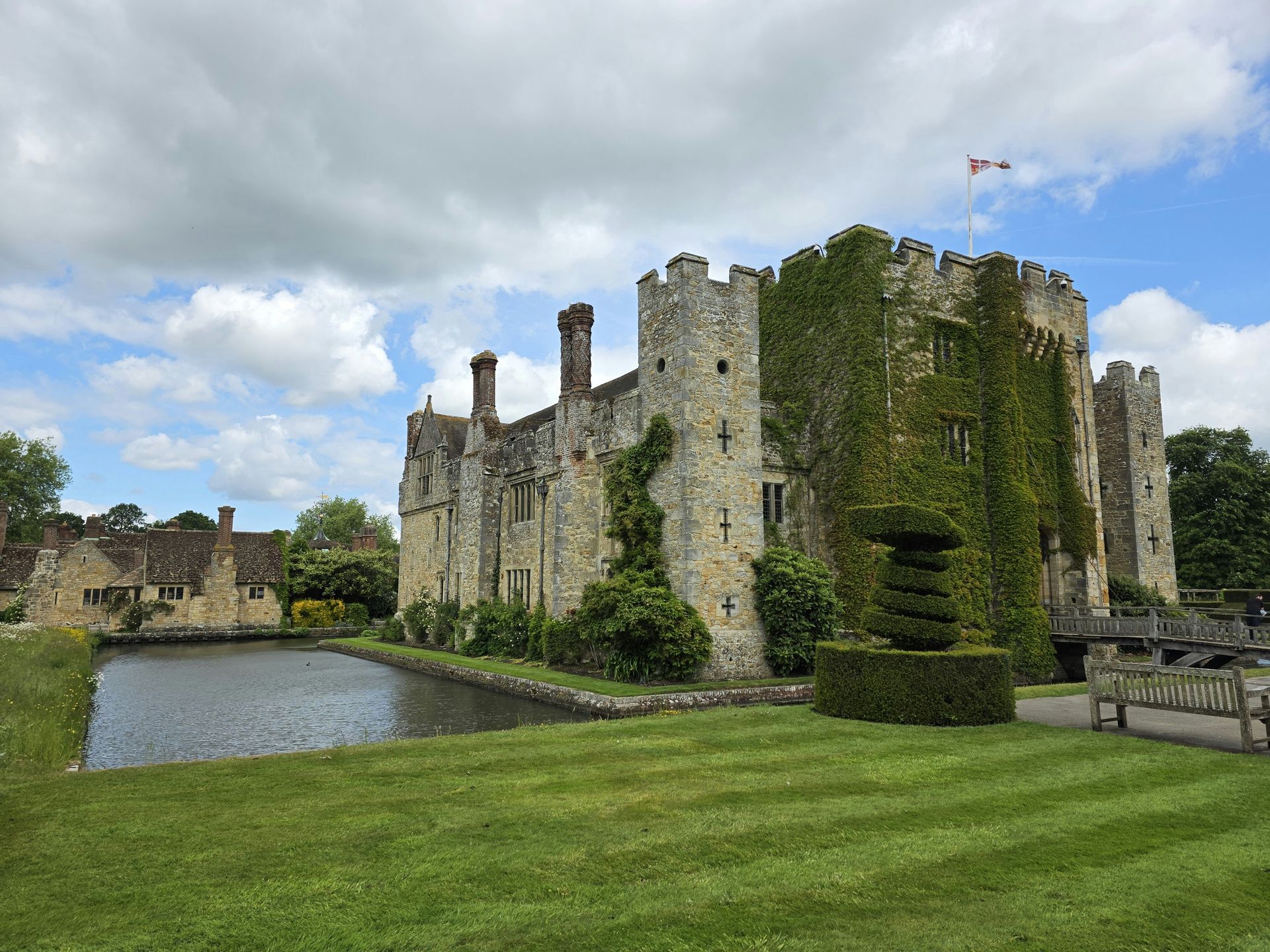
The Uplifting Times / Unsplash
Hever Castle sits about an hour south of London on 125 acres, with more than 600 years of history and a double moat that gives it a distinctive visual profile among English castles. The original medieval castle dates to 1383, and builders added the Tudor dwelling and defensive walls during the 15th and 16th centuries. It served as the childhood home of Anne Boleyn, the second wife of Henry VIII and the mother of Elizabeth I, giving it a specific connection to one of the most consequential figures in English history.
The double moat is an architectural distinction worth noting: most medieval English castles were built with a single moat, and the double configuration at Hever reflects specific defensive calculations made during the property’s development across two centuries. The Tudor additions to the original medieval structure are also visible as a physical record of the building’s expansion during the period of Anne Boleyn’s family’s ownership.
Anne Boleyn’s significance extends well beyond her personal history with Henry VIII. Her role in the English Reformation — Henry’s desire to annul his marriage to Catherine of Aragon drove his break with Rome, which permanently transformed English religious and political life — makes Hever Castle a site with historical consequences far greater than a country house or childhood home would normally carry. Visitors who engage with that context will find the castle’s 600 years of physical history read differently than it does when approached purely as architecture. The double moat also deserves attention as a specific defensive investment: building and maintaining two concentric water barriers reflects a level of concern about the property’s vulnerability that the single moat at Broughton Castle, for comparison, does not. Hever’s 125 acres of grounds also include formal and Italian gardens that the Astor family added in the early 20th century, extending the estate’s landscaped character well beyond the medieval footprint.
Ryan Storrier / Unsplash
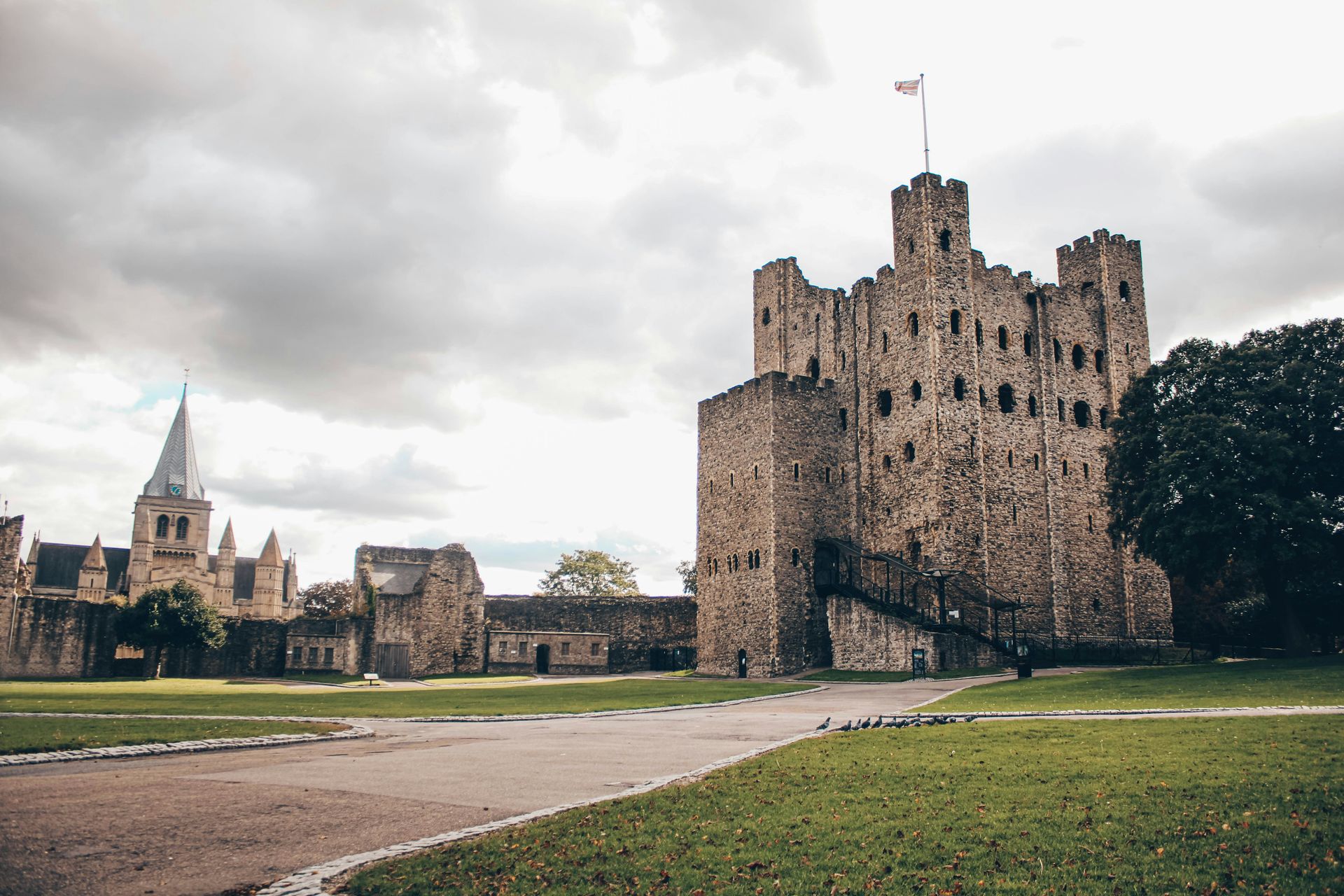
Rochester Castle sits about 30 miles from London roughly an hour by car. Construction on the site began in the 1080s. The castle was built to guard a critical crossing point on the River Medway, giving it a strategic military purpose from its foundation. It stands 113 feet high across three floors above a basement. King John besieged the site in 1215, and Henry III and Edward I subsequently rebuilt it. The castle endured three sieges in total and remained a fortress until the 16th century.
The siege history is the defining narrative of Rochester Castle’s significance. A castle besieged three times by different English kings, at different points across several centuries, reflects a position of strategic importance that persistent conflict confirms more convincingly than any architectural assessment. The 1215 siege by King John is the most historically significant: it occurred in the same year as Magna Carta and as part of the same political conflict between the crown and the baronage, giving Rochester a connection to one of the foundational documents of English constitutional history.
The source describes Rochester as manageable in a half-day, making it a practical addition to a broader Kent itinerary that might include other destinations. Its compact visit time relative to the depth of its military history makes it one of the most efficiently experienced properties on this list for visitors interested specifically in England’s medieval political and military past. Rochester city itself is worth incorporating into the day trip: the cathedral that sits adjacent to the castle is a Norman structure of comparable age, and castle and cathedral together on the same site give the visit a breadth of Norman heritage that neither building alone would provide. Rochester’s position in the broader context of the Magna Carta year — 1215 — also makes it possible to connect a visit to a specific and consequential moment in English constitutional history, which the castle’s documentary record supports in detail.
Nigel Walsh / Unsplash
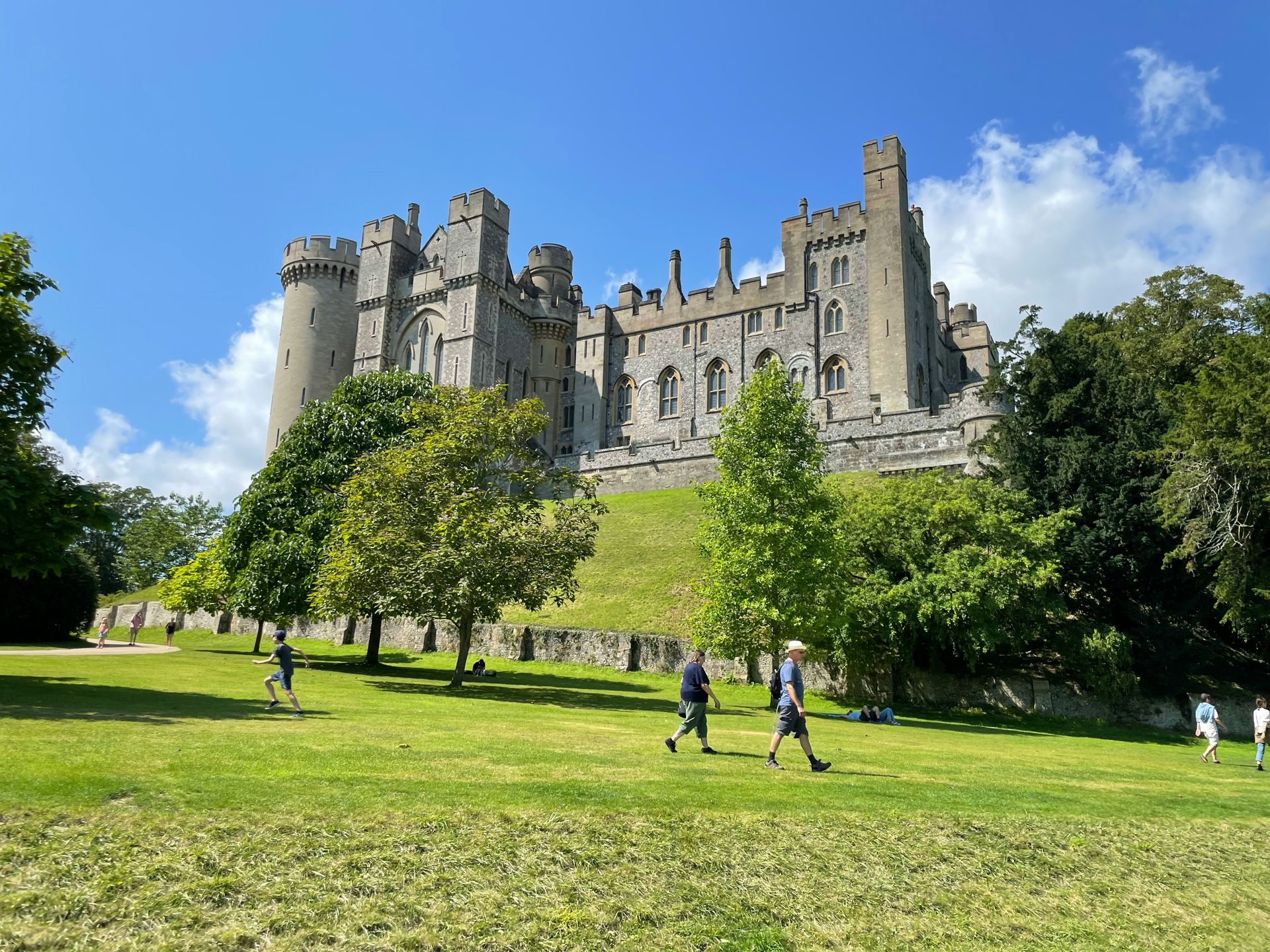
Arundel Castle is about 70 miles from London and has a history that reaches back to the 11th century. The motte, a grassy mound constructed in 1068, rises more than 100 feet and carries a stone keep at its summit. The castle has served as the seat of the Dukes of Norfolk and their ancestors for centuries, and overlooks the River Arun with gardens that the source describes as worthy of a visit independent of the castle itself.
The property is open from spring through autumn and closes during winter, which is the primary scheduling constraint for visitors. The interior includes state rooms, a drawing room, the Regency Library, and the Barons’ Hall. Medieval defense towers, a 14th-century chapel, and several bedrooms and bathrooms in Victorian and Edwardian styles give the castle an architectural range spanning nearly a millennium of English building history within a single estate.
The 1068 motte is the oldest element of a property that has accumulated additions over 900 years of continuous occupation and development. The coexistence of Norman earthworks, medieval stonework, Gothic architecture, and Victorian interior design in a single complex reflects the Dukes of Norfolk’s long tenure and their investment in the property across successive eras. Arundel is also one of the few castles on this list where the gardens specifically merit planning a separate visit from the castle tour, as the immaculate grounds overlooking the Arun valley naturally extend the visit beyond the building itself. The Barons’ Hall is particularly worth noting as an interior space: the scale and decoration reflect the political and social standing of the Dukes of Norfolk across the castle’s long history as the seat of one of England’s premier aristocratic families. Visiting in spring or early summer gives the castle gardens their most vivid presentation, and the medieval defense towers offer elevated views of the River Arun valley that the interior rooms cannot provide.
