
10 best and most affordable alternatives to Santorini
Santorini alternatives across Greece, Italy and beyond offer the same caldera views, sunsets and white-washed charm for a fraction of the price
Credit: Tânia Mousinho / Unsplash
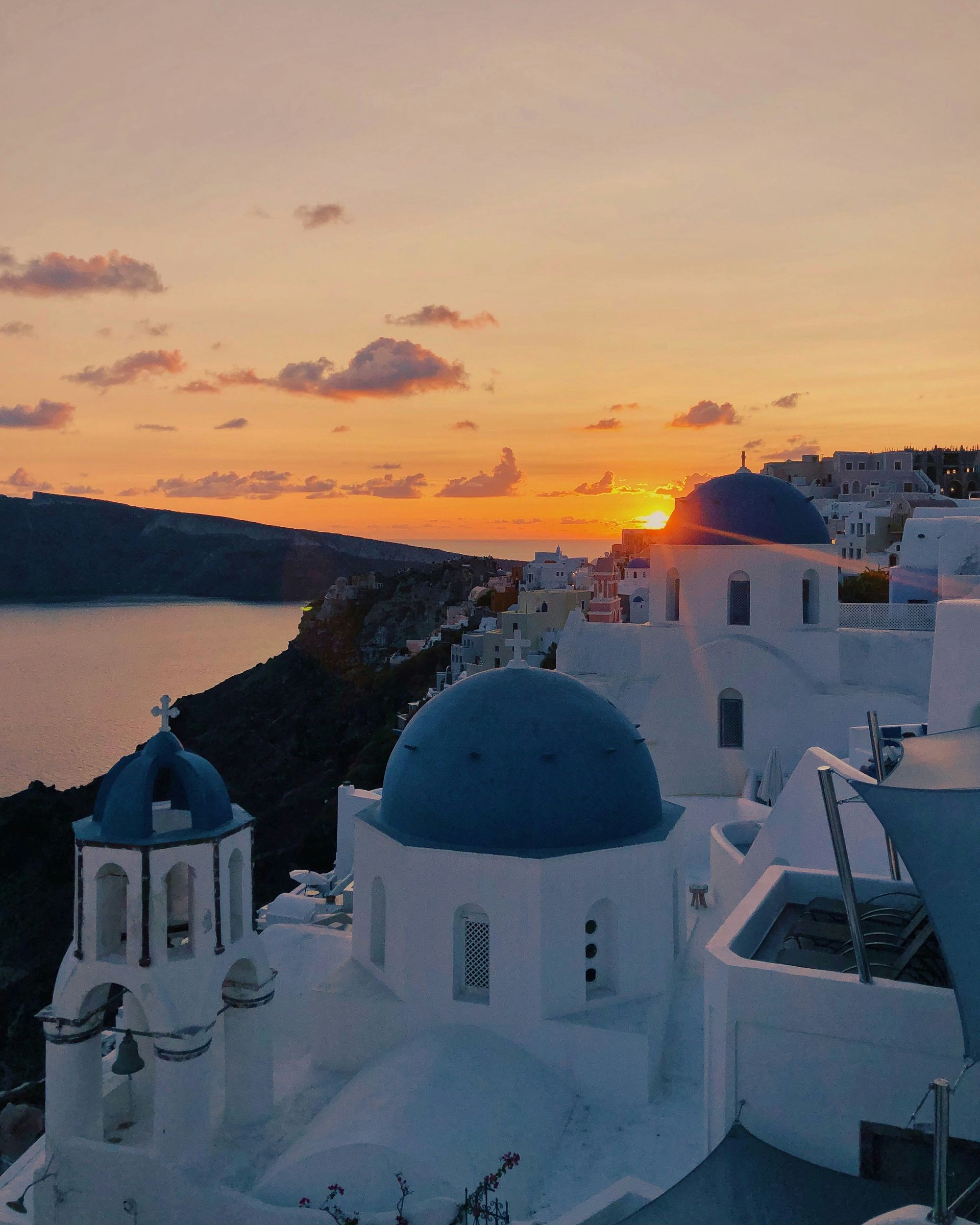
Santorini's caldera views come at a cost that has climbed sharply in recent years. The island's narrow lanes fill with cruise ship crowds for much of the season, and hotel rates in Oia now rank among the highest in Greece. Travelers $TRV chasing the same mix of white-washed villages, clifftop views and Mediterranean sunsets can find it elsewhere, often for a fraction of the price. The search for Santorini alternatives has become one of the most common trip-planning questions among travelers eyeing Greece and the wider Mediterranean this year, and the region has no shortage of answers.
Some of the closest matches sit within the Cyclades themselves, a ferry ride from Santorini, where volcanic rock, blue-domed churches and cliffside villages appear at a fraction of the hotel rates. Others require looking further afield: to the Dodecanese islands near Rhodes, to Italy's Bay of Naples, or to Montenegro's Adriatic coast, where old stone towns wrap around dramatic bays. Turkey's southern coast offers its own version of turquoise water and cliffside views, priced in lira rather than euros.
This list covers 10 destinations, each chosen for a specific reason. Every one offers a genuine echo of what draws people to Santorini in the first place, whether that's a caldera-like bay, a clifftop old town, or white-washed houses tumbling toward the sea, at a noticeably lower cost for lodging, food and activities. Some are quiet Cycladic islands a short ferry from Santorini itself. Others sit in different countries entirely. Each entry below explains what the destination offers, how it compares to Santorini, and roughly what a traveler can expect to spend.
Milos delivers Santorini's volcanic look for a fraction of the cost
Credit: Dimitris Mourousiadis / Pexels
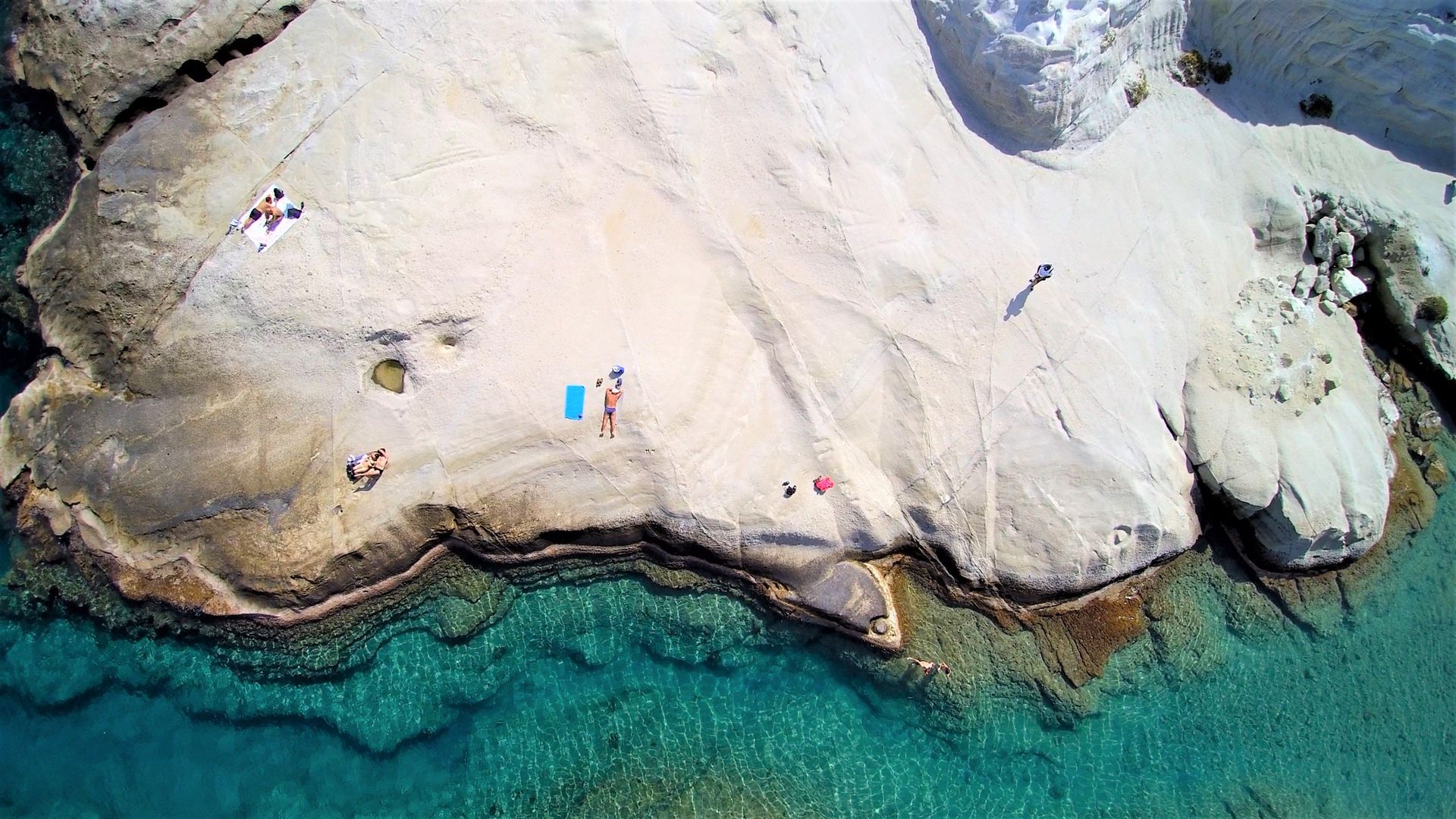
Milos offers lunar-white cliffs and pastel fishing villages built directly into volcanic rock, all at prices well below Santorini's. The island sits in the Cyclades, a couple hours by high-speed ferry from Santorini itself, making it an easy add-on for travelers already in the region.
Sarakiniko is Milos's signature sight, a stretch of coastline where wind and seawater have carved the rock into smooth white formations. The result looks closer to a moonscape than a typical Greek beach. Unlike Santorini's black-sand beaches, which charge for sunbeds and fill early, Sarakiniko stays free and rarely feels crowded, even in July and August.
The villages of Klima, Mandrakia and Fyropotamos are built around syrmata, small boathouses with brightly painted doors set right at the waterline. Fishermen still keep their boats there. The look recalls Oia's cliffside houses, but on a smaller, less commercial scale, and a taverna meal overlooking the water costs noticeably less than a comparable spot in Fira.
Milos carries historical weight, too. The Venus de Milo, now in the Louvre, was discovered here in 1820. The island's catacombs near Tripiti rank among the largest in Greece, with tunnels dating to the early Christian era.
Lodging runs well below Santorini rates, particularly outside the harbor town of Adamas, where family-run rooms are common. A car or ATV is worth budgeting for, since the best beaches and villages spread across the coastline rather than cluster in one walkable center.
Ferries reach Milos from Piraeus in roughly three to four hours by high-speed boat. Aegean Airlines also flies directly from Athens, keeping the island accessible even for travelers short on time. Peak season still brings higher prices, but Milos tends to run noticeably cheaper than Santorini across food, lodging and activities alike.
Folegandros trades crowds for the same clifftop drama
Credit: George Zografidis / Pexels
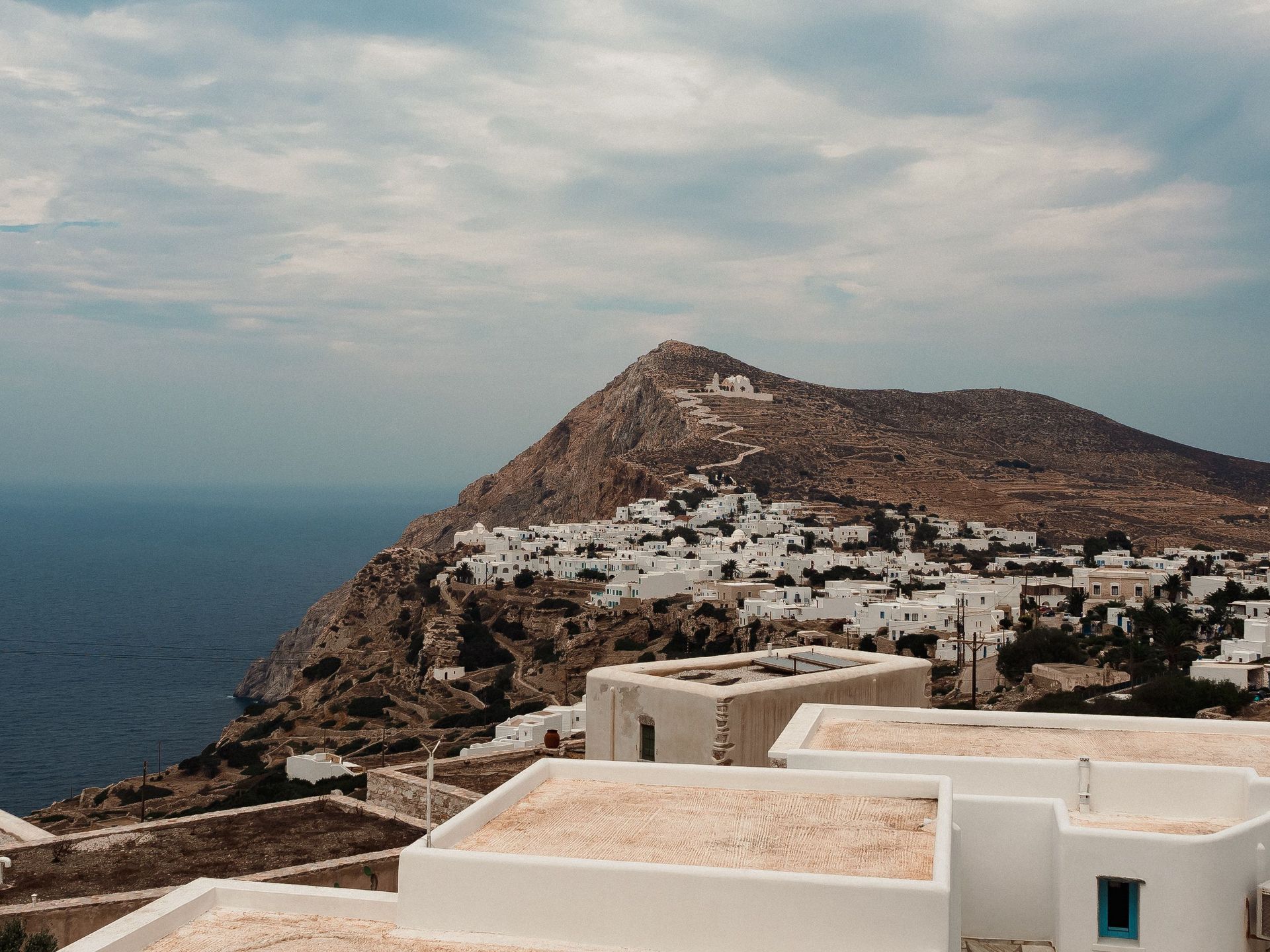
Folegandros offers the same clifftop-village setting as Santorini's Fira and Oia, minus the crowds and much of the price. The island's Chora sits on a plateau above a sheer 200-meter drop to the sea, a setting so similar to Santorini's caldera towns that first-time visitors often ask why it isn't better known.
Folegandros has no airport. The only way in is by ferry, and that has kept mass tourism largely at bay. The ferry ride from Santorini takes roughly one to two hours depending on the route, making it one of the easiest true alternatives to reach as a side trip.
The Chora's main square, Piatsa, is ringed by whitewashed houses, small churches and open-air tavernas. Locals and travelers share the same tables in the evening. A short climb leads to the Kastro, a fortified medieval quarter built into the cliffside, with stone passages that predate Oia's cliffside architecture by centuries.
Beaches here take more effort to reach than Santorini's, often via dirt roads or a short hike. That keeps them close to empty even in August. Agali and Katergo are the two most visited, both reachable by bus, boat taxi or a walk along coastal paths.
Because the island has resisted large hotel development, most lodging is small, family-run guesthouses. Prices for rooms and meals run well below the Santorini average, even at the height of summer. There's no nightlife scene, no cruise ship crowds and no queue for sunset photos, though the sunset views from the Chora's cliff edge rival anything Oia offers. Travelers $TRV looking for the visual reward of a caldera town, without the commercial buildup around it, tend to name Folegandros first among quiet Cycladic alternatives.
Sifnos swaps caldera views for a serious food scene
Credit: Ben Prater / Pexels
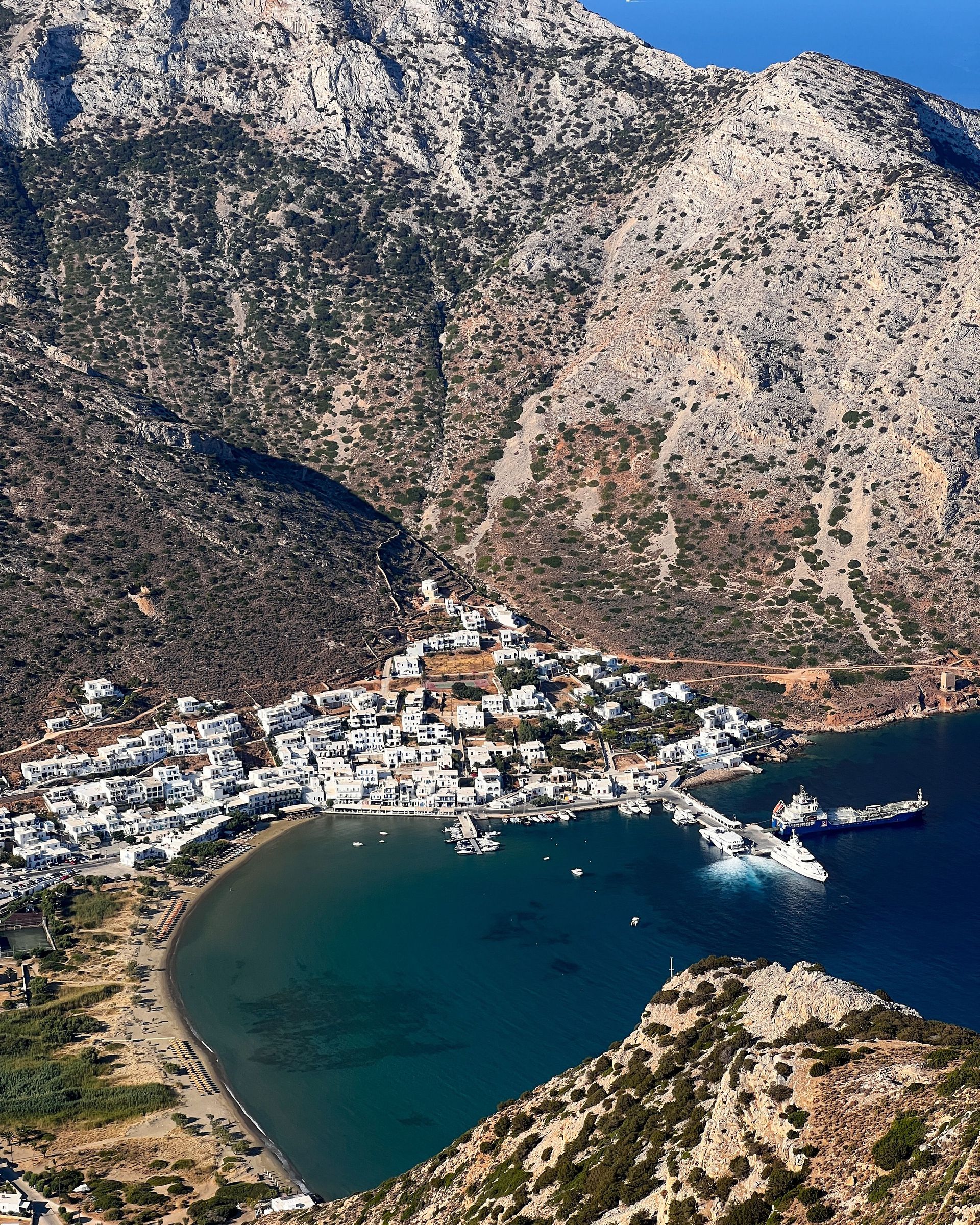
Sifnos trades Santorini's caldera views for something else: stone-walled footpaths, dovecote-dotted hills and a food culture built around clay-pot cooking, all at prices well below its more famous neighbor. The island has produced several of Greece's best-known chefs, and its reputation for food, rather than sunsets, is what draws most repeat visitors.
The local dish revithada, a slow-baked chickpea stew, cooks overnight in ceramic pots in wood-fired ovens, a method tied to the island's long pottery tradition. Villages like Apollonia and Artemonas still sell handmade ceramics from workshops that have operated for generations. A taverna meal in either village typically costs a fraction of a comparable meal in Fira.
Kastro, the island's medieval capital until the 1830s, sits on a rocky promontory above the sea. Its houses were built wall-to-wall in a defensive ring, once protection against pirate raids. The architecture recalls Santorini's cliffside towns, without the crowds, and walking Kastro's lanes at sunset costs nothing and needs no reservation.
Sifnos also has a network of walking trails connecting monasteries and chapels across its hills, including the hilltop Panagia Chrysopigi. It's one of the most photographed churches in the Cyclades, perched on a narrow rock spit surrounded by sea on three sides.
Beaches like Vathi and Platis Gialos offer calm, sheltered swimming without the sunbed fees common on Santorini's black-sand coast. Ferries from Piraeus take roughly three to five hours depending on the boat, and a seasonal route also connects Sifnos to Milos and Paros.
Lodging remains largely small-scale and family-run. Travelers $TRV who prioritize food and walking over beach clubs and sunset crowds tend to find Sifnos delivers a more grounded version of Cycladic life for considerably less money.
Naxos is big enough to keep prices down
Credit: Johnny B / Pexels
Naxos is the largest island in the Cyclades, and its size is what keeps prices manageable. Enough beach, farmland and mountain village options exist that no single stretch of coastline commands Santorini-level rates. The island grows much of its own produce, including potatoes, cheese and citrus, which keeps taverna menus affordable even in peak season.
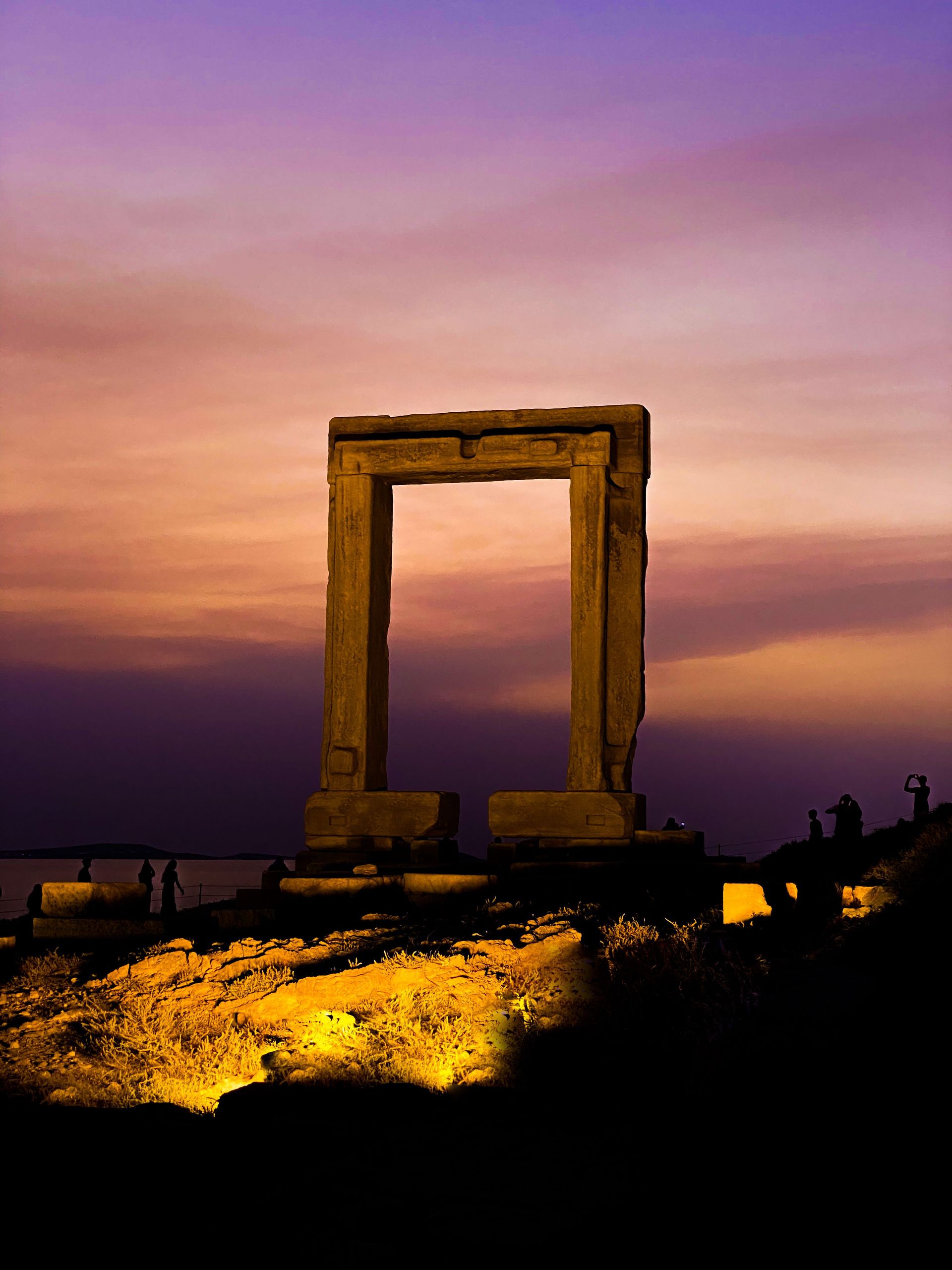
The Portara, a massive marble doorway left from an unfinished temple to Apollo dating to the sixth century B.C., stands on an islet connected to Naxos Town by a short causeway. It's the island's most photographed landmark, especially at sunset, when the sun sets directly through the frame.
Naxos Town climbs from the harbor into a Venetian-era Kastro quarter, with the same whitewashed, blue-shuttered look found throughout the Cyclades, spread across a working town rather than a resort strip. Unlike Oia, Naxos Town keeps its shops and restaurants open to serve residents year-round.
Beaches here rank among the best in the Cyclades for length and sand quality, particularly Agios Prokopios, Plaka and Mikri Vigla, all backed by dunes rather than volcanic cliffs. Because the island is large enough to spread visitors out, even these well-known beaches rarely reach Santorini's density of sunbeds and beach clubs.
Inland, mountain villages including Halki and Apeiranthos preserve marble-paved streets, Byzantine churches and small museums. They offer a version of island life built around agriculture rather than tourism. The island's highest peak, Mount Zeus, draws hikers to the cave where mythology says the god was raised.
Ferries from Piraeus reach Naxos in roughly three to six hours depending on the vessel, and the island has its own airport with short flights from Athens. Lodging spans budget rooms to full resorts, but even resort-level properties price well below Santorini's caldera-view hotels, since Naxos has no caldera to charge a premium for.
Symi's harbor rivals Santorini for color, at day-tripper prices
Credit: Márton Novák / Pexels
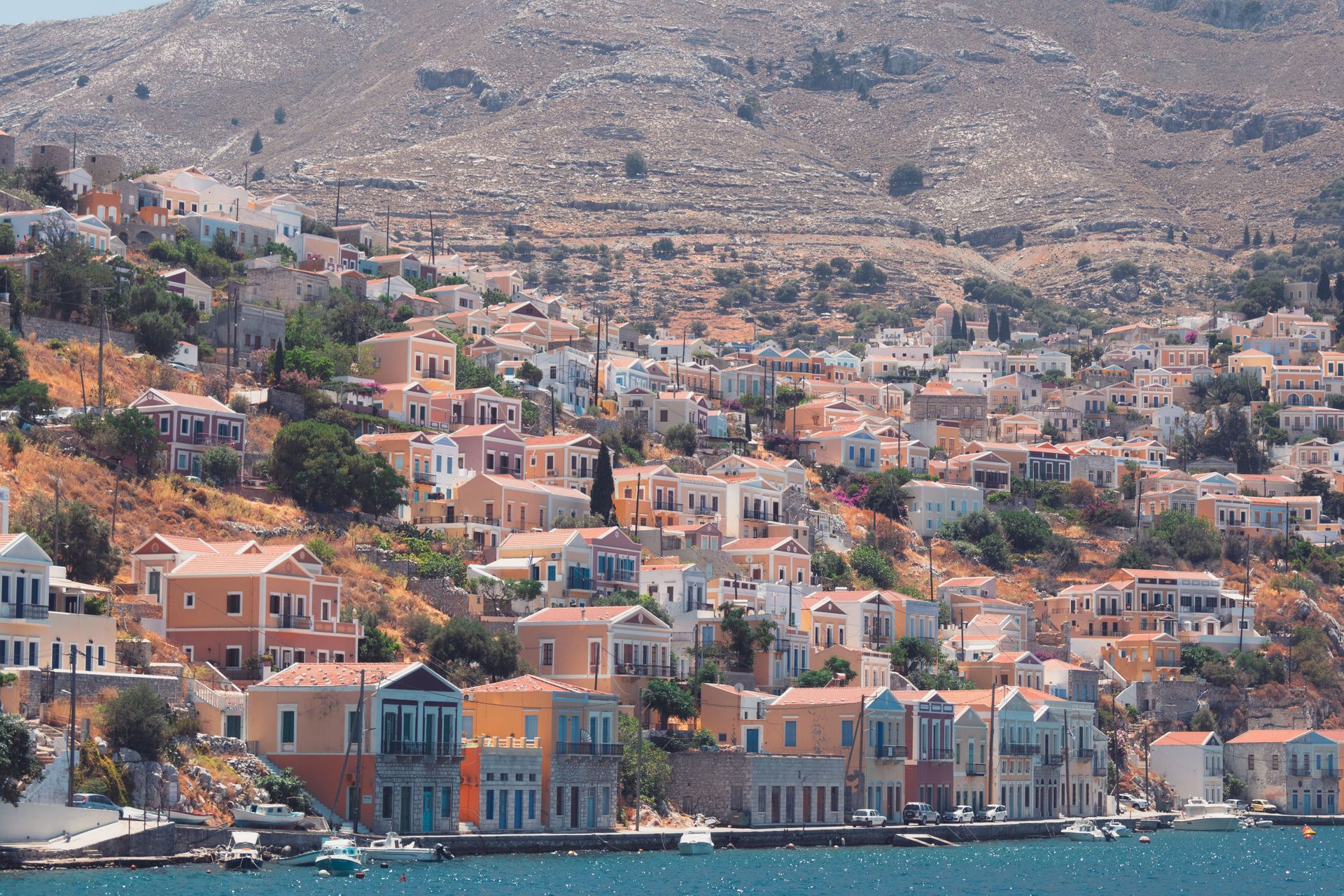
Symi trades Santorini's caldera for a horseshoe-shaped harbor lined with color. Neoclassical mansions in ochre, pink and blue stack up the hillside above Gialos, the island's main port, in a scene that rivals anything in the Cyclades. The island sits in the Dodecanese, close to Rhodes, and day-trip crowds from Rhodes thin out almost entirely by evening.
The harbor houses date to a 19th-century boom fueled by shipbuilding and sponge diving, industries that made Symi one of the wealthiest islands in the Aegean at the time. Many mansions fell into disrepair after the trade collapsed and the population shrank, but a wave of restoration has brought much of the harbor front back to its original condition.
Staying overnight, rather than visiting on a day trip from Rhodes, separates a real Symi visit from a rushed one. Once the afternoon boats leave, the harbor empties out. The walk up the Kali Strata, a wide stone staircase connecting the port to the upper town of Chorio, becomes a quiet climb past churches and windmills.
Beaches on Symi tend to be small and pebbly rather than long stretches of sand. Nos Beach and Nimborios are the most accessible, though many visitors take a small boat to reach coves with no road access at all.
Sponge diving remains part of the island's identity. Small shops near the harbor still sell natural sea sponges, a holdover from the trade that built the town.
Ferries connect Symi to Rhodes in under an hour, and a seasonal hydrofoil links it to other Dodecanese islands. Because Symi depends heavily on day-trippers rather than overnight stays, lodging and dinner prices remain considerably lower than Santorini's, even though the harbor view itself is arguably just as dramatic.
Procida offers Capri's color at a fraction of the price
Credit: Kevin / Pexels
Procida offers the color and charm of Italy's Bay of Naples islands at a fraction of Capri's prices. Much of that comes down to its small size, just over four square kilometers, and its distance from the main tourist circuit. The island was named Italy's Capital of Culture in 2022, a recognition that brought new attention without yet bringing Capri-level costs.
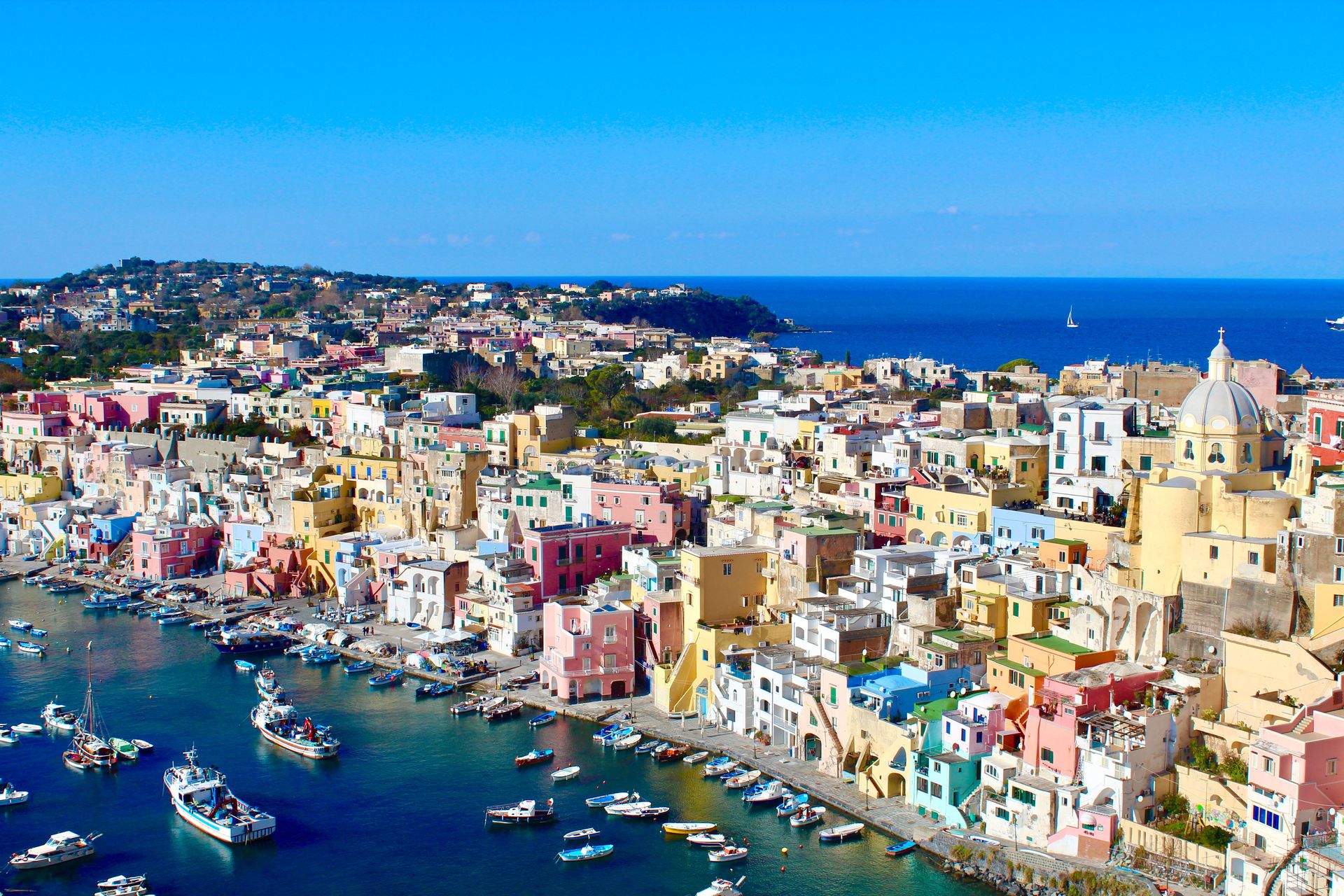
The most photographed spot on the island, Corricella, is a fishing village built into a natural amphitheater above the harbor. Its houses are painted in yellow, pink and blue, with laundry strung between windows and fishing boats pulled up on the small beach below. The scene has appeared in several films, including "The Talented Mr. Ripley."
Unlike Capri, which built its economy around luxury tourism decades ago, Procida stayed a working fishing island well into the 2000s. That identity still shows in its restaurants, which lean toward simple seafood rather than the high-end dining found on Capri or the Amalfi Coast.
Terra Murata, the island's old fortified quarter, sits at its highest point and includes a former Bourbon-era prison and a Benedictine abbey. Both are open to visitors and largely uncrowded compared to Capri's Piazzetta.
Beaches are modest by Amalfi standards. Chiaiolella and Ciraccio are the two most visited, both reachable on foot or by the island's small local buses.
Ferries and hydrofoils run from Naples in roughly 40 minutes to an hour, with a short additional hop connecting Procida to Ischia. Because the island has resisted large hotel development, most lodging is in small guesthouses or converted fishermen's houses. Both rooms and meals price well below a comparable stay on Capri or Positano.
Ischia pairs volcanic drama with thermal spas, for less
Credit: David Sams / Pexels
Ischia is the largest island in the Bay of Naples, and its size has kept it cheaper than neighboring Capri, despite a similar mix of coastline, harbor towns and clear water. The island is volcanic, and that geology feeds dozens of thermal spa parks, a feature Capri doesn't share.
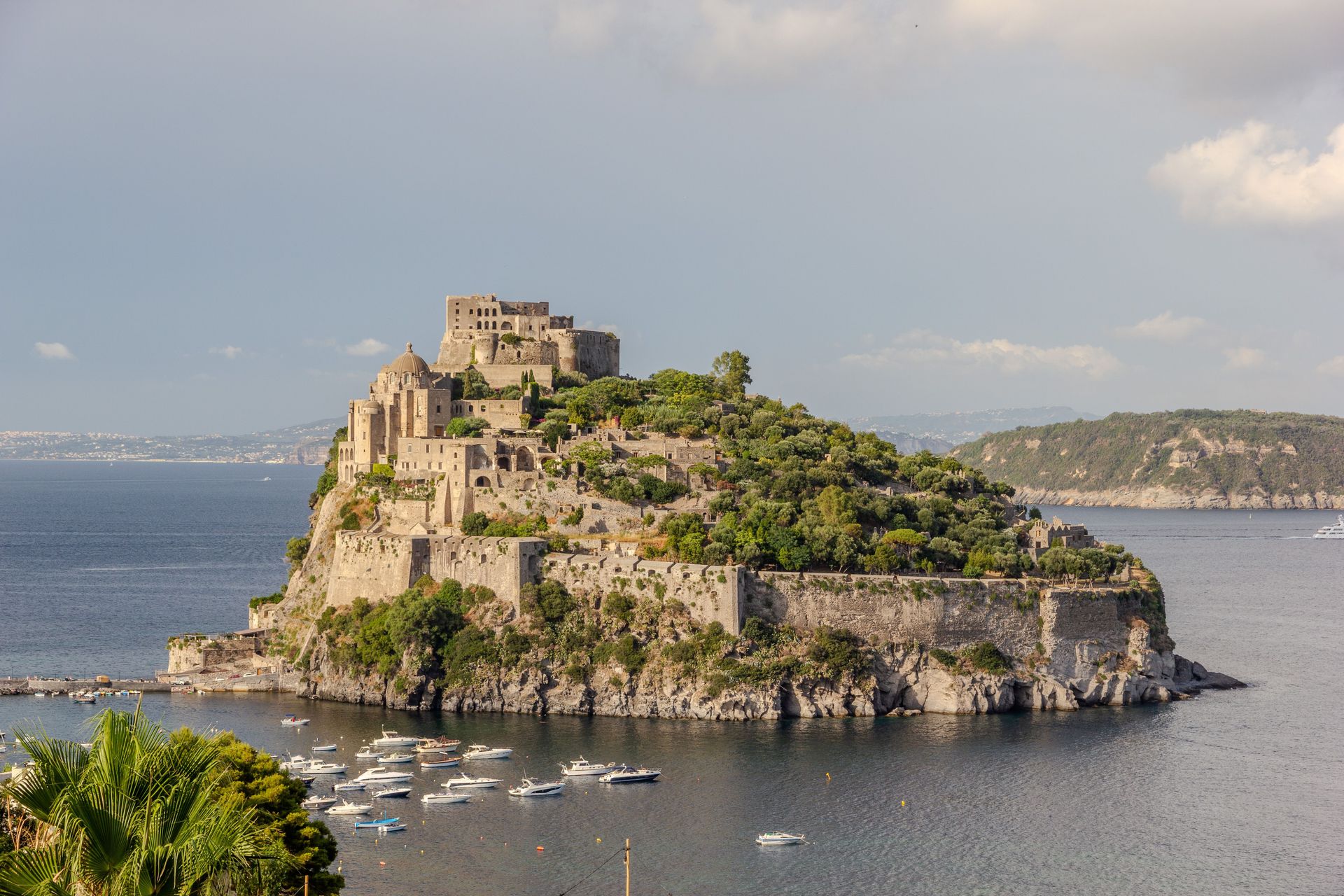
Ischia Ponte, the old fishing quarter connected to the main town by a causeway, is anchored by the Aragonese Castle. Built on a rock islet in the 15th century, it now houses gardens, a small museum and a chapel. It's one of the few sights on the island that draws a real crowd, though nothing close to Capri's Piazzetta at midday.
Thermal parks including Negombo and the Poseidon Gardens combine natural hot springs with pools and sea access. A day pass typically costs less than a single upscale lunch on Capri.
The island's interior is notably green, with vineyards producing Ischia DOC wine and terraced hillsides that give it a more agricultural feel than Capri's sheer cliffs. Monte Epomeo, the island's highest point, can be reached by hiking trail or on the back of a donkey, a traditional method a few local guides still offer.
Beaches range from black volcanic sand near the thermal areas to lighter sand at Citara and San Montano Bay. Most remain free to access, unlike many beach clubs on the Amalfi Coast.
Ferries and hydrofoils connect Ischia to Naples in roughly 45 minutes to an hour and a half, depending on the port and vessel. Lodging spans budget guesthouses to full spa resorts, nearly all of it priced below comparable Capri options.
Kotor delivers caldera-scale views on the Adriatic
Credit: Kate Holovacheva / Pexels
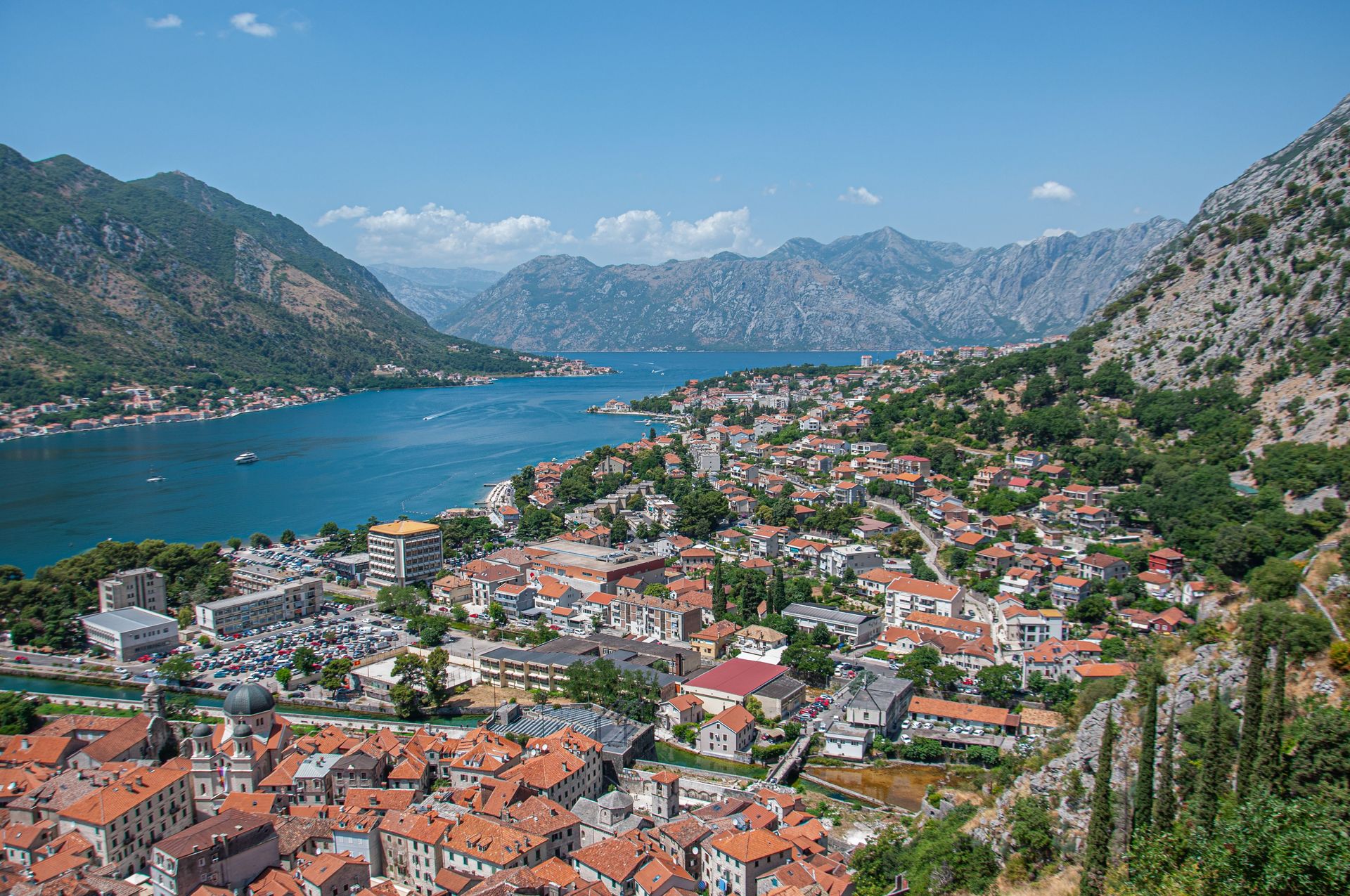
Kotor swaps the Aegean for the Adriatic, but its setting, an old stone town wedged between steep mountains and a fjord-like bay, delivers the same sense of scale that draws people to Santorini's caldera. Prices are set by Montenegro's smaller, less tourism-saturated economy. The Bay of Kotor is technically a ria, a submerged river canyon, rather than a true fjord, but the effect of mountains rising straight from dark water is much the same.
The old town, a UNESCO World Heritage site since 1979, is a maze of stone lanes, Venetian-era churches and small squares. Fortifications climb nearly 1,200 meters up the mountainside behind it. Climbing the old fortress walls to San Giovanni Castle offers a view over the bay that rivals any caldera photo from Oia. The climb is free, though it takes roughly one to two hours round trip and calls for sturdy shoes.
Kotor is also known, somewhat unofficially, as a city of cats. Strays wander the old town freely, and a small cat museum sits tucked into one of its alleys, a quirk that has become part of the town's identity online.
Food prices in Montenegro run well below those in Greece or Italy. A full seafood dinner in Kotor's old town typically costs less than half of a comparable meal in Santorini. The local currency is the euro, despite Montenegro not being part of the European Union, which keeps transactions simple for travelers.
Cruise ships do call at Kotor, and the old town can feel crowded when several dock the same day. But the crowds clear by early evening, unlike Santorini's, which persist through sunset. Nearby towns including Perast and Herceg Novi offer quieter bases along the same bay.
Turkey's Turquoise Coast offers cliffside views at lira prices
Credit: Cemgazi Yoldaş / Pexels
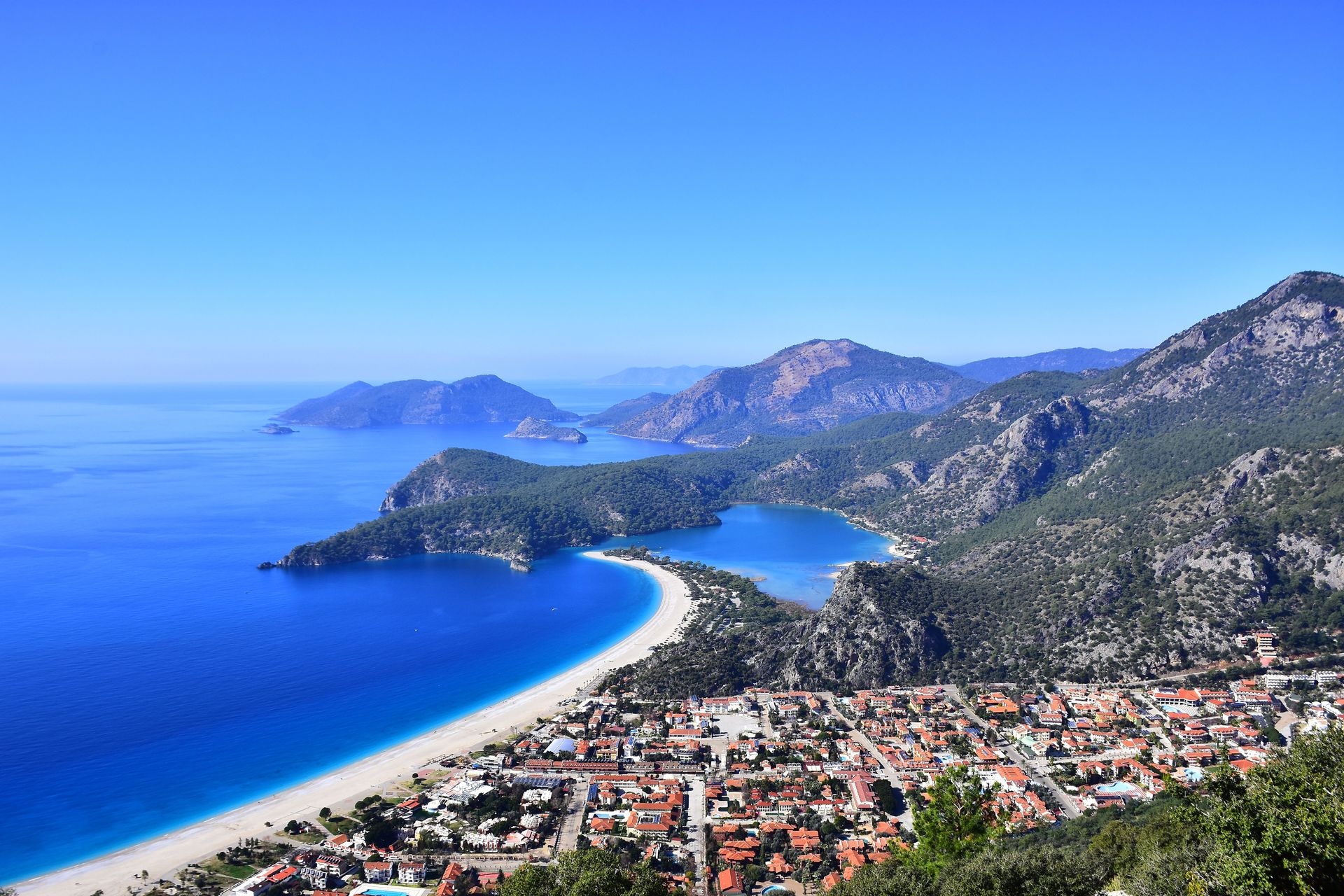
Turkey's Turquoise Coast, particularly the area around Oludeniz and Fethiye, delivers the same combination of cliffside views and vivid blue water that draws people to Santorini. Prices run lower, shaped by the Turkish lira rather than the euro, which has made the region one of the more consistently affordable Mediterranean options in recent years.
Oludeniz's Blue Lagoon, a sheltered inlet separated from the open sea by a sandbar, is the region's signature image. It draws a steady stream of paragliders who launch from Babadag mountain above and land on the beach below, one of the most recognizable adventure activities on Turkey's coast.
Fethiye, the nearest larger town, combines a working harbor, a Tuesday market and rock-cut Lycian tombs carved directly into the cliffside above town, dating back more than 2,000 years. The tombs, along with the ruins at nearby Kayakoy, a Greek village abandoned after the population exchange of 1923, give the area a historical layer Santorini's volcanic landscape doesn't offer in the same way.
Boat trips along the coast, often marketed as the "12 Islands Tour," stop at secluded coves reachable only by water. It's a version of Santorini's caldera cruises, at a fraction of the price.
Kas and Kalkan, smaller towns further along the coast, offer a quieter, more upscale version of the same coastline. Whitewashed buildings and harbor-front dining echo the Cycladic look, at costs still well below the Greek islands.
Fethiye's airport, Dalaman, connects to major European hubs with direct flights in summer. Lodging spans budget pensions to five-star resorts, virtually all of it priced lower than comparable Greek island options, largely due to exchange rates that have favored travelers spending euros, dollars or pounds.
Tinos delivers Cycladic charm a short hop from Mykonos
Credit: Canva Images
Tinos sits close enough to Mykonos to share a ferry route, yet its prices and crowd levels stay far closer to a quiet Cycladic town. The island is best known in Greece as a pilgrimage site, home to the Church of Panagia Evangelistria, which houses an icon believed to have healing properties and draws thousands of visitors each August 15.
Beyond the pilgrimage site, Tinos is known among Greeks, though less so among foreign travelers, for marble craftsmanship. The village of Pyrgos has produced sculptors and marble workers for generations. A small marble museum there documents the trade, while marble-framed doorways and decorative panels appear throughout the island's villages.
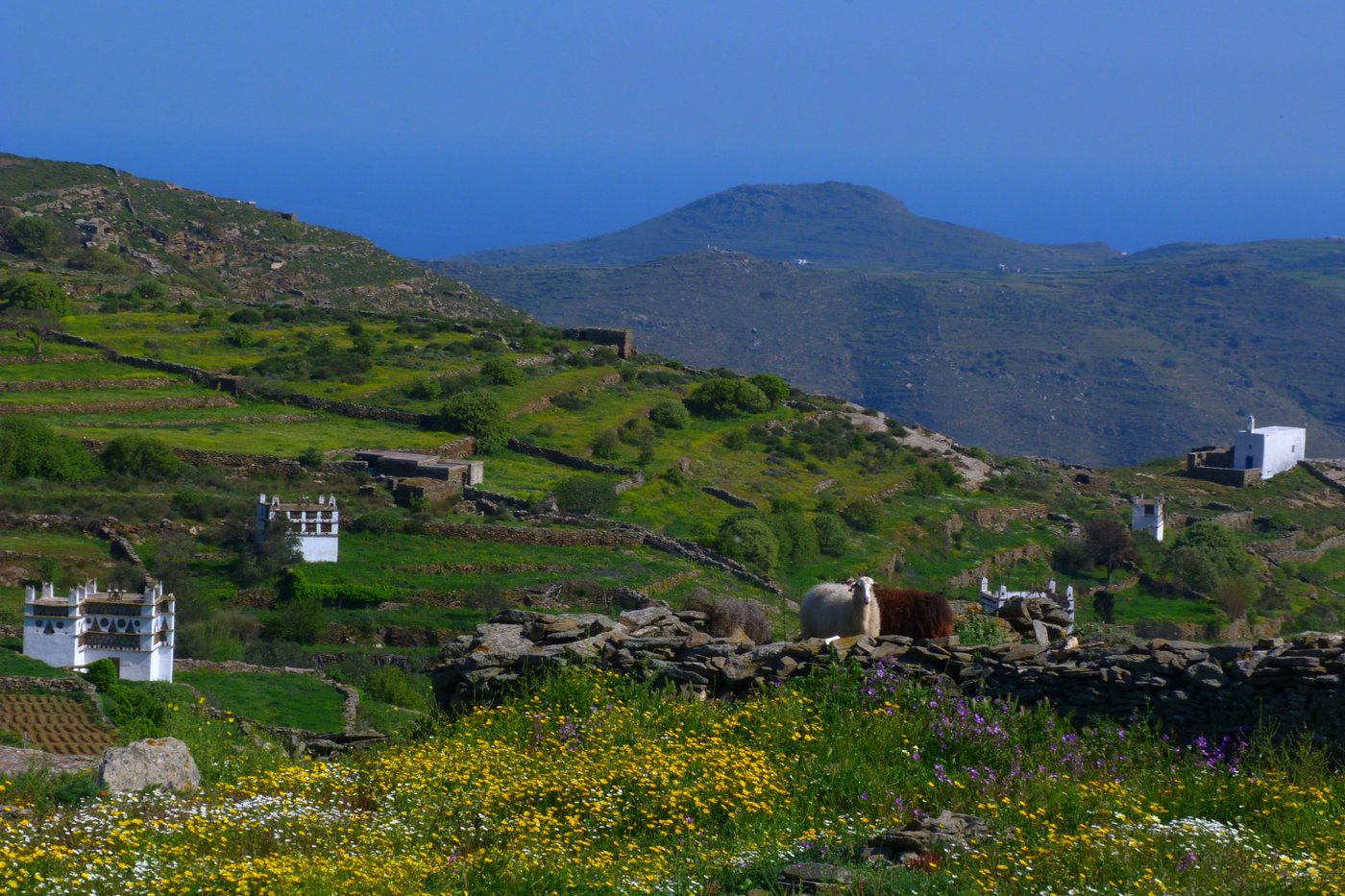
Tinos is also home to some of the Cyclades's most distinctive architecture: peristeria, elaborate stone dovecotes built by Venetian colonizers, dot the island's hillsides by the hundreds. Their patterned stonework is unlike anything found on Santorini or Mykonos. Many date to the 17th and 18th centuries and remain in use today.
The island's villages, including Volax, set among giant granite boulders, and Isternia, built into a hillside above the sea, offer the whitewashed, blue-shuttered look common across the Cyclades. Far fewer restaurants cater specifically to tourists, and prices run correspondingly lower.
Beaches like Kolymbithra combine soft sand with green hills rather than volcanic cliffs. The island's windy conditions, courtesy of the same meltemi winds that affect Mykonos, have made it a growing spot for windsurfing and kitesurfing.
Ferries from Piraeus reach Tinos in roughly four to five hours, and a short hop connects it directly to Mykonos, making it simple to combine both islands in one trip. Lodging on Tinos runs noticeably cheaper than Mykonos for a comparable standard of room, particularly outside the main town of Chora.