
The best children's museums in the U.S.
From the world's largest children's museum in Indianapolis to a San Francisco pier where 600 exhibits let kids run every experiment themselves
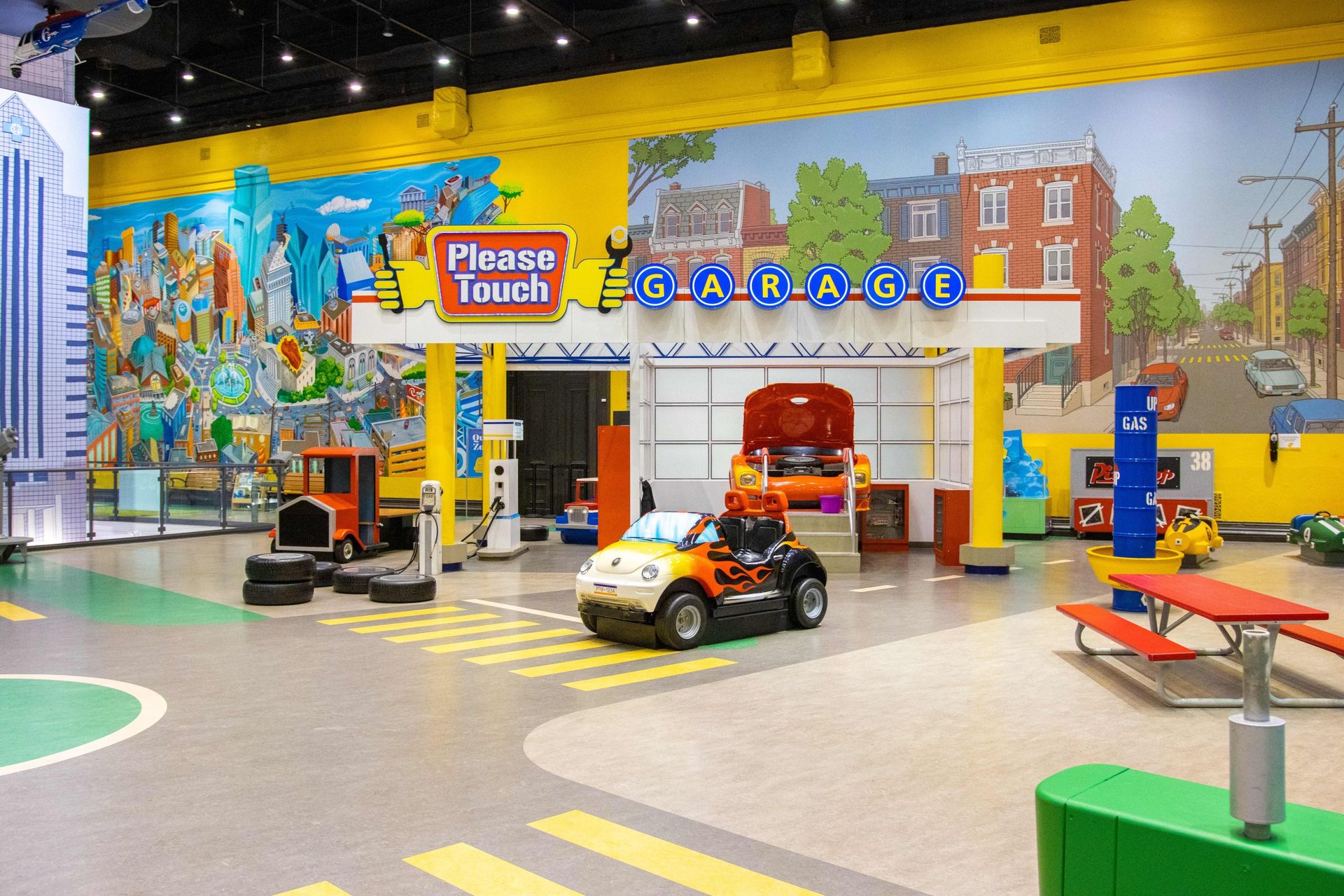
Credit: Please Touch Museum
The children’s museum has earned a place in the travel itinerary that its former rainy-day reputation undersells. The best institutions in this category are fully realized destinations whose programming, scale, and curatorial intelligence make them worth seeking out as primary stops rather than weather-contingency options. The shift reflects a change in how these museums approach their purpose: the most effective ones have moved away from text-heavy exhibit panels that explain what children should be learning and toward environments where the learning happens through the activity itself, without announcement.
The institutions that distinguish themselves in this category tend to share a few qualities. They are organized around what children at specific developmental stages actually want to do rather than what adults think they should find educational. They make clever use of their physical space, whether that is nearly half a million square feet or a carefully designed two-floor building. And the strongest ones reflect the specific city they occupy — its industries, its food culture, its waterways, its multicultural character — rather than defaulting to generic exhibits that could exist anywhere.
The nine museums below are featured in Travel + Leisure, spanning the country from Boston to Houston. Each earns its place through a specific combination of scale, programming philosophy, and the quality of experience it delivers across a range of ages and interests.
1. The Children’s Museum of Indianapolis is the world’s largest children’s museum
Credit: The Children's Museum of Indianapolis
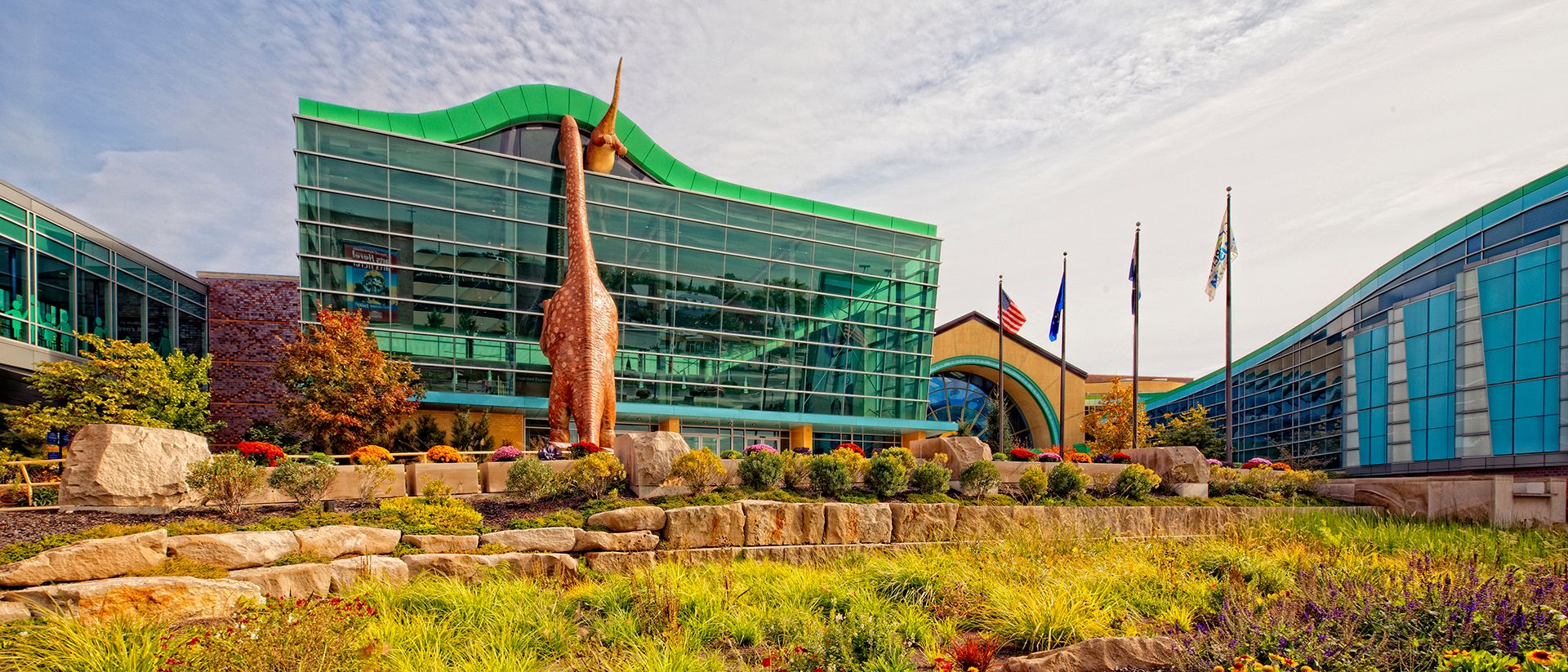
The Children’s Museum of Indianapolis covers 473,000 square feet across five floors, making it the largest children’s museum in the world by a margin that its programming fills without leaving the scale feeling empty or underpopulated. The Dinosphere gives children direct encounters with real fossils, which distinguishes the exhibit from reproductions and provides the specific physical reality that makes natural history tangible rather than abstract for young visitors. The Carousel Wishes and Dreams, a century-old carousel designated as a National Historic Landmark, operates within the building as both a functional ride and a genuine artifact of American amusement history.
The Riley Children’s Health Sports Legends Experience, a 7.5-acre sports and fitness park that opens seasonally, extends the museum’s programming beyond the building itself and into an outdoor environment that gives physically active children an alternative to the indoor exhibit model. The scale of the outdoor addition gives Indianapolis’s children’s museum a footprint that no indoor-only facility can match, and the seasonal operation of the outdoor component gives the museum a different character across different times of year.
The museum’s scope across science, culture, history, and active play gives families with children of different ages and interests a realistic expectation that each member of the group will find something specific to their level of engagement. The five floors allow programming to be distributed across age groups and subject areas without any single exhibit competing for attention with others oriented toward a different developmental stage.
2. Boston Children’s Museum organizes 88,575 square feet around developmental stages
Credit: Museums of Boston
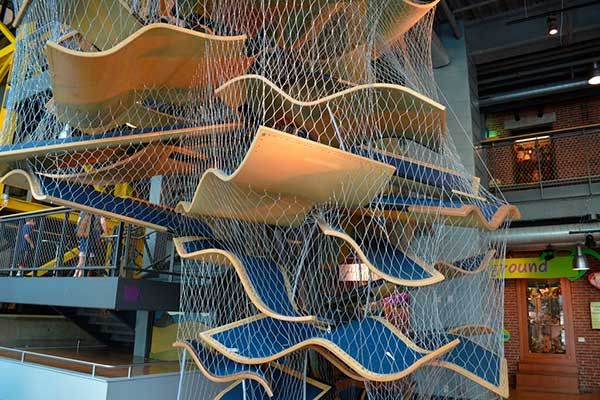
The Boston Children’s Museum, founded in 1913, has more than a century of experience adjusting its programming to how children actually learn at different developmental stages. The museum’s current organization reflects this accumulated understanding: PlaySpace is explicitly designed for infants and toddlers, providing the youngest visitors with an environment calibrated to their specific developmental needs rather than a scaled-down version of exhibits built for older children. Arthur & Friends, which explores storytelling and social-emotional themes through the characters of the PBS children’s series, provides older children with a programming anchor with a recognizable cultural context.
The STEAM lab and the art lab offer children who want more structured, experimental, or creative engagement specific destinations within the museum that the exhibit-browsing format alone does not provide. The replica of Fenway Park’s rooftop garden, where produce is grown on site, gives the museum a Boston-specific exhibit that connects the city’s most iconic sports venue to the food and environmental science content produced by the garden. This kind of local specificity — using a cultural institution recognizable to Boston families as the vehicle for science education — reflects the strongest version of what a city-specific children’s museum can accomplish.
The waterfront location gives the Boston Children’s Museum a physical setting that the giant milk bottle structure outside the building signals to the surrounding area. The building’s orientation toward Fort Point Channel gives the museum a relationship to Boston’s harbor geography that the city’s maritime history amplifies, and the neighborhood’s development into a cultural and restaurant district around the museum provides visiting families with the infrastructure for a full-day outing that the museum itself anchors.
3. The Strong National Museum of Play in Rochester houses the National Toy Hall of Fame
Credit: The Strong Museum of Play
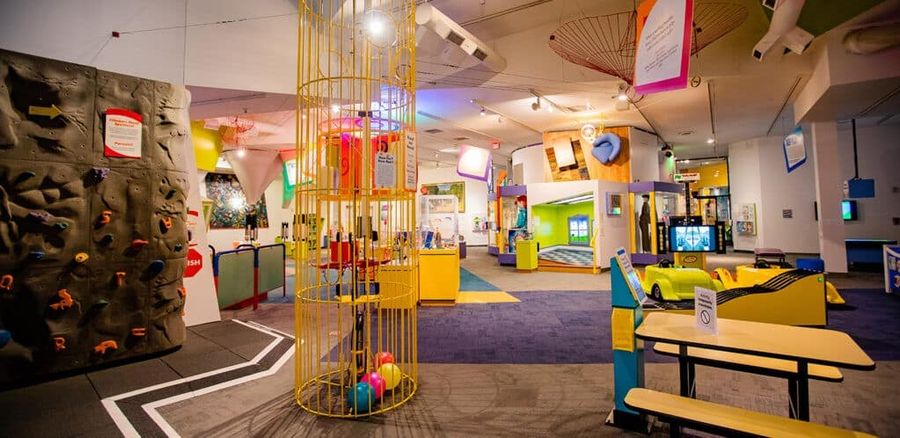
The Strong National Museum of Play in Rochester spans roughly 150,000 square feet and houses the National Toy Hall of Fame and the World Video Game Hall of Fame, which give the museum a curatorial function beyond the hands-on play that most children’s museums prioritize. The Hall of Fame designations give toys and video games the kind of institutional recognition that art and history museums accord to paintings and artifacts, reflecting the museum’s broader argument that play is a subject worthy of serious scholarly and curatorial attention alongside the experiential dimension the museum floor delivers.
The collection of toys, games, and pop-culture artifacts that the museum houses gives adult visitors a sense of nostalgia that children’s museums built primarily around interactive programming do not provide in the same way. Parents and grandparents who encounter toys from their own childhood within the collection find the museum working simultaneously across generational registers, which gives a Strong family visit a shared dimension that purely age-targeted programming cannot generate. The exhibits inspired by Sesame Street and The Berenstain Bears give younger children culturally familiar anchors within the broader collection.
The quieter spaces focused on reading and imaginative play that the Strong maintains alongside its larger interactive exhibits give children who want lower-stimulation engagement specific retreats within a museum that its scale could otherwise make overwhelming. The balance between high-energy interactive environments and calmer reading-focused spaces reflects an understanding of how children’s energy and attention vary across a visit of several hours, which the museum’s programming design accommodates rather than ignores.
4. Please Touch Museum in Philadelphia builds immersive environments for children seven and under
Credit: Please Touch Museum
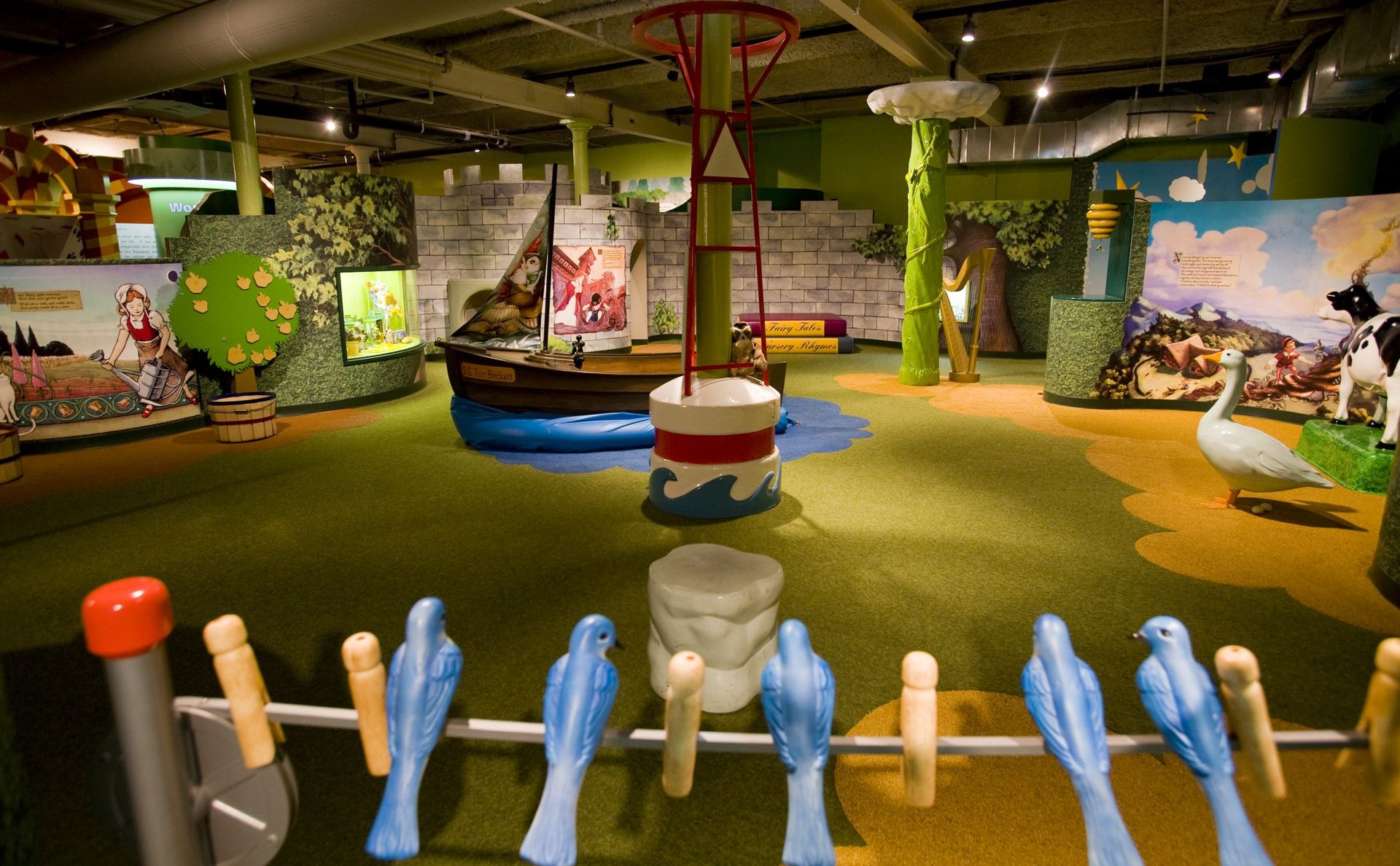
Philadelphia’s Please Touch Museum takes its name from the instruction that conventional museums spend considerable energy prohibiting, which signals its curatorial philosophy before a visitor steps inside. Designed for children ages seven and under, the museum builds its two floors around environments meant to be physically engaged rather than observed at a distance: art studios, water-play areas, gardens, a child-sized grocery store, and a storybook-style fairytale garden give young visitors spaces where the activity is the content rather than a means of accessing it.
The museum’s scale — one of the smaller institutions on this list — forces a specificity of design that larger museums can afford to achieve through addition rather than efficiency. Every square foot of the Please Touch Museum’s floor plan is accountable to its purpose in a way that 473,000-square-foot institutions are not, and the result is a space where the immersive environments feel complete rather than underdeveloped. The child-sized grocery store provides young children with a role-play environment that reproduces the scale of a familiar adult space, with dimensions that give the child physical authority over the environment rather than the other way around.
The developmental focus on children under seven reflects the research consensus that this age range benefits most specifically from the kind of hands-on exploratory play that the Please Touch Museum’s design prioritizes, and that the interactive exhibit model, when scaled correctly for small children, produces engagement that text panels and passive observation do not approach. The Philadelphia location gives the museum access to a large urban family population for whom a city museum with free or low-cost admission offers a practical programming option that suburban destination museums do not.
5. The Children’s Museum of the Upstate in Greenville spans three floors across 80,000 square feet
Credit: The Children's Museum of the Upstate
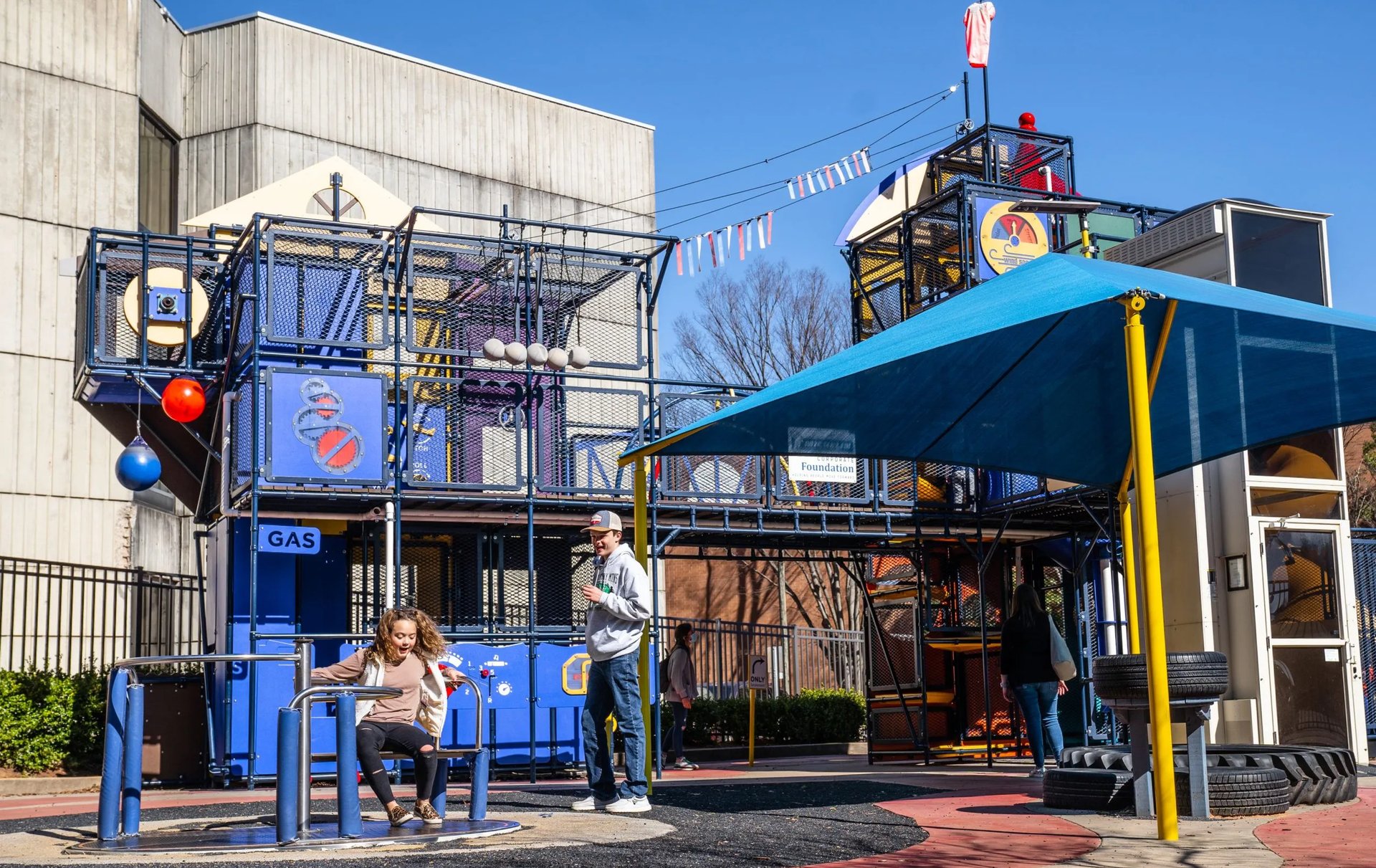
The Children’s Museum of the Upstate in downtown Greenville, South Carolina, spans roughly 80,000 square feet across three floors and offers programming that caters to different age groups and subject areas, providing families with children at different developmental stages with simultaneous options during the same visit. Reedy River Bend gives children a water-play environment whose name connects the exhibit to the actual river that runs through downtown Greenville, giving the museum a local specificity that generic water-play exhibits forego. The Publix grocery store exhibit gives the role-play format a branded local context, and the Teddy Bear Clinic within the Your Healthy Body exhibit gives health and anatomy content a child-accessible framing through a familiar object.
The climbing and engineering challenges the museum includes provide physically active children with problem-solving environments that combine gross motor activity with design thinking, offering a different engagement mode than the role-play environments of the grocery store or the water play at Reedy River Bend. The separate spaces designated for toddlers acknowledge that the programming needs of the youngest visitors differ enough from those of five- and seven-year-olds that sharing exhibit environments produces a worse experience for both groups than separation allows.
The arts, music, and STEAM programming the museum offers, alongside its role-play and physical environments, give the institution a breadth of subject matter that families with children of different interests can navigate without anyone being left with nothing specifically suited to their engagement preferences. The downtown Greenville location places the museum within walking distance of the city’s restaurant and commercial district, providing visiting families with the surrounding infrastructure for a full-day outing in which the museum serves as the primary destination.
6. The Exploratorium in San Francisco operates as an open-ended learning lab with more than 600 exhibits
Amy Snyder / Wikimedia Commons (CC BY-SA 3.0)
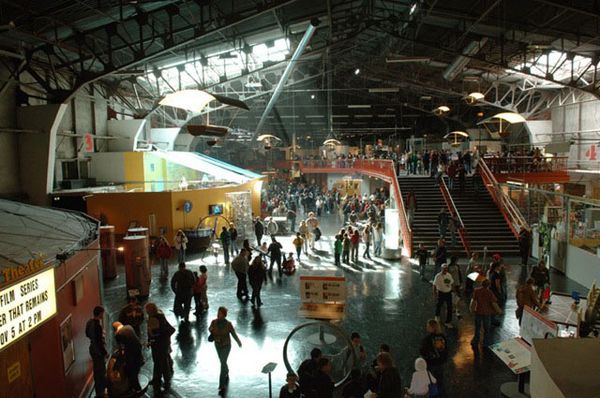
The Exploratorium functions differently from a conventional children’s museum, a distinction that its founder, physicist Frank Oppenheimer, built into the institution’s design philosophy when he established it in 1969. More than 600 exhibits examining light and sound, motion, biology, and perception give visitors an environment where testing, tinkering, and questioning are the expected modes of engagement rather than optional behaviors that some children bring to an otherwise passive experience. The museum does not tell visitors what they should be learning from each exhibit; the exhibits are designed so that the learning emerges from the engagement itself.
The integration of art throughout the museum — with installations directly embedded in the galleries rather than set apart in a separate art section — gives the Exploratorium’s science exhibits an aesthetic dimension that most science museums treat as supplementary rather than constitutive. The Exploratorium makes the argument that art and science share a common methodology of observation, experimentation, and revision through its spatial organization rather than through text panels explaining the connection.
The San Francisco waterfront location at Pier 15 gives the Exploratorium an outdoor dimension, extending some of its exhibits to the Bay’s edge, where the physical environment of wind, water, and light provides natural phenomena that the indoor exhibits address in a more controlled form. The museum’s approach — trusting visitors to engage with complex phenomena without prescriptive guidance — reflects the city’s particular cultural confidence in experimentation and self-direction, which gives the Exploratorium a character specific to its location that institutions with similar programming in other cities do not fully replicate.
7. Louisiana Children’s Museum spreads across an 8.5-acre campus in New Orleans’ City Park
Credit: Louisiana Children’s Museum
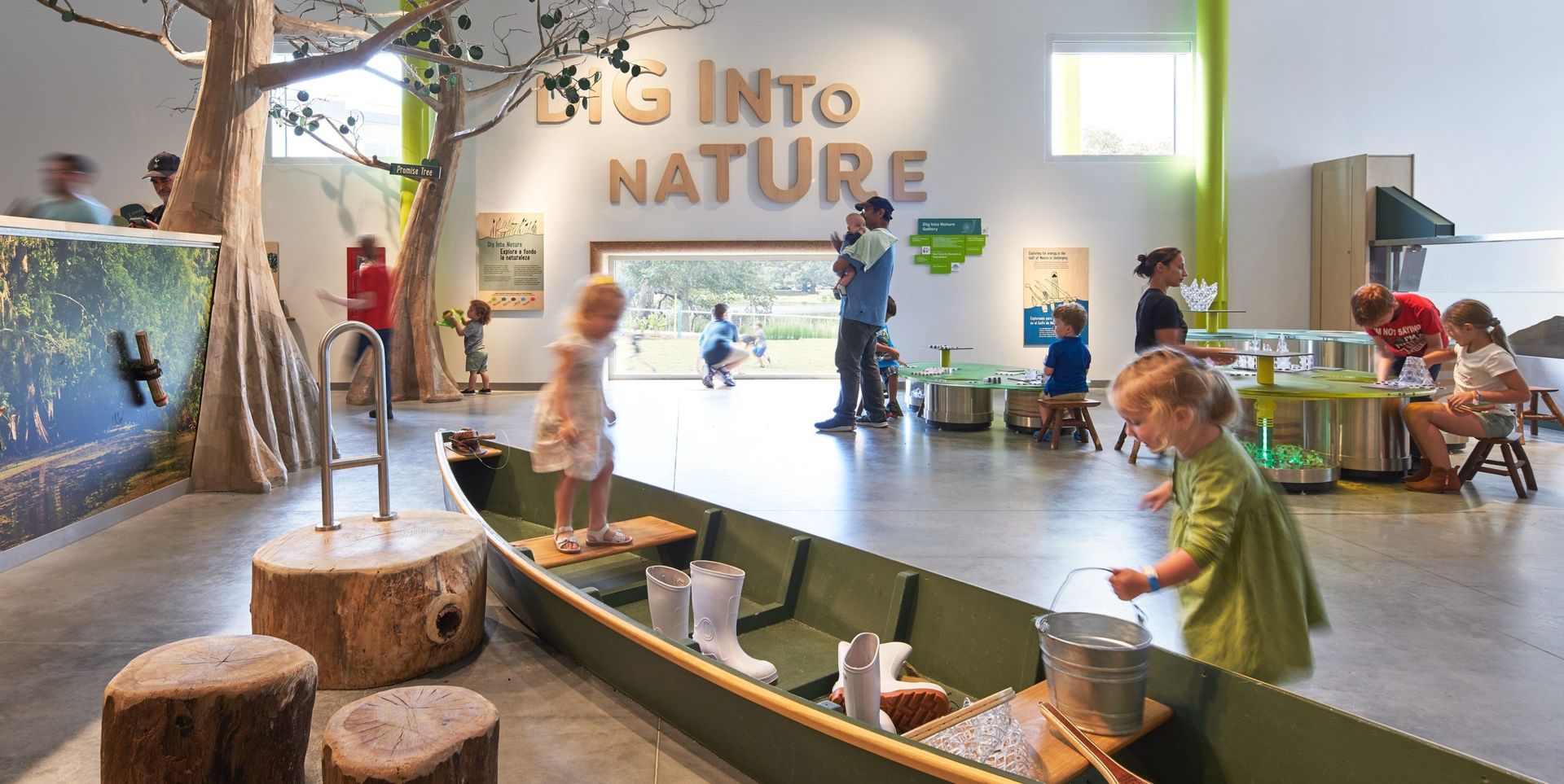
The Louisiana Children’s Museum occupies an 8.5-acre campus within New Orleans’ City Park, giving it an outdoor scale that most urban children’s museums cannot access from their city-center locations. The campus distributes its programming between indoor and outdoor environments in a way that the New Orleans climate supports across much of the year, with exhibits oriented toward literacy, science, and environmental understanding moving through both spaces without the division between inside and outside that enclosed museums maintain as a permanent boundary.
Follow That Food offers children a physically active exhibit that traces the journey of a meal from farm to table, connecting the food culture that defines New Orleans’ identity more than almost any other American city to the science and environmental content it delivers. The connection between local food culture and exhibit design gives the Louisiana Children’s Museum a specificity to its city that generic farm-to-table exhibits in other museums do not carry with the same cultural weight.
Play With Me, designed specifically for children under three and equipped with a sensory lagoon, felt wall, discovery zone, book nook, and climbing space, provides the museum’s youngest visitors with a dedicated environment whose components address the developmental needs of that age range. The Bubble Studio, where children climb inside giant bubbles to understand how surface tension works, gives the science curriculum a physical experience that the concept alone cannot provide through explanation alone, which is the Exploratorium’s model applied to a more contained exhibit format.
8. Miami Children’s Museum reflects the city’s multicultural identity in 56,500 square feet on Watson Island
Credit: Miami Children's Museum
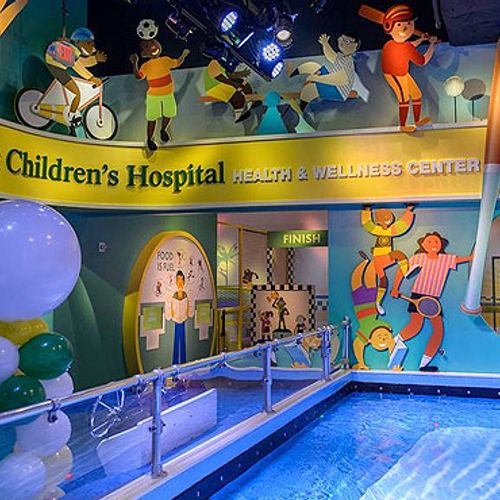
The Miami Children’s Museum sits on Watson Island between Downtown Miami and Miami Beach, giving it a geographic position within the city’s cultural and commercial landscape that its exhibits directly reference. The full-scale cruise ship inspired by Miami’s port, the kid-run bank, and the construction zone that frames problem-solving as an engineering challenge give the museum a set of exhibits whose subjects the city’s own economy — tourism, finance, development — supplies. This connection between what the city does and what the museum’s exhibits explore gives Miami’s institution a local specificity that distinguishes it from children’s museums in cities with less distinctive commercial identities.
The bilingual English and Spanish programming that runs throughout the museum reflects Miami’s linguistic demographics in a way that makes the museum genuinely functional for the full range of families in the city’s population, rather than treating Spanish-language access as an accommodation added to an English-primary institution. The bilingual approach gives the museum a cultural authenticity specific to Miami’s majority-minority character that children’s museums in other cities with significant non-English-speaking populations sometimes achieve less fully.
The Castle of Dreams — a two-story sandcastle with a winding slide and ambient sound — gives the museum’s youngest visitors a landmark within the building that functions as both a play structure and an environmental sculpture. The sandcastle’s architectural presence within the museum space gives the Watson Island location a visual connection to the beach environment immediately surrounding it, which grounds the indoor museum in the specific landscape of its setting without requiring children to go outside to access the coastal reference.
9. Children’s Museum Houston uses nearly 90,000 square feet to keep kids moving and experimenting
Credit: Houston Museum District
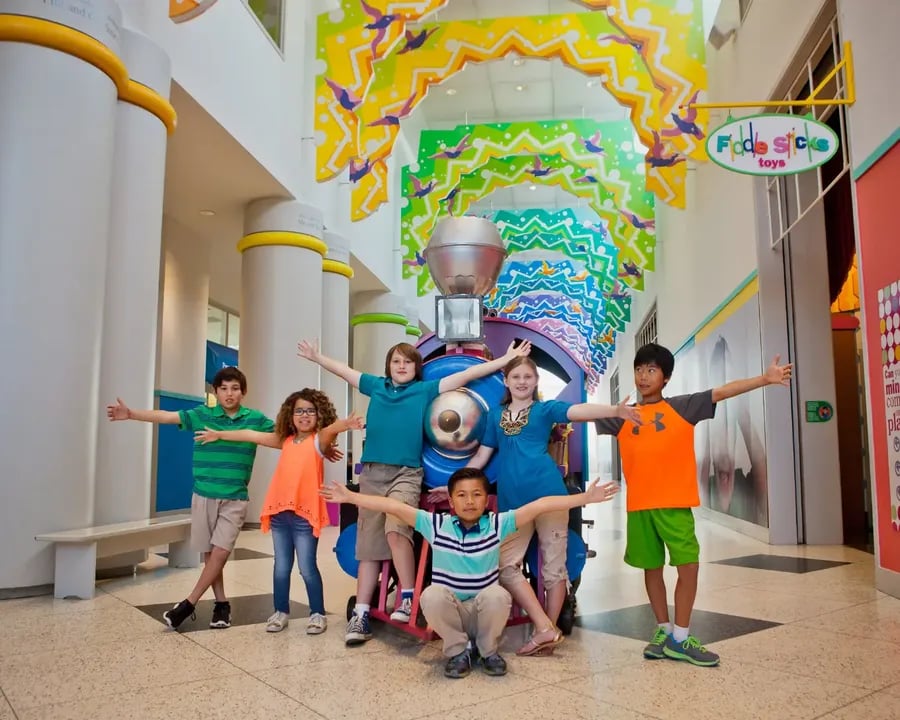
Children’s Museum Houston covers nearly 90,000 square feet, with a programming philosophy oriented toward movement, experimentation, and hands-on play, a philosophy that the museum’s national recognition — including the National Medal for Museum and Library Service — has validated over the decades since its 1980 founding. Flow Works, the Secret Spy Game, and Exploration Zones give older children exhibits that reward repeat visits, which is an unusual quality in museum programming and reflects the exhibits’ design around open-ended engagement rather than content that is fully consumed on a single visit.
Tot Spot gives the museum’s youngest visitors a space designed around their developmental needs rather than a portion of the general floor calibrated downward. The separation of the youngest children’s environment from the broader exhibits gives families with toddlers and older siblings the option of distributing across the museum in ways that serve each child’s level of engagement, rather than requiring the family to move as a single unit at the pace of the youngest child.
The energy and community atmosphere on the museum floor — which the source identifies as the quality that keeps guests of all ages returning more than the specific exhibits — reflects what the best children’s museums produce when the programming and the physical environment align well enough that the institution becomes a social gathering point rather than purely an educational destination. A children’s museum that adults enjoy is one where the learning-through-play model has succeeded so fully that the experience reads as anything but educational.