From tiny Marais hideaways to grand hotel bars on Place de la Concorde, these are Paris's best cocktail spots
Credit: The Ritz Bar
Paris has never been a city that does anything in a hurry, and its bar culture is no exception. For years, the drinking scene moved at its own pace — charming cafés, a brief obsession with faux-speakeasy theatrics, wine bars that needed no improvement and received none anyway. Then something shifted. The speakeasies dropped the act, the wine bars made room for something new, and a generation of bartenders with serious credentials and genuine ideas began opening places that reflected what Parisian drinking had quietly become: unhurried, considered, and very good.
The result is a cocktail scene that feels less like a trend and more like a natural extension of the city's broader relationship with pleasure. Cocktails in Paris are not the centerpiece of an evening — they are part of one, alongside food, music, conversation, and the particular quality of light that a well-designed room produces at ten o'clock on a Wednesday. The best bars here understand that distinction and build their programs accordingly. A sous-vide Negroni chilled to precise consistency. A jasmine cocktail built from five separate jasmine preparations. A Bloody Mary was invented in 1921 and is still served at the address where it was created.
The Michelin Guide's selection of Paris bars spans the full range of what the city's drinking culture currently offers: pocket-sized neighborhood spots in the 11th arrondissement where the playlist changes the mood as much as the drink list; grand hotel bars on Place de la Concorde where the décor alone justifies the trip; a hidden bar behind a Marais taquería that has been a benchmark in Parisian cocktail culture since 2011. Each operates according to its own logic, and each rewards the visit on its own terms.
What connects them is a seriousness about the drink that never tips into solemnity. Paris has always known how to be sophisticated without being stiff, and its cocktail bars have absorbed that lesson completely. What follows is a guide to 10 of the best places to experience it firsthand.
Credit: Bar Nouveau
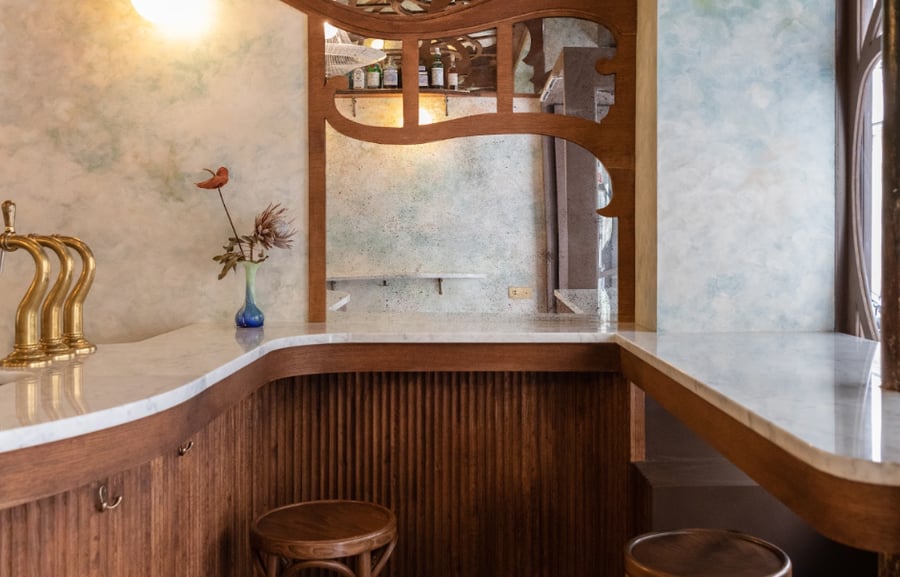
Bar Nouveau occupies a very small Art Nouveau-inspired space tucked into the Marais, and its ambitions are inversely proportional to its footprint. The bar's co-owners, Remy Savage, Marc Puzzuoli, Sara Moudoulaud, and Hadrien Moudoulaud, bring collective experience from some of Paris's most respected addresses, including Little Red Door, Le Syndicat, La Commune, and Swift. That résumé informs a philosophy that runs counter to much of contemporary mixology: no high-tech gadgets, no molecular theatre, no techniques deployed for their own sake. The focus is on classic drinks that were never broken, elevated through careful thought rather than equipment.
The results are quietly impressive. A Bloody Mary gets a red wine float that deepens its savory character without obscuring it. A Ramos Gin Fizz is whipped to a creaminess that requires a spoon — a commitment to texture that most bars would not attempt. The six-signature menu includes the Gustav, an agave-based drink adorned with flower petals and gold leaf, inspired by the Austrian painter Gustav Klimt. The artistic reference is not decorative; it reflects a bar that thinks about what a cocktail should communicate, not just what it should taste like.
Bar Nouveau is the kind of place that only makes sense in Paris. It is small enough that the atmosphere is entirely shaped by whoever is in it, serious enough to reward repeat visits, and confident enough in its own approach to resist the pressure to update it. For a drink that feels genuinely considered in a room that feels genuinely Parisian, it is one of the strongest addresses on this list.
Credit: Fréquence
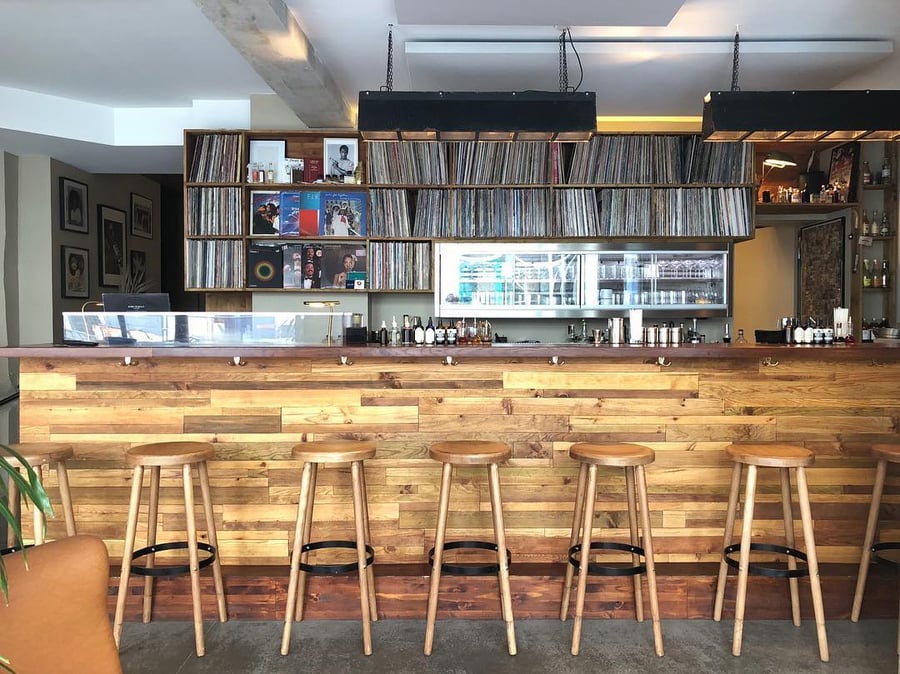
Fréquence operates in the 11th arrondissement with a freewheeling approach to its drink list that mirrors the nightly playlist. Co-owner Baptiste Radufe has described the bar's philosophy as being as free as possible with recipes — no planned menu changes, new cocktails made when the team feels ready, and ingredients are available. The result is a continually evolving menu of around eight drinks, with certain classics held in reserve for consistency. The sous-vide Negroni — pre-batched and chilled for precise, repeatable results — is the clearest expression of a bar that values accuracy as much as spontaneity.
The bar occasionally collaborates with spirit brands it admires. A recent partnership with Nikka Whisky produced the Katsu Highball, combining umeshu, whisky, and a housemade soda into something crisp, balanced, and immediately drinkable. The collaboration model suits Fréquence well: it keeps the menu moving without destabilizing it, and it connects the bar to a broader network of producers who share its values.
The vinyl element is not incidental. At Fréquence, the music and the drinks operate at the same register — both chosen with care, both capable of shifting the atmosphere of an evening in ways that a carefully curated playlist or a well-made cocktail can produce independently but rarely achieve together. For a night that combines genuinely good drinking with the kind of soundtrack that makes it better, Fréquence is among the most complete options in Paris.
Credit: The Ritz Bar
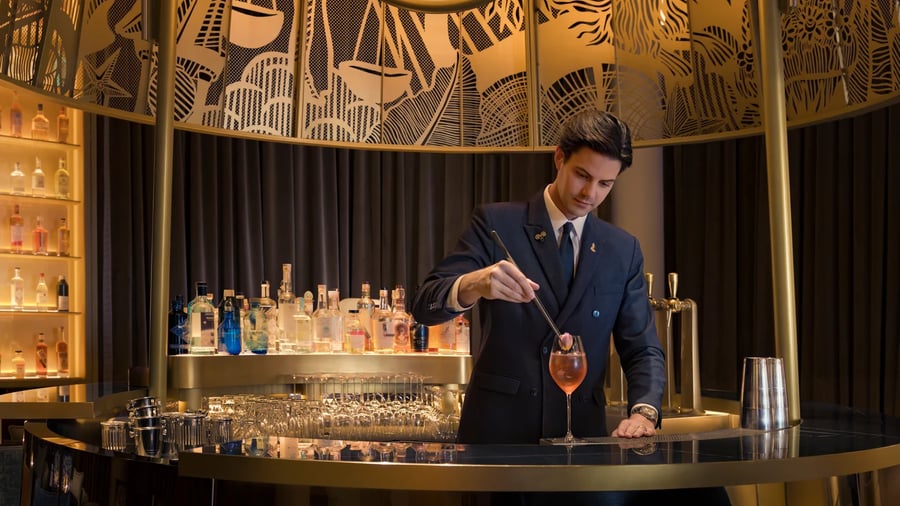
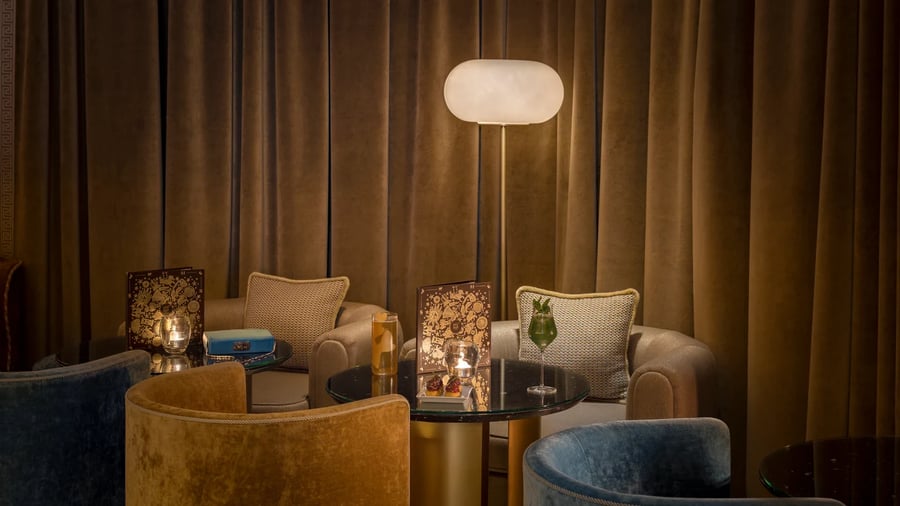
The Ritz Bar reopened in 2021 with a design that marked a clear departure from the wood-paneled classicism of its sister bar, Hemingway. Director Romain de Courcy introduced a cocktail program rooted in biodynamic principles, the influence of celestial bodies on plant growth, expressed through a menu built around the rhythms of flowers, fruits, leaves, and roots. The approach could easily produce novelty without depth, but the execution is precise enough to make the philosophy legible in the glass.
The jasmine cocktail makes the case most clearly. Built from eau de vie, jasmine sambac water, Chinese jasmine infusion, and two separate jasmine essences, it isolates a single aromatic ingredient and explores it with a thoroughness that most bars would not attempt. Pre-batching ensures that every version is consistent — a detail that reflects the Ritz's understanding that luxury is as much about reliability as it is about spectacle.
The broader setting reinforces the experience. The Ritz Bar is moody and opulent in a way that the Hemingway, for all its charm, is not — darker, more contemporary, more aware of what it is doing aesthetically. For visitors who want to take out-of-towners somewhere that delivers an imaginative cocktail in an unambiguously grand Parisian setting, the Ritz Bar remains the most defensible choice on this list. The drinks are good enough to justify the occasion, and the occasion is hard to improve on.
Credit: Sister Midnight
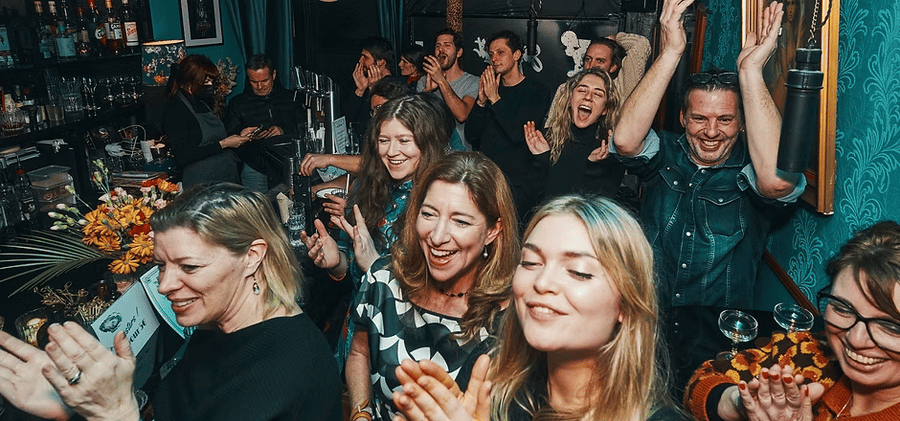
Sister Midnight is run by Jen Riley and Joseph Boley, the duo behind Red House in the 11th arrondissement, and it carries their reputation for serious drinks into a room that earns its own attention. The décor is maximalist — leopard print banquette against aquamarine flock wallpaper, a plush red velvet curtain leading to a makeshift backstage — and the atmosphere is shaped as much by the evening's performers as by the drinks. Local drag performers and burlesque artists appear alongside the cocktail program, making Sister Midnight one of the few Paris bars where the entertainment is as carefully considered as what is in the glass.
The cocktails are scrupulously stirred or shaken and finished with original seasonal touches. The Hocus Pocus, salted butter fat-washed gin, chai spices, and a citrus splash, is the kind of drink that sounds complicated on paper and tastes inevitable in the glass. The fat-washing technique, which infuses a spirit with fat to add texture and flavor before freezing and straining it out, is handled with the confidence of a bar that knows what it is doing and why.
Sister Midnight's inclusive ethos is embedded in its operation rather than stated as a policy. The space welcomes everyone and designs its programming accordingly. There is something for the cocktail purist and something for the person who came primarily for the show. In a city where bars often excel at one register, Sister Midnight manages both with apparent ease.
Credit: Classique
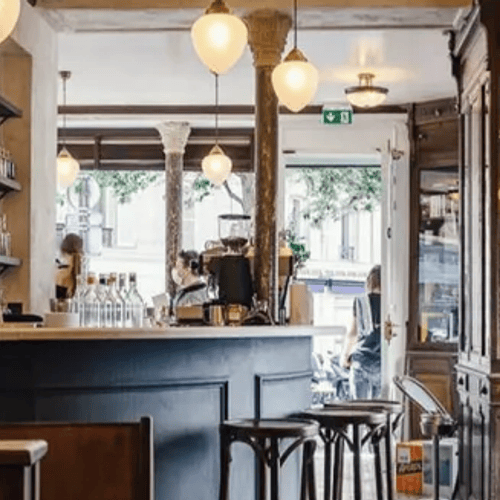
Classique occupies a former pharmacy in Pigalle, and the building's history is still visible in its design: an illuminated green cross on the façade, a long apothecary-style white marble bar, and bistro-inspired Venetian red checkered tiles. The tribute to tradition is aesthetic rather than nostalgic. The drinks menu operates firmly in the present, with a focus on natural wines and cocktails built around wine varietals, aperitifs, and spirits, all shaped by the season.
The Cépage menu, the name refers to a grape variety, is organized around that philosophy. The Viognier Gimlet, combining coconut-infused orange wine, Italian aperitivo, and parsley oil, is representative: the base ingredient is wine rather than spirit, and the other elements are chosen to draw out its character rather than obscure it. It is a less aggressive style of cocktail than the city's more technique-forward bars produce, and deliberately so. Classique is interested in the pleasure of a gentle drink alongside good food, not in the demonstration of technique.
The food menu earns its place. Briny oysters and a crab roll on buttery brioche are exactly the kind of small plates that make a bar worth visiting for dinner rather than just drinks. Skipping the food at Classique would be a mistake. The kitchen is doing work that reinforces the bar's broader argument that drinking well and eating well are not separate activities but aspects of the same one.
Credit: Maison Delano
Maison Delano opened in Paris in 2023, following extensive renovations of an 18th-century manor in the 8th arrondissement. The hotel brought the original Delano Miami's particular energy, confident, sociable, designed to be experienced rather than merely occupied, into a French context and found the combination more coherent than it might have appeared on paper. Le Delano, its bar, reflects that synthesis in both design and program.
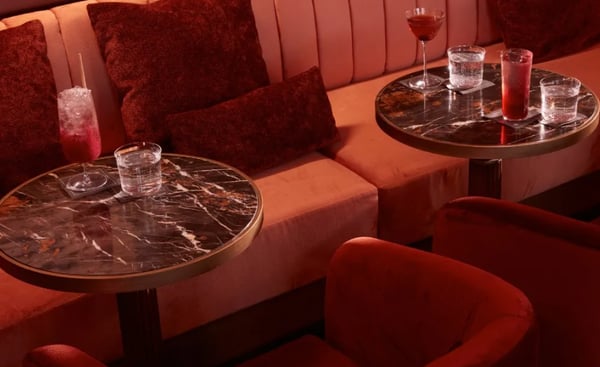
The Art Deco-inspired interior features velvet clamshell seating and intimate marble cocktail tables bathed in warm terra cotta tones — a palette that nods to Miami without abandoning the French preference for restraint. The cocktail menu builds on fine French spirits and liqueurs paired with seasonal produce, alongside a wine selection substantial enough to serve guests who come for the room and stay for the drinks rather than the other way around.
Le Delano is a bar that works for any occasion. It is intimate enough for a quiet drink at the start of an evening and energetic enough to sustain a later one, a flexibility that few Paris hotel bars manage convincingly. The Michelin Guide notes its suitability for everything from a quiet conversation to a wilder night, a range that reflects a space designed with genuine thought about how it will actually be used rather than simply how it will look in photographs.
Credit: SO/ Hotels
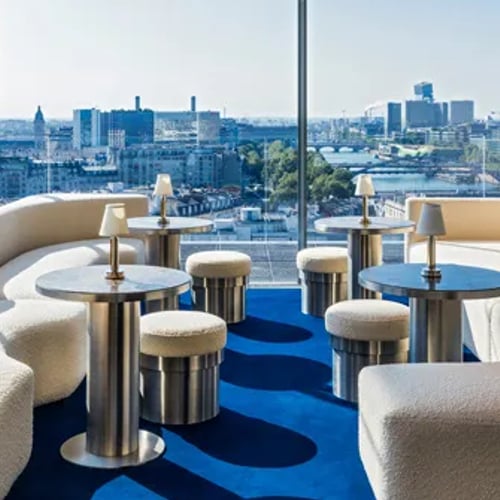
Bonnie Bar sits on the 16th floor of the SO/Paris hotel, just off the Seine, with floor-to-ceiling windows offering a perspective on Paris most visitors never see. The Eiffel Tower, Notre-Dame Cathedral, the Panthéon, and the hills of Belleville are all visible from the right seat — a panorama that functions as the bar's most significant asset and shapes the entire experience of drinking there. Signature cocktails start at 20 euros, and the view is included at no additional charge.
The drinks are well matched to the setting. The Jimmy Two Times, Noble Coyote Espadin mezcal, Lustau Amontillado sherry, Château de Breuil calvados, and Adriatico amaretto, is an original creation that moves between a margarita and a Manhattan without fully committing to either, producing something that rewards the attention the view might otherwise absorb. The Virgine Bonnie, a zero-proof Bloody Mary, ensures that non-drinkers are not relegated to the edges of the menu or the room.
Bonnie Bar is the kind of place that demands a specific occasion — a birthday, a reunion, a night when the city itself feels worth celebrating. The view does the work that the atmosphere would need to do in a basement bar, and the drinks are good enough to justify staying long after the sun has set and the lights of Paris have taken over. For a single evening that makes the most of what the city looks like from above, it is the best address on this list.
Credit: Bar Joséphine
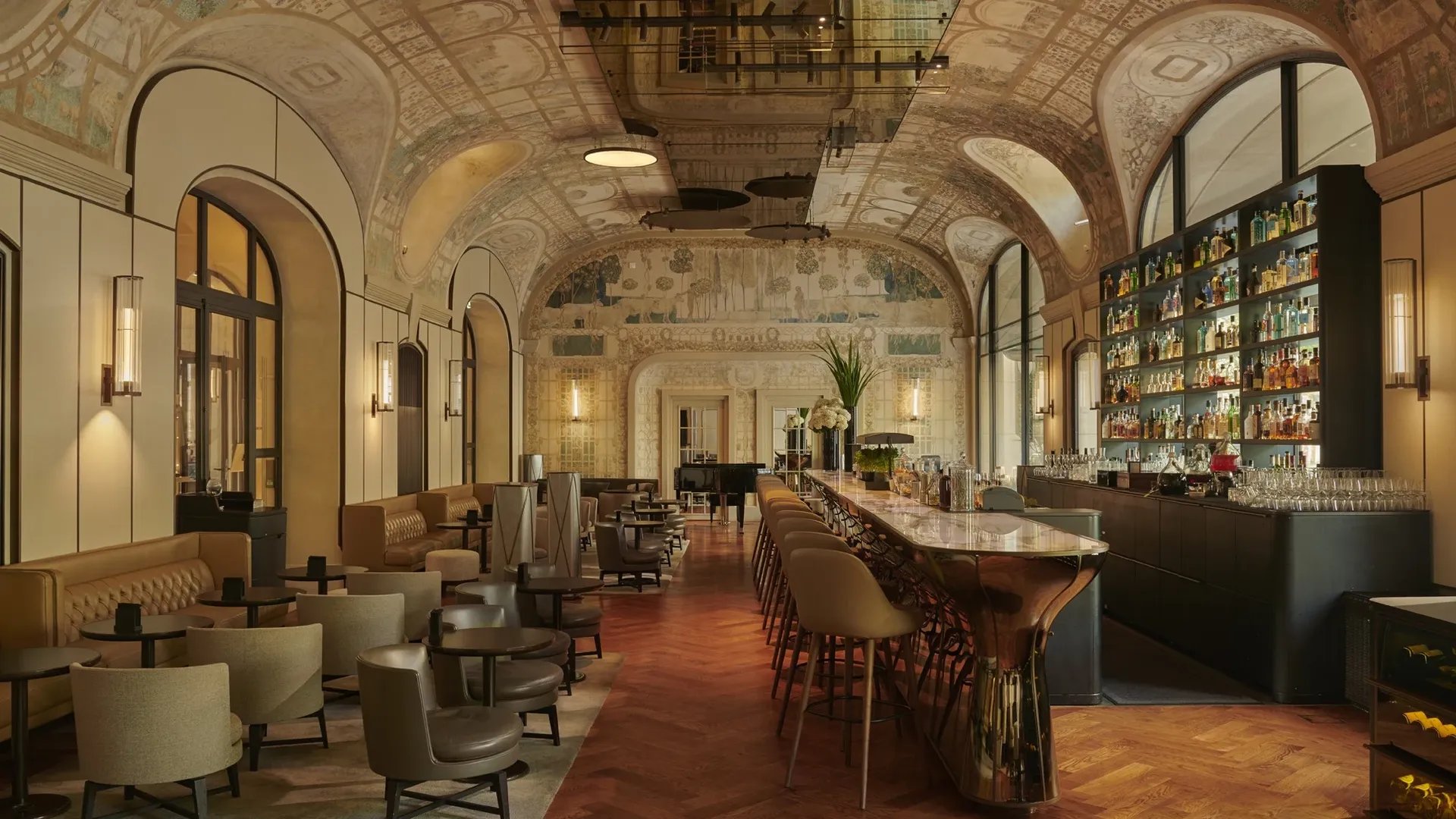
The Lutetia has been a fixture of the Left Bank since 1910, and its guest list across the intervening century, Picasso, André Gide, General de Gaulle among them, gives Bar Joséphine a historical weight that most Paris hotel bars cannot claim. The bar was refurbished in 2018 by architect Jean-Michel Wilmotte, retaining its Art Deco character and the spirit of the Années Folles, the roaring twenties, while updating it for contemporary use. The name honors Joséphine Baker, who once called the hotel home, and her personality and life inform the cocktail menu throughout.
The drinks are as polished as the room. Paris, Un Soir d'Été combines vodka with sherry amontillado, verjuice, jasmine tea, and hints of coconut and lychee into something refreshing and precisely balanced. The Bang Bang, gin with vermouth, oyster leaves, dill, and black sesame oil, is barely briny in a way that rewards slow sipping rather than quick consumption. Both reflect a kitchen that understands the difference between a cocktail that is interesting to read about and one that is genuinely pleasurable to drink.
Bar Joséphine is one of the most beautiful rooms on the Left Bank, a fact that shapes the experience of drinking there without overwhelming it. It is a bar that works for a business meeting and a romantic evening in equal measure — a flexibility that reflects a hotel that has been hosting both for over a century and learned to accommodate each without compromising the other.
Credit: Combat
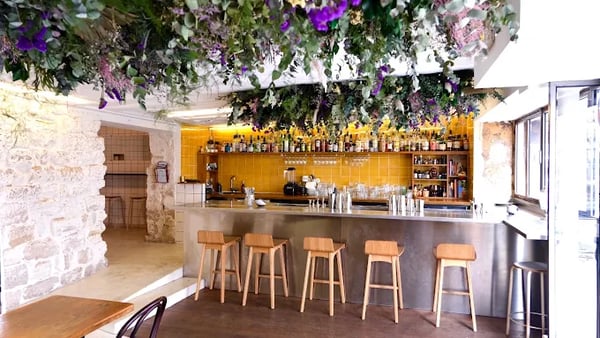
Combat sits on the hills of Belleville, one of Paris's most interesting and least tourist-facing neighborhoods, and its approach to cocktail-making reflects that positioning. Founded by Margot Lecarpentier, described by the Michelin Guide as a star of the shaker, the bar operates with a menu that evolves with the seasons and inspiration rather than a fixed program. The results are consistently surprising: a cocktail made with absinthe, coconut cream, fromage blanc, and lemon; an elixir flavored with CBD. These are not drinks assembled to impress; they are drinks assembled to explore.
The feminist identity of Combat is embedded in its operation rather than announced. Lecarpentier founded the bar with a specific vision of mixology that casts off the clichés of the form — the masculine swagger, the technique-for-its-own-sake approach, the exclusivity that characterizes some of the city's more self-consciously serious bars. What Combat replaces them with is a laid-back intelligence that makes every drink feel like a genuine act of curiosity rather than a performance.
For visitors who want to experience Paris drinking at its most independent and most genuinely creative, Combat is essential. The Belleville location adds an extra dimension — the neighborhood's hills, its mix of communities, its distance from the tourist circuits of the center — that gives an evening at Combat a quality that a more central bar could not replicate. It is a bar that rewards the journey required to reach it.
Credit: Rosewood Hotels
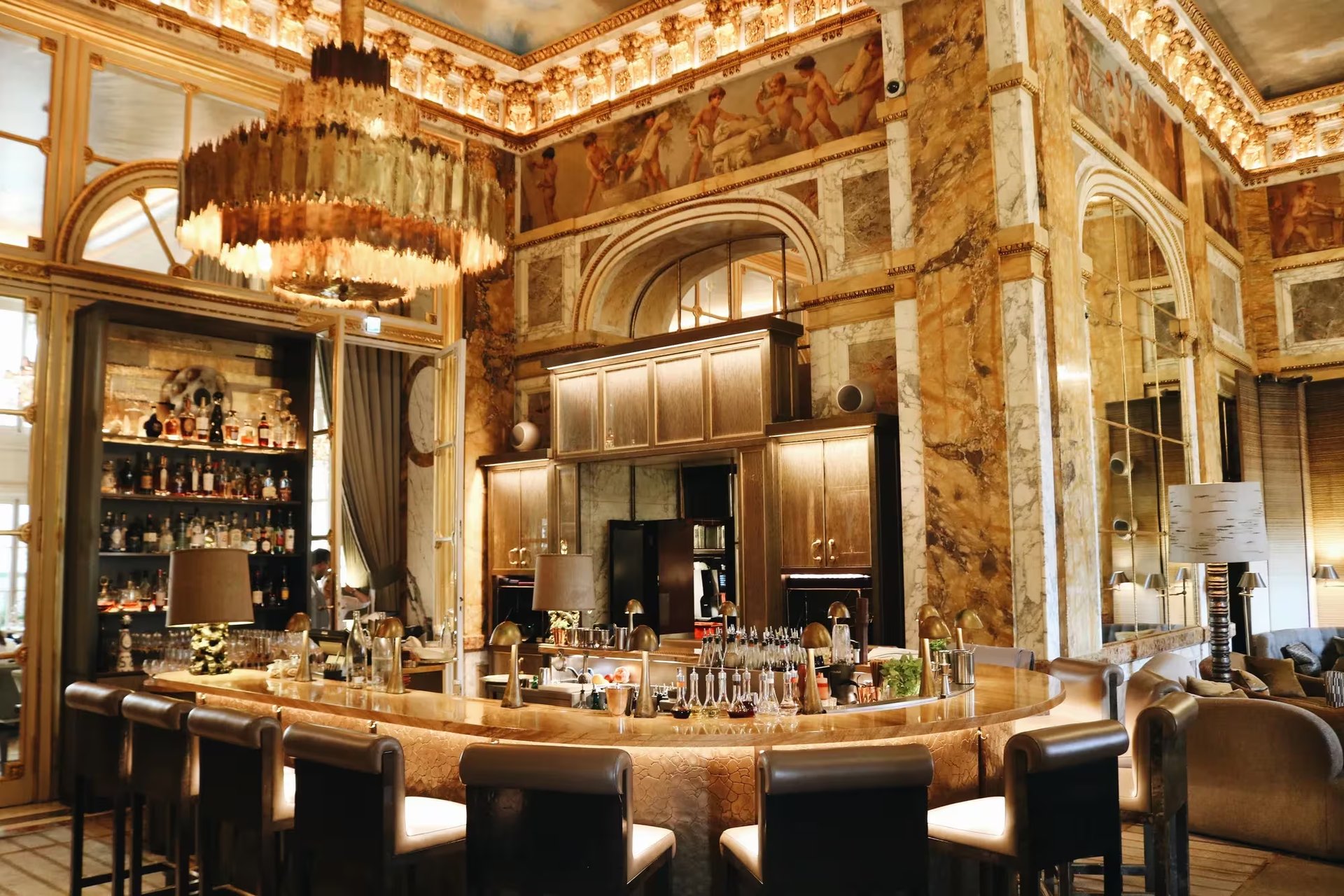
Les Ambassadeurs occupies a room in the Hôtel de Crillon that sets a standard for Parisian grandeur that few interiors anywhere in the world can match. Soaring ceilings, marble surfaces, and gilded mirrors create an environment where seeing and being seen is as much part of the experience as what is in the glass — a dynamic that the Crillon has understood and accommodated since it opened on Place de la Concorde in the 18th century. Fashion Week celebrities and international visitors fill the room during the city's most high-profile weeks; the rest of the year, it belongs to anyone who walks through the door.
The drinks are made by the hotel's in-house mixologists and are tailored to the setting. The Sloe Berry is a refreshing reinterpretation of a gin fizz that updates the classic without abandoning it. The Olive — the house dirty martini — is exactly what a dirty martini should be at a bar of this caliber. For guests who prefer to avoid alcohol, almost every cocktail on the menu has a zero-proof version, a thoughtful approach to inclusive hospitality rather than an afterthought.
The bar also offers live music, adding a dimension that the room's grandeur already suggests. Les Ambassadeurs is not a bar for a quiet drink — it is a bar for an occasion, and it delivers on that premise with the consistency of a hotel that has been doing this long enough to know exactly what it is. For a single glamorous evening in Paris, it is the most complete address on this list.
