
From a Mazda CX-5 with near-luxury interior quality and standard AWD to a Subaru Forester Hybrid with the highest safety score on the list
Credit: Toyota
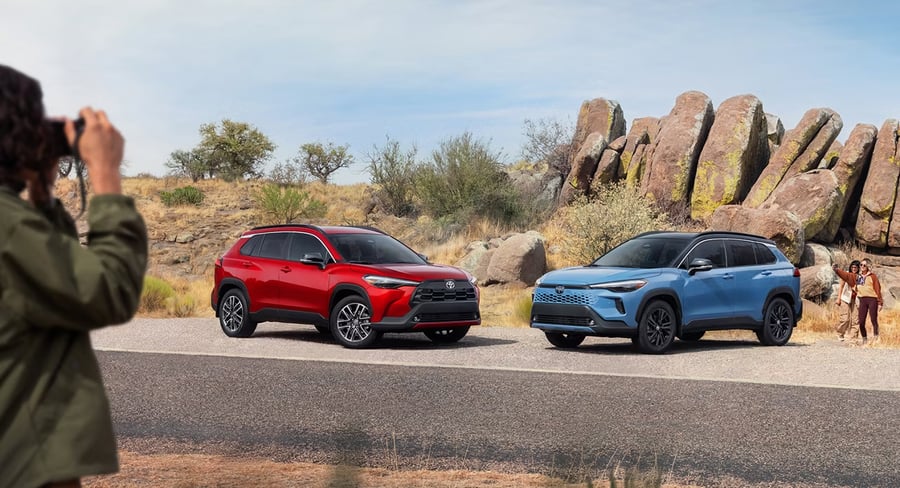
The 2026 Toyota $TM RAV4 is America’s second-best-selling vehicle, trailing only the Ford $F F-150, which means millions of compact SUV shoppers arrive at their purchase decision having already, consciously or not, benchmarked every competitor against it. The RAV4’s 2026 redesign made the benchmark harder to beat: the vehicle now comes exclusively as a hybrid, which gives it a combined fuel economy figure in the mid-40s that no non-hybrid compact SUV can approach, and the redesign brings updated styling and technology to a package whose reliability record and resale value have sustained its dominance through multiple competitive generations.
The case for shopping beyond the RAV4 is not that the RAV4 is a bad vehicle. It is not. The case is that it has specific weaknesses that some competitors address more directly. The interior design and driving dynamics, which Mazda’s CX-5 handles significantly better. The safety score, where the Subaru Forester Hybrid posts a 9.8 out of 10. The reliability score, where the Subaru Crosstrek outperforms the RAV4 by a meaningful margin. The cabin comfort, where the Honda $HMC CR-V and CR-V Hybrid both outscore the RAV4. The buyer who has identified which of these dimensions matters most to their specific use case will find a more targeted answer than the RAV4 provides.
The 10 vehicles below appear in U.S. News and World Report, ranked by their editorial scoring, with base price as the tiebreaker, spanning subcompact through midsize and conventional through hybrid powertrains. The range reflects the full spectrum of what a buyer who has identified the RAV4 as a benchmark might be looking for: a cheaper entry point, a more comfortable cabin, a higher safety score, a more engaging drive, or simply more interior room and a third row for a growing family.
Credit: Mazda
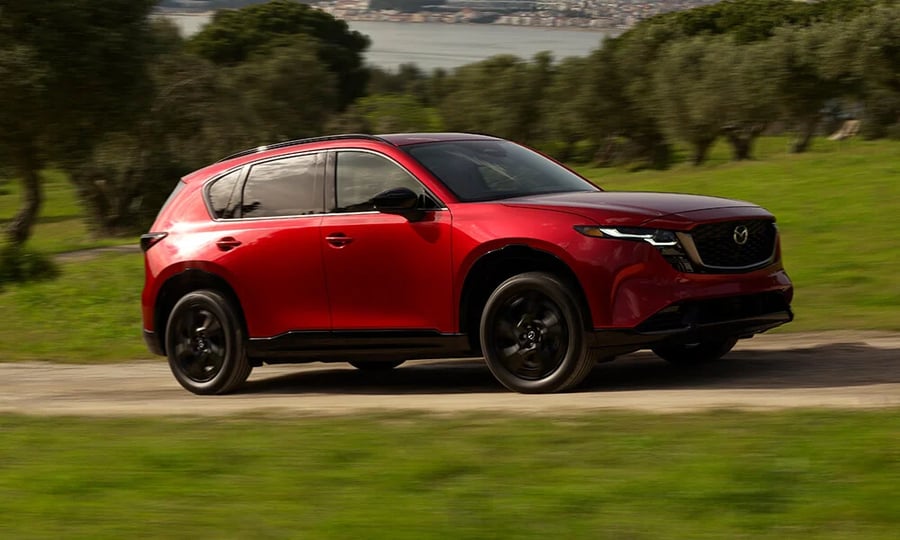
The 2026 Mazda CX-5 carries a U.S. News rating of 9.3 out of 10 and received a full redesign for 2026, giving it updated styling and revised driving dynamics that maintain Mazda’s consistent position as the compact SUV segment’s handling leader. All-wheel drive comes standard across the lineup, an advantage over the RAV4, which requires it as an upgrade. The suspension tuning keeps the wheels planted through curves and corners with a precision and feedback quality that the RAV4’s comfort-oriented suspension setup does not attempt, and the steering provides satisfying responsiveness in line with Mazda’s chassis philosophy.
The interior makes the CX-5’s most compelling competitive case against the RAV4. The cabin quality exceeds what the price point suggests, to the point that the CX-5 can fool an uninitiated occupant into thinking they are sitting in an entry-level luxury vehicle. The base trim’s cloth upholstery is more refined than most competitors’ cloth materials, and the upgrade path progresses through synthetic leather and microsuede to genuine leather on upper trims. The majority of interior surfaces are soft to the touch, and the black plastic trim that dominates the RAV4’s cabin is minimized in the CX-5’s design.
The CX-5’s main competitive limitation against the RAV4 is fuel economy: the non-hybrid powertrain returns significantly fewer miles per gallon than the RAV4’s standard hybrid setup. The buyer who commutes extensively and weighs fuel costs heavily in the ownership calculation should factor that gap into the comparison. The buyer who weighs driving engagement, interior quality, and standard all-wheel drive more heavily will find the CX-5 the stronger argument, and the 9.3 rating confirms the vehicle’s overall competitive standing in the compact SUV class. The CX-5’s fully redesigned 2026 platform gives the vehicle an engineering freshness that updates the suspension calibration and the interior structure, which means the handling and cabin quality advantages over the RAV4 are built on a new engineering and material foundation.
Credit: Toyota
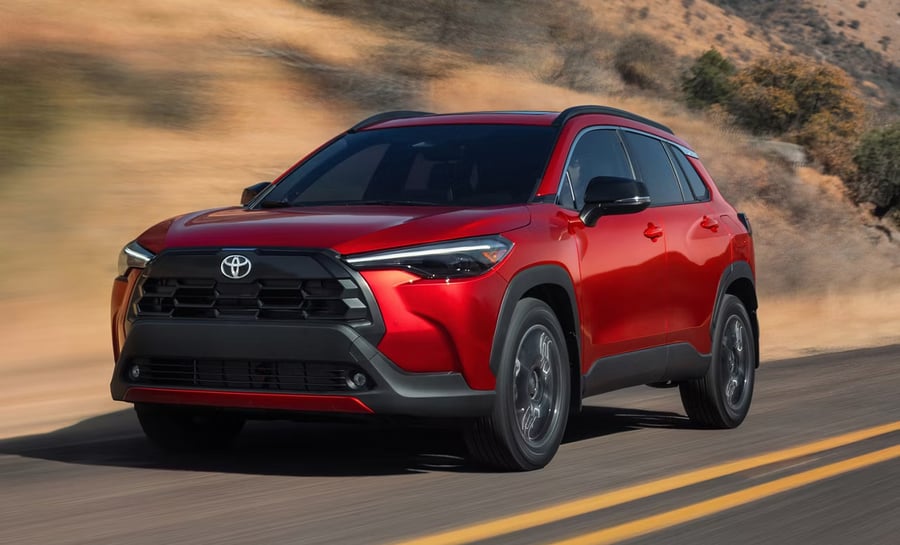
The 2026 Toyota $TM Corolla Cross has a U.S. News rating of 7.7 out of 10 and the lowest starting price on this list, making it a clear value for the budget-conscious compact SUV buyer. The name’s reference to the long-running Toyota Corolla is not incidental: it immediately signals the value proposition the vehicle is designed to deliver, and the Corolla Cross follows through by giving five passengers and a reasonable cargo volume at the most accessible price in the segment. The cross-shopping context against the RAV4 makes the price difference the Corolla Cross’s primary argument.
The interior is straightforward and functional, accurately reflecting the vehicle’s design priorities. The base is not lavish, but the 2026 model year brings a larger standard infotainment screen that gives the technology baseline a competitive update, and the standard safety feature suite is comprehensive relative to the price. The Corolla Cross is not as engaging to drive as the RAV4, and the fuel economy, while adequate, does not approach the RAV4 hybrid’s combined rating. Senior editor John Vincent notes that the Corolla name’s association with value creates an immediate and accurate sense of what the vehicle offers, which is a rare quality in a segment where marketing positioning often overpromises.
The Corolla Cross occupies a specific position in the compact SUV market: it is genuinely smaller and less capable than the full compact crossovers on this list, and the buyer who selects it is trading some size and performance for a meaningful price reduction. The buyer who needs a compact SUV footprint with five seats, basic safety technology, and the Toyota reliability reputation at the lowest available entry point will find the Corolla Cross the most straightforward answer on this list. The Toyota nameplate also carries a resale value reputation that the lowest-priced alternatives from other brands do not sustain over the same ownership period, which gives the Corolla Cross a total cost of ownership argument that the sticker price alone understates.
Credit: Honda
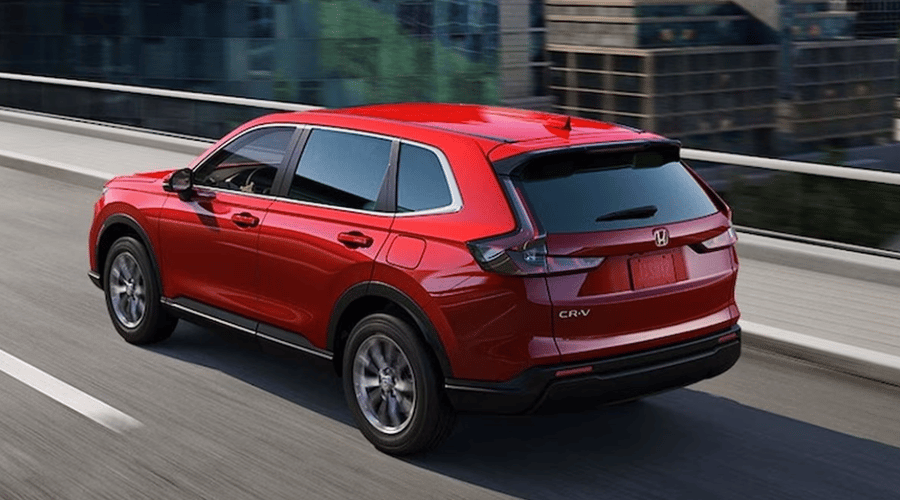
The 2026 Honda $HMC CR-V Hybrid has a U.S. News rating of 8.9 out of 10 and an interior score of 8.8 out of 10, the highest comfort rating among the RAV4 alternatives on this list. The seats are supportive, both rows have generous space for adult passengers, and the build quality is strong throughout the cabin. Managing Editor Alex Kwanten notes that the interior styling is not the CR-V Hybrid’s strongest suit, with a cabin design that prioritizes function and durability over visual distinction. The seats and the space, however, deliver what the interior score quantifies.
The CR-V Hybrid's fuel economy is its most important technical credential relative to the RAV4: at 40 combined miles per gallon, it comes closer to challenging the RAV4’s 44 combined than any other vehicle on this list. The hybrid powertrain gives the CR-V a running cost profile that the non-hybrid CR-V and most other compact SUV competitors cannot approach, and the buyer who wants RAV4-adjacent fuel economy without committing to the RAV4 specifically will find the CR-V Hybrid the most credible alternative.
The 2026 refresh adds a larger infotainment display, an updated optional all-wheel-drive system, and a new TrailSport trim that adds light off-road capability to the CR-V’s platform. The TrailSport’s exterior treatment and suspension calibration give buyers who want some adventure-oriented positioning a specific option within the CR-V lineup. The CR-V Hybrid’s overall case against the RAV4 is straightforward: more interior comfort, competitive fuel economy, strong safety scores, and a Honda reliability record, with documented ownership history that gives the buyer confidence in long-term ownership costs. The 2026 refresh’s larger infotainment display addresses a previous generation weakness in the technology presentation, giving the CR-V Hybrid a cabin technology baseline that narrows the gap with competitors whose screen sizes set a visual expectation the pre-refresh CR-V did not meet. The TrailSport trim, new for 2026, also gives the CR-V lineup a visual identity option that the previous generation’s conservative styling did not offer.
Credit: Subaru
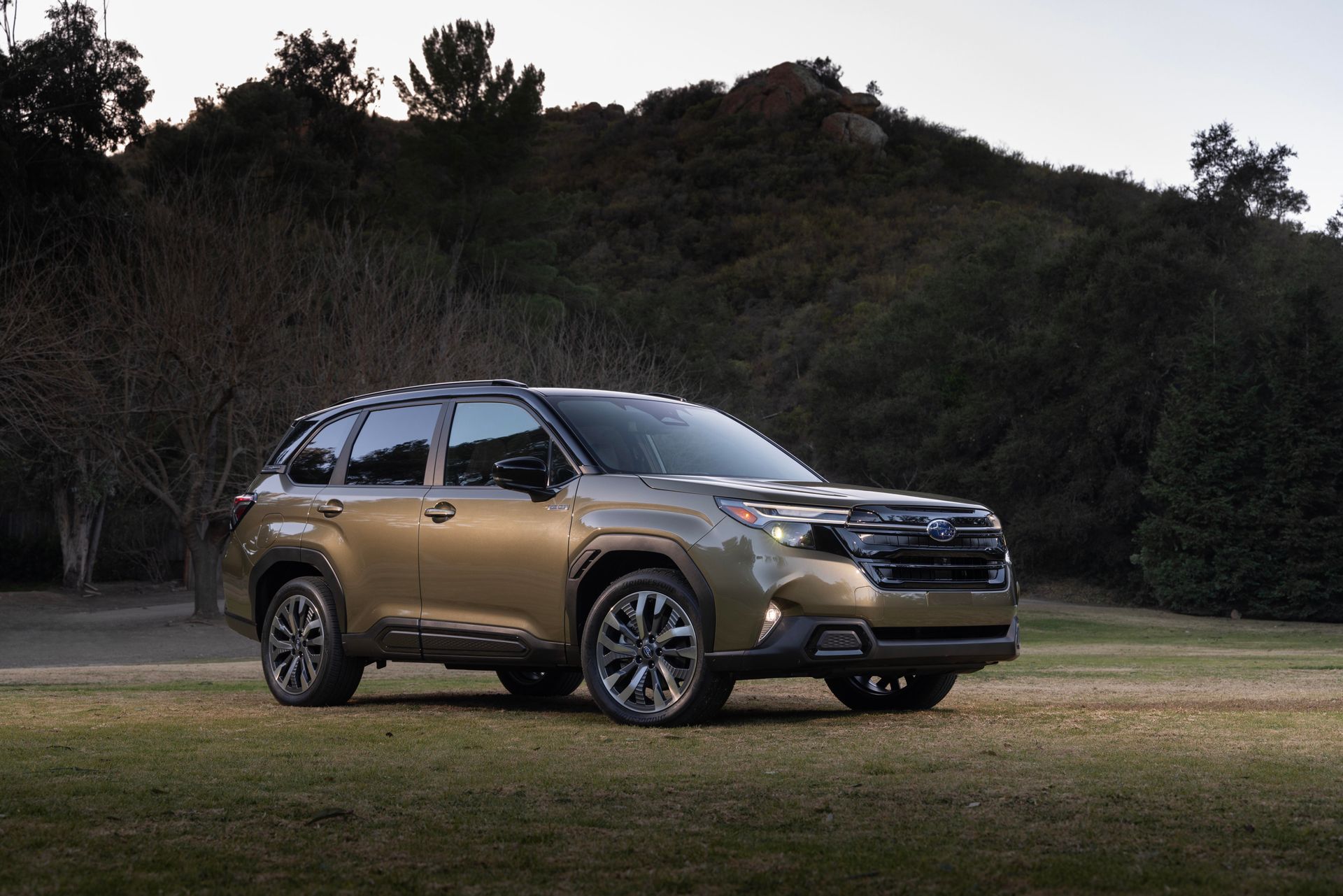
The 2026 Subaru Forester Hybrid carries a U.S. News rating of 8.6 out of 10 and a safety score of 9.8 out of 10, the highest safety rating on this list and one of the highest in the compact SUV segment. The safety score reflects a strong showing across crash-test programs and a comprehensive suite of standard and available active-safety technologies. The buyer whose primary concern in a compact SUV is crash avoidance and occupant protection will find the Forester Hybrid the most defensible choice on this list.
The all-wheel drive comes standard, and Subaru’s symmetrical all-wheel-drive system provides more genuine off-road capability than the RAV4’s optional all-wheel-drive system. The cabin is more upscale and comfortable than the RAV4’s interior, giving the Forester Hybrid a quality advantage in the occupant environment that the RAV4 buyer trading up from a previous generation will notice immediately. Managing Editor Alex Kwanten praises the Forester Hybrid’s value for 2026, noting a price reduction that narrows the gap between the gas-only Forester and this more efficient and more powerful hybrid variant, and describing it as an excellent family crossover at a solid value proposition.
The Forester Hybrid’s fuel economy trails the RAV4’s 44 combined miles per gallon, which is the RAV4’s most durable competitive advantage on the efficiency dimension. The buyer who prioritizes safety over fuel economy will find the Forester Hybrid’s 9.8 safety rating a more meaningful distinction from the RAV4 than the fuel-economy gap works against it. The Forester Hybrid’s strongest safety credentials in the segment, combined with standard all-wheel drive and a more comfortable cabin, give it a specific profile that the RAV4, for all its strengths, does not replicate. The 2026 price reduction that Kwanten specifically notes gives the Forester Hybrid a more favorable value position relative to both the standard Forester and the RAV4 hybrid, making the safety and comfort premium it carries over both alternatives easier to justify on a cost-per-feature basis.
Credit: Subaru
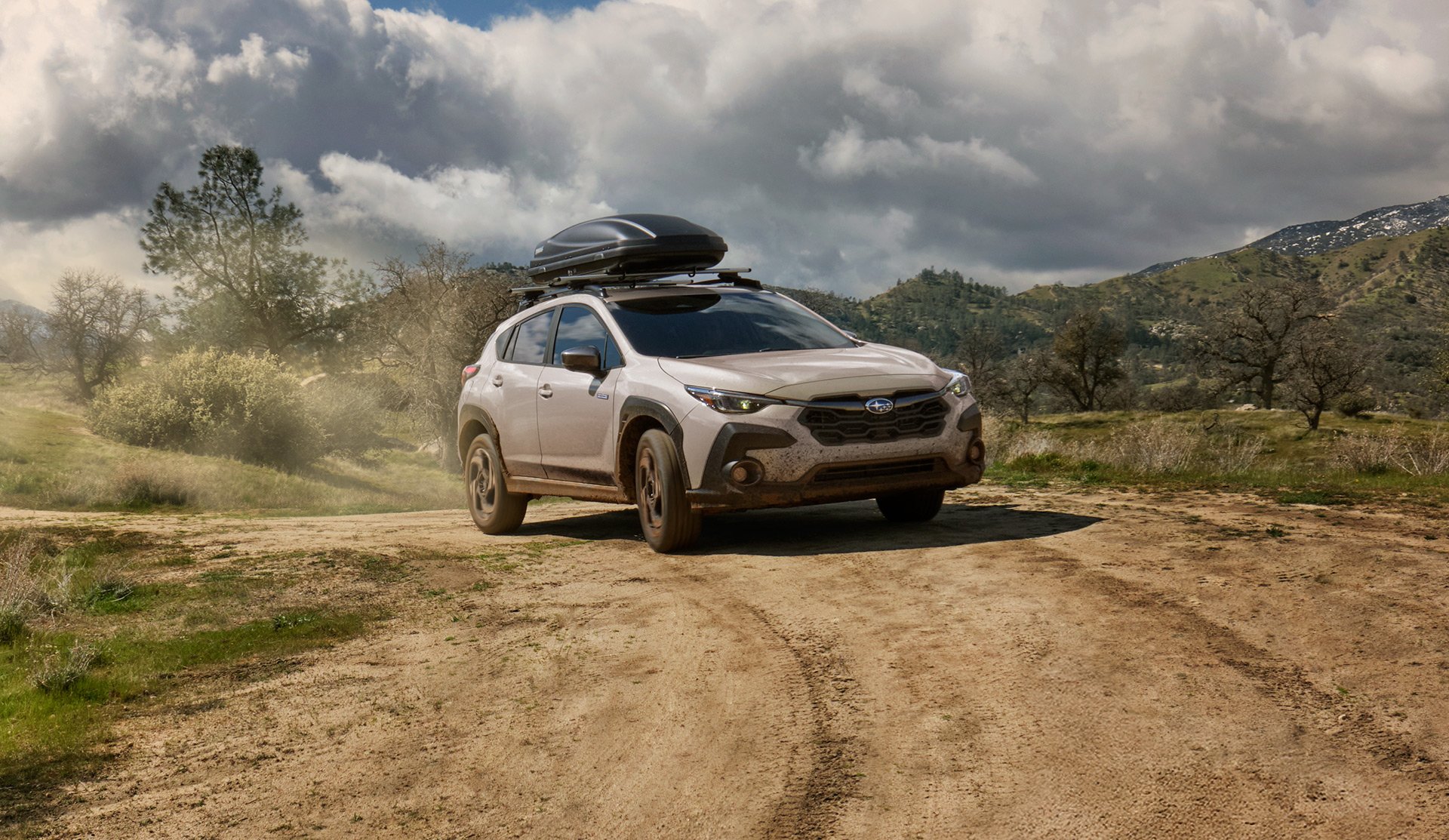
The 2026 Subaru Crosstrek has a U.S. News rating of 8.5 out of 10 and a reliability score of 85 out of 100, which outranks the RAV4 by a meaningful margin in this dimension. The Crosstrek is a subcompact crossover, a size classification smaller than the RAV4. The buyer who selects it accepts reduced passenger and cargo room in exchange for the reliability advantage, the lower starting price, and the standard all-wheel drive that Subaru equips across the Crosstrek lineup.
The powertrain is a modest four-cylinder whose power output can feel strained under heavy throttle or during highway passing maneuvers. Reviewer Emme Hall notes that the power delivery is consistent with comparable subcompact crossovers, meaning the Crosstrek is not underpowered for its class, even though a comparison to a full compact SUV like the RAV4 makes the difference apparent. The safety ratings are strong, and the standard all-wheel drive gives the Crosstrek winter weather and light off-road capability that many subcompact competitors offer only as an upgrade.
The Crosstrek Hybrid, reviewed separately from the standard model, gives buyers who want the Crosstrek’s reliability credentials with improved fuel economy a specific option within the Subaru lineup. The standard Crosstrek’s case is primarily for the reliability-focused buyer who can accept the subcompact dimensions and wants the standard all-wheel drive, the lower price, and the documented dependability record that the 85 reliability score represents. For that specific buyer, the Crosstrek is a more defensible RAV4 alternative than the reliability dimension alone suggests. The Subaru standard of standard all-wheel drive gives the Crosstrek a capability baseline that compact SUVs from most other brands deliver only at a higher trim level or as a paid upgrade, and the lower starting price, combined with the higher reliability score, gives the total ownership cost argument a specific shape: less to pay at acquisition, and less to pay in unscheduled repairs over the ownership period. That is the Crosstrek’s clearest case against the RAV4, and it is a substantial one for the right buyer.
-1-900x675.jpg)
Credit: Honda
The 2026 Honda $HMC CR-V carries a U.S. News rating of 8.9 out of 10 and is a finalist for the 2026 Best Compact SUV for the Money award, which gives it a competitive standing across the segment that the RAV4 wins only on fuel economy. The CR-V’s cabin comfort, cargo space, safety, and reliability all outscore the RAV4 in U.S. News’s scoring, which makes it the most broadly competitive RAV4 alternative on this list for the buyer who prioritizes overall quality over the specific fuel economy advantage that the RAV4 hybrid provides.
Managing Editor Alex Kwanten describes the CR-V as well-built and comfortable, with a functional, durable interior that is visually unexciting and fitted with notable plastic trim. Honda’s infotainment system is straightforward and accessible, which makes it easier to use intuitively than more complex systems, but also gives the technology presentation a simplicity that buyers accustomed to more visually elaborate systems may find underwhelming. The 2026 refresh updates the CR-V with new features and technology that narrow the gap with the competition.
The CR-V’s position as Honda’s top-selling model and the RAV4’s position as the compact SUV segment’s overall leader give the two vehicles a specific competitive significance: they are the two vehicles most compact SUV shoppers will compare directly, and the CR-V’s stronger scores in comfort, cargo, safety, and reliability make a compelling case for the buyer who prioritizes those dimensions over the RAV4 hybrid’s fuel economy advantage. The Best Compact SUV for the Money finalist status reflects U.S. News’s judgment that the CR-V’s quality-per-dollar ratio is among the strongest in the compact SUV class, which gives the buyer who has been considering the RAV4 as the default choice a specific and documented reason to reconsider the default choice. The 2026 refresh’s technology updates also close a gap left by the previous CR-V’s relatively modest infotainment presentation, which fell short against competitors whose screen sizes and system complexity set a higher visual bar.
Credit: Nissan
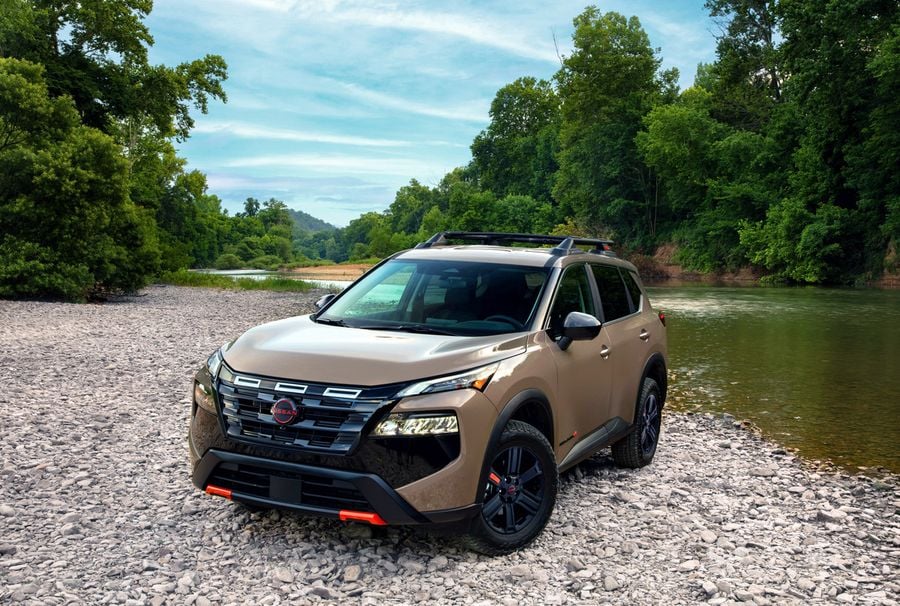
The 2026 Nissan Rogue carries a U.S. News rating of 8.8 out of 10 and outscores the RAV4 specifically in safety, reliability, and interior comfort by U.S. News’s measurement. The Rogue is also a finalist for both the 2026 Best Compact SUV for the Money and Best Compact SUV for Families awards, which gives it a breadth of competitive recognition that the RAV4-focused buyer who wants a value-oriented alternative will find directly relevant.
The powertrain is a turbocharged three-cylinder engine that gives the Rogue somewhat less power than the RAV4 and a driving character tuned specifically for comfort over performance. Reviewer Mike Hagerty found that real-world fuel economy in his testing came close to the EPA’s estimated ratings, which is a practical quality in a segment where advertised efficiency numbers sometimes diverge from achievable results in normal driving. The Rogue is not a driver’s SUV, but it is a comfortable, well-rounded compact crossover whose long-trip passenger experience and real-world fuel economy track well against stated claims.
Front-wheel drive is standard, and all-wheel drive is available, so the buyer who needs all-weather capability must specify it at purchase. The Rogue’s competitive case against the RAV4 is most compelling for the buyer who wants strong safety and reliability scores in a compact SUV at a price that the RAV4 hybrid’s standard powertrain upgrade places above the Rogue’s accessible starting point. The Rogue’s dual finalist status, for both the Best Compact SUV for the Money and Best Compact SUV for Families awards, gives it an unusual breadth of competitive recognition for a single vehicle: it is simultaneously one of the best-value and one of the most family-appropriate options in the compact SUV segment, which means the buyer who optimizes for either dimension arrives at the Rogue through a different path and finds the same well-rounded, comfort-tuned compact SUV waiting at the destination. The Rogue’s real-world fuel-economy consistency, documented in Hagerty’s testing, gives the efficiency claims practical credibility that many competitors’ EPA numbers do not sustain in normal driving.
Credit: Subaru
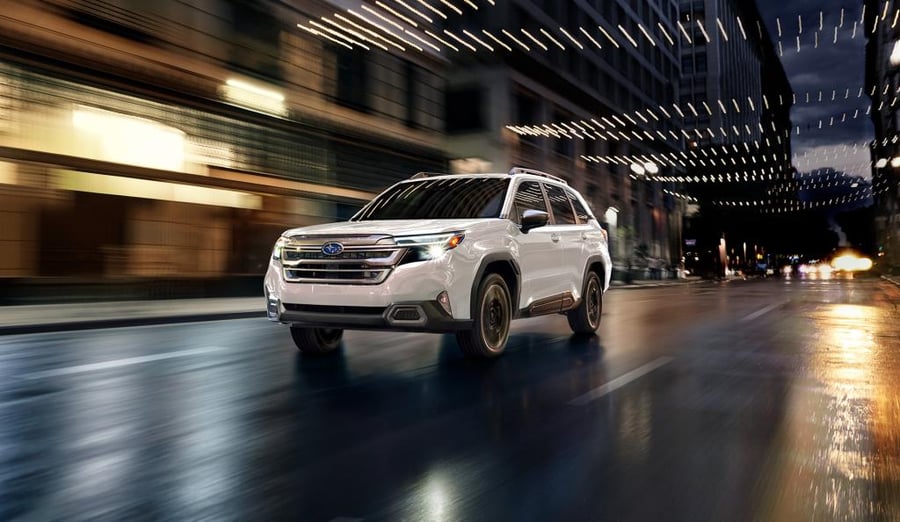
The 2026 Subaru Forester carries a U.S. News rating of 8.6 out of 10 and shares its hybrid sibling's safety credentials at a lower starting price. The recently redesigned Forester brings a fully updated platform, and reviewer James Gilboy describes it as a refined, comfortable SUV with strong driving dynamics and an interior specifically tailored to outdoor-oriented buyers. The standard all-wheel drive with genuine off-road capability gives the Forester a functional advantage over the RAV4 in the situations that the outdoor buyer specifically needs: unpaved access roads, trailhead parking, and light off-road terrain that the RAV4’s all-wheel system handles less confidently.
The cabin is more comfortable than the RAV4’s interior, and the build quality reflects the Subaru standard of durability that the brand’s outdoor-oriented buyer base demands. The Forester’s safety score is nearly as strong as the Forester Hybrid’s 9.8 rating, giving the non-hybrid version a safety credential that the RAV4 does not match, despite the RAV4’s strong overall competitive position. The base price is lower than the RAV4’s, giving the Forester a value argument for buyers who want the compact SUV segment’s strongest safety scores at a lower acquisition cost.
The limitation relative to the RAV4 is power: the non-hybrid Forester’s four-cylinder produces less output than both the RAV4 and the Forester Hybrid. The buyer who values the Forester’s specific advantages, standard all-wheel drive capability, superior safety scores, and a more comfort-focused cabin over the RAV4’s fuel economy and powertrain performance will find the non-hybrid Forester a well-reasoned purchase at its price point. The lower starting price relative to both the RAV4 and the Forester Hybrid gives the standard Forester its clearest competitive positioning: more safety and more capable all-wheel drive than the RAV4, at a lower acquisition cost than either one, in exchange for less power and measurably lower fuel economy than the RAV4’s standard hybrid consistently delivers in real-world driving conditions.
Credit: Toyota
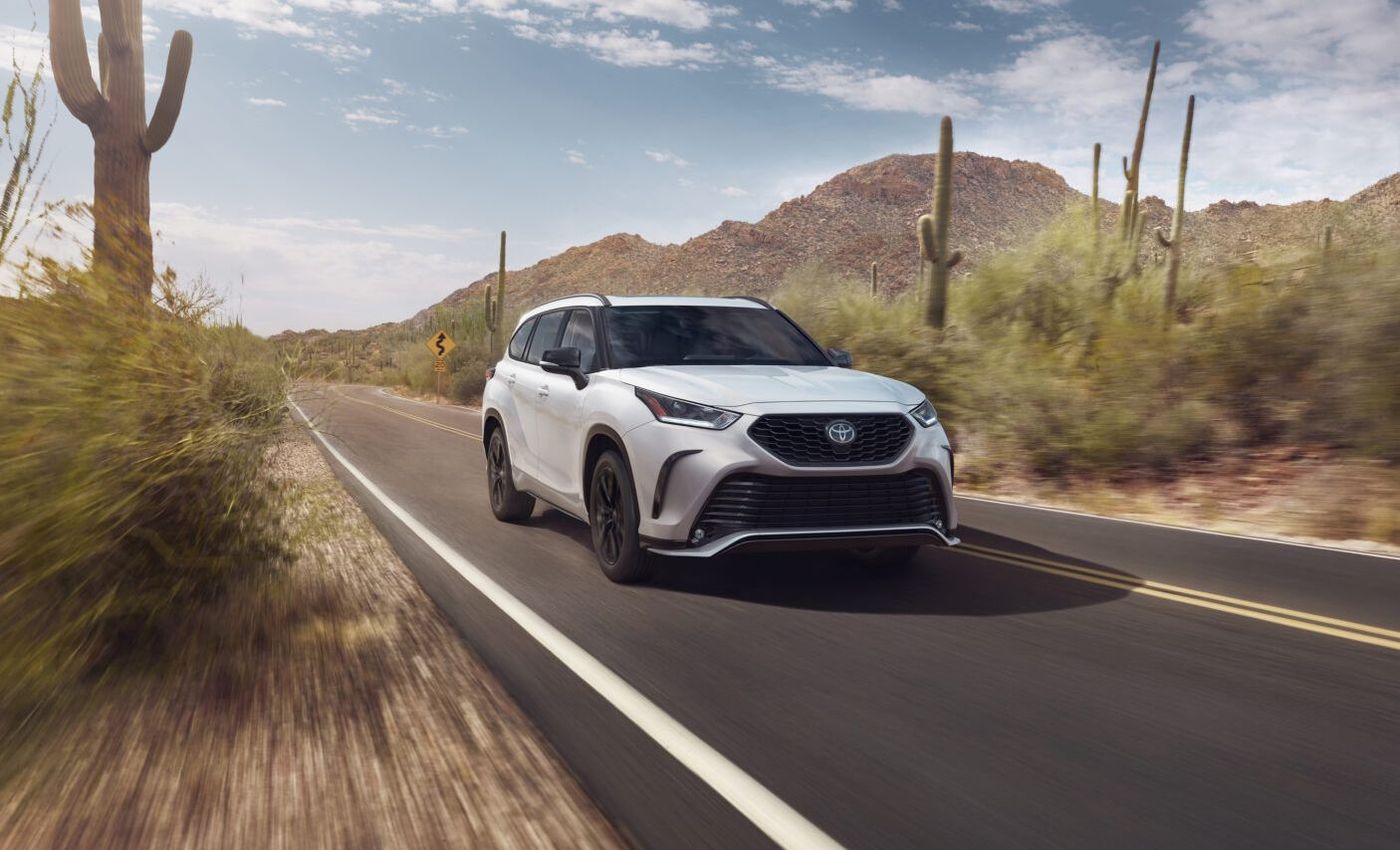
The 2026 Toyota $TM Highlander carries a U.S. News rating of 8.6 out of 10 and serves a specific RAV4 upgrade scenario: the family that has outgrown the RAV4’s two-row configuration and needs the third row that the larger midsize SUV provides. The Highlander’s three rows of seating and standard all-wheel drive give it the family capacity that the RAV4 cannot offer, and the Toyota reliability record and resale value that RAV4 owners have come to rely on carry forward into the Highlander platform.
The fuel economy is decent for a midsize SUV with all-wheel drive, though it falls well short of the RAV4 hybrid’s efficiency figures. The Highlander Hybrid, reviewed separately, offers the efficiency-focused buyer a more capable powertrain option within the same body. Contributing reviewer Brontë Wieland describes the Highlander as a family hauler that feels most at home on city streets despite its towing capacity and mild all-terrain capability, which is an honest characterization of the vehicle’s intended use case and a useful signal for buyers considering the Highlander for serious off-road or towing applications.
The powertrain is consistent across all non-hybrid Highlander trims, which simplifies the purchase decision to trim-level selection rather than powertrain specification. The base trim delivers the best value in the lineup, with heated front seats and flexible seating configurations available at the entry level. The price premium over the RAV4 is substantial, and the buyer who selects the Highlander is paying specifically for the third row and the midsize SUV’s additional interior volume. The Toyota reliability and resale value credentials that the RAV4’s ownership record has established carry forward into the Highlander platform, which gives the buyer who moves from one to the other a consistent brand-level ownership experience alongside the capacity upgrade. The Highlander’s positioning as Toyota’s flagship three-row family SUV also means it benefits from the same engineering standards and quality investment that have sustained the RAV4’s long-term market leadership.
Credit: Toyota
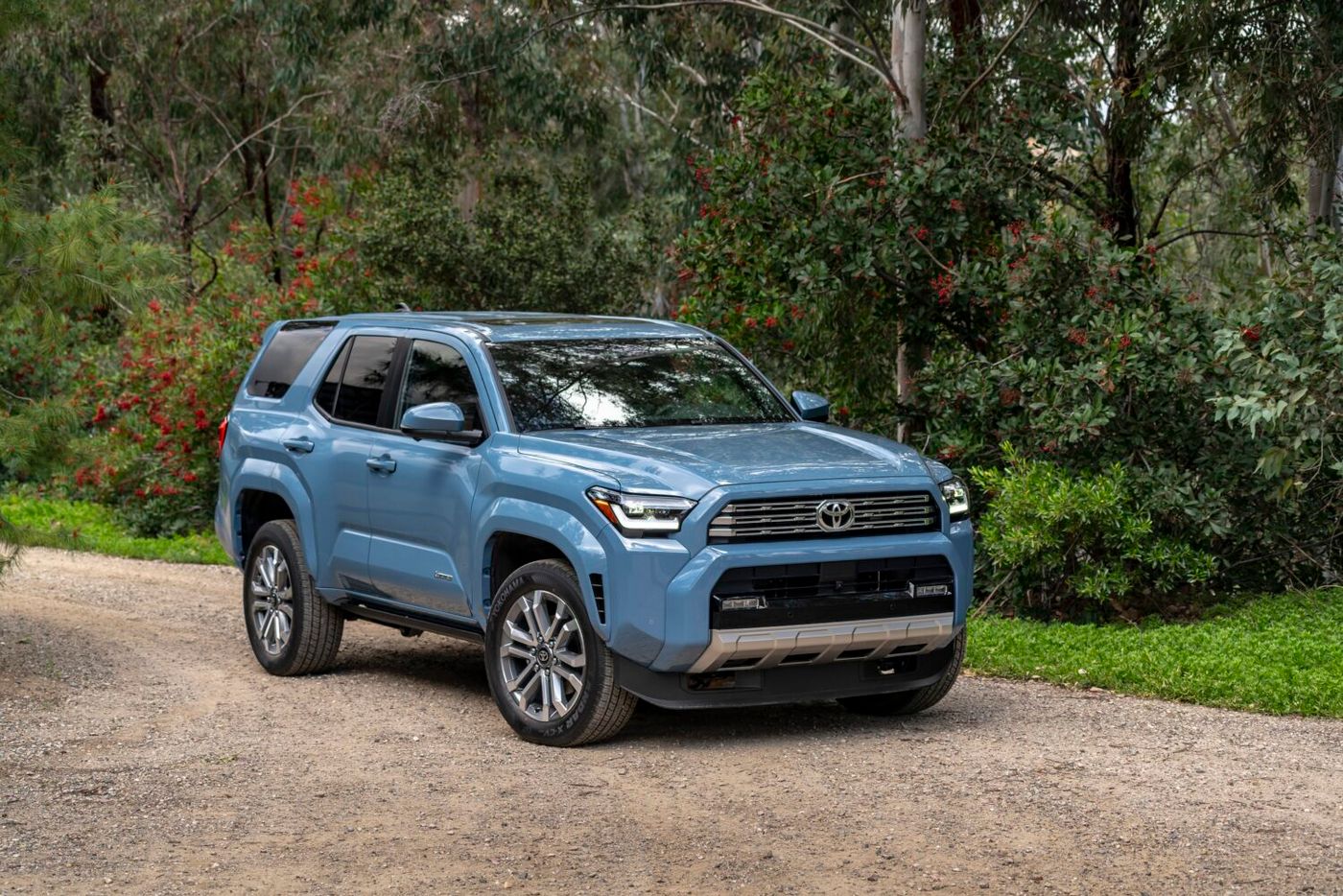
The 2026 Toyota $TM 4Runner carries a U.S. News rating of 8.3 out of 10 and represents the RAV4 upgrade path for buyers whose primary interest is genuine off-road capability that the RAV4, despite being competent on mild trails, does not deliver at the same technical level. The 4Runner’s body-on-frame construction gives it a structural durability advantage in demanding off-road conditions that the RAV4’s unibody platform cannot replicate, and the available powertrain and hardware upgrades give the 4Runner a capability ceiling that extends well above the standard compact SUV configuration.
Senior editor John Vincent notes that the 4Runner has a dedicated and loyal following, and that the potentially high configured prices reflect it: the buyer who wants the 4Runner’s specific capability credentials and off-road heritage has concluded that those qualities are worth the premium over the RAV4’s lower purchase price and significantly better fuel economy. The 4Runner’s disadvantages relative to the RAV4 are real and should be weighed honestly: the truck-based frame produces a rough ride on pavement, neither the standard nor the hybrid powertrain is fuel-efficient, and the optional third row is too cramped for comfortable adult use.
The 4Runner is the right alternative for the specific buyer whose primary need is trail capability beyond what the RAV4 provides, and who can accept the ride quality, fuel economy, and pavement-driving dynamics that body-on-frame construction entails as its trade-off. For everyone else, the RAV4 or the alternatives earlier on this list will deliver a more balanced compact SUV ownership experience. The 4Runner’s loyal following, which Vincent specifically identifies as the factor that justifies the premium pricing, reflects the specific quality of a vehicle whose off-road credentials and long-term durability give it a compelling lifetime ownership case that the more road-focused compact SUVs on this list do not make in the same terms, at the same depth of off-road engineering commitment, or with the same body-on-frame chassis durability over extended and repeated hard use.