From Borobudur's world's largest Buddhist temple to Raja Ampat's coral reefs where new species records are still being set
Simon Spring / Unsplash
Indonesia is a nation of over 17,000 islands, and the overwhelming international concentration of tourism on a single one of them, Bali, has produced a paradox: one of the world’s most geographically diverse countries is experienced by most of its international visitors as a single island whose specific version of Indonesian culture, landscape, and hospitality represents only a small fraction of what the archipelago actually contains. The rice terraces and temple culture of Bali are genuinely extraordinary, but they are no more representative of Indonesia than Manhattan is representative of the United States.
The case for going beyond Bali is made most concretely by the scale of what the other islands offer. The world’s largest Buddhist temple is in Java. The world’s most biodiverse coral reef system is in Raja Ampat. The only surviving population of Komodo dragons lives in a national park accessible from Flores. Wild orangutans inhabit the rainforests of Borneo in the Indonesian territory of Kalimantan. An active volcano in East Java allows visitors to stand at its rim and look directly into the smoking crater. Sumba Island has one of the world’s most celebrated surf resorts alongside a living traditional culture whose architecture and ceremonial practices are unlike anything in Bali. The diversity of experience available across the Indonesian archipelago beyond the most famous island is genuinely extraordinary, and accessing it requires only the willingness to take an additional domestic flight.
The six destinations below appear in Travel + Leisure and are recommended by a Travel + Leisure A-List travel advisor of Indonesian heritage, whose professional focus is guiding clients to lesser-known destinations where the archipelago’s character is most fully expressed. Each offers something that Bali, for all its genuine and well-documented appeal, simply does not.
Utku Özen / Unsplash
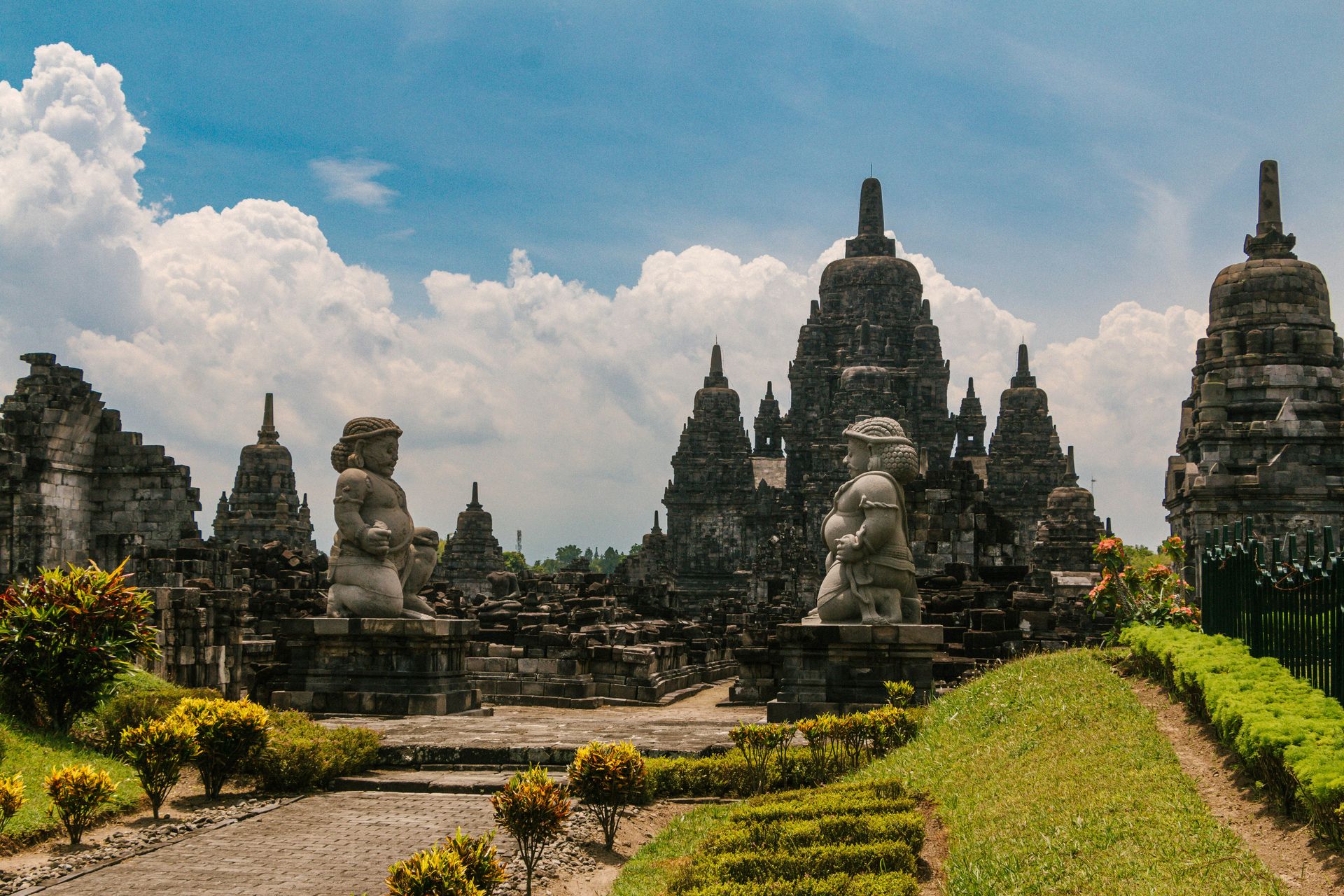
Yogyakarta, Java’s cultural capital in the center of the island, gives Indonesia its most significant historical destination: Borobudur, the world’s largest Buddhist temple and a UNESCO World Heritage Site, built in the 9th century during the Sailendra dynasty and comprising more than two million stone blocks arranged into nine stacked platforms representing the Buddhist cosmological universe. The temple’s scale is only fully appreciated in person: the upper terraces, where 72 stupas each contain a statue of the Buddha, give the structure a crown visible from considerable distance across the surrounding agricultural plain, and the view from the upper platform across the central Javanese landscape at sunrise, when morning mist fills the valleys between the surrounding volcanoes, is among the most extraordinary architectural and natural spectacles in Asia.
Amanjiwo, an Aman Resort positioned with direct views of Borobudur across a private valley, gives the destination its most refined accommodation option: private pool suites facing the temple give guests the experience of watching the light change on the structure across the day, from the golden dawn light that the sunrise visit rewards to the warm late afternoon illumination that gives the stone carvings their most dimensional quality. The rice fields that surround the resort property give the setting a living agricultural landscape, and the soursop martini sunset at Amanjiwo’s field tables, with Mount Merapi smoking in the background, offers a specific version of Javanese hospitality that no hotel farther from the temple can replicate.
The surrounding cultural geography extends the Yogyakarta visit beyond Borobudur: the village of Candirejo, an hour northwest, gives visitors access to batik craft production in the traditional Javanese form that the city’s commercial batik shops represent in a more transactional register. The Selogriyo Temple, reached by a three-hour hike through rice terraces and jungle, gives serious walkers a secondary archaeological site of genuine quality in a setting whose remoteness gives the arrival a sense of discovery that Borobudur’s UNESCO visitor management necessarily prevents.
Simon Spring / Unsplash
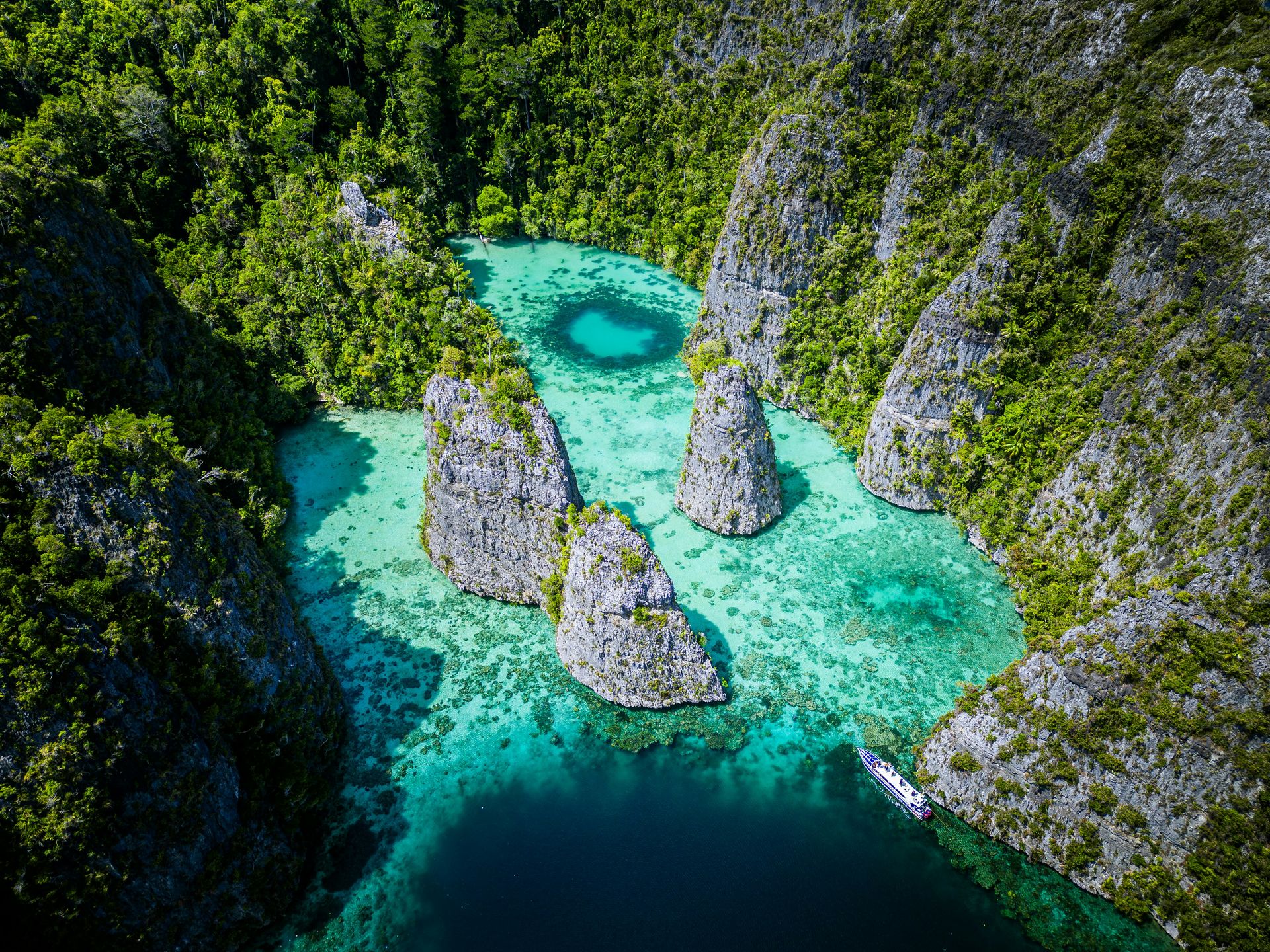
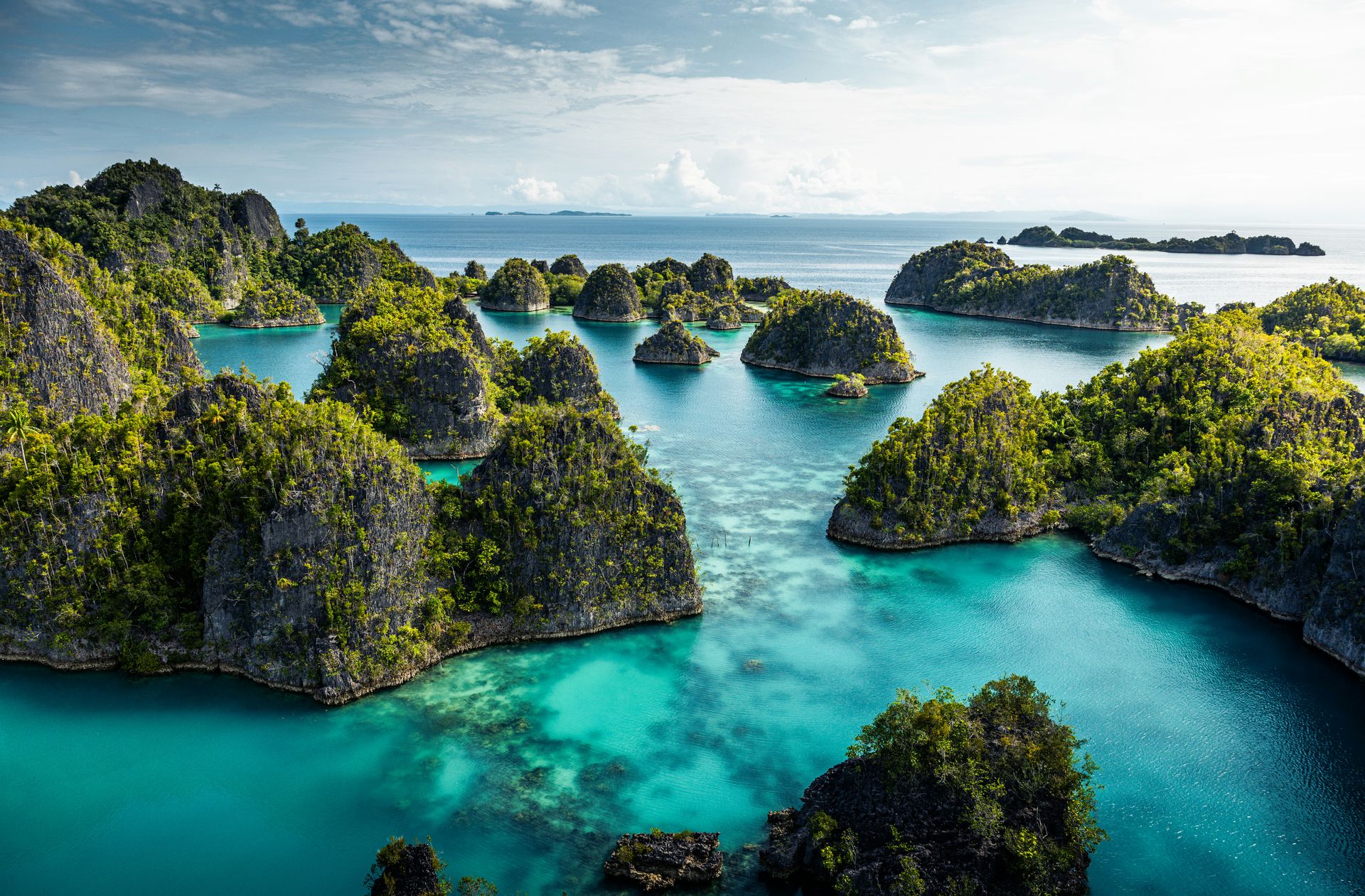
Raja Ampat, an archipelago of approximately 1,500 small islands off the northwestern tip of West Papua, contains the most biodiverse marine ecosystem on earth: the coral reef system here is estimated to support over 600 coral species and more than 1,700 fish species, figures that no other marine environment in the world approaches. The geographic position of Raja Ampat at the center of the Coral Triangle, where the Pacific and Indian Oceans exchange water and species through the Indonesian archipelago, gives the marine biodiversity its specific scientific explanation and gives the snorkeling and diving a quality that even experienced divers consistently describe as unlike anything they have encountered elsewhere in the world.
A private charter through companies such as Rascal Voyages gives the Raja Ampat experience its most complete version: a liveaboard vessel that moves between islands, reefs, and hidden lagoons according to weather and marine conditions, with expert guides who know the specific dive and snorkel sites where the density of reef sharks, turtles, and iridescent fish is highest. The barefoot luxury format that these charters provide, with grilled seafood prepared on deck under the stars and kayak access to hidden lagoons reachable only by small craft, gives the maritime experience a social and culinary dimension that hotel-based dive operations cannot replicate.
The absence of crowds gives Raja Ampat a quality that the world’s other great marine destinations have lost to their own fame. Very few international visitors reach West Papua, which requires multiple domestic flights from Bali or Jakarta and a final boat transfer to the islands. The logistical investment is the condition that maintains the reef’s health, the beach’s emptiness, and the atmosphere of being in a genuinely remote part of the world where the natural environment has not been significantly altered by tourism infrastructure. For serious divers and snorkelers who have exhausted the famous sites of the Red Sea, the Maldives, and the Great Barrier Reef, Raja Ampat offers the only marine environment on earth that consistently produces new species records and gives experienced underwater naturalists encounters they have not had before.
FIFANI CAHYADI / Unsplash
Labuan Bajo, a fishing town on the western tip of Flores Island, gives travelers the entry point into Komodo National Park, a protected area spanning the Lesser Sunda Islands that is the only remaining habitat of the Komodo dragon, the world’s largest lizard. Komodo dragons, which can reach three meters in length and whose saliva carries bacteria that have historically been understood as the mechanism of their predatory effectiveness, are observable at close range on guided treks through the park’s scrub vegetation on both Komodo and Rinca islands. The experience of walking at ground level among the world’s largest lizards, with only a forked stick and a ranger between the visitor and the animal, gives Komodo National Park a wildlife encounter whose specific physical reality no zoo or nature documentary preparation fully anticipates.
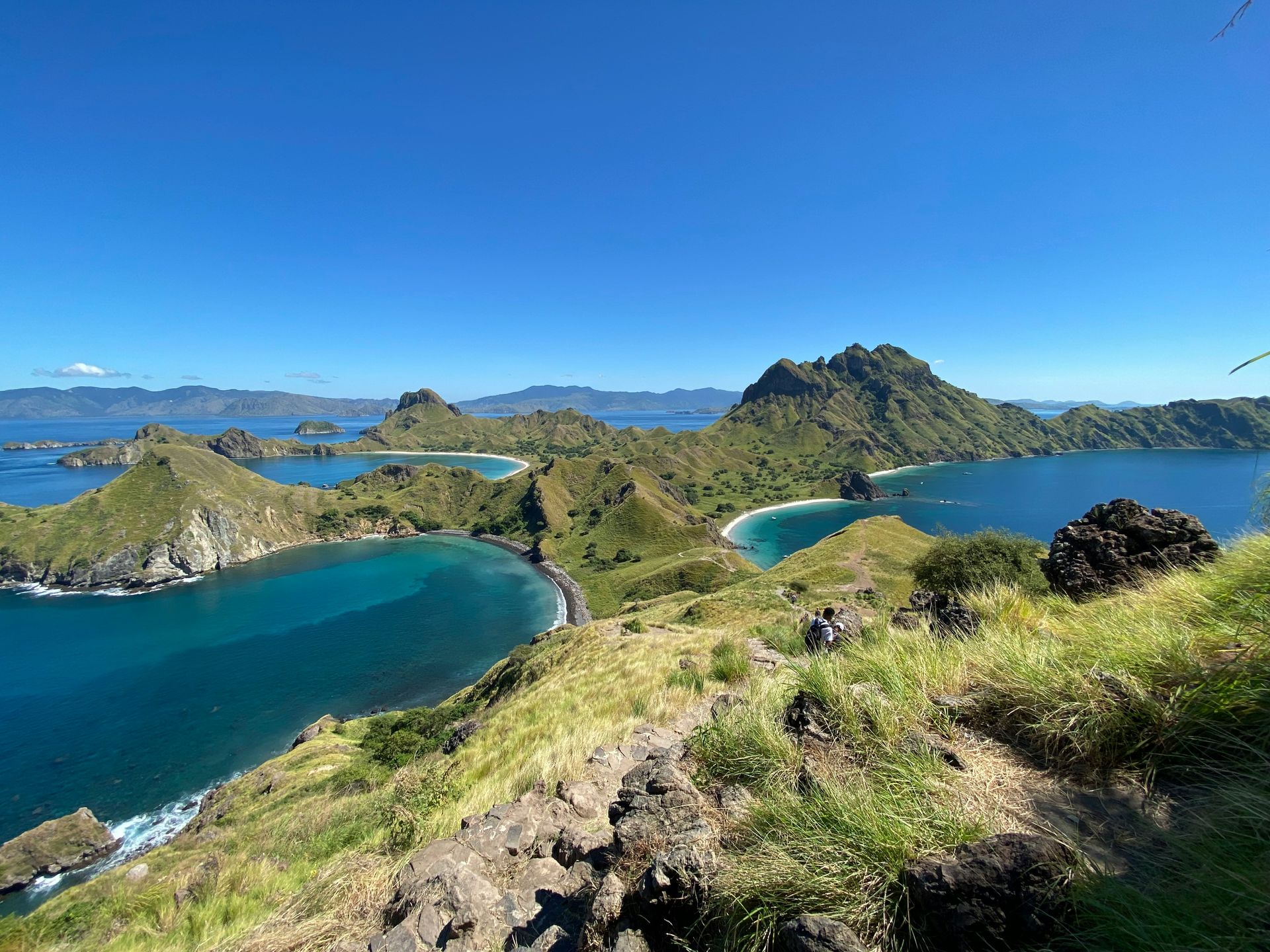
The marine environment within the park gives the destination a second world-class natural experience: manta rays congregate in the waters around the islands in concentrations that make encounters on snorkeling and diving excursions essentially guaranteed during the right season, and the underwater topography of the park’s channels gives experienced divers access to drift diving conditions whose current speeds and marine life density are among the strongest in Indonesia. The hike to Padar Island’s summit, where the panoramic view across three bays of different water colors offers one of the most photographed landscapes in the Indonesian archipelago, extends the park visit into a third distinct program alongside dragon trekking and marine activities.
Ta’aktana, a Luxury Collection Resort in Labuan Bajo, provides the destination with an accommodation base, with overwater villas, infinity pools, and a farm-to-table Indonesian restaurant, offering guests the comfort from which to engage in the park’s more physically demanding activities. The resort’s contemporary interpretation of Indonesian cuisine, using ingredients sourced from local farmers and fishermen, gives the dining program a connection to the surrounding Flores culture that generic resort menus do not provide. For travelers whose Indonesia itinerary needs to deliver both extraordinary wildlife and exceptional hospitality infrastructure within the same destination, Labuan Bajo and Komodo National Park make the strongest case available in the archipelago.
Deepavali Gaind / Unsplash
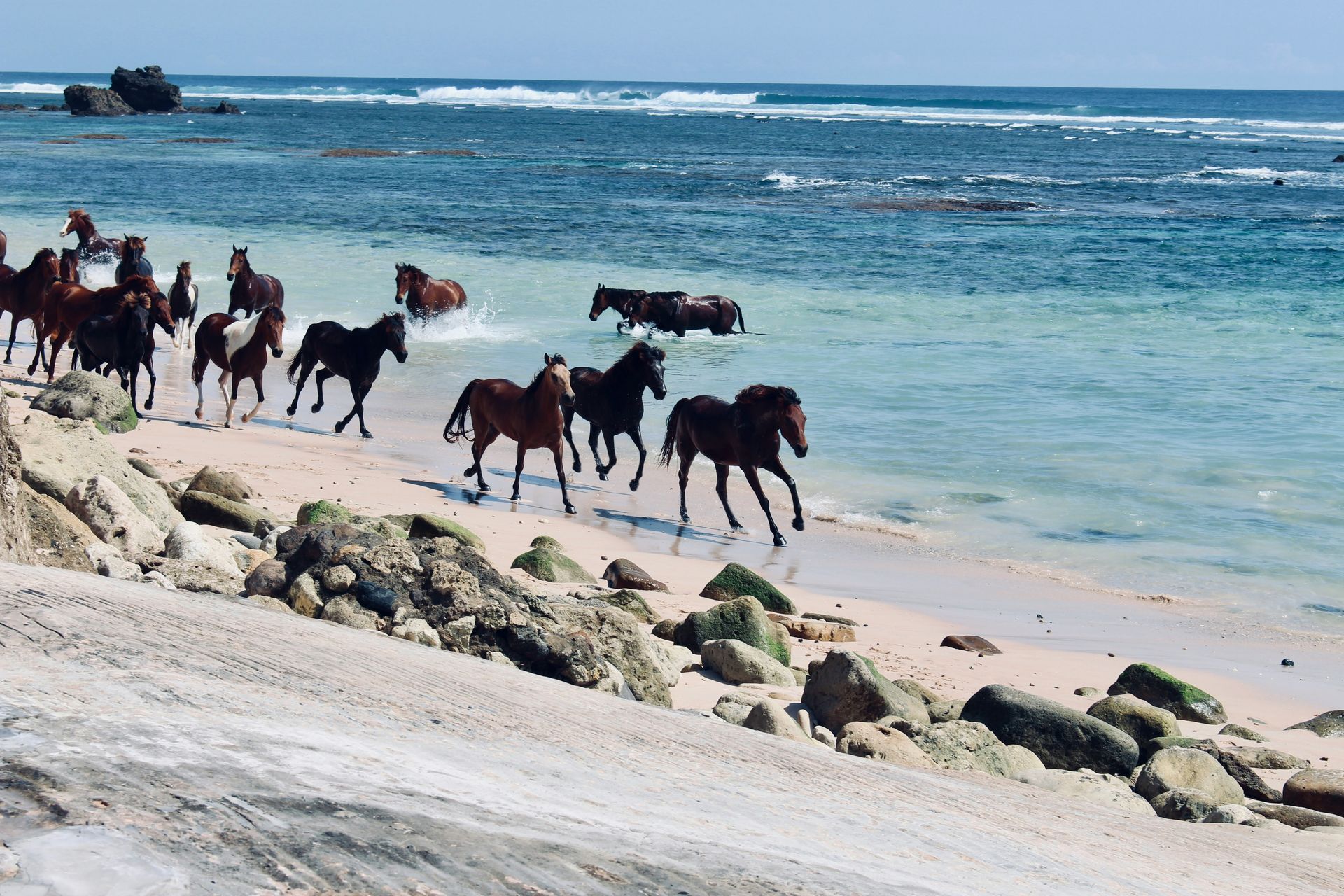
Sumba, a relatively large island in the eastern part of the Indonesian archipelago, offers visitors a rare experience: a destination where international tourism has arrived in the form of genuinely world-class hospitality without displacing or overshadowing the living traditional culture that gives the island its distinct character. The Sumbanese traditional architecture, whose high-roofed clan houses are organized in hilltop villages according to ancestral custom, and the ceremonial practices that include elaborate funeral rites and the pasola festival, in which riders on horseback hurl wooden spears at each other in a ritualized combat tied to the rice planting cycle, give the island a cultural depth that no amount of resort development has absorbed into generic Indonesian tourism.
Nihi Sumba, consistently ranked among the world’s best hotels, gives the destination its accommodation centerpiece: picture-perfect surf breaks accessible from the resort, horse riding into the ocean, jungle waterfall treks, and cliffside seafood barbecue dinners give the physical program a range across different intensities and interests that resort properties rarely match. The artisan workshops and intimate village visits that the resort facilitates give guests access to the Sumbanese cultural life sustained by the island’s traditional communities, independent of the tourism economy, which imbues the cultural encounters with an authenticity that staged demonstrations at more heavily touristed destinations do not replicate.
The dining program at Nihi Sumba gives food its most specifically Indonesian expression: menus that unveil authentic Indonesian flavors and customs alongside locally caught seafood give the dining a regional specificity that Bali’s more internationally calibrated restaurant culture has largely replaced with a global palate. For travelers whose interest in Indonesia extends beyond Bali’s tourism dominance, Sumba offers the clearest and most complete alternative within the archipelago. The island’s specific combination of world-class resort infrastructure, living traditional culture, surf quality, and natural landscape gives it a range of appeal that no other Indonesian island outside Bali offers at comparable depth, and the relative difficulty of reaching it from Bali, which requires a direct flight of about two hours, maintains the quality of the experience by keeping the visitor numbers significantly below what the destination’s quality would otherwise attract.
Alessio Roversi / Unsplash
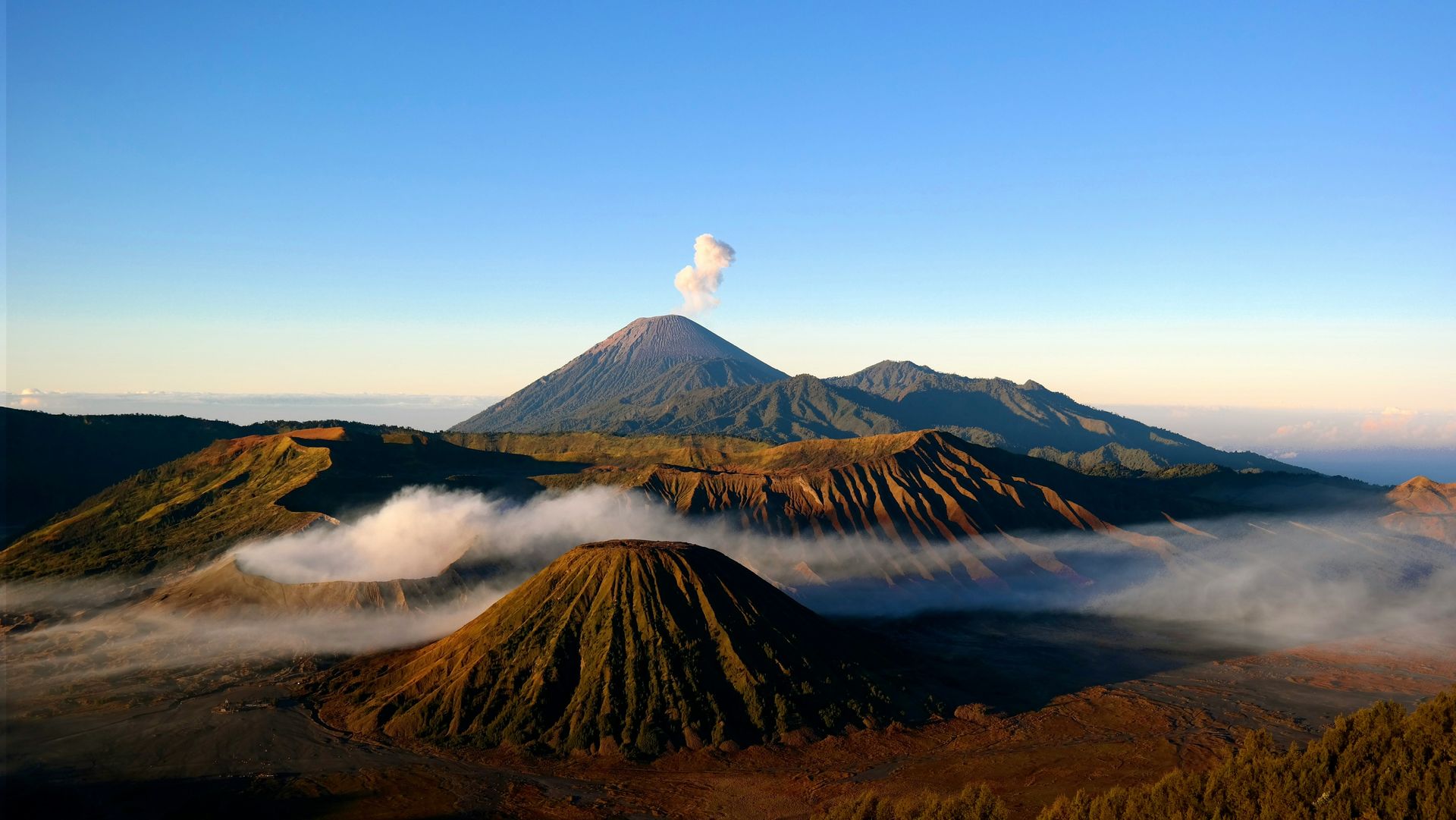
Mount Bromo, an active volcano in the Tengger massif in East Java approximately two hours from the city of Malang, gives travelers one of the world’s most accessible active volcanic experiences: a guided sunrise hike that begins with a jeep ride to King Kong Hill for the initial panoramic view of the smoking crater against the dawn sky, followed by a descent and approach to the volcano’s base and a climb of the staircase that leads directly to the rim, where the smoking crater is visible below. The ability to stand at the rim of a live volcano and look into the crater, in conditions managed by expert local guides who know the volcano’s current activity level, gives Mount Bromo a physical encounter with volcanic geology that most volcanic national parks, which restrict visitor access to safe distances, do not permit.
The Tengger Sand Sea, the vast caldera floor of volcanic sand that surrounds Bromo and the other volcanoes of the massif, gives the landscape an otherworldly quality that the sunrise light amplifies into one of the most visually extraordinary landscapes most visitors have encountered. The mist that fills the caldera in the pre-dawn hours, pierced by the volcanic peaks as the sun rises, gives the King Kong Hill viewpoint its iconic visual: a photograph that has become one of the most recognized images of Indonesian landscape without the destination itself having become overcrowded with the visitors that the image would suggest.
The broader Tengger massif contains Mount Semeru, the highest peak in Java, whose active summit gives experienced mountaineers a more demanding volcanic objective adjacent to Bromo, and the traditional Tengger people, descendants of the Hindu Majapahit kingdom who have maintained their culture and religion in the area while the surrounding Javanese culture converted to Islam, give the region a cultural dimension specific to this volcanic landscape that adds historical depth to the geological spectacle.
Mochamad Airef / Unsplash
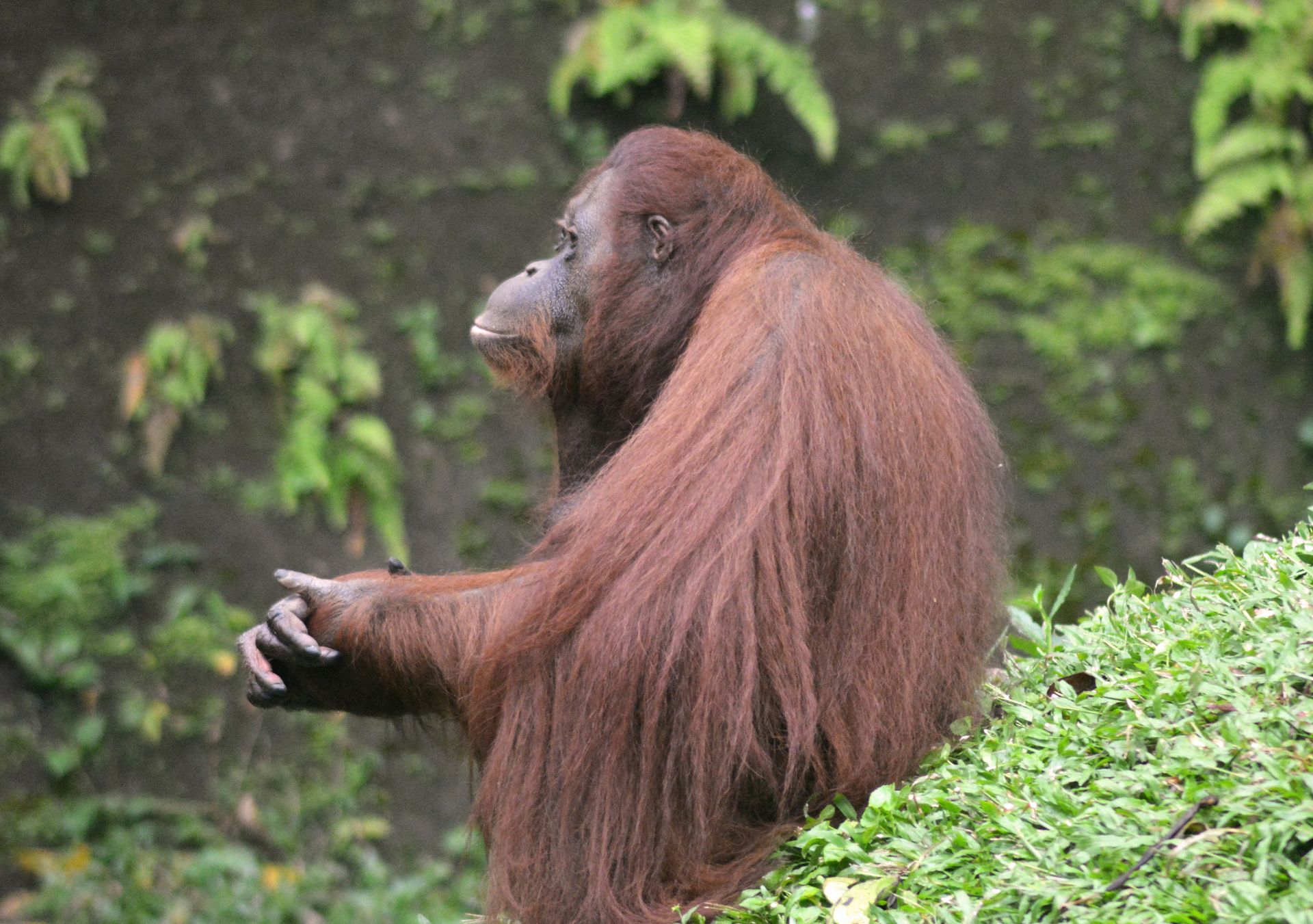
Kalimantan, the Indonesian portion of Borneo, offers travelers access to one of the world’s oldest and most biodiverse rainforests on an island that is the third-largest in the world, and whose jungle interior has been less comprehensively explored than any comparable landmass outside Antarctica. Tanjung Puting National Park in Central Kalimantan, accessible by gliding down the Sekonyer River on a private klotok, a traditional wooden houseboat equipped with modern accommodation and crew, gives visitors the specific wildlife encounter that Borneo’s remaining rainforest is most celebrated for: wild orangutans observed in the forest canopy from the river, in conditions where the animals have not been habituated to close human contact and where the sighting carries the quality of genuine discovery rather than managed wildlife viewing.
Camp Leakey, within Tanjung Puting, gives the wildlife visit a conservation dimension: the research station established by Dr. Birute Galdikas in 1971, which has contributed more to the understanding of wild orangutan behavior than any other long-term study, gives visitors a direct glimpse into the ongoing conservation work that has given the park’s orangutan population protection across more than fifty years of research. The combination of wild sighting from the river and the research station visit gives the Kalimantan experience an educational depth that purely wildlife tourism programs do not provide.
The klotok format gives the journey its specific quality: sleeping under the stars with the sounds of the Bornean rainforest as the acoustic environment, waking to morning river mist and the first orangutan sightings of the day, and eating meals prepared by the boat’s cook using local ingredients gives the Kalimantan experience a total immersion in the forest landscape that land-based lodge accommodation, however comfortable, does not produce in the same terms. For travelers whose primary interest in Indonesia is the natural world rather than the cultural and beach experiences that dominate the Bali tourism circuit, Kalimantan offers the most extraordinary wildlife encounters in the archipelago.
