America's best dog-friendly beaches, from Carmel's off-leash surf to a fireworks-free Fourth of July in Cannon Beach
Anita Kot / Getty Images
Most beaches tolerate dogs the way a restaurant tolerates a crying baby. Minimal accommodation, a clear preference for the situation to resolve itself quickly, and a notable absence of dog-specific infrastructure define the experience at most American public beaches. A beach that is genuinely dog-friendly operates differently. It provides waste bags at every access point, doggie water fountains in the parking area, rinse stations for sandy coats, and designated off-leash zones where a dog can enter the surf without being tethered the whole time. The difference between a beach that technically allows dogs and a beach designed for dogs and their owners is the same as the difference between a hotel that accepts children and a hotel that builds a water park for them.
The practical considerations for traveling with a dog are also more demanding than those for traveling alone. Dogs require up-to-date vaccinations, a leash even at off-leash destinations, fresh water and a bowl on hot days, and owners who understand the difference between voice control and wishful thinking. Some beaches require a dog license. Some restrict beach access to morning and evening hours during summer. Some prohibit dogs in certain sections but allow them in others without restriction. Planning a dog-friendly beach trip requires reading the specific rules for each destination before arrival, because policies change seasonally and the cost of a violation — being turned away from a beach you drove hours to reach — is high.
The 10 destinations below come from U.S. News & World Report’s ranking of the best dog-friendly beaches in the U.S., which evaluated beaches based on the quality of dog-specific amenities, the flexibility of leash and access policies, the accommodations available for traveling pet owners, and the broader pet-friendliness of the surrounding towns and restaurants. The list spans both coasts, the Gulf of Mexico, and reaches from California and Oregon in the West to Florida and New Jersey in the East.
Pgiam / Getty Images
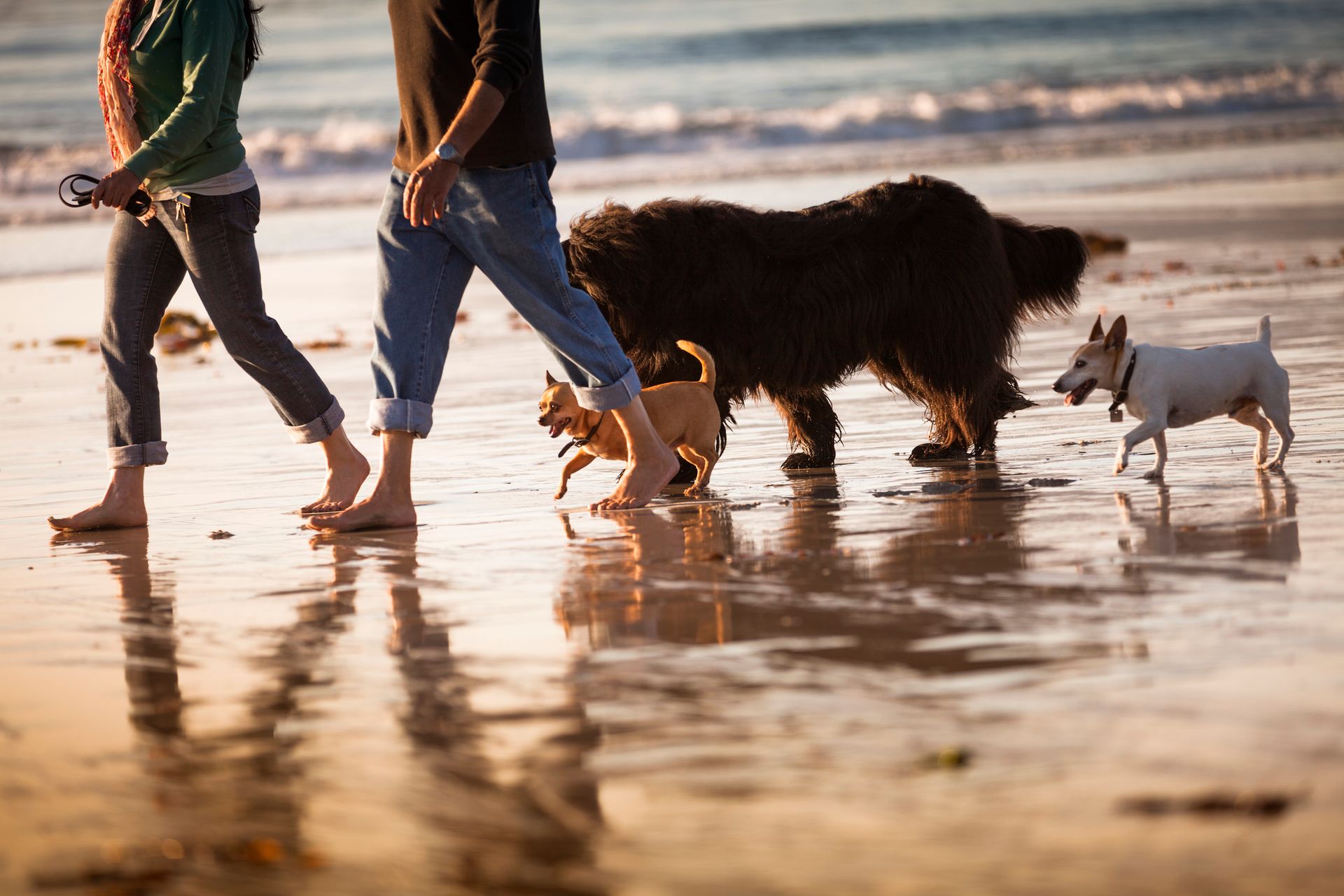
Carmel Beach in Carmel-by-the-Sea, California, along the central coast, allows dogs to run off-leash in the surf and socialize with other dogs on the sand, provided they respond to their owners' voice commands. The off-leash freedom distinguishes Carmel Beach from most public beaches in the U.S., which require leashes at all times. The only exception is the Scenic Road, which runs parallel to the beach, where dogs must be leashed at all times. The road meanders past spectacular coastal views, the town’s signature cypress trees, and the course at Pebble Beach Golf Links.
The beach infrastructure reflects the town’s commitment to its canine visitors. Waste bags branded as “Mutt Mitts” are available at every beach access point, eliminating the most common oversight of unprepared dog owners. Restaurants in Carmel-by-the-Sea welcome dogs at patio tables and, at many establishments, inside as well, with pup-specific menu items including steak tartare and grilled chicken. The Fountain of Woof in Carmel Plaza provides a dedicated drinking station for dogs in the town center.
More than 25 hotels in Carmel offer pet-friendly rooms with amenities that go well beyond the standard pet-fee-and-hope-for-the-best model. Properties provide “yappy hour” events, doggie room service menus, pup-oriented turndown service, and designated areas to wash off after beach time. The town itself is one of the most dog-friendly communities in the country. Shopkeepers greet dogs with biscuits and water bowls at many storefronts. Carmel-by-the-Sea sits south of Monterey, offering a central coast location that combines off-leash beach access, a walkable town center, and a hotel infrastructure built specifically for traveling with dogs. The 25-plus pet-friendly hotels with dedicated dog amenity programs give Carmel a concentration of pet hospitality that few coastal destinations anywhere in the U.S. match. A dog that checks into a Carmel hotel and finds a pup-oriented turndown service and a room service menu tailored to its preferences occupies a category of travel accommodation that most American beach towns cannot offer.
Chris Hackett / Getty Images
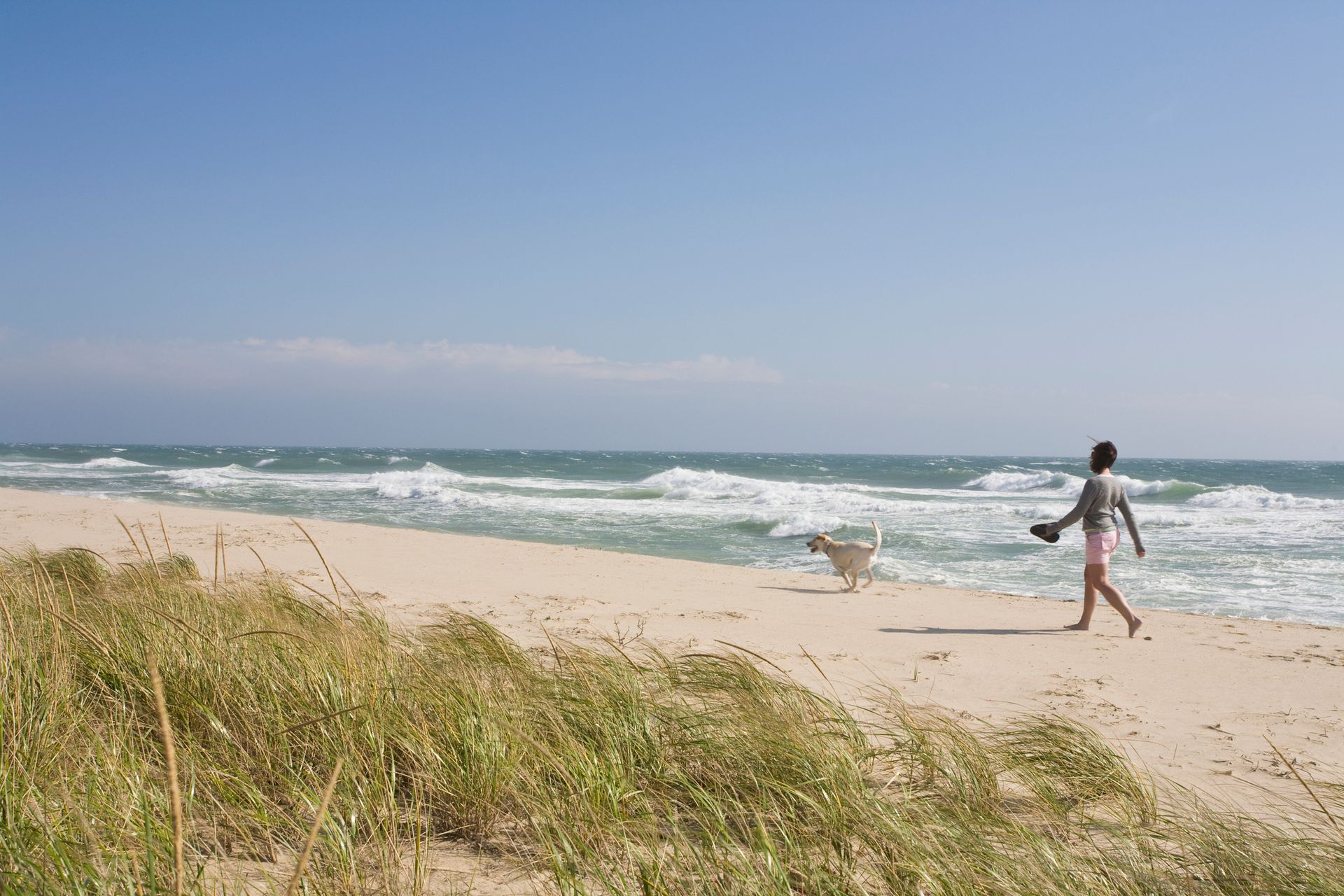
Cisco $CSCO Beach on the southern shore of Nantucket, Massachusetts, combines heavy surf and soft sand in a setting popular with both surfers and the younger crowd that gravitates to active coastal environments. A lifeguard is on duty in season, but the beach has no permanent facilities. Owners need to pack everything, including food and water for their dogs and themselves. Dogs must be licensed and kept on a leash on the beach, giving Cisco a slightly more regulated character than Carmel’s off-leash policy, but the setting delivers a raw coastal experience that purpose-built dog parks cannot replicate.
Getting to Nantucket with a dog requires some logistical planning, but the source confirms it is straightforward: Cape Air flies pet-friendly routes to the island, and both Hy-Line Cruises and the Steamship Authority accept dogs on their ferries. On the island, Cisco Brewers welcomes leashed dogs at its outdoor tables, giving owners a locally brewed cold drink alongside a dog-appropriate social environment.
The Woof Cottages at The Cottages at Nantucket Boat Basin represent the lodging highlight for dog owners visiting the island. Each room includes food and water bowls, a pet bed, a welcome bag of treats, and a personalized pet tag for the guest’s dog. Guests also have access to Bailey, the property’s dedicated pet concierge. The Nantucket setting gives Cisco Beach a context that elevates the dog-friendly visit beyond the beach itself: an island destination with ferry access, a craft brewery that welcomes pets, and a hotel concierge whose entire role is managing the needs of canine guests. The island’s isolation from the mainland also gives Nantucket a quieter character than busy day-use beaches that absorb drive-in crowds from nearby metro areas. A dog owner who takes the ferry to Nantucket has self-selected for a more deliberate, less crowded beach experience than anything available on the Cape Cod or South Shore mainland.
meaghanbrowning / Getty Images
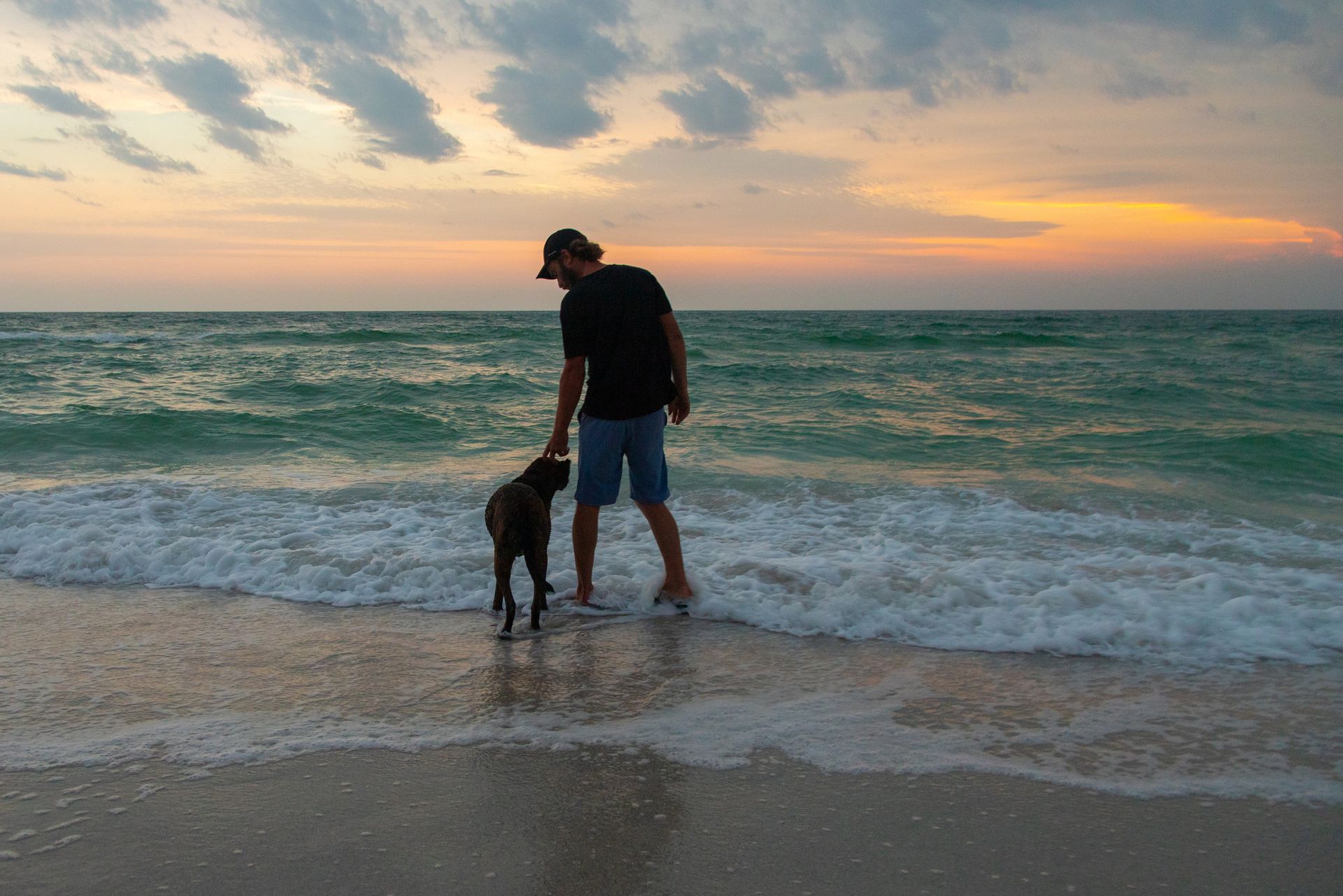
Jupiter Dog Beach in Jupiter, Florida, is a designated dog beach. It is not a stretch of public beach where dogs are tolerated, but a 2.5-mile section of southern Florida’s Atlantic coastline formally allocated to canine recreation. The beach runs from marker No. 26 at Marcinski Road to dune marker No. 57 at the Carlin Park property line along the Palm Beaches. Dogs can move freely on the sand once they reach the beach, provided they are well socialized and respond to voice commands. Leashes are required for the walk between the parking area and the beach itself.
Jupiter Beach Resort & Spa in Palm Beach offers dog-owning guests accommodations that begin with a welcome before check-in, with a gift bag waiting on arrival. The resort maintains dog-friendly public spaces and designated beach areas for guests’ pets, extending public beach access from the public area into the hotel environment. The surrounding area offers retail and social options for pet owners: outdoor malls, including The Royal Poinciana Plaza, welcome well-behaved dogs, and local dog parks give both dogs and their owners a chance to meet other traveling pet families.
The formal 2.5-mile designation gives Jupiter Dog Beach a clarity that informally pet-tolerant beaches lack. An owner arriving at a beach where the rules are ambiguous spends mental energy on the uncertainty of compliance. An owner arriving at a marked, designated dog beach knows exactly what is and is not permitted. The Palm Beach County location on Florida’s Atlantic coast gives the destination a weather advantage over northern beach options. The warm climate extends the beach season well beyond what New England and the Pacific Northwest can offer. The formal 2.5-mile designation gives Jupiter Dog Beach a clarity that informally pet-tolerant beaches lack. An owner arriving at a marked, designated dog beach knows exactly what is and is not permitted, which removes the compliance uncertainty that comes with arriving at a beach where the rules are ambiguous or inconsistently enforced.

Cynthia Farr-Weinfeld / Getty Images
Willard Beach in South Portland, Maine, operates a seasonal off-leash schedule that gives dogs significantly more freedom during the cooler months than in summer. From October through April, dogs can run leash-free during extended morning and evening hours. The summer season compresses that window to limited access only during morning and nighttime hours, reflecting the increase in human beachgoers during peak season. The source recommends confirming the current restrictions before visiting, since leash requirements can change.
The beach itself covers four acres of sandy shoreline, five miles from downtown Portland, with views of Spring Point Ledge Light and the sailboats moored in the harbor offshore. The setting gives Willard Beach a scenic character beyond its dog-friendly policies. The lighthouse and harbor views make the morning and evening off-leash windows visually rewarding for owners and physically rewarding for dogs. The gentle waves suit dogs who want to wade and splash without the heavy surf conditions of more exposed Atlantic beaches. The four-acre footprint is compact enough to cover fully in a single morning visit, making Willard a practical choice for dog owners whose schedules favor a focused beach outing over an all-day commitment.
Portland’s broader infrastructure makes the surrounding area worth exploring beyond the beach. The most photographed lighthouse in the U.S., Portland Head Light, is accessible with dogs, as is the adjacent Fort Williams Park. The Inn by the Sea in Cape Elizabeth offers the “INNcredible Pet” package, which includes a personalized L.L.Bean dog bed and toy, nightly pet turndown service, an evening gourmet pet menu, and additional perks calibrated specifically to canine guests. The extended off-leash hours during the October-to-April period give Willard Beach a practical advantage for owners who travel with dogs that need genuine off-leash exercise and cannot find it at summer-season beaches further south. The Portland Head Light visit, and the Inn by the Sea’s “INNcredible Pet” package together give Willard Beach a full-day itinerary structure beyond the beach itself.
Moelyn Photos / Getty Images
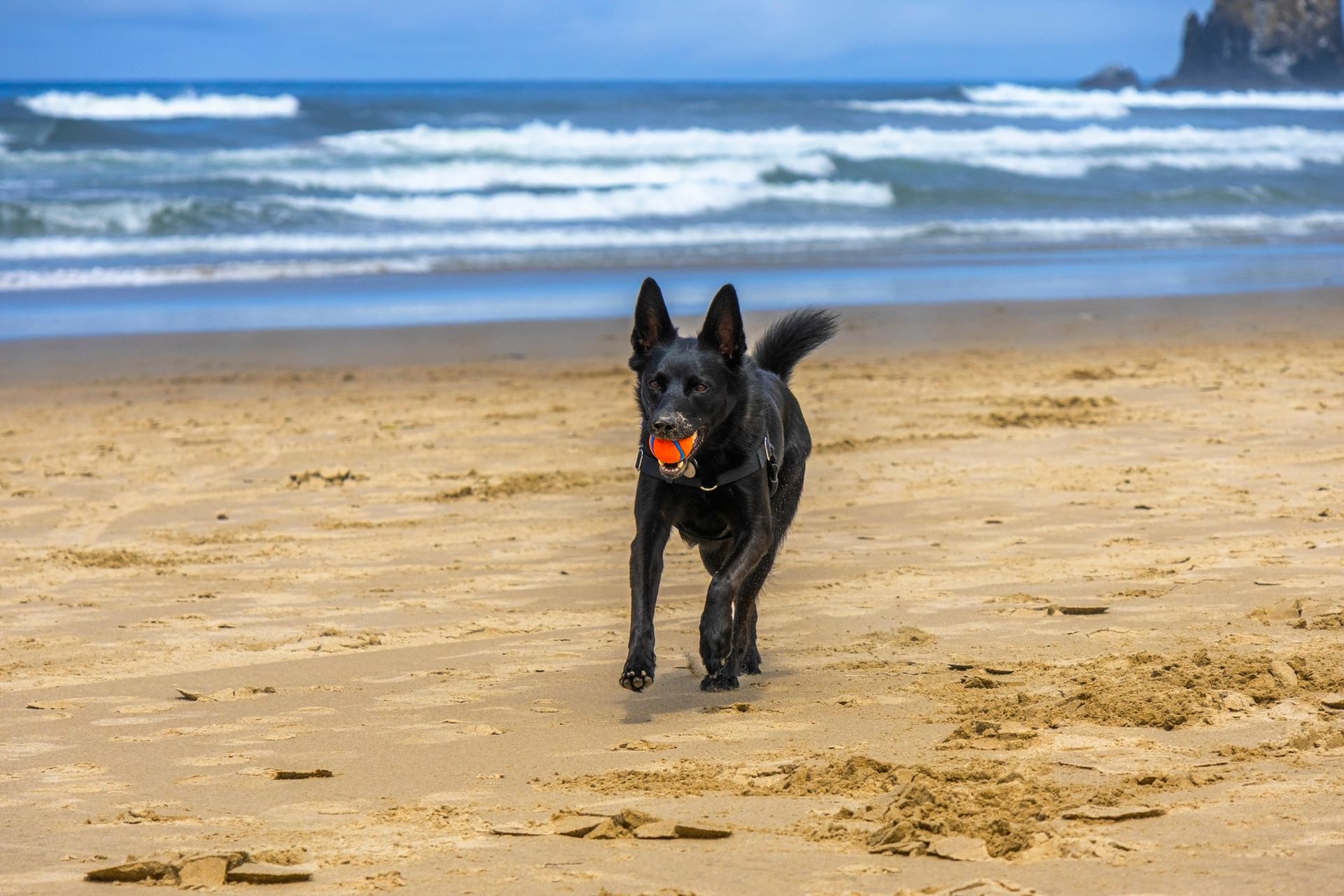
Cannon Beach, Oregon, builds its dog-friendly identity into the town’s culture and not into a specific beach section or a designated access zone. The source describes it as difficult to find anywhere in Cannon Beach that does not welcome dogs, positioning the town as a destination where dog ownership shapes the entire visit rather than requiring constant navigation of restrictions. Dogs can accompany their owners on the beach as long as they stay within sight and respond to voice commands. The policy matches Carmel’s approach without requiring a specific off-leash designation.
The Fourth of July celebration in Cannon Beach is fireworks-free, which the source identifies as a specific virtue for owners traveling with dogs that are distressed by fireworks. Most beach communities along the U.S. coast celebrate Independence Day with fireworks, which produce sound levels and atmospheric conditions that cause significant anxiety in many dogs. A coastal destination that explicitly skips fireworks removes one of the more stressful elements of summer travel with a noise-sensitive pet and gives the holiday weekend a calmer character that owners of anxious dogs can actually enjoy.
The surrounding area extends the dog-friendly experience beyond the beach itself. Hiking trails in the region allow dogs to follow wildlife scent trails left by local animals, including chipmunks, elk, and bears. The olfactory enrichment a trail walk provides goes well beyond what a beach walk alone delivers. Pet-friendly beachfront accommodations at both the Tolovana Inn and Surfsand Resort give owners options on the oceanfront. Cannon Beach’s permissive voice-command beach policy, a fireworks-free Fourth of July, wildlife hiking trails, and two beachfront pet-friendly hotels together make it the most comprehensively dog-integrated town on this list. The fireworks-free holiday is a specific policy decision that requires institutional commitment from the local government — not something a business can offer unilaterally — and it signals that the town’s dog-friendly character operates at the civic level, not only at the individual hotel and restaurant level.
EyeWolf / Getty Images
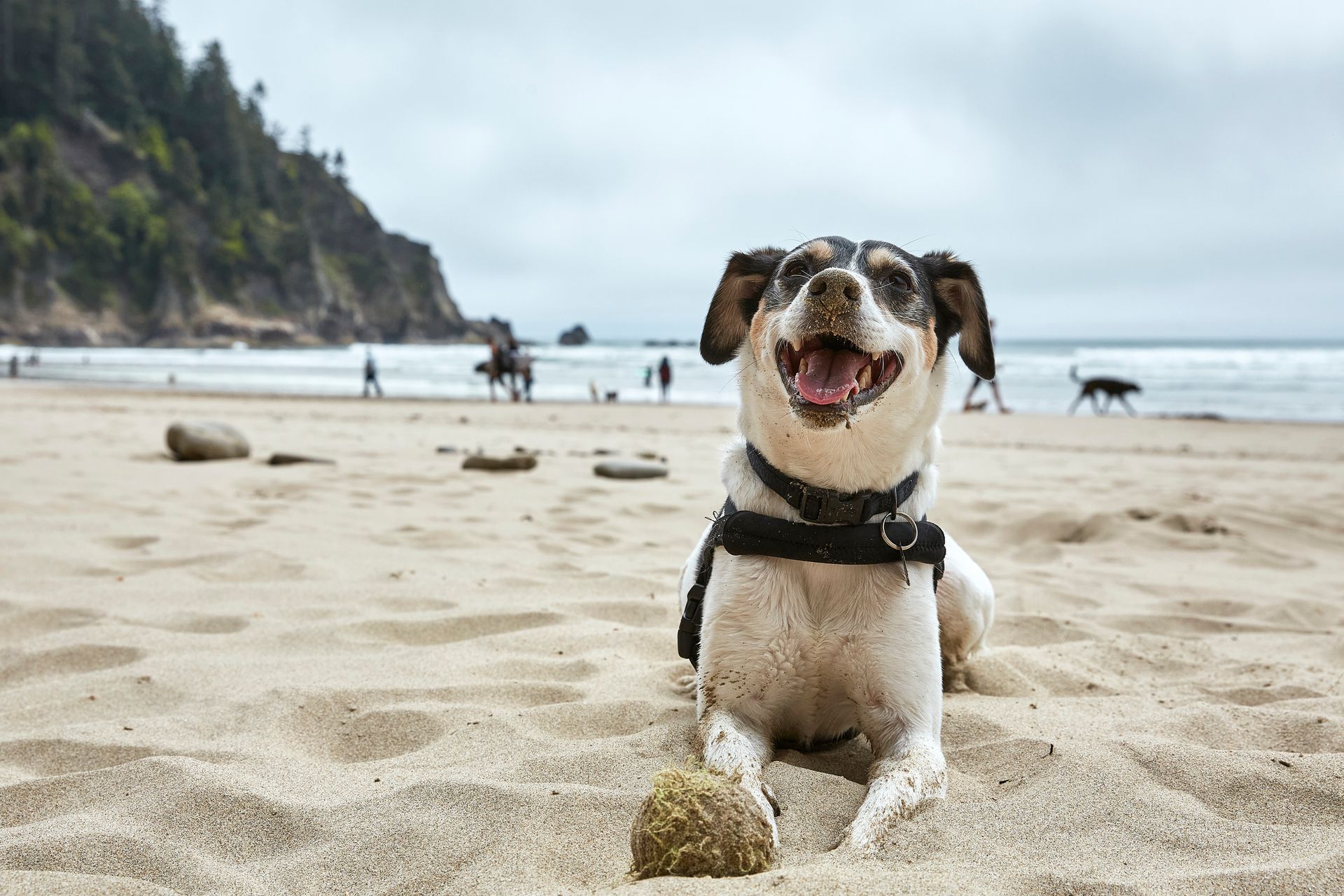
Double Bluff Beach on Whidbey Island in Washington state gives dogs access to open shoreline where they can run free while their owners take in views of Admiralty Inlet and, on clear days, the distant Olympic Mountains. The beach requires leashes in the grassy picnic area adjacent to the parking lot, but the shoreline itself is open for off-leash running. A doggie shower near the picnic benches and barbecue area gives owners a practical tool that most beaches do not provide. The rinse station lets owners clean salt, sand, and whatever else a dog has found on the shoreline before loading back into the car. It eliminates one of the more unpleasant logistical aftereffects of a beach day with a wet, sandy dog.
Marguerite Brons Memorial Park, five miles from Double Bluff Beach, adds a complementary off-leash option for owners who want to extend their dog’s exercise beyond the beach. The park covers 13 acres of fenced meadows and wooded hiking trails, providing dogs with a natural environment distinct from the open beach and inlet views at Double Bluff. Beach freedom paired with a large fenced park within five miles gives Whidbey Island a depth of off-leash options that single-beach destinations cannot match.
The Inn at Langley, eight miles from Double Bluff Beach, offers dog-friendly accommodations and amenities on the island. The Whidbey Island setting, reached by ferry from the mainland, gives the visit a destination quality that day-trip beaches lack. Committing to the ferry crossing and an island stay creates a deliberate dog-oriented trip and not a casual detour. The Olympic Mountain backdrop and Admiralty Inlet shoreline give Double Bluff Beach a visual setting that puts it among the most scenically distinctive beaches on this list. Few off-leash beaches in the Pacific Northwest combine that mountain-and-water backdrop with an on-site rinse station and a 13-acre fenced park five minutes down the road.
Noel-Marie Kot / Getty Images
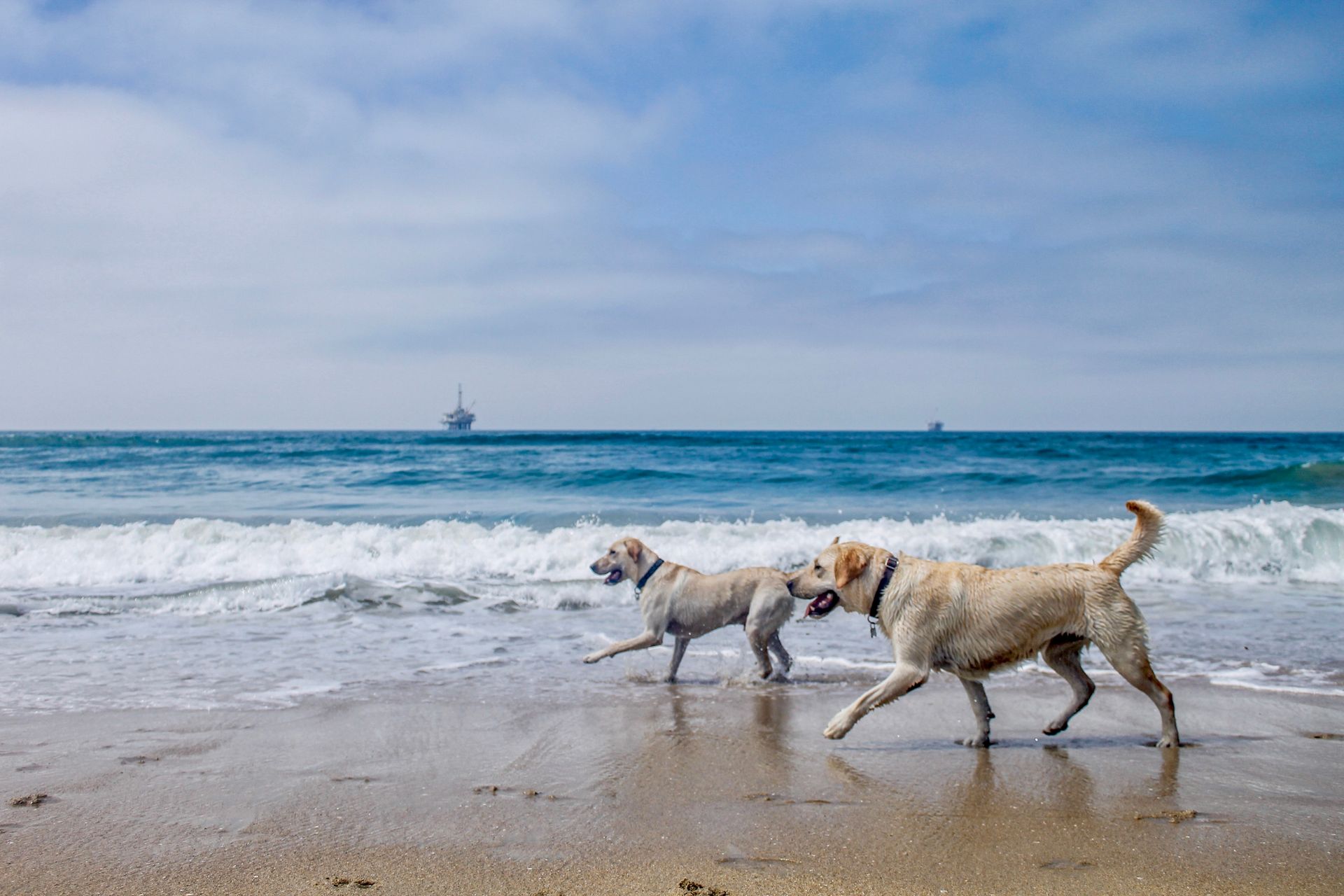
Huntington Dog Beach in Huntington Beach, California, operates as a year-round dog-friendly beach along Southern California’s Pacific Coast Highway between Seapoint Avenue and 21st Street, approximately 40 miles south of Los Angeles. The year-round designation removes the seasonal access restrictions that complicate dog-friendly beach visits at many East Coast and Pacific Northwest destinations. Amenities at the beach include picnic tables, restroom facilities, and doggie waste bags. The baseline infrastructure supports a full day’s visit without requiring owners to carry every supply from the car.
The Paséa Hotel & Spa, two miles from Huntington Dog Beach, offers guests access to the 1,100-square-foot Paw-sea dog park on-site, providing dogs with an off-leash play area without leaving the hotel property. The “Very Important Pet Package” at the Paséa includes a keepsake collar, leash, and toy as part of the room amenities. The hotel’s dog menu offers gourmet items including a barky burrito bowl, a doggie skillet, and peanut butter bacon truffles. The culinary offering for canine guests reflects the same Southern California food culture identity the hotel applies to its human restaurant programming.
The Southern California climate gives Huntington Dog Beach a weather reliability that beaches in New England and the Pacific Northwest cannot guarantee. Warm, dry days run from spring through fall, and even winter visits are mild by national comparison. The Pacific Coast Highway location puts the beach within a larger Southern California driving circuit that includes other dog-friendly destinations, making Huntington a natural anchor for a multi-day coastal road trip with a dog. The year-round access, the 40-mile proximity to Los Angeles, and the Paséa’s dog park and gourmet menu together make Huntington Dog Beach the most logistically convenient option on this list for urban Southern California dog owners. A dog owner based in Los Angeles can reach the beach without a flight, check into a hotel with a dedicated dog park and a room service menu for their pet, and be back home the following evening.
Rozana Sarmanho Gomes / Getty Images
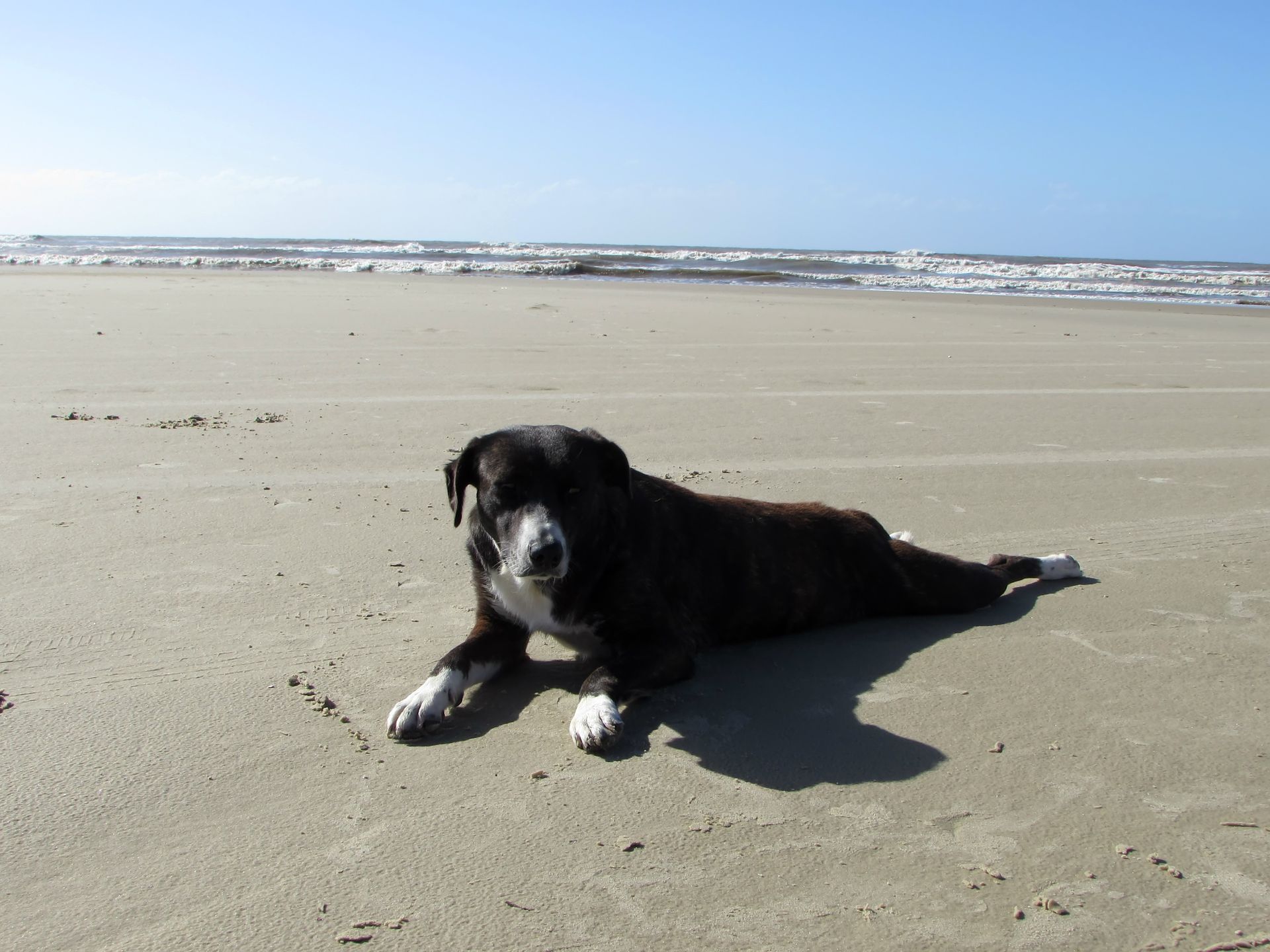
Brohard Beach and Paw Park in Venice, Florida, holds a specific distinction in Sarasota County: it is the only beach in the county where dogs and their owners can both enter the water and frolic on the sand together. The Paw Park includes a fenced area that leads directly to the designated beach, keeping the dog-specific section organized and separated from the general public beach areas. On-site amenities include benches, showers, and doggie water fountains. The water fountain is a specific amenity that most beach dog parks do not provide at the shoreline level, and its presence at Brohard reflects the degree to which the park was designed with dogs’ needs as the primary consideration.
The 17th Street Paw Park in Sarasota extends the county’s off-leash infrastructure beyond the beach itself, with separate fenced areas for large and small dogs, drinking fountains, and supplies for cleanup. The separation of large and small dog areas addresses one of the most common anxiety points for small dog owners at off-leash parks, where a size mismatch between dogs can create unpredictable and uncomfortable situations.
Owen’s Fish Camp, identified as one of Sarasota’s top restaurants, welcomes leashed dogs on its outdoor patio for evening dining, offering owners a high-quality restaurant option that does not require leaving their dog at the hotel. The Ritz-Carlton in downtown Sarasota accepts pets up to 30 pounds, and additional vacation rental options in Venice are searchable through BringFido for owners who prefer a home-based environment. Brohard Beach’s monopoly on dog-accessible waterfront in Sarasota County gives it a functional importance beyond its individual merits. Owners visiting the county with dogs who want beach water access have one option, and Brohard is it. The Paw Park fencing and the doggie water fountain at the shoreline give the facility a purpose-built character that distinguishes it from beaches where dogs are tolerated in an undifferentiated public space.
Stephen O'Byrne / Getty Images
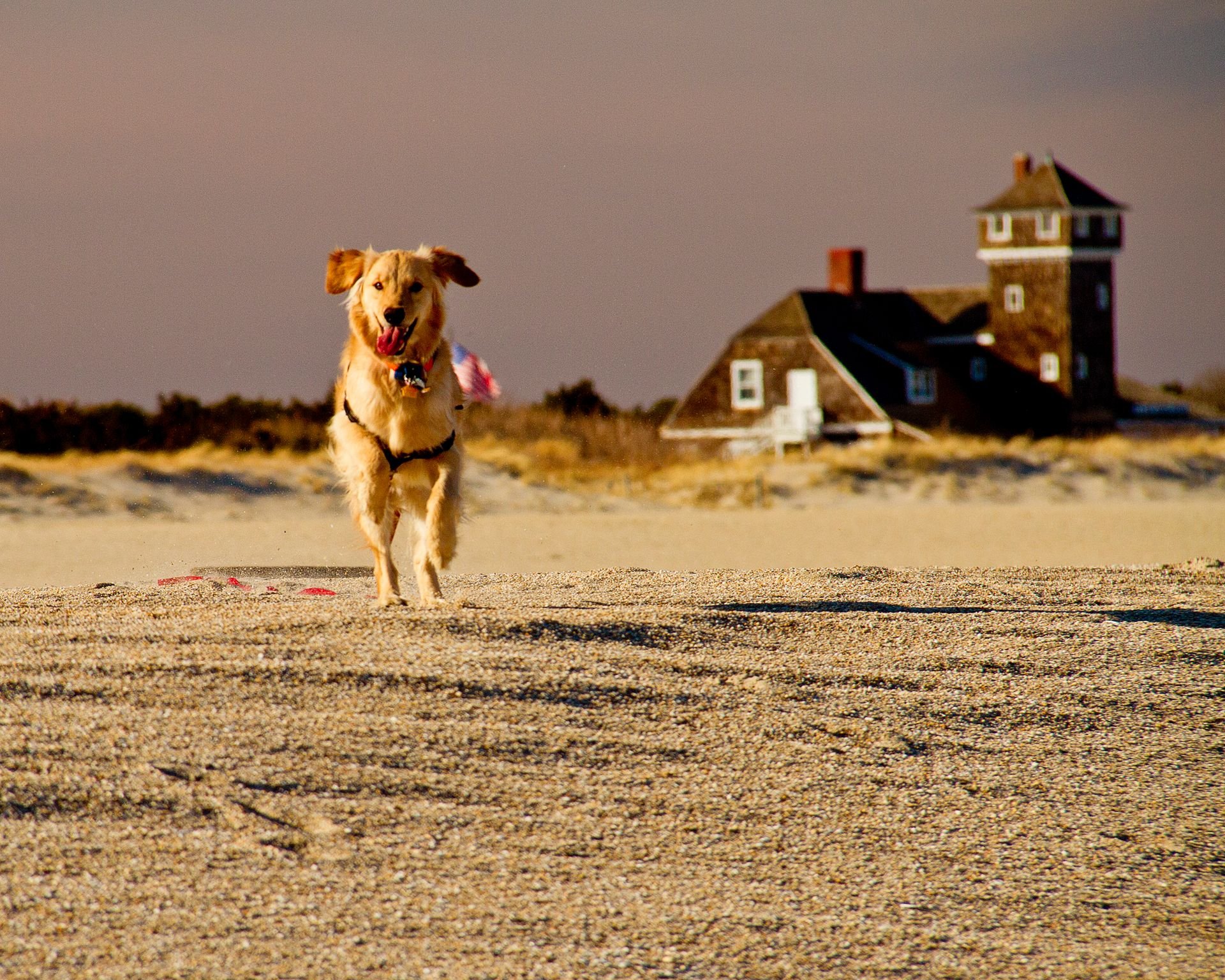
Island Beach State Park in Seaside Park, New Jersey, preserves 10 miles of white-sand beach and coastal dunes between the Atlantic Ocean and Barnegat Bay, making it one of the last undeveloped barrier beaches on the North Atlantic coast. Dogs on leashes no longer than six feet are permitted year-round, giving the park a year-round canine access policy that many New Jersey beach towns do not maintain. The undeveloped shoreline offers dogs and their owners a coastal environment without the commercial infrastructure that crowds more developed Jersey Shore destinations.
The park’s ecological character gives it a natural richness that purely recreational beaches lack. The maritime forest and pristine shoreline support the state’s largest osprey colony alongside peregrine falcons and waterfowl, giving dog walks on the beach a wildlife observation dimension uncommon at developed recreational beaches. A swimming section covers approximately one mile of the beach in summer, with lifeguards on duty, and surfing is permitted south of the swimming area. Eight-foot trails give active owners and dogs hiking options beyond the beach itself, and an eight-mile road accommodates cyclists.
Horseback riding on six miles of the beach is available from October through April. The seasonal activity gives visitors an option to pair a dog-friendly beach visit with equestrian recreation. Saltwater fishing is also available after registration, adding another recreational layer for owners whose interests extend beyond the dog-specific amenities. Pet-friendly accommodations in the area can be found on Vrbo and Airbnb $ABNB. Island Beach State Park’s 10 undeveloped miles, its year-round leash access, its osprey colony, and its beach, trail, and biking infrastructure together make it the most ecologically rich and recreationally varied destination on this list. The undeveloped status also means no food concessions, parking fees beyond the entrance, or commercial noise. The trade-off favors the kind of dog owner who wants a genuine natural environment over a managed recreational facility.
meaghanbrowning / Getty Images
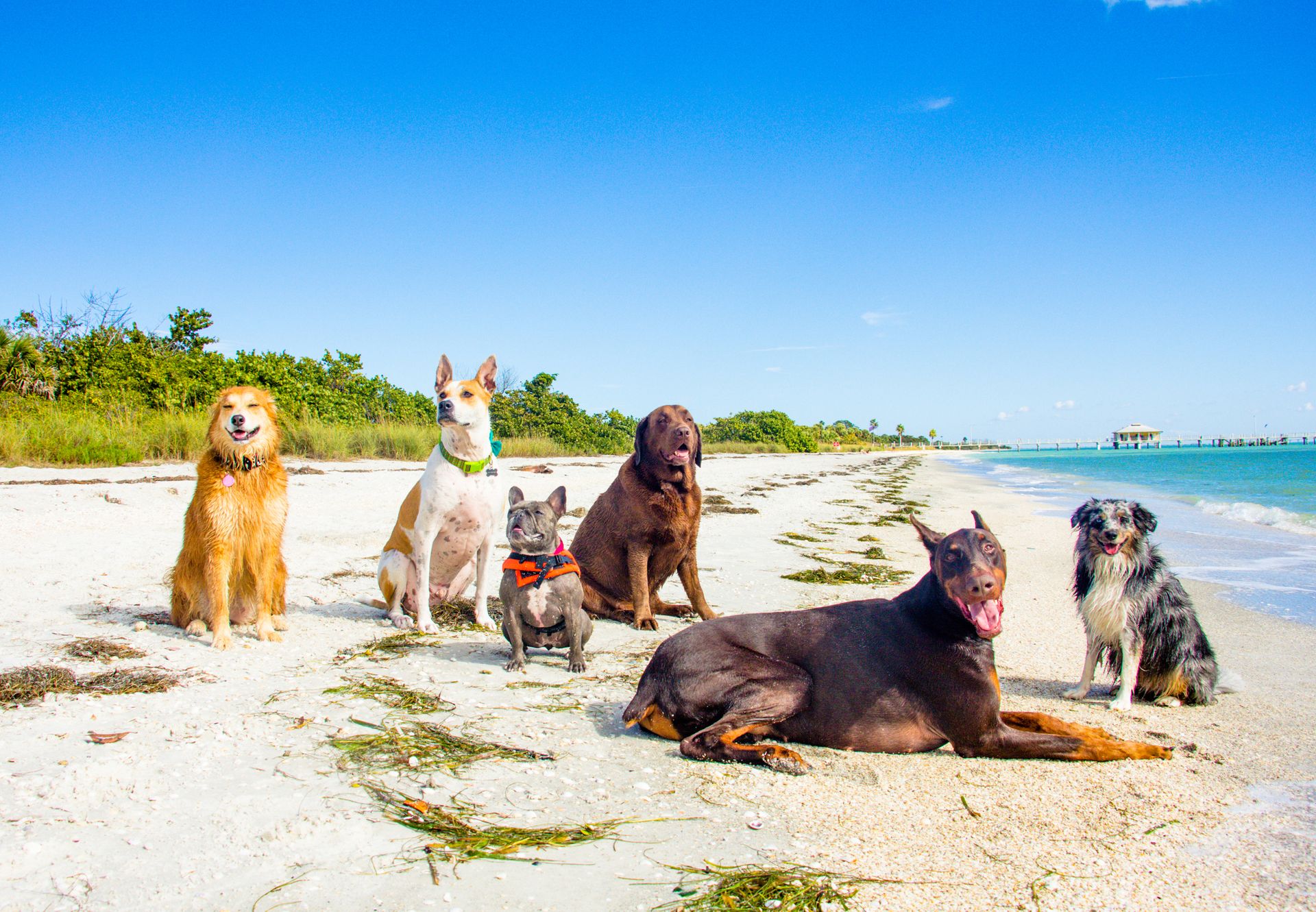
Fort De Soto Park in Tierra Verde, Florida, spreads across five small islands at the mouth of Tampa Bay, giving dogs a designated beach area within a park complex that otherwise permits leashed canine access throughout. The Paw Playground on the designated dog beach offers fenced areas for both large and small dogs, along with showers and dog-level water fountains, giving the facility practical infrastructure beyond what most Florida beach parks provide. Dogs on leashes can accompany owners anywhere else in the park except the main public beaches.
The Dog Bar near the park offers a post-beach social option: a full-service bar with an off-leash dog park, where owners can have a drink while their dogs roam freely. Dogs at the Dog Bar require a membership, so the source recommends registering online before your visit and arriving with credentials. The TradeWinds Island Grand Resort near the park extends the dog-friendly experience into the accommodation, with a leash-free Pet Play Zone, a quick-wash station for post-beach cleanup, and a Doggie Accessory Center stocked with pet supplies for guests who arrive without everything they need.
The five-island spread of Fort De Soto Park gives the destination a geographic complexity that single-beach parks cannot match. A dog owner who visits for a full day can move between different island environments, access the Paw Playground for structured off-leash time, walk the broader park on a leash, and then end the afternoon at the Dog Bar before returning to the TradeWinds resort. The membership requirements at the Dog Bar, the Doggie Accessory Center, and the dedicated wash station at the resort, together, reflect a St. Petersburg-area dog culture infrastructure that operates at a higher level of intentional design than most coastal dog-friendly destinations on this list. The Doggie Accessory Center, in particular,, signals a resort that anticipates owners who arrive underprepared and provides a commercial solution on-site rather than directing them to a pet store off-site.
