From the Arctic to Antarctica, these six expedition cruise lines reach the places most travelers will never see
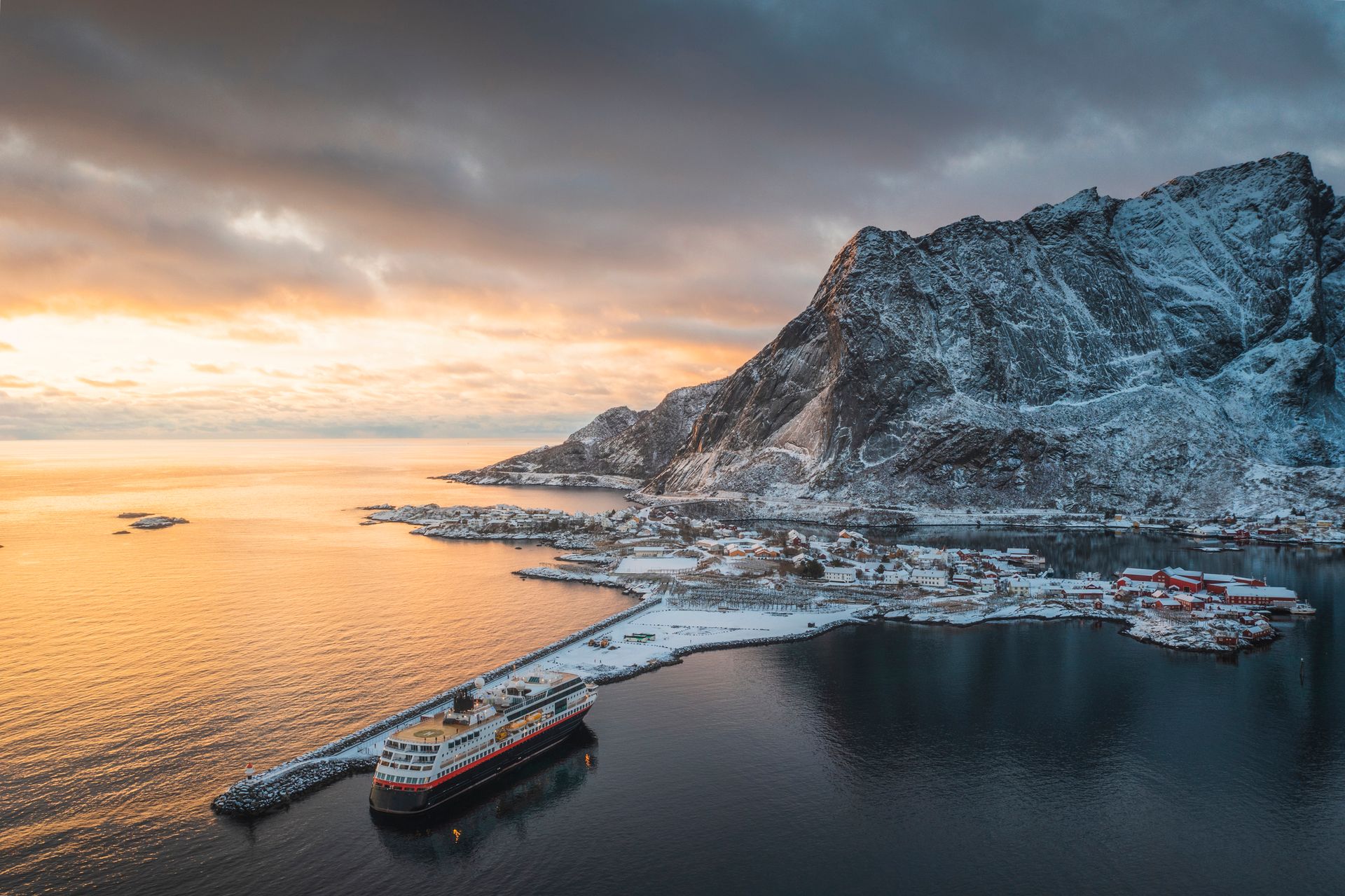
Marco Bottigelli / Getty Images
Expedition cruising occupies a different category from the rest of the cruise industry. The ships are smaller, the destinations more remote, and the itineraries shaped by what the ice allows or the wildlife demands. A fixed port schedule does not apply here. Passengers on these voyages do not arrive at a polished terminal and step into a waiting taxi. They pull on a parka, board a Zodiac, and land on a beach that most people will never see. That experience — the physical fact of being somewhere genuinely wild and genuinely far — is the product.
The destinations that expedition cruise lines serve are among the most restricted and most fragile on earth. Antarctica is governed by an international treaty. The Galápagos limits the number of visitors allowed ashore at any given time. The Arctic communities that some lines visit can accommodate only a handful of guests at once. These constraints are not obstacles to the expedition cruise format. They are the reason it exists. Ships carrying 100 to 500 passengers can reach places larger vessels cannot, and operators with deep knowledge of these regions can navigate the logistical complexities that access entails. The best expedition cruise lines have built their reputations on that knowledge over decades, and in some cases over more than a century.
The six lines below, ranked by U.S. News & World Report, represent the strongest options currently operating in the expedition cruise market. They range from the pioneer of eco-tourism, who first sailed to the Antarctic Peninsula in 1966, to a French luxury operator whose icebreaker has reached both the geographic North Pole and the southernmost point on Earth. Each offers something distinct: a fleet designed for a specific region, a scientific program built around resident experts, an all-inclusive model that removes the friction of per-excursion costs, or a level of interior finish that brings the comforts of a luxury hotel to one of the planet's most inhospitable latitudes.
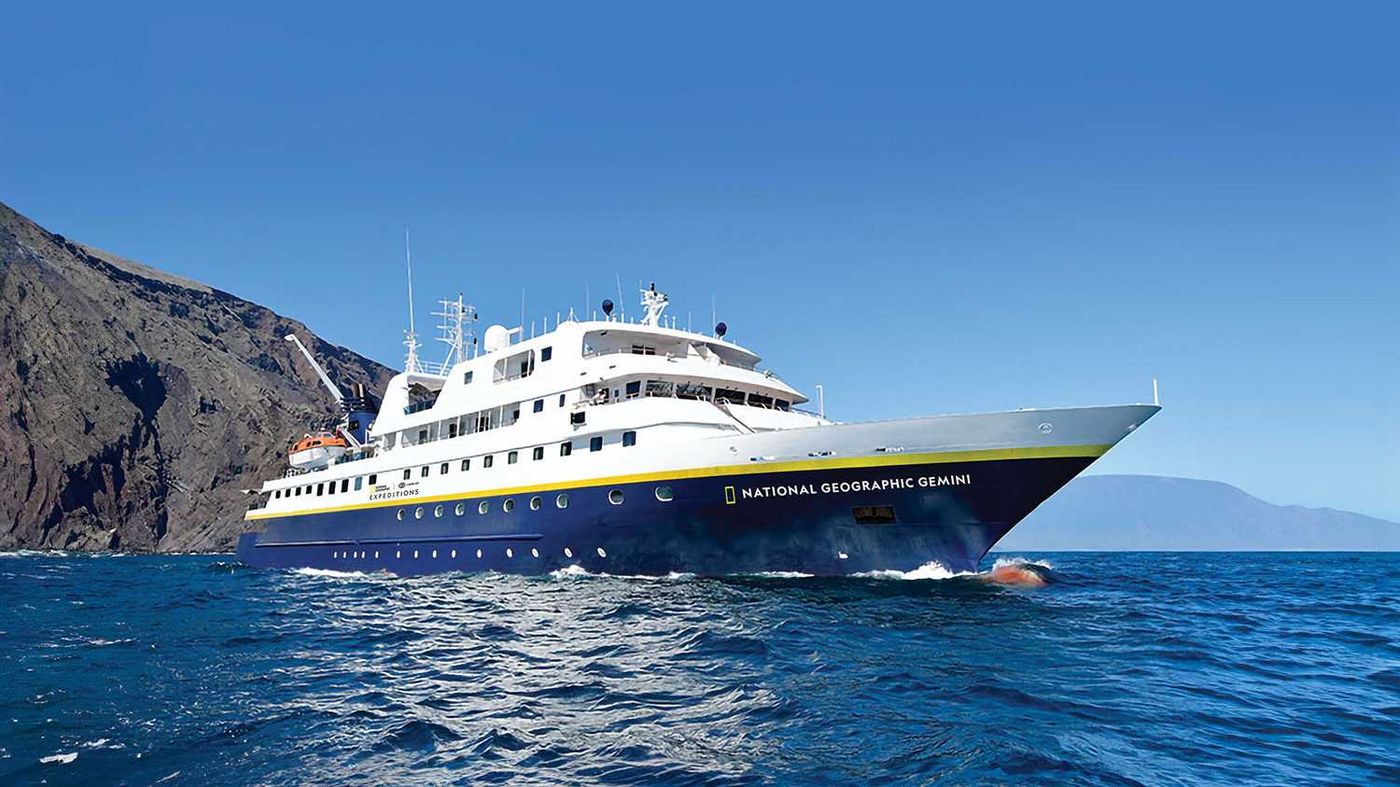
Credit: Lindblad Expeditions
Lars-Eric Lindblad sailed with 57 citizen explorers to the Antarctic Peninsula in 1966 — the first expedition of its kind — and followed it the next year with the first organized journey to the Galápagos. His conviction that visitors who experienced remote places firsthand would become advocates for protecting them became the philosophical foundation of the operation that his son, Sven, later built into Lindblad Expeditions. The partnership with National Geographic extended that mission globally, producing a fleet of more than 20 ships and a catalog of over 100 expedition experiences across all seven continents. The line's identity is inseparable from its origins, and that continuity shapes everything from the expertise of its expedition staff to the research programs its ships support in the field. Few operators in the expedition cruise market can point to a founding philosophy that remains this legible in everyday operations.
The fleet accommodates between 16 and 154 guests at double occupancy, depending on the vessel, a range that reflects the variety of destinations the line serves. Smaller ships can navigate wild coasts and shallow channels to follow seasonal whale migrations. Larger vessels can operate in remote polar regions for weeks without restocking provisions or fuel. Captains and expedition leaders who know the regions intimately designed the ships, a detail that yields practical advantages: hull profiles suited to specific waterways and deck configurations optimized for wildlife observation. Ships built to a generic expedition template do not offer those advantages. Alaska, Antarctica, and the Galápagos are among the headline destinations, each chosen because the line has accumulated decades of operational knowledge there.
The fare covers accommodations, all meals, complimentary beer, wine, and cocktails, nonalcoholic beverages around the clock, snacks, enrichment programming, activities and excursions, basic Wi-Fi, and ship-based amenities. Additional perks vary by destination, but the baseline removes most of the planning friction a voyage to a remote location would otherwise involve. For travelers who want an expedition experience grounded in a genuine conservation mission and backed by National Geographic's scientific credibility, Lindblad is the most historically significant and philosophically coherent option on this list.
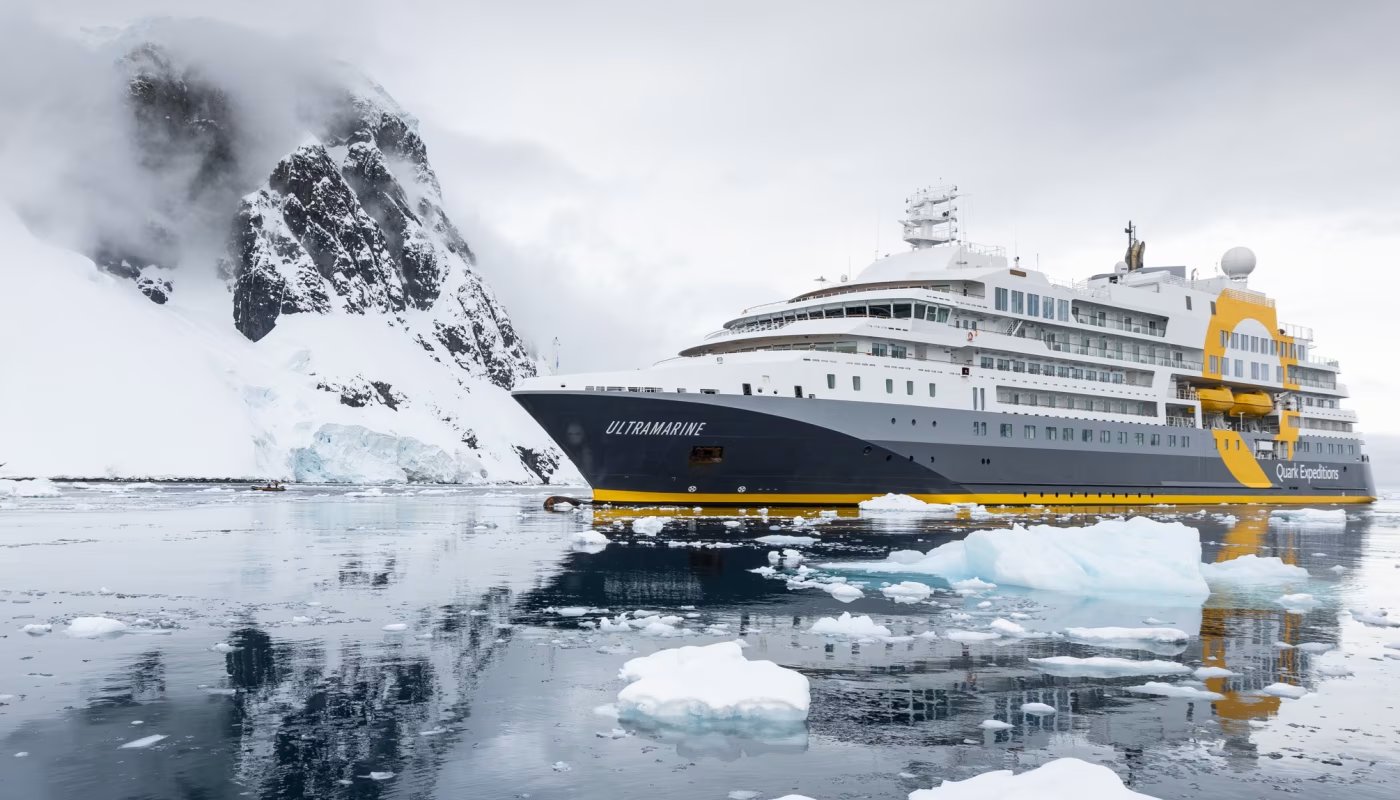
Credit: Quark Expeditions
Quark Expeditions concentrates its entire operation on the Arctic and Antarctic, and the specificity of that focus produces ships, staff, and itineraries calibrated for polar conditions in ways that generalist expedition lines cannot match. The fleet of four vessels — Ultramarine, World Explorer, Ocean Explorer, and World Voyager — carries between 138 and 199 guests at double occupancy, keeping groups small enough to visit remote Indigenous communities and navigate narrow fjords that larger ships cannot enter. The intimate scale also makes it easier for solo travelers to meet fellow passengers and crew, a social dynamic that matters on voyages where shared experience defines the trip. That group cohesion develops naturally when the ship is small and the destination is genuinely remote.
Ultramarine, the 199-passenger flagship, carries two twin-engine helicopters that open access to landscapes unreachable even by Zodiac. A wraparound viewing deck, a sustainable waste-to-energy system, two dining venues, a lounge and bar, a fitness center, and a spa and sauna complete the onboard setup. Ocean Explorer approaches the experience differently. It carries 138 guests aboard a purpose-built Polar Class 6 vessel with an Ulstein X $TWTR-Bow hull engineered to smooth passage through rough seas. A two-story library at the bow, spacious cabins with verandas on most, an observation lounge, and two outdoor hot tubs give the smaller ship a finish level that does not ask passengers to trade comfort for access.
Itineraries span Antarctica, Patagonia, and Greenland, each destination chosen because Quark's polar specialization gives it genuine expertise there. Patagonia adds helicopter rides over dramatic landscapes and wildlife encounters with pumas, sea lions, flamingoes, and penguins. The fare covers accommodations, premium dining, alcoholic and nonalcoholic beverages, complimentary Wi-Fi, transfers that vary by voyage, an official Quark Expeditions parka, immersive off-ship activities, and full access to onboard programming and facilities. For travelers whose primary goal is one of the polar regions and who want an operator whose entire identity centers on getting there well and safely, Quark makes the strongest argument on this list.
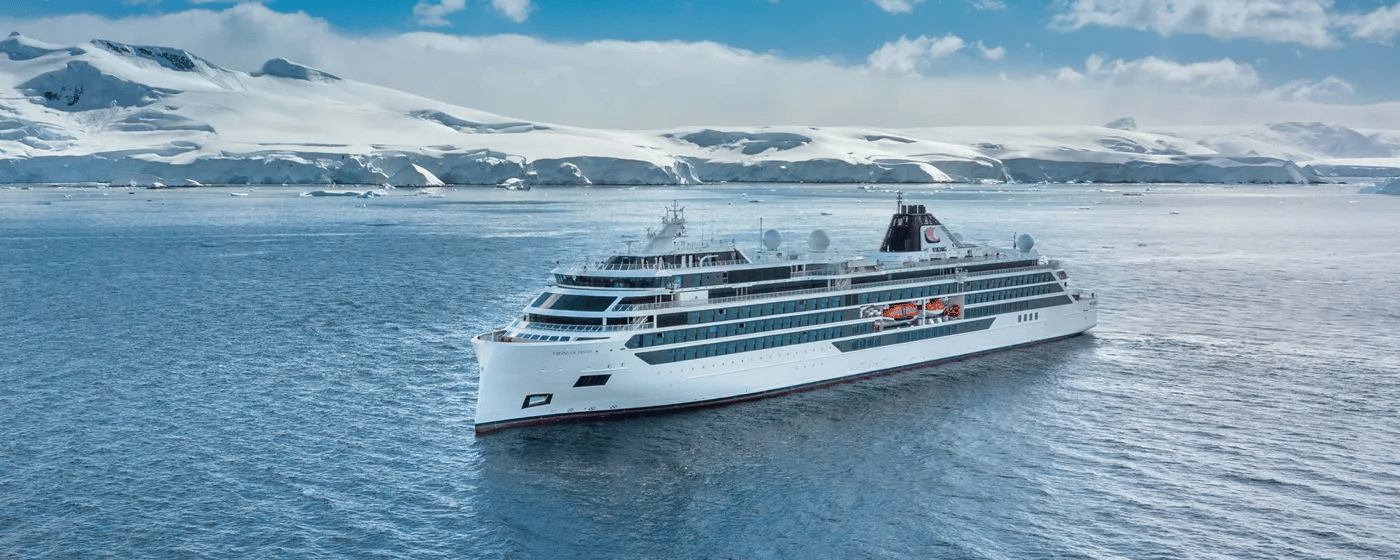
Credit: Viking Cruises
Viking's two expedition vessels — Viking Octantis and Viking Polaris — carry 378 guests each at double occupancy, making them the largest ships on this list. The Polar Class 6 rating qualifies both for polar operations, and the Scandinavian interior design links them to Viking's ocean fleet, giving passengers familiar with the brand a recognizable environment in an unfamiliar setting. The Living Room, the Nordic Spa, and the two-story Explorers' Lounge all appear on the expedition ships, providing continuity that returning Viking passengers notice immediately. For first-time Viking guests, those spaces establish a standard of onboard comfort that sets the tone for the expedition experience.
The ships stand apart through their scientific infrastructure. The Aula is a panoramic auditorium purpose-built for daily briefings, lectures, and films. It functions as a dedicated learning space, not a repurposed lounge. Expedition Central gives the expedition team a working environment equipped with state-of-the-art data visualization and mapping tools that passengers can access alongside the staff. The Science Lab and The Studio host Viking's resident scientists, who share findings across ornithology, biology, botany, geology, glaciology, and oceanography throughout each voyage. The scientific dimension is built into the ship's architecture and woven into its daily programming, producing a more integrated educational experience than lecture series alone can deliver.
Fares include ocean-view staterooms or suites with Nordic balconies, king-size beds, free Wi-Fi, private bathrooms with heated floors, plush robes and slippers, Freyja toiletries, 24-hour room service, and a keepsake Viking jacket on polar itineraries. Meals, beer, wine, and soft drinks at lunch and dinner; specialty coffees, teas, and bottled water available around the clock; enrichment programming; one complimentary landing or excursion per port; and Nordic Spa access are all included. Top destinations include Antarctica, the Panama Canal, South America, and world cruises spanning multiple continents. For passengers who want expedition depth alongside the design standards and brand consistency of a major cruise line, Viking offers the most fully developed option on this list.
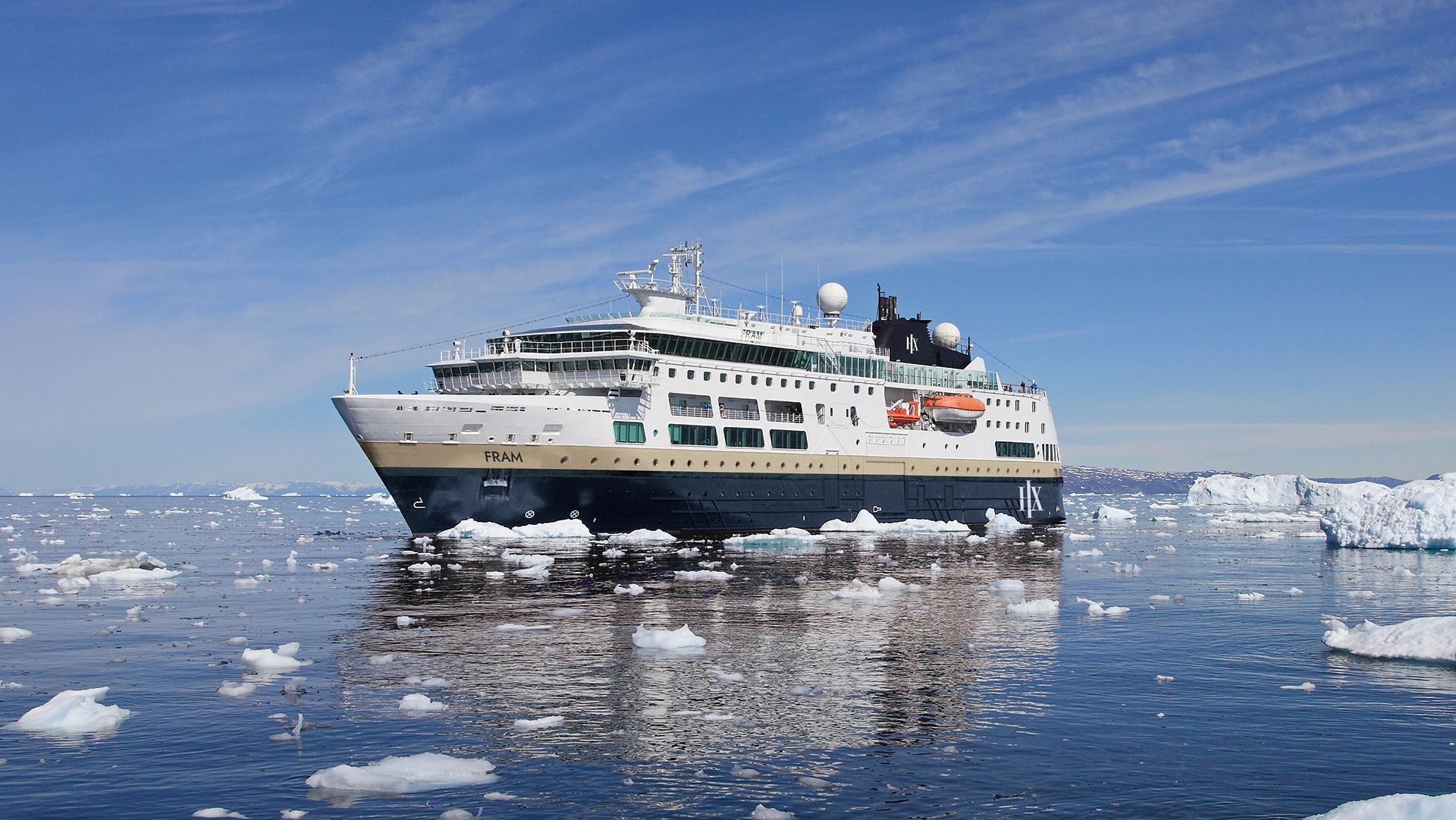
Credit: HX Expeditions
HX began operating in Norway in 1896, and the 130 years of polar and coastal experience that lineage represents give the line a knowledge base in northern waters that newer operators cannot replicate. The fleet of five ships accommodates between 90 and 490 guests at double occupancy, depending on the vessel, a span broad enough to serve both intimate small-group expeditions and larger voyages. The two newest additions are fully hybrid vessels that each carry 490 guests. MS Santa Cruz II, the smallest, operates exclusively in the Galápagos. Each ship in the fleet was chosen or built for the specific demands of the regions it serves.
The itinerary catalog covers more than 250 destinations across 30-plus countries, a breadth that sets HX apart from the polar specialists on this list. Norway remains the home territory, and the line's century-plus of operating there gives its Norway expeditions a depth of local knowledge — seasonal conditions, wildlife patterns, community relationships — that a recently launched Norway itinerary cannot offer. Iceland and the British Isles round out a portfolio built on genuine operational experience. Ships include stylish cabins, a bar and lounge, restaurants, a library, and a Science Center — or Science Corner on the smallest vessel — where staff and guests share knowledge about the destinations they are sailing through.
The all-inclusive fare covers accommodations, three daily meals, nonalcoholic and alcoholic beverages throughout the day and at meals, complimentary Wi-Fi, gratuities, onboard activities, excursions and landings ashore, a polar expedition jacket or equivalent gear, and professional photographs taken by the onboard photographer. The photography inclusion is an unusual detail that reflects HX's understanding of what expedition travelers most want to take home: evidence of having been somewhere that most people never reach. For travelers drawn to Norway, Iceland, or the British Isles and wanting an operator whose knowledge of those regions was earned over generations, HX is the clearest choice on this list.
Credit: Ponant
Le Commandant Charcot holds a distinction no other passenger vessel can claim: it has sailed to both the geographic North Pole and the most southerly accessible point on earth, at the edge of the Antarctic. The French luxury line Ponant operates this icebreaker alongside four sister expedition vessels and six Ponant Explorers, smaller yacht-style ships accommodating up to 184 guests at double occupancy. The Blue Eye, an underwater lounge installed on the Explorer vessels, is the only installation of its kind on any passenger ship and gives guests a perspective on the ocean environment that no other expedition line provides. The engineering required to build it reflects Ponant's willingness to invest in access that goes well beyond what standard expedition ships offer.
The geographic reach of Ponant's itineraries reflects the capability of its fleet. The Arctic program puts passengers in close proximity to polar bears, orcas, and narwhals, and includes interaction with local communities in Greenland, Alaska, and Iceland. The Asia program covers world wonders and natural landscapes across a region where few expedition lines operate with the same depth of knowledge. The European itinerary range spans northern Europe and Scandinavia, as well as the Mediterranean and Atlantic coasts. This breadth is unusual for an expedition operator and reflects Ponant's positioning as a luxury line with expedition capabilities rather than a pure polar specialist.
The all-inclusive fare covers accommodations, a full meal plan, an open bar with most nonalcoholic and alcoholic beverages, 24-hour room service, free Wi-Fi, Zodiac excursions, access to a snow cabin and fitness room, and numerous excursions and activities. The luxury positioning appears in the service standards and the finish level of the ships, which bring a French sensibility to environments that most expedition vessels treat as purely functional. For travelers who want expedition access to remote destinations without trading down in comfort or service from what they expect at a high-end hotel, Ponant is the most distinctly luxurious option on this list.
Credit: Silversea
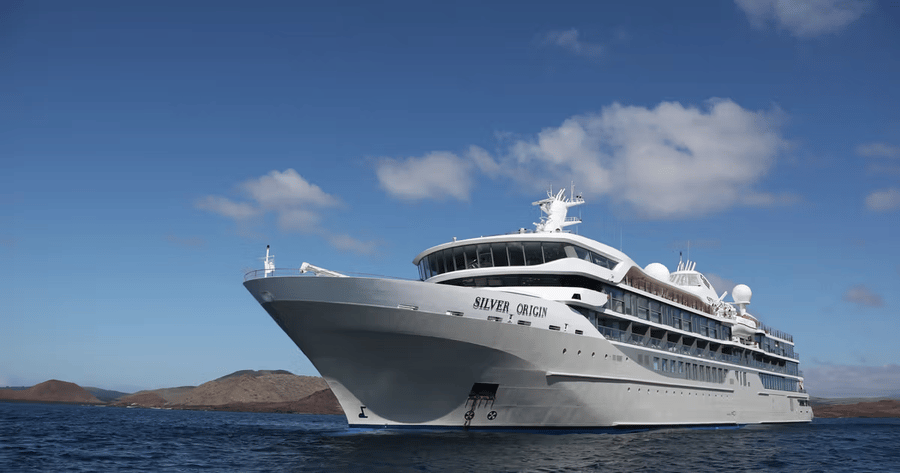
Silversea operates four expedition ships accommodating between 100 and 274 guests at double occupancy, with Silver Origin — the smallest — stationed year-round in the Galápagos. The permanent deployment of a dedicated vessel to a single destination reflects an operator that has built genuine expertise in that archipelago, not one that includes the Galápagos as a single stop on a rotating schedule. The year-round presence enables the depth of naturalist knowledge, established relationships with local authorities, and logistical consistency that seasonal programs cannot achieve. Passengers who sail Silver Origin benefit directly from that accumulated familiarity with the islands, their wildlife cycles, and their access constraints.
Onboard amenities across the fleet include luxurious suites, varied dining serving multiple cuisines, a fitness center, and an observation lounge. Select ships add a spa, a pool and pool deck, a lounge, a boutique, and a library, a finish level that places Silversea at the luxury end of the expedition market. The suite-only configuration across all ships means every passenger receives the same baseline standard of accommodation, removing the tiering that characterizes most cruise products and giving the onboard experience a consistency that suits the expedition context well.
Destination highlights extend beyond the Galápagos to include the Kimberley region of Western Australia — a remote wilderness of waterfalls, canyons, and forest that very few expedition lines serve with regular itineraries — and Antarctica. The Kimberley program is significant: it represents a destination where access is genuinely limited and operator expertise is rare, and Silversea's presence there reflects a line willing to develop knowledge in places that have not yet become standard expedition cruise routes. The all-inclusive-plus pricing covers all food and beverages, butler service, expedition gear, shore excursions, and pre- and post-cruise benefits, including charter flights, airport transfers, and hotels. The comprehensive fare structure is among the most complete on this list and removes the financial decisions that can otherwise interrupt the rhythm of a journey to somewhere genuinely remote.
