From Sicily's quarry-carved coves where Favignana locals played extras to Morocco's Ait Ben Haddou, Hollywood's favorite ancient city stand-in
Elektra Klimi / Unsplash
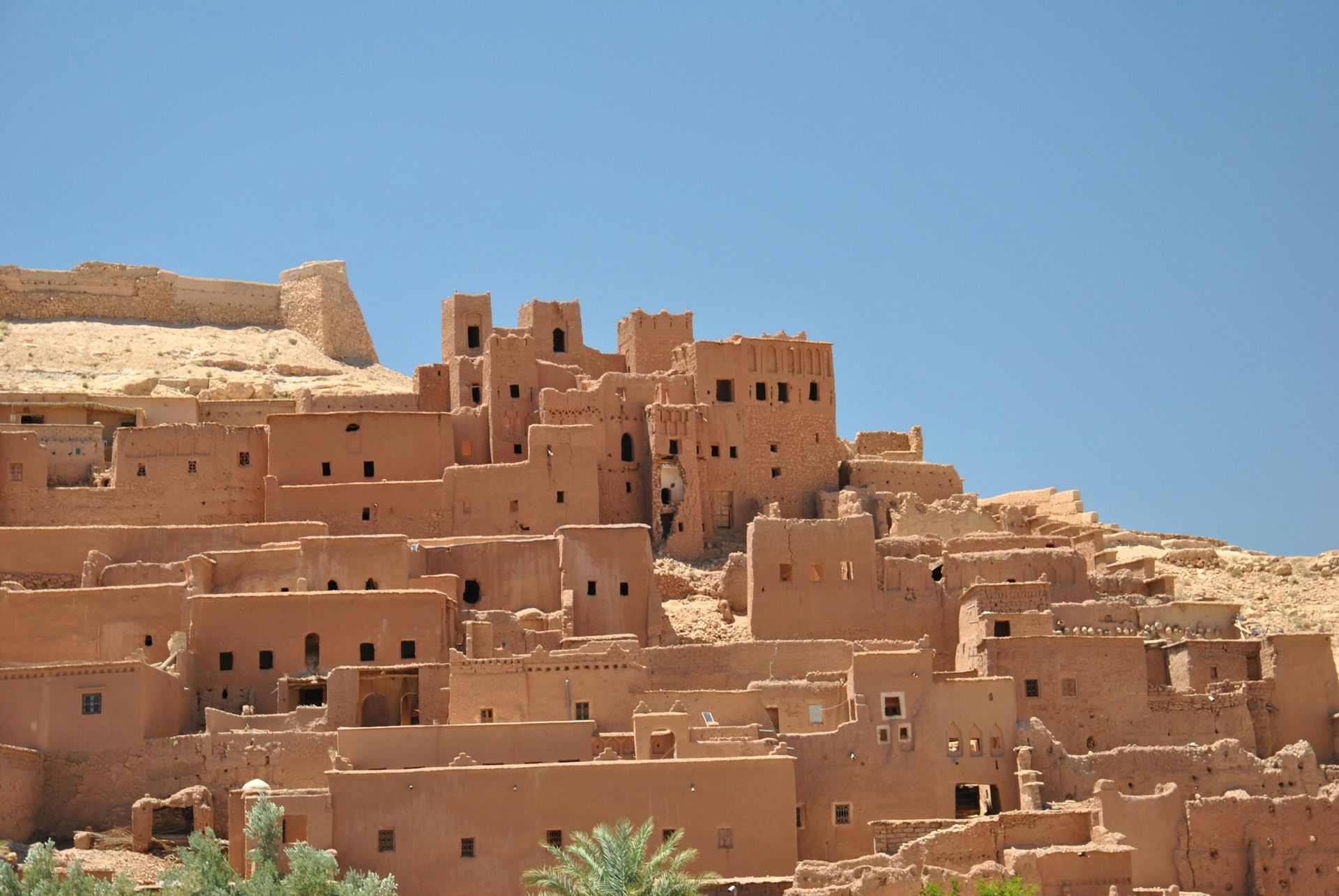
Christopher Nolan’s newest film, The Odyssey, was shot over 91 days across six countries, a genuinely fitting scale for a story centered on Odysseus’s decade-long journey home from the Trojan War. Production spanned the Mediterranean and beyond, sending cast and crew from sun-scorched Sicilian coves to Icelandic glaciers and the fortified walls of a Moroccan city standing in for ancient Troy, giving the finished film a genuinely global visual range.
The actual vessel used in the film, the Draken Harald Hårfagre, a 35-meter-long, ocean-worthy Viking-style longship, has recently docked in Oslo and remains open to the public on guided tours through July 31. Most travelers won’t make it to Norway before the film’s July 17 release, though the wider list of filming locations offers plenty of inspiration for anyone hoping to trace the production’s path across some of the Mediterranean’s most striking coastlines and beyond, from ancient Greek ruins to volcanic Icelandic highlands.
The six locations below appear in Lonely Planet, covering confirmed and reported filming sites from Christopher Nolan’s The Odyssey. Some sites carry a confirmed role in the finished film, while others remain based on local reports and sightings ahead of the movie’s actual release. Either way, each location stands on its own as a worthwhile destination independent of any connection to Nolan’s production. Travelers $TRV drawn primarily by the film should still budget time to actually explore each place on its own terms, since the history, geology, and local culture behind these locations existed long before any camera crew arrived, and will remain long after the film leaves theaters. That’s especially true for sites such as Ait Ben Haddou and Ithaca’s palace ruins, which have already outlasted countless other film productions long before Nolan’s crew ever arrived on set. They will likely outlast this one, too.
Angela Sciortino / Unsplash
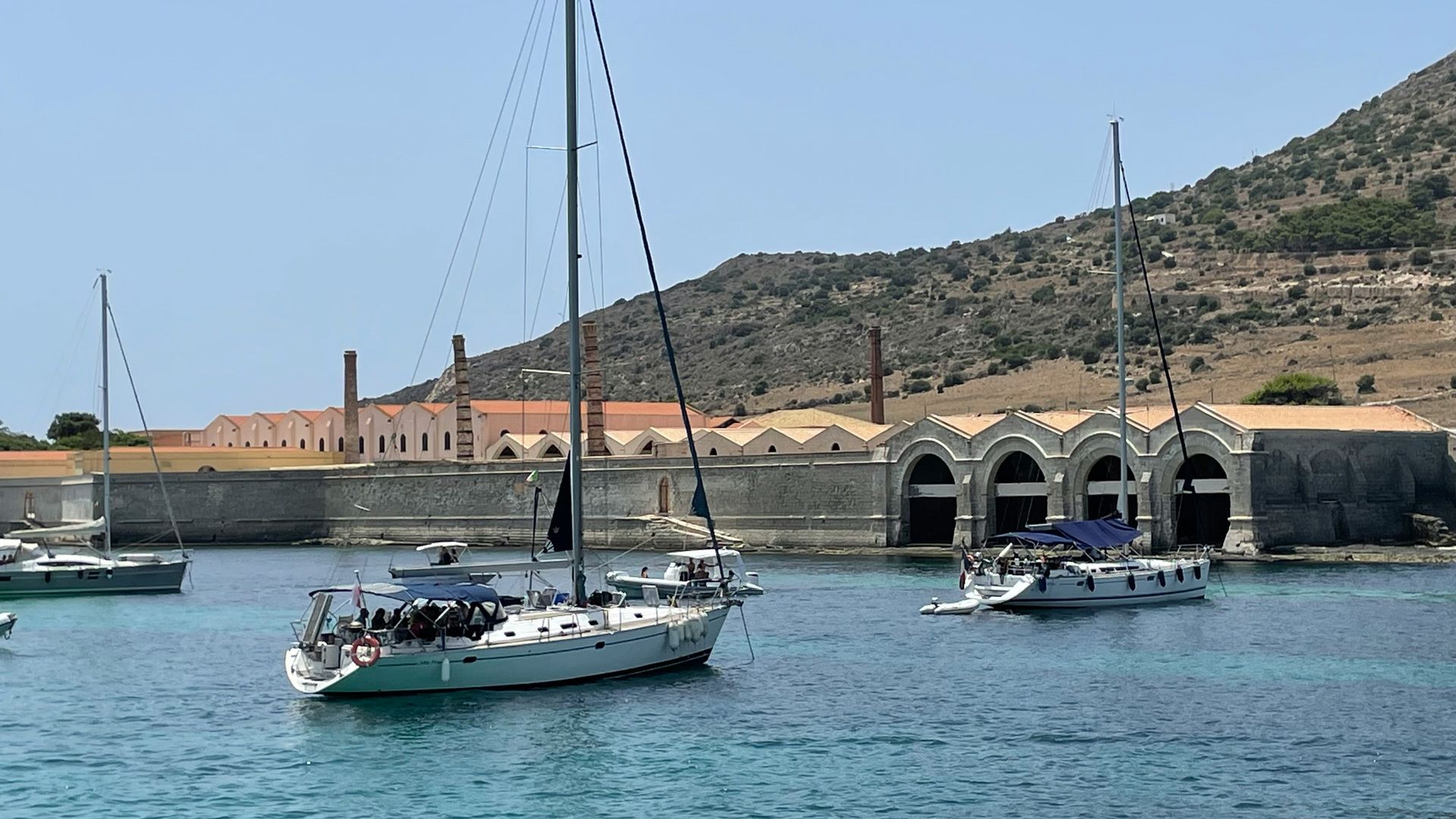
Sicily, once occupied by the ancient Greeks and likely home to many of the original epic poem’s actual settings, made an obvious choice for on-location shooting throughout the production. Film crews and ships turned up in the Aeolian Islands during filming, though one of the largest segments of production took place on Favignana, a butterfly-shaped island sitting just west of Trapani and widely regarded as one of the most beautiful corners of Sicily.
Local residents on Favignana reported seeing crews use sites such as Castello di Santa Caterina and Cala Rossa throughout filming, and the released trailer also shows the quarry-carved shoreline of Bue Marino, giving eagle-eyed viewers a preview of exactly where several key scenes were shot. Many islanders had the chance to appear as extras during production, giving the local community a genuinely direct connection to the finished film.
Favignana rewards visitors who explore by bike, and travelers should plan to stay at least one or two nights to properly see the island’s coves and quarries beyond the main harbor town. Stopping at U Bar du Marinaru immediately after getting off the ferry for a caffè pistachio, a shot of espresso topped with a dollop of pistachio cream, ranks among the island’s most essential small rituals for first-time visitors.
Favignana sits close enough to mainland Sicily that travelers can easily combine a visit with other stops throughout the wider Trapani region, including the Aeolian Islands, where additional filming reportedly took place. Ferries connect the island to Trapani regularly throughout the day, making a spontaneous day trip or longer stay equally feasible, depending on a traveler’s overall itinerary. Trapani’s own historic center makes a worthwhile stop before or after the ferry crossing, giving travelers a chance to explore mainland Sicily alongside the island itself. Favignana’s old tuna processing plant, the Florio, now serves as a museum documenting the island’s fishing history, offering visitors a cultural stop beyond the beaches and filming sites.
Joshua Woods / Unsplash
Bringing one of the ancient world’s most famous literary epics to life without returning to Greece itself would have been genuinely difficult to imagine, and production sites turned up far and wide throughout the country, including in Messinia and elsewhere across the Peloponnese. Nestor’s Cave reportedly served as the setting for the film’s Cyclops scene, while Voidokilia Beach, widely considered one of the best beaches anywhere in Greece, became the site of a dramatic shipwreck sequence.
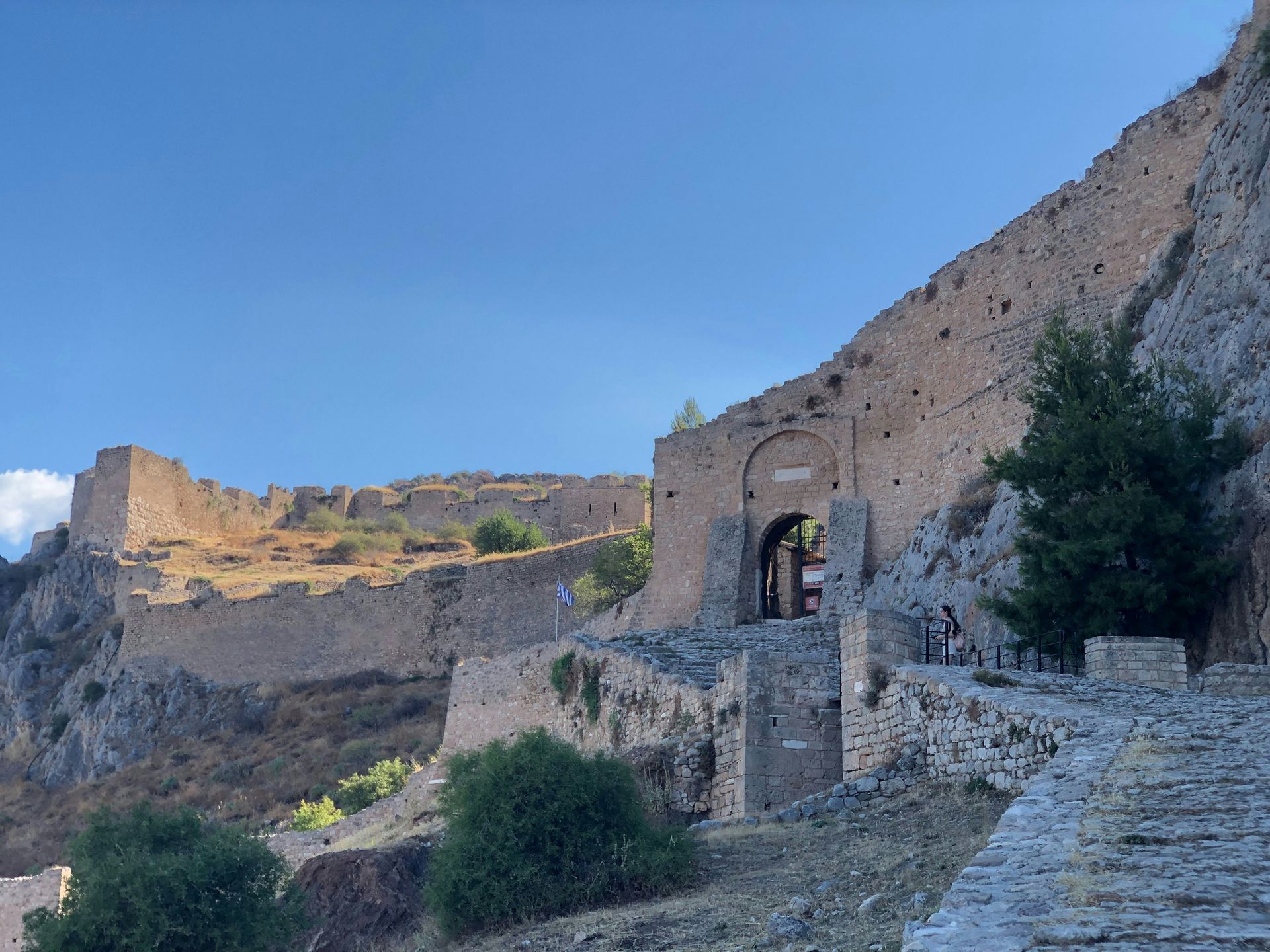
Portions of Methoni Castle and the Acrocorinth fortress reportedly stood in for the palace of Ithaca throughout the film, giving these historic Greek sites a starring role well beyond their usual function as archaeological attractions. Naval scenes were filmed in Pylos’s harbor as well, rounding out a genuinely comprehensive use of the Peloponnese’s varied coastal and historic landscapes across multiple scenes.
These filming locations all cluster conveniently on the Peloponnese, part of the Greek mainland, sparing travelers anything resembling the ten-year journey depicted in the original story. Voidokilia Beach sits just an hour’s drive from Kalamata International Airport, making it a genuinely accessible starting point for travelers hoping to trace several of these locations across a single, relatively compact road trip.
Travelers $TRV visiting the Peloponnese specifically for these filming sites should budget several days to properly cover the distance between Messinia and Pylos, since the region’s historic castles and beaches sit spread across a genuinely varied stretch of coastline instead of clustered within a single town. Kalamata itself offers a genuinely worthwhile base for exploring the wider region, with direct flights to several major European hubs during peak season. Methoni Castle’s Venetian-era fortifications, built centuries after the events described in Homer’s poem, give the site its own distinct layered history well beyond its brief cinematic role. Pylos itself boasts well-preserved Venetian- and Ottoman-era fortifications, offering visitors a worthwhile historic stop even beyond the harbor’s brief cinematic use. A rental car remains the easiest way to link Kalamata, Pylos, and Methoni within a single manageable loop.
Ferenc Horvath / Unsplash
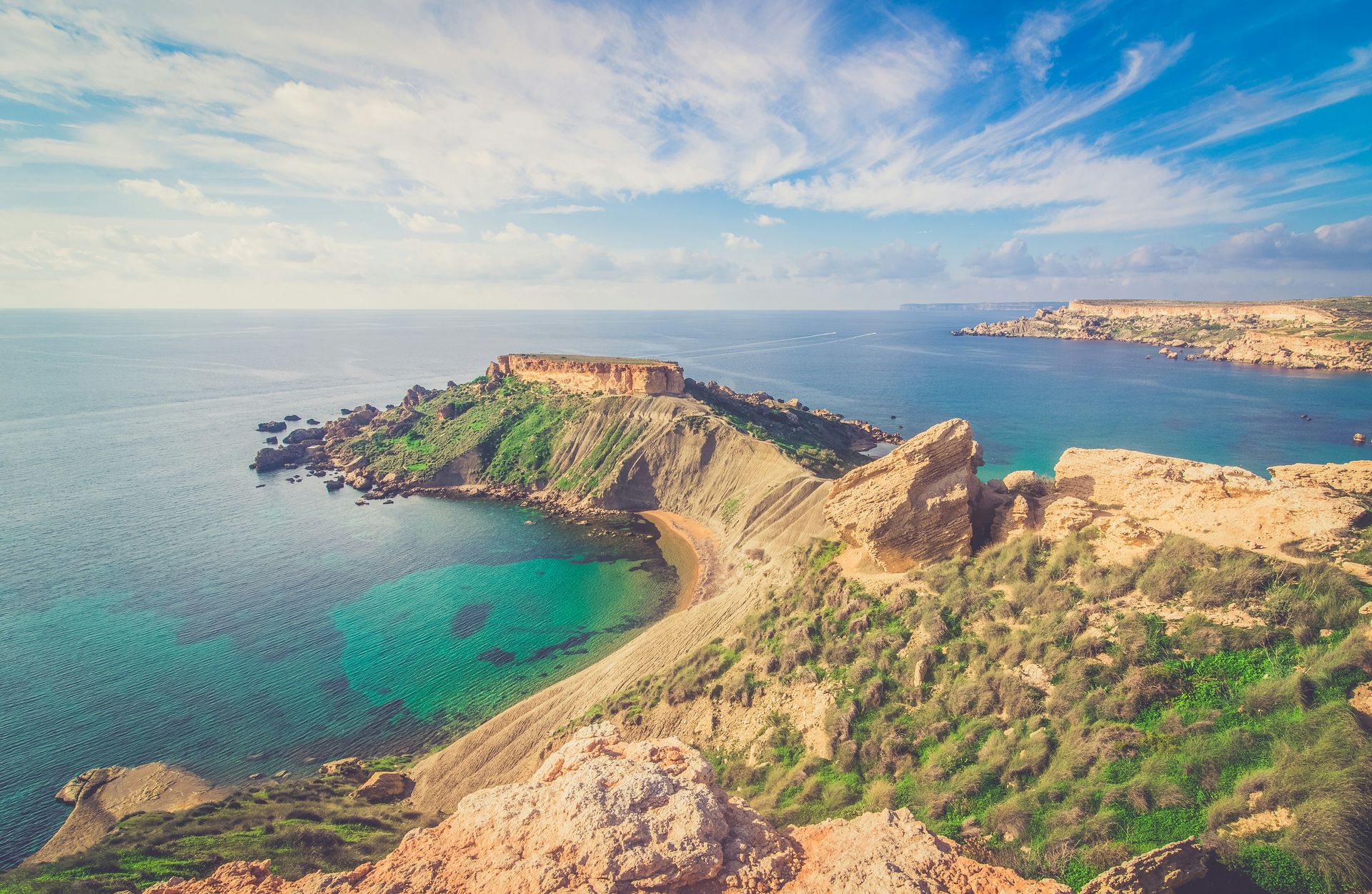
Malta ranks among the confirmed filming locations for The Odyssey, though visitors likely won’t recognize many of the nation’s actual landmarks on screen. News outlets have reported that Malta’s coast was used specifically to film the movie’s open-water scenes, with the horizon line likely left empty to reflect the vastness of the open sea, alongside large-scale nautical sequences that will almost certainly rely on green-screen effects during postproduction.
Malta also holds a site widely believed to correspond to one of the original locations described in Homer’s poem. The island of Gozo is thought to align with Ogygia, where the nymph Calypso held Odysseus captive for seven years, and a cave on the island, known locally as Calypso’s Cave, still bears her name today. The cave remains closed to the public for safety reasons, though, making it an unlikely actual backdrop for the film’s stars.
Beyond its mythological ties, the deep waters surrounding Malta have become renowned among divers, and one of the archipelago’s most popular dive sites features the wreck of a Libyan tanker resting on the seafloor. This pairing of mythology, cinematic history, and world-class diving gives Malta genuine appeal well beyond simply chasing filming locations for a single movie.
Travelers $TRV hoping to visit Gozo specifically for its Calypso’s Cave connection should still plan a broader day of sightseeing around the island, since the cave itself stays off-limits and the real draw ends up being the surrounding coastline and the Blue Hole, a popular sinkhole for snorkelers and divers alike. A short ferry ride connects Gozo to the main island of Malta, making it easy to combine both islands in a single trip rather than choosing one over the other. Visitors specifically drawn to Gozo’s mythology should also seek out the nearby Azure Window site, though the original rock formation collapsed in 2017 and now exists only in older photographs. The Blue Hole, close to where the Azure Window once stood, remains a popular dive site in its own right.
Credit: Findlater Castle
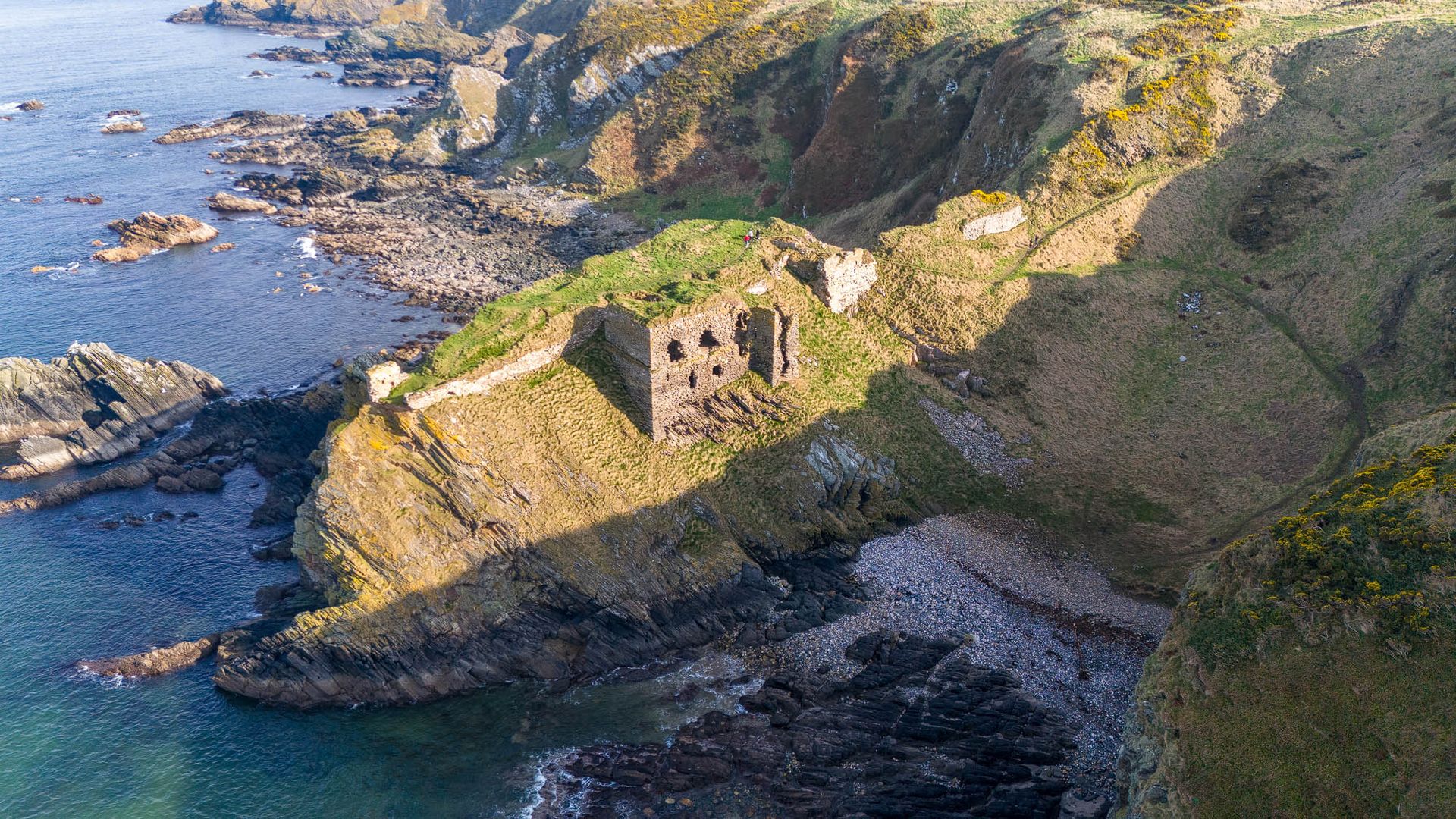
The Odyssey isn’t entirely built around sun-scorched coves and sparkling seas, and Nolan also brought his cast and crew to Scotland specifically to film along dramatic coastlines meant to evoke an end-of-the-world kind of landscape. Actors Matt Damon and Tom Holland were spotted wandering around the small village of Burghead in 2025, though exactly which scenes these Scottish locations will appear in remains genuinely unclear ahead of the film’s release.
Travelers $TRV curious about these locations should keep an eye out for the ruins of Findlater Castle and the Culbin Forest along the coast of Moray Firth, where a thick tree line runs all the way down to the shoreline itself. This kind of forest-meets-sea landscape would make a genuinely fitting landing site for Odysseus within the broader story, whether or not Nolan actually used it for exactly that purpose.
Exploring the coastline between Inverness and Aberdeen offers travelers a real chance to spot bottlenose dolphins, sometimes nicknamed "sirens" locally, that call this stretch of the Scottish coast home year-round. Travelers willing to brave the cold water can even find a dedicated snorkel trail at the aquarium in Macduff, offering a structured way to get into the water themselves rather than simply admiring the coastline from land.
This stretch of Scottish coastline offers a distinct visual register from the film’s Mediterranean locations, and travelers interested in tracing the production's full geographic range should treat Scotland as a deliberate tonal shift within the broader story rather than simply another scenic coastal stop. Burghead itself remains a quiet fishing village largely unaffected by the production, giving curious visitors a genuinely low-key way to see where two of the film’s stars were spotted. The wider Moray coast holds several other small fishing villages worth exploring on the same trip, each offering its own version of the rugged scenery that drew Nolan’s production north. Cullen and Portsoy both sit within easy reach along the same coastline, each holding its own harbor and pastel-colored houses worth a quick stop.
Yvon Hoogers / Unsplash
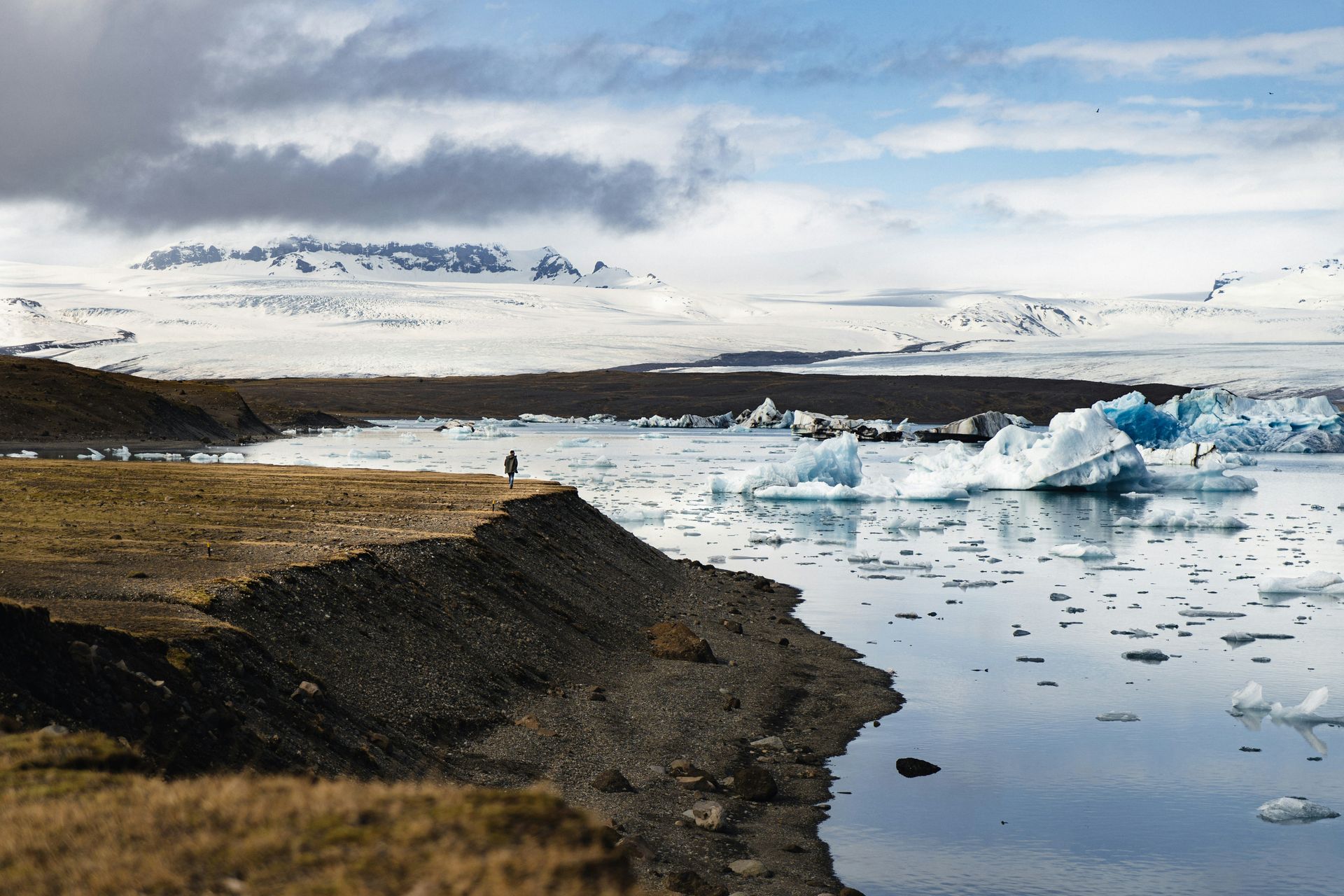
Few concrete details have emerged about the Iceland portion of production, though reports indicate Nolan’s team traveled deep into the Icelandic highlands and along the country’s coastline during filming. Between Iceland’s astonishing green valleys, volcanic fields, and crackling glaciers, the finished film seems genuinely likely to deliver some deliberately otherworldly imagery drawn directly from this particular leg of production.
Glaciers don’t actually figure into Homer’s original epic poem, though if Nolan’s hero does end up somewhere icy on screen, travelers hoping to follow in his footsteps could reasonably start at Jökulsárlón, a popular and genuinely accessible stop along Iceland’s well-traveled Golden Circle route. The glacier lagoon’s otherworldly blue ice walls would fit naturally alongside the imagery Nolan appears to be pursuing throughout this section of the film.
Iceland’s inclusion in the production gives The Odyssey a genuinely unexpected geographic range compared with the story’s traditional Mediterranean setting, and travelers specifically drawn to Nolan’s filmography should treat this stop as a chance to see how the director translates ancient mythology onto a landscape entirely unlike anything described in the original text.
Travelers $TRV planning a trip around Iceland’s filming connection should still treat any specific site identification as speculative until the film’s actual release, since so few confirmed details have emerged about exactly where, within the highlands or coastline, production actually took place. Jökulsárlón sits roughly a five-hour drive from Reykjavík, making it a genuinely worthwhile stop for travelers already planning a longer road trip around Iceland’s southern coast. Nearby Diamond Beach, named for the ice chunks that wash ashore from the same glacier lagoon, makes a natural add-on stop for travelers already visiting Jökulsárlón. Boat tours across the lagoon itself let visitors get considerably closer to the floating icebergs than a walk along the shoreline alone would allow. Visiting early in the morning also helps avoid the larger tour groups that typically arrive by midday during peak summer travel season.
Abdou Faiz / Unsplash
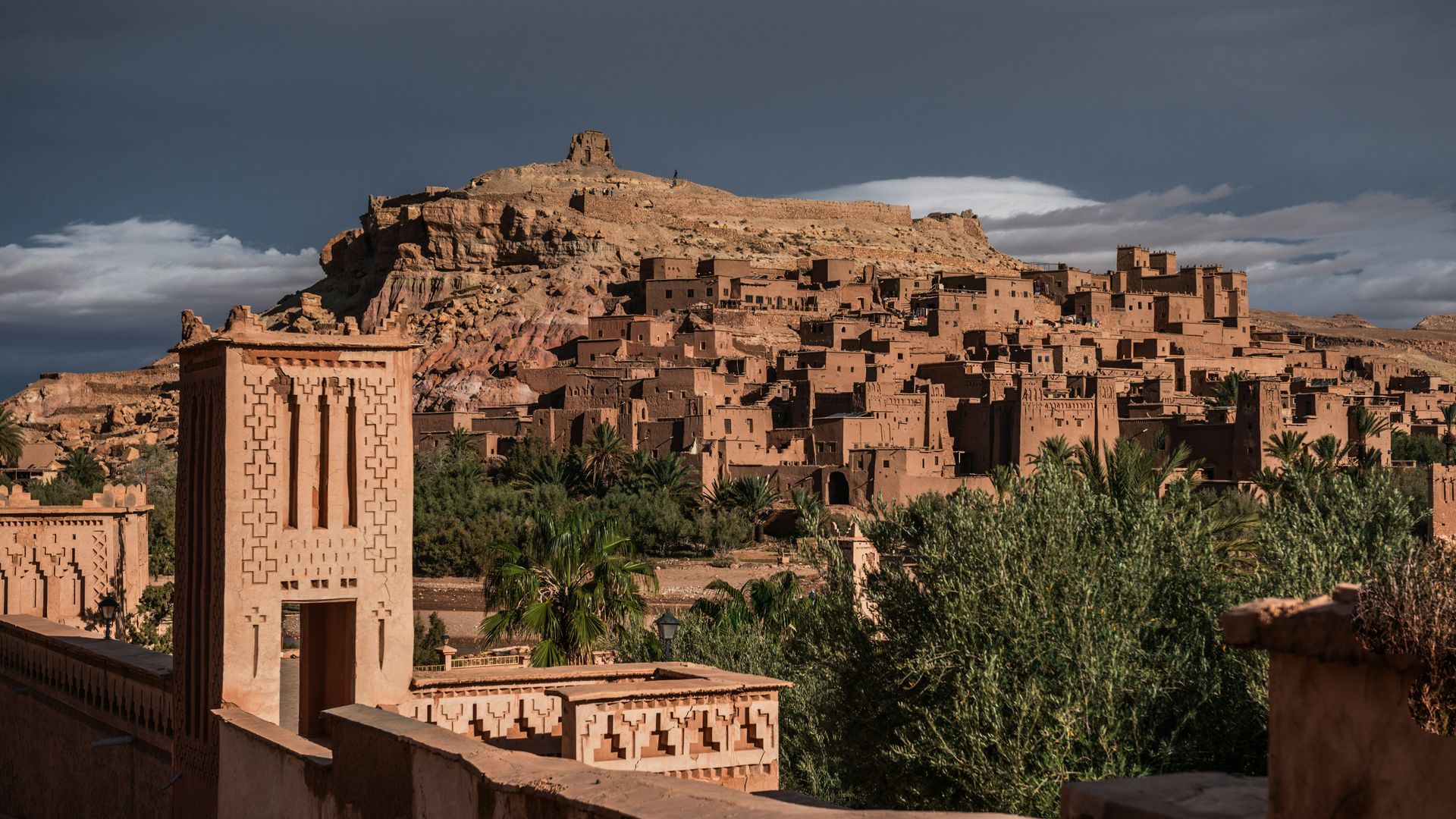
The UNESCO World Heritage site of Ait Ben Haddou served as the legendary city of Troy, a city whose historical existence remains debated among scholars but which nonetheless kicks off the entire story. Dating back to the 11th century CE, this fortified Moroccan city has long been a favorite among Hollywood productions, having previously appeared in Lawrence of Arabia and Gladiator before Nolan’s production arrived.
Nolan also used the shores of Essaouira to suggest the rough sea conditions stirred up by the wrath of the sea god Poseidon throughout key scenes in the film. Essaouira’s consistently strong wind and swell make it a fitting real-world stand-in for divine maritime fury, giving the production a naturally dramatic backdrop without relying entirely on visual effects for these sequences.
Poseidon, as it happens, tends to stay in a genuinely good mood along this stretch of Morocco’s coast, and Essaouira has become a real hub for surfers drawn to its reliable waves. Salt House Morocco, a hostel and surf camp offering daily yoga between Essaouira and Agadir, gives budget-conscious travelers an affordable, beginner-friendly base for sampling the same waters that stood in for Poseidon’s wrath on screen.
Travelers $TRV combining a visit to Ait Ben Haddou with time in Essaouira should budget a full day of driving between the two, since the fortified city sits well inland near Ouarzazate while Essaouira hugs the Atlantic coast considerably further west, making this pairing a genuinely worthwhile way to see two very different sides of Morocco within a single trip. Ait Ben Haddou’s continued use as a working film set means portions of the city remain inhabited today, giving visitors a genuine sense of a living community alongside the cinematic history. The nearby city of Ouarzazate has built an entire local industry around film production, earning a reputation as Morocco’s own version of Hollywood for its concentration of studios and sets.
