
From Palermo's brioche-wrapped pistachio gelato to a Calabrian waterfront kiosk that has served bergamot and tartufo since 1918
Dominik Gryzbon / Pexels
No country treats a simple scoop of frozen dessert with the same reverence that Italy brings to gelato, where gelatai across the country approach their craft with a dedication that rivals that of painters and sculptors from the country’s artistic past. Gelato differs from ice cream in ways that matter well beyond the name, since it typically contains less fat, producing a denser, creamier texture that coats the tongue differently than a scoop of American-style ice cream. This fundamental difference in composition explains why so many visitors describe their first proper Italian gelato as a genuine revelation instead of just a slightly better version of a dessert they already knew. Once a visitor tastes real gelato made with care, a mass-produced scoop back home rarely feels quite as satisfying again.
Unlike a handful of iconic regional dishes tied to a single city, high-quality gelato turns up throughout the entire country, and that spread invites genuine regional variation from one region to the next. Liguria’s gelaterie favor basil-based flavors that reflect the region’s culinary identity, while the Amalfi Coast leans into lemon, drawing on the citrus groves that define the local landscape. Spotting quality amid this variation comes down to a simple visual cue, since gelato stored in shallow metal tins tends to signal a more artisanal approach than the tall, brightly colored mounds piled high in open containers at tourist-heavy spots, though exceptions to that rule do exist. Ordering itself can also catch first-time visitors off guard, since some historic shops require payment before customers choose their flavors, and asking for a dessert “con panna” adds a dollop of fresh cream for anyone craving something closer to a sundae.
The six gelaterie below appear in Lonely Planet, covering standout shops recommended across Sicily, Rome, Milan, Florence, Treviso, and Calabria.
Credit: Cappadonia
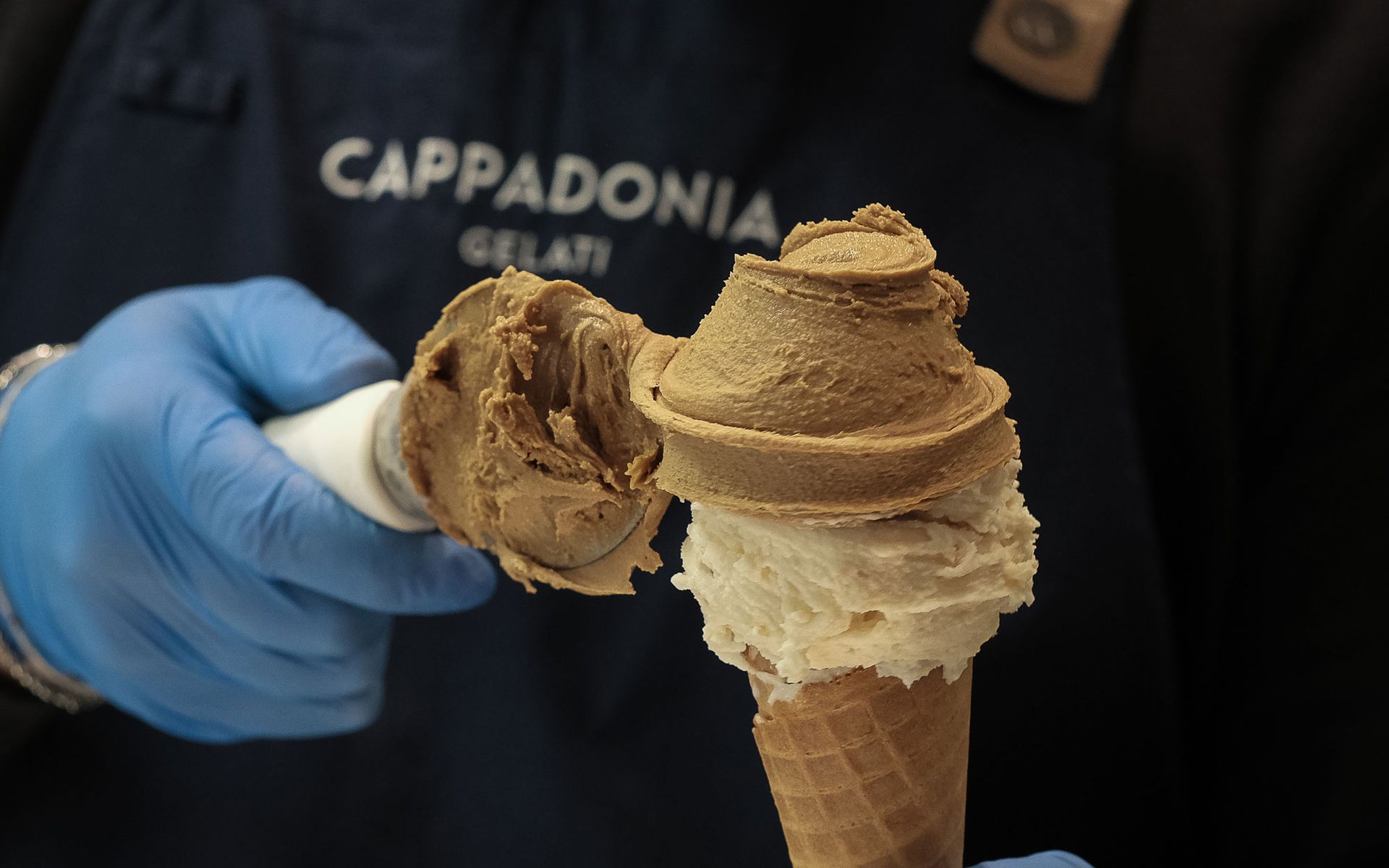
Sicilian gelato culture rejects the standard cup-or-cone choice entirely, instead serving gelato tucked inside a brioche bun to create a genuine ice cream sandwich, and Cappadonia stands as one of the clearest examples of why that pairing works. The gelateria sources many of its ingredients locally, often directly from regional farmers, and its pistachio flavor has become the clearest demonstration of that commitment to quality ingredients over flashy presentation.
Cappadonia’s pistachio gelato looks noticeably more muted than the electric-green versions found at less careful gelaterie elsewhere in Sicily, and that visual restraint reflects a broader philosophy about what actually belongs in the tub. Bright, artificial-looking color often signals added dyes rather than genuine pistachio content, and Cappadonia’s willingness to let its pistachio look exactly like a real pistachio, rather than a candy-colored imitation, speaks to the quality behind the flavor itself. Visitors who taste the difference tend to understand immediately why appearance matters less than substance when judging gelato quality.
Three separate locations across Palermo give visitors multiple chances to try Cappadonia during a single trip to the city, reducing the odds of missing out simply due to a scheduling conflict or an inconvenient neighborhood. Arriving at the Via Vittorio Emanuele location right at its 10am opening time gives visitors a head start on the day, and timing matters here because Sicilian culture treats brioche as a breakfast food, which makes an early-morning gelato con brioche a genuinely acceptable way to start the day rather than an indulgent exception.
Visitors interested in exploring Palermo’s broader breakfast traditions can extend the morning with a stop at nearby Casa Stagnitta, widely regarded as home to the city’s best granita, an icier dessert that offers a useful point of comparison against gelato’s creamier texture. Trying both desserts back-to-back gives visitors a clearer sense of how Sicilian dessert culture distinguishes between these two related yet genuinely different frozen treats, both worth sampling on the same morning.
Credit: Pavé
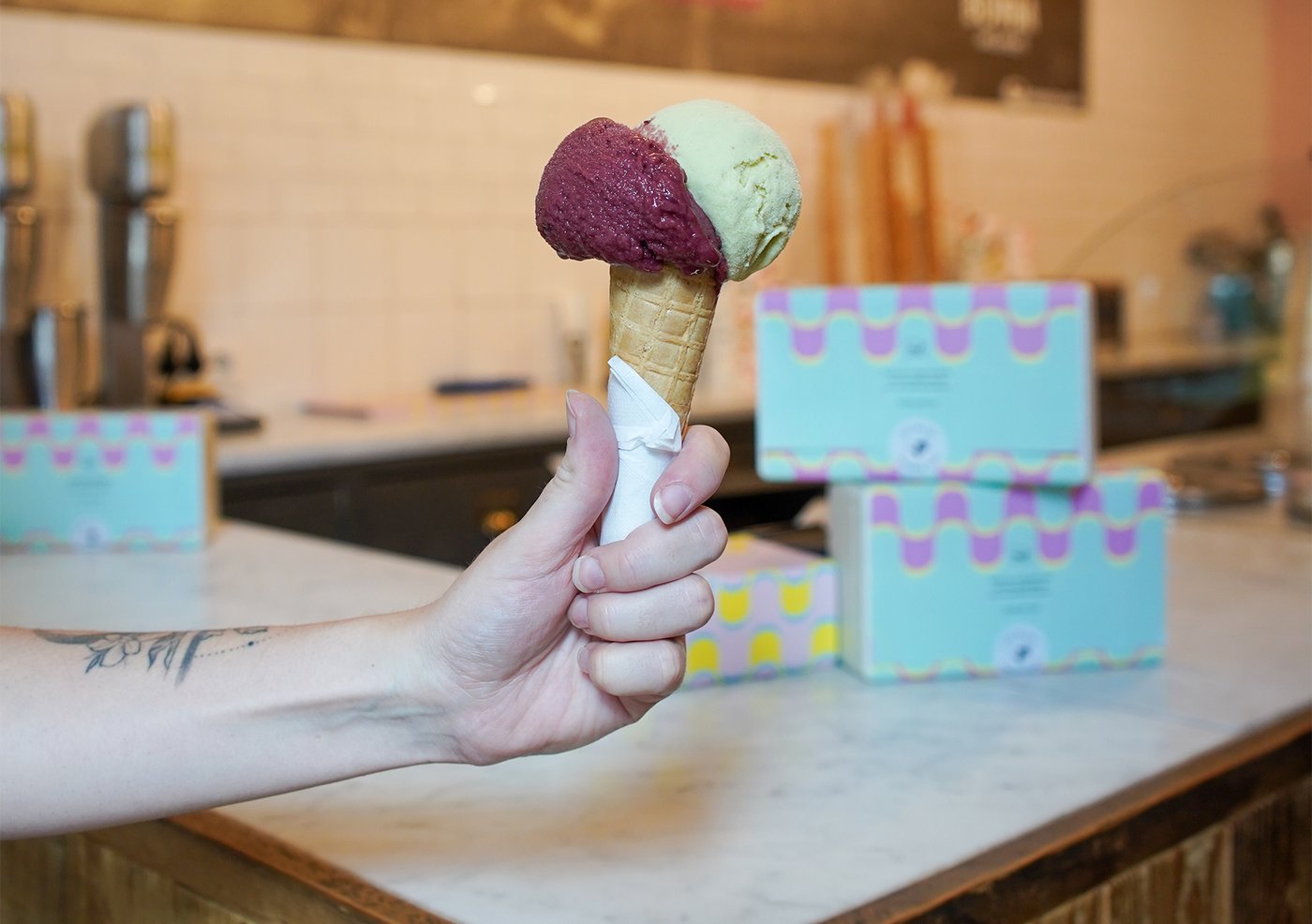
Pavé built its reputation in Milan as a bakery first, drawing loyal customers in for fig tarts and other pastries long before many visitors realized the shop also operates two dedicated gelaterie across the city. This bakery pedigree shows up directly in how Pavé approaches gelato, treating each batch with the same attention to detail the shop already applies to its flaky croissants and other baked goods. Visitors who discover the gelateria connection after already falling for the bakery often find themselves torn between which counter to visit first on any given trip.
Pavé’s gelato menu leans hardest into its bakery roots during the holiday season, when a panettone-based gelato flavor appears specifically to mirror the traditional Italian Christmas bread that defines the season for so many Italian households. Year-round, visitors can find a toasted bombolone, Italy’s answer to a doughnut, stuffed with gelato for a dessert that essentially combines two of Pavé’s specialties into a single item, instead of asking customers to choose between the bakery and gelato counter.
Location matters when planning a visit to Pavé, since its Via Cesare Battisti shop closes earlier than the one on Via Cadore. Visitors hoping for a late-evening gelato run should confirm which location stays open late before making the trip, since arriving at the wrong shop after hours means missing out entirely rather than simply choosing a less convenient option. Checking hours in advance saves visitors from the disappointment of walking up to a locked door after a long day of sightseeing.
Beyond gelato and pastries, Pavé also positions itself as a proper granita shop, selling Sicilian-style granita and fruit sorbets at both of its locations. This range gives visitors a reason to return for multiple visits, sampling gelato on one trip and granita or sorbet on another, treating Pavé as a broader frozen-dessert destination rather than a single-flavor stop worth visiting only once per trip to Milan.
Credit: Come il Latte
Come il Latte translates to “Like Milk,” a name that undersells just how far the gelateria’s flavor range actually extends beyond simple dairy-forward options. Ciao, one of the shop’s more adventurous offerings, mixes gelato with blue cheese for a flavor that surprises first-time visitors, while a stellar Fior di Latte and a mascarpone cookies-and-cream flavor anchor the menu for visitors who prefer more familiar territory. This range, spanning both bold experimentation and comforting classics, means almost any visitor can find something to love on the menu.
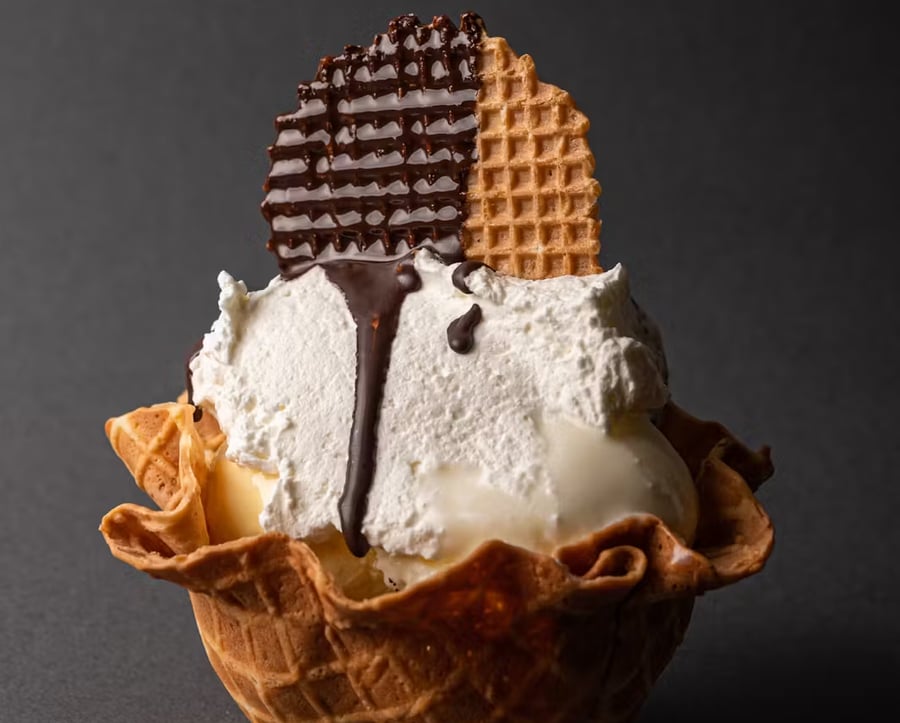
What truly distinguishes Come il Latte is its presentation rather than its flavor alone. The gelateria serves its gelato in homemade cones, each topped with a customer-selected chocolate drizzle, creating an effect that resembles an artisanal take on a mass-produced ice cream truck treat, elevated well beyond anything a truck could realistically offer. Visitors who grew up with a specific nostalgic ice cream treat often find themselves surprised by how closely Come il Latte’s presentation echoes that childhood memory while delivering a dramatically higher-quality product.
Rome draws visitors for countless historic sites, and Come il Latte gives regular visitors to the city a reason to return that has nothing to do with ancient ruins or famous piazzas. Repeat trips to the city often revolve around specific neighborhood favorites instead of the same handful of tourist landmarks, and Come il Latte exemplifies exactly that kind of personal, recurring destination within a much larger city.
Pairing a visit to Come il Latte with a stop at Pinsere, an unassuming pizzeria just up the street on Via Flavia, rounds out a proper Roman food outing built around two very different specialties. Pinsere serves pinsa, a local flatbread-style pizza distinct from the thinner styles found elsewhere in Italy, and visitors can choose whether to start with pizza and finish with gelato or approach the meal in the opposite order entirely, depending on personal preference.
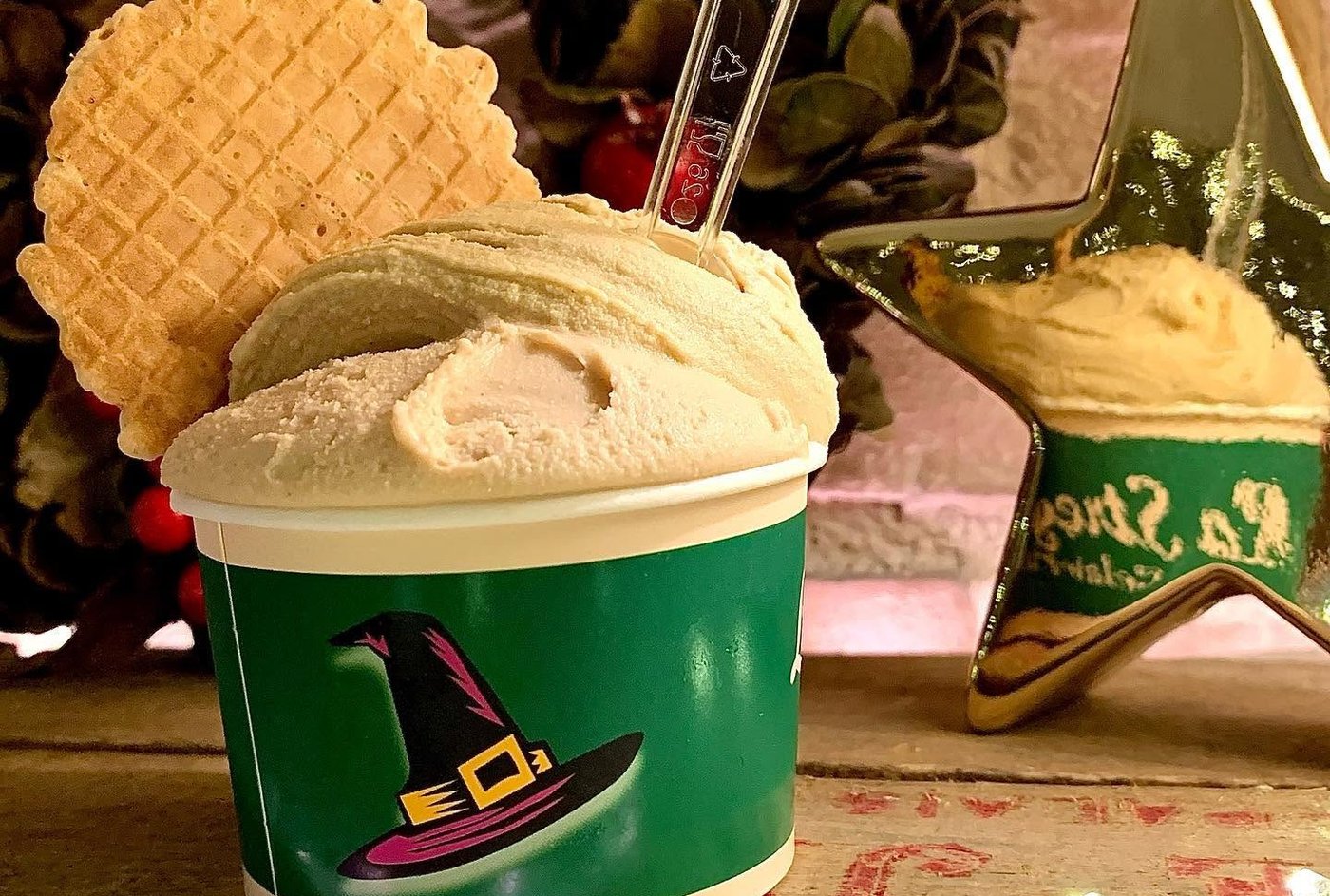
Credit: La Strega Nocciola
La Strega Nocciola translates to “The Hazelnut Witch,” a name that captures exactly what has kept visitors returning to the gelateria across its locations in Florence and Rome. The shop’s signature hazelnut flavor combines a crisp edge with an underlying sweetness, a balance precise enough that regular visitors describe genuinely craving it during ordinary lunch breaks rather than treating it as an occasional indulgence. This kind of everyday craving, rather than an occasional-treat mentality, says something about how well the flavor holds up on repeated visits.
Natural, in-season ingredients define La Strega Nocciola’s overall approach, and that commitment extends well beyond the signature hazelnut flavor that gives the shop its name. Dairy-free options sit alongside more experimental combinations, including a cinnamon flavor paired with white chocolate, giving visitors with dietary restrictions or simply adventurous taste buds plenty of reasons to explore beyond the hazelnut that first built the shop’s reputation.
Location matters considerably when planning a visit to La Strega Nocciola in Florence. The compact Via Ricasoli shop sits just steps from the city’s famous Duomo, a location that all but guarantees heavy foot traffic and crowding throughout the afternoon as tourists finish exploring the cathedral and look for something nearby to cool down with. The larger Via de’ Bardi location draws noticeably fewer customers despite sitting close to the equally famous Ponte Vecchio, making it the smarter choice for visitors who want the same gelato without fighting through a crowd just to place an order.
Choosing between La Strega Nocciola’s two Florence locations essentially comes down to weighing convenience against comfort. Visitors already standing at the Duomo may find it easier to simply join the line at Via Ricasoli despite the crowds, while those willing to walk slightly further toward Ponte Vecchio get a calmer ordering experience without sacrificing any of the quality that made the hazelnut flavor famous in the first place across both cities where the shop operates.
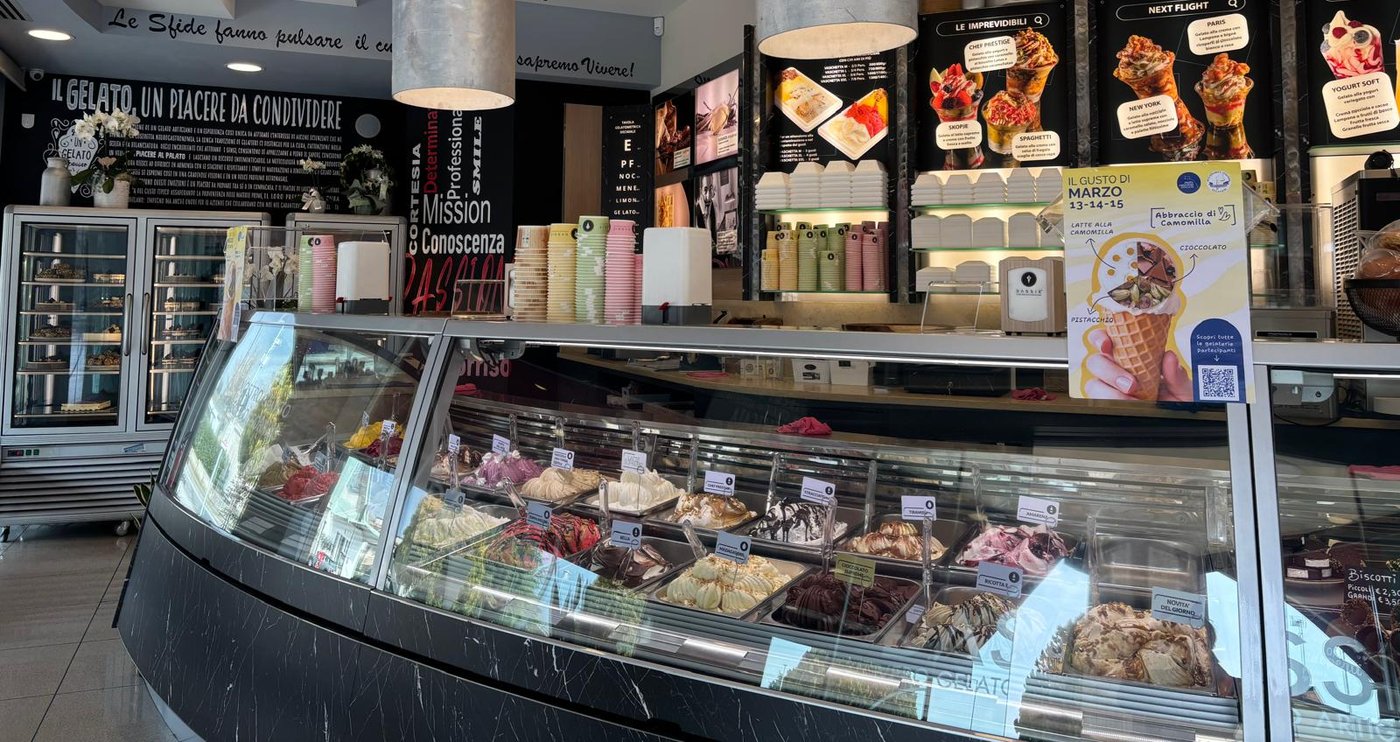
Credit: Dassie
Dassie has built a reputation strong enough that some longtime fans consider its chocolate gelato the best in the entire country, a claim backed by real recognition instead of just local pride. Stefano Dassie won the Italian Championship of Gelato Makers in 2010, and just a few years later, the family-run gelateria received Gambero Rosso’s award for best chocolate gelato, giving the shop credentials that few competitors across Italy can match. Winning both honors within a relatively short span cemented Dassie’s reputation well beyond its home region of Treviso.
This chocolate flavor stands out for how it balances lightness with real intensity, the result of high-quality ingredients rather than any single technique. The gelato itself feels creamy rather than heavy, yet carries a strong, unmistakable chocolate flavor that comes directly from the quality of the ingredients Dassie uses, rather than any shortcuts involving excessive sugar or artificial flavoring. Visitors expecting a heavy, dense chocolate experience often find themselves pleasantly surprised by how much lighter Dassie’s version feels while still delivering serious chocolate intensity in every single bite.
Dassie operates seven gelaterie across Italy, with most clustered in or around central Treviso, a city that holds its own significant claim to dessert fame as the birthplace of tiramisu. This local connection to tiramisu has occasionally inspired Dassie to offer a tiramisu-flavored gelato, timed to coincide with Treviso’s Tiramisù World Cup celebration, giving visitors lucky enough to catch the seasonal flavor a chance to experience two of Italy’s most celebrated desserts in a single, memorable order.
Visitors who spot the tiramisu flavor on Dassie’s menu during a visit should order it without hesitation, since the flavor doesn’t appear year-round and represents a genuine crossover between the region’s two most famous dessert traditions. Even on visits when tiramisu isn’t available, the chocolate flavor alone justifies the trip, especially for visitors who have never experienced an award-winning version of a flavor most people assume they already know well from countless ordinary versions elsewhere.
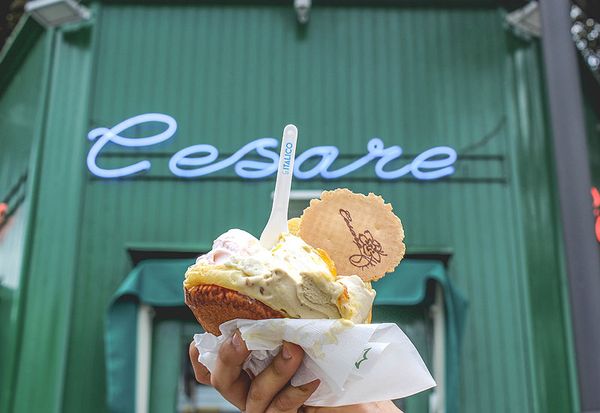
Credit: Cesare
Finding Cesare in Reggio Calabria rarely requires much effort, since the gelateria’s snaking line during the day and its bright neon signage after dark both make the kiosk almost impossible to miss. Its sea-foam-green exterior echoes the color of the nearby Mediterranean, a visual connection that feels intentional given how closely tied the gelateria’s identity is to its coastal setting. Visitors walking the waterfront for the first time often spot the color scheme before they even realize what the building actually is, drawn in by curiosity alone before they ever taste a single scoop.
Cesare has held its current coastal location since 1918, giving the kiosk more than a century of continuous operation along one of Southern Italy’s most scenic stretches of coastline. This kind of longevity in a single location speaks to consistent quality across generations, since a gelateria without genuine staying power rarely survives long enough to become the institution Cesare has become for both locals and visitors passing through the region year after year.
Flavor choices at Cesare lean into genuinely regional specialties rather than following the same standard menu found elsewhere in Italy. Bergamot, a citrus fruit closely associated with Calabria, and tartufo, a chocolate-based specialty with its own regional roots, both give visitors a taste of flavors they’re unlikely to find with the same authenticity anywhere outside Southern Italy. Choosing either flavor over a more familiar option rewards visitors with a genuine sense of place that a generic stracciatella simply can’t provide.
Cesare operates strictly as a grab-and-go kiosk, so visitors should plan to enjoy their gelato while walking instead of looking for a table inside. The Lungomare, a palm-tree-lined pathway that traces the curve of the Mediterranean coastline, offers one of Italy’s most scenic settings for exactly that kind of stroll, and clear days even reveal Sicily visible across the water in the distance, adding a dramatic backdrop to what might otherwise be a simple gelato break on an ordinary afternoon.